ARTICLE · 1130622
小学英语,广西接力版,四年级上册,Unit 2 I find it. 课前预习·知识清单·重点句型解析
一、核心句型一:Where is the …? — It‘s + 方位短语
1. 句型结构
问句:Where is the + 单数名词?
答语:It’s + in / on / under / behind + the + 地点/物品.
这是本单元最基础的“询问位置”句型,用于直接询问某个物品在哪里。
2. 教材原文示例
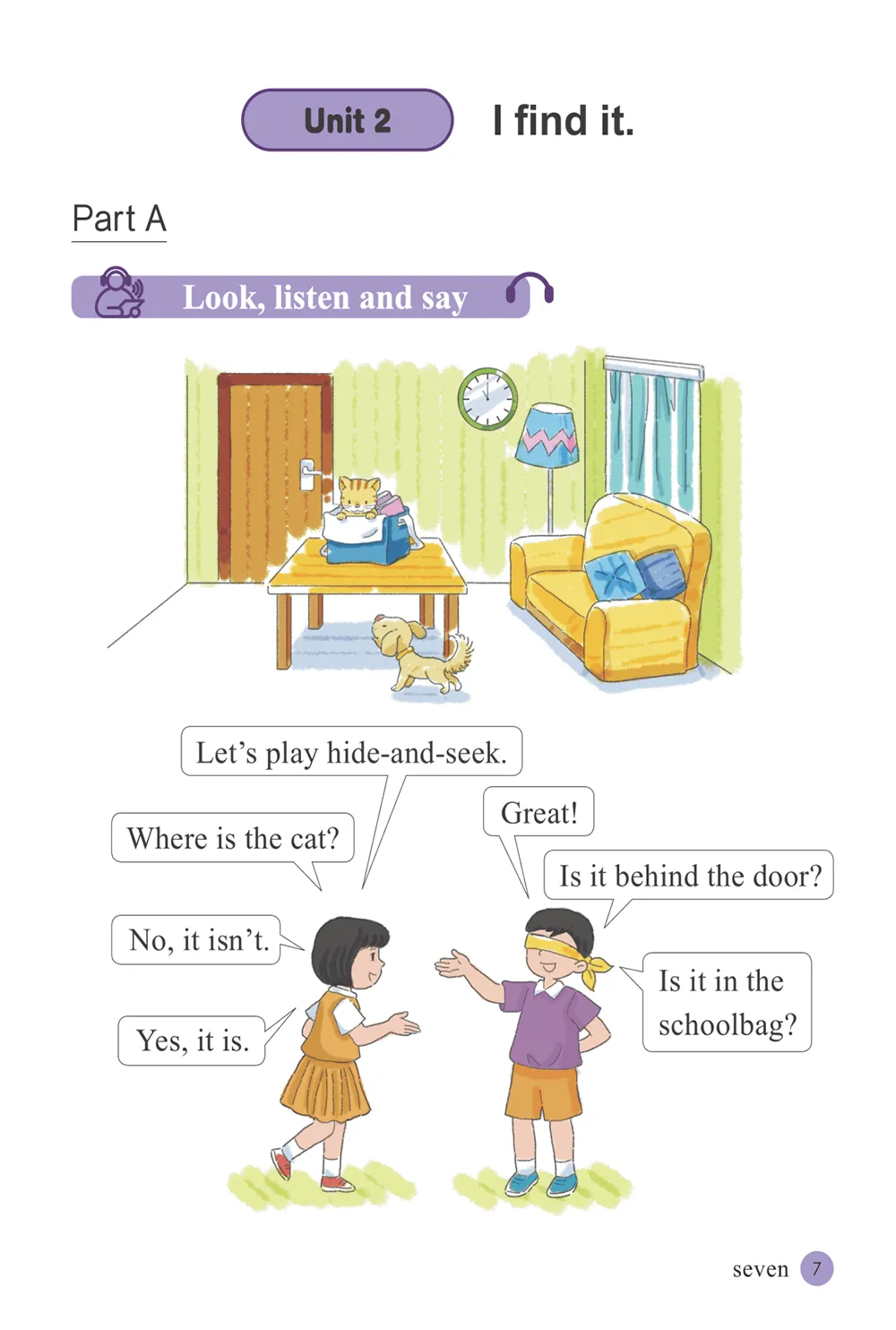
— Where is the cat?(猫在哪里?)
— Is it behind the door?(它在门后吗?)
— No, it isn‘t. Is it in the schoolbag?(不,它不在。它在书包里面吗?)
— Yes, it is.(是的,它在。)
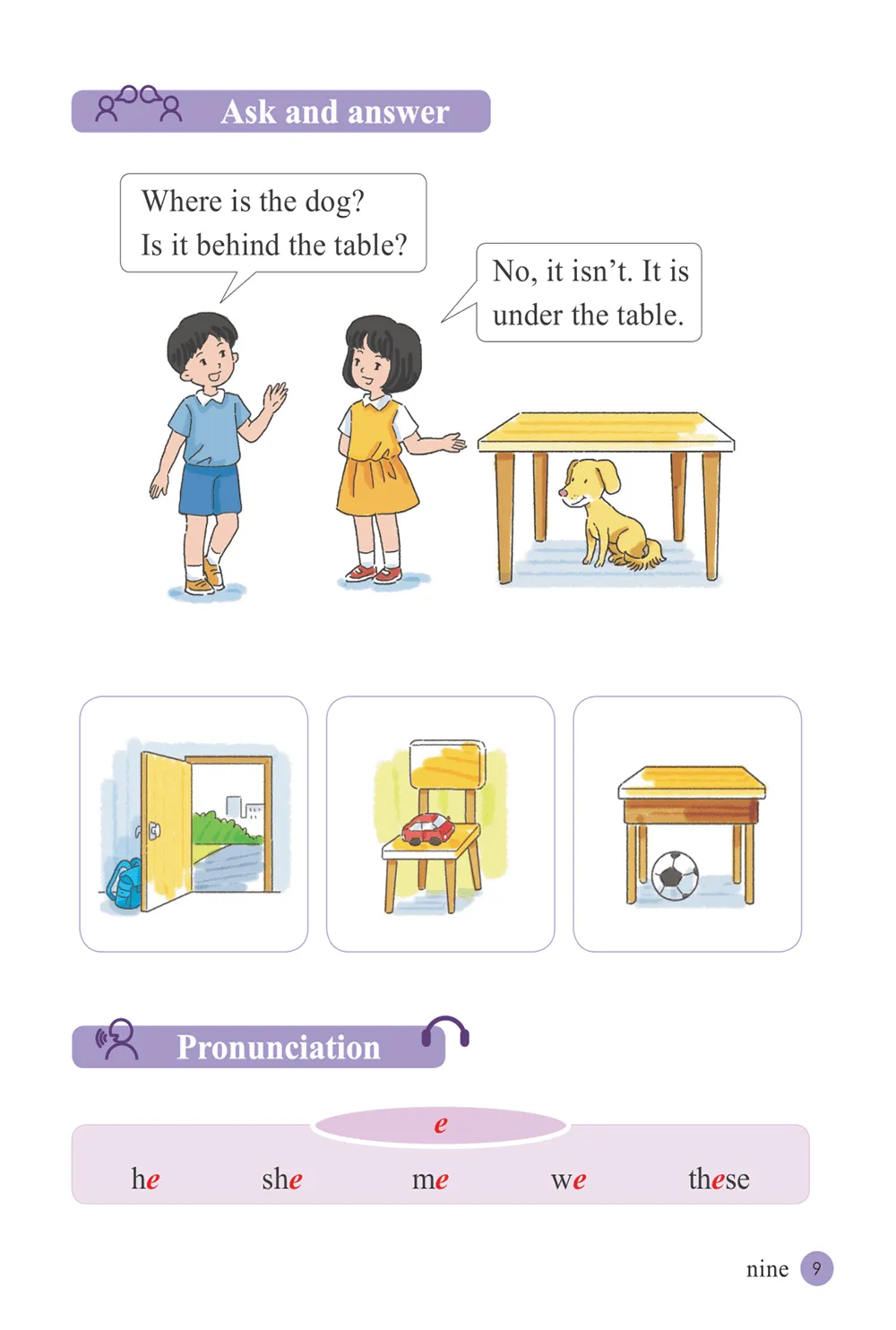
— Where is the dog?(狗在哪里?)
— It’s under the table.(它在桌子下面。)
3. 用法要点
(1)Where is 的缩写形式
Where is 在口语中常缩写为 Where‘s。例如:
Where’s my schoolbag?(我的书包在哪里?)
Where‘s the ball?(球在哪里?)
(2)答语必须用 It 代替前文提到的物品
无论问句中的物品是 cat、dog 还是 schoolbag,答语中都用 It 来指代,不能说 “The cat is...” 或 “Cat is...”。这是四年级学生最容易出错的点之一。
(3)方位介词的含义与图示理解
本单元重点学习四个方位介词:
| 介词 | 含义 | 典型例句 |
|---|---|---|
| in | 在……里面 | It’s in the schoolbag. |
| on | 在……上面(接触表面) | It‘s on the table. |
| under | 在……下面 | It’s under the chair. |
| behind | 在……后面 | It‘s behind the door. |
其中,behind 是本单元新学方位词,学生此前已接触过 in 和 on,但对 behind 和 under 的综合运用仍需强化。
(4)名词前必须加 the
方位短语中,名词前通常加定冠词 the。例如:
✅ It’s under the table.
❌ It‘s under table.(错误)
4. 易错提醒
Where is 后接单数名词。如果是复数物品,应使用 Where are...?,答语用 They’re...。本单元以单数为主,但学生容易混淆。
It‘s 不能省略。答语中 It’s 是“It is”的缩写,不能说 “Is under the table.” 或 “Under the table.”,必须完整说出 It‘s。
二、核心句型二:Is it + 方位短语? — Yes, it is. / No, it isn’t.
1. 句型结构
一般疑问句:Is it + in / on / under / behind + the + 地点/物品?
肯定回答:Yes, it is.
否定回答:No, it isn‘t.
这是“确认位置”的句型,通常用在 Where is...? 之后,作为进一步猜测和确认的手段。
2. 教材原文对话链
捉迷藏场景中,完整对话逻辑如下:
A: Where is the cat?(猫在哪里?)
B: Is it behind the door?(它在门后吗?)
A: No, it isn’t.(不,它不在。)
B: Is it in the schoolbag?(它在书包里面吗?)
A: Yes, it is.(是的,它在。)
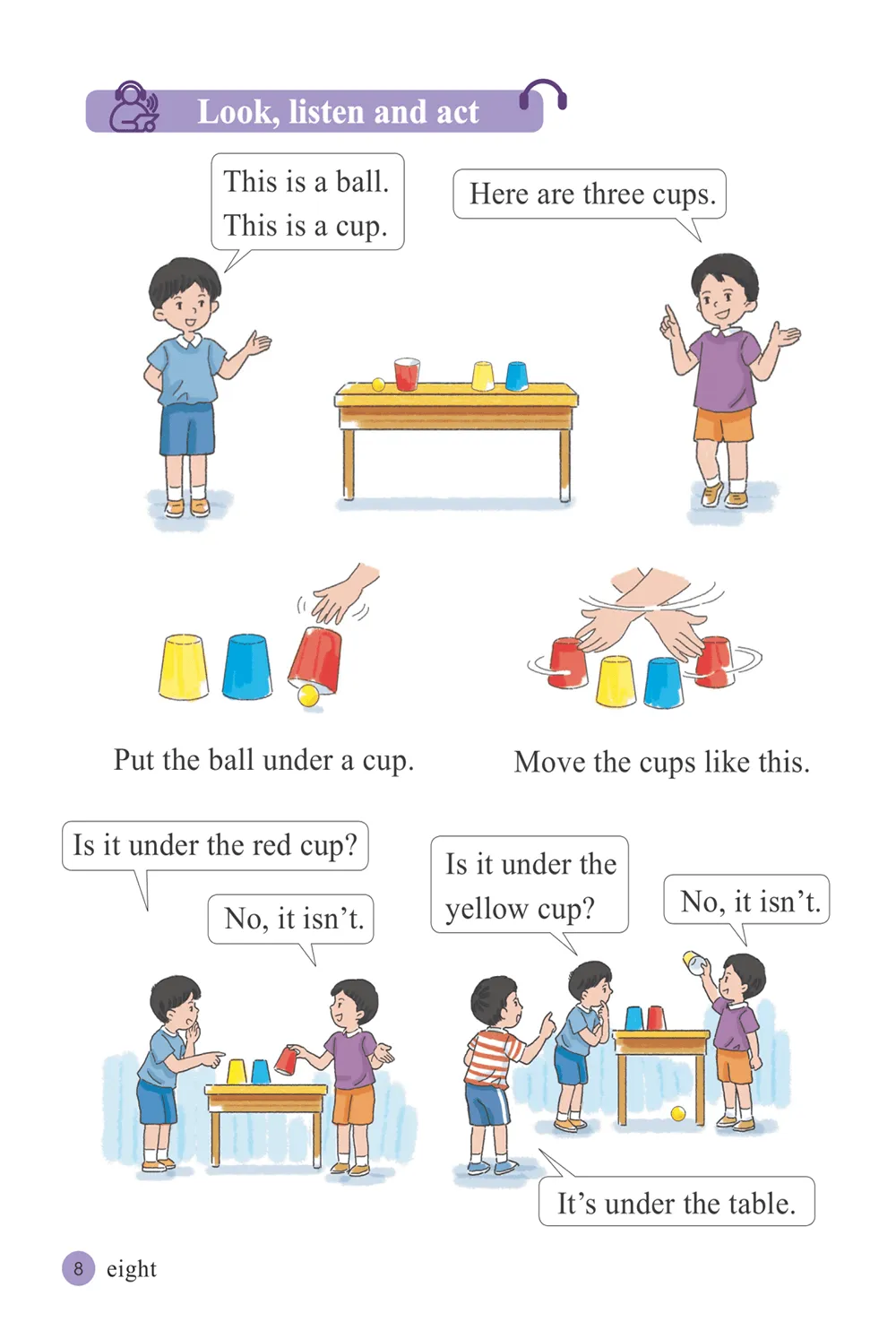
在猜杯子游戏中:
— Is it under the red cup?(它在红色的杯子下面吗?)
— No, it isn‘t.(不,它不在。)
— Is it under the yellow cup?(它在黄色的杯子下面吗?)
— No, it isn’t. It‘s under the table.(不,它不在。它在桌子下面。)
3. 用法要点
(1)Is it...? 是 Yes/No 疑问句,不能用 Where 回答
学生最容易犯的错误是:听到 “Is it...?” 却用 “It’s under the table.” 来回答。这是错误的。Is it...? 只接受 Yes, it is. 或 No, it isn‘t. 如果要说具体位置,需要在否定后另起一句补充。
(2)否定回答必须用缩写 isn’t
No, it isn‘t. 中 isn’t 是 is not 的缩写,在口语和书面练习中都要求使用缩写形式。不能说 “No, it is not.”(虽然语法正确,但不符合本单元的规范要求)。
(3)肯定回答 Yes, it is. 不能缩写
注意区别:
✅ Yes, it is.(肯定回答,不能写成 Yes, it‘s.)
✅ No, it isn’t.(否定回答,必须缩写)
这是小学英语中常见的“缩写规则不对称”现象,需要特别提醒学生记忆。
(4)猜测的顺序逻辑
在实际对话中,Is it...? 可以连续使用多次,每次更换方位短语,直到猜对为止。这体现了捉迷藏和猜物游戏的语言交际功能。
4. 易错提醒
| 错误表达 | 正确表达 | 说明 |
|---|---|---|
| Yes, it‘s. | Yes, it is. | 肯定回答不缩写 |
| No, it is not. | No, it isn’t. | 否定回答要缩写 |
| Yes, it isn‘t. | No, it isn’t. | 肯定/否定回答不能混搭 |
| — Is it under the table? — It‘s under the table. | — Is it under the table? — Yes, it is. | 一般疑问句不能用陈述句回答 |
三、核心句型三:Excuse me. Where is...? — Walk along... Turn right/left. The... is on your left/right.
1. 句型结构
这是 Part B 的核心句型,用于礼貌地问路和指路。
问路:Excuse me. Where is the + 地点名称?
指路:Walk along + 街道名称. Turn right/left. The + 地点 + is on your left/right.
2. 教材原文示例
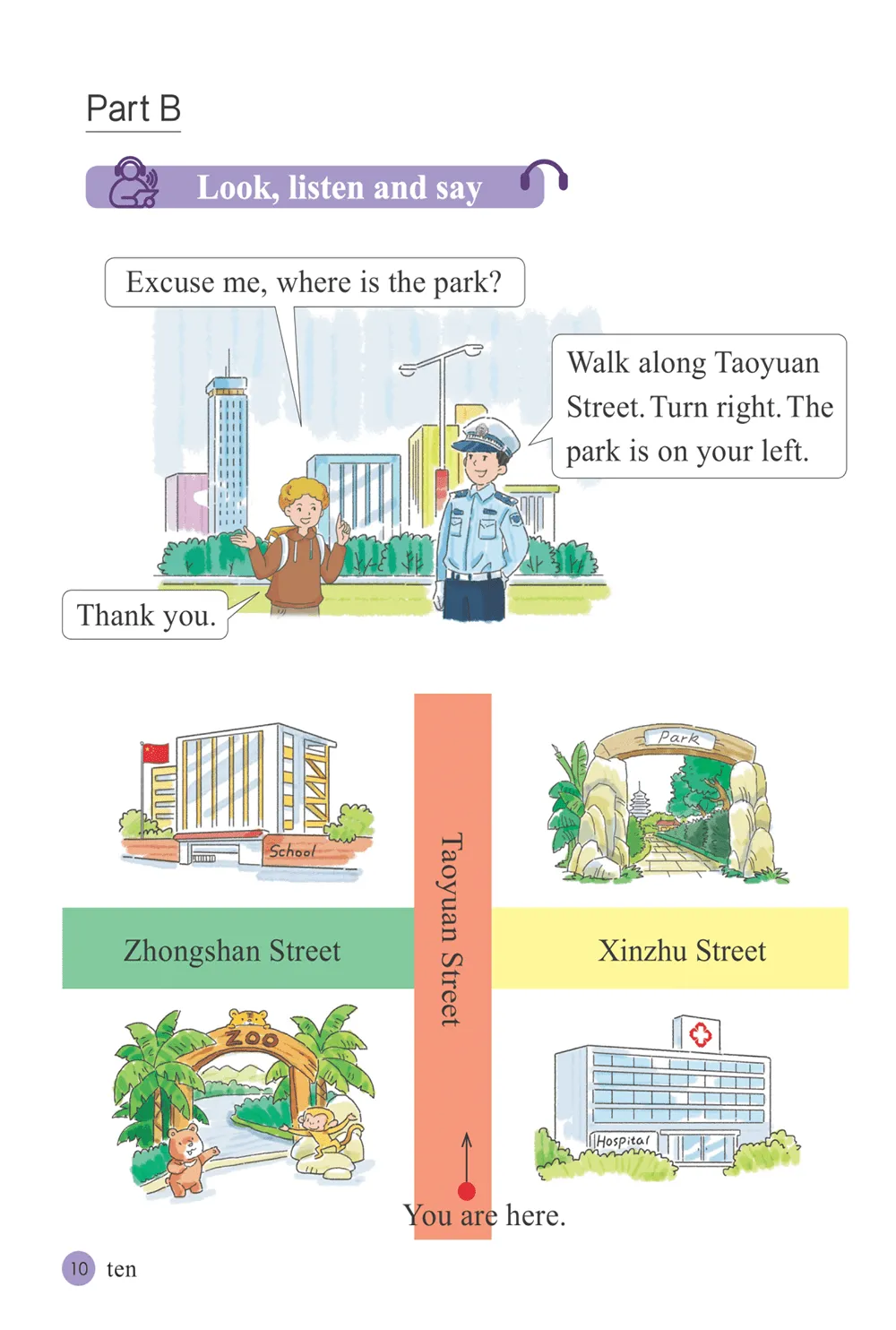
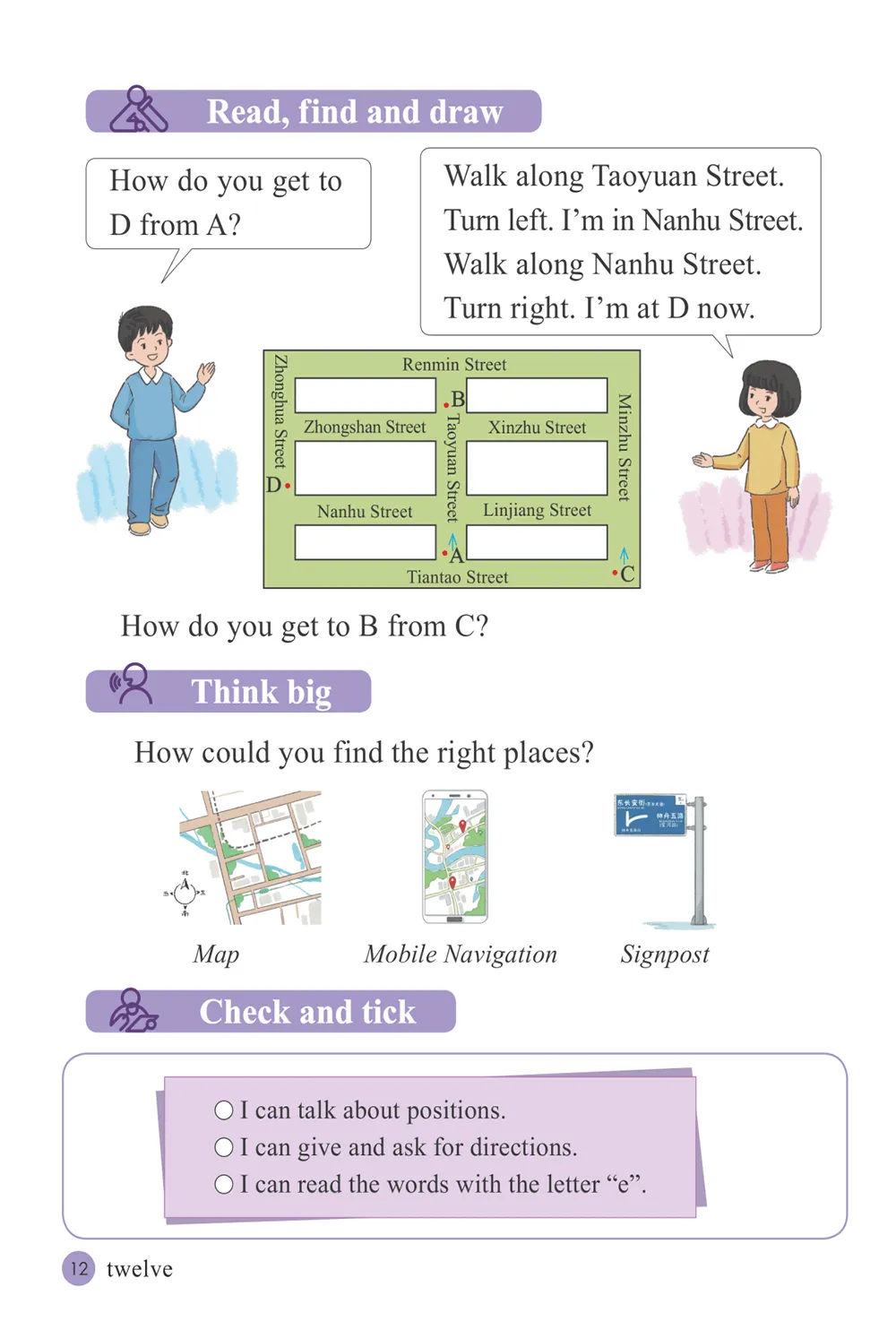
— Excuse me, where is the park?(请问公园在哪里?)
— Walk along Taoyuan Street.(沿着桃源街走。)
— Turn right. The park is on your left.(向右转。公园在你的左边。)
— Thank you.(谢谢。)
3. 用法要点
(1)Excuse me 的使用场景
Excuse me 是向陌生人问路或引起注意时的礼貌用语,意思是“打扰一下”“请问”。它和 Sorry 不同:
Excuse me:事前使用,用于礼貌地打断或询问。
Sorry:事后使用,用于道歉。
例如:
✅ Excuse me, where is the hospital?(请问医院在哪里?)
❌ Sorry, where is the hospital?(不用于问路开头)
(2)Walk along 的含义
Walk along 意为“沿着……走”,后面接街道名称,街道名首字母要大写。例如:
Walk along Taoyuan Street.(沿着桃源街走。)
Walk along Xinzhu Street.(沿着新竹街走。)
(3)Turn right / Turn left 是祈使句
Turn right/left 是祈使句,用于发出指令或给出指示。祈使句的特点是以动词原形开头,省略主语 You。类似的祈使句还有:
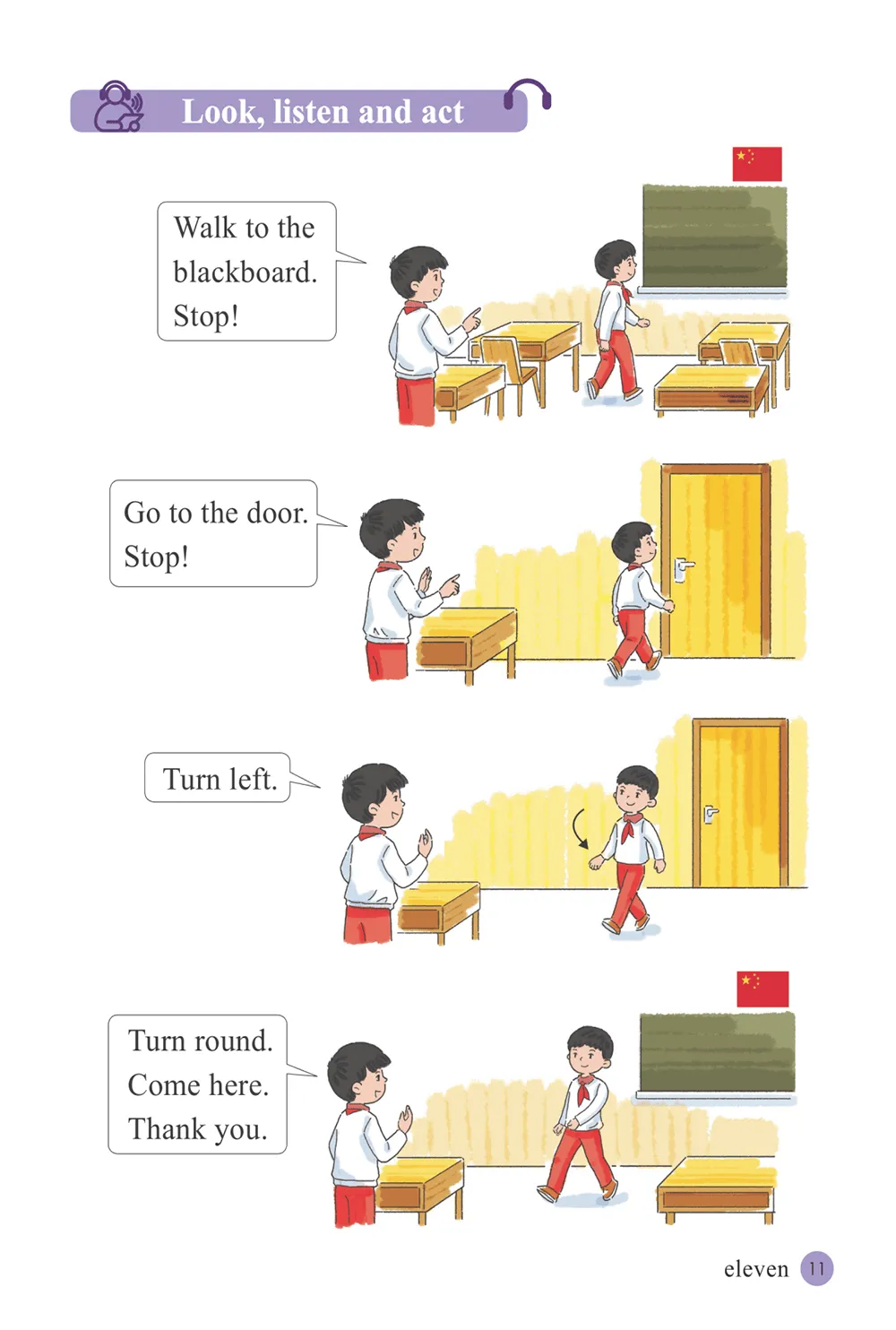
Walk to the blackboard.(走向黑板。)
Stop!(停!)
Go to the door.(走到门口。)
Come here.(到这里来。)
(4)The... is on your left/right 描述最终位置
指路的最后一步是说明目的地在你的哪一侧:
The park is on your left.(公园在你的左边。)
The school is on your right.(学校在你的右边。)
注意介词搭配是 on your left / on your right,不是 in your left 或 at your left。
4. 易错提醒
Excuse me 不要写成 Excuse I。me 是宾格形式。
Walk along 中的 along 不要漏掉。只说 Walk Taoyuan Street 是错误的。
Turn right/left 中不加 to。❌ Turn to right. ✅ Turn right.
on your left 中的 on 不要换成 in。
四、方位介词对比记忆表
| 介词 | 含义 | 记忆口诀 | 例句 |
|---|---|---|---|
| in | 在……里面 | “包在里面” | It‘s in the schoolbag. |
| on | 在……上面 | “贴在上面” | It’s on the table. |
| under | 在……下面 | “藏在下面” | It‘s under the chair. |
| behind | 在……后面 | “躲在后面” | It’s behind the door. |
注意:on 强调“接触表面”,in 强调“被包围在内部”,under 强调“正下方或下方区域”,behind 强调“后方空间”。
五、语音重点:字母 e 发 /iː/
本单元语音聚焦字母 e 在以下单词中的发音:
he / she / me / we / these
这些单词中,字母 e 都发长元音 /iː/,发音时声带振动,嘴巴向两侧咧开,像微笑一样,声音又长又清晰。
发音规律:当一个单词只有一个音节,并且以字母 e 结尾时,结尾的 e 通常不发音,但它会让单词中间的字母 e 发出 /iː/ 音。
易混对比:
| 发 /iː/ | 不发 /iː/ |
|---|---|
| he, she, me, we, these | bed, red, get, let, pencil |
这也是单元练习中语音题的考查重点。
六、单元句型速查表
| 功能 | 句型 | 答语/后续 |
|---|---|---|
| 询问位置 | Where is the...? | It‘s in/on/under/behind the... |
| 猜测位置 | Is it in/on/under/behind...? | Yes, it is. / No, it isn’t. |
| 礼貌问路 | Excuse me. Where is the...? | Walk along... Turn right/left. The... is on your left/right. |
掌握这三大句型的结构、回答方式和易错点,就能完整覆盖本单元的核心语言目标。建议在练习中重点关注:缩写形式的规范性(it‘s / isn’t)、一般疑问句与特殊疑问句的回答区分,以及方位介词在真实语境中的准确选用。
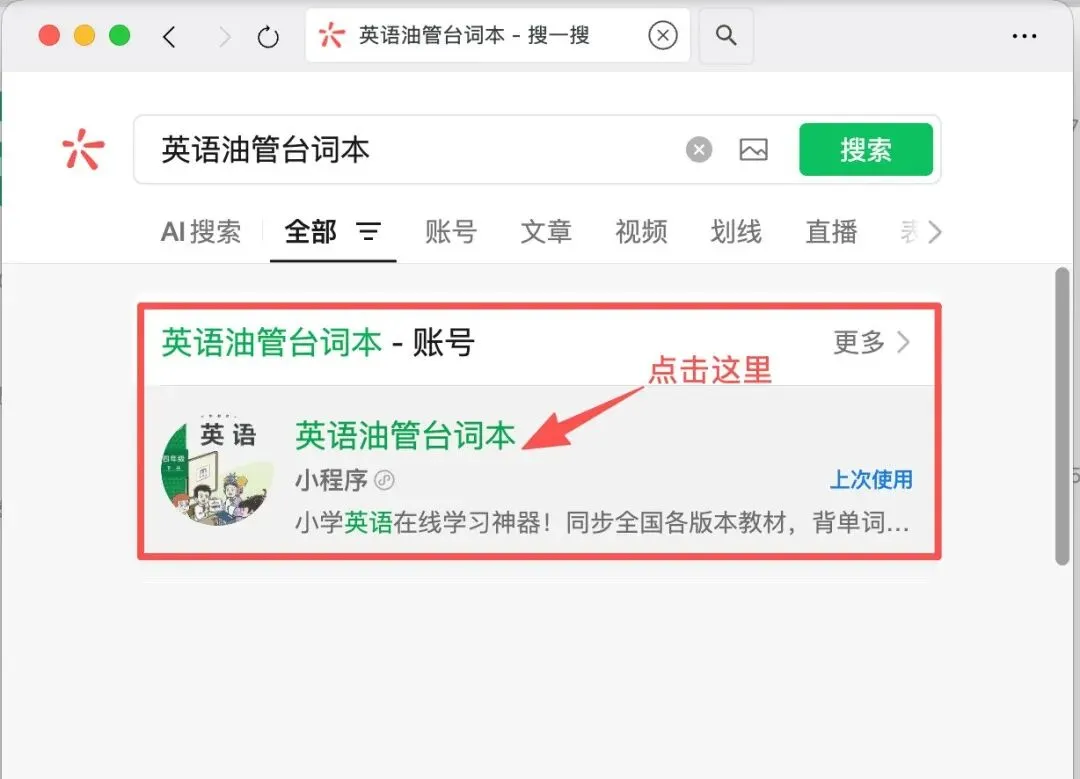
推荐一个免费学单词的微信小程序
更多内容请长按识别下面二维码学习