ARTICLE · 1295180
初中英语语法特辑⑤:形容词副词辨析—10 组易混词 + 10 个口诀
初中英语语法精讲 · 第 27 期
导语
先看一句学生作业里的原句:
❌ He works hardly every day.(他想说:他每天都努力工作。)
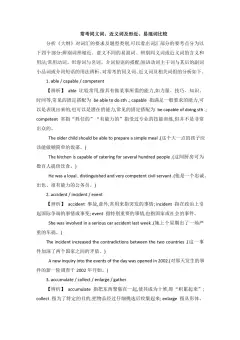
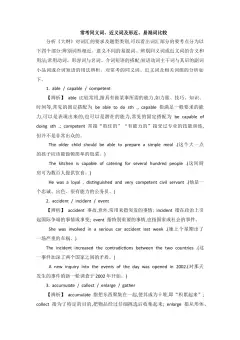
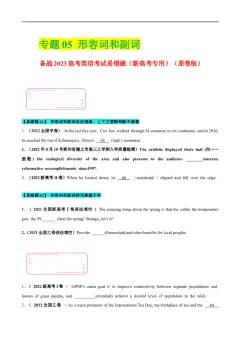
结果这句话的真实意思是"他几乎不工作"——意思完全说反了。hard 和 hardly 长得像亲兄弟,意思却是天壤之别。中考单选和完形里,专挑这种"长得像、意思差"的词来设选项。今天把 10 组最容易混的形容词、副词一次分清。
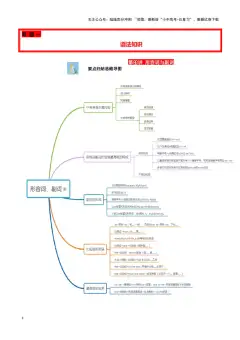
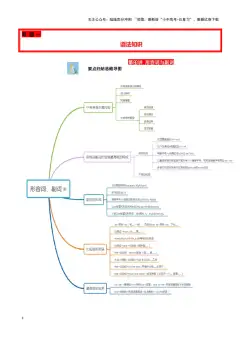
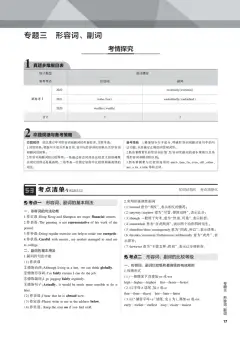
一、先建立地图:辨析题就考三层
| 数量层 | |||
| 意思层 | |||
| 用法层 |
一句话先记住:辨析题不是背单词,是"分场合"——谁在哪句话里出现,才对。
二、10 组高频易混词
1. few / a few / little / a little:先看有没有 a,再看可不可数
| 肯定(有一些) | a few | a little |
| 否定(几乎没有) | few | little |
He has a few friends here.(他在这里有一些朋友。)——人多,不孤独。 He has few friends here.(他在这里几乎没有朋友。)——冷冷清清。 There is a little milk in the glass.(杯子里还有点牛奶。) Hurry up! We have little time.(快点!我们没什么时间了。)
口诀:有 a 是"有一些",没 a 是"没几个";few 配复数,little 配不可数。
2. too / also / either:肯定句与否定句,各用各的
- also
:放句中(be 后、实义动词前)。She also likes music.(她也喜欢音乐。) - too
:放句尾,常加逗号。She likes music, too.(她也喜欢音乐。) - either
:只用在否定句句尾。She doesn't like music, either.(她也不喜欢音乐。)
❌ I don't like it, too. → ✅ I don't like it, either.
口诀:also 居中 too 殿后;句子变否定,too 让位 either。
3. how long / how often / how soon:三个 how 各问各的
| how long | for two hours / two metres | |
| how often | ||
| how soon | in an hour |
— How long have you lived here? — For ten years.(你住这儿多久了?——十年了。) — How often do you play basketball? — Twice a week.(你多久打一次篮球?——一周两次。) — How soon will he be back? — In half an hour.(他多久回来?——半小时后。)
口诀:long 问时长 often 问次数,soon 问将来多久——soon 配 in,long 配 for。
4. too much / much too:先分清 too 修饰谁
- too much + 不可数名词
:Don't eat too much sugar.(别吃太多糖。) - much too + 形容词
:The box is much too heavy.(这箱子实在太重了。)
判断法:too much 是"太多的",后面跟名词;much too 是"实在太",后面跟形容词。
❌ He has much too homework. → ✅ He has too much homework.
口诀:too much 太多跟名词,much too 太跟形容;中间的词是主语,谁修饰谁看后头。
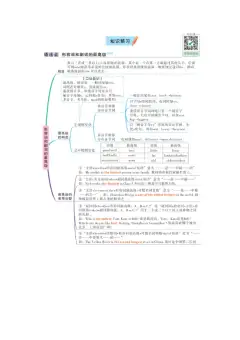
5. 系动词后面:用形容词,不用副词
look(看起来)、sound(听起来)、smell(闻起来)、taste(尝起来)、feel(摸/感觉起来)、become、get(变得)后面接形容词,说明主语的状态。
The song sounds beautiful.(这首歌听起来很美。) The soup tastes good.(这汤尝起来不错。)
❌ She looks happily. → ✅ She looks happy.
口诀:眼耳鼻舌身,五大感官后,站着的永远是形容词。
6. hard / hardly:差的不是一个 -ly
- hard
:形容词"困难的";副词"努力地"。He studies hard.(他学习很努力。) - hardly
:副词"几乎不"(否定意味)。He hardly watches TV.(他几乎不看电视。)
❌ He works hardly.(他几乎不工作)→ ✅ He works hard.(他努力工作)
同类陷阱:friendly、lovely、lively、lonely 长着 -ly 的脸,却是形容词——a friendly boy(一个友好的男孩),不能说 friendlily。
口诀:努力用 hard,几乎不用 hardly;-ly 结尾不一定是副词,friendly 一家都是形容词。
7. good / well:一个是"好",一个才是"干得好"
- good
:形容词,修饰名词或作表语。a good idea(一个好主意) well:副词,修饰动词;作形容词时只指"身体好"。
She sings well.(她唱得好。)——修饰动词 sing,用 well。
— How are you? — I'm well, thanks.(我挺好的。)
❌ She sings good. → ✅ She sings well.
口诀:good 形容词管名词,well 副词管动词;只有问身体,well 才当形容词。
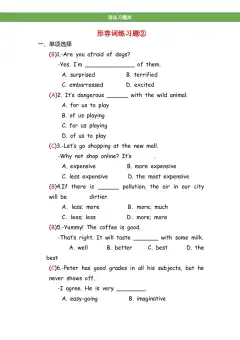
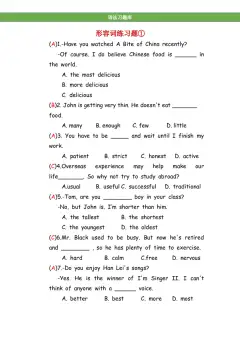
8. interested / interesting:-ed 管人,-ing 管物
| interested | 人(的感受) | |
| interesting | 物(的性质) |
I'm interested in the interesting story.(我对这个有趣的故事很感兴趣。) The film is exciting, so we're all excited.(电影很激动人心,我们都很激动。)
固定搭配要背:be interested in(对……感兴趣)、be excited about(对……兴奋)。
口诀:-ed 是人的心,-ing 是物的性;人对物感兴趣,人用 -ed 物用 -ing。
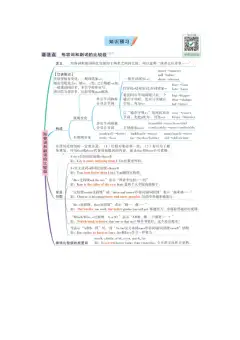
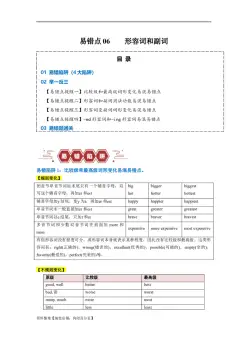
9. much / even / a little + 比较级:very 不许进这个门
比较级前面能加的"加强词"只有三类:much、even、a little,表示"……得多 / 甚至更 / 稍微"。
This room is much bigger than that one.(这个房间比那个大得多。) You look even taller than your brother.(你看起来甚至比你哥还高。)
❌ She is very taller. → ✅ She is much taller.
口诀:比较级门前 very 止步,much、even、a little 才放行。
10. alone / lonely:一个说状态,一个说心情
- alone
:副词或表语形容词,只说"独自一人",不谈感情。He lives alone.(他独自居住。) - lonely
:形容词,指"孤独的、寂寞的",也可指地方"偏僻的"。He feels lonely.(他感到孤独。)
一个人 alone 未必 lonely,但 lonely 的人心里是空的。
口诀:alone 数人数,lonely 数心情;独自一人不寂寞,寂寞未必一个人。
三、中考风格演练(4 题)
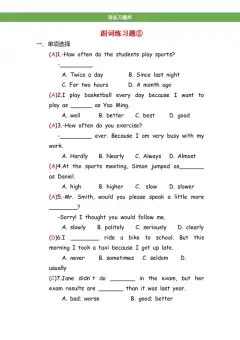
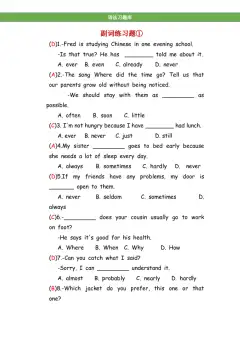
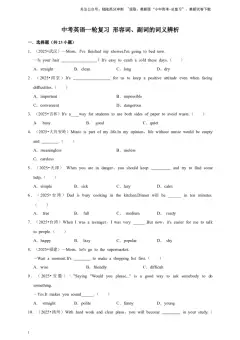
1. — ______ do you go to the library? — Once a week.
A. How long B. How soon C. How often D. How far
答案:C 解析:答语 Once a week 是频率,用 how often 提问。how long 问时长(答 for two hours),how soon 问将来多久(答 in an hour),how far 问距离。
2. There is ______ milk in the fridge. Let's go and buy some.
A. a little B. little C. a few D. few
答案:B 解析:milk 不可数,先排除 C、D;后句说"去买一些",说明冰箱里"几乎没有",表否定用 little。若表肯定"还有一点"才用 a little。
3. — I hear your father ______ watches TV at night. — Yes, he is always busy with his work. A. usually B. often C. hardly D. always
答案:C 解析:由答语"他总是忙于工作"可知,爸爸晚上"几乎不"看电视,表否定频度用 hardly。usually、often、always 都是肯定频度,与语境矛盾。
4. 短文改错:The story is very interesting, and I'm very interesting in it.
答案:interesting → interested 解析:第二个句子主语是 I(人),表达"我感到感兴趣",要用 -ed 形式的 interested,构成 be interested in。第一个 interesting 修饰 story(物),正确,不用改。
四、随堂练习(5 题)
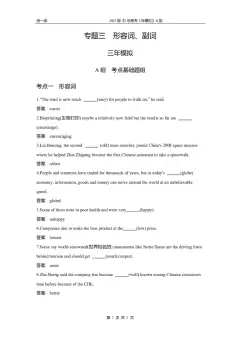
1. My cousin is __ shy, so he has ____ friends at school.
A. a little; few B. a little; a few C. little; few D. little; a few
2. — Does Tom like swimming? — Yes, he does. And his sister likes it, ______. A. either B. also C. too D. neither
3. The box is ______ heavy. I can't carry it alone.
A. too much B. much too C. many too D. much many
4. 用所给词的正确形式填空:All of us were ______ (excite) when we heard the good news.
5. 短文改错:Lucy sings very well, and she is a good singer. Her brother Tom sings good, too.
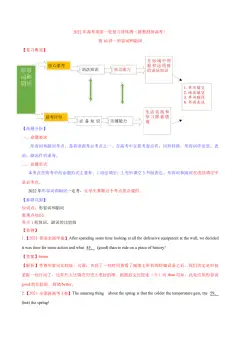
参考答案
- A
。shy 是形容词,"有点害羞"用 a little(little 只能修饰不可数名词);"有点害羞所以几乎没有朋友",表否定用 few(friends 可数)。 - C
。答语 Yes... 是肯定句,句尾用 too;either 只用于否定句,also 应放句中。 - B
。heavy 是形容词,用 much too("实在太")修饰;too much 后面要跟不可数名词。 - excited
。主语是 we(人),表示"我们感到激动",用 -ed 形式;the good news 才用 exciting。 - good → well
。修饰动词 sings 要用副词 well;第一个 sings well 正确,a good singer 中 good 修饰名词 singer,也正确。
五、一句话总结
辨析题就记三条:
- 先看 a 不 a
:a few / a little 是"有一些",few / little 是"几乎没有";few 配复数,little 配不可数。 - 词性跟着动词走
:感官动词和系动词后用形容词,修饰实义动词用副词;hard 努力、hardly 几乎不,别被 -ly 骗了。 - -ed 管人 -ing 管物
:人对物感兴趣,人 interested、物 interesting;比较级前 very 止步,much 才放行。
下期预告: 中考高频固定句型 30 例——"该做某事了"是 It's time to do 还是 It's time for do?"一到家就……"用 as soon as 时态怎么配?把 30 个高频句型装进口袋,完形填空的速度立刻提上来。
如果这篇对你有用,收藏起来考前再刷一遍;身边有正在为语法头疼的同学,转给他。
关注我,周一到周五早7点,一天一个语法点📘