文档文本内容
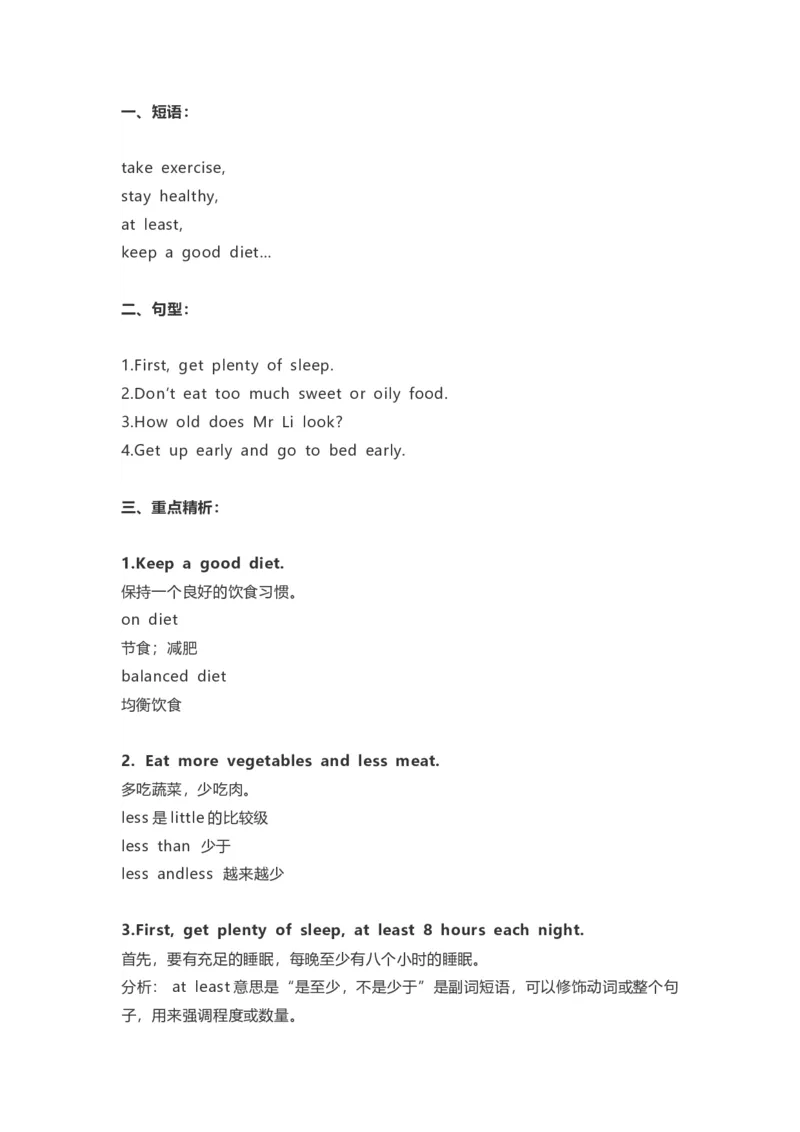
一、短语:
take exercise,
stay healthy,
at least,
keep a good diet…
二、句型:
1.First, get plenty of sleep.
2.Don’t eat too much sweet or oily food.
3.How old does Mr Li look?
4.Get up early and go to bed early.
三、重点精析:
1.Keep a good diet.
保持一个良好的饮食习惯。
on diet
节食;减肥
balanced diet
均衡饮食
2. Eat more vegetables and less meat.
多吃蔬菜,少吃肉。
less是little的比较级
less than 少于
less andless 越来越少
3.First, get plenty of sleep, at least 8 hours each night.
首先,要有充足的睡眠,每晚至少有八个小时的睡眠。
分析: at least意思是“是至少,不是少于”是副词短语,可以修饰动词或整个句
子,用来强调程度或数量。4.Don’t eat too much sweet or oily food.
不要吃太多糖和油腻食物。
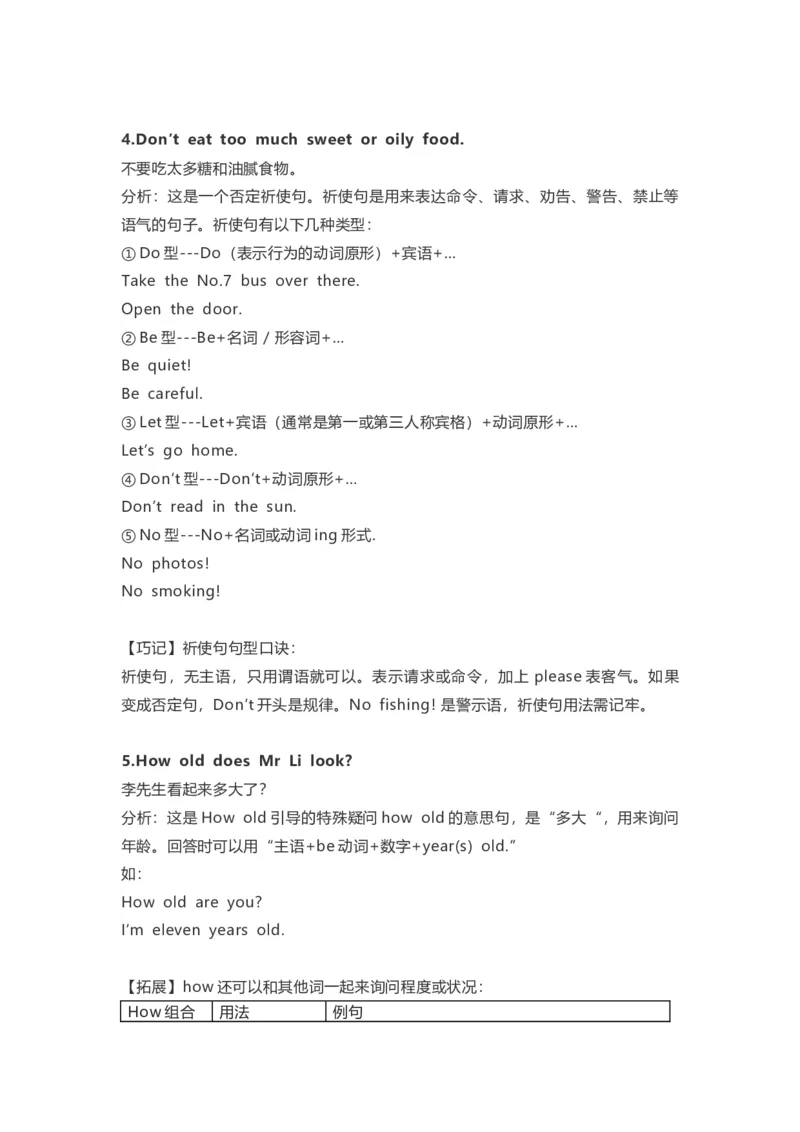
分析:这是一个否定祈使句。祈使句是用来表达命令、请求、劝告、警告、禁止等
语气的句子。祈使句有以下几种类型:
①Do型---Do(表示行为的动词原形)+宾语+…
Take the No.7 bus over there.
Open the door.
②Be型---Be+名词 / 形容词+…
Be quiet!
Be careful.
③Let型---Let+宾语(通常是第一或第三人称宾格)+动词原形+…
Let’s go home.
④Don’t型---Don’t+动词原形+…
Don’t read in the sun.
⑤No型---No+名词或动词ing形式.
No photos!
No smoking!
【巧记】祈使句句型口诀:
祈使句,无主语,只用谓语就可以。表示请求或命令,加上 please表客气。如果
变成否定句,Don’t开头是规律。No fishing! 是警示语,祈使句用法需记牢。
5.How old does Mr Li look?
李先生看起来多大了?
分析:这是How old引导的特殊疑问how old的意思句,是“多大“,用来询问
年龄。回答时可以用“主语+be动词+数字+year(s) old.”
如:
How old are you?
I’m eleven years old.
【拓展】how还可以和其他词一起来询问程度或状况:
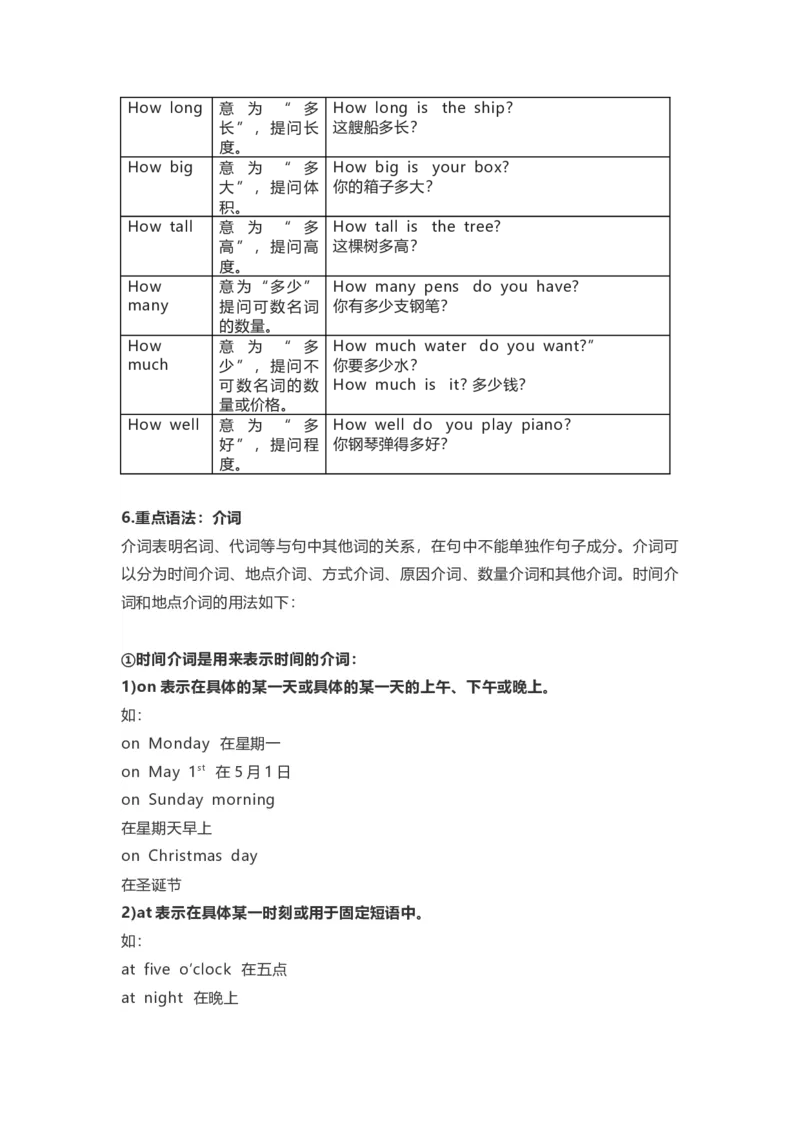
How组合 用法 例句How long 意 为 “ 多 How long is the ship?
长”,提问长 这艘船多长?
度。
How big 意 为 “ 多 How big is your box?
大”,提问体 你的箱子多大?
积。
How tall 意 为 “ 多 How tall is the tree?
高”,提问高 这棵树多高?
度。
How 意为“多少” How many pens do you have?
many 提问可数名词 你有多少支钢笔?
的数量。
How 意 为 “ 多 How much water do you want?”
much 少”,提问不 你要多少水?
可数名词的数 How much is it? 多少钱?
量或价格。
How well 意 为 “ 多 How well do you play piano?
好”,提问程 你钢琴弹得多好?
度。
6.重点语法:介词
介词表明名词、代词等与句中其他词的关系,在句中不能单独作句子成分。介词可
以分为时间介词、地点介词、方式介词、原因介词、数量介词和其他介词。时间介
词和地点介词的用法如下:
①时间介词是用来表示时间的介词:
1)on表示在具体的某一天或具体的某一天的上午、下午或晚上。
如:
on Monday 在星期一
on May 1st 在5月1日
on Sunday morning
在星期天早上
on Christmas day
在圣诞节
2)at表示在具体某一时刻或用于固定短语中。
如:
at five o’clock 在五点
at night 在晚上at noon 在正午
3)in泛指一天的早、中、晚,还可以表示一段时间,如星期、月、年、季节等。
如:
in the morning 在早上
in 2014 在2014年
in winter 在冬天
4)from… to…“从...到...”用来指时间范围。
如:We go to school from Monday to Friday. 我们从星期一到星期五上学。
5)before意思是“在…..之前”,after意思是“在……之后”,用来表示时间的
先后顺序。
如:
Wash your hands before dinner.
饭前要洗手。
Please clean the classroom after school.
放学后请打扫教室。
②空间介词是用来表示空间或位置的介词。
1)on表示在某一平面或线上,强调与某物体有接触。
如:
There is a pen on the desk.
书桌上有一支钢笔。
2)in 表示在较大的地方,在某立体空间或平面范围之内。
如:
The kids are playing in the room.
孩子们在房间里面玩。
3)at用于表示在一个较小的地点,这个地点被当作一个点来对待。
如:
She is waiting for you at the gate.
她在大门处等着你。
4)over强调在某人或某物的正上方,而且两物体表面没有接触;above强调位置
在某物体的上方,并不一定是正上方,而且两物体表面也没有接触。
如:There is a bridge over the river.
河上面有一座桥。
Some birds are flying above the clouds.
一些鸟儿在云朵上飞翔。
5)under 强调在某物的正上方,两物理表面可以接触,也可以不接触。below强
调位置低于某参照物,但并不一定是正下方。
如:
A cat hides under the sofa.
一只猫咪藏在沙发下面。
Please do not write below this line.
请不要写到这条线下面。
6)between表示位置在两者之间;among表示位置在三者或者三者以上之间。
如:
I set betweenTom and Mary.
我坐在汤姆和玛丽之间。
Susan is among the crowd.
苏珊在人群当中。
7)in front of表示在一定范围外的前面;in the front of表示在一定范围内的
前面。
如:
There is a fountain in the front of the park.
公园的前面有一个喷泉。
He is standing in front of me.
他正站在我前面。