2009
年专八真题详解
(新题型优化)
PART I LISTENING COMPREHENSION
SECTION A
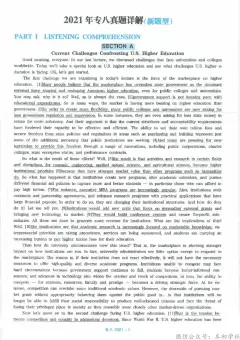
Writing Experimental Reports
Good morning, everyone. Today we'll discuss some preliminaries concerning how to write experimental
reports.
When you first signed up for a course in university, like a psychology course, chances are that you
didn't really expect what was coming in your study; particularly, the course emphasis on methodology and
statistics. For a few of you, this may have come as a pleasant surprise, provided that you have already
known something about the course. For most, however, I dare say, it will undoubtedly have been a shock
to the system.
No doubt in other parts of your course study, you will read books and journals, examining, critically,
models and theories, assumptions and hypotheses put forward by scholars and specialists. My task today is
to help you understand some of the important features of experimental reports, because you will have to
write up some kind of report of this nature if your course gives prominence to practical work, especially
experimenting.
Then what is an experimental report?
[ 1 ]All a re ort is reall is the lace in which ou tell the sto of our stud like what ou did wh
ou did it what ou found out in the rocess and so on. In doing this, you are more like an ancient sto
ryteller, whose stories were structured in accordance with widely recognized and long-established conven
tions, than a modem novelist who is free to dictate form as well as content. Moreover, like the storyteller
of old, although you w让1 invariably be telling your·story to someone who knows quite a bit about it al
ready, you are expected to present it as if it had never been heard before. [2]/[3]This means that you w山
need to s ell out the details and assume little knowled e of the area on the art of our audience.
Then, perhaps, you may ask, what is the nature of the conventions governing the report?
A clue, I think, can be found in its basic structure. [4]A highly ·structured and disciplined report is
written in sections and these sections b and lar e follow an established se uence. What this means is
that, in the telling, your story is to be cut up into chunks: different parts of the story are to appear in ctµ
ferent places in the report. [5]What ou did and wh ou did it a ear in the section called INTRODUC
TION. How you did it is in the METHOD section. And what you found out is in the RESULT section. [6]
And finall what ou think it shows a ears in the DISCUSSION part. As you can see, the report, there
fore, is a formal document composed of a series of sections in which speci:fic information is expected to
appear. We will discuss the precise conventions governing each section as we go along. For example, what
are the subsections in the METHOD?
But today, I w讥 introduce to you certain general rules straight away.
The first of these concerns the person to whom you should address your report, whom I shall call
"your reader". [7]A ve common mistake es eciall earl on is to assume that our reader is the erson
who will be marking the report. [8]In reali however the marker will be assessin our re ort on behalf
of someone else — an idealized h othetical erson who is intelli ent but unlmowled eable about our
study and the area in which it took place. Your marker will, therefore, be checking to see that you have
written your report with this sort of reader in mind. So you need to make sure that you have:
1. introduced the reader to the area relevant to your study;
2. [9] rovided the reader with the back round necess to understand what you did and why you did it;
3. spelt out and developed your arguments clearly;
专八 2009 -124. [lO]defined technical terms·
And 5. [ 11] rovided recise details of the wa in which ou went about collectin and anal zin the
data that you obtained.
In short, you should w卤e for someone who knows little about your area of study, taking little for
granted about your reader's knowledge of your area of study. So when in doubt, spell it out. This is my
advice to you.
If you find this difficult to do, then a useful approach is to write the report as if it would be read by
someone you know who is intelligent but unknowledgeable about your subject. A friend of yours, say. Write
it as if this person were going to have to read and understand it. Indeed, it is a good idea, if you can, to
get just such a person to read your report before handing it in.
[12]The demands and e ectations laced u on ou will of course v with our e erience of re ort
writing. Early on in your study, as an author of experimental reports, less will be expected of you than lat
er. At this early stage, you w山 be expected mainly to show that [13]you understand what you did in your
report and its implications, together with evidence that you have, at least a basic grasp of the demands of
the report's format.
[14]Later on however ou will be e ected to a more attention to this research si nificance of what
you did. The "why you did it" part will become more important because in being responsible for the choice
of topic and design, you w山 be expected to be able to justify this choice. So you must be able to tell us
why it is, that given the options available to you, you decided to conduct your particular study. You will
need, therefore, to develop the habit of thinking about how the ideas that you are entertaining for your ex
periment or study w让1 look in the report, paying particular attention to how they will fit into the part of
INTRODUCTION. Specific dangers that you must watch out for here are:
First, a lack of adequate material to put in the section;
[15]And second the undertakin of a ro·ect that lacks 叩 research ·ustification because it is based on
assum tions that are contradicted b existin fmd让1 s in the area.
Thinking clearly in advance w让I help you to avoid making these mistakes.
OK. Today we've had a brief look at the format of an experimental report, what each section is about
and some of the basic issues like reader awareness, so on and so forth. Next time, we will discuss how to
w讥e up the INTRODUCTION section.
” “ ”
1. study method II study findings // results // discus 做? 的是 引言 部分,因此,根据后面的 why you
sion // discoveries did it直接填入短句what you did 即可。
“ ”“
(解析]原文说,实验报告包括 研究问题/领域 研究 6. DISCUSSION
“
目的 以及what you found out in the process。 因 【解析】题干所给内容是what you think it shows,
” ”
此,应填study fmdings、results或记忆中的其他内容。 这是报告的 讨论 部分的内容,故填 DISCUSSION。
2. spelling out details II providing details 注意与前面的 METHOD 和 RESULT 等统一, 用全
【解析】本题与第三题紧密相连,原文说,写实验报告 大写。
需要把细节都说出来(spell out the details) , 由下一 7. a common mistake // mistaken assumption //
行的 regarding可知,空格处应该用 doing形式,故可 wrong // incorrect
填 spelling out details , 或者用近义的 providing 【解析】材料提到,如果实验报告的作者把该报告的评
details等表达。 阅者当作自己的读者,这样假设就错了。 因此,应填a
3. audience // non-professionals II ordinary people // common mistake, 或填入mistaken assumption等
“ ”
laymen 表示 错误 的表达。
【解析】原文提到写实验报告时要把自 己的读者当作 8. reality // truth // correct assumption // correct //
“ 对该报告的研究领域一无所知的听众"'故可用 au right
dience, 也可用 non-professionals, laymen或 ordi 【解析】根据材料中的信号词 however可知本题所在
nary people。 句子是对前一句的转折,前一句是错误的假设,这一
” ” “ ”
4. disciplined 句应该就说 事实、真相 或 正确的假设 。
【解析]原文说, 实验报告具有较强的结构性和规范 9. necessary background information
性。 答案 disciplined可直接从听力原文中得出。 【解析】材料中提到了五项任务,其中第二项是给读者
5. what you did 提供必要的背景(p,rovided the reader with the
“
(解析】原文提到实验报告中关于 做过什么? 为什么 background necessary to ...) , 让他们明白你在做什
专八2009 -13么和你为什么这么做,此处应填入名词(词组),将原 tations, 注意首字母要大写。
文概括一下, 答案可填 necessary background in 13. implications
formation。 【解析]材料提到,在最初的时期,你要明白你报告中
10. technical terms 是在做什么,以及报告的含义(implications), 答案
[解析】 材料中提到的第四项任务是定义专有名词 可直接从录音中得出。
(defined technical terms) , 答案可从原文直接得 14. focus II stress II lay emphasis II more I greater I
出,注意要用复数形式。 stronger emphasis
11. collecting II collection // collection and analysis // 【解析】文中说,在第二阶段就得更加注意(pay more
“ ”
analysis attention to)所做研究的意义。 既要表示 注意 ,又
【解析】文中说要详细、准确地描述你收集、分析数据 要与介词 on 连用, 故应填 focus 或 stress 或 lay
的方法。 这里填 “ 收集、分析 ” 的名词或动名词形式 emphasis等词。
即可。 15. a lack // lack II absence
“
12. Demands and expectations 【解析】原文指出研究中需避免的第二点是 缺乏调
” “ “
[解析】材料中在说三个时期前提到,对你的要求和 查论证 ,故填入表示 缺乏 意义的短语a lack of、
期望(demands and expectations)会因你的写作经 lack of或absence of。
验而有所不同。 故此处填入Demands and expec-
��CTION �
Part One:
M: Good morning, Mrs. Collins! Welcome to our studio. As a distinguished member of Toastmasters Inter
national, could you tell us a bit about the background of the organization?
W: I am delighted to have that opportunity. Toastmasters is an international organization, designed to de
velop effective speaking and listening skills. [l]It was founded in 1924 b Ral h Smedle and it's head
quartered in California.
M: What is the purpose of Toastmasters?
W: [2]Toastmasters has a two-fold ose: the ersonal rowth of the individual and stron effective com-
munication skills.
M: Then, who is Toastmasters open to? And what kind of members do you have now?
W: [3]Well man eo le think Toastmasters is o en onl to those individuals who wish to be rofessional
speakers, but that is defi血tely not true. Toastmasters is open to_ the public at large. Any individual who
咋hes to improve his public speaking is welcome. And also, those who just want to increase their
overall self-confidence are encouraged to attend.
M: Another question is how can Toastmasters help you in job situations?
W: [4]B becomin involved in Toastmasters ou will learn different methods of communicatin what ou
reall want to sa and e uall im ortant ou will learn what our audience e ects·from ou so ou
can deliver that messa e to them in a lo ical fashion. Some people are comfortable around friends, but
whe� they appear before a group they don't know, they get tense. [4]0ur organization helps our mem
bers to et calm and or anize thou hts and deliver them in an effective w� .
M: Is Toastmasters concerned with total communication, not just for speaking but other communicati�n skills?
W: Most often, people assume that when you are listening, you are also paying attention. This is not always
true. (5]Man times eo le are waitin for their turn to s eak and are not reall listenin at all. Toast
masters can develop a person overall in terms of organizing their thoughts, getting input from others
and then receiving effective feedback.
1. What do we learn about the background of Toastmasters?
[C] 【解析]本题考查Toastmasters 的背景信息。 录音提到Toastmasters 由 Ralpf Smedley在 1924年创立。 C项所述
与此相符,故为答案。
“ ”
【点睛】A项 这是一个总部在加州 的地方机构 中 的 local 与录音不符,录音说的是这是一个国际性Cmternat10nal)机
构;被访者提到 Toastmasters 设立的初衷是培养学员 的演讲和倾听技巧(develop effective speaking and listening
skills) ,B项信息不全;D项强调 professional speakers , 应予以排除。
专八2009-142. What is the purpose of Toastmasters?
[B] [解析】本题考查Toastmasters的 目标。 被访者提到 Toastmasters 的目标包含两个方面,分别是个人的成长和强
力有效的沟通技巧。 B项所述与此相符,故为答案。
【点睛)A项中的 “ 强力有效的翻译技巧 ” 录音未提及;C 项中的 “ 增强整体 自 信心 ” 是在提到 Toastmasters 向谁开放提
” ”
及的;D项 中的 与朋友舒服相处 是在提及Toastmasters对人们在职场方面的帮助时提及的,并非其目标。
3. Who do many people think Toastmasters is only open to?
[A] [解析】本题考查许多人认为Toastmasters 只针对哪类人群。 录音提到许多人认为Toastmasters只是针对 “ 渴望
成为专业演讲人的人(those individuals who wish to be professional speakers)"。 A项为答案。
【点睛】B 项 “ 希望提高公共演讲能力的人 “ 和 C项 “ 想增强 自信心的人 ” 是Toastmasters 实际面向和鼓励参与 的人群的
“ ”
特点;D 项 希望改善思维方式的人 录音未提及。
4. How can Toastmasters help people in job situations?
[B] [解析】关于参加 Toastmasters对于人们在职场中的益处,被访者Mrs. Collins做了具体回答,包括:学到不同的
“ ”
表达技巧、了解听众心理以及有条理地表达思想。 B项 帮助人们有条理地表达信息 与被访者的表述相符,故
为答案。
“ ” “ ” “
[点睛]A项 帮助人们提高做报告的能力 和 D 项 帮助人们 改善总结能力 录音未提及;C 项 帮助人们提高倾听技
”
巧 是Toastmasters 的设立初衷之一。
5. Why in many cases people aren't really listening at all?
[B] '【解析】本题考查人们为什么很多时候没在听人讲话。 录音提到的原因是人们在等候自 己说话的时机。 B项所述与
此相符,故为答案。
[点睛】A项 “ 因为他们在走神 ” 和 D项 “ 因为他们对谈话不感兴趣 ” 录音未提及;C 项 中 的 ” 他们在组织想法 ” 是在提及
Toastmasters 能为人们提供的帮助是涉及的一个方面。
PP.rt Two·
M: Then, how does Toastmasters train people?
W: [6]Toastmasters has an a roach of learnin b <loin . [6]/[7]The Toastmasters International organization
rovides a menu we refer to as the basic menu because it ives a uideline for the develo ment of
speeches. [6]These s eeches cater to different oses. For exam le one ob·ective 1ni ht be to <level-
o vocal v狙ie · another mi ht be to or anize our thou hts or develo our use of humor in s eeches.
M: Can you also learn other skills, such as parliamentary procedures or being master of ceremonies?
W: Yes, different assignments within Toastmasters involve not only preparation of speeches and then pre
senting these before an audience, but also the opportunity of serving as toastmaster of the meeting.
This assignment helps members practice being an MC for a meeting, that is, a master of ceremonies.
Other assignments include serving as an evaluator for another speaker, or serving as [S]a grammarian
who will monitor use of filler words or hrases such as "and", "uh", "er" or "you know". Both of
these assignments w诅 allow the member to increase or enhance their listening skills.
M: I know that there is an eight-week program for young people and also an eight-week speech craft
course offered for adults. What do these involve?
W: [9]The are basicall introduction to Toastmasters in eneral. A sample, providing the opportunity for an
individual to determine whether or not they wish to get involved in Toastmasters by joining a club.
M: What can an individual gain from being in Toastmasters?
W: I would say, self-confidence and some tricks of the trade in the development of speeches. But that is
only the beginning. As an individual continues to give speeches and improve, he progresses from the
point of being fearful to stand before a group of peers to the point where he can address any group of
people with a degree of self-confidence. Leadership skills are also developed by learning to organize and
conduct meetings.
M: OK. Thank you very much, Mrs. Collins, for talking to us in the studio.
W: You're most welcome.
丛
6. flow c3n Toastmasters' genrral approach to mining be summarized?
[A' [解析】文中提到Toastmasters对学员的培训是全面的,包括声音的多样性、思想组织能力及幽默感等,因此,B、C
都属于培训的某一方面而非总括。 另 D项不属于培训目标。 故A为正确答案。
勹【点睛】本题四个选项结构一致,区别集中在 后面,提示听录音时应重点 留意差异之处。
plus
7. Why does Toastmasters regard the menu they provided as the basic menu?
【解析】录音提到,原因是其为演讲的提升提供了指导 a 。
[C] (gives guideline for the development of speeches) C
所述与此一致,故为答案。
【点睛】A项“帮助人们组织思想"�B 项“包含形成声音多样性的 目标”和 D 项“帮助提升演讲中的幽默感“均是想要某
些演讲 想要实现的 目标。
(speeches)
8. According to Mrs. Collins, what does a grammarian do?
[C] 【解析】本题考查grammarian 的工作内容。 录音提到 grammarian 的工作内容是监测填充词或短语的使用情况
。 项所述与此一致,故为答案。
(monitor use of filler words or phrases) C
【点睛】 项”担任会议主持”为 的某项任务内容,与 问题不相关; 项”评估他人 的演讲”是 的
A Toastmasters B evaluator
工作内容;D 项“润色演讲稿”录音未提及。
9. What does the eight-week program and eight-week speech craft course involve?
【解析】本题考查八周项目和八周演讲课程包含的内容。 录音中被访者提到涉及的主要是关于 的介
[A] Toastmasters
绍 。 项表述与此一致,故为答案。
(introduction to Toastmasters) A
【点睛】 项 的使命”、 项 的宣传”和 项 的项 目 “均与录音表述不符。
B "Toastmasters C "Toastmasters D "Toastmasters
10. What does the interview mainly focus on?
【解析]纵观整个对话,从采访者的各种问话以及对话开始时 对 目的的阐述来看,该对话是
[D] Collins Toastmasters
围绕个人整体成长而展开的,由此判断该对话的 是 项”个人整体成长”。
focus D
【点睛】本题考查对语篇整体内容的把握与理解,是一道概括题。概括题的解答要求在于听录音时多注意关键词,通过关
键词来判断谈话的主 旨。
PART II READING COMPREHENSION
'SECTION A
PASSAGE ONE 全文翻译画线点评
我们一直以来都想带孩子去一些与之前旅行所去的欧美国 家不同的地方 以此来拓展他们的视野
(1)[25]
考虑到从我们所在的 日 内瓦可能的出发路线,我们决定去伊斯坦布尔旅行,从苏黎世搭飞机到那里需要两个小时。
我们把这次旅行当作是以后去其他更新奇的地方旅行的序曲 比如今年晚些时候或许要去新德里
(2) [25]
或曼谷 我们想 我们的两个 岁和 岁的孩子需要走出新的一步 而不光是观赏修剪整齐的林荫大道和质
11 13
朴的纪念碑。
朋友们的反应 出乎我们的意料 他们警告说我们正把孩子置于“危险之中“ 大约是指疾病、恐怖主
(3)[11]
义或是未知的事物之类——-当然这是大谬不然的。 为 了帮助孩子了解伊斯坦布尔的独特之处,也让他们选择自
己特别想去看的地方,我们买 了一本很好的旅行指南,并在出发前详尽地浏览了一遍。
虽然我们本该更谨慎一点 先核对一遍美国 国务院所列的问题场所 可这样友好的提醒并没有改变
(4)[11]
我们的计划 我们在伊斯坦布尔呆了六天 在外国游客中没有看到 多 少小孩 可我们发现旅游区既安全又有趣
种类繁多 ,很适合我们的儿子,虽然他平时常要求我们不要参观一个城市的每一个教堂和博物馆。
去伊斯坦布尔不需要接种疫苗 但我们还是担心在这里短暂停留可能对当地的饮用水不适应。 所以
(5)[11]
我们喝水、刷牙都使用瓶装水,这看似多余的预防措施让我们都保持健康。
(6)我们听从一位友人的建议预订的旅馆距离伊斯坦布尔大多数的景点只需步行20 分钟。这样不仅可以让
我们早晨做一些运动,比如漫步于卡拉廓依桥之上,此外还可以见到形形色色的渔夫、摊贩、擦鞋匠。
(7)在我们的两个十几岁的孩子看来,伊斯坦布尔的街市生活令人着迷,因为这里几乎所有的东西都能在户
外购买到。 对他们来说,现在是在迷宫似的香料集市里转悠的绝佳年龄。 集市上各个店令甫都成堆摆放着一袋袋
刺鼻的药草。 街上挤满 了人,年纪再小一点的儿童就不适宜逛了 ,因为那样很容易走失。
对我们的两个孩子来说 以往的购物经验是逛百货公司和购物中心的时装店 因此 发现这里居
(8) [ 13]/[26]
然还可以讨价还价 以至于到最后很有可能只花一份的钱就买了 两份东西 他们很惊奇 孩子们还学会了计算
土耳其里拉的相对价值,这可不是件小事,因为该数值包含了很多个零。
(9)我们此次旅行的一个重要组成部分是接触到 了伊斯兰教。 [13]参观清真寺 尤其是.宏伟的蓝色清真寺
让我们笫一次见识到这一主要宗教的仪式 城市每个角 落都安装有大喇叭 每天五次发出祈祷音 许多 当地妇
专八 2009 -16女都用方巾 蒙住头部 这些都激起了孩子们的好奇心
要给孩子们找吃的可不是件容易的事,不过从街上或是餐馆里买来烤羊肉 串 ,每次都会很受欢迎。由于
(10)
我们早就决定此行不是为 了 美食, 吃烤羊肉 串便省去了我们每天找饭馆的烦恼一大人想要尝鲜而孩子则希
望上菜及时一要找这样的饭馆可不容易。 渐渐地,我们也会分头尝试一些土耳其的其他特色食品。
(11)我们的儿子虽然简要地学了一点伊斯兰教的知识,但还是冷不防地会冒 出奇怪的 问题,在托普卡普宫
(土耳其帝国 苏丹的皇宫)就是这样。 那时我们找不到导游 只能靠 自 己翻弄那本指南·上面缺失了许多有趣
[12]
的历史掌故和秩事 如果有专业导游的介绍就好了。 下次我们一定要提前做好这方面的安排
此行我们一家游历于华丽宏伟的建筑群之间 还有皇室珍品、皇家庭院和伊斯兰教徒的闺房
(12)[13] [12]
这最后一项需要一点解释 我们本该很乐意请某位有学问的笫三方来做这件事的
11. [A]【定位】需要把握全文。
【解析】文章第 4段指出伊斯坦布尔景区安全有趣,不像友人说的置于“危险之中",这显然与之前预料的不一
样,所以A项是不正确的叙述,为应选答案。
【点睛】第 3段友人的反应表明他们不赞成此次旅行计划 ,排除B。第4 段提到,作者没有查看”问题场所名单”就带孩子
去了伊斯坦布尔,的确有些不够谨慎,排除 C。 第 5 段指出作者担心用水问题说明他们对水质很在意,故排除D。
[B]【定位】由题意定位到最后两段。
12.
【解析】本题考查最后两段的含义。 倒数第 段指出,当时作者一家身旁没有导游,只能靠自己翻弄指南,结果无
2
法得知有关历史软事;最后 1段中的“有学问的第三方”就是指导游。 据此选择B项(必须有一个专业导游)。
【点睛】1到数第 2 段说,旅游指南“缺失了许多历史掌故和铁事",排除A项;而 C 项(必须准备好回答问题)不是主要内
容,仅是针对孩子的,所以也排除。D项(必须提前做好安排)最具有迷惑性 但是选矿丿、中的、
make arrangements和原文
中的 含义并不一致,有过度推理之弊,也排除。
make such arrangements
[D]【定位】需要把握全文。
13.
【解析】全文只在第 段提到 那是作者在国内逛街常去的地方,并不是他们在伊斯坦
8 shopping mall boutiques,
布尔看到的,因此D项是应选答案。
[点睛】文中提到 ,他们听到喇 叭里发出的祈祷音,看到清真寺、皇家庭院等历史建筑,也逛了 当地的集市,所以 A、B、C
三项都予以排除。
难句分析
参 We had been wanting to expand our children's horizons by taking them to a place that was unlike any
thing we'd been exposed to d田ing our travels in Europe and the United States. (Para. 1)
【分析】本句包含两个定语从旬:一是 二是 …,第二个定语从旬包含在第
that was unlike ... , we'd been exposed to
一个定语从旬之中。 其中 指的是作者一家即将去旅行的地方, 指的则是他们在欧美旅行所到过的
a place anything
地方。
难词穿破
(花园或草坪)修剪整齐的
prelude /'prelju:d/ n. 序幕,序曲 manicured /'m妥mkjuad/ a.
(气味)浓烈的,刺鼻的
vaccination /.vaeks1'ne1J�n/ n. 种癒,疫苗接种 pungent /'pAnd3ant/ a.
时装店 v. 激起,引起
boutique /bu:'ti:k/ n. pique /pi:k/
美食 (伊斯兰教教徒的)闺房
gourmet /'guame1/ n. harem /'ha:ram/ n.
PASSAGE TWO 全文翻译画线点评
(1) 上个月 ,在上世纪生育高峰期出生的笫一批人 60 岁 了 。 在 1946 年到 1964 年间 出 生的人,数量庞大,而
且他们也到 了退休的年龄。 即将到来的所谓“人口统计绝壁“将会见证大量熟练工人退出 劳动大军。
[27]
(2)发达国 家的劳动人员 的年龄逐渐偏大。就拿欧盟来说,二十年之后年龄在50到 岁之间的工人数量将
64
增加 而 到 岁之间的工人数量将下降 。 日 本早已有 的人超过 岁 ,这一比例是世界上最高
25%, 20 29 20% 20% 65
的。 在美国,再过十年, 到 岁的工人的数量将会增加一半以上,而同时 到 岁工人的数量则将减少 。
55 64 35 44 10%
鉴于多数国 家法定的退休年龄在 岁左右, 许多企业都面临一个潜在的知识管理问题 就是需要
(3) 65 [27]
保证这些婴儿潮期 间 出 生的工人们在退休前不仅要交出其办公室钥匙和电子邮箱地址 而且还要移交他们
的技术。 由 IBM所做的一项有关人力资源部经理的调查总结说:"这批婴儿高峰期出生的工人退休时,他们毕生
的职场经验也将随之离去,剩下填补这些空缺的人才数量将严重不足,不过等到许多企业发现就已经太迟了。 ”
专八 2009-17(4)[27]有些企业还面临技术专长的问题 比如航天和国防工业的一些企业,多达40%的劳动人员在五年之
内就到了 可以退休的年龄。 与此同时,发达国 家工程学专业的毕业生的数量却急剧下降。
(5)有些企业面临如此压力采取了不 同寻常的措施。 今年早些时候《洛杉矶时报》采访了一位颇有胆识的澳
洲人,[14]他待在贝佛利山庄的时候 就试图劝说当地人移居澳大利亚昆士兰州的图文巴 到他经营的工程公司
王图文巴的今天,是否就是其他发达地区明 日效仿的对象呢?
(6)假如你仔细观察就会发现,[14)有些企业 已经开始改造工作场所来适应年长工人的 需要。 美国退休
人员 协会(AAI汗)是 50 岁以上的美国人的协会,它每年列 出一份适合其会员 的最佳雇主的名单。 [28]保健公司
总是名列名单头几名 原因就在于它们也属于最需要技术劳动力的产业 理事会指出 , 包括石油、天然气、能源
工业和政府部门在 内的其他行业也受到的影响比较接近。
(7)该协会最近列 出的名单中,迪尔公司位置靠近顶部。这是总部设在伊利诺斯州的一家名副其实的工业装
备制造厂商。 迪尔的 4.6 万名职工中大约 35%的人年龄在 50 岁以上,不少人都已经 70 多 岁 了 。 [14]/[15]迪尔公
司之所以能这样做 就是采取了 弹性工作制、计算机远程操控在家上班制等手段 恰好有助于延长老年工人的
工作年限 这家公司在提高工厂工效上下 了很大的功夫 降低了 工作强度 使年长的工人可以在岗位上待更
长时间。
(8)同样地,像 日本丰田这样世界最先进的制造商,十几年来也采取措施对工作场所进行整改以适应年长工
人。 汽车业紧缺技术人员 导致返聘退休人员 变得异常火爆。 德国宝马汽车公司最近在莱比锡开办了一家工厂 ,
目 的很明显,就是着手招聘45 岁 以上的人员 。 这也是形势所迫不得已而采取的措施。
(9)[14)其他一些企业则在更新他们的成员联络网。 IBM使用 自 己的联络网为某些特定项 目返聘退休人员
四大国际会计公司之一的安永,是一家提供专业服务的公司 ,它拥有大约 3 万名注册成员 ,其中 25%左右有经验
的新成员是之前离任的老员 工。
(10)但是这样的例子并不常见。 安永上个月在美国的一项调查显示:虽然整个美国都预见到在这批婴儿潮
期间 出生的工人退休之后会出现巨大的劳动力短缺,但它并没有着手去解决这个问题。 1400 家跨国公司在去年
接受了德勤(四大国际会计公司之一)的采访,其中有大约四分之三的公司预测在今后三五年之内将会出现带
薪员 工的短缺,然而这其中很少有公司想到雇用年长员 工来填补空缺,愿意请他们来填补现在已经出现的空缺
的公司就更少 了 。 不少欧美公司抱怨说,他们很难招到合格的董事,而与此同时,大批退休酝的才智之士却大量地
从这些公司跑了 出去。
(11)为什么各公司不更努力一点试图留住老员工呢?部分原因是多数经理人员并未认i只到人员不足会构成
的困境。此外,[29]留住老员工并不是解决劳动力供应下降的唯一途径。 无论发达国家人口统计数据如何对当地
造成影响 发展中 国家参与全球经济活动增加了 劳动力供应的总量 当前大量的工作已经安排在海外完成,比
如像中国和印度这样的国家,而且以后还会更多。 有些国家,比如澳大利亚,正在放松移 民政策的限制 ,以期更
多急需的人才到那里去。 其他一些国 家则通过投资机械和 自动化设备来避免对人员的需求。
14. [C]【定位】根据measures定位到第 5-9段。
【解析】第 5 段提到 exceptional measures, 说有个澳洲人到美国来鼓动当地人移民到澳洲去为他的工程公司工
作。 这并不是C"鼓励公司原来的雇员到海外工作”的意思。 故选 C。
[点睛】本题属于"EXCEPT"题,可以用排除法。 由第 6段第 1 句可以排除 A;由第 9 段的第 1、2 句可以排除 B;第 7段
提到 了 flexible working 等,指的正是为工人工作提供的种种便利,可以排除D。
15. [B]【定位]定位到第 7段。
[解析】第 7段讲述迪尔公司为留住年长工人所采取的措施(tools):弹性工作制、在家办�等;并说公司花了大量
时间改善工厂的工作环境,使那里的工作不那么令人疲乏。 由此种种推断,公司所作所为旨在使工人工作更舒
适,与此含义一致的是B(改善工作环境)。
[点睛】其他三项在文中没有提及。 但如果不认识 ergonomics(工效学,研究如何使工作及工作条件最适合工作者以发
挥其最大效能的学科)这个单词,那么如何排除 D 呢? 关键在于,D 侧重工厂、设备,而此处文章侧重公司对员工的关
怀,二者侧重点不一样。 相对而言,B 中 的 working conditions 内容更全面、准确。
16. [A][定位】本题问作者展开论述的方式。 要根据全文内容解答。
(解析]文章可以分为如下几个部分:第 1-4段引出问题,第 5-9段介绍不同公司的应对方法,第 10段用 But
such examples are unusual. 引出美国各企业的实际状况,说明该问题并没有得到重视;最后一段则解释该问
题没有引起重视的原因。 因此,选项A"引出话题一介绍应对方法一描述真实现状一给出理由”正确。
[点睛】容易排除C、D,因为对文中所说问题的解决方法的说明既不是出现在开头,也不是出现� 容易误选B。 但
专八2009 -18是,第 1 段是引 出话题,第 2段介绍背景,第 3 、4 段详细说明 问题,这些都算是介绍议题的 内容。 至于 actual status , 是
在倒数第 2 段作者引用安永公司 的调查数据时才描述的。 故B错误。
难句分析
• Given that most societies are geared to retirement at around 65, companies have a looming problem of
knowledge management, of making sure that the boomers do not leave before they have handed over
their expertise along with the office keys and their e-mail address. (Para. 3)
【分析】本句包含一个由 引导的让步状语从句,全句理解的难点在于两个 结构的处理。 两者都是
given of a loo:mirig
的定语,只不过第二个 结构的内容比第一个 结构更复杂,既包括一个 引导的宾语从句,还包括
problem of of that
一个 引导的时间状语从旬,因而信息量也就更大。
before
难词突破
庞大的,巨大的 空缺,空置的职位
bulky /bAlk1/ a. void /vmd/ n.
有资格的,合适的,符合条件的 人类工程学,工效学
eligible /'ehd31bl/ a. ergonomics /,3:ga nom1ks/ n.
/吐 屈] 男毕业生,男校友 JI 困境
alumni mna1/ n. crunch /krA nt n.
PASSAGE THREE 全文翻译画线点评
(1)由妇女就业产生的另一个问题与在职妻子有关,它表现为两个方面 :妻子在工作中比丈夫更出 色 ,[19]
并且妻子在家务方面极大地依赖丈夫的帮助。 [17]有许多 办法可以减轻前一个困难所带来的影响。 倘若夫妻二
人所处的职业不同或者并不具有直接的可比性 那么两人可以达成某种友好的共识 认为纯粹凭赚钱多 少来衡
量事业是否成功是完全不可接受的、过于简单的观点 这样 妻子在事业上比较成功的事实就不那么显眼了 。 如
果有职衔的话,夫妻双方最好在不同的领域工作,这样丈夫就可以找到特别的理由,使 自 己感到 自 己最微不足
道的职衔都要比妻子最高级别的职衔更为优越。
(2)[30]让更多的在职妻子感到困扰的 问题是 如果有孩子的话 她们需要重新分配家务。 乔治·奥威尔在
《通往威根码头之路》中叙述了 兰开夏煤田的失业情况:[18]/[19]"事实上在一个工薪家庭 你会发现丈夫什么 家
务也不做。就算丈夫失业在家也改变不 了这个传统 从表面上说 这是不公平的。丈夫从早到晚无所事事,而妻子
却和往常一样忙个不停,事实上更加忙碌,因为她不得不在收入减少后凑合着过日子。 不过就我所知,主妇们并
没有提出抗议,她们觉得一个男人如果仅仅因为没了工作就变成像玛丽·安那样的主妇, 男人就没有男人味了 。 ”
(3)重新分配家务对于照籵孩子显得尤为重要。因为这与烹任涂有面包粉的冻鱼条以及铺床不同 ,不可避免
地,它要占用很多 时间 ,而一位职场妻子所能抽得出来的时间不见得就比丈夫多 。
(4)[20]男性在求爱时的主动出击过程完全是任意的 并非只针对某个特定对象·此时 男性对任何某个 自
己认识的、感觉多 少有戏的女性示好 当然了 这个过程带有种种不同程度的试探性质。 可是 决定是否确立真
正意义上的恋爱关系 完全看女方的反应。 [19]/[20]如果她感兴趣的话 那么 男士就会卯足劲来嬴取芳心 真实
的情形是,在求爱的过程中,社会看似把权力给了 男性,其实女性才是真正的掌权者。
(5)有一点看来比较清楚,不管是上班还是下班,男人和女人在一起的时间越长,男人就越得向女人付出更
多 、更全面的爱一尽管此前男性为追求女性已经大献过殷勤。 正因为这样,[19]男人在工作中的成就比不上女
人时才会特别感觉受伤 ·间接地,家务活因而看起来也很没有男人味。 [31]如果要在男女之间重新分配挣钱养
家、干家务等责任 使男女之间更加平等 那么 在男女性谁该掌有性爱主动性这一问题上 也必须进行补偿性调
整。 如果女人们不再愿意让我们胜过她们 那她们就得允许我们像她们一样 也可以羞答答地接受她们送未的
鲜花和巧克力。
17. [B]【定位】题干指明是第 1 段。
[解析】文中提出的建议是:想办法使妻子的成就不那么显眼;让丈夫找一个理由获得心理上的优越感。 选项 B
“对自己的成功保持低姿态,使它看起来无足轻重”与此含义一致。
【点睛】A"与丈夫在同一个工种工作”、C"强调 自 己的薪水在家庭中 的作用“正好与作者的建议相反;D"为家里购买更
多的设备以节省劳力”在文中没有提及。
18. [D] 【定位】由 Wigan Pier 定位到第 2 段。
【解析】本题可分解为两个问题:作者认可的夫妻关系是什么样的? 奥威尔作品中描写的夫妻关系是怎样的? 作
者认为夫妻是平等的,若妻子工作繁忙,家务事就得夫妻共同分担 tasks)。作者举出奥威
(re-allocate domestic
尔作品中的例子,说明丈夫不承担家务的话,显然不公平。 故作者认为奥威尔描述的情形是必然要改变的,选D。
专八2009 -19【点睛】细节推断题。A、B、C 三项都对奥威尔作品 中描写的情形持正面态度,均不选。注意文中引 文部分提到 ,人们普遍
认为男人不该做家务。 ——-但那是引 文中的观点 ,不是本文作者的看法。
[C]【定位】定位到相应单词所在段落即可。
19.
【解析】 项中的 本义是“摩擦的,粗糙的",但此处修饰人与人之间的关系,应理解为“伤感情的 项
A abrasive ";B
中的 本义是“引擎,发动机”,文中有“推动”之义,可以比作“动力”讲; 项中的 本义是“重地,沉
engines D heavily
重地”,这里修饰 rely on, 表示“极大地”。 只有 convention 仍然保留”习俗,传统”的本义,故 C 正确。
【点睛]须准确掌握单词的基本含义,并根据单词在语境中的用 法、意义进行推断。
【定位】由 定位到第 段。
20. [A] present form of courtship 4
【解析】由该段首句中的 不加选择的”一词可知 不正确,因此 男人对求爱的
indiscriminate" equally serious A"
态度同样认真”符合题意,是本题的答案。
【点睛】本段第 1 句说,男性会向任何 自 己认识的 、估计有可能成功的 女性示
(any) (within range) (remotely plausible)
好,可见 B"每个男人都会向许多女性示好“正确。 第 2 句说”决定是否确立真正意义上的恋爱关系,完全看女方的反
应"'故 女性的反应决定求爱能否成功“正确。接着文章说,“如果她感兴趣的话,那么 ,男性就会卯足劲来嬴取芳心"'
C"
其反面就是,如果女性对 自 己的示好行为没有回应的话,男性就可能会停止追求,这与 D"男性给 自 己保留了迅速停止
追求的机会“含义一致。 本题是INCORRECT题,可以用排除法。
难句分析
e Provided that husband and w廿e are not in the same or directly comparable lines of work, the harsh fact
of her greater success can be obscured by a genial conspiracy to reject a purely monetary measure of
achievement as intolerably crude. (Para. 1)
(分析】本句包含一个 引导的条件状语从句,理解的难点在于判断
provided to reject a purely monetary measure
是修饰 的后置定语, 而 则是
of achievement conspiracy as intolerably crude a purely monetary measure of
的补语,并与它形成逻辑上的主谓关系。
achievement
难词突破
友好的,亲切的 飞SI/ 共识、一致看法
genial /'d3i:mal/ a. conspiracy /kan'sp1 n.
随意的,不加选择的 可能的,似乎可能的
indiscriminate /,md1'sknmmit/ a. plausible /'pl::>:21bl/ a.
恋爱,多情 闷 恼人的,使人受伤的
amorousness / aemarasms/ n. abrasive bre1s1v/ a.
PASSAGE FOUR 全文翻译画线点评
以海拔 英尺高的夏尔巴首府南吉巴札为起点 这条长道向南延伸 地势也随之下降 英尺
(1)[21] 12000 2000
直至谷底·而后一路沿着索拉昆布大峡谷向前 最后眼前便是开阔的尼泊 尔 中部丘陵 那里植物繁茂 地势依
然险峻。
(2)就是在南吉,一个男子脱离 了 队伍朝北行进,零星散布的小石屋后面半围着一座天然竞技场 ,该男子缓
慢而费力地爬上了竞技场陡峭的围墙,接着又穿过了 昆德和肯真两个小镇。
(3)即使头戴羊毛头罩,他还是频频被藏族人认出来,并且受到最崇高的尊重和敬意。 就算是那些对他一无
所知的旁人也会从他们水汪汪的黑眼睛里流露出惊奇的眼神,因为没人想到他这样的人会出现在那里。
不仅因为他比体型较小的藏族人魁梧得多 还有他的举止和那个崭新的宽型斗篷以及斗篷下面那
(4)[22]
件过于紧身的军用制服都能说明他在 日 常生活中的社会地位明显高于普通藏族人 在这个几乎不拥有私人财
产的民族 他拥有的物品更少 就只有一个用绳子紧扣在肩上的直径一英尺的 包裹。 缠绕包裹使用的是西藏地
区很普通的布料,这样根本就看不 出 包里有什么值钱的物品—— 只不过看来他是很看重里面的 东西的 因
-[23]
为他的手一刻也没有从那个包裹处松开过。
他的 目 的地是位于山谷对面 巨大石壁半腰处的一小群房子 那些房子位于�阿玛达布朗峰底层往
(5)[24]
外凸出的巨大的、植物繁茂的山嘴上。 阿玛达布朗峰有 英尺高,是地球上最雄壮的 山峰之一。 这里有
22493 [24]
喜马拉雅地区最著名的佛教寺院 天波切喇嘛庙 而它周边宏伟壮丽的景色属世界之最
(6)[32] 站在山嘴的顶端 顺着总长 12 英里的都德科西大河谷一路看过去 尽头是努·子峰全长 6 英里的花
岗岩峭壁 如果说阿玛达布朗峰是看门人的话 那么高度从没有低于 4 英里的努子峰峭壁则是最后的守护者
而它们守护的是这些山峰中最高大雄伟的那一座:珠穆朗玛 藏族人称之为大地的西王母·尼泊 尔人称之为 萨
伽马塔 意为海洋首领·也就是西方人常说的埃佛勒斯峰。 从努子峰望去 珠峰庄重地高耸云间
下午的晚些时候,那些巨峰的侧影逐渐沉入谷底, 他才到达那个突兀的山嘴顶部。 他拖着脚步 经过
(7) [23]
专八
2009 -20尽波切喇嘛庙入口寺院时停住了。 他的胸口、一起一伏,呼吸着稀薄的空气,[23]他的手从那个包裹上移开了——
这是他笫一次这么做 然后用从露指手套里伸出来的手指将眼圈周 围流淌下来的汗渍拭去。
(8) [23]/[24]他眯着双眼打量着宽敞空寂的地面 打量着宝塔一般的寺院以及寺院四周的石制建筑 它们顺
地势向下延伸 看起来像是起保护作用的衬裙。 远处 这一魔幻时刻独有的魔幻之光点燃了一缕青烟 只见那青
烟飘过29029 英尺高的珠峰峰顶 好似展开了一面鲜亮的欢迎的旗帜。
(9)[23]等到呼吸平静下未 他踏着粗糙的石阶 缓慢而坚定地向寺院大门走去。 在门 口 ,一位 35 岁上下的
瘦高个僧人向他恭敬地招呼道:narneste, 即“佛祖与你同在”。 这位僧侣迅速将其用来打扫 内院石板的小树枝做
的扫帚放在一旁。 在他放置扫帚时,到访者注意到这位僧侣左手少了尾指。 未客用藏语说了 几句措辞谨然的话,
两个人就一起消失在内院。
(10)笫二天一大早,使者出现在寺院门 口 ,他身上的包袱已经不见了 。 陪同的还是那位僧侣,旁边还站着年
长的住持。 他朝那两人粕了个躬,而那两位身着褚色法衣的僧侣却给他回敬了更深的粕躬。 在这之后,未访者启
程离开。 那两位神情肃穆的僧侣就这样一动不动地看着来访者顺着寺院坐落的山脊往下走,消失在视野中。
(11)接着,那两位僧侣转身走进了寺院,什么话也没说。
21. [C]【定位】题干指明是第 1段。
(解析]本题考查词义理解。 C项trudge表示”艰难跋涉;步伐沉重地行走"'暗示行路困难。 故答案是 C。
【点睛】thread 在文中指道路狭窄;drop指从高处下降到低处的坡度很陡;daunt在文中修饰 foothills,指丘陵地形看起
来“令人畏缩”。 三个词均不直接与“行走”相关,排除。
22. [A]【定位】由 contrast between the Tibetans and the man查找到第4段。
【解析]本题问来访者和藏民在哪个方面没有形成对照。 文中说藏族人diminutive(身材矮小),而来人身材魁
梧,由此排除B"身高”。 文中说,“从他那崭新的斗篷和斗篷下的紧身军装可以明显看出 ,他的社会地位高于普
通藏民”,由此排除C"社会地位”。 文中提到,“在这个几乎不拥有私人财产的民族,他拥有的物品就更少"'由此
排除D。 本题答案为A。
【点睛)EXCEPT题多考查对细节的理解能力,通常可用排除法进行作答。
23. [B]【定位】从题干中he reached the monastery定位到第 7段。
【解析】文中说使者经过Tengboche入口的寺院就停下来,可见虽然因为路程艰难,走得缓慢,可他一路都没有
停过;然后给出-个细节 他把手从包裹上移开,并说,这是他第一次这样做。 这一动作表明,他此时心情上
终于放松了。注意第4段重点提到过这个包裹,并说他的手一刻也没有离开过包裹。也就是说,一路上他都保持
高度的戒备,小心看护着包裹。 此时他的手从包裹上松开,是他心情上放松的标志。 故答案是B。
【点睛】A是使者到达目 的地后的动作,与心情是否放松无关(无论心情放松与否,到达目 的地都会停下来的)。C描写使
者到达后观看 四周 的情况 ,也不 能表 明 他 的 心 情是否放松。 容易 误选 D, 因 为 它 前面有个短语 His breathing
calmed。 虽然”他呼吸平稳下来”是前面 stop 的结果,也表明他此刻心情 巳经放松了 ,但是 D 选项本身“缓慢而坚定地
向寺院大门走过去”却不是心情放松的标志。
24. [A]【定位]由题干how it (the monastery) is described定位到第5段、第8段。
【解析】第 5段描写该寺院时说,它是一个小小的建筑群落(a tiny huddle of buildings) , 建立在巨大的绝壁
上。 它是喜马拉雅地区最有名的佛教寺院, 周围环境宏伟壮丽, 无与伦比。 第 8段描写寺院时提到 quiet
grounds, pagoda-like, 它四周像护卫的衬裙似的向外伸开的建筑,以及天空显现出来的魔幻般的(magic)光
彩。 这一切,都呈现出一种令人敬畏的气氛。 所以答案是A。
【点睛】本题考查对描写笔触的感知能力 ,答案可能纷呈多样,但只要通读全文,从对寺院的地理位置、以及到访寺院者
的举止等的描写来看,都让人对这座寺院产生一种敬畏之情。
难旬分析
• Not only was his stature substantially greater than that of the diminutive Tibetans, but it was also obvi
ous from his bearing - and his new broadcloak, which covered a much-too-tight army uniform 一 that he
came from a markedly loftier station in life than did the average Tibetan.
【分析]理解本句需要注意以下三点:心but之后是it was also obvious… that结构,that 引导的是主语从旬,it是
形式主语;@句中 from 的宾语是his bearing;@两个破折号之间的内容作插入语,与 his bearing并列,补充说明
from 的对象,该插入语是个带非限制性定语从句的名词短语。
trudge /tr/\屯I v. 缓慢或吃力地走 daunting /'中:nbl)/ a. 令人畏惧的,畏缩的
amphitheater /年mfI'8rnta/ n. 竞技场 deference /'defarans/ n. 敬重,尊重
专八200- --1diminutive /d1'mmjuhv/ a. 个子矮小的 majestic /ma屯esbk/ a. 雄伟的,壮丽的
stupendous /stju:'pendas/ a. 极大的,巨大的 crest /krest/ n. 顶点,顶部
grimy /'gra1m1/ a. 肮脏的,满是污垢的 emissary /em1s可I/ n. 使者
$_ECTIQ_� B
PASSAGE ONE
25. Because the city is between the familiar and the exotic.
【定位】由题意可以定位到文章的第 1、2段。
[解析】文章第 1 段第 1旬就表明欧美国家是主人公夫妇熟悉的地方,第 2段指出此行是为以后更奇特的旅行做准
备(prelude),同时孩子们也需要一个适应的过程。 由此可知这对夫妻选择Istanbul作目的地是由于该城市既熟悉
又有异国特色,因此答案为Because the city is between the familiar and the exotic。
26. They preferred fashion and brand names.
【定位】由 shopping experience back home定位到第8段。
【解析】文中提到,“我们的两个孩子的购物经验由百货公司和购物中心的时装店构成"(那样的地方明码标价,所以
发现在Istanbul可以讨价还价时他们很高兴)。 前文还说两个孩子分别是 11 岁和 13 岁 ,因此,他们的购物经验都
是父母带出去购物时获得的。 由此再进一步推断,这对夫妇也是只去百货公司和时装店购物,由此表明他们偏爱购
买时装,注重品牌。 故答案为They preferred fashion and brand names.。
PASSAGE TWO
27. A loss of knowledge and experience to many companies.
【定位]由 consequence和baby-boomers approaching retirement定位到第 1-4段,准确地说,是第3-4段。
【解析】 第 1 段说婴儿潮期间出生的人临近退休 (heading towards retirement, 即本题题干中的 approaching
retirement) , 出现demographic cliff, 结果将是很多熟练的技术工人将离开劳动力市场。第3段说,这些人退休,各
公司将出现“知识管理难题”,希望他们退休不会把相应的经验和技术力量带走。IBM的调查结论含义与此相同。第
4段则专门提及shortage of expertise 的问题。 总之,这些人退休的后果是可能给公司带来知识、经验与技术上的
损失。 故答案是A loss of knowledge and experience to many companies。
28. Because they are in greatest need of skilled labour.
【定位】根据题干中的 come to near the top of The AARP's list定位到第 6段倒数第 2 句。
【解析】本题为何保健公司总是名列AARP名单的头几名。 第 6段倒数第 2 句明确提到,保健公司总是名列AARP
名单的头几名是由于该行业是最需要技术劳动力的一个产业, 因此答案为 Because they are in greatest need
of skilled labour。
29. Because they have other options to consider.
[定位]本题问美国企业对劳动力老龄化问题不采取措施的原因,由此查到最后一段。
[解析】最后一段第3 句说,“留住老员工并不是解决劳动力供应下降问题的唯一途径",然后文章介绍了几种应对
劳动力减少问题的方案。 由此可知, 这是由于美国企业有其他途径可以考虑, 因此答案为 Because they have
other options to consider。
PASSAGE THREE
30. The need to re-allocate domestic when they have children.
【定位】根据题干中的problem affects much more working wives可定位到第 2段第 1 句。
【解析】本题询问什么问题影响更多的在职妻子。 第2段第 1 句提及,“如果有孩子的话,她们需要重新分配家务”这
个问题影响更多的在职妻子,因此答案为The need to re-allocate domestic when they have children。
31. Sometimes make the first advances in love.
【定位]题干指明是最后一段,甚至是最后一句。
【解析】 题干中的 if they are to hold important jobs , 在文中相当于 if women will no longer let us beat
them, 即“如果男女性要在职场上完全平等的话”。文中作者说,如果这样的话,在性爱主动性方面,男女性也应该平
等一不能总是表面上看起来是男人主动,而实际上由女人决定是否建立恋爱关系;也可以倒过来,由女性表面上
主动点,男性来接受女性送来的鲜花和巧克力! 答案是Sometimes make the first advances in love。
专八 2009-22、,-... ,-
PASSAGE FOUR
32. A panoramic view.
【定位】定位到第 5、6段。
【解析】第 6段第 1 句说:"站在山嘴的顶端,顺着总长 12英里的都德科西大河谷一路看过去,尽头是努子峰全长 6
英里的花岗岩峭壁”。 然后文中接着说明阿玛达布朗峰、努子峰和珠穆朗玛峰的关系,读者眼前呈现的是这一带的
全景。 而第 5段中也有寺院周围的景色属“世界之最”的表述。 故答案为A panoramic view。
RART III LANGUAGE USAGE
1. the further-+a further ery rhyme是先学后传, 学会与传播之间的时间差距
【解析】句中意思是说两种 lore之间的”另一种更进一 少则 20年, 多则 70年; 本旬说school lore或play
步的差异”, 这种差异就是下文提到的二者在传播方 ground rhyme, 孩子们一边学一边传。 二者形成对
一
式上的差异。 前文没有提到过这种差异,此处是第一 照。 故用转折意义的however替换therefore。
次提及,故要用不定冠词 a而不用定冠词 the。 此题 6. the general general
易错之处是,把illustrates改为illustrated,变成现在 【解析】表达“通常、一般而言“应为 in general, 中间
完成时。 实际上,illustrate 用一般现在时没问题。 不用定冠词the。
2. when�until 7. currently---+current
【解析】这句话是说,nursery lore学会后一般要等到 [解析】此句意为“若某个游戏童谣一直流行上百年"'
自己有了小孩或孙儿时才会传给别人听, 句中应用 表示“流行“应用形容词 current。 此处用形容词 cur
not… until结构表示“直到……才……”之意。 rent作to have been的表语。
3. thei广his 8. over /\ ;-+again
[解析]本题所在的分句主语是the little listener, 谓 【解析]注意旬中的分号,表明它前后是两个独立的分
语动词也用了单数形式,故行中 their own在指代的 旬。 首先引起怀疑的是passed along ... 它是否该用被
单复数上有问题。 要把their改作his(现代英语中也 动语态? along是否多余? 注意本文前两行有 pass
可改作her)。 from. .. to…的结构,可以看出 pass 可以用作不及物
4. something-飞nything 动词,句中pass along的用法没有问题。 然后再寻找其
【解析】此处表示”在限定范围内的任何一点上",故用 他可能的“错误“ 实际上,本行中没有错误!最后只
anything。anything是副词,后面可以接from... to…这 好在 and over 后加 again; 而 over and over=
样的范围。 something表示“大约,非常”,用在句中不 over and over again, 只不过后者稍微有强调的含义。
合适。 另一种改法是把something改作somewhere, 9. live一alive
表示“在限定范围内的某一点上”,更侧重”大约、大 【解析】remain为系动词,要表达“保持鲜活、生动"'
概” 之义。 例如:It happened somewhere between 其后应接形容词性的 alive。 live也可用作形容词,意
3 and 4 o'clock. 仔细分析本旬含义,应该表示”时 思是“现场直播的”,用在此处不符合上下文语境。
间间隔可以是从20年到 70年之间的任何某个时间 10. to let alone-+� let alone
一
段",用anything 比somewhere好。 【解析】let alone为固定用法,表示”更别提……",前
5. therefore however 面不用to。
【解析]此旬与前旬在意义上应是转折关系,前句说,nurs-
PART IV TRANSLATION
1. 第一句“刷新”可译作renew或refresh,但注意句中与“关系”搭配,不可选用 refurbish或是renovate,因为它们不
能修饰relationship。 此处也可译为 alter或是 change,但语义更泛指一些。
2. 第二句考生较易按字面义译出“门口通常贴着一条通告"' 如 A notice is often posted outside the conference
room, 其实在一般情况下,这类动词可以不译出,使用 There be句型,把汉语动态转换为英语静态,这样更符合英
语的表达习惯。
3. 第四、五旬句意紧密,为显性的让步转折关系,故合译为一句。 前一句两个小分旬可译为并列关系,用 and连接,如
We are all common people and rarely have things of great urgency to do, 也可译成从属关系,相比之下,译
成从属关系更符合英语表达习惯, 可以用介词 with,without, as等连接。 ”重要的事情” 此处选用things of great
urgency来译,表达更为地道。 “轻易”不可简单地译成easily。 “轻易”应理解为“在一般情况下不愿意”或“除非在必
要情况下,否则不会”,可用 we are reluctant to tum off the phone或译文处的 not... unless (it is) absolutely
necessary结构。
4. 遇到像第七句“社交饥渴症”这样的词时不能按字面意思硬译。”饥渴症”即”渴望”,因此译为thirst for或 desire for
专八 2009 -23” “ ”
即可。 其实,"饥渴症 中的 症 是一个范畴词,是汉语常用的特指手段。 汉语有使用范畴词的倾向,英语却有省略范
畴词的倾向。
参考译文
Mobile phones have renewed the interpersonal relationships. There is usually a notice on the door of
the meeting room, which reads, "Please turn off your mobile phones during the meeting! " Still, the meet
ing room invariably echoes with the mobile rings. Although we are all ordinary people with few matters of
great urgency, we will not turn off our mobile phones unless absolutely necessary. Turning on the mobile
phones is a symbol of our contact with the world. Mobile phones reflect our hunger for social communica
tion, as can always be seen in a phone user who comes to a sudden halt on his way, staring at the screen
of his mobile phone for texting regardless of whether he is in the middle of a road or by a public toilet.
PART V WRITING
写作指南
题目给出一篇文章,内容是建议博物馆采用收取门票的方法来应对财政困难。本文可从两个大方面来概括:由千政
府的资助减少,英国的博物馆陷入经济困境;作者认为收取门票是解决该问题的最佳方法,并给出理由和具体的门票收
取方案。 根据题目的要求,考生可采取以下的布局;
第一段:从上述的两方面来概括文章的大意。
第二、三段;亮出自己的观点-�收取门票的方法并不能解决博物馆的财政问题,并给出两个理由。
第四段:给出 自己的建议,提出有更好的解决方法 一是倡议政府伸出援手;二是博物馆应完善管理制度。
第五段;总结全文,重申博物馆不应向游客收取门票。
范文
Should Museums Charge for Admission?
According to the article, British museums are confronted with spending cuts. The author is worried that
such a cut in government support to the museums w山 lead to their decay. In order to keep the museums
alive, the author suggests that museums charge for entry. A charging scheme is suggested: Free entry for
evecyone under 20 and all students, and membership schemes for the rest of the citizens.
However, in my opinion, charging for entry can hardly serve its purpose of reviving museums. First, as
is said in the article, the museums which suffered the most cut in government support are those "less
fashionable venu�s ". For these places, owing to their small number of visitors, charging for entry would not
help much in improving their financial situation; on the contrary, it could further reject potential visitors.
Second, museums serve as a public welfare and if they charge for admission, it is possible that they
may concentrate on how to make money, thus failing their role for public welfare. In China, those most
popular museums and parks have become tourist attractions, and they normally raise their admission fees
evecy three years, which has caused much criticism from the public.
In order to make a balance between "protection of the museum" and "function as public welfare", I
think better ways can be found rather than charging for entry. First, it is the responsibility of the
government to maintain the museums, and funds must be appropriated to keep their operation. Second, as
to the more attractive museums, they can introduce the "daily visiting limit" scheme to ensure their smooth
management. That is, when in peak periods, guests must book beforehand so that the museums can have a
control of the total visit for each day.
In short, I think it a bad idea for museums to charge for admission. Better management and financial
measures may be the right solution to this issue.
亮点词汇
be confronted with sth. 面对(某种问题等) decay /d1'ke1/ n. 衰败,衰退
serve one's purpose of. .. 达到它……的目的 revive /n'varv/ vt. 使复苏
public welfare 公共福利 appropriate /a praupne廿I vt. 拨出(款项等)供专用
beforehand /b1'fo:h岔nd/ ad. 预先,事先
专八 2009 -24