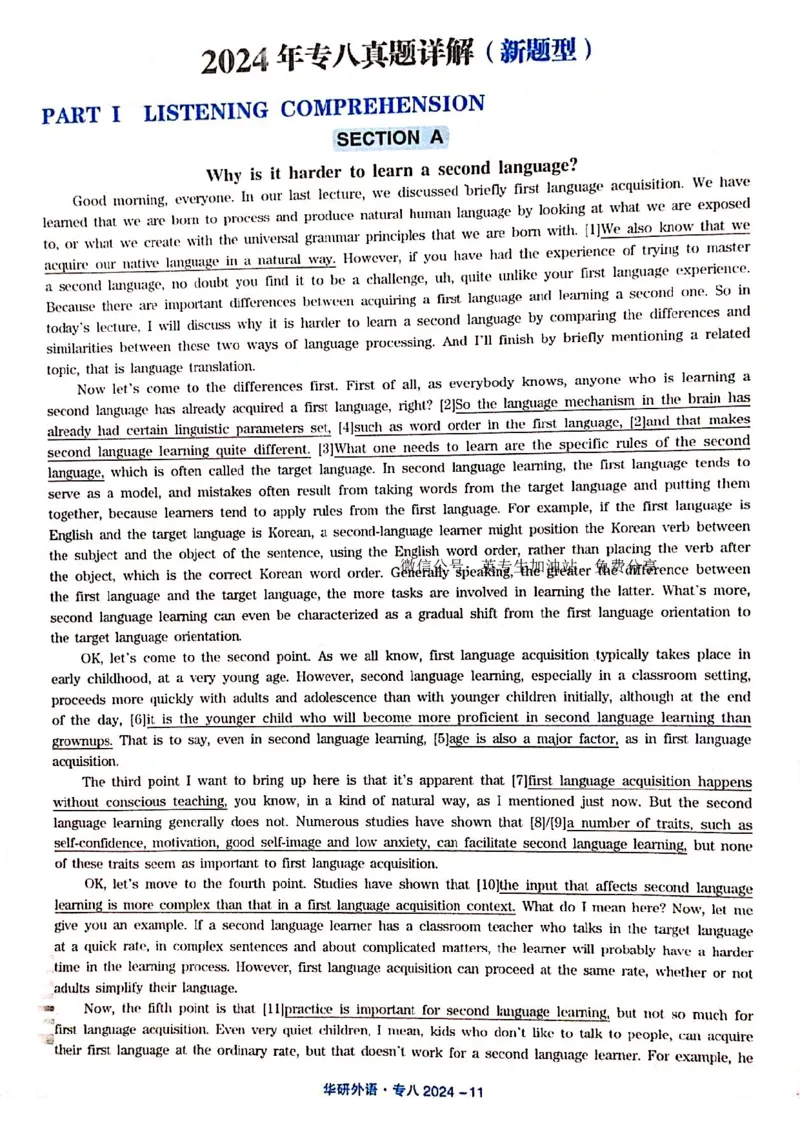
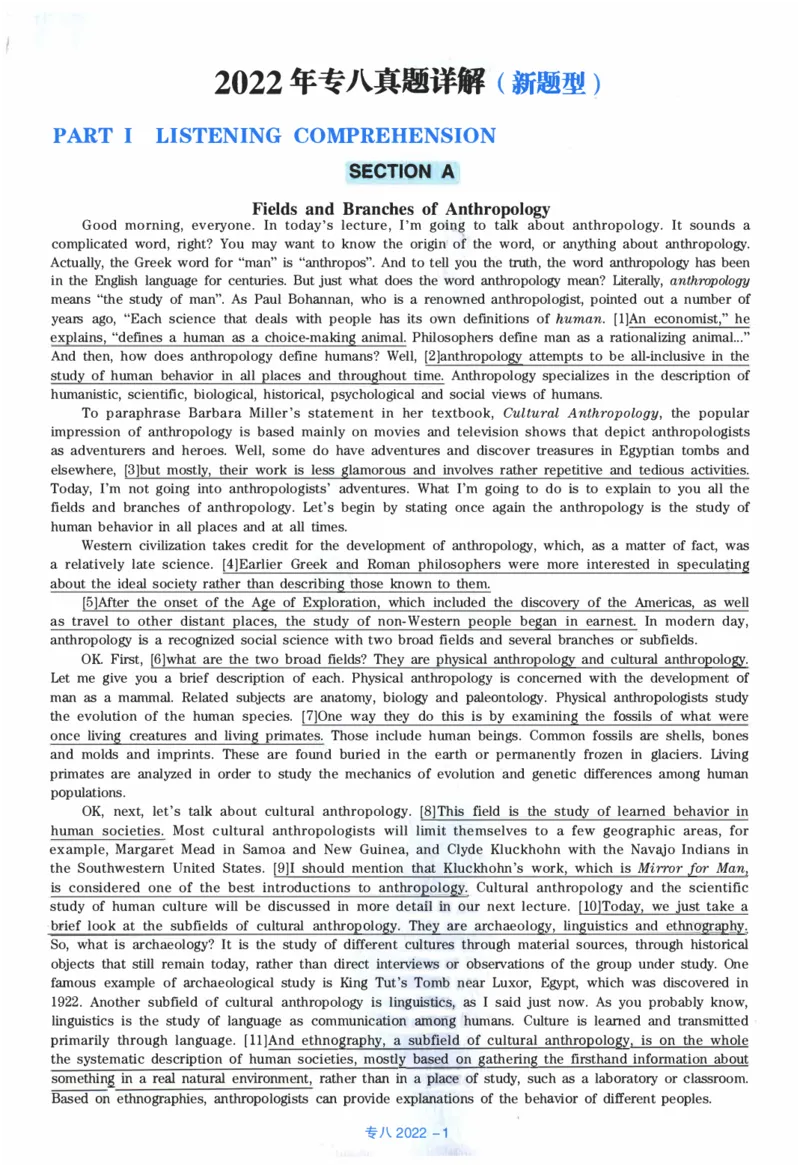
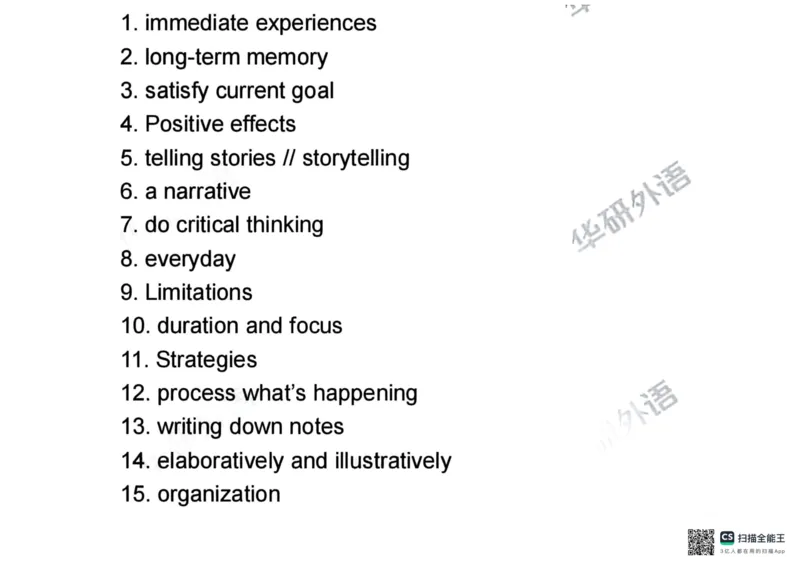
2011 年专八真题详解
(新题型优化)
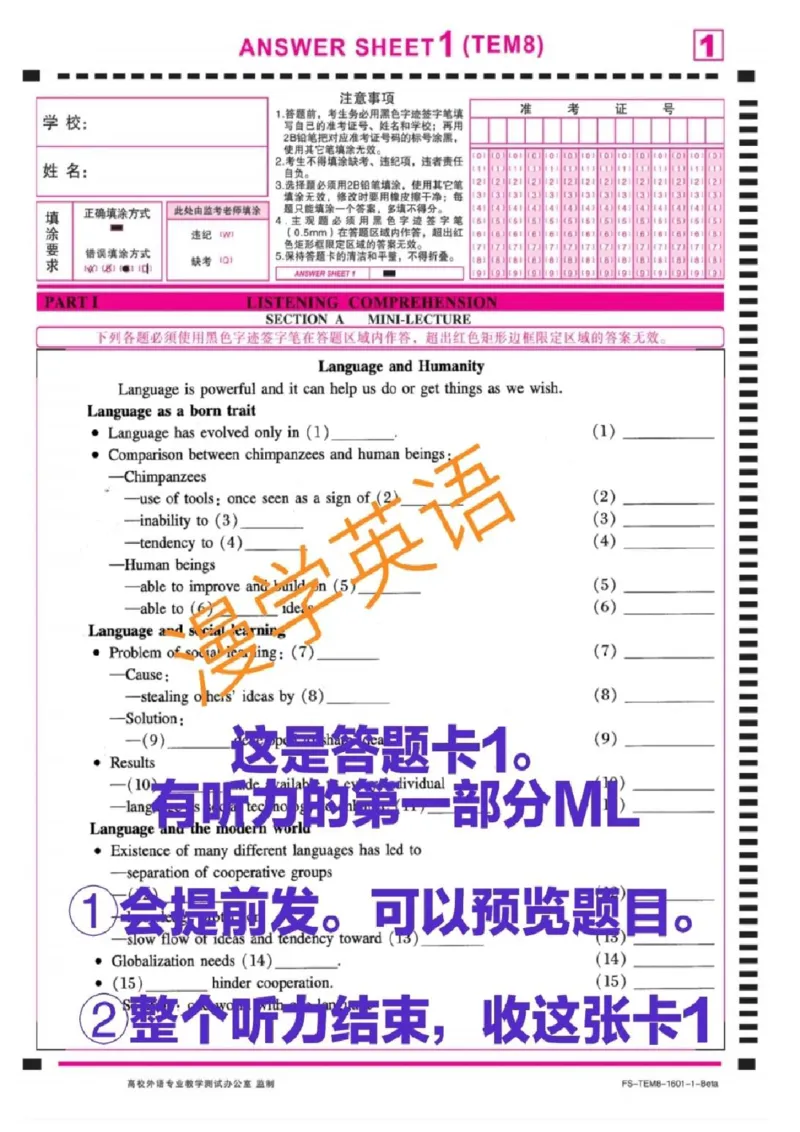
PART I LISTENING COMPREHENSION
SECTION A.....
Classifications of Cultures
Good morning, everyone. Today we'll look at culture or rather classifications of cultures. Usually when
we deal with different people, we deal with them as if we were all members of the same culture. Howev
er, it's possible that people from different cultures have different assumptions about the world, regarding
such important and basic ideas as time, personal space. And this is the view of Edward Hall. And Edward
Hall is an anthropologist who spent a large part of his life studying American Indians, their culture, their
language, but he was different from a lot of other anthropologists who just study one culture. He was in
terested in the relations between cultures, how cultures interact. What Hall believes is that cultures can be
classified by placing them on a continuum, ranging from what he called high-context to low-context.
OK, r1l what is a high-context culture? [2]A hi h-context culture is a culture in which the context of the
messa e or the action or an event carries a lar e art of its meanin and si nificance. [3]What this means
is that in. a hi h-context culture more attention is aid to what has been in and around the messa e than
to the message itself. Now let me give you examples. First in terms of personal space, generally speaking,
in a high-context culture, because there's greater dependency on group thinking, [4]people lean towards
heavier senso involvement or closeness to eo le. [5]And the have less res ect for rivac for ersonal
叩 If you go into that culture, people might stand closer when they're talking to you. They might touch
more and if they're jostled in a crowd, they won't feel violated. [6]And also people from a high-context cul
ture pay attention to body language. Because remember what I said, [2]the defi皿tion of a high-context cul
ture is that more attention is aid to the context of the messa e than to the messa e itself, and part of
the context is body language. Second, in terms of time, [7] eo le in hi h-context cultures are considered to
have what is called a ol chronic attitude toward time. Here " ol " means multi le and "chronic" means
time. What this means is that they believe people, things, events have their own time and there can't be a
standard system of time for everything. What this leads them to believe is that [8]you can't emphasize
punctuality. Things happen when they are supposed to happen. So there's a different attitude toward time.
There is no set standard of time. You can't control time. Everything has its own sense of time. So it's a
culture that pays little attention to time, to clock time.
Now, let's move on to low-context culture. A low-context culture is just the opposite. [9]A low-context
culture is one in which the messa e the event or the action is a se arate enti havin meanin onto it
self re ardless of the surroundin s or the context. That the messa e the event the action has meanin in
itself. So what this means in a low-context culture is that people pay more attention to the event itself
rather than to the context which surrounds the event or the message. For example, in terms of personal
space again. There's more emphasis on individuality, so the concept of privacy is very very important, or as
.
,. before as I said, in a high-context culture they might not even be concerned with privacy or personal
space. But in a low-context culture, there's a feeling that we each have our own personal space. If you get
too close, if you don't knock on doors before entering, that's an invasion of privacy; people feel violated.
There's a respect and a desire for privacy, [lO]and ou also see that eo le mi ht a less attention to
body language because as I said the message is, the message is everything. [ll]They are not going to wor-
about all the details around it. What ou sa is the im ortant thin or what ou do is the im ortant
也 Another example of a low-context culture is people's attitude towards, time. In terms of time, I said
before there was a polychronic sense of time in a high-context culture. What do you think there would be
in a low-context culture? Monochronic! Right! [12]A monochronic sense of time and b that we mean that
专八2011 -11there is one time. And that concept means that people in a low-context culture believe that there's one
standard of time and that should be for everything. And so I'm not willing to hear "Oh, the traffic was
heavy. That's why I am late." or "Oh, I slept late." [13]Peo le in a low-context culture wotild be much
more u set with lateness because the feel that eve one should follow the same time· there shouldn't be
all this flexibili with time and the e ect unctuali . And [ 14 ]they look at time as almost a commodity
that they use expressions like "use time", "to waste time", "to spend time" or "time is money". All of these
expressions reinforce the concept that time is actually something you can hold onto.
So what this is all about is that Hall stresses that people need to be aware of these different assump
tions or concepts about reality. And he thinks that this has all kinds of relevance no matter what you're
doing, if you're in business, negotiations, interpersonal relations, if you're dealing with people from·different
cultures in any way, it's going to affect every part of your life. [15]In any multicultural situation, these as
sum tions need to be taken into account for successful interactions.
OK Today, we've taken a brief look at Edward Hall's view of culture, mainly his classification of high
or low context culture with some examples. Next week, we'll look at some more examples of cultures on
the continuum between high-context and low-context cultures.
1. High-context celture 【解析】在第一种文化下,人们的时间观念没那么强,
【解析】原文介绍了两种不同的文化,第一种是”强语 不会强调 ..,-,...,寸 时、 "( you cant ,emphasize punctuali-
境文化"(High-context culture)。 提纲中第二大点的 ty)'即他们对守时的关注不多,故答案填punctuality
Low-context culture给了本题很大的提示。注意首字 即可。
母要大写。 9. in message itself II in event // regardless of sur-
2. beyond the message II in context II depending on roundings II independent of context
context [解析】在弱语境文化下,信息、事件、动作是独立实
【解析】原文提到,在强语境文化中,信息所在的语境 体,其意义不依赖语境或环境而独立存在。 对原文稍
包含更重要的意义和信息。 也就是说,意义不在于信 加概括可得此答案。
息本身, 而取决于语境, 故答案可填 beyond the 10. body language
message, in content或depending on context。 【解析】在弱语境文化下,' 人们较少关注身体语言
3. the context · - (people might pay less attention to body lan-
【解析】原文 pay attention to 的宾语是 what has guage) , 答案填body language。
been in and around the message, 是对 the con 11. message // message itself // words or actions
text 的解释 , 后文又明确说 the context of the 【解析】弱语境文化下人们不太关注语言(message)
message, 故答案为the context。 以外的细节,“话语”和”行为”才是最重要的。 原文用
4. heavier sensory involvement // closeness to people 的是 what you say or what you do, 可概括为
【解析】原文从两个角度(私人空间和时间观念)举例 words or actions或message (itself)。
阐述强语境文化。 从私人空间的角度阐述时提到,人 12. monochronic // one time
们倾向于身体的更密切接触,故答案为 heavier sen 【解析】原文讲到,弱语境文化下人们对时间的概念
sory involvement 或closeness to people。 是monochrome, 之后对 monochronic进行的解释
5. privacy // personal space 是只有一个统一的标准时间(… by that we mean
【解析】讲座明确提到,在第一种文化中,人们对隐私 there is one time), 故答案为 monochronic 或 one
和私人空间没那么在乎(they have less respect for time。
privacy, for personal space) , 答案两者取其一即可。 13. lateness // unpunctuality // flexibility with time
6. body language 【解析】在弱语境文化环境下,人们期望守时,讨厌迟
【解析】本题考查说明私人空间的第三个例子,即强语 到。 原文用了 upset with lateness, expect punc
境文化下人们注重身体语言。 故答案为 body Ian tuality, 因此答案可直接用 lateness, 也可用 un
guage。 punctuality或 fle�bility of time。
7. multiple // poly chronic 14. commodity
【解析】原文用了 polychronic一词说明强语境文化的 【解析】本题与上题紧密相连,在讲完上题内容后,原
时间概念,而之后立刻解释了该词的含义,即poly意 文马上提到人们几乎把时间看作是一种商品(they
为multiple。 故答案为multiple或polychronic。 look at time as almost a commodity) , 故答案填
8. punctuality commodity。
专八2011 -1215. importance // influence 由此可以推断了解不同文化背境对成功交际(sue
【解析】原文在结论处指出,在跨文化交际中,要进行 cessful communication) 具有重要意义及影响力,
成功交际,人们应该把文化差异这一因素考虑进去, 故此空应填importance或influence。
S�CT�ON B
Part One:
W: Good morning, Dr. Harley. Thank you very much for coming on our radio talk We know that you are
an applied linguist specializing in second language acquisition.
M: Right.
W: So, today, urmm… we'll look at this issue. Now, first, Dr. Harley, could you please tell us what is sec
ond language acquisition?
M: Well, [l]second Ian ua e ac uisition is "ha ens when a child or adult has alread become com etent at
a lan ua e and then urmm... the attem t to learn another."
W: OK, most people think, including me, [lOA]it is difficult to learn another language. What are the rea
sons? Why is it so?
M: Well, there are a number of reasons for this. Urmm… 丘st, there have been research studies. [2]归
have shown that some as ects of lan ua e learnin es eciall s tax are more difficult be ond a cer
tain age, say after around 12 years of age.
W: So, age plays an important role in language learning?
M: Yes. But that's not the only reason.
W: Oh, is that so?
M: Yes. For example, umm, time and interest. Old children and adults often have less time and motivation
to learn a second language.
W: Mm…
M: Another is related to the similarities and differences between one's mother tongue and the second lan
guage. We fmd that learners will experience difficulty when their mother tongue and the second lan
guage they are learning differ. In general, the more idiosyncratic a feature is in a particular language,
relative to other languages, the more difficult it will be to acquire.
W: Perhaps this is the key issue. [lOA]Differences between lan ua es cause lan ua e learnin roblems.
M: Well, this may be one of the issues here, [3]but this cannot be the whole sto as not all differences
between languages cause difficulty. Let me give you an example.
W: OK.
M: [3]Research has found that man errors b Czech s eakers leamin En lish were made on s tactic
constructions in which the two lan ua es do not differ.
W: Oh, really? The picture is more complicated than we've imagined.
M: Defirlitely yes. Each language learning situation is different. So reasons vary a lot from case to case.
W: Now, Dr. Harley. Since learning a second language is a difficult process, you know, in one way or an
other, are there any methods, so .far, effective methods to teach a second language?
M: There again. No method is· absolutely effective in all situations. Some may prove effective, others may
not. I mean, all depending on specific conditions. [10D]But generally speaking, there are a number of
methods that have been used to teach a second lan ua e.
W: Could you mention a few?
M: For instance, there is [4]the traditional method. This method is based on translation from one lan ua e
to another and it emphasizes grammar teaching.
W: Mm…
M: And [4]then ou have direct methods which focuses on conversational skills and all teaching must be
carried out in the second language.
W: Oh, I see. Any other method?
M: Yes. For example, [4]the audiolin ual method. This method em hasizes s eakin and listenin before
reading and writing.
专八2011 -13W: How interesting!
M: Then you have [4]the inunersion method. This method teaches learners exclusive!. throu h the medium
of the second language.
W: How?
M: [5]Well it sim 1 means that ou cannot s eak mother ton ue. Eve hin must be done in·the Ian ua e
you are learning. To me, the most natural method of learning a new language is what I call submer
sion. That is, to go to that country and be surrounded exclusively by speakers of that language.
1. What is second language acquisition according to Dr. Harley?
[C] 【解析】本题问 Dr. Harley 对第二语言学习所下的定义。 Dr. Harley 的回答是 ” 小孩或成人在已经掌握一种语言之
后, 再试图学习另一种语言 , 就是第二语言的学习。 "C 项 “ 学习除母语之外的另一门语言 ” 即符合 Dr.
Harley
所说的第二语言学习的特征,故为本题答案。
A “ ” D ” “ Dr. Harley
【点睛】 项 在母语可 以输出之前学习 一门新的语言 和 项 在语言能力发展时期学习一 门外语 均与
” ” B “ “ ” “
说的 已经掌握一种语言之后 这一点不符。 项 在母语开始输出之后学习 一门新的语言 有点迷惑性,但 开始输出
“ B
并不等于 巳经掌握"'故 项不准确。
2. What makes language learning more difficult after a certain age?
[B] [解析】在采访的开头,主持人问:”为什么很多人认为学习第二门语言较难? " Dr. Harley 回答,一定年龄(如 12
(syntax), B “ ”
岁)以后,语言学习的某些方面,特别是句法 较难掌握。 故 项 学习句法的能力下降 为答案。
after a certain age ;A “ ” C、D
[点睛】听题时注意听清问题中 的 项 不 同语言间 的差异 和 两项所提到 的时间和动机因
素,均与学习者年龄无关,这三项都属于答非所问。
3. What does the example of Czech speakers show?
[D] 【解析】 Dr. Harley 谈到语言差异给外语学习带来障碍时,举例说明语言间的差异和相似处都会给语言学习带来障
D
碍:以捷克语为母语的英语学习者在学习英语的过程中对于与捷克语相同的旬法构造也常犯错误。 故 为答案。
]A C Dr. Harley Czech speakers
[点睛 项和 项在文中未提及,容易排除; 用 的例子说明不只有差异会带来学习语言的
B
障碍, 项与此正好相反。
4. What method does NOT advocate speaking?
[A]
【解析】
Dr. Harley
介绍了几种常见的语言教学方法。 其中,
traditional method
强调翻译和语法教学。 根据
di
rect method
中的关键词
conversational skills、audiolingual method
中的
emphasizes speaking 和 inunersion
method through the medium of the second language B、C、D speaking A
中的 可知, 三项都提倡 。故答案为 项。
【点睛】在听录音时,着重听这四个教学方法的介绍,边听边记下它们各 自 的相关细节信息。
5. What do we learn about the immersion method?
[C] inunersion method Dr. Harley inunersion method
【解析]本题问的是 的相关信息。 在对 补充说明时,提到用这
C ”
种教学法时学习者不能讲自己的母语,所用的事情必须用正在学的这门语言来完成, 项 在沟通中不允许使用母
”
语 与此相符,为本题答案。
A “ ” traditional method B “ ” audiolin
【点睛】 项 强调翻译和语法教学 是 的特征。 项 在开 口说之前不提倡阅读训练 是
gual method D ” “ Dr. Harley
的特征。 项 所有教学都必须在国外进行 颇具迷惑性,因为 还补充 了 一点个人看法,他觉得
inunersion method
出国让自 己完全浸入到这门外语的语言环境当 中是学习新语言的最地道的方法,但 是指完全使用
D
第二语言的媒介来教学,两者不能等同 ,所以 项也不对。
Part Two:
W: Thank you very much, Dr. Harley, for introducing some of the language teaching methods. Now let's
move on to something a bit theoretical. Since second language acquisition and teaching are a fascinating
area for researchers, are there any theories to explain second language acquisition?
M: Yes, [lOC]man theories and models have been ut forward b researchers so far. Toda I'd like to
mention the five h otheses ro osed b Ste hen Krashen.
W: OK.
M: The five hypotheses, or what he calls, the monitor model of second language learning.
W: What does it mean?
M: OK. The first hypothesis is the acquisition and learning distinction hypothesis. According to Krashen,
children acquire their first language largely unconsciously and automaticallY, [6]but adults could only learn a
2011 -14
专八second language consciously and effortfully. And adults could indeed acquire the second language, at
least in part.
W: Right. Then what's his second hypothesis?
M: His second hypothesis is the natural order in acquisition hypothesis. Basically, he means that the order
ing which learners acquire syntactic rules is the same in both languages.
W: Oh, that's something really new to me.
M: [8]The third h othesis is the monitor h othesis which is central to his theo . Here again, we come
across the distinction between acquisition and learning. According to this hypothesis, the acquisition
processes create sentences in the second language, right? But learning enables the development of a
monitoring process to check and edit this output. [7]The monitor uses lmowledge of the rules. That's
why, as I said just now, learning is a conscious process.
W: [7]This means in learnin ou use lmowled e of the lan ua e to make sure what ou sa or write is
correct. Is that so?
M: Yes. His fourth hypothesis is the·comprehensible input hypothesis. In order to move from one stage to
the next, the learner must understand the meaning and the form of the input. This emphasizes the role
of comprehension. [9]And finall the active filter h othesis. This su ests attitude and emotional factors
are also important in second language acquisition.
W: I guess Krashen's model has provided a useful framework for second language learning.
M: Yes, it indeed has and it has also proved to be one of the most influential theoretical approaches to
teaching a second language.
W: OK, Dr. Harley. Thank you once again for talking to us about second language acquisition.
M: Pleasure.
6. What can we learn from Krashen's first hypothesis?
[B] 【解析】本题问的是 Krashen 的第一个假说的相关信息。 这个假说讲的是习得和学习的区别,其中提到成人学习二
(adults could only learn a second language consciously and effo rtful
语是一种有意识去付出努力的行为
ly) ,B
项与之相符。
]Krashen A
【点睛 的第一个假说认为儿童的丹语习得过程主要是在不知不觉中 自 动进行的, 项的表述与此相反。 录音
C Krashen
中提到成年人至少在一定程度上可以 习得第二语言,故 项不对o 的这个假说并未对语言习得和语言学习 的
D
重要性进行比较, 项无原文依据。
7. Which hypothesis deals with the role of language knowledge in the learning process?
[C] Dr. Harley Krashen (monitor hypothesis)
【解析】 重点介绍了 的语言习得理论和其中几个假说。 其中监控假说 认
为,在语言学习过程中,学习者会用巳有的语言知识判断语言输出正确与否。 故答案为 C项。
monitor hypothesis Krashen
【点睛】细节题。 注意听清这几个假说的相关信息。 录音中说到 是 这套理论的核心 内容
时,要仔细聆听并做好笔记, 因为重要内容通常包含的信息都比较多 ,也很有可能成为 出题点。
8. What do we learn about the monitor hypothesis?
[B] 【解析】本题间 monitor hypothesis 的相关信息。 B 项 “ 它是 Stephen Krashen 的理论的核心内容 ” 正是对录音中
”
“第三个假说是监控假说,而这是他的理论核心 的同义表述,故为答案。
【点睛
l
录音提到
“
学习可以促使监控过程的形成, 以检查和编辑输出
(learning enables… to check and edit this
output)" (learning) A C “
可知,这种监控是在有意识的学习 过程中,而非在习得过程中产生的,故 项不对。 项 两种语言
” monitor
的 习得过程的顺序是一样的 是第二个假说的内容。 根据监控假说, 是对语言的输 出进行检查和编辑,不是针
D
对语言输入, 项不对。
9. Which hypothesis deals with the role of emotional factors in language learning?
[B] active filter hypothesis
【解析】本题问哪个假说讲的是情感因素在语言学习中的作用。 根据录音,最后一条假说
就提到了态度和情感因素对二语习得也很重要,所以 B项为答案。
【点睛】假如听不全相关的解题信息,也可以在听到 问题时通过对其他听得比较细致的选项进行排除来得出答案。
10. What topic is NOT discussed during the interview?
[B] Dr. Harley (A (D Krashen
[解析】整个访谈中,主持人和 探讨了语言学习的困难 项),外语教学的方法 项)和 的二
语习得理论(C项)。 文中并未对母语和二语的差异(B项)进行介绍,故答案为 B。
[点睛】细节题。 浏览选项,对各选项的关键词进行标识,运用排除法,在整个听音过程中兼顾着排除于扰项。
2011 -15
专八PART II READING COMPREHENSION
PASSAGE ONE 全文翻译画线点评
(1)只要时间允许,我和琼就会穿梭于直布罗陀的大街小巷。对英国人而言,家就是他的堡垒,因为他别无选
择。 在英国的街道上,即便是黄昏后的公园内也没有地方可坐。 [25]天气状况也常常不允许英国人出 门 因而他
们 自然就只能待在家中创造尽可能舒适的环境将自 己包裹其中。 那就是我们在利兹的生活方式。
(2)而这些南方人则心向户外。 在直布罗陀,家一般是在几步阴暗肮脏的楼梯之上的又小又挤的公寓房内。
在房里,一个、两个、甚至三个老人和他们的年轻小辈分住在几间照明很差的房间 内 。 一旦一个南方男人吃完
饭、换好衣服、拥抱过妻子、亲吻过孩子和父母后,就再没有什么能把他留在家中。 他匆匆 出 门 ,甚至早餐咖啡也
在当地酒吧喝。 在咖啡馆待上一段时间、食欲大开之后,他才迟迟归家吃午餐。 在家睡上一个小时午觉,他穿好
衣服又再次出 门 ,一直在外待到深夜。 他的妻子并不想念他,因为她自 己也在外面——-上午在市场,下午和其他
妈妈们一起,边晒太阳边照看孩子。
(3)[26]直布罗陀的普通家庭都没有起居室或客厅 [11]对他们而言 英国劳工阶层房子里的客厅简直就是
一种空间浪费 让人无法容忍 [26]安乐椅、沙发以及类似的家具他们闻所未闻 家里没有书架 因为根本没有
书 吃饭、聊天、喝酒都是围着餐桌坐在硬木椅子上进行的。 左右两边分别是餐柜和陈列枉 餐柜用最好的玻璃装
饰 陈列柜里装满了 家庭珍藏品、照片及纪念品 精美的枝形吊灯悬挂在餐桌上方 清楚地宣告这里才是家庭的活
动中心。 “温暖的家庭生活”在直布罗陀没什么意义。 [12]/[26]家是整个小镇或村庄·而温暖来自 室外的阳光。
(4)相比之下,我们北方的城镇就如同 由斗室组成的集体宿舍。 每当我们聚会的时候一以前是在教堂,现
在则是互不相干地在电影院或者是一本正经地在公众集会上 我们很少平等坦诚互处。 真正的社交和集体
精神只有在我们的酒馆里才幸存下来,但在英国 ,即便是酒馆也是分阶级的。
(5)在地中海沿岸一带 ,家仅仅是避难所和休养地。 大街、市场这样的户 外空间才是人们共同 生活的场
所。[12]这儿有着比我们所知道的强烈得多的社区感情。在拥挤、局促的直布罗陀 由于其内部复杂的联姻关系、
其利益的一致性及其遭遇围城后的幸存感 人们可以眼见心感这是一个融洽和谐的社会
(6)[13]在这个小小的城镇里 所有政府部门一应俱全:总督、首席部长、议会、新闻部 门 国防部 所有这些
都是微型的 都赵尺可及。 住在这样的小城如同上一门公民学的强化课程。 在这种环境里 不管好坏 一切都无
所遁形 一个人的成功会为人所知 受到赞许·一个人的失败也会马上公诸于众。 这里有最强的社会意识 因此
人们总有着压力要表现出好的社会行为、要礼貌、要友好。 直布罗陀尽管有各种缺点,却是个最友好、最宽容的
地方。 从愤世嫉俗而又千人一面的大城市一下子到 了这儿,我们尽情享受它快乐的人格主义。 就如同是它被流
放的儿女,我们回忆它的时候总是充满了真挚的喜爱之情。
11. [B]【定位】根据题干直接定位到第 2、3段。
(解析】上文提到直布罗陀的房子都是又小又挤的,结合本旬意思:”对他们而言,英国劳工阶层房子里的客厅简
直就是一种空间浪费,让人无法容忍"�这表明英国劳工阶层家里的客厅很宽敞,故而选项 B正确。
【点睛】句意推断题。 选项 A"英国劳工阶层的家与直布罗陀人的家相似”与第 3 段的内容相反,很好排除;对直布罗陀
人来说英国劳工阶层的客厅是在浪费空间 ,但不能因此就说英国劳工阶层家庭浪费 了很多空间 ,排除 C;D 用词虽然和
原文一样,在时态运用上却曲解原意,因此应排除。
12. [A] 【定位】根据题干中的 a much stronger sense这一比较级形式定位到第5段。
(解析】第 5段中明确告诉读者他们有着“强烈得多的社区(community)感情”,结合该段最后一句“人们可以眼
见心感这是一个融洽和谐的社会”可推断出直布罗陀人的"togetherness(不分彼此的集体感)”更强烈,这从第3
段最后一句的前半句话也可得到印证。 因此选项A正确。
(点睛】细节推断题。 选项 B 和 C 是第五段最后一句中的只言片语,不是答案。 选项 D"悠闲”�生文中第 2 段似有线索佐
证,但这方面文中并没有和英国人比较的意思,所以也应排除。
13. [B]【定位】根据题干中的 people in Gibraltar tend to be well-behaved定位至最后一段。
(解析】B"来自政府的不断压力”是对原文相关句子的曲解。原文中提到,在直布罗陀,�女府部门规模虽小但功能
齐全,公民意识强烈,这样的环境造就了要求自己行为良好的压力。这种压力并不是政府直接施加的,故B是答案。
【点睛】细节判断题。 本题可采用排除法。 A"政府结构的完整性”、C"城市规模小”及 D"事情的�明度”是对最后一段前
三句的概括和解释,它们相互作用 ,共同导致了直布罗陀人行为端正,因此均可排除。
专八2011 -16难句分析
• Talking and drinking, as well as eating, are done on hard chairs round the dining-table, between a side
board decorated with the best glasses and an inevitable display cabinet full of family treasures, pho
tographs and souvenirs. (Para. 3)
[分析】本句看似较长,但不难理解。全句主干是 … 采用了被动语态。主句后接了三
Talking and drinking are done,
个介词短语,分别是 和 意在说明直布罗陀人聊天
on hard chairs, round the dining-table between a sideboard,
小酌的具体方位。 过去分词短语
decorated with
…修饰
a sideboard,
说明其装饰;形容词短语full
of...
修饰
cabi
说明里面陈列的物品。
net,
难词突破
有食欲的,促进食欲的
cocoon /ka'ku:n/ n. 茧,蚕茧 appetitive /a'pehhv/ a.
客厅;接待室 岔加 复杂的;精心制作的
parlour /'pa:la/ n. elaborate /I'I rit/ a.
枝形吊灯 温暖舒适的家庭生活
chandelier /,J岔nd1'1Ia/ n. hearth and home
v. (使)集合,聚集 爱交际的,合群的
congregate /'kol)gnged/ gregarious /gn'geanas/ a.
际 公共的,集体的 a. 局限的;受限制的
communal /' mjunl/ a. circumscribed /sa:kamskra1bd/
siege /si:d3/ n. 围困,围攻 anonymity / 忿 na'mmah/ n. 匿名,无名
v. 纵情享乐;放纵自己 个人至上论;人本主义
luxuriate /IAg'zjuaned/ personalism /pa:sanahzm/ n.
PASSAGE TWO 全文翻译画线点评
对于办公革新者来说 “无纸化”办公这一梦想未得到实现 这是高科技狂妄 自 大的典型例子。 现在
(1)[27]
的办公室职员 比以往任何时候更深陷于纸堆当 中。
(2)但经过几十年天花乱坠的宣传后,美国的办公室人员可能最终会告别他们对纸张的迷恋。 在美国,对纸张
的需求以前总是超过经济的增长速度,但在过去两三年间, 尽管经济发展态势良好 纸张的销量却明显放缓。
[14]
(3)分析家们把纸张销量下滑的原因归结为电子数据库和数字化通讯系统的发展。 但要摆脱对纸张的热望
绝不是一件容易的事。
人们很难改变旧 习惯,“一家通讯物资公司的董事长 如是说。 “纸张所具有的一些功能
(4)" Merilyn Dunn
是电脑显示屏所无法提供的。 这些功能一方面是纸张的优势,一方面却又是它的不足。 ”
世纪 年代早期至中期 经济的繁荣和台式电脑打印机的改进促成了纸张的销量以每年 到
(5)[28]20 90 6%
的速度增长。 台式电脑打印的便捷使得办公室工作人员 乐于将所有东西打印 出来,毫不费力且成本极低。
7%
(6)但目 前,美国纸张的销量的增长率正在放缓,增长率每年下降
0.5%
左右。
Dunn
女士说,
2004
年至
2005
年间, 尽管整体经济强劲,普通办公用 白纸的销售增长率将不足 。 说 产生这种变化的一个主要
[14] 4% [14]Dunn
原因是 约 的劳动力在进入就业市场时 办公室就已经配备了 电脑—一-这在历史上是笫一次
47%
一家纸浆和纸业经济顾问公司 副总裁 说:"我们终于看到工作场所人均耗纸量的减少。 更
(7) John Maine
多信息以电子方式传输,越来越多的人适应了 以电子文档形式存在的信息,无需打印多个备份。 ”
另外 先生指出 纸张使用的变化也源于白领就业市场的不景气 因为 白领是办公纸张消费的
(8)[14] Maine
主要动力。
真正的更新换代应该说是纸的使用方式的改变。 随着先进可靠的办公网络系统的问世 资料已不再
(9)[14]
以纸张的形式存档。 “文件归档”这一秘书技能正在从工作职责中消失。 如今,许多数据可能会永远以其原始的
数字形式存档。
微软公司研究员 说,对纸张态度的转变最终引起了造纸公司的注意。 “突然之间 ,造纸
(10) Richard Harper
业开始思考,`我们需要对人们使用纸张的行为习惯有更多 了解,'”他说。 ”他们以前从未这样问过就想当然地认
为 ,每年 万的销量是经济增长的必然结果。 ”
7000
为了减少使用纸张 一些公司致力于把数宇和纸张功能结合起来 比如施乐公司正在开发电子纸:薄
(11)[15]
薄的数宇显示器能显示电子笔写下的符号,就如同在纸上写宇一般。 所写符号可以以数据的形式轻易清除或储存。
阿诺托公司想到 了另一个主意一—-智能纸。 这使得电子笔在特殊的磁性墨水打印的 页面上记下的数
(12)
据同时显示在计算机屏幕上。
一名技术预测员 辩称,即便有着这样的科技进步,数字化存储功能的改进仍然不利 于“无
(13) Paul Saffo
纸化”。 在他 年发表的极具预言性和隐喻性的文章《电子彩罐》中, 指出 电子数据量的增加
1989 [29]Paul Saffo
必然导致对纸张的需求增大
专八
2011 -17(14)Saffo 先生写道: “ 当今的信息工业如同一个巨大的电子彩罐,它由环绕着电子 内核的薄薄的纸张外壳
”
组成。 “增长中的纸张外壳 最引人注 目 ,但产生这层外壳的隐蔽的电子内核要大得多 ,而且增长速度更快。 结果
”
就是我们正在实现无纸化的同时却对此浑然不觉。
(15)[29 Saffo 说 如同数字化革新增加了纸张消费一样 可减少面对面交流的视频会议同样增加了商务旅行量。
(16)[ 29]" 这是信息时代最具讽刺意味的事情之一" Saffo 说, “ 这其实是个常识问题: 你通过电话或电脑与
”
某个人交谈得越多 ,会面就变得越不可避免。 对航空业来说最好的礼物就是互联网 了 。
* 本文节选 自 The Christian Science Monitor (《基督教科学簇言报》) 2005 年 12 月 12 日 一篇题为 "What
ever happened to the paperless office?"
的文章。
14. reason for the slowdown in paper sales 8 9
[B]【定位】根据题干中的 定位到第6、 、 段。
“ 2 a healthy
【解析】选项 B"美国经济增长缓慢 显然与文中提到的事实不符,文中第 和第 6段分别都提到了
economic scene strong overall economy,
和 均表明美国经济良好,发展强劲,故而选项B是答案。
”
【点睛】细节判断题。此题最好用排除法解答。第 6段可找到对应选项A"劳动力计算机技能提高 的句子;第 8 段可找到
” ”
对应选项 D"就业形势发生变化 的句子;第 9段可找到对应选项 C"纸张使用模式发生变化 的句子,故均可排除。
15. Xerox Corp. and Anoto Group
[A]【定位】根据题干中的 定位到第 11段。
【解析]本题考查施乐公司和阿诺托公司的革新特点。 这是两个为第 11段首句 “ 为了减少使用纸张,一些公司正
” ”
致力于把数字和纸张功能结合起来 所举的例证,因此选项A"纸张和数字化形式整合使用 是答案。
“
【点睛】例证题。选项 B"从纸张到数字化形式转变 过度推断,据文意可知,信息数字化并不能让办公室摆脱对纸张的依
“ ”
赖,反而令纸张需求增加,故从纸张到数字化的过渡与文意明显相悖;选项 C"计算机屏幕应用 和选项 D"写作新风格
断章取义,均是例子中 出现的片言只语制造的干扰。 因此只要定位正确,这几个选项都很容易排除。
16. [A]【定位】需把握全文。
【解析】全文不是从一个角度而是从多个角度探讨 “ 无纸化 ” 这一复杂问题的,作者的探讨包括了对无纸化理想
努力的具体例子和特点、数字化信息时代纸张使用量并不减少的原因等等,因此选项A是答案。
”
【点睛】作者态度题。 B"他同意文中所引 的一些人的观点 句意模糊,文中作者态度客观,没有表现出 明显的赞同某些人
”
而不赞同另 一些人的观点 ,所以不是答案;C"他偏好数字化革新 也明显带有倾向性,与作者�观的态度相违背;D"他
”
认为航空公司从数字化时代获益最多 更是偏离了 文章的中心,完全文不对题,因此均可排除。
难句分析
• It would allow notations made with a stylus on a page printed with a special magnetic ink to simultane
ously appear on a computer screen. (Para. 12)
It would allow notations to appear,
【分析】本句虽不太长,但修饰成分较多,考生需仔细分析。 全句主干为 是
“主+谓+宾+宾补 ” 结构。 过去分词短语 made with a stylus …修饰 notations, 说明 notations 如何产生;另一个过去
printed wi page, page
分词短语 山.. 修饰 说明 用什么墨打印。
难词突破
drone /draun/ n. be drown in
从事单调工作的无聊的人 陷于,沉浸于
hype /ha1p/ n. obsession /ab'seJ an/ n.
大肆宣传 痴迷;着魔
outstrip /aut'stnp/ crave for
v. 做得比……更好;超过 渴望;渴望得到
reside in lackluster ooklAsta/ a.
存在千,属于 八 无光泽的,暗淡的
paradigm /'p岔rada1m/ n.
范例;样式
advent /oodvent/ n.
出现,到来
chive /'a:ka1v/ n. secretarial /,sekn'teanal/ a.
扛 档案文件 秘书的
stylus /'sta1las/ n. simultaneously /s1mal1temiaslI/ ad.
指示笔 同时地,同步地
prophetic /pr ehk/ a. boost /bu:st/ v.
叶 预言(性)的,先知的 增加,提高
PASSAGE THREE 全文翻译画线点评
(1)1941 年,乔治·臭威尔 曾写道,英国是 “ 世界上阶级性最强的国家 ” 。 但他只说对了 一部分。 社会向来存在
等级制度,一些团体占据着顶层。 [30) 在印度比哈尔邦 一队叫 兰比尔塞纳的上层种姓雇佣兵为 了 维护地位甚至
不惜杀戮。
(2)[30] 以此来衡量 英国的阶级观念似乎算不上根深蒂固 [31) 但从另一方面讲 奥威尔是对的 而且至到
今天也是对的。 英国调查机构尤格夫 ouGov 的一项新调查显示 英国人对 自 己和他人一的阶级身份出奇地敏
30 30 48%
感 并且 他们仍然认为阶级身份难以改变 调查显示, 岁 以上(包括 岁)的受调查者中, 的人预计 自 己
2011 -18
专八最终能比父母更富裕;但只有 28%的人预计能进入另一个阶级。 超过三分之二的人认为 自 己以及子女都脱离
不开他们 出 生的那个阶层。
(3)这个所有人都无法摆脱的东西在今时今日到底由什么构成呢? 当人们判定他人处于哪个阶层时关注的
又是哪些因素呢? 根据尤格夫的调查 最有效的识别标准依次为职业、住址、口音和收入 收入位列笫四位这
[17]
点向我们揭示:虽然一些在过去用以界定某个特定阶级的行为习惯和处世态度已经不再局限于那个阶级 但是
阶级所涵盖的内容依然不只是财富这样的明显特征。
(4)[18]职业是判断一个人所处阶级的最为可信的标准 但是劳动力 市场的变化使这一标准的运用 变得比臭
威尔写那句话时的时代难得多 体力劳动者在劳动大军中的比例正随着农业和重工业的萎缩而大幅减小 与
[19]
此同时白领的数量却在激增。 尽管发生了如此巨变,当被问及自 己属于哪一阶层时,大多数英国人在2006年的选
择仍与他们在 年的选择相同。 所以,职业这个曾经被视为相当可靠的判定阶级身份的标准已经变得不可靠了。
1949
(5)今年早些时候 Expertian公司所作的一份调查显示出 了这种相近类型工作的趋同性对模糊阶级界限所
起的作用。 Expertian让许多从事不同工作的人判断 自 己属于工人阶级还是中产阶级。 [18]与会计师、程序设计
员和公务员相比 秘书、服务员和记者明显更倾向于把 自 己归为 中产阶级。 许多新的白领工作并没有比先前那
些蓝领工作提供更多 自 主性或更好的前程。 尽管区分阶级的标志性因素变得越来越模糊,但尤格夫调查的受访
者中,71%的人仍旧认为他们能很容易判断他人的阶级身份。
除了 劳动力市场的变化外 另外两个因素也使阶级的界限变得模糊。 首先 英国 自 年来接收了
(6)[19] 1945
大批外来移民。他们很难用现有的阶级观念加以界定,但他们有自 己须面对、攀爬的社会阶梯而奋斗。而 20世纪
90年代后期,更庞大的新移民涌入,使得阶级划分变得更加模糊了 。
其次 获取名誉的门槛有所降低 在英国 ,像贝克汉姆和他的妻子维多利亚这样的名人阶级正在迅
(7)[19]
速壮大。 他们形成了一个类似于贵族的阶层,但凡有才华的人,或至少是那些敢于突破束缚以迎合电视制作人
要求的人,都可以进入这一阶层。 这一现象也使得阶级的定义变得更为复杂。
(8)然而,如果能够选择的话,大多数英国人还是倾向于把自 己归入出生时所属的阶层,而不是他们的工作
或收入所代表的那个阶层。 [20]这常常使他们表现得更谦虚 把 自 己归到稍低的阶级中 如 22%的白领在接
受尤格夫调查时 把 自 己归为工人阶级。 同样地,Expertian 的调查发现,十分之一声称 自 己属于工人阶级的成
年人事实上属于最富裕的有产阶级,超过 万个年薪在 万美元以上的家庭把自 己归为工人阶级。 也有人
50 19.1
声称 自 己属于比收入和工作所表明的阶层更高的阶层,但是这种情况非常少。
(9)如果阶级已无法明确体现一个人的社会、经济甚至政治地位,它还值得我们关注吗?答案也许是肯定的,
因为在大多数情况下,阶级仍旧与教育程度和职业期望有着莫大的联系。
* 本文节选 自 The Economist (《经济学人》)2006 年 8 月 10 日 一篇题为 "Class: But did they buy their
own furniture?"的文章。
17. [B]【定位】根据题干直接定位到第3段。
【解析】本题考查对句子隐含意思的理解。 “阶级所涵盖的内容依然不只是财富这样的明显特征”,反过来说,就
是”阶级具有的内涵要比金钱更微妙",故而选项 是答案。
B
【点睛】句意理解题。 与原句前半句意思刚好相反,很好排除; 忽略了原句的转折关系,它是对前半句的解释,而非对
A C
此题提问的后半句的正确理解;容易误选 D"收入在决定人的阶级归属上不重要“。 按照文意,虽然收入仅排在第四位,
但它仍是判断阶级的最有效的标准之一,所以不能说它是“不重要”的,故排除。 注意 B 中的 more subtle 和原文中的
less blunt 同义。
18. [C]【定位】定位到第4段。
【解析】第4段首句的前半旬明确指出“职业是判断一个人所处阶级最为可信的标准”,这和 C"职业和阶级间不
再有联系”相反;此外,即便这段最后一句说职业已不是最可靠的判断标准,但也绝不能说它们之间没有任何关
系。 故C是答案。
【点睛]细节理解题。选项 A、B都能从第 5段第 3 句话推断出来:”与会计师、程序设计员和公务员相比,秘书、服务员和
记者明显更倾向于把 自 己 归为 中产阶级”,这既说明选项 A"白领会把 自 己归于不同的阶级”;也说明选项 B"不同工作
的人可能把 自 己归于同一阶级",故均可排除。 选项 其实是对第 段首句后半句话的正确理解,故也应排除。
D 4
19.
[CJ【定位】定位到第
4
段。
【解析】第 段第 句说到“体力劳动者在劳动大军中的比例正随着农业和重工业的萎缩大幅减小,而与此同时
4 2
白领的数量却在激增”,这表明工作类型从整体上来说并未减少,故选项 C 的说法错误,故是本题答案。
【点睛】细节判断题。 此题用排除法解答最迅速。 选项 、 和 分别可在文中第 、 段找到对应表述,故均可排除。
A B D 6 7
专八2011 -1920. [A]【定位】根据successful white-collar workers choose to stay in the working class 定位到倒数第 2 段。
.
【解析】此题定位准确后,答案就出来了。 文中明确提到”这常常使他们表现得更谦虚一把自 己归到稍低的阶
级中"'所以白领这样做是显得他们谦虚,选项 A是答案。
[点睛】细节判断题。 选项 B"显示 自 尊”与常理不符,可首先排除;选项 C"自 吹 自擂“刚好与句意相反,也应排除;选项 D
为强干扰项,白领这样说本身就是低调的说法,但题 目 问的是这种低调的说法暗示什么 ,A项比 D 项更为合适。
难句分析
• Britain's fast-growing ranks of celebrities — like David Beckham and hls wife Victoria - form a kind of
parallel aristocracy open to talent, or at least to those who are uninhabited enough to meet the requests
of television producers. (Para. 7)
【分析】本旬的主干是 Britain's fast-growing ranks of celebrities… form a kind of parallel aristocracy。 like
David Beckham and his w廿e Victoria是插入语,举例说明前面的 celebrities; 形容词短语open to talent, or…
producers修饰aristocracy;定语从旬who are... producers修饰those。
难词突破
hierarchy /'ha1ra: k1/ n. 等级制度;统治集团 surge /s3: d3/ vi. 洋溢;猛增
huddle /'队di/ v. 聚集在一起;蟋缩 autonomy /:>:'tonam1/ n. 自治;人身自由
muddle /'mAdl/ n. 混乱,杂乱 v. 弄乱 scramble /'skr妥mbl/ v. 攀登;争夺
aristocracy /,aens'tokras1/ n. 贵族;上层社会 attainment /a'tem/ n. 达到;造诣
PASSAGE FOUR 全文翻译画线点评
(1)列车肃穆地呼啸向前。放眼窗外,只感觉到德州平原好像在向东奔驰。一望无琅的绿野,灰色的灌木和仙
人掌错落有致,三五成群的木屋,浅绿色的嫩树林,这一切都向东疾驰, 迅速地越过地平线 像坠落入悬崖一样
[32]
消失在远处。
(2)一对新婚夫妇在圣安东尼奥登上了 火车。 [21]新郎的脸因长期凤吹日 晒而泛红 身上崭新的黑色新郎装
把他那双砖红的手衬得格外显眼 像一直在忙不停似的 他时不时恭敬地打量 自 己的装束。 新郎双手置于膝盖
上 像等待理发的人一样坐着 他还偶尔肠膜地偷看一眼其他乘客。
(3)新娘不算漂亮,也不算年轻。她身穿一套蓝色开士米婚纱,上面装点着小绒花和很多钢制纽扣。 [21]新娘
不时转头留意蓬松的袖子 袖子僵硬且高耸 这让她感到些许尴尬。 很显然,她以前就是介、烹任好手,以后也会
尽职尽责地为家人煮食。 原本她有着一张平和、鲜有表情的脸。 可上火车时, 一些乘客无意的端详让她有点
[23]
脸红 这样平凡无奇的 乡村人脸红成这样 实在难得
(4)看得出这对新人很高兴。 新郎微笑着问新娘:"乘坐过豪华客车吗? ”
(5)新娘回答道:“没,我没坐过。 这真的很棒! ”
(6)新郎又说:”当然棒! 待会儿我们就去餐厅好好吃上一顿。 那肯定是世上最美味的,要花一美元呢。 ”
(7)"那么贵? “新娘大叫道,“要一美元? 噢,对我们来说,那真是太贵了 ,不是吗,杰克? ”
(8)新郎坚定地回答:”对于这趟旅行未说不算贵;我们什么都不要漏下。 ”
接着,新郎开始向新娘介绍火车上的一切。“你瞧,德州的一端到另一端有 1000 英里,这趟车刚好贯穿德
(9)
州 ,中间只停四站。 “他说话的口吻骄傲得就好像他是这辆列车的主人似的。 [22]他指着车厢里令人眼花缭乱的
装饰让她看。 新娘认真打量着大海一样碧绿的、有花纹的天鹅绒布面 钰亮的铜匾、银牌和玻璃杯 像一汪油的
表面一样渤黑光亮的木制品 她的眼睛睁得更大了 在车厢的一端 一尊坚固的铜像支撑着另一个独立车厢·车
厢的天花上适时地嵌着橡木框和银框装禄的油画。
(10)在这对新人看来,他们身处的环境就像他们清晨在圣安东尼奥举行的婚礼那般闪耀。 这是他们新居的
环境,新郎脸上洋溢着欣喜。 但在黑人列车服务员看来,却显得很滑稽。 他时不时从远处打量着他们,然后高傲
地咧嘴一笑。 另一些时候,他以一种无法察觉的方式欺负 着这对新人。 他忍不住很势利地运用各种方法压迫他
们,但这对新人并未察觉。 而且 他们很快就忘记了 那些对他们偶尔投以嘲笑的眼神并以此为乐的游客。一直
[23]
以来,他们当时的处境都被看作是充满了无限滑稽色彩的。
(11)"我们 3 点 42 分到黄天镇,“新郎温柔地看着新娘的眼睛说。
(12)"是吗?“新娘答道,好像她自 己不知道这点似的。作为妻子,她需要对丈夫的话表五汀京奇,以此来展现她
可人的一面。 她从口袋里掏出一个小小的银色手表,放在眼前仔细地端详着,眉毛也因 为专注而不 自 觉地皱了
起未。 看到这一场景,新郎显得容光焕发。
专八 2011 -20(13)"
这是我从圣安东尼奥的一个朋友那里买来的。 “新郎饶有兴致地告诉新娘。
(14)" 现在是 12 点 17 分,“新娘看着丈夫说,眼神中流露出羞涩,也有一点笨拙的调笑意味。 [23] 有一个乘客
恰好看到 了这一幕 对此很是不屑 冲着众多镜子中的一面对自 己挤眉弄眼。
(15)
最后,他们来到了 用餐车厢。两排身穿洁白工作服的黑人服务员 注视着这对新人走进餐厅,饶有兴致却
很平静,就像被预先警告过似的。还好有那么一位服务员开心地招待了这对新人。他就像一位慈父舵手,慈祥地看着这
对新人。 这种服务加上那一点点的尊敬,对新人来说可不寻常。 [24]然而 当他们回到车厢时 脸上分明写着逃离。
Stephen Crane The Bride Comes to Yellow Sky
* 本文节选 自 的著名短篇小说 (《新娘来到黄天镇》)。
21. [D]【定位】根据题干中的 the couple's clothes and behaviour 和 at the beginning of the passage 定位到第 2 、 3 段。
2 3 brick oloured hands were
[解析】 文章第 、 段分别详述了新郎和新娘尴尬的衣着和不自在的举动 (如 七
constantly performing, sat with a hand on each knee, furtive and shy, continually twisted, puff
sleeves, embarrassed) ; D"
由于有大量段落语句的相互支持,考生可较为容易总结出本题答案为选项 尴尬/
”
笨拙 。
A"secrecy( ” B"elation( ”
【点睛】细节总结题。 神秘感) 与原文完全不搭调 ,可排除; 兴高采烈) ,虽然新婚夫妇本身心情
C "superiority ”
愉快,但他们的着装和表现给他人的感觉是笨拙的,也排除; (优越感) 与文中事实恰好相反,应排除。
22. [B]【定位】根据题干中的 the interior of the coach 定位到第 9 段。
9 "luxurious ”
【解析】第 段内对车厢内部令人眼花缭乱的装饰的详尽描述只能用 (豪华的) 来总结,这也更衬托
出这对乡巴佬新婚夫妇与环境的不相适应,故B正确。
A"modem( ” C"practical ” D"complex(
【点睛】 现代的) 、 (实用 的) 、 复杂的)在文中都没有线索可以推断出来,均可排除。
23. [A]【定位】根据题干中的 attitude of other people... towards the couple 定位到第 10 和第 14 段。
10 14 2
【解析】本题考查火车上其他乘客对这对夫妇的态度。 从第 段其他乘客的态度,以及第 段第 句话对那位
乘客的描述可清楚看出,这些乘客是把这对夫妇当作笑话来看的,故正确答案为选项A。
“ ” ” “
【点睛】细节总结题。 文中 一些乘客无意的端详 、“对他们偶尔投以嘲笑的眼神并以此为乐 、 有一个乘客恰好看到 了
” “ ”
这一幕,对此很是不屑 等,都说明选项 B"对这对夫妇丝毫不感兴趣 明显错误;选项 C"对这对夫妇十分好奇 过度推
”
断,其他乘客并未对他们显露出过分的好奇心;选项 D"对这对夫妇很友好 也与文中所述不符,均应排除。
24. [B]【定位】直接定位到最后一段。
【解析】本题考查这对新婚夫妻在火车餐厅用餐的感受。 从该段最后一句话 ” 然而,当他们回到车厢时,脸上分明
”
写着逃离 可合理推断这对夫妇在餐厅中感到很不自在,故正确答案应为选项 B。
”
【点睛】细节推断题。选项A"侍者们都很势利 与最后一段提到的为他们尽心尽力服务的老侍者不符,所以不正确 ;选项
”
C"服务令人满意 表面上似乎正确,但没有提到夫妇俩内心真正的感受,流于肤浅,也应排除;选项 D"这对夫妻很享受
”
这顿晚餐 与夫妻俩真正内心感受相反,他们其买是感觉受 了罪,所以应予以排除。
难句分析
• The blushes caused by the careless scrutiny of some passengers as she had entered the car were strange
to see upon this plain, under-class countenance, which was drawn in placid, almost emotionless lines.
(Para. 3)
【分析】本句的主干是 The blushes … were strange to see …a strange 作表语,不定式 to see upon … countenance
caused by passengers The blushes, as she the car
是状语。 过去分词短语 … 是后置定语修饰 说明新娘脸红的原因; …
which was drawn in placid lines countenance,
是时间状语从句。 … 修饰 说明新娘的面部表情。
难词突破
precipice /'pres1p1s/ n. 悬崖,峭壁 furtive hv/ a.
/fa: 偷偷摸摸的,鬼鬼祟祟的
countenance / kauntmans/ n. contemplate ntample vt.
面容,表情 /'知 廿I 盘算;思量;凝视
sturdily /'sta:d ad. beam /bi:m/ n. v.
加 坚强地;坚毅地;刚强地 光束 面露喜色
amiability /,e1mja'bI11h/ n. sardonic /sa: mk/ a.
可爱;和蔼可亲;娇美 如 嘲笑的,讥讽的
benevolence /b1'nevalans/ n. deference /'defarans/ n. 顺从;尊重
仁慈, 善意
2011 -21
专八SECTION B
PASSAGE ONE
25. The climate.
【定位】第 1、2段,并需把握全文内容。
【解析)英国人与直布罗陀人生活方式的最大不同在于前者通常足不出户(stays indoors) , 而后者则更愿意待在户
外(look outward)。 首段指出造成英国人足不出户的原因是受到天气的限制;第3段末提到直布罗陀人认为“阳光
就是他们的家"(one's hearth is the sunshine) , 据此两点可确定 climate影响着两者的生活方式, 因此答案为
The climate。
26. Simple.
【定位]根据题目中的 description和Gibraltarian home定位到第3段。
(解析】第 3段描述了直布罗陀的家庭里没有客厅,没有安乐椅、沙发和书架,平时饮食也只是坐在“硬木椅子上“
(hard chair) , 可见屋内的布置朴素简单,因此答案为Simple。
PASSAGE TWO
27. It confirms the effect of high-tech hubris.
(定位】根据题目直接定位到第 1段。
【解析】文章第 1 段首句说“`无纸化' 办公这一梦想未得到实现,这是高科技狂妄自大的典型例子",紧随其后那句
话说“当今的办公室职员比以往任何时候更深陷于纸堆当中”,显然是对前句中高科技狂妄自大结果的一个证明:
办公室不仅没有实现'无纸化',反而在使用更多的纸。因此答案应为It confrrms the effect of high-tech hubris。
28. A booming economy and improved desktop printers.
【定位】根据题目中的in the early to mid-'90s, the paper sale boost可定位到第 5段第 1 句。
(解析】本题询问 90年代早期至中期,是什么促成了纸张的销量增长。 第 5段第 1 句明确提到,经济的繁荣和台式
电脑打印机的改进促成了纸张的销量增长,因此答案为A booming economy and improved desktop printers。
29. More digital data use leads to greater paper use.
【定位】根据题目中的irony of the infor叨ation age定位到最后一段,同时需综合理解最后四段的意思和关系。
【解析]该旬中的That似乎是指上段提到的”更多的视频会议和更多的商务旅行”这一对具有反讽关系的矛盾体,
但细读倒数第 2 段可以发现这对矛盾体实际上是 Saffo为了说明 digital innovation促进paper consumption而
作出的类比, 同时结合全文的主题 “数字化办公和纸张使用量” 这一对矛盾体, 可知作者说的 irony of the
information age是指 “更多数码数据的使用导致更大的用纸量”, 因此答案为 More digital data use leads to
greater paper use。
PASSAGE THREE
30. The top class in Britain wouldn't kill to stay top.
[定位】根据题目中的 seem not so entrenched定位到第 2段第 1句。
In
【解析]本题询问从哪个方面来看英国的阶级观念似乎不那么根深蒂固。 题目中的 what way 对应原文的 By
that measure, 因此要解答本题,就要弄清楚By that measure 的含义,根据that这个回指代词,回到上一句查找。
第 1段末句提到,在印度比哈尔邦,一队叫兰比尔塞纳的上层种姓雇佣兵为了维护地位甚至不惜杀戮,从 even这
个表递进的词,可知英国的顶层不会通过杀人来维系其地位,因此说英国不如印度比哈尔邦的阶级观念那么根深
蒂固,是在“英国的顶层不会通过杀人来维系其社会地位”这个方面来说的,故答案为 The top class in Britain
wouldn't kill to stay top。
31. Because Britons are still conscious of their class status.
【定位】根据题目直接定位到第2段。
【解析]由该句转折词 But可知其与前一句 “英国的阶级观念并不是根深蒂固的” 意思相反; 结合后句提到的
Britons are surprisingly alert to class (英国人对阶级观念出奇地敏感)一—这;是对前句的解释,可知答案为“因
为英国人仍然在意他们的社会地位”,故答案为Because Britons are still conscious of their class status。
PASSAGE FOUR
32. Metaphor.
【定位]根据.. sweeping over the lwrizon, a precipice定位到第 1段最后一句。
【解析】本题考查… sweeping over the horizon, a precipice 用了哪种修辞手法。 ”… sweeping over the
horizon, a precipice" 意思是 "越过地平线, 好像坠落悬崖(一样消失不见)"' 显然句中把 horizon 暗喻为 a
precipice, 所以答案是Metaphor。
专八 2011 -22PART 一III LANGUAGE USAGE
1. grew八1 up 力丰富的"'而此处所表达的意思是“我和其他孤独的
【解析)动词 grow意为”成长,长大”,强调从小到大的 孩子一样,习惯编造故事,与想象中的人物对话",故应
成长过程;而动词短语grow up则表示“长大成人"' 改用imaginary。
强调从儿童到成人的成长结果。根据上下文的意思,此 7. literal--+literary
处应为 grow up。 【解析】literal意思是“本义的,原义的"'而 literary 的
2. conscience—+consciousness 意思是“文学的”。上下文中所表达的意思是“我在文学
【解析)conscience 意为“良心, 良知"'而 conscious 上的志向和抱负”,应为literacy (ambition)。
ness意为”意识,知觉”。 句中的 that引导同位语从句 8. facing in-+伍
具体说明前面的名词的内容,而该内容为“我”的一种 【解析]facing是动词 face 的-ing 分词形式,表示“面
一
想法(或意识),因而此处应为consciousness。 对,正视”时是及物动词,后接宾语,无须加介词in。
3. soon一sooner 9. world A which--+in或which where
【解析)sooner or later是一个固定的表达形式,意思 【解析】关系代词 which所修饰的先行词 world 在定
是”迟早,总有一天”。 语从句中作地点状语,而 which非关系副词,因此须
4. on the either side·+邮 在which前加介词in组成介词短语来表示地点,或将
(解析】either在此处为限定词,表示“任一的”,限定名 which改成关系副词where。
词side时无须加定冠词the。 10. Therefore-+Nevertheless // However
5. disagreeing-+disagreeable 【解析]从上下文中的语义来判断,旬间的逻辑关系应
(解析)欲表达言行举止粗鲁无礼时应用 disagreeable。 为转折关系。 前面一句说到“我具有文学方面的天赋
disagreeing意思是“有分歧,不赞成"'不能作为前置 和面对现实的能力……",本句则说“我早年正式的文
定语修饰名词mannerism(言行举止)。 学创作加起来也不过寥寥数页", 前面的天赋与本句
6. imaginative一imaginary 的作品少形成对比, 故应把表因果的连词Therefore
【解析】此处为形容词误用。 imaginative指“(人)想象 改为Nevertheless(也可用 However)。
* 改错原文选自 George Orwell所著的随笔 Why I Write。
PART IV TRANSLATION
本文选自王小波的杂文《正面是休闲,背面是匆忙一现代人的生活节奏》,文章沿袭了王小波的一贯风格,直
白、生动、重逻辑和哲理性。 要求翻译的画线部分其实只有三旬,前两句论述“匆忙”与“休闲”的生活方式和人们生活方
式的选择,最后一句举出实例。 全篇都可以采用现在时,最后一句采用过去时也可以。
1. 第一句作为后文的启首旬,主语的选择上应该考虑到和后文的衔接。 本句除可按原语序译出外,还可选用“生活方
式”作主语,这样能较好地承接后文。 如译为 Tl1e hasty and leisurely lifestyles are radically distinct。
2. 第二句“在现实生活中“易误译成in real life或in actual life , 但实际上,“现实”和“生活”属于同义反复,故real和
actual其实可略去不译,译成in our life或in reality即可。”休闲着“和“忙碌着",结构一致,意思相反,在原文中读
起来有对比的特殊效果,翻译成英语时也应采用结构一致、意义相反的短语,可考虑选用介词短语at leisure 和in
haste来保持原文中的韵味。
3. 最后一句较长,是中文典型的”流散型”句式,翻译时需对信息进行拆分和合并。本句可以第一个破折号为界,将句子
分译成两句。
4. "当……,却忽然……",主句用进行时态,表示正在进行的动作,用 when引导的从句表示另一动作发生的突然性。
”却忽然接到老板的电话,告诉我们……"'这两个分句中的后者在翻译成英语时,可处理成现在分词短语informing
us ... , 作前一句的伴随状语,再用that引导的从句译出电话内容。
5. 第二句可按原语序用“现代便捷先进工具”作主语,“搞得人一下子兴趣全无”和“休闲只能徒有其表”都是其产生的
结果,故处理成现在分词短语,作结果状语。
6. "面容”此处实指现代工具的特点、性质、方面,可意译为 side、nature、feature等。 英语中常说 modern technology
is a two-edged weapon"现代科技是把双刃剑”,译文仿照此用法 ,别具匠心地用了 edge,使译文语义更
加生动贴切。
7. "搞得人一下子兴趣全无“如按字面义,使用make或let的句式来翻译会显得生硬。此处可选用短语动词表达方式,
如译为take all the interest away from us或译文用的deprive us of all the interest等结构。
8. "火烧火撩”可以采用简单的意译,如worried、anxious。也可采用归化的译法,译为like a cat on hot bricks。译文
译作了 laden with burning anxiety同时兼顾了字面义和比喻义,更为忠实原文。
专八 2011 -23参考译文
Haste and leisure are two completely different lifestyles. But in reality, people shuttle between the two
styles too frequently to tell whether they are at leisure or in haste sometimes. ·For instance, we are e司oy
ing our holidays at a famous scenic spot,. when our boss's phone call arrives, saying that we have had
some troubles with our customers or work The convenient and advanced tool of modern times at this mo
ment has revealed its ferocious and gloomy edge, depriving us of all the interest and leaving the leisure in
name to the tourists, who have been laden with burning anxiety.
PART V WRITING
写作指南
题目给出了一段新闻报道。 在概括时,考生须注意不要被报道的支撑信息所困,只需关注核心信息。 本报道可从两
个大方面来概括:社会对教师的认可与政府对教师(培养)的支持。 根据题目的要求,考生可采取以下的布局:
第一段:从两方面概括报道对教师职业的看法,并提出个人见解 政府有责任确保教师得到应得的回报。
第二段:指出教师的回报可分为两部分 有形与无形。 教师的无形回报(社会认可度)已实现,而有形回报(工资
待遇)仍需改善。通过乡村教师的例子来支证明该观点,并提出解决办法 政府应补贴教师待遇以及通过绩效工资来
增加教师收入。
第三段:总结全文,重申要从有形回报和无形回报两方面加强教师职业的竞争力。
范文
Even Teachers are Humans Needing Material Comfort
The dilemma of being a teacher in China is discussed in the given·article. On the one hand, teachers
still hold the most respectable job, and the social expectation of teachers' morality and lmowledge remains
high. On the other hand, the number of teacher-training universities is decreasing and teachers' salary is
less than satisfactory. This mismatch is the very obstacle that prevents many young talents from the
teaching profession. As a student, I understand how important it is to have qualified teachers in my life, so
I think it is the government's responsibility and priority to ensure that teachers are duly rewarded.
Two kinds of rewards are pertinent to teachers: tangible and intangible. From the news coverage, we
learn. that teachers are well-respected and have gained social recognition, an intangible reward for a
.
professional occupation. However, as for the tangible rewards, the situation is far from being satisfactory.
Teachers are under-paid, and in the rural areas many of them are living a dismal life. They have to shelter
in thatched cottages and live on ration food every day. It is really disheartening to know that teachers have
to suffer from poverty when they are entrusted with the great responsibility to shape studen岱' morality,
lmowledge and personality. I believe that Chinese government must subsidize teachers and substantially
increase teachers' salary. For instance, teachers should be entitled to housing allowance or low-rent
apartments to guarantee that they live·in comfortable houses. Teachers' salary should be performance-based,
and it needs to be reviewed every year. If a teacher has done a good job, he or she deserves an annual
increase and a satisfactory amount of bonus.
In conclusion, since we have already recognized teachers' social value, it is high time we awarded
them the fmancial value. When intangible and tangible incentives are present, more young talents w出 be
competing to be teachers. The flowers of the motherland will be in excellent hands.
亮点词汇
pertinent /'p3:tmant/ a. 有关系的,相关的 be pertinent to sb./sth. 与某人/某事相关的
tangible /'匼nd31bl/ a. 确凿的;可触摸的 dismal /'中zmal/ a. 悲伤的,凄凉的
thatch /8甜JI vt. 用茅草覆盖 ration /'r叫叩I n. 定量
it is really disheartening to do sth 做某事很令人揪心 be entrusted with sth. 被委托做某事
be entitled to 有资格做某事
专八 2011 -24