文档文本内容
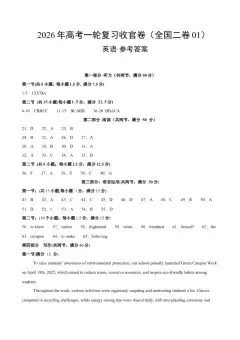
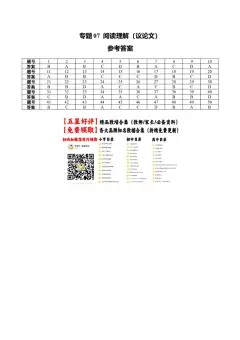
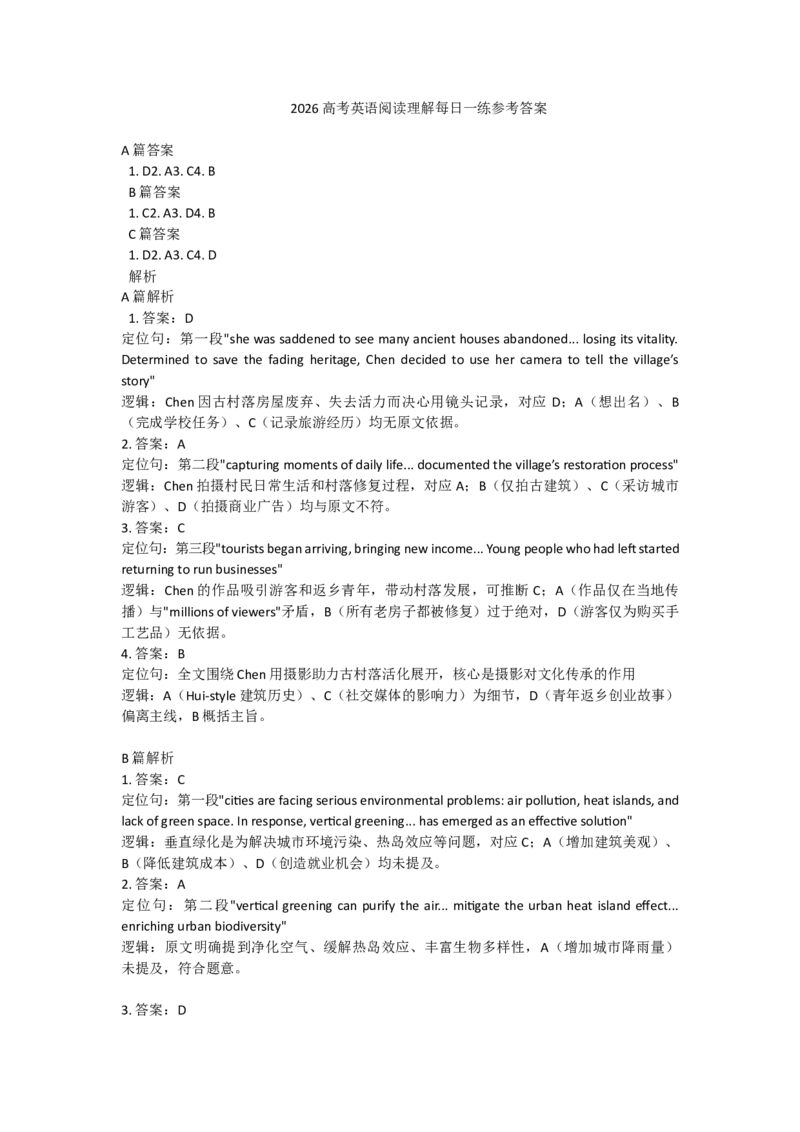
                        2026 高考英语阅读理解每日一练参考答案
A 篇答案
 1. D2. A3. C4. B
 B 篇答案
 1. C2. A3. D4. B
 C 篇答案
 1. D2. A3. C4. D
 解析
A 篇解析
 1. 答案:D
定位句:第一段"she was saddened to see many ancient houses abandoned... losing its vitality.
Determined to save the fading heritage, Chen decided to use her camera to tell the village’s
story"
逻辑:Chen 因古村落房屋废弃、失去活力而决心用镜头记录,对应D;A(想出名)、B
(完成学校任务)、C(记录旅游经历)均无原文依据。
2. 答案:A
定位句:第二段"capturing moments of daily life... documented the village’s restoration process"
逻辑:Chen 拍摄村民日常生活和村落修复过程,对应A;B(仅拍古建筑)、C(采访城市
游客)、D(拍摄商业广告)均与原文不符。
3. 答案:C
定位句:第三段"tourists began arriving, bringing new income... Young people who had left started
returning to run businesses"
逻辑:Chen 的作品吸引游客和返乡青年,带动村落发展,可推断C;A(作品仅在当地传
播)与"millions of viewers"矛盾,B(所有老房子都被修复)过于绝对,D(游客仅为购买手
工艺品)无依据。
4. 答案:B
定位句:全文围绕Chen 用摄影助力古村落活化展开,核心是摄影对文化传承的作用
逻辑:A(Hui-style 建筑历史)、C(社交媒体的影响力)为细节,D(青年返乡创业故事)
偏离主线,B 概括主旨。

B 篇解析
1. 答案:C
定位句:第一段"cities are facing serious environmental problems: air pollution, heat islands, and
lack of green space. In response, vertical greening... has emerged as an effective solution"
逻辑:垂直绿化是为解决城市环境污染、热岛效应等问题,对应C;A(增加建筑美观)、
B(降低建筑成本)、D(创造就业机会)均未提及。
2. 答案:A
定位句:第二段"vertical greening can purify the air... mitigate the urban heat island effect...
enriching urban biodiversity"
逻辑:原文明确提到净化空气、缓解热岛效应、丰富生物多样性,A(增加城市降雨量)
未提及,符合题意。
3. 答案:D
定位句:第三段"people living near vertical green spaces report lower stress levels and better
mental health"
逻辑:垂直绿化能改善居民心理健康,对应D;A(替代公园)、B(无需维护)、C(仅适
用于新建筑)均与原文矛盾(原文提到需维护、新旧建筑均可采用)。
4. 答案:B
定位句:最后一段"with technological advancements and growing environmental awareness,
more cities are investing in vertical greening. Experts predict that it will become a standard practice
in urban planning"
逻辑:专家预测垂直绿化将成为城市规划的常规做法,可推断其前景广阔,对应B;A(成
本过高难以推广)、C(仅适用于新加坡)、D(会破坏建筑结构)均无依据。

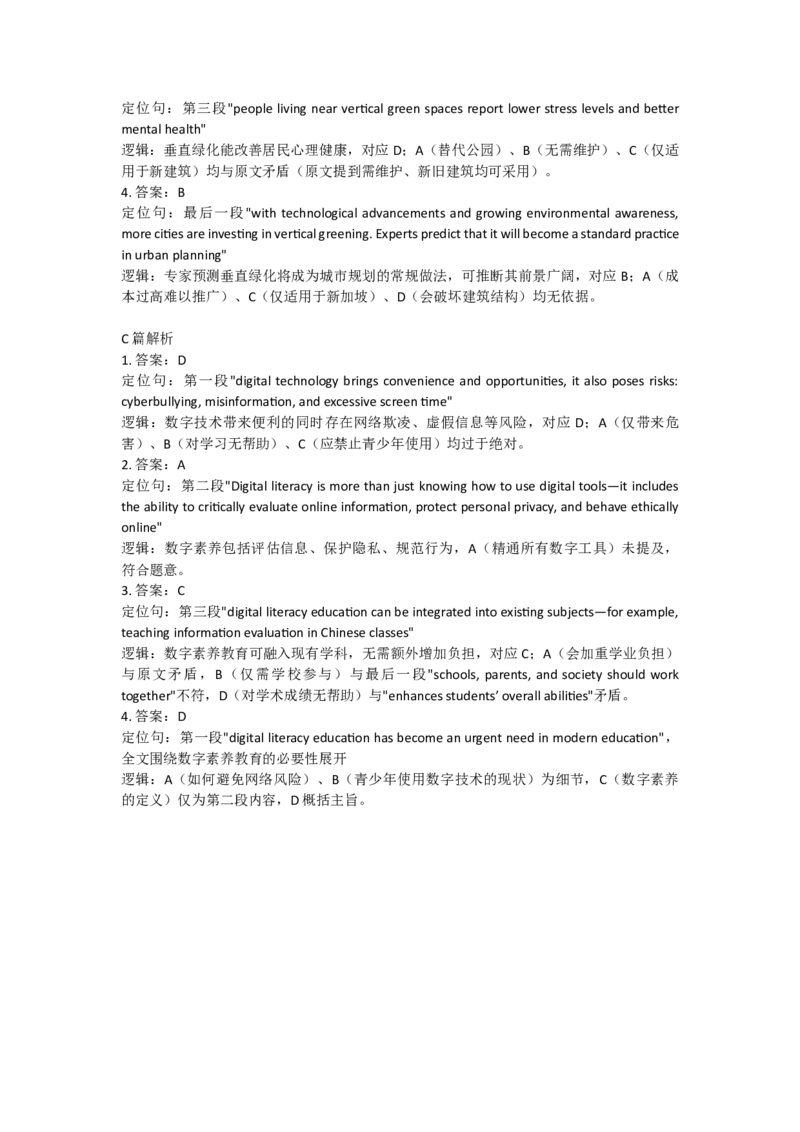
C 篇解析
1. 答案:D
定位句:第一段"digital technology brings convenience and opportunities, it also poses risks:
cyberbullying, misinformation, and excessive screen time"
逻辑:数字技术带来便利的同时存在网络欺凌、虚假信息等风险,对应D;A(仅带来危
害)、B(对学习无帮助)、C(应禁止青少年使用)均过于绝对。
2. 答案:A
定位句:第二段"Digital literacy is more than just knowing how to use digital tools—it includes
the ability to critically evaluate online information, protect personal privacy, and behave ethically
online"
逻辑:数字素养包括评估信息、保护隐私、规范行为,A(精通所有数字工具)未提及,
符合题意。
3. 答案:C
定位句:第三段"digital literacy education can be integrated into existing subjects—for example,
teaching information evaluation in Chinese classes"
逻辑:数字素养教育可融入现有学科,无需额外增加负担,对应C;A(会加重学业负担)
与原文矛盾,B(仅需学校参与)与最后一段"schools, parents, and society should work
together"不符,D(对学术成绩无帮助)与"enhances students’ overall abilities"矛盾。
4. 答案:D
定位句:第一段"digital literacy education has become an urgent need in modern education",
全文围绕数字素养教育的必要性展开
逻辑:A(如何避免网络风险)、B(青少年使用数字技术的现状)为细节,C(数字素养
的定义)仅为第二段内容,D 概括主旨。