专题06 细节理解题
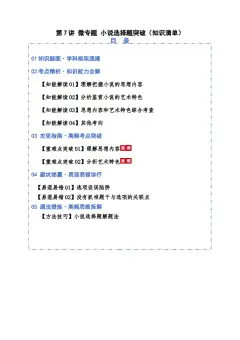
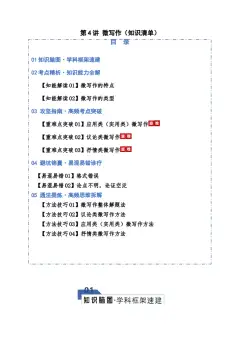
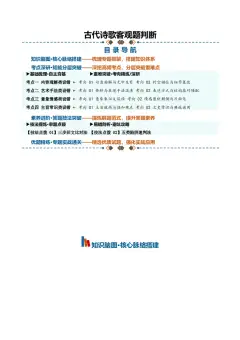
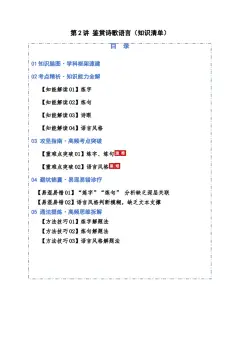
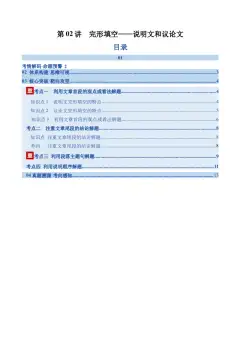
目录
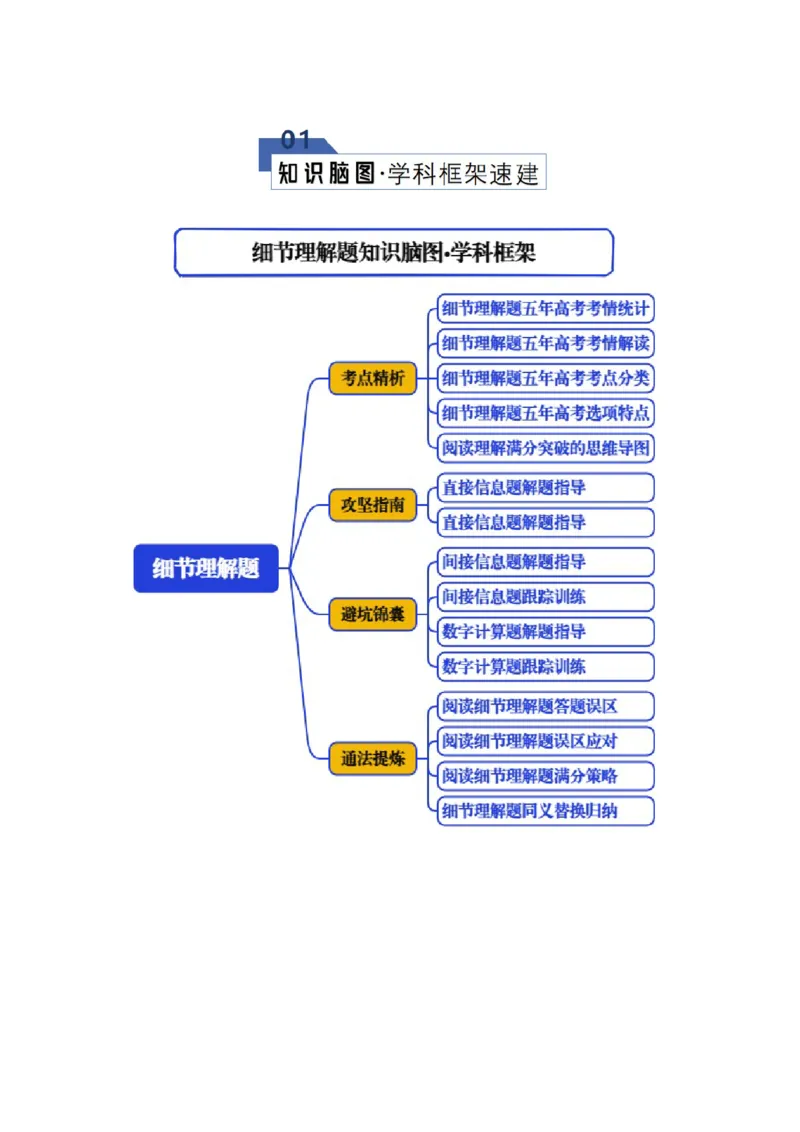
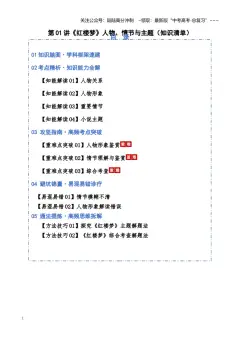
01 知识脑图·学科框架速建
02 考点精析·知识能力全解
【知能解读01】细节理解题五年高考考情统计
【知能解读02】细节理解题五年高考考情解读
【知能解读03】细节理解题五年高考考点分类
【知能解读04】细节理解题五年高考选项特点
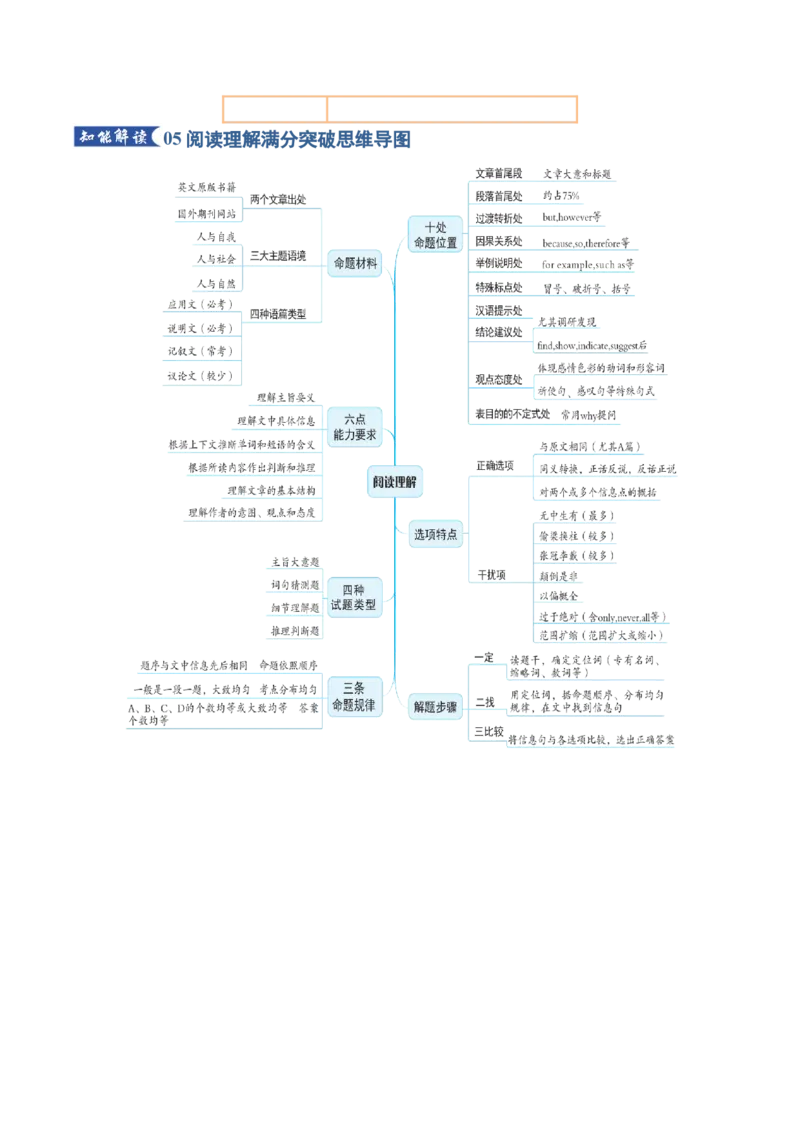
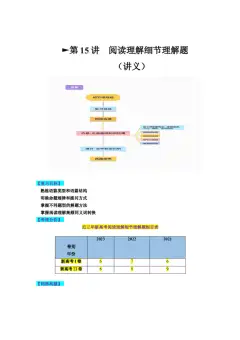
【知能解读05】阅读理解满分突破思维导图
03 攻坚指南·高频考点突破
【重难点突破01】直接信息题解题指导
【重难点突破02】直接信息题解题指导
04 避坑锦囊·易混易错诊疗
【易混易错01】间接信息题解题指导
【易混易错02】间接信息题跟踪训练
【易混易错03】数字计算题解题指导
【易混易错04】数字计算题跟踪训练
05 通法提炼·高频思维拆解
【方法技巧01】阅读细节理解题答题误区
【方法技巧02】阅读细节理解题误区应对
【方法技巧03】阅读细节理解题满分策略
【方法技巧04】细节理解题同义替换归纳
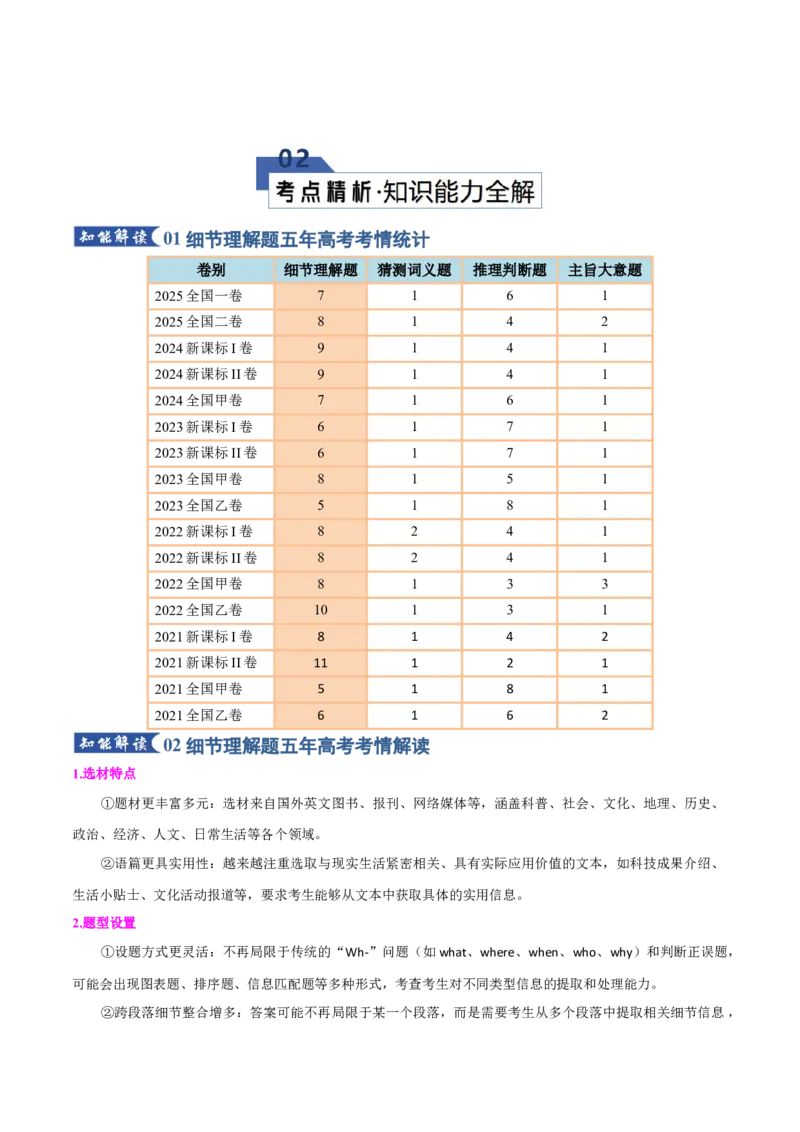
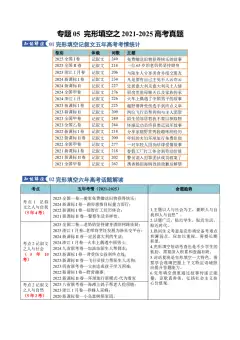
01 细节理解题五年高考考情统计
卷别
细节理解题
猜测词义题
推理判断题
主旨大意题
2025 全国一卷
7
1
6
1
2025 全国二卷
8
1
4
2
2024 新课标I 卷
9
1
4
1
2024 新课标II 卷
9
1
4
1
2024 全国甲卷
7
1
6
1
2023 新课标I 卷
6
1
7
1
2023 新课标II 卷
6
1
7
1
2023 全国甲卷
8
1
5
1
2023 全国乙卷
5
1
8
1
2022 新课标I 卷
8
2
4
1
2022 新课标II 卷
8
2
4
1
2022 全国甲卷
8
1
3
3
2022 全国乙卷
10
1
3
1
2021 新课标I 卷
8
1
4
2
2021 新课标II 卷
11
1
2
1
2021 全国甲卷
5
1
8
1
2021 全国乙卷
6
1
6
2
02 细节理解题五年高考考情解读
1.选材特点
①题材更丰富多元:选材来自国外英文图书、报刊、网络媒体等,涵盖科普、社会、文化、地理、历史、
政治、经济、人文、日常生活等各个领域。
②语篇更具实用性:越来越注重选取与现实生活紧密相关、具有实际应用价值的文本,如科技成果介绍、
生活小贴士、文化活动报道等,要求考生能够从文本中获取具体的实用信息。
2.题型设置
①设题方式更灵活:不再局限于传统的“Wh-”问题(如what、where、when、who、why)和判断正误题,
可能会出现图表题、排序题、信息匹配题等多种形式,考查考生对不同类型信息的提取和处理能力。
②跨段落细节整合增多:答案可能不再局限于某一个段落,而是需要考生从多个段落中提取相关细节信息,
并进行整合和归纳,对考生把握文章整体结构和梳理信息的能力要求更高。
③增加隐含细节考查:除了直接在文中能够找到的显性细节,会更多地设置需要考生通过对上下文的理解、
推理才能得出答案的隐含细节题,考查考生的深度理解能力。
④细节理解题每年占6-9 题,细节杂糅更普遍:将文章中不同位置的细节信息进行拼凑组合,形成一个看
似与原文相关,但实际上逻辑混乱或与原文不符的干扰项,让考生难以辨别。体裁以应用文为主,说明文和记
叙文为辅。
3.能力要求
①信息定位要求提高:阅读量和阅读速度要求持续提升,考生需要在有限时间内快速浏览文章,精准定位
到与题目相关的细节信息。
②综合理解能力凸显:考生不仅要理解单个句子或段落中的细节,还需要理解细节之间的逻辑关系,以及
这些细节与文章主旨、作者观点之间的联系,对综合理解能力的要求不断提高。
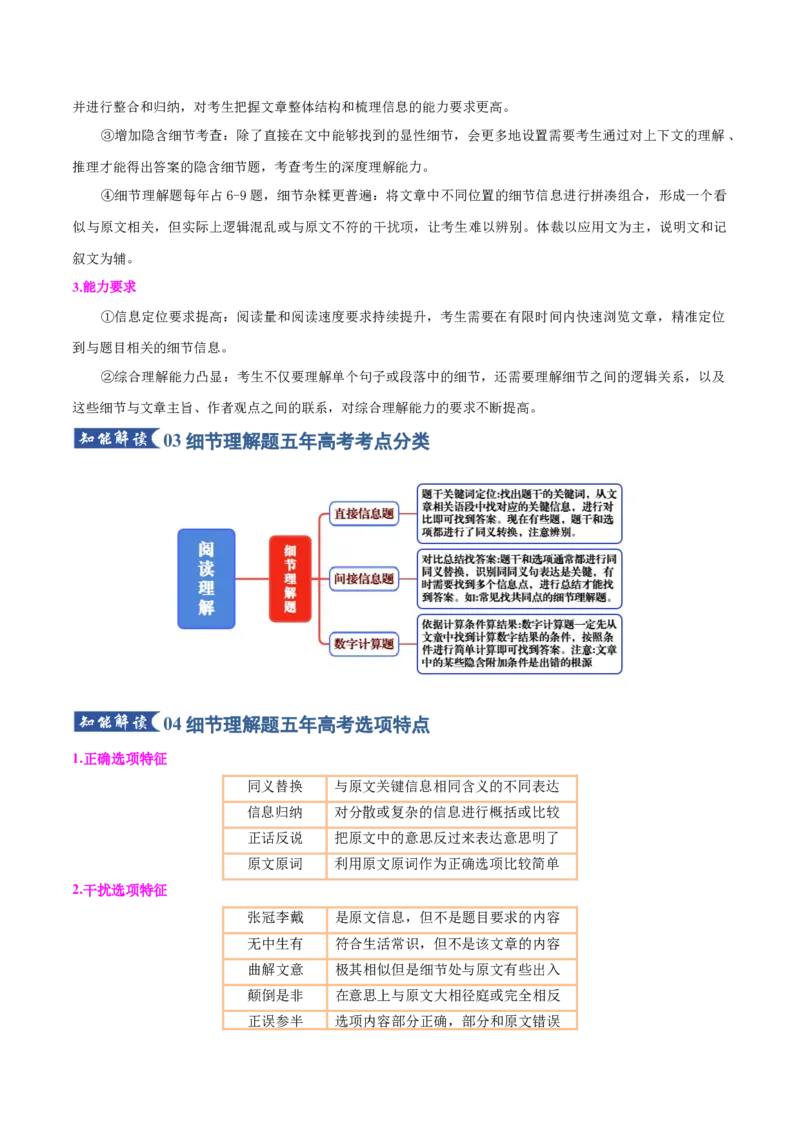
03 细节理解题五年高考考点分类
04 细节理解题五年高考选项特点
1.正确选项特征
同义替换
与原文关键信息相同含义的不同表达
信息归纳
对分散或复杂的信息进行概括或比较
正话反说
把原文中的意思反过来表达意思明了
原文原词
利用原文原词作为正确选项比较简单
2.干扰选项特征
张冠李戴
是原文信息,但不是题目要求的内容
无中生有
符合生活常识,但不是该文章的内容
曲解文意
极其相似但是细节处与原文有些出入
颠倒是非
在意思上与原文大相径庭或完全相反
正误参半
选项内容部分正确,部分和原文错误
05 阅读理解满分突破思维导图
01 直接信息题解题指导
1.题型解读
解此类题要求考生快速抓住原文中的关键信息,直接得出答案,但要注意往往答案与原文中的语句
并非一模一样,而是用不同的词语或句型结构表达相同的意思。有的细节理解题就需要通过有关词语和句
子的转换。利用主要事实、图表、图形来获取信息,然后利用因果、类比、时间、空间等关系将零碎的细
节经过一系列加工、整理,方能做出正确的判断.此类试题在高考中占大多数。值得一提的是,有时原文
中的信息可能只是一个短语,甚至一个单词,因此需要我们在阅读中特别仔细才能捕捉到真正有用的信息。
2.命题方式
22. Which mode of transport can go green comparatively easily? (2025 全国一卷)
23. What does the author suggest visitors do in Mevagissey? (2025 全国一卷)
23. What are the volunteers expected to do? (2024 新课标I 卷)
28. How is the Saint Lukas different from other trains?  (2024 全国甲卷)
29. What are the selected artworks about? (2023 新课标II 卷)
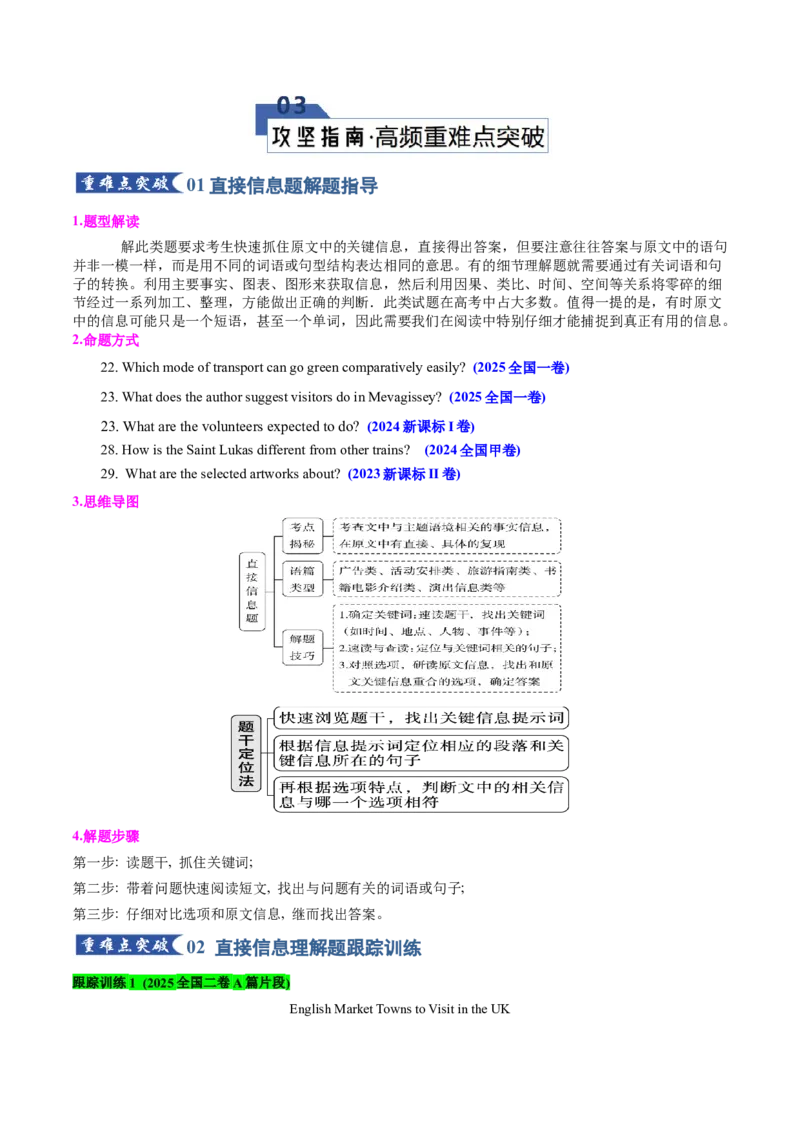
3.思维导图
4.解题步骤
第一步: 读题干, 抓住关键词;
第二步: 带着问题快速阅读短文, 找出与问题有关的词语或句子;
第三步: 仔细对比选项和原文信息, 继而找出答案。
02 直接信息理解题跟踪训练
跟踪训练1 (2025 全国二卷A 篇片段)
English Market Towns to Visit in the UK
English market towns come in many shapes and sizes. Each has a personality shaped by the goods and services
produced and traded for centuries. But each town has more to do than shop.
Hereford, Herefordshire
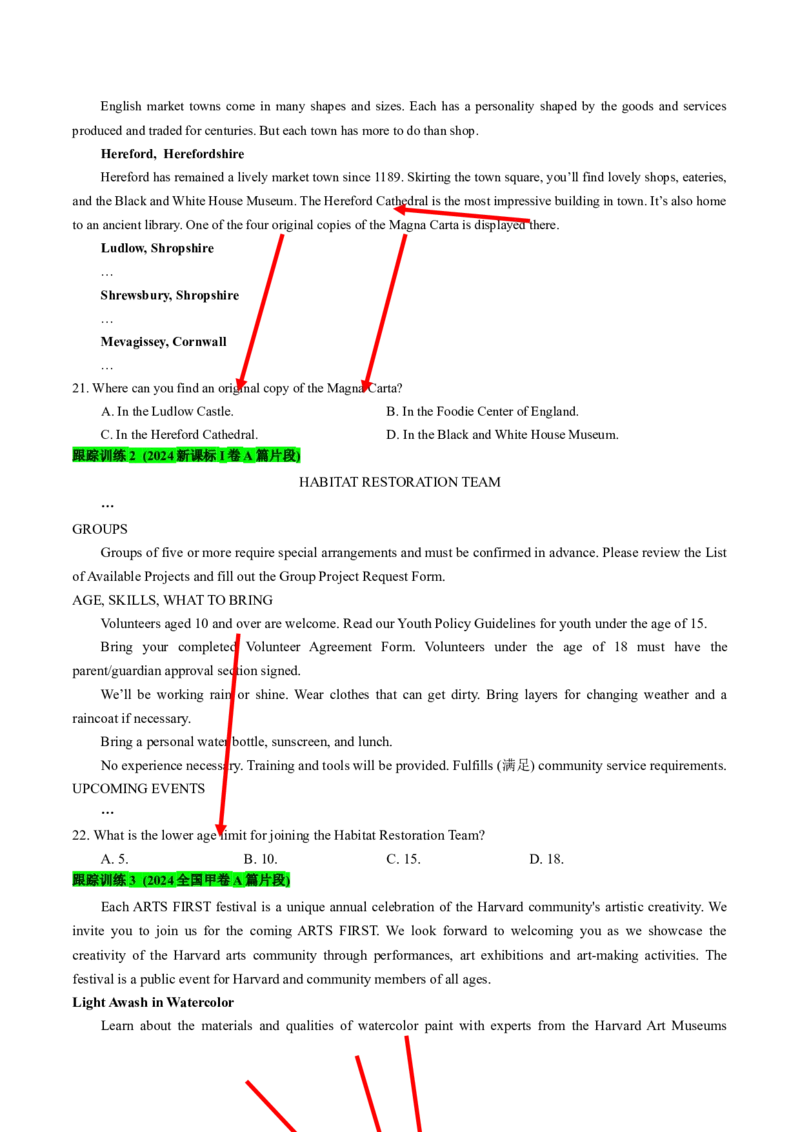
Hereford has remained a lively market town since 1189. Skirting the town square, you’ll find lovely shops, eateries,
and the Black and White House Museum. The Hereford Cathedral is the most impressive building in town. It’s also home
to an ancient library. One of the four original copies of the Magna Carta is displayed there.
Ludlow, Shropshire
…
Shrewsbury, Shropshire
…
Mevagissey, Cornwall
…
21. Where can you find an original copy of the Magna Carta?
A. In the Ludlow Castle.
B. In the Foodie Center of England.
C. In the Hereford Cathedral.
D. In the Black and White House Museum.
跟踪训练2 (2024 新课标I 卷A 篇片段)
HABITAT RESTORATION TEAM
…
GROUPS
Groups of five or more require special arrangements and must be confirmed in advance. Please review the List
of Available Projects and fill out the Group Project Request Form.
AGE, SKILLS, WHAT TO BRING
Volunteers aged 10 and over are welcome. Read our Youth Policy Guidelines for youth under the age of 15.
Bring your completed Volunteer Agreement Form. Volunteers under the age of 18 must have the
parent/guardian approval section signed.
We’ll be working rain or shine. Wear clothes that can get dirty. Bring layers for changing weather and a
raincoat if necessary.
Bring a personal water bottle, sunscreen, and lunch.
No experience necessary. Training and tools will be provided. Fulfills (满足) community service requirements.
UPCOMING EVENTS
    …
22. What is the lower age limit for joining the Habitat Restoration Team?
A. 5.
B. 10.
C. 15.
D. 18.
跟踪训练3 (2024 全国甲卷A 篇片段)
Each ARTS FIRST festival is a unique annual celebration of the Harvard community's artistic creativity. We
invite you to join us for the coming ARTS FIRST. We look forward to welcoming you as we showcase the
creativity of the Harvard arts community through performances, art exhibitions and art-making activities. The
festival is a public event for Harvard and community members of all ages.
Light Awash in Watercolor
Learn about the materials and qualities of watercolor paint with experts from the Harvard Art Museums
Materials Lab. Try your hand at some of the painting tricks used by artists whose works will be in the upcoming
exhibition of American Watercolors 1880-1990: Into the Light.
Spineless Artists: Invertebrate Creativity
…
Wheel Throwing
…
Knitting and Pom-Pom Making
…
22. Which program will you join if you're interested in drawing pictures?
A. Light Awash in Watercolor.
B. Spineless Artists: Invertebrate Creativity.
C. Wheel Throwing.
D. Knitting and Pom-Pom Making.
跟踪训练4 (2023 新课标I 卷A 篇片段)
Bike Rental & Guided Tours
Welcome to Amsterdam, welcome to MacBike. You see much more from the seat of a bike! Cycling is the
most economical, sustainable and fun way to explore the city, with its beautiful canals, parks, squares and countless
lights. You can also bike along lovely landscapes outside of Amsterdam.
Why MacBike
…
Prices
…
Guided City Tours
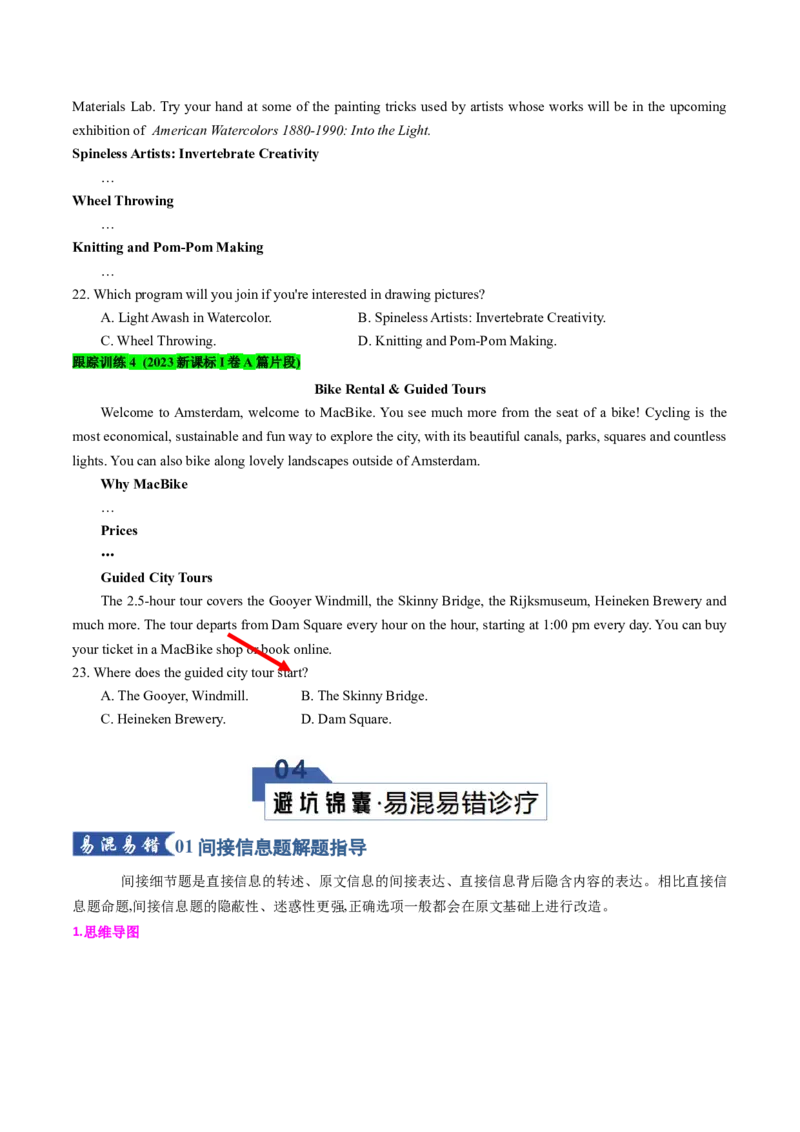
The 2.5-hour tour covers the Gooyer Windmill, the Skinny Bridge, the Rijksmuseum, Heineken Brewery and
much more. The tour departs from Dam Square every hour on the hour, starting at 1:00 pm every day. You can buy
your ticket in a MacBike shop or book online.
23. Where does the guided city tour start?
A. The Gooyer, Windmill.
B. The Skinny Bridge.
C. Heineken Brewery.
D. Dam Square.
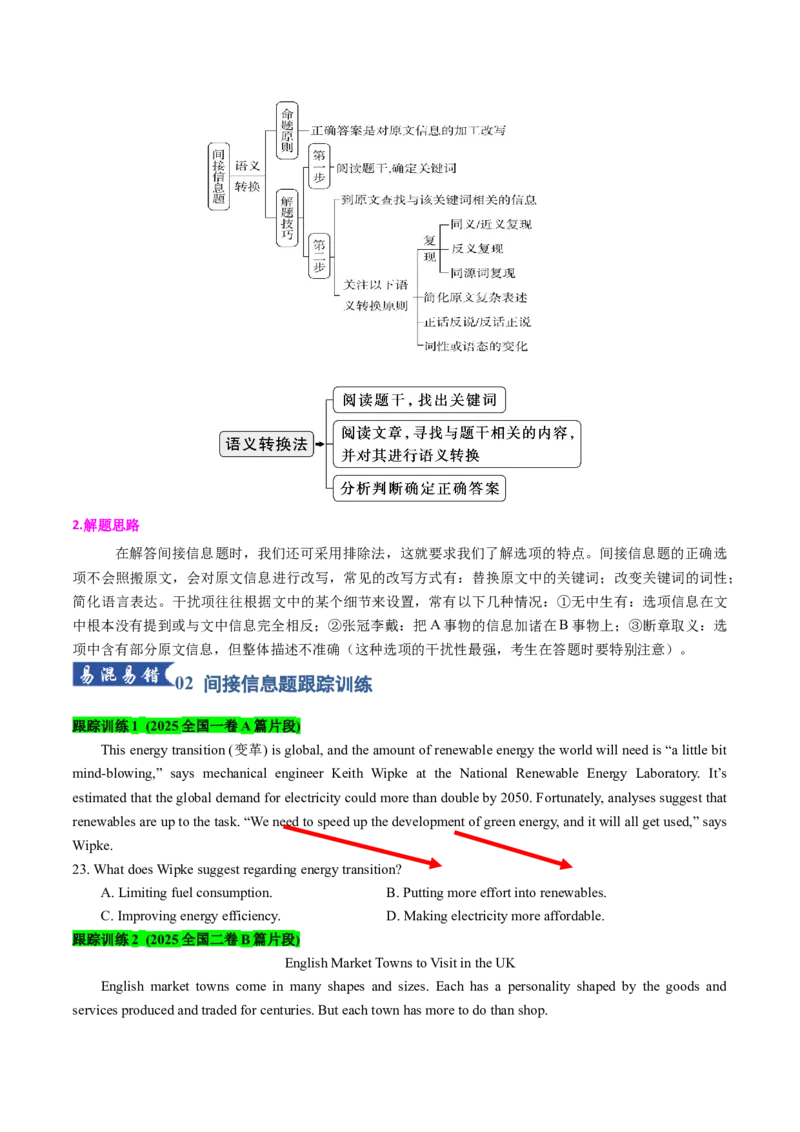
01 间接信息题解题指导
间接细节题是直接信息的转述、原文信息的间接表达、直接信息背后隐含内容的表达。相比直接信
息题命题,间接信息题的隐蔽性、迷惑性更强,正确选项一般都会在原文基础上进行改造。
1.思维导图
2.解题思路
在解答间接信息题时,我们还可采用排除法,这就要求我们了解选项的特点。间接信息题的正确选
项不会照搬原文,会对原文信息进行改写,常见的改写方式有:替换原文中的关键词;改变关键词的词性;
简化语言表达。干扰项往往根据文中的某个细节来设置,常有以下几种情况:①无中生有:选项信息在文
中根本没有提到或与文中信息完全相反;②张冠李戴:把A 事物的信息加诸在B 事物上;③断章取义:选
项中含有部分原文信息,但整体描述不准确(这种选项的干扰性最强,考生在答题时要特别注意)。
02 间接信息题跟踪训练
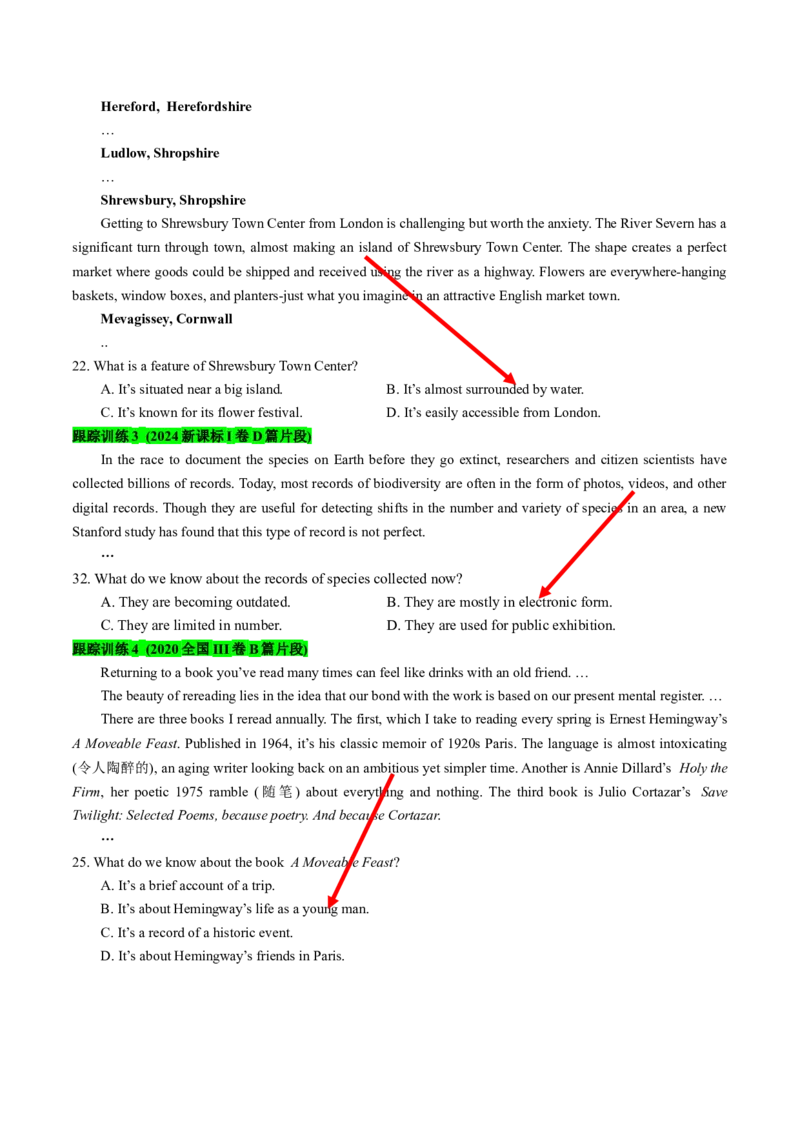
跟踪训练1 (2025 全国一卷A 篇片段)
This energy transition (变革) is global, and the amount of renewable energy the world will need is “a little bit
mind-blowing,” says mechanical engineer Keith Wipke at the National Renewable Energy Laboratory. It’s
estimated that the global demand for electricity could more than double by 2050. Fortunately, analyses suggest that
renewables are up to the task. “We need to speed up the development of green energy, and it will all get used,” says
Wipke.
23. What does Wipke suggest regarding energy transition?
A. Limiting fuel consumption.
B. Putting more effort into renewables.
C. Improving energy efficiency.
D. Making electricity more affordable.
跟踪训练2 (2025 全国二卷B 篇片段)
English Market Towns to Visit in the UK
English market towns come in many shapes and sizes. Each has a personality shaped by the goods and
services produced and traded for centuries. But each town has more to do than shop.
Hereford, Herefordshire
…
Ludlow, Shropshire
…
Shrewsbury, Shropshire
Getting to Shrewsbury Town Center from London is challenging but worth the anxiety. The River Severn has a
significant turn through town, almost making an island of Shrewsbury Town Center. The shape creates a perfect
market where goods could be shipped and received using the river as a highway. Flowers are everywhere-hanging
baskets, window boxes, and planters-just what you imagine in an attractive English market town.
Mevagissey, Cornwall
..
22. What is a feature of Shrewsbury Town Center?
A. It’s situated near a big island.
B. It’s almost surrounded by water.
C. It’s known for its flower festival.
D. It’s easily accessible from London.
跟踪训练3 (2024 新课标I 卷D 篇片段)
In the race to document the species on Earth before they go extinct, researchers and citizen scientists have
collected billions of records. Today, most records of biodiversity are often in the form of photos, videos, and other
digital records. Though they are useful for detecting shifts in the number and variety of species in an area, a new
Stanford study has found that this type of record is not perfect.
…
32. What do we know about the records of species collected now?
A. They are becoming outdated.
B. They are mostly in electronic form.
C. They are limited in number.
D. They are used for public exhibition.
跟踪训练4 (2020 全国III 卷B 篇片段)
Returning to a book you’ve read many times can feel like drinks with an old friend. …
The beauty of rereading lies in the idea that our bond with the work is based on our present mental register. …
There are three books I reread annually. The first, which I take to reading every spring is Ernest Hemingway’s
A Moveable Feast. Published in 1964, it’s his classic memoir of 1920s Paris. The language is almost intoxicating
(令人陶醉的), an aging writer looking back on an ambitious yet simpler time. Another is Annie Dillard’s Holy the
Firm, her poetic 1975 ramble ( 随笔) about everything and nothing. The third book is Julio Cortazar’s Save
Twilight: Selected Poems, because poetry. And because Cortazar.
…
25. What do we know about the book A Moveable Feast?
A. It’s a brief account of a trip.
B. It’s about Hemingway’s life as a young man.
C. It’s a record of a historic event.
D. It’s about Hemingway’s friends in Paris.
03 数字计算题解题指导
细节理解之数字计算题考点是高考中的必考点。数字计算题考点主要在广告信息类文章中考,锁定题干直
接找相关的文章内容,提取相关信息,进行简单的计算,就可以得出正确答案。预测在2026 高考中,数字
计算题会在广告信息文章中和说明文中的部分试题中呈现。
1.思维导图
2.解题思路
①主题段法。标题段一般在文章的第一段和最后一段,一般来说第一段经常提出文章的主题或最后一段总
结文章的主题,知道了文章的主题也就知道了文章的中心,把中心概括成一句话或一个短语即是文章的标
题。
②主题句法。解题的关键要抓住每段的首尾句,要注意贯穿文章始终的词语。通过寻找文章的主题句,并
对主题句进行概括和提炼,从而确定文章的标题。
③关键词法。任何一篇文章都是围绕某个主题展开的,因此有的文章中最明显的特点之一是有一个反复出
现的中心词,即关键词,也叫做主题词。抓住了它,便容易抓住文章的中心。
3.解题策略
①正面肯定法。在理解文章主旨的基础上,揣摩哪个选项能准确概括主旨。
②反面否定法。撇开原文,拿各个备选项去尝试用它们写出来的“文章”将是什么内容,然后和原文对照,
一一排除荒谬者。
③排除干扰法。研究干扰项里面的中心词、修饰词的变化、结构、新奇性、概括性等。文章的标题应该新
颖奇特,易激发读者的好奇心,吸引读者注意力。
04 数字计算题跟踪训练
跟踪训练1 (2025 全国一卷I 阅读A 片段)
The greening of planes, trains and automobiles
Moving goods and people around the world is responsible for a large part of global CO2 emissions (排放). As
the world races to decarbonize everything, it faces particular problems with transportation — which accounts for
about a quarter of our energy-related greenhouse gas emissions. Here’s the breakdown of the emissions in 2018 for
different modes of transport.
21. What percentage of global transport emissions did road vehicles account for in 2018?
A. 11.6%.
B. 45.1%.
C. 74.5%.
D. 86.1%.
跟踪训练2 (2023 新课标I 卷阅读A 片段)
Bike Rental & Guided Tours
Welcome to Amsterdam, welcome to MacBike. ...
Why MacBike
MacBike has been around for almost 30 years and is the biggest bicycle rental company in Amsterdam. With over
2,500 bikes stored in our five rental shops at strategic locations, we make sure there is always a bike available for you.
We offer the newest bicycles in a wide variety, including basic bikes with foot brake (刹车), bikes with hand brake and
gears (排挡), bikes with child seats, and children’s bikes.
Prices
Hand Brake, Three Gears
Foot Brake, No Gears
1 hour
7.50
5.00
3 hours
11.00
7.50
1 day (24 hours)
14.75
9.75
Each additional day
8.00
6.00
Guided City Tours
…
22. How much do you pay for renting a bike with hand brake and three gears for two days?
A.15.75.        B.19.50.              C. 22.75. D. 29.50.
跟踪训练3 (2023 新课标I 卷阅读A 片段)
Henry Raeburn (1756-1823)
The Exhibition
This exhibition of some sixty masterpieces celebrating the life and work of Scotland’s best loved painter, Sir
Henry Raeburn, comes to London. Selected from collections throughout the world, it is the first major exhibition of
his work to be held in over forty years.
Lecture Series
…
Exhibition Times
…
Admission
£4. Children under 12 years accompanied by an adult are admitted free.
Schools and Colleges
A special low entrance charge of £2 per person is available to all in full-time education, up to and including
those at first degree level, in organised groups with teachers.
22. How much would a couple with two children under 12 pay for admission?
A. £4.
B. £8.
C. £12.
D. £16.
跟踪训练4 (2025 浙江1 月卷阅读A 片段)
Interlibrary Loan (ILL) provides teachers, students and staff with access to books that are checked out or not
owned by our own libraries, as well as digitized copies of articles and book chapters from our collection.
Who Can Borrow?
…
How Long Does It Take?
…
Length of Loans
…
Notification/Delivery Options
…
Interlibrary Loan Fees
Library Type
Loan Cost
Article/Chapter Cost
Non-Profit Libraries
$15
$10
For-Profit Libraries
$20
$12
International Libraries
$25
$15
23. How much do you pay for two articles obtained from an international library?
A. $15.
B. $20.
C. $24.
D. $30.
01 阅读细节理解题答题误区
1.扩缩范围
选项中的描述将原文内容扩大或缩小,与原文的内容极其相似,只是在程度上有些变动。干扰项常使
用与文中某句话相似的句子结构和陈述,但在关键地方换了单词,增加或删除了部分信息,从而改变了句
意。
2.张冠李戴
所述细节确实与原文一致,但变换了主体,把文中的 “张三” 换成了选项中的 “李四”。或者把
文中作者的观点与他人的观点混淆在一起,比如题干问的是作者的观点,选项陈述的是他人的观点。
3.无中生有
选项内容在意思上符合常识,但与原文大相径庭甚至完全相反。考生容易在没有充分理解文章信息的
情况下凭主观臆断答错题。
4.原词再现
选项内容部分是文章原文原句或原词,实则部分正确或部分错误,考生对具体信息的内容记忆不全,
对这样的试题缺少足够的判断,错选选项。
02 阅读细节理解题误区应对
1.精准定位
先从问题中抓住关键性词语(题眼),然后以此为线索,运用略读及查读的技巧快速在文章中寻找与
此问题相关的段落、语句。如 2022 年海淀区高三 “一模” 试题中问 “According to the passage, what
is‘fresh start effect’”,考生可根据题干定位到文章第一段相关内容。
2.仔细核对
将选项与定位到的原文内容进行仔细对照比较,看选项是否与原文完全一致,注意关键词的同义替换、
句式的转换等。对于一些看似与原文相似的选项,要特别注意其是否在范围、主体、时态等方面与原文有
差异。
3.避免主观臆断
严格依据原文内容答题,不要仅凭自己的常识或主观想法去选择答案。如果原文中没有明确提及的内
容,即使选项看起来很合理,也不能选。
4.全面捕捉信息
当细节理解题考查的是多处信息的整合时,一定要全面捕捉相关信息,进行综合分析、归纳,切忌根
据 “一面之词” 草率地得出结论。
03 阅读细节理解题满分策略
一、阅读理解应用文细节理解题居多,落实“定位原文”和“同义替换”。
二、数据计算题注重“原文定位”“细节理解”,弄清来龙去脉再计算。
三、文章出处题注意利用文章“总分”结构,即首尾段相关关键词作答。
四、写作意图题要结合试题内容类型,尤其是首尾段做出合理推测判断。
五、写作对象题需要结合首尾段关键信息,对象可能是家长、游客等。
六、规范训练目标:先题后文,做标记,留痕迹;零失误,限时6 分钟/篇。
04 细节理解题同义替换归纳
1.高频同义转换(动词类)
动词类同义替换(一)
动词类同义替换(二)
book=reserve=order
conduct=carry out
please=amuse=entertain
improve=promote
guarantee=ensure
document=record
ruin=destroy=damage=violate
declare=announce=inform
divide=separate=part with
complete = fulfill =accomplish= achieve
delay=put off=postpone
give=supply=provide=offer
encourage = motivate =stimulate = spur
reject=refuse=turn down=decline
receive=accept
see=observe=notice=spot
search=explore
connect=link=relate=associate
discourage=frustrate
rent=hire
prove=turn out
remove=get rid of
admire=appreciate
possess=own
decide=determine=resolve to do
get= obtain= acquire= gain= possess
2.高频同义转换(名词类)
名词类同义替换(一)
名词类同义替换(二)
data=statistics
novel=fiction
feature=characteristics
career=occupation
manners=etiquette
gratitude=appreciation
experiment=trial
personality=character
stress=pressure
origin=pioneer
circumstance=environment=atmosphere
creation=innovation
achievement=recognition
option=choice=selection
material=resource
luggage=baggage=package
rule=regulation=principle
direction=discipline=guideline
colleague=coworker
essay=passage=article=text
approach=way=method=means
3.高频同义转换(形容词副词类)
形容词副词类同义替换(一)
形容词副词类同义替换(二)
delicious=tasty
attentive=focused
original=initial
final=eventual
obvious=evident=Striking
accurate=exact
authentic=true=genuine
thrilling=frightening
thrilled=excited
time-honored=has a long history
dull=boring
daring=brave
extra=additional
glad=pleased=delighted
touched=moved
accessible=available=at hand
appropriate=proper=suitable
appealing=attractive
complex=complicated
safe=secure
3.高频同义转换(高频短语类)
高频短语类同义替换(一)
高频短语类同义替换(二)
ahead of time=in advance=previous
places of interest=tourist attraction
result in=lead to=contribute to
be accustomed to=be used to doing
prevent...from=keep...from=stop...from
join in=take part in=participate in
=involve in=be engaged in
get ready for=be prepared for
focus on =concentrate on
arrive at=reach=get to=approach
in spite of=despite
from one’s perspective=from one’s point of view
try doing=attempt to
be filled with=be charged with=be full of
run into=come across
take the place of=replace
from time to time=once in a while
be caught in=be trapped in
transform A into B=turn A into B
in the long term=in the long run
hold on to=insist
take action=take measures=take steps to
keep in touch with=contact
deal with=cope with=handle with=address
at the same time=meanwhile
on the spot=on the scene
be proud of=take pride in
head into=leave for
consist of =be made up of
for a moment=for a while
a collection of =a series of
figure out=find out
bright up=light up
roll around=turn up
give...a lecture=deliver a speech
draw one’s attention=attract one’s attention
be desperate for=desire for=be thirsty for
in favor of=favorable
真题专区:研读高考真题,洞悉高考命题规律,探寻满分做题技巧和应试思维
01 (2024 浙江1 月卷)
Tom Sawyer Play Is an Adventure
A 35-minute hand-clapping, foot-stomping musical version of a Mark Twain favorite returns with this
Tall Stacks festival.
“Tom Sawyer: A River Adventure” has all the good stuff, including the fence painting, the graveyard, the
island and the cave. It is adapted by Joe McDonough, with music by David Kisor. That’s the local stage
writing team that creates many of the Children’s Theatre of Cincinnati’s original musicals, along with the
holiday family musicals at Ensemble Theatre.
This year Nathan Turner of Burlington is Tom Sawyer, and Robbie McMath of Fort Mitchell is Huck
Finn.
Tumer, a 10th-grader at School for Creative and Performing Arts, is a familiar presence on Cincinnati’s
stages. He is a star act or of Children’s Theatre, having played leading roles in “The Legend of Sleepy
Hollow” and “The Wizard of Oz,” and is fresh from Jersey Production “Ragtime”.
McMath is a junior at Beechwood High School. He was in the cast of “Tom Sewyer” when it was first
performed and is a Children’s Theatre regular, with five shows to his credit. This summer he attended
Kentucky’s Governor’s School for the Arts in Musical Theatre.
Note to teachers: Children’s Theatre has a study guide demonstrating how math and science can be taught
through “Tom Sawyer.” For downloadable lessons, visit the official website of Children’s Theatre.
21. Who wrote the music for “Tom Sawyer: A River Adventure”? (细节理解题)
A. David Kisor.
B. Joe McDonough.
C. Nathan Turner. D. Robbie McMath.
22. What can we learn about the two actors? (细节理解题)
A. They study in the same school.
B. They worked together in “Ragtime”.
C. They are experienced on stage.
D. They became friends ten years ago.
23. What does Children’s Theatre provide for teachers? (细节理解题)
A. Research funding.
B. Training opportunities.
细节理解题综合能力提升
C. Technical support.
D. Educational resources.
02 (2023 浙江1 月卷)
Explorers Camp
•Full day camp for kids aged 5-13.
•Monday-Friday, July 8-26, 9am-4pm.
Week 1 | July 8-12
Week 2 | July 15-19
Week 3 | July 22-26
•Register for a single week or multiple weeks.
•Fees: $365 per week.
•The last day to cancel registration and receive a full refund (退款) is June 15.
Camp Structure
The day is divided into two thematic sessions per age group. Campers have a three-hour morning class
engaging with a morning theme (9am to 12 noon) and a one-hour lunch break, followed by another three-hour class
engaging with an afternoon theme (1pm to 4pm). Snack periods are held throughout the day. All campers should
bring their own bagged lunch and snacks.
Camp Content
Explorers Camp organizes engaging arts, history and science-related activities in every class, and focuses on
a range of topics that emphasize active learning, exploration and, most of all, fun! All camp sessions are created
with age-appropriate activities that are tailored to the multiple ways that kids learn.
Camp Staff
Campers enjoy a staff-to-child ratio ranging from 1:4 to 1:7 depending on the age group. Instructors are
passionate educators who are experts in their fields and have undergone training and a background check.
21. On which of the following dates can you cancel your registration with a full refund? (细节理解题)
A. June 12.
B. June 22.
C. July 19.
D. July 26.
22. How are campers divided into different groups? (细节理解题)
A. By gender.
B. By nationality.
C. By interest.
D. By age.
23. How many hours of class will you have altogether if you register for a single week? (细节理解题)
A. 15.
B. 21.
C. 30.
D. 42.
03 (2023 新课标I 卷)
Jim Johnson, a mail carrier, was an institution in the leafy Westmoreland, Westhaven and Westover Hills
neighborhoods. just north of downtown Wilmington, where he delivered much more than the mail. He knew all the
kids and their pets by name; he carried in the groceries; he took note of unlocked doors, offered gardening advice,
and taught more than a few young boys the art of the curveball. When he wasn't doing all that, Jim was running
across a checkerboard of green lawns(草坪) to ensure the local postal service did not fall short of its daily promise.
Though the postal service is often disparaged now, the trust in local postal service lives on. In many
communities, that trust is won every day when life-saving medicine, greeting cards, social security checks, college
acceptance letters-even the bills-appear in mailboxes in front of the houses.
After more than three decades, Jim approached his final days on the job much like any other. He drove a boxy
postal truck to North DuPont Road for the first unofficial stop of the day. Butch, a dog who belonged to one of the
neighbors, was waiting just like every day before. And just like every day before, he got into the jump seat and they
were off. On the route, Jim and Butch had become inseparable. Now, the dog and the mailman would ride off to
retirement together. At every stop, Jim accepted the parting good wishes of families that had become his own.
There were tears and laughter, and hugs filled with warm memories.
It’s been 33 years since Jim left the route, but we are still reminded of the deep bond established between
community and letter carrier. That’s what the postal service means to us.
24. What do we know about Jim Johnson from the first paragraph?
A. He’s open-minded.
B. He’s sharp-eyed.
C. He’s warm-hearted.
D. He’s strong-willed.
25. What does the underlined word “disparaged” in paragraph 2 mean?
A. Refused.
B. Criticized.
C. Investigated.
D. Suspended.
26. What did Jim do besides daily delivery on his final days of work? (细节理解题)
A. He drove Butch to its owner.
B. He sent presents to his friends.
C. He prepared a retirement party.
D. He said goodbye to the neighbors.
27. What is the author’s purpose in writing the text?
A. To remember a respected mail carrier.
B. To record an unforgettable experience.
C. To raise funds for the postal service.
D. To call for harmony in the community.
模拟专区:精选名校真题好题,帮你锤炼做题技巧,助力冲刺备考圆梦高考
05(25-26 高三上·四川巴中·开学考试)
Information for School Activities to Kew Gardens
Kew Gardens are famous for its diverse living plants and a wide range of educational events and activities.
Below is the necessary information about planning a school visit to Kew.
Educational Session Prices
Students will participate in the educational sessions in groups of 15. Prices vary based on different situations:
For Early Years Foundation Stage
• Key Stage 4: 45-minute sessions; £35/ group; 90-minute sessions; £70/ group
• Key Stage 5: Half day (1 session) : £80/ group: Full day (2 sessions) : £160/ group
For Teachers and Adults
• One adult accompanying one pupil: Free:
• Adults above the required ratios: £11/ person
The payment will be due within 28 calendar days of making the booking.
Health and Safety
Required Supervising (监护) Adult-Student Ratio:
• Key Stage 4   1:12
• Key Stage 5   1:6
The group sizes should be controlled if you are visiting restricted or potentially busy areas such as glasshouses
and other attractions. The maximum number of students visiting the greenhouses is 15 per group; each group to
Kew shops should include no more than 10 students.
Risk Assessment
Standard risk assessment directs you to customize a student-oriented risk assessment. If there is an emergency,
do not call 999, contact the nearest staff or call Constabulary on 0208 332 3333.
Planning Your Visit
Your tickets and two planning passes will be sent to you upon the receipt of your payment. You can complete
your risk assessment with the passes. Show the tickets and receipt documents to the gates staff on the day of visit.
Recommended Timings
Our gardens open at 10 a.m. You are recommended to spend at least three hours on your visits. The closing
times vary while the earliest is 3:30 p.m. We have a fixed schedule for education sessions, which is from 10:30 a.m.
to 2:20 p.m. (except KS5).
1.If a group of 12 KS4 students and 2 teachers chooses a 45-min session, how much should be paid? (细节理解题)
A.£35.
B.£46.
C.£57.
D.£81.
2.What should one do in case of emergency?
A.Refer to the risk assessment.
B.Telephone 999 immediately. (细节理解题)
C.Ask adults for help.
D.Seek help from the staff nearby.
3.What is the purpose of the text?
A.To describe the Kew Garden.
B.To employ the staff.
C.To guide school visitors.
D.To introduce the activities.
05(2025 高三上·全国·专题练习)
New Scientist is the world’s most popular weekly science and technology publication. Our website, app and
print editions cover international news from a scientific standpoint.
Highlights:
News & Features
Daily online updates and weekly magazine top picks bring you the latest scientific news, covering everything
from artificial intelligence to breakthroughs in health and quantum ( 量子) physics. Written by researchers and
expert journalists, feature articles separate fact from fiction and turn discoveries into easy-to-understand knowledge
— no science background needed.
Culture
This section explores the intersection of science and culture, featuring reviews of books, events, and
exhibitions. It highlights the impact of science on society and the arts.
Views
We present readers’ letters, opinions, and articles by editors, offering in-depth analysis and diverse viewpoints
on science, culture, and social issues. This section encourages critical thinking and discussion.
Subscriber-only Benefits:
·Exclusive (专享的) access to articles with great content
·Priority to paid tours to sites of scientific importance worldwide
·Four free virtual events each year, including lectures and masterclasses on science topics
·Newsletters with the latest news and insights, sent directly to your email or digital devices
Best offer
Digital

accessAPP+

Website
Subscription
√Unlimited access to newscientist. com
√Unrestricted access to the app
Trial: $10 for 10
weeks
○Then $49.99 every 3 months
○Then $200 $99 annually
Print and digital accessAPP+ Website
Subscription
√Unlimited access to newscientist. com
√Unrestricted access to the app
√Print edition delivered directly to your door
each week
Trial: $20 for 10 weeks
○Then $64.99 every 3 months
○Then $240 $199 annually
1.What can you find in New Scientist? (细节理解题)
A.Latest science fiction.
B.Beginner-friendly science articles.
C.Academic writing guide.
D.In-depth scientific research papers.
2.What is an advantage of being a subscriber? (细节理解题)
A.Staying informed of updates.
B.Taking discounted science tours.
C.Getting free reading devices.
D.Attending lectures in universities.
3.How much is the annual subscription for print and digital access after the 10-week trial? (细节理解题)
A.$99.
B.$109.
C.$199.
D.$2
06(2025·陕西安康·三模)
The waiting room was crowded with little kids and their parents, but I knew this was something I, a
housewife, needed to start doing.
When my name was called, I entered the small room, wiping the sweat from my palms.
“Oh!” the young woman greeted me. “I wasn’t expecting to see any, uh... adults!”
When my friends turned fifty, they did exciting things to celebrate, like a trip to the sunny south, a fancy
dinner or a new hairstyle. I decided to learn to play the cello (大提琴).
I had heard that learning a musical instrument boosts brainpower, so to fight against my ageing, I went to the
music store to peruse the options. Never having played strings before, I rented a cello to see what I thought, and it
was love at first note.
My new cello teacher was as young as my daughter, and as she handed me the cello music, she inquired as to
how long I’d been playing. “I just started,” I mumbled.
“I guess we’ll start you off like my other students,” she said, handing me a book full of photos of four-year-
old cellists.
I started lessons two years ago, and now I play every day. Eagerly, I anticipate my cello practice time every
evening, craving it, and loving the calm that always arrives. I have no idea how much I will enjoy the cello and how
much I need it. I’m not sure where this cello playing will take me, but I love mentioning casually in conversation,
“Yeah, I was just playing my cello today...”
Recently, I played with a group of musicians. To my surprise, people applauded at the end. My friends’ new
hairstyles have all grown back. Their trips are nothing but memories, but I have dents(凹痕) in my fingers and a
strategy for keeping calm for the next thirty years until I find another new instrument to try.
1.How did the author feel when she entered the music room?
A.Shocked.
B.Calm.
C.Confident.
D.Nervous.
2.Why did the author choose to learn music at fifty? (细节理解题)
A.To make her childhood dream come true.
B.To maintain her mental abilities.
C.To satisfy the expectation of her family.
D.To try something different from her friends.
3.Why does the author look forward to practicing the cello every day? (细节理解题)
A.She enjoys showing off.
B.She wants to impress others.
C.She is preparing for a performance.
D.She loves the feeling it brings to her.
4.What can we learn from this story?
A.Every cloud has a silver lining.
B.Actions speak louder than words.
C.It’s never too late to follow your heart.
D.It’s too late to learn something you like.
07(2025·山东淄博·三模)
Anna Du was walking along the beach at Castle Island in South Boston when she noticed plastic scattered
(散落) across the shoreline. She bent down to pick some up but quickly realized there were far too many tiny pieces
to handle. “When I saw how much plastic there was, it seemed impossible to clean it all up,” recalls Du, who was in
sixth grade at the time. Instead of giving up, Du tackled the problem like any good scientist — starting with
research. That’s how she discovered that 8 million tons of plastic end up in the oceans every year.
Inspired by her findings, Du decided to build a remote-operated vehicle (ROV) to detect microplastics on the
ocean floor. Her ROV, made from PVC pipes, features two main systems: a navigation system and a detection
system. The navigation system uses propellers ( 螺旋桨) and a combination of fishing weights and foam floats
(lightweight materials that keep the device floating) to move up and down. The detection system, however, is the
real innovation. It uses infrared cameras (红外相机) and light wavelengths to spot microplastics, making them
stand out against sand and plants. Actually, the device doesn’t collect microplastics, but it identifies where they
accumulate. Du has even applied for a patent on the Rov’s key components.
Faced with the challenge of locating ocean microplastics — unlike the Great Pacific Garbage Patch, these
are not floating on the surface — she knew an ROV would be the most efficient tool. Taking water samples and
analyzing them in a lab could never be done on the scale needed. Instead, she needed a mobile lab to detect plastics
in-situ.
Her ROV. impressed many experts with its clever design. “She has an impressive engineering instinct,” says
Casey Mach ado, an engineer at the Woods Hole Oceanographic Institution. “Her ability to break down problems
and create solutions is remarkable.”
“I want to be an engineer because I love building things to help solve global problems,” says Du. “But I’m
not sure yet what kind of engineer I want to be.” At her age, she has plenty of time to figure that out.
1.What motivates Anna Du to build the ROV? (细节理解题)
A.Her interest in engineering design.
B.Her discovery of plastic pollution.
C.Her participation in a school project.
D.Her desire for marine biology.
2.What is the highlight of Au’s invention? (细节理解题)
A.Its use of recycled PVC materials.
B.Its ability to classify plastic types.
C.Its floating control system.
D.Its advanced detection system.
3.What does paragraph 3 mainly talk about?
A.The necessity of ROV.
B.The impact of microplastics.
C.The challenges in the invention.
D.The limitation of the traditional lab.
4.Which of the following best describes Anna Du?
A.Cooperative.
B.Particular.
C.Humble.
D.Creative.
08(25-26 高三上·湖南长沙·开学考试)
Beneath the quiet surface of a forest lies a busy network scientists call the “Wood Wide Web”. Far from
being isolated individuals, trees communicate, share resources, and even send warnings through an underground
system of fungi (真菌).
The key players in this hidden conversation are mycorrhizal fungi. These thread-like organisms connect tree
roots, forming vast networks. Research from the University of British Columbia reveals that up to 90% of land
plants depend on these fungi. Through this interdependent relationship, trees exchange nutrients like carbon and
nitrogen. Older “mother trees” often act as hubs, sending extra sugars to younger saplings struggling in shaded
areas — a phenomenon called “forest family connections”.
When under attack, trees release chemical signals. A 2023 study in Nature Ecology & Evolution
demonstrates that acacia trees (金合欢树) bitten by giraffes produce ethylene (乙烯) gas. Nearby trees pick up
these chemical signals from the air within minutes and increase tannin (鞣酸) production, making their leaves bitter
and less tasty. Similarly, pine trees attacked by beetles send out warning signals through fungal networks, pushing
neighbors to boost defensive resins (树脂).
Not all interactions are cooperative. Some plants, like the ghost orchid, hack the network to steal nutrients
from nearby trees without offering anything in return. Other species, such as black walnut trees, release toxins (毒
素) to restrain competitors — a strategy called “biological warfare” by ecologists.
Understanding this “social network” challenges traditional views of forests. Logging dominant mother trees
can collapse entire ecosystems, much like removing servers from the Internet. Scientists now advocate for selective
cutting practices that preserve fungal networks, ensuring forests’ resilience (适应力) to climate change.
As author Peter Wohlleben notes in The Hidden Life of Trees, “Forests are super-organisms with intelligence
we’re just beginning to decode.” This silent dialogue beneath our feet reminds us that nature’s deepest
conversations often happen without a single word.
1.What method do acacia trees use to warn nearby trees of giraffe feeding? (细节理解题)
A.Producing defensive resins in bark.
B.Transmitting electrical signals through roots.
C.Releasing a warning gas into the air.
D.Increasing sugar distribution via fungal networks.
2.What does “biological warfare” refer to in paragraph 4?
A.Using chemicals to kill insects.
B.Releasing poisons to contain competitors.
C.Fighting for sunlight through height.
D.Stealing nutrients via underground roots.
3.Why should mother trees be preserved according to scientists? (细节理解题)
A.They attract diverse wildlife species.
B.They offer young trees nutrients.
C.They battle against climate change.
D.They maintain ecosystem stability.
4.What’s the main idea of the text?
A.The defensive strategies of trees.
B.The cooperative interaction between trees.
C.The important role of mother trees.
D.The hidden communication among trees.
09(25-26 高三上·河北衡水·开学考试)
Back in 2018, scientists at Duke University discovered that each time our eyes move, our ears make a
squeaking (吱吱声) noise, which is hard or unable to hear. Now, the researchers have developed a method of telling
where a person is looking by analyzing those sounds. Although we don’t consciously hear the noises, they can be
picked up by a highly sensitive microphone placed in the ear canal.
Lead scientist Professor Jennifer Groh believes that they may occur as eye movements trigger the brain to
contract either the middle ear muscles or the hair cells — doing the former helps dampen loud noises, while doing
the latter amplifies ( 放大) quiet ones. This arrangement could help us make sense of our surroundings, by
automatically adjusting the sensitivity of our hearing based on what we’re looking at.
In a recent experiment, Groh’s team and Professor Christopher Shera from the University of Southern
California recruited 16 adults, all with good vision and hearing, to take a simple test. The volunteers started by
visually tracking the movements of a green dot on a computer screen, without moving their heads. As they did so,
an eye-tracking camera recorded the direction of their gaze, while microphones in their ear canals recorded their ear
sounds.
When the eye video and ear audio recordings were subsequently cross-referenced, it was found that eye
movements in specific directions produced specific types of ear noises. The scientists were thus able to tell where a
participant’s gaze was focused, simply by identifying what sort of noise “signature” their ears were making. It was
also possible to do the opposite — the researchers could accurately tell what sort of sounds the volunteers’ ears
were making, by tracking the direction of their gaze. It is hoped that the team’s findings will contribute to a better
understanding of human perception (感知), possibly leading to more accurate and informative hearing tests.
“If each part of the ear contributes individual rules for the eardrum signal, then they could be used as a type
of clinical tool to assess which part of the anatomy in the ear is malfunctioning,” said Stephanie Lovich, one of the
lead authors of the paper and a graduate student in psychology& neuroscience at Duke.
1.Why do the ear noises occur according to Professor Jennifer Groh? (细节理解题)
A.Some noises echo in the ear canal occasionally.
B.The head moves too quickly along with the ears.
C.A highly sensitive microphone usually causes the noises.
D.The brain contracts muscles or hair cells with eye movements.
2.What potential outcome do the researchers anticipate from their findings? (细节理解题)
A.Creating a new type of hearing aid.
B.Enhancing the design of microphones.
C.Understanding human perception better.
D.Replacing traditional vision tests with new technology.
3.What does Stephanie Lovich think of these findings?
A.Complex.
B.Promising.
C.Faulty.
D.Primitive.
4.What is the best title for the text?
A.The human perception is complex.
B.Eye movements lead to brain responses.
C.Scientists know what your eyes talk to your ears.
D.The evolution of hearing is discovered by scientists.
10(25-26 高三上·河北保定·开学考试)
Are you a fan of spending your lunch breaks in a park? Or do you walk your dog in a park each morning and
evening? Well, if you do, we have good news for you: Studies have confirmed that spending just 20 minutes in a
park every day will make you happier and less stressed—regardless of whether or not you’re exercising while
you’re there.
A recent study from University of Michigan suggests that spending at least 20 minutes wandering or sitting
in a place where you’re in contact with nature significantly lowers stress levels. “Our study shows that for the
greatest payoff, in terms of efficiently lowering levels of stress, you should spend 20 to 30 minutes sitting or
walking in a place that provides you with a sense of nature,” says lead researcher Mary Carol Hunter. “You don’t
have to travel to the wildlands. Getting out of an office block and sitting next to a tree can be enough.”
Meanwhile, another study by King’s College London researchers finds that being outdoors, seeing trees,
hearing birdsong, looking at the sky, and feeling in contact with nature are associated with higher levels of mental
well-being. In some cases, these beneficial effects impact people positively for up to seven hours afterwards.
The latest research, published today by Aarhus University, Denmark, suggests that children who grow up
with greener surroundings have up to 55% less risk of developing various mental disorders later in life.
The results are perhaps unsurprising. Multiple studies have previously highlighted the benefits of nature on a
person’s mental health and emphasized the need for designing greener cities for the future and protecting our
existing parks. However, the challenge facing cities is that planners and developers are eager to replace green space
with residential and commercial buildings.
1.What will Mary Carol Hunter most probably advise us to do to reduce stress? (细节理解题)
A.Put some flowers in the office.
B.Spend 25 minutes in nature each day.
C.Go to wildlands once a week.
D.Do exercise each morning at home.
2.What is paragraph 4 mainly about?
A.The challenge facing cities.
B.The healing effects of trees.
C.Nature’s impact on efficiency.
D.The lasting influence of green space.
3.What message does the author seem to convey in the last paragraph?
A.The conclusion of the studies is not reliable.
B.The studies have ground-breaking significance.
C.The urban planning is going in a wrong direction.
D.Cities will become greener and healthier in the future.
4.How is the text mainly developed?
A.By listing examples.
B.By analyzing data.
C.By conducting surveys.
D.By making comparisons.