专题 36 考前必做保温小卷+读后续写一句多译+
高考英语高频词 145 例+书面表达押题 原卷版
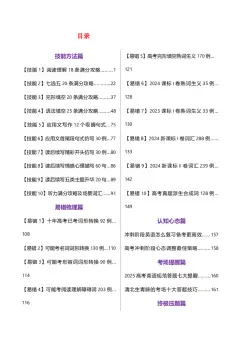
目录
读后续写一句多译(二)
五、我们期待着快乐、阳光和欢笑。
(1) We were looking forward to happiness, sunshine and laughter.
(2) We anticipate joy, brightness, and merriment.
(3) We eagerly await pleasure, warmth, and gaiety.
六、我抬起头,看到船长站在那里,面带温暖的微笑。
(1)I looked up and saw the captain standing with a warm smile.
(2)I lifted my head and saw the captain standing there, wearing a warm smile.
(3) Looking up, I spied the captain standing there, his face adorned with a genial smile.
七、她的父亲吻了一下她的脸颊。
(1)Her father brushed her cheek with a kiss.
(2)Her father kissed her cheek.
(3)Her father planted a kiss on her cheek.
(4) Her father bestowed a kiss upon her cheek.
八、下班后,Kathy赶去火车站,却被告知她已经误了火车。
(1) After work, Kathy hurried to the train station, only to be told that she had missed
the train.
(2)After work, Kathy rushed to the train station but was told that she had missed hertrain.
(3)Upon finishing work, Kathy made a dash for the train station but was disappointed
to learn that she had missed it.
保温小卷
阅读理解C篇---人与自我,突破性的汗液生物传感器
阅读理解D篇---人与自我,坚持练习才能获得持久的快乐
阅读理解七选五---人与自然,古树寿命长的原因
完形填空---人与社会,高速路汽车轮胎爆获救的感人故事
语法填空---人与社会,中国传统文化中“和谐”核心价值理念
增值礼包
2019-2023高考英语试题中高频词145例(附部分高考原句)
保温小卷
第二部分 阅读(共两节,满分50分)
第一节(共15小题:每小题2.5分,满分37.5分)
阅读下列短文,从每题所给的A、B、C、D四个选项中选出最佳选项。
C
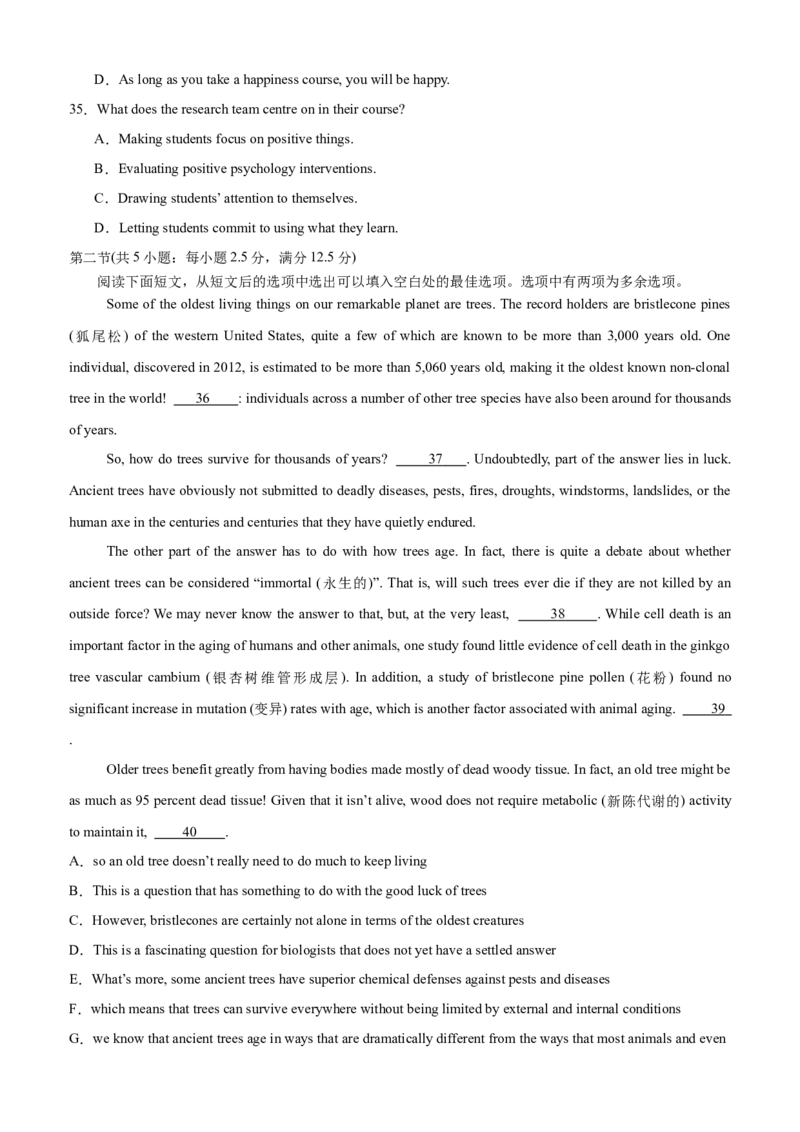
Researchers at the Tokyo University of Science (TUS) have developed a groundbreaking sweat biosensor that
opens up new possibilities for real-time health monitoring.
Wearable sensors, typically worn directly on the skin, can monitor vital signs such as heart rate, blood
pressure, and muscle activity. However, designing chemical sensors for detecting substance in bodily liquid, like
sweat, has proven more complex due to issues of skin irritation (刺激) and accuracy when integrated into clothing.
Addressing these challenges, the research team at TUS used a technique called “heat-transfer Printing” to fix a
thin, flexible chloride ion (氯离子) sensor onto a clothing base and then integrated it into clothes such as T-shirts.
Further, health signs such as chloride ion concentration in sweat can be measured by simply wearing them. By
moving the sensor outside of the clothing piece, skin irritation is prevented. The wicking effect (芯吸效应) of fiber
helps distributing sweat evenly between the sensor’s electrodes (电极), ensuring stable electrical contact and
therefore improving the accuracy.Additionally, the team carefully selected skin-friendly materials and conducted various experiments using
artificial sweat to prove the sensor’s accuracy in measuring chloride ion concentration. To assess its practicality, the
team tested the sensor on a volunteer who engaged in a 30-minute exercise on a still bicycle. Measurements of
bodily liquid were taken every five minutes and compared with the data collected by the sensor. The wearable sensor
reliably measured the concentration of chloride ions in sweat. Moreover, the sensor has the capability to deliver data
wirelessly, enabling real-time health monitoring.
This breakthrough can boost the development of advanced healthcare devices that offer precise and
convenient monitoring of important health indicators. With the power of these tiny electronics, researchers are
pushing the boundaries of healthcare innovation to improve disease prevention and overall well-being.
28.What is paragraph 2 mainly about?
A.Varieties of sweat biosensors.
B.Popularity of wearable equipment.
C.Complexity in monitoring vital body signs.
D.Difficulties in designing chemical sensors.
29.What contributes to the even distribution of sweat between the sensor’s electrodes?
A.The technique of heat-transfer printing.
B.The chloride ion sensor.
C.The wicking effect of fibre.
D.Selected skin-friendly materials.
30.What is the purpose of the test on the volunteer?
A.To evaluate the sensor’s reliability.
B.To improve the volunteer’s performance.
C.To determine the sensor’s duration.
D.To ensure the volunteer’s well-being.
31.What is the author’s attitude toward the new technology?
A.Critical.
B.Expectant.
C.Reserved.
D.Doubtful.
D
We can learn to be happy, but only get lasting benefits if we keep practising, a first-of-its-kind study has
revealed.
The team behind the University of Bristol’s “Science of Happiness” course had already discovered thatteaching students the latest scientific studies on happiness created a marked improvement in their well-being. But
their latest study found that these well-being boosts are short-lived unless the evidence-informed habits learnt on the
course — such as gratitude, exercise, meditation (冥想) or journaling—are kept up over the long-term.
Senior author Prof Bruce Hood said, “It’s like going to the gym — we can’t expect to do one class and be fit
forever. Just as with physical health, we have to continuously work on our mental health, otherwise the
improvements are temporary.”
Launched in 2018, the University of Bristol’s Science of Happiness course was the first of its kind in the UK.
It involves no exams or coursework, and teaches students what the latest peer-reviewed studies in psychology and
neuroscience (神经科学) say really makes us happy.
Students who took the course reported a 10 to 15% improvement in well-being. But only those who continued
implementing the course learnings maintained that improved well-being when they were surveyed again two years
on.
Published in the journal Higher Education, is the first to track well-being of students on a happiness course
long after they have left the course.
Prof Hood said, “This study shows that just doing a course — be that at the gym, a meditation retreat or on an
evidence-based happiness course like ours — is just the start: you must commit to using what you learn on a regular
basis.
“Much of what we teach revolves around (以……为中心) positive psychology interventions that shift your
attention away from yourself, by helping others, being with friends, gratitude or meditating.
32.What did the latest study find?
A.Humans need to be grateful.
B.Regular exercise alone brings long-term happiness.
C.It calls for consistent commitment to keep happiness lasting.
D.The latest scientific studies on happiness help create improved well-being.
33.Why did Prof Hood mention the gym in Paragraph 3?
A.To compare happiness with exercise.
B.To stress the importance of physical activities.
C.To explain why the finding is reasonable.
D.To prove the effectiveness of their study.
34.What may Prof Hood agree with?
A.It’s necessary to track the well-being of students.
B.Happiness can be learnt, but you have to work at it.
C.Learning happiness is as important as doing exercise.D.As long as you take a happiness course, you will be happy.
35.What does the research team centre on in their course?
A.Making students focus on positive things.
B.Evaluating positive psychology interventions.
C.Drawing students’ attention to themselves.
D.Letting students commit to using what they learn.
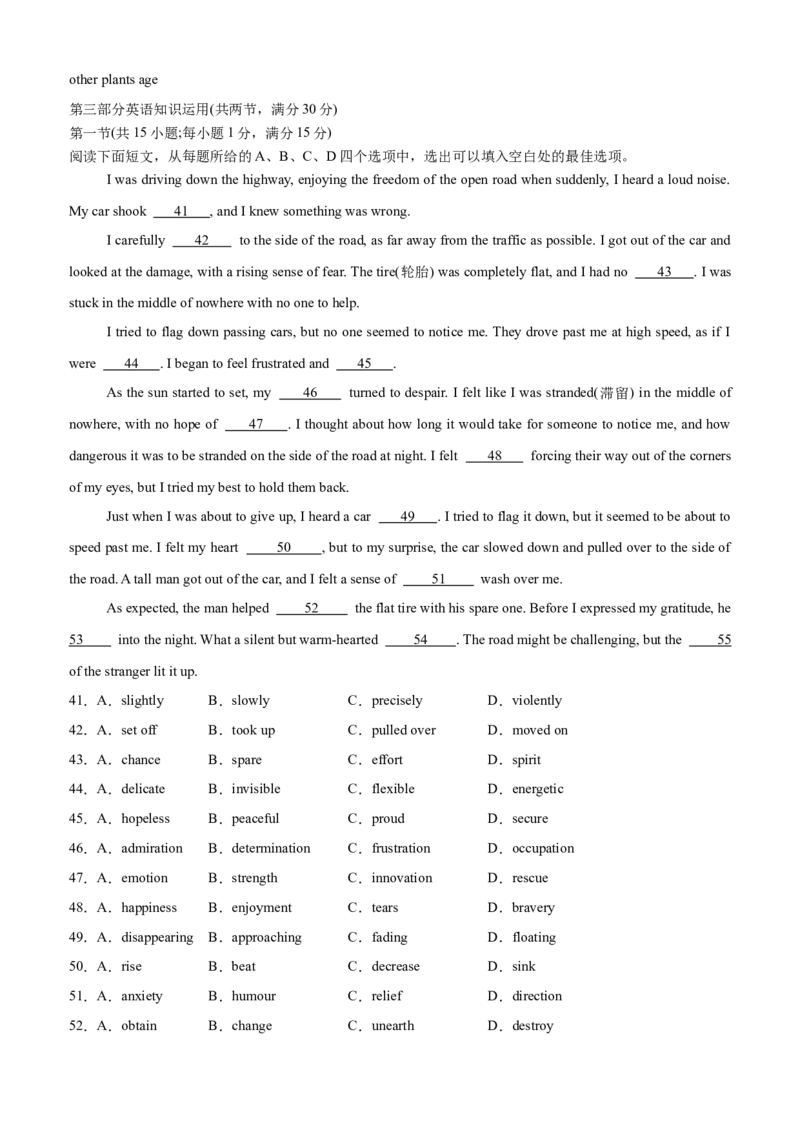
第二节(共5小题:每小题2.5分,满分12.5分)
阅读下面短文,从短文后的选项中选出可以填入空白处的最佳选项。选项中有两项为多余选项。
Some of the oldest living things on our remarkable planet are trees. The record holders are bristlecone pines
(狐尾松) of the western United States, quite a few of which are known to be more than 3,000 years old. One
individual, discovered in 2012, is estimated to be more than 5,060 years old, making it the oldest known non-clonal
tree in the world! 36 : individuals across a number of other tree species have also been around for thousands
of years.
So, how do trees survive for thousands of years? 3 7 . Undoubtedly, part of the answer lies in luck.
Ancient trees have obviously not submitted to deadly diseases, pests, fires, droughts, windstorms, landslides, or the
human axe in the centuries and centuries that they have quietly endured.
The other part of the answer has to do with how trees age. In fact, there is quite a debate about whether
ancient trees can be considered “immortal (永生的)”. That is, will such trees ever die if they are not killed by an
outside force? We may never know the answer to that, but, at the very least, 3 8 . While cell death is an
important factor in the aging of humans and other animals, one study found little evidence of cell death in the ginkgo
tree vascular cambium (银杏树维管形成层). In addition, a study of bristlecone pine pollen (花粉) found no
significant increase in mutation (变异) rates with age, which is another factor associated with animal aging. 3 9
.
Older trees benefit greatly from having bodies made mostly of dead woody tissue. In fact, an old tree might be
as much as 95 percent dead tissue! Given that it isn’t alive, wood does not require metabolic (新陈代谢的) activity
to maintain it, 40 .
A.so an old tree doesn’t really need to do much to keep living
B.This is a question that has something to do with the good luck of trees
C.However, bristlecones are certainly not alone in terms of the oldest creatures
D.This is a fascinating question for biologists that does not yet have a settled answer
E.What’s more, some ancient trees have superior chemical defenses against pests and diseases
F.which means that trees can survive everywhere without being limited by external and internal conditions
G.we know that ancient trees age in ways that are dramatically different from the ways that most animals and evenother plants age
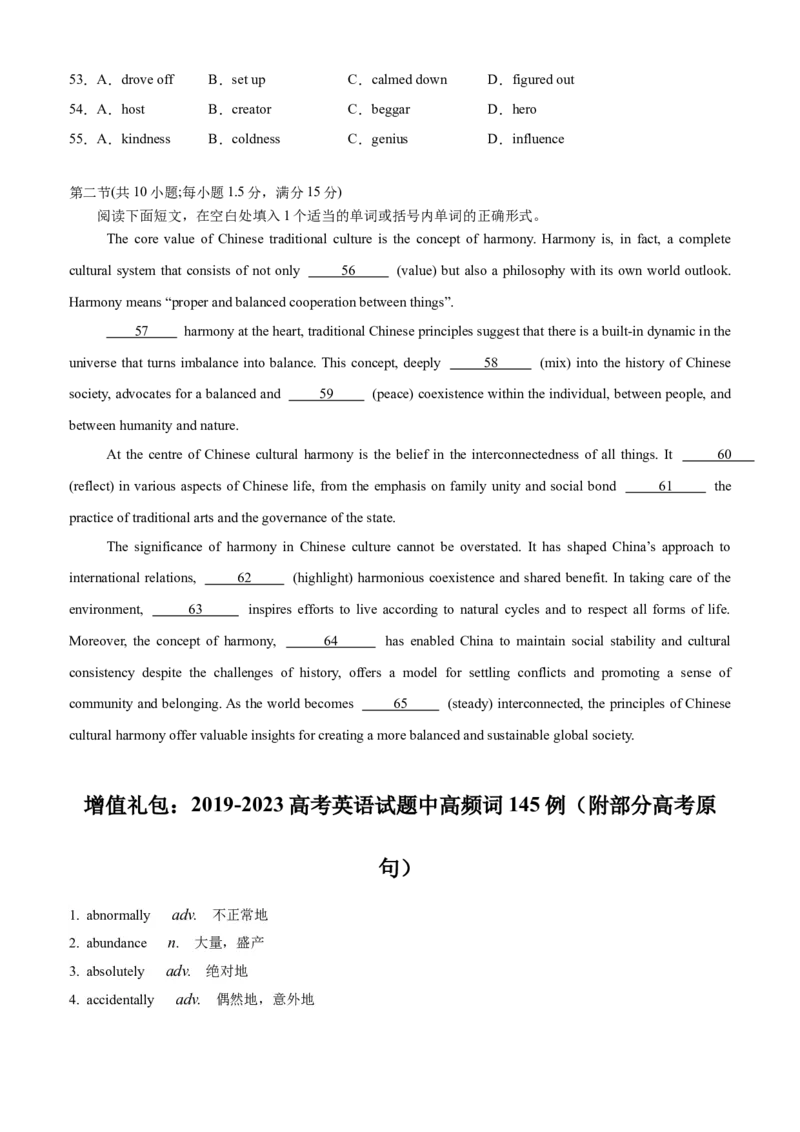
第三部分英语知识运用(共两节,满分30分)
第一节(共15小题;每小题1分,满分15分)
阅读下面短文,从每题所给的A、B、C、D四个选项中,选出可以填入空白处的最佳选项。
I was driving down the highway, enjoying the freedom of the open road when suddenly, I heard a loud noise.
My car shook 41 , and I knew something was wrong.
I carefully 42 to the side of the road, as far away from the traffic as possible. I got out of the car and
looked at the damage, with a rising sense of fear. The tire(轮胎) was completely flat, and I had no 43 . I was
stuck in the middle of nowhere with no one to help.
I tried to flag down passing cars, but no one seemed to notice me. They drove past me at high speed, as if I
were 44 . I began to feel frustrated and 45 .
As the sun started to set, my 46 turned to despair. I felt like I was stranded(滞留) in the middle of
nowhere, with no hope of 47 . I thought about how long it would take for someone to notice me, and how
dangerous it was to be stranded on the side of the road at night. I felt 48 forcing their way out of the corners
of my eyes, but I tried my best to hold them back.
Just when I was about to give up, I heard a car 49 . I tried to flag it down, but it seemed to be about to
speed past me. I felt my heart 50 , but to my surprise, the car slowed down and pulled over to the side of
the road. A tall man got out of the car, and I felt a sense of 51 wash over me.
As expected, the man helped 52 the flat tire with his spare one. Before I expressed my gratitude, he
53 into the night. What a silent but warm-hearted 54 . The road might be challenging, but the 55
of the stranger lit it up.
41.A.slightly B.slowly C.precisely D.violently
42.A.set off B.took up C.pulled over D.moved on
43.A.chance B.spare C.effort D.spirit
44.A.delicate B.invisible C.flexible D.energetic
45.A.hopeless B.peaceful C.proud D.secure
46.A.admiration B.determination C.frustration D.occupation
47.A.emotion B.strength C.innovation D.rescue
48.A.happiness B.enjoyment C.tears D.bravery
49.A.disappearing B.approaching C.fading D.floating
50.A.rise B.beat C.decrease D.sink
51.A.anxiety B.humour C.relief D.direction
52.A.obtain B.change C.unearth D.destroy53.A.drove off B.set up C.calmed down D.figured out
54.A.host B.creator C.beggar D.hero
55.A.kindness B.coldness C.genius D.influence
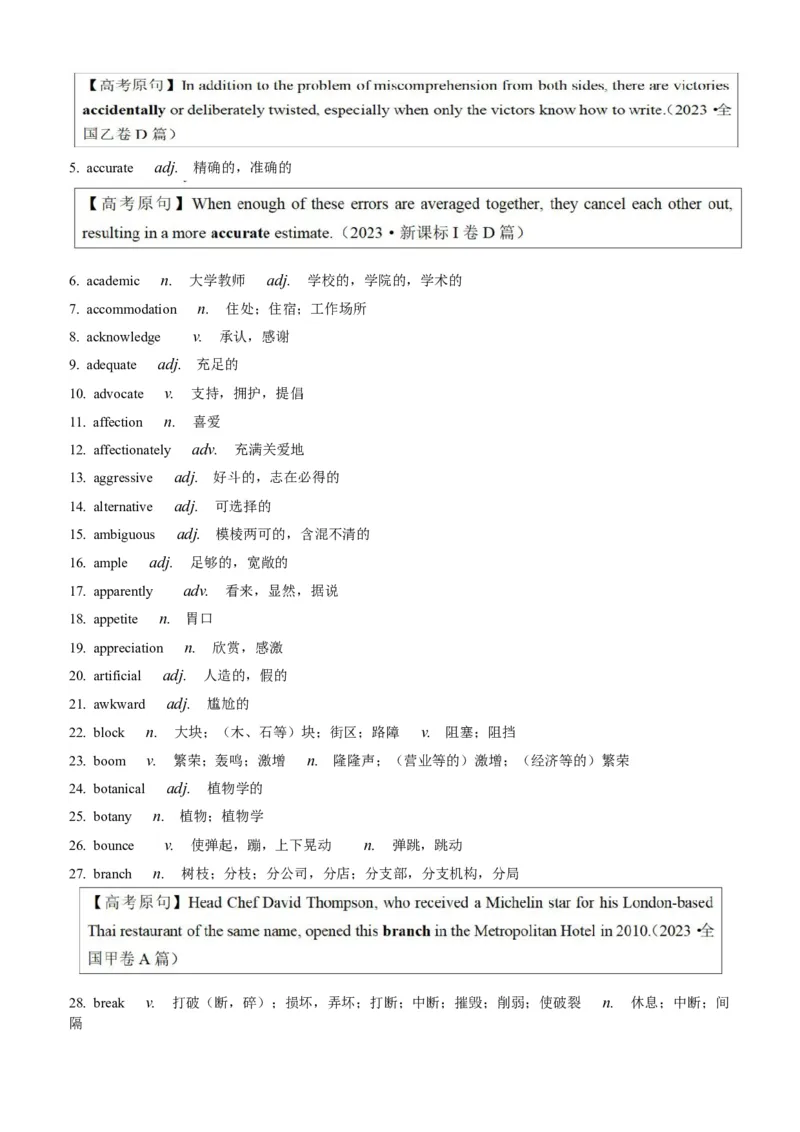
第二节(共10小题;每小题1.5分,满分15分)
阅读下面短文,在空白处填入1个适当的单词或括号内单词的正确形式。
The core value of Chinese traditional culture is the concept of harmony. Harmony is, in fact, a complete
cultural system that consists of not only 56 (value) but also a philosophy with its own world outlook.
Harmony means “proper and balanced cooperation between things”.
57 harmony at the heart, traditional Chinese principles suggest that there is a built-in dynamic in the
universe that turns imbalance into balance. This concept, deeply 58 (mix) into the history of Chinese
society, advocates for a balanced and 59 (peace) coexistence within the individual, between people, and
between humanity and nature.
At the centre of Chinese cultural harmony is the belief in the interconnectedness of all things. It 60
(reflect) in various aspects of Chinese life, from the emphasis on family unity and social bond 61 the
practice of traditional arts and the governance of the state.
The significance of harmony in Chinese culture cannot be overstated. It has shaped China’s approach to
international relations, 62 (highlight) harmonious coexistence and shared benefit. In taking care of the
environment, 63 inspires efforts to live according to natural cycles and to respect all forms of life.
Moreover, the concept of harmony, 64 has enabled China to maintain social stability and cultural
consistency despite the challenges of history, offers a model for settling conflicts and promoting a sense of
community and belonging. As the world becomes 65 (steady) interconnected, the principles of Chinese
cultural harmony offer valuable insights for creating a more balanced and sustainable global society.
增值礼包:2019-2023 高考英语试题中高频词 145 例(附部分高考原
句)
1. abnormally adv. 不正常地
2. abundance n. 大量,盛产
3. absolutely adv. 绝对地
4. accidentally adv. 偶然地,意外地5. accurate adj. 精确的,准确的
6. academic n. 大学教师 adj. 学校的,学院的,学术的
7. accommodation n. 住处;住宿;工作场所
8. acknowledge v. 承认,感谢
9. adequate adj. 充足的
10. advocate v. 支持,拥护,提倡
11. affection n. 喜爱
12. affectionately adv. 充满关爱地
13. aggressive adj. 好斗的,志在必得的
14. alternative adj. 可选择的
15. ambiguous adj. 模棱两可的,含混不清的
16. ample adj. 足够的,宽敞的
17. apparently adv. 看来,显然,据说
18. appetite n. 胃口
19. appreciation n. 欣赏,感激
20. artificial adj. 人造的,假的
21. awkward adj. 尴尬的
22. block n. 大块;(木、石等)块;街区;路障 v. 阻塞;阻挡
23. boom v. 繁荣;轰鸣;激增 n. 隆隆声;(营业等的)激增;(经济等的)繁荣
24. botanical adj. 植物学的
25. botany n. 植物;植物学
26. bounce v. 使弹起,蹦,上下晃动 n. 弹跳,跳动
27. branch n. 树枝;分枝;分公司,分店;分支部,分支机构,分局
28. break v. 打破(断,碎);损坏,弄坏;打断;中断;摧毁;削弱;使破裂 n. 休息;中断;间
隔29. breakthrough n. 重大进展,突破
30. brochure n. 资料(或广告)手册
31. campaign n. 运动;活动;战役 v. 参加运动;参加竞选
32. cancel v. 取消,撤销
33. cargo n. (船、飞机等装载的)货物34. casual adj. 偶然的,碰巧的;非正式的;临时的;不定
期的35. catalog n. 目录(册) v. 编目36. certificate n. 证明,证明书;文凭37. ceremony
n. 典礼,仪式38. character n. 特征,特性;性格;角色;人物;(汉)字,字体;品格
39. classify v. 把……分类,把……归类
40. compulsory adj. 强制的,必须做的,义务的
41. concentrate v. 专心,集中,聚集于,浓缩 n. 浓缩物,浓缩液
42. concrete adj. 具体的,确实的
43. confirm v. 确认,确定;证实,证明;批准
44. constant adj. 固定的,不变的;连续不断的
45. consult v. 请教;查阅;商议;咨询
46. continuous adj. 连续的,持续的,延伸的
47. contradictory adj. 相互矛盾的,不一致的
48. conventional adj. 传统的,惯例的
49. convey v. 运输;传送;表达;传递(思想、感情等)
50. convince v. 使确信,使信服,劝服,说服
51. critical adj. 批判的;吹毛求疵的;重大的;严重的;关键的
52. declare v. 宣言,声称,声明;断言
53. decline v. 减少,下降,衰退;谢绝,婉拒
54. delivery n. 递送;分娩;生产
55. depression n. 沮丧;抑郁;不景气
56. delicate adj. 精美的,易碎的57. dispose v. 除掉;处置;解决;处理
58. distinguish v. 区分,辨别,使出色
59. distinguished adj. 著名的;卓著的;高贵的
60. distribute v. 分发,分配
61. drawback n. 缺点,不利因素
62. ease n. 安适,悠闲;容易 v. 减轻;缓和;小心缓慢地移动
63. electric adj. 电的,电动的,用电的
64. electrical adj. 电气科学的,与电有关的
65. electricity n. 电,电学,电流
66. electronic adj. 电子的,电子器件的
67. emergency n. 紧急情况
68. endangered adj. 濒危的;有危险的
69. entertainment n. 娱乐,娱乐节目;招待70. equality n. 平等71. essential adj. 完全必要的,
极其重要的72. estimate v. & n. 估计,估价,估算
73. exactly adv. 确切地,恰好
74. explicit adj. 明确的;坦率的
75. exterior n. 外部,外表 adj. 外部的,外表的
76. external adj. 外部的,外来的,外面的
77. extinct adj. 灭绝的,熄灭的
78. extraordinary adj. 非凡的;异乎寻常的
79. fierce adj. 凶猛的,激烈的
80. fix v. 使固定;确定;安排
81. flexible adj. 灵活的,有弹性的
82. freeze v. (因为恐惧等)呆立不动,呆住;(使)结冰
83. happening n. 事件,偶然发生的事84. increasingly adv. 越来越多地
85.
infect vt. 传染,染上86. informed adj. 有知识的,见多识广的;消息灵通的87.
initially adv. 最初地
88. institute n. 学院;院;所89. intelligence n. 智力;情报90. liberal adj. 慷慨的;丰富的;
自由的
91. mature adj. 成熟的;慎重的 v. (情感和认识)成熟;长成;充分发展
92. merchant adj. 商业的 n. 商人
93. motivation n. 动机
94. oblige v. 迫使,责成;使感激
95. occupation n. 工作,职业;占领;居住
96. particular adj. 特殊的,个别的
97. pedestrian n. 步行者,行人
98. plain n. 平原,大片平地 adj. 清楚的;易懂的;简朴的;单色的;相貌平平的;坦白的
adv. 简直;绝对
99. portable adj. 便携的
100. preference n. 偏爱
101. preserve v. 维护,保护
102. privilege n. 特权,荣幸,光荣 v. 给予特权;特别优待103. promote v. 促进,提升,促销,推广,倡议
104. punctually adv. 按时地
105. random adj. 随意的,未经事先考虑的
106. rarely adv. 很少,难得
107. recall v. 回忆;召回,收回
108. recreation n. 娱乐,消遣
109. reference n. 提及,涉及;参考;推荐信,推荐人
110. refresh v. 使恢复精力
111. regulation n. 规则
112. release v. 放开,排放,释放;首映;发布 n. 释放;宣泄;发行(影片/新闻)
113. review v. 复习;回顾;反思;写评论 n. 复习,评论,报告,回顾
114. ridiculous adj. 荒谬的,可笑的
115. sensitive adj. 敏感的;体贴的
116. scarcely adv. 几乎不
117. schedule n. 日程安排,时刻表 v. 安排,列入进度表
118. shelter n. 居所;遮盖物;避难所;保护;掩蔽 v. 掩蔽;保护;提供避难所;避难
119. skeptical adj. 怀疑的
120. slightly adv. 略微,稍微
121. strike v. 敲;打;侵袭 n. 罢工
122. studio n. 工作室,演播室
123. survive v. 幸存,存活,幸免于,比……活得长
124. swallow v. 吞下,咽下;抑制 n. 燕子
125. target n. 目标,对象,靶子 v. 把……作为攻击目标,把……对准
126. temporary adj. 暂时的127. tiresome adj. 令人厌倦的,讨厌的
128. tradition n. 传统,风俗,惯例
129. trick n. 诡计,骗局,恶作剧;戏法;诀窍 v. 欺骗,欺诈
130. typical adj. 典型的,有代表性的
131. urge v. 敦促,催促,力劝;强烈主张;鼓励;促使 n. 强烈欲望;冲动
132. unique adj. 独特的,独一无二的
133. vacant adj. 空缺的,未被占用的
134. vague adj. 模糊的,不明确的
135. vain adj. 徒劳的,白费的
136. value n. 价值;重要性 v. 评价;重视;估价
137. valid adj. 有效的
138. vessel n. 船舶;容器,器皿;血管
139. violence n. 暴力;猛烈,剧烈
140. visual adj. 视觉的
141. vital adj. 必不可少的,极其重要的;维持生命活动所必需的;充满活力的
142. vivid adj. 生动的;逼真的
143. weave v. 织,编
144. weigh v. 称……的重量;权衡145. withdraw v. 退出,取消,撤回,取钱
增值礼包:应用文押题
假定你是你们班研究项目“Campaigning for a Greener School”的负责人,上周该项目获得了学校一
等奖,请你用英语写一篇稿子给全班同学介绍如何做好该项目的经验,内容包括:
1. 项目的目的;
2. 分享成功的经验;
3. 你的期待。
增值礼包:读后续写押题(竞选谦让之美德)
阅读下面材料,根据其内容和所给段落开头语续写两段,使之构成一篇完整的短文。
Ahmad sat at a table in the school cafeteria. The election for fifth-grade class president was only about two
weeks away, and Ahmad knew it was time to begin seriously campaigning.
“I think you need a catchy slogan, ” said his friend,twirling(旋转)a pencil as he thought. “How
about Authentic and Approachable: Always Ahmad? ”Ahmad beamed. “It’s got a nice ring to it.”
“You need something that people will remember. They won’t forget that Olivia was the fourth-grade president
last year and they’ll like the fact that she has experience, “his friend added. Ahmad nodded, grinning. “I know, but I
think I can bring some fresh ideas. Do you know Olivia’s plans for the campaign?”
Olivia, meanwhile, sat at her kitchen table with her twin sister. They were eating cupcakes while discussing
what to put on the signs they planned to make. At the center of the table were poster board in bright colors, markers,
pens, colored pencils, and crayons.
“Where should we start?” asked her sister ,brushing the cream from her hands. “What do you want people to
know about you?” Olivia raised her head and thought for a moment. “I want them to know I’m a hard worker,“ she
said, eyes bright and alert. “I have experience as class president. I also have a lot of ideas of making this a great
school year.” “Experience is truly important,” commented her sister. “Dad once told me he would vote for someone
who had proven to be the kind of leader he was looking for in his company.”
An enormous grin spread across Olivia’s face. “What about Olivia for President-All Original, All Experience,”
suggested her sister. “Oh, or Olivia for President, Opportunity for All?“ “I like both of those, ”exclaimed Olivia.“
The first one reminds the voters of my experience. The second one lets them know I will listen to their ideas andwork for and with them. ”Her words fell as she took out a fat red marker and began the first poster.
注意:
1. 续写词数应为150左右;
2. 请按如下格式在答题卡的相应位置作答。
Later on, Ms. Pond announced, “Now, we’ve two candidates with same votes.”
__________________________________
Ahmad went to the front of the room to begin his speech after Olivia.