 夜雨聆风
夜雨聆风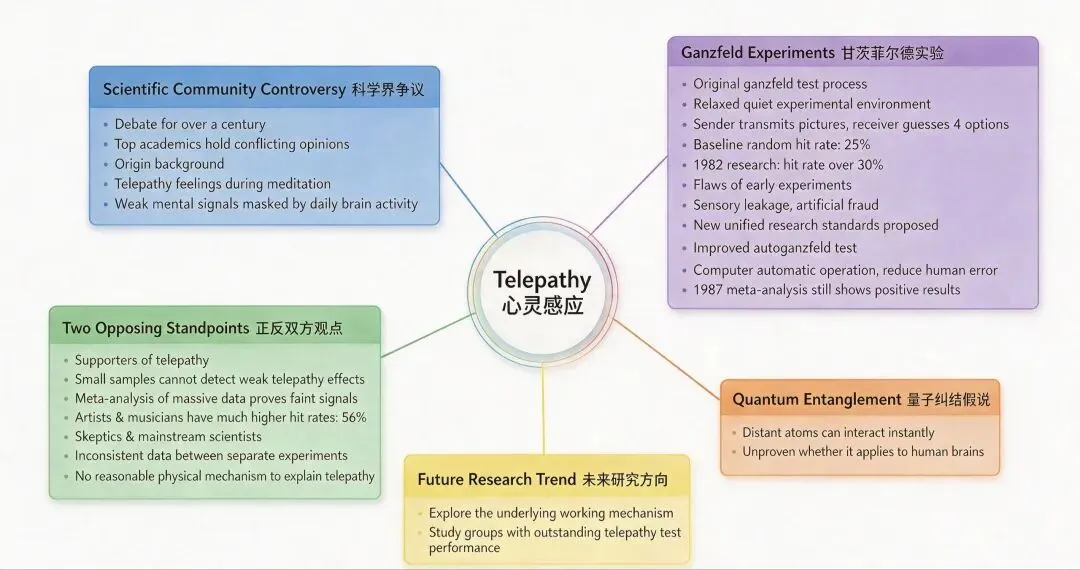
After reading the article Telepathy, I have gained a better understanding of how scientists investigate controversial ideas. The article explores whether humans can communicate through thoughts alone and introduces the debate between supporters and sceptics of telepathy. Although I was initially doubtful about the existence of telepathy, the scientific experiments mentioned in the article showed me that even unusual ideas can be studied through systematic research.
The Ganzfeld experiments were particularly interesting because they attempted to test telepathy under controlled conditions. Although some results appeared to support the possibility of telepathic communication, the article also pointed out that these findings could be explained by other factors, such as experimental errors or sensory leakage. This reminds me that scientific conclusions should not be based only on limited evidence.
In my opinion, the most valuable lesson from this article is the importance of maintaining a balance between curiosity and critical thinking. Scientists should be open to exploring new possibilities, but they must also require reliable evidence and reasonable explanations. Even if telepathy has not been widely accepted, the research process itself demonstrates how science develops through questioning, testing, and continuous improvement.
Overall, this article has encouraged me to think more critically about scientific discoveries. It shows that the search for truth often involves uncertainty, but careful investigation can gradually expand human understanding.