 夜雨聆风
夜雨聆风Section II Reading Comprehension
Part A
Directions: Read the following four texts. Answer the questions below each text by choosing A, B, C or D. Mark your answers on the ANSWER SHEET.
Text 3
When the astronauts of Artemis II looked back at Earth this spring, they marvelled at the same luminous blue-and-white sphere that had captivated the Apollo crews half a century earlier. Yet satellite instruments tell a less flattering story. Measured objectively rather than admired subjectively, the planet is growing dimmer: the fraction of sunlight it bounces back into space has been quietly shrinking for two decades, and the implications reach far beyond aesthetics.
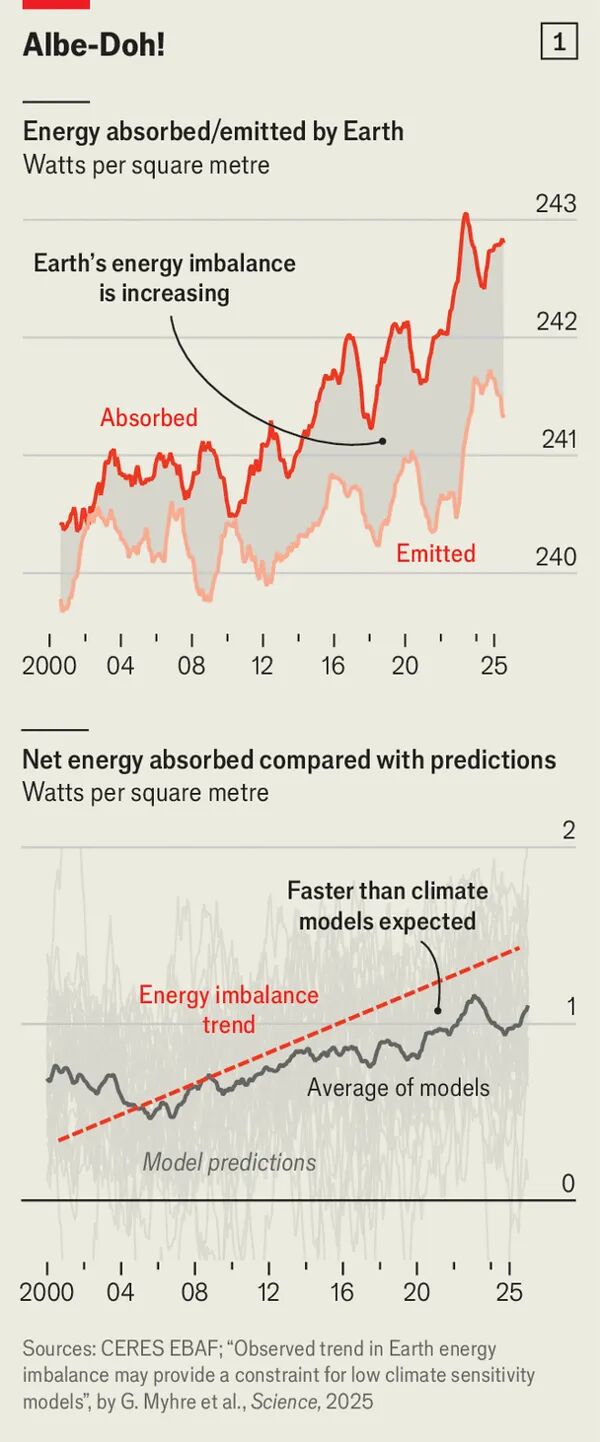
Since the late 1990s, a NASA programme called CERES has used satellite sensors to keep a running account of the planet's energy budget. It tracks how much sunlight arrives, how much of that is reflected away as albedo, and how much heat the planet subsequently radiates back into space as infrared. When more energy enters the system than leaves it, the surplus—known as Earth's energy imbalance—is stored somewhere within the climate system, mostly in the oceans. A balanced budget would mean a stable climate; a growing surplus means the opposite.
That surplus is not merely growing; it has more than doubled since the turn of the century. Because such a finding could easily be dismissed as a quirk of satellite calibration, researchers sought a second, independent check. A worldwide network of drifting ocean probes, known as Argo, continuously records temperature and salt content at depths reaching six kilometres, and its data confirm that the extra energy is indeed accumulating in the sea, exactly where CERES predicts it should. Bjorn Stevens, who directs a climate institute in Hamburg, has described the convergence of the two datasets as a turning point: for the first time, he suggests, scientists can trust what the measurements are telling them rather than merely theorise about it.
Two forces appear to be driving the dimming. One is an unintended consequence of cleaner air: rules curbing sulphur emissions from factories and, since 2020, from ocean-going ships have scrubbed the skies of reflective sulphate particles that once bounced sunlight back to space and brightened low clouds. The other is a feedback loop inherent to warming itself—shrinking sea ice, retreating glaciers and thinning cloud cover all reflect less sunlight than the surfaces and clouds they replace, so warming begets further dimming, which begets further warming.
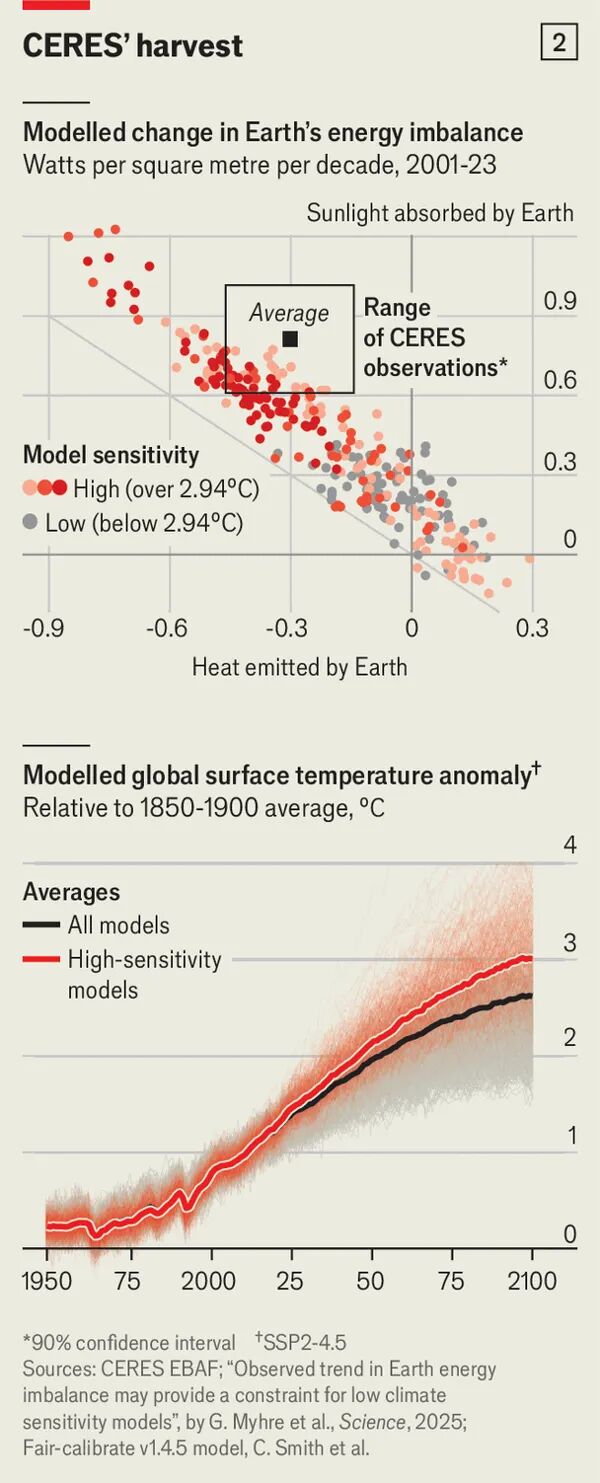
What unsettles climate scientists most is not that these mechanisms exist—both were long anticipated in theory—but that the computer models underpinning official climate projections cannot reproduce the scale of what satellites and ocean floats are now recording. When researchers checked which models came closest to matching the observed imbalance, the ones that succeeded tended to share a common trait: an assumption that the climate is more sensitive to added greenhouse gases than the current mainstream estimate allows. If that assumption is closer to reality, near-term warming could outpace the projections most governments currently rely on.
Not every scientist agrees on how much weight to give this evidence, and rival explanations continue to compete for support. But a growing number now argue that the more urgent crisis is not simply that the planet is warming, but that the tools designed to forecast how fast it will do so are quietly failing a real-world test. Sharpening those tools, they say, is no longer an academic curiosity; it is a precondition for knowing what is actually coming.
31. According to the first two paragraphs, satellite observations have revealed that ____
[A] the aesthetic grandeur documented by Artemis II astronauts has substantially deteriorated over time
[B] NASA's monitoring initiative was primarily designed to verify astronauts' subjective visual impressions
[C] the accumulation of atmospheric pollutants has visibly tarnished the planet's appearance from space
[D] Earth's diminishing reflectivity contradicts the optimistic imagery captured by recent astronauts
32. The Argo ocean-float data is mentioned in Paragraph 3 mainly to ____
[A] reinforce the credibility of the CERES findings through an independently derived line of evidence
[B] introduce an alternative methodology capable of superseding satellite-based measurements entirely
[C] illustrate the logistical challenges involved in monitoring temperature changes at extreme ocean depths
[D] demonstrate that oceanic heat absorption occurs independently of the broader planetary energy imbalance
33. It can be inferred from Paragraph 4 that efforts to reduce air pollution from shipping ____
[A] have proven largely ineffective at lowering atmospheric concentrations of reflective particles
[B] have inadvertently contributed to the very warming trend they were never intended to address
[C] were implemented specifically to counteract the feedback loop caused by melting ice and retreating glaciers
[D] remain controversial among policymakers due to their negligible impact on cloud brightness
34. What is most concerning to climate scientists, according to Paragraph 5?
[A] The theoretical mechanisms behind the dimming trend had never previously been considered plausible
[B] The mainstream estimate of climate sensitivity has already been revised upward by most researchers
[C] Existing climate models fail to capture a phenomenon that satellite and ocean data confirm is occurring
[D] Governments have consistently ignored scientific warnings about the pace of near-term climate change
35. Which of the following best captures the central argument of the text?
[A] Rival scientific camps remain deadlocked over which single factor best explains planetary dimming
[B] The reliability of climate forecasting tools has become as pressing a concern as warming itself
[C] Satellite technology has definitively resolved earlier uncertainties surrounding Earth's energy budget
[D] International regulations on industrial emissions should be reconsidered in light of their climate impact
附注:根据历年考研英语真题阅读题源外刊等,摘选最新文章,模拟仿真出题。
参考答案见以下。
Quick look: DABCB
31.【正确答案】D
【解析】题型:细节对比题
定位:第一段"astronauts...marvelled at the same luminous...sphere...Yet satellite instruments tell a less flattering story...the planet is growing dimmer."
分析:首段构建了一组鲜明对比——宇航员肉眼所见的地球依旧壮美如初,但卫星仪器记录下的客观数据却揭示出行星正在变暗这一"不那么讨喜"的事实。选项D"地球反照率的下降与近期宇航员所记录的乐观景象相矛盾"精准捕捉了这一"主观印象vs客观数据"的核心对比。
干扰项:[A]"宇航员记录的美学壮丽已实质性衰退"——事实相反,原文明确说宇航员看到的景象与阿波罗时代"同样"壮丽,衰退的是仪器测得的反照率,而非肉眼可见的视觉印象;[B]"NASA的监测项目主要是为了验证宇航员的主观视觉印象"——无中生有且张冠李戴,CERES项目是独立的仪器测量项目,并非为验证宇航员印象而设立;[C]"大气污染物的累积已使地球外观明显失色"——无中生有并程度夸大,原文并未提及"肉眼可见的失色",变暗是仪器测得的量化趋势。
32.【正确答案】A
【解析】题型:举例目的题
定位:第三段"researchers sought a second, independent check...confirms that the extra energy is indeed accumulating in the sea, exactly where CERES predicts it should."
分析:Argo浮标数据的作用是为CERES的卫星数据提供一条完全独立的验证路径,二者相互印证,从而增强"地球能量失衡正在加剧"这一结论的可信度。选项A"通过一条独立获得的证据链强化CERES研究结果的可信度"准确概括了这一论证功能。
干扰项:[B]"引入一种可完全取代卫星测量的替代方法"——无中生有且程度夸大,Argo是"补充验证"而非"取代";[C]"说明在极深海域监测温度变化所面临的技术难题"——无中生有,原文未讨论监测的技术困难;[D]"证明海洋热吸收的发生独立于更广泛的行星能量失衡"——事实相反,原文强调的正是海洋热量积累与CERES预测"恰好吻合",二者高度一致而非彼此独立。
33.【正确答案】B
【解析】题型:推理判断题
定位:第四段"an unintended consequence of cleaner air. Rules curbing sulphur emissions...have scrubbed the skies of reflective sulphate particles...that once bounced sunlight back to space."
分析:本段揭示了一层反直觉的因果关系:治理空气污染、削减硫排放的环保举措,客观上却清除了原本具有降温效果的反光颗粒物,从而"意外地"加剧了变暖趋势。选项B"无意中助长了它们本无意应对的这场变暖趋势"精确点出了这层"好心办坏事"的反讽逻辑。
干扰项:[A]"在降低反光颗粒物大气浓度方面收效甚微"——事实相反,原文恰恰说明这些法规确实有效清除了硫酸盐颗粒物,这正是问题所在;[C]"是专门为抵消冰川融化引发的反馈效应而制定的"——无中生有并强加因果,减排法规的初衷是治理空气污染,并非针对冰川反馈;[D]"因对云层亮度影响甚微而在决策者中饱受争议"——程度夸大且事实相反,原文未提及决策者的争议,且这一影响被认定为变暗的重要成因,而非"甚微"。
34.【正确答案】C
【解析】题型:推理判断题
定位:第五段"the computer models underpinning official climate projections cannot reproduce the scale of what satellites and ocean floats are now recording."
分析:本段指出,真正令科学家不安的并非变暗机制本身(这些机制早有理论预期),而是当前用于制定官方气候预测的计算机模型,竟无法复现卫星与海洋浮标已实测到的变化幅度。选项C"现有气候模型未能捕捉到卫星与海洋数据已证实正在发生的现象"是对这一核心担忧的准确转述。
干扰项:[A]"变暗趋势背后的理论机制此前从未被认为具有可信性"——事实相反,原文明确指出这些机制"早已在理论上被预见到";[B]"气候敏感度的主流估计值已被大多数研究者上调"——强加因果并程度夸大,原文只是说"若"这一假设更接近现实,"则"近期变暖可能超出预期,属于有条件的推测,并非既成的共识转变;[D]"各国政府一直无视有关近期气候变化速度的科学警告"——无中生有,本段并未涉及政府反应这一话题。
35.【正确答案】B
【解析】题型:主旨大意题
定位:末段"the more urgent crisis is not simply that the planet is warming, but that the tools designed to forecast how fast it will do so are quietly failing a real-world test."
分析:全文由"地球变暗"这一现象切入,逐层递进到"模型无法复现观测数据"这一更深层担忧,末段将此归纳升华为全文核心论点——真正紧迫的危机并非变暖本身,而是气候预测工具本身的可靠性正面临考验。选项B"气候预测工具的可靠性已成为与变暖本身同等紧迫的关切"精准提炼了这一主旨。
干扰项:[A]"对立的科学阵营在何种单一因素能最佳解释行星变暗上仍陷入僵局"——以偏概全并程度夸大,原文呈现的是两种互补而非互斥的解释,全文重点也不在"哪个解释正确"的争论,而在模型本身的失效;[C]"卫星技术已彻底解决了此前围绕地球能量收支的不确定性"——事实相反,卫星技术恰恰是揭示模型无法复现观测结果这一新不确定性的手段,而非"解决"了不确定性;[D]"国际社会应重新审视工业排放法规对气候的影响"——无中生有并偷换概念,全文落脚于科学认知/模型可靠性问题,并未提出政策层面的排放法规建议。
【词汇注释】
albedo: noun (SCIENCE) the fraction of sunlight that a surface or planet reflects back into space 反照率(行星或表面反射太阳光的比例)
corroborate: verb (CONFIRM) to provide evidence that supports or confirms a statement, theory, or finding 证实;佐证
inherent: adjective (BASIC QUALITY) existing as a natural or basic part of something 固有的;内在的(文中指云层与冰雪反馈效应是变暖过程本身固有的机制)
underpin: verb (SUPPORT) to support a system, idea, or argument and help it to function effectively 构成…的基础;支撑
reproduce: verb (COPY) to produce something again in exactly the same way 复现;再现(文中指气候模型未能复现卫星与海洋实测到的失衡幅度)
unsettle: verb (WORRY) to make someone feel worried, confused, or anxious 使不安;使担忧
outpace: verb (EXCEED) to develop or increase more quickly than someone or something else 超过…的速度;快于
【长难句】When researchers checked which models came closest to matching the observed imbalance, the ones that succeeded tended to share a common trait: an assumption that the climate is more sensitive to added greenhouse gases than the current mainstream estimate allows.
When引导时间状语从句,其中checked后接which引导的宾语从句(which models came closest to matching the observed imbalance)作checked的宾语; 主句主干为the ones...tended to share a common trait(那些……的模型往往具有一个共同特征),the ones后接that引导的定语从句(that succeeded)修饰the ones; 冒号后an assumption是common trait的同位语,进一步说明这个"共同特征"的具体内容;assumption后接that引导的同位语从句(that the climate is more sensitive...)交代假设的具体内容,该同位语从句内部又嵌套了than引导的比较状语从句(than the current mainstream estimate allows)。
【参考译文】
今年春天,当“阿耳忒弥斯二号”的宇航员们回望地球时,他们惊叹于那颗与半个世纪前曾令“阿波罗”号宇航员们着迷的、同样璀璨的蓝白球体。然而,卫星仪器所揭示的情况却没那么美好。若以客观测量而非主观欣赏的角度来看,这颗行星正变得越来越暗淡:它反射回太空的阳光比例在过去二十年间一直在悄然下降,而其影响远不止于美学层面。
自20世纪90年代末以来,美国宇航局(NASA)的一个名为“塞雷斯”(CERES)的项目一直利用卫星传感器持续监测地球的能量收支。该项目追踪入射的太阳光总量、其中作为反照率反射回太空的量,以及地球随后以红外线形式向太空辐射回的热量。当进入系统的能量多于离开系统的能量时,这一盈余——即地球能量失衡——会被储存在气候系统的某个地方,主要是在海洋中。能量收支平衡意味着气候稳定;盈余的增加则意味着相反的情况。
这一盈余不仅在持续增长,自本世纪初以来其规模已翻了一番有余。由于此类发现很容易被归因于卫星校准的偏差,研究人员因此寻求了第二项独立验证。一个名为“阿戈”(Argo)的全球漂流海洋探测器网络,持续记录着深达六公里的水温和盐度数据,其数据证实,多余的能量确实正积聚在海洋中,这与CERES的预测完全一致。汉堡某气候研究所所长比约恩·史蒂文斯将这两组数据的一致性描述为一个转折点:他指出,科学家们首次能够相信测量数据所揭示的内容,而非仅仅停留在理论推测上。
似乎有两种力量正在推动这种“变暗”现象。其一是空气变清洁带来的意外后果:限制工厂硫排放的法规,以及自2020年起针对远洋船舶的同类法规,已将曾将阳光反射回太空并使低云变亮的反射性硫酸盐颗粒从天空中清除。另一股力量则是变暖本身固有的反馈循环——缩减的海冰、退缩的冰川以及变薄的云层,其反射的阳光都比它们所取代的地表和云层要少,因此变暖导致进一步的变暗,而变暗又导致进一步的变暖。
最让气候科学家感到不安的并非这些机制的存在——这两者在理论上早已被预料到——而是支撑官方气候预测的计算机模型无法再现卫星和海洋浮标目前记录到的现象规模。当研究人员核查哪些模型最接近观测到的失衡现象时,成功的模型往往具有一个共同特征:即假设气候对新增温室气体的敏感度高于当前主流估计。如果这一假设更接近现实,那么短期内的变暖速度可能会超过大多数政府目前所依据的预测。
并非所有科学家都认同应给予这一证据多少重视,相互对立的解释仍在争夺支持。但越来越多的人现在认为,更紧迫的危机不仅仅在于地球正在变暖,而在于那些用于预测变暖速度的工具正在悄然经受现实世界的考验而失败。他们表示,完善这些工具已不再是学术上的好奇,而是了解未来实际将发生什么的先决条件。
附注: