 夜雨聆风
夜雨聆风
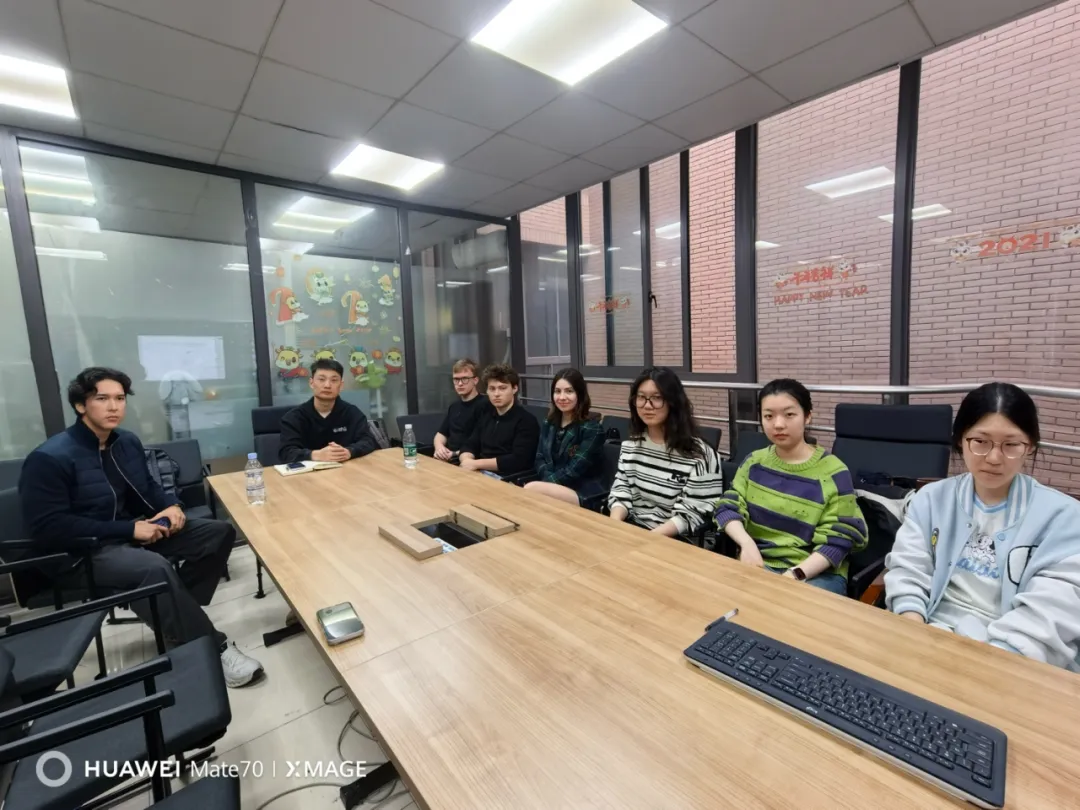
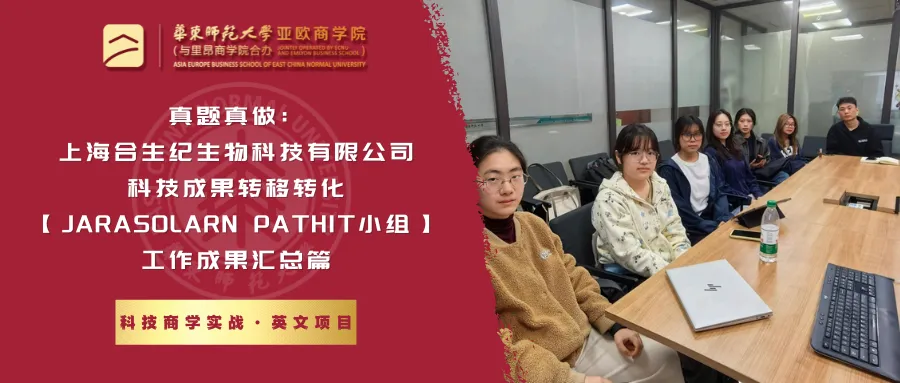
合作企业:上海合生纪生物科技有限公司
所属学院:华东师范大学亚欧商学院
专业年级:2024级本科班
团队成员:DVOINIKOV EGOR,刘蕴琦,黄思祺,吴佳楠,MILLER ARTUR,SAGIT ASANBI,RODRIGUEZ SHWANCHE LIDIA VANESSA
01
Project Origin & Company Overview
Shanghai SynBioEra Biotechnology Co., Ltd. (合生纪) is an early-stage synthetic biology company spun off from Professor Haifeng Ye's research team at East China Normal University. It is, in other words, a university technology transfer case: a company built directly on academic research that now has to survive in a commercial market. Its core technology centers on engineered probiotic strains and smart living cell therapeutics — a “smart living drug factory” working inside the body — targeting metabolic conditions such as hyperuricemia, diabetes, chronic wound healing and anti-aging.
The science is strong: 50+ published papers, 30+ patent applications with 20+ granted, multiple national research grants, and two parallel pipelines — a natural product line already commercializing in China and Hong Kong, and an engineered line pursuing FDA GRAS certification. What the company did not have when we met it was a brand. No professional website, no unified visual identity, and no coherent way of explaining itself to anyone outside the laboratory. The gap was not scientific but commercial: research results that could not yet be understood, trusted or acted on by investors, partners or consumers.
02
Our Project and Workflow
Our task was to build a complete brand system and translate the company's scientific assets into something investors, channel partners and consumers could all understand. We organized everything around two themes we identified as the core of its identity: cutting-edge science as foundation, accessible technology for humanity. Holding those two ideas together became the test we applied to every deliverable.
We deliberately worked through professional business methods rather than intuition or personal taste. A mixed-method design combined qualitative stakeholder interviews with structured competitive data; three standardized instruments underpinned the process — a founder interview guide covering business objectives, stakeholder priorities and compliance red lines; a benchmarking template evaluating peer companies across information architecture, visual identity, content strategy and messaging; and Keller's CBBE pyramid as the framework for brand equity. Findings were then visualized through multi-dimensional evaluation models: a quadrant chart plotting technical barriers against commercialization speed, a strategic group map plotting brand tone against development stage with bubble size for company scale, and a radar chart comparing SynBioEra with the industry average across five capability dimensions. Every design decision we later defended to the client could be traced back to one of these instruments.
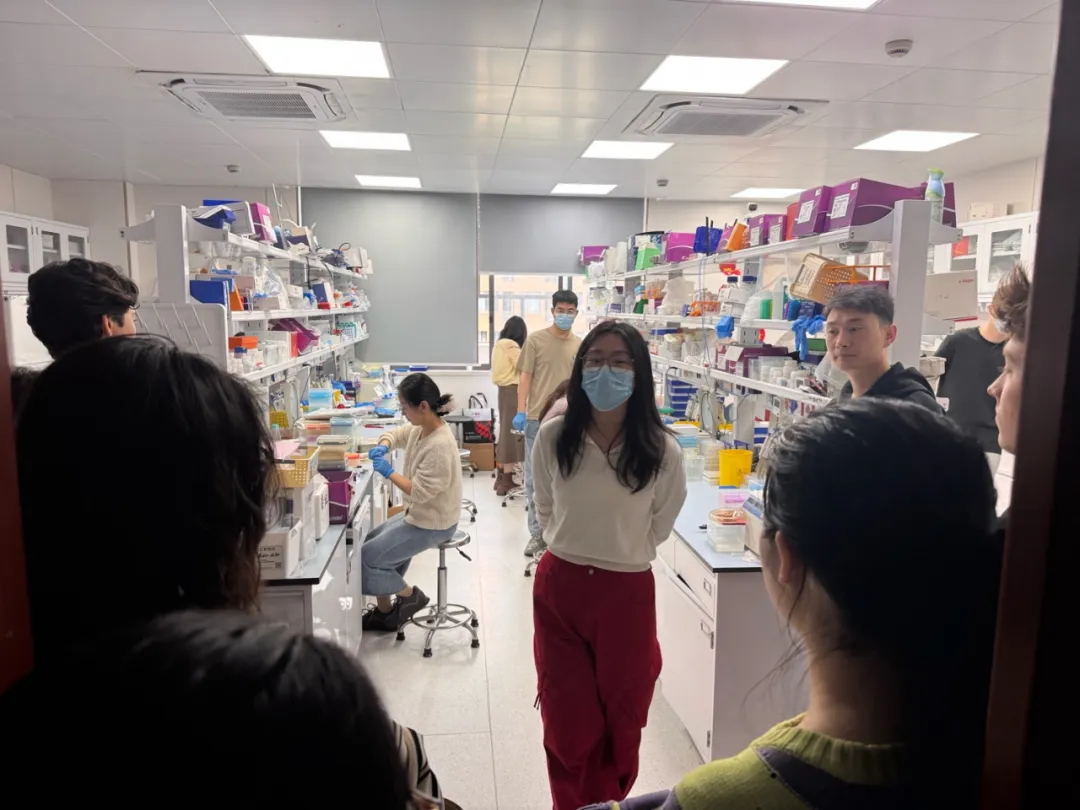
The work ran across four sub-teams following an MVP logic adapted for science-based startups, structured into six iterative phases from stakeholder research through to final handover:
• Competitor and market research: we studied 20 Chinese and international companies in the same field and compared them on two charts. SynBioEra turned out to fill a gap in the market — few companies have both strong, hard-to-copy technology and a product already on sale.
• Brand analysis: Keller's CBBE pyramid and SWOT analysis to define brand identity, positioning and a three-year roadmap moving from awareness building to resonance.
• Logo and slogan: a rounded blue–green emblem reading as body, organ and microbiome in balance, plus a bilingual slogan system — “Invisible care, visible health” / “关怀无声,健康有型”.
• Website: architecture, bilingual content and front-end development of a six-page site (About Us, Pipeline, Products, Science, Investors, Contact), taken from a single-page prototype through three versions, with a packaged code handover.
03
Real Difficulties & Solutions
The language barrier was the most immediate. Brand communication across Chinese and English is not a translation task: a credential that carries weight domestically can mean nothing internationally. We learned this concretely when our company supervisor pointed out that the “985” university label we had used was meaningless to overseas readers, and that QS World University Rankings should be used instead. We stopped treating the two versions as one text in two languages and planned them as parallel but distinct content streams.
Time pressure was the second. Research, analysis and creative output had to happen in parallel, so decisions were often made before the supporting research was complete. Our answer was continuous sharing across sub-teams rather than sharing only at scheduled checkpoints — when the website team did not know what the brand team had found, the outputs drifted apart.
The hardest challenge was identifying needs the client had never stated. SynBioEra knew it needed a logo and a website. It had not articulated the regulation that ordinary food may not advertise health effects while registered supplements may — which forced us to restructure the Products page into two labeled columns with health claims only on the supplement side — nor the investor communication gap left by a placeholder Investors page, which we rebuilt into a full pitch section. Each required a judgment call about whether to raise the issue and how to build a response into the deliverable without overstepping our scope.
04
Support from Our Mentors
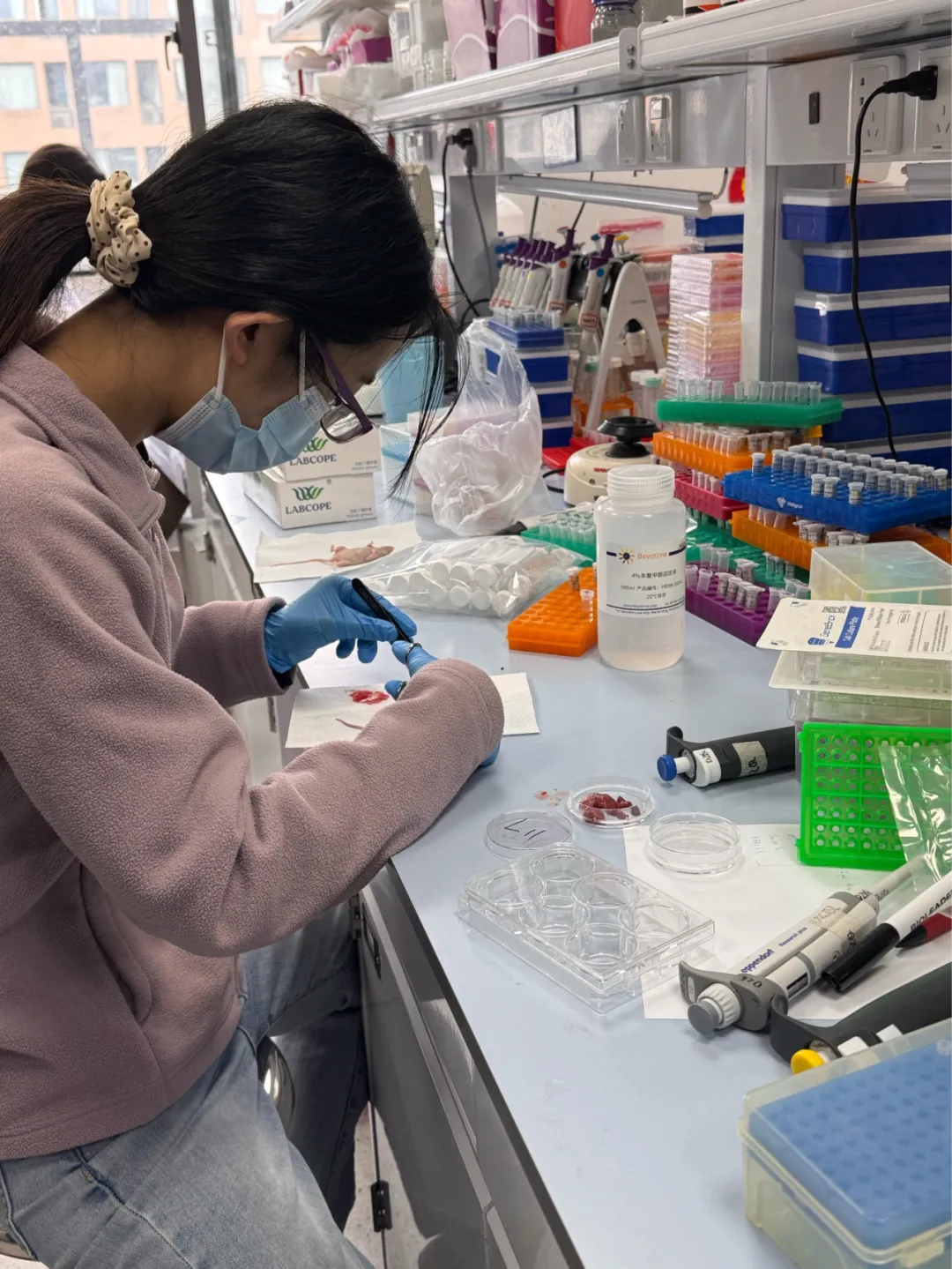
Our company supervisor gave us much more than a task list. In a series of structured interviews, he helped us see that the real problem was not “we don’t have a website” but that the company had no proper way of communicating with the outside world at all. He gave us a simple description of what the company offers, which we used as the basis for all our writing. He also told us clearly what we could and could not say publicly, and which health claims were not allowed under Chinese regulations.
Our marketing professor helped us mostly with structure and strategy. Two of her comments stayed with us. First, even a strong plan loses its value if you cannot explain it clearly — who it is for, why it matters, and what it is meant to achieve. Second, a brand only works when the logo, slogan and website come from the same idea and speak in the same voice. If you treat them as three separate tasks, you get three separate files; if you treat them as one system, you get a brand. That comment changed how we ran our final review.
05
AEBS Courses that Helped
This project was where classroom theory became a working solution for a real enterprise.
Marketing gave us Keller's CBBE model, positioning theory, SWOT, benchmarking and strategic group mapping. In class these are things you fill in. Here we had to choose them and defend the choice. We found that the CBBE pyramid is not linear in practice — for SynBioEra, scientific credibility had to be built before awareness could mean anything, which reverses the textbook order. We learned that positioning has to be translated culturally, not just linguistically: a “985 university” credential carries weight in China and none abroad. And we learned that positioning is limited by regulation — you cannot advertise health effects on an ordinary food product, which is what forced us to split the Products page in two.
Research Methodology in Management shaped how we gathered information. Designing the interview guide taught us that real interviews do not follow the protocol, and that the most useful insight often comes from what the client does not say: the founder never told us “we have no way of communicating,” but that was the actual problem underneath “we have no website.” Building the benchmarking template taught us that the template is never the deliverable — the client cares about the conclusion, not the filled-in grid.
06
Project Outcomes and Value
to the Enterprise
The chain we were working along was research findings → implementable solutions → actual business value. The company's 50+ papers and 30+ patents were real assets, but they were only readable by other scientists. Our job was to convert them into a form that investors, partners and consumers could act on.
What the company received at handover was a set of tools it can reuse and maintain on its own, not a one-off report:
• A complete brand identity system — logo, bilingual slogan, and visual guidelines — built from a single strategic foundation.
• A six-page bilingual website, with the full source code and assets packaged for handover.
• A three-year brand development roadmap based on the CBBE model, staged from awareness building through meaning to resonance.
• A marketing plan separating domestic channels (WeChat Official Account and Channels) from overseas ones (Instagram, English landing pages), organized into four recurring content pillars.
• A compliance framework for external communication, including the separation of ordinary food from registered health supplements.
• A competitive analysis of 20 companies that the company can reuse as a reference base for future positioning decisions.
The business value is concrete. The client's own success criterion was that within three months of launch the website should work as a self-sufficient communication tool, removing the need for long one-on-one explanatory calls with each investor — a direct gain in decision-making and outreach efficiency. The rebuilt Investors page supports the company's 50–100M RMB Series A target; the compliance structure protects the company as new products are added; and the bilingual system supports both domestic distribution and the cross-border and overseas expansion the engineered pipeline will require after FDA GRAS certification.
07
Personal Growth
Professionally, the clearest change was moving from reciting frameworks to applying them. Before ICP, Keller's model was something we could reproduce in a classroom. After ICP, it is something we used to argue why this company should build salience through a scientist's story before attempting to build community. We also gained competences no course taught directly: benchmarking at scale, bilingual brand copywriting, compliance-aware content writing, and AI-assisted front-end implementation. In soft skills, the biggest gains were in coordination and client communication — dividing work without letting outputs diverge, presenting ideas to a client who understands the science far better than we do, receiving critical feedback on work we were attached to, and changing direction when later evidence contradicted an earlier decision.
The project also exposed gaps we still need to close:
• Regulatory knowledge: we could react to compliance constraints but not anticipate them. Reading the actual regulations rather than relying on client corrections is the obvious next step.
• Industry and technical proficiency: translating synthetic biology is far easier when you genuinely understand it. Building a working vocabulary in a client's field is now part of our preparation.
• Technical execution: front-end development and information architecture were learned on the fly, with AI filling gaps.
Our plans for closing these gaps are ordinary but concrete: reading primary regulatory sources and industry reports, taking relevant electives and online courses, and looking for internships where the same constraints appear again, with more experienced people to learn from.
08
Real Consulting Versus
Classroom Cases
A classroom case arrives complete: the data is gathered, the problem is named, the relevant framework is implied by the chapter, and a defensible answer is waiting. A real project arrives as one sentence — “we need a brand” — and everything after that is your responsibility. You must define the problem before solving it, because the stated need and the actual need are rarely the same. The information is incomplete, sometimes confidential, and keeps changing. The deliverable will actually be used, so a misplaced health claim is not a lost mark but a regulatory risk for a real company. And there is no final answer — only a version good enough to hand over.
09
How ICP Will Affect Our Next Steps
We now have a full portfolio piece — a brand system, a live website, a 20-company competitive analysis and a marketing plan — that we can walk an interviewer through end to end, including what went wrong and what we did about it. That is a very different conversation from listing courses.
The project also clarified what we want next. Some of us found that consulting and brand strategy genuinely suit us and will look for internships in that direction; others became more interested in the science-commercialization interface itself — how university research turns into a product — and are considering further study in that field.
10
Advice for Future ICP Students
• Interview before you design. Our most valuable single day happened before we drew anything — it turned a surface request into a diagnosis.
• Ask about compliance in week one. In a regulated industry the rules determine what you may say, which determines the structure of your deliverable.
• Share across sub-teams continuously, not at checkpoints. Assume any sub-team working in isolation for two weeks is drifting.
• Never arrive at a mentor meeting with only questions. Bring at least one proposed answer — it makes the feedback far more targeted.
• Treat your deliverables as one system. Review logo, slogan and website together against the same strategy before launch.
• Go beyond the brief, carefully. The most valuable work we did addressed needs the client had never stated.
Authors | DVOINIKOV EGOR、刘蕴琦
黄思祺、吴佳楠、MILLER ARTUR
SAGIT ASANBI
RODRIGUEZ SHWANCHE LIDIA VANESSA
叶沛思
Review | Tingwei Jin、Nicole Sheng
Editor | Wenting Yang

⬇ 点击下方链接,阅读更多相关文章






长按二维码 关注亚欧更多资讯吧!
