文档文本内容
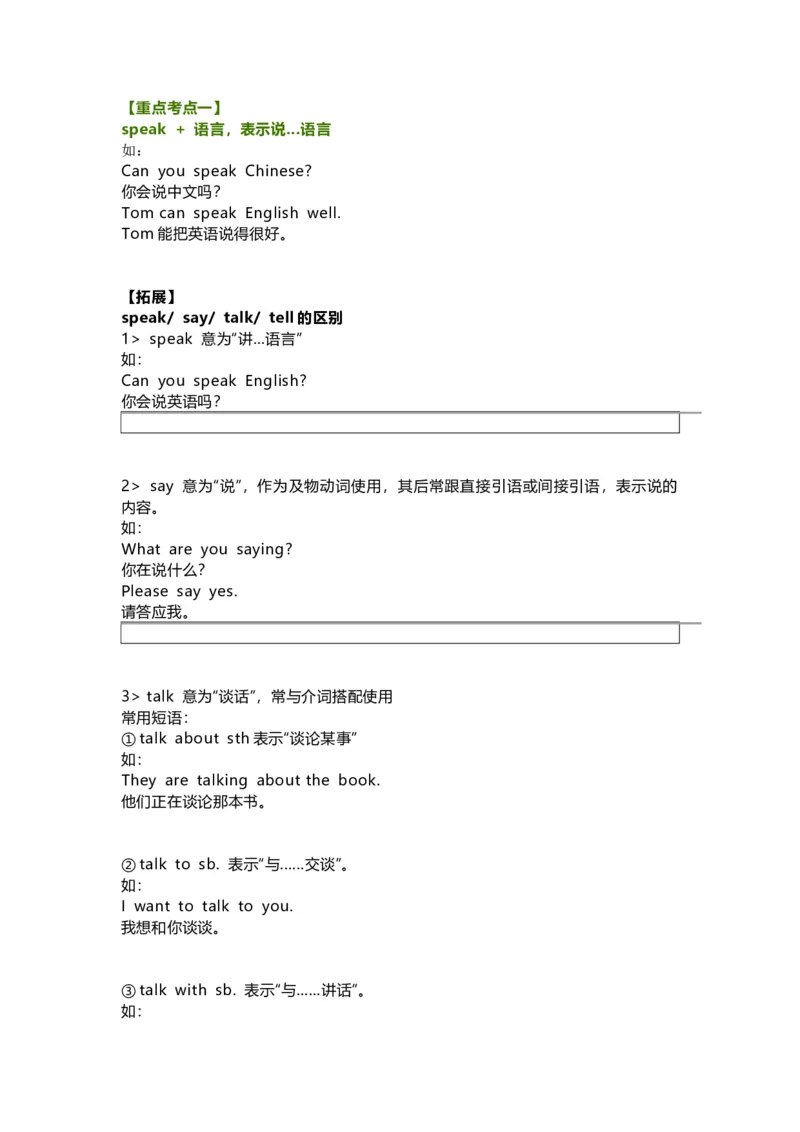
【重点考点一】
speak + 语言,表示说...语言
如:
Can you speak Chinese?
你会说中文吗?
Tom can speak English well.
Tom能把英语说得很好。
【拓展】
speak/ say/ talk/ tell的区别
1> speak 意为“讲...语言”
如:
Can you speak English?
你会说英语吗?
2> say 意为“说”,作为及物动词使用,其后常跟直接引语或间接引语,表示说的
内容。
如:
What are you saying?
你在说什么?
Please say yes.
请答应我。
3> talk 意为“谈话”,常与介词搭配使用
常用短语:
①talk about sth表示“谈论某事”
如:
They are talking about the book.
他们正在谈论那本书。
②talk to sb. 表示“与......交谈”。
如:
I want to talk to you.
我想和你谈谈。
③talk with sb. 表示“与......讲话”。
如:You can talk with me.
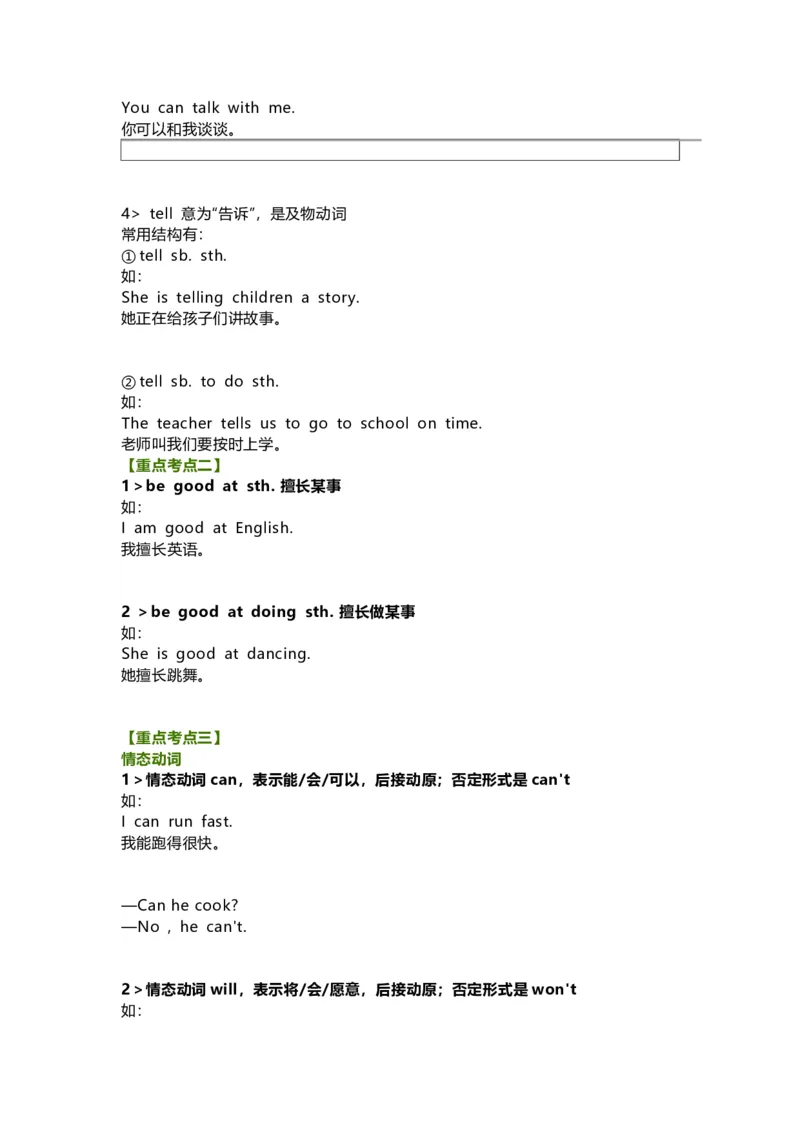
你可以和我谈谈。
4> tell 意为“告诉”,是及物动词
常用结构有:
①tell sb. sth.
如:
She is telling children a story.
她正在给孩子们讲故事。
②tell sb. to do sth.
如:
The teacher tells us to go to school on time.
老师叫我们要按时上学。
【重点考点二】
1>be good at sth. 擅长某事
如:
I am good at English.
我擅长英语。
2 >be good at doing sth. 擅长做某事
如:
She is good at dancing.
她擅长跳舞。
【重点考点三】
情态动词
1>情态动词can,表示能/会/可以,后接动原;否定形式是can't
如:
I can run fast.
我能跑得很快。
—Can he cook?
—No , he can't.
2>情态动词will,表示将/会/愿意,后接动原;否定形式是won't
如:I will be late.
可缩写成:I'll be late.
我要迟到了。
—Will you do homework for me , Robbie?
—No , I won't.