2025-2026 学年高一英语上学期第一次月考卷 01(江苏)
(考试时间:120 分钟 试卷满分:150 分)
考生注意:
1.答题前,请务必将自己的姓名、准考证号用黑色字迹的签字笔或钢笔分别填写在试
题卷和答题纸规定的位置上。
2. 答题时,请按照答题纸上“注意事项”的要求,在答题纸相应的位置上规范作答,
在本试题卷上的作答一律无效。
3.难度系数:0.65。
4.考试结束后,将本试卷和答题卡一并交回。
第一部分 听力(共两节,满分 30 分)
做题时,请先将答案标在试卷上。录音内容结束后,你将有两分钟的时间将试卷上的答案转
涂到答题卡上。
第一节(共 5 小题;每小题 1.5 分,满分 7.5 分)
听下面 5 段对话。每段对话后有一个小题,从题中所给的 A、B、C 三个选项中选出最
佳选项。听完每段对话后,你都有 10 秒钟的时间来回答有关小题和阅读下一小题。每段对
话仅读一遍。
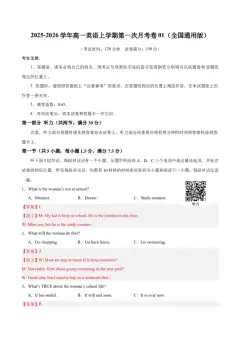
1.What is the woman doing?
A.Drawing a map. B.Making a travel plan. C.Preparing for a class.
【答案】C
【原文】M: What are you doing?
W: I’m just looking at this map of the world. I’m preparing for geography class.
2.Where does the conversation probably take place?
A.In a pet store. B.In a zoo. C.In a music hall.
【答案】A
【原文】W: Look at those colorful birds over there. I think you can teach them to sing.
M: But look at the price! I’d rather buy a cat as my pet.
3.What time is it now?
A.6:40. B.7:00. C.7:20.
试卷第 1 页,共 3 页【答案】A
【原文】W: When does the basketball game start?
M: At 7 o’clock. We have twenty minutes left.
4.What is the woman’s son at school?
A.Monitor. B.Doctor. C.Study monitor.
【答案】C
【原文】M: My kid is busy at school. He is the monitor in his class.
W: Mine too, but he is the study monitor.
5.What’s the relationship between the speakers?
A.Colleagues. B.Classmates. C.Brother and sister.
【答案】B
【原文】M: Hi, Sarah. Have you reviewed the chemistry notes? Mr. Brown said we’ll have a quiz
tomorrow.
W: Oh no, I forgot! Can I borrow your notebook after lunch? We can study together in the
classroom.
第二节(共 15 小题;每小题 1.5 分,满分 22.5 分)
听下面 5 段对话或独白。每段对话或独白后有几个小题,从题中所给的 A、B、C 三个选项
中选出最佳选项,并标在试卷的相应位置。听每段对话或独白前,你将有时间阅读各个小题,
每小题 5 秒钟;听完后,各小题将给出 5 秒钟的作答时间。每段对话或独白读两遍。
听下面一段较长对话,回答以下小题。
6.Where are the speakers probably?
A.At a restaurant. B.In a car. C.At home.
7.What might be the cause of the woman’s stomachache?
A.The cold drink. B.The chicken. C.The fish.
【答案】6.B 7.A
【原文】W: I’ve got a stomachache. Can we stop somewhere?
M: Can you hold on, Katie? We’ll be home soon. It’s only a five-minute drive away.
W: OK, I’ll try. I ate some chicken, but I shouldn’t have drunk the cold beer.
M: Well, the rest of us had fish and we feel OK.
W: Do we have anything at home that I can take to make it better?
试卷第 1 页,共 3 页M: We do have some medicine. I’ll get it for you as soon as we arrive.
听下面一段较长对话,回答以下小题。
8.Why won’t the woman take the room at the hotel?
A.It doesn’t have a nice view.
B.She can’t get free parking.
C.It’s too far away.
9.What will the woman do?
A.Cancel a reservation. B.Contact another hotel. C.Go to Vacation Plaza.
【答案】8.A 9.B
【原文】M: Good morning. Hotel Hilton. May I help you?
W: Yes, I’d like to book a room for two nights.
M: One moment please. Let me check our registration list.
W: I’d prefer something with a window that looks out into the park.
M: We do have a room available, but it overlooks the parking lot.
W: That’s not exactly what I had in mind. Could you recommend another hotel in the area?
M: There’s a Vacation Plaza two blocks away. If you hold on a minute, I can get the number for
you.
W: Thanks.
听下面一段对话,回答以下小题。
10.Why does the woman refuse to go to a gym?
A.She thinks it costly.
B.She is too busy to go there.
C.She dislikes exercising with others.
11.What does the man think of the woman’s exercise plan?
A.Unwise. B.Funny. C.Practical.
12.What does the man suggest the woman do?
A.Buy new clothes. B.Walk in the park. C.Go to work by bike.
【答案】10.A 11.A 12.C
【原文】W: Oh, I’ve got so out of shape recently that none of my clothes fit me!
M: Why don’t you go to a gym?
试卷第 1 页,共 3 页W: That’s not my style and it’s always expensive. I’d rather exercise at home.
M: Well, everyone I know who has tried to get into shape by exercising at home has given up. But
if you pay to join the gym, you’ll be more likely to succeed.
W: You might have a point, but there must be something else I can do.
M: I know! Why don’t you ride to work every day, and then take a nice long ride through the park
on your way home?
W: Sounds good!
听下面一段较长对话,回答以下小题。
13.What are the man and the woman doing while talking?
A.Attending a party. B.Visiting an art exhibition. C.Having a picnic.
14.Where does Tony come from?
A.He’s a German.
B.He comes from New York.
C.He’s a native of Portland.
15.What does Susan do?
A.She’s an art teacher at the Art College.
B.She teaches art in a high school.
C.She’s a waitress in a restaurant.
16.What does Tony ask Susan to do next week?
A.Come to his art exhibition.
B.Attend his graduation ceremony.
C.Be his model at the Art College.
【答案】13.A 14.C 15.B 16.A
【原文】M: Great party, isn’t it?
W: Yes. And the food is wonderful.
M: By the way, I’m Tony.
W: Hi Tony. I’m Susan, nice to meet you.
M: Me too. Are you from the states?
W: Actually, I was born in Germany, my dad’s German, but I grew up in New York. How about
you?
试卷第 1 页,共 3 页M: Oh, me? I grew up right here in Portland.
W: Ah, so you’re a local boy. What do you do?
M: Right now I’m in school? How about you?
W: I’m an art teacher at grant high school.
M: Really? I’m an art student in college. Here I graduate this year.
W: No kidding.
M: Yes. There’s an exhibition for my graduation next week. I have a couple of paintings in it.
Would you like to come?
W: I’d love to. That would be excellent.
M: Great. The first day is on Monday, it’s at the art college.
听下面一段独白,回答以下小题。
17.Who is probably the speaker?
A.A reporter. B.A teacher. C.A writer.
18.What did the coachman do outside the theater?
A.He read a book. B.He looked after the horse. C.He enjoyed the snow.
19.How did the young lady feel about the coachman’s situation?
A.Sad. B.Moved. C.Unconcerned.
20.What does the speaker want to tell us?
A.Help those around us as much as we can.
B.Read as many books as we can.
C.Be thankful for what we have.
【答案】17.B 18.B 19.C 20.A
【原文】
I read a story in a book the other day. It showed something important and I wanted to share
it with you. The story was set in the years before cars were invented, so the rich had to travel in
coaches. One day a young lady wanted to watch a play in the theatre. Her coachman took her to
the theatre in a coach. It was cold while she was watching the play, the poor coachman had to sit
outside in the snow on the driver’s seat of the coach looking after the horse. Inside the theatre, the
lady was moved to tears by the performance. Some actors in the play were in extremely poor
situations. She showed great pity on them, however, when she came out and saw the coachman
试卷第 1 页,共 3 页covered with snow and almost frozen to death, she just considered it as a normal part of life.
Nowadays, whenever I see people in terrible situations on TV I feel sad, wishing that I could do
something to make a difference. But I often ignore people and things around me like people who
struggle with life. They lose their jobs, experience death in their family or suffer diseases. Help
those as you can. This is the story. Is there anyone who can share something you read during the
holidays in class?
第二部分 阅读(共两节,满分 50 分)
第一节 (共 15 小题;每小题 2.5 分,满分 37.5 分)
阅读下列短文,从每题所给的 A、B、C 和 D 四个选项中,选出最佳选项。
A
High School Programmes in Australia
Beautiful weather, friendly people and a widely varied landscape are just a few of the
reasons you should choose to spend time in Australia as a high school student. Here are some
programmes you can choose from.
High School Exchange
Individuals studying for a semester or full year in Australia will usually live with a host
family. This is a great opportunity for students to see what daily family life is like in Australia.
Students learning English will see their language skills improve by communicating with their new
friends and host family, while those familiar with the language already can use this opportunity to
learn more about the day-to-day life in Australia.
Youth Travel Tours
Travel tours for teens are a wonderful way for high school students to spend a short,
concentrated amount of time abroad. Tours are usually for different themes such as cooking,
adventure travel, or volunteerism. Students will have a fun, unique experience while incorporating
educational components like environmental or cultural studies — and all without missing your
normal coursework back home.
Summer Study Programme
For students who only have a few months of the summer break available, an advanced
试卷第 1 页,共 3 页summer programme is perfect. Just keep in mind, the summer of the northern hemisphere (半球)
is actually the winter of Australia. Oftentimes these summer programmes can be partnered with
universities that will allow students to receive college credits.
21.What can High School Exchange offer?
A.A good command of what we learn at school.
B.A better understanding of Australian culture.
C.A wonderful way to communicate with famous teachers.
D.A precious chance to make friends from different countries.
22.Who may want to choose Youth Travel Tours?
A.Those who have ever been volunteers. B.Those who are interested in cooking.
C.Those who like doing adventure sports. D.Those who want to take a part-time job.
23.Which programme should you choose if you want to earn college credits?
A.Summer Study Programme. B.Youth Travel Tours.
C.High School Exchange. D.All of the programmes.
【答案】21.B 22.B 23.A
【导语】这是一篇应用文,主要介绍了澳大利亚适合高中生的三类项目,分别是高中交换项
目、青少年旅行团和夏季学习项目,并简述了每个项目的特点和优势。
21.细节理解题。根据“High School Exchange”部分中“Students learning English will see their
language skills improve by communicating with their new friends and host family, while those
familiar with the language already can use this opportunity to learn more about the day-to-day life
in Australia.(学习英语的学生通过与新朋友和寄宿家庭交流,语言能力会得到提高,而那些
已经熟悉这门语言的学生则可以利用这个机会更多地了解澳大利亚的日常生活。)”可知,高
中交换项目(High School Exchange)能让学生更多地了解澳大利亚的日常生活,即更好地
理解澳大利亚文化。故选 B。
22.细节理解题。根据“Youth Travel Tours”部分中“Tours are usually for different themes such
as cooking, adventure travel, or volunteerism.(旅行团通常有不同的主题,如烹饪、探险旅行或
志愿服务。)”可知,对烹饪感兴趣的人可能会选择青少年旅行团(Youth Travel Tours)。故选
B。
23. 细 节 理 解 题 。 根 据 “Summer Study Programme”部 分 中 “Oftentimes these summer
试卷第 1 页,共 3 页programmes can be partnered with universities that will allow students to receive college credits.(
通常这些夏季项目会与大学合作,让学生获得大学学分。)”可知,如果想获得大学学分,应
该选择夏季学习项目(Summer Study Programme)。故选 A。
B
The classic 1951 science fiction film The Day the Earth Stood Still includes an impressive
character — a frightening robot (Gort) whose terrible actions are under control only when he is
ordered, “Klaatu barada nikto”. What does this mean? I don’t know. But when I overhear my
students speaking to each other, I am often similarly confused.
I teach at a university. One of the “problems” is that as the years pass, I get older, but my
students remain the same age — 18 to 22. Early on, when I was in my 20s and 30s, this wasn’t an
issue, as we were close enough in age to speak the same language. But lately I have become well
aware that a language ship seems to have sailed, and I am not on board.
Let me make it clear by using an example: Recently, when I walked into my class, my
students were chatting happily with each other. One of their comments caught my ear: “Venmo it
to me.” I had no idea what “Venmo” meant, so I asked. The good-natured students were happy to
explain it to me, and in return I nodded with an awkward expression, as if I should have known
better.
I went home that evening, absorbed in that moment of noncomprehension (不理解). I am
not against change, but I am uncomfortable with change when its pace has me hanging on by my
fingernails. If I were to awaken from a five-year nap, I’d have no idea what people were talking
about. I just wouldn’t understand the language.
Their willingness to explain their words to me is a great comfort, and I congratulate myself
on at least having interest in what they’re talking about, as well as on my ability — for the most
part — to understand their explanations.
But what will happen if my interest wanes and the language ship finally disappears over the
horizon? The answer, to me, is clear: Klaatu barada nikto.
24.What did the author probably meet with?
A.Hearing loss. B.Culture shock.
C.A language barrier. D.A frightening robot.
25.What makes the author fall behind in language?
试卷第 1 页,共 3 页A.Learning needs. B.Teaching tasks.
C.Age difference. D.Language abuse.
26.What does the author think of language change?
A.It is entirely avoidable. B.It is really small.
C.It is very beneficial. D.It is much too rapid.
27.What does the underlined word “wanes” in the last paragraph mean?
A.Reduces. B.Grows. C.Happens. D.Focuses.
【答案】24.C 25.C 26.D 27.A
【导语】本文是一篇记叙文。文章主要讲述了作者因年龄增长与学生产生语言隔阂的困惑与
感慨。
24.细节理解题。 根据第一段中“What does this mean? I don’t know. But when I overhear my
students speaking to each other, I am often similarly confused.(这是什么意思?我不知道。但当
我无意中听到学生们互相交谈时,我也常常会感到困惑)”和第二段中“But lately I have
become well aware that a language ship seems to have sailed, and I am not on board.(但最近我清
楚地意识到,一艘语言之船似乎已经起航,而我却没有登船)”可知,作者可能遇到了语言障
碍。故选 C。
25.细节理解题。根据第二段中“One of the “problems” is that as the years pass, I get older, but
my students remain the same age — 18 to 22. Early on, when I was in my 20s and 30s, this wasn’
t an issue, as we were close enough in age to speak the same language. But lately I have become
well aware that a language ship seems to have sailed, and I am not on board.(其中一个“问题”是,
随着时间的推移,我变老了,但我的学生仍然是 18 到 22 岁。早在我二三十岁的时候,这并
不是什么问题,因为我们的年龄足够接近,可以说同一种语言。但最近我清楚地意识到,一
艘语言之船似乎已经起航,而我却没有登船)”可知,日益扩大的年龄差异使作者在语言上落
后,无法理解年轻的学生们所说的内容。故选 C。
26.推理判断题。根据第四段中“I am not against change, but I am uncomfortable with change
when its pace has me hanging on by my fingernails. If I were to awaken from a five-year nap, I’d
have no idea what people were talking about. I just wouldn’t understand the language.(我并不反
对改变,但当改变的速度让我竭尽全力才能跟上时,我就会感到不舒服。如果我从五年的小
睡中醒来,我根本不知道人们在说什么。我就是无法理解那种语言)”可知,作者认为语言变
试卷第 1 页,共 3 页化太快了,让自己无所适从。故选 D。
27.词句猜测题。根据划线词上一段“I congratulate myself on at least having interest in what
they’re talking about, as well as on my ability — for the most part — to understand their
explanations.(我庆幸自己至少还对他们谈论的内容感兴趣,也庆幸自己多半能听懂他们的解
释)”及划线词前的 But 可知,此处与前文构成转折关系,(但如果我的兴趣减弱了,语言之船
最终消失在地平线上,会发生什么呢?对我来说,答案是明确的:Klaatu barada nikto。)”可
知,当前作者依然有了解学生们谈话内容的兴趣,但是作者担心有一天这种兴趣减退了,自
己就完全无法理解他们的话了,故划线词的意思应与 A 项 reduces“减弱,减少”意思相近。
故选 A。
C
From Mozart to Metallica, tons of people enjoy listening to various types of music while
they paint, write, or draw. Most believe that music helps increase creativity, but an international
study conducted by English and Swedish researchers is challenging that view. The study results
were echoed by scientists from Lancaster University, and the University of Gavle, saying their
findings show music actually weakens creativity.
To reach their conclusions (结论), researchers had volunteers complete verbal (口头的)
problems designed to inspire creativity while sitting in a quiet room, and then again while music
played in the background. They found that background music significantly weakened the
volunteers’ ability to complete tasks connected with verbal creativity. The team also tested
background noises like those commonly heard in a library, but found that such noises had no
influence on subjects’ creativity.
The tasks were simple word games. For example, volunteers were given three words, such
as dress, rise, and flower. Then, they were asked to find a single word connected with all three that
could be combined (结合) to form a common phrase or word. The single word, in this case, would
be “sun” (sundress, sunrise, sunflower). Volunteers completed the tasks in either a quiet room, or
while listening to two different types of music: rock music or light music
“We found strong evidence of weakened performance when playing background music in
comparison to quiet background conditions,” says co-author D. Neil McLatchie of Lancaster
University. He and his colleagues find that music negatively influences the verbal working
memory processes of the brain, preventing creativity. Also, as far as the library background noises
试卷第 1 页,共 3 页having seemingly (似乎) no effect, the study’s authors believe that was the case because library
noises create a “regular state” environment that doesn’t affect concentration.
“To conclude, the findings here challenge the popular view that music increases creativity,
and instead show that music, whatever type it is, is always a disadvantage for creative
performance in problem solving,” the study reads.
28.What does the underlined word “echoed” in Paragraph 1 mean?
A.Challenged B.Accepted C.Doubted D.Heard
29.What were the volunteers asked to do in the study?
A.To play music. B.To combine given words.
C.To create new words. D.To connect words with music.
30.What can we infer from the study?
A.Quiet background inspires creativity best. B.Library noise does no harm to creativity.
C.Music has a bad effect on language ability. D.Music types matter in creative
performance.
31.Which is the main idea of the passage?
A.Quiet Environments Prevent Concentration. B.Background Noise Affects
Concentration.
C.Composing Music Weakens Creativity. D.Listening to Music Reduces Creativity.
【答案】28.B 29.C 30.B 31.D
【导语】这是一篇说明文。文章主要说明了大多数人认为音乐有助于提高创造力,但一项由
英国和瑞典研究人员进行的国际研究对这一观点提出了挑战。他们表示,音乐实际上会削弱
创造力。文章主要介绍了研究开展的过程以及研究表明,无论音乐是什么类型的,它总是不
利于解决问题的创造性表现。
28. 词 句 猜 测 题 。 根 据 第 一 段 “Most believe that music helps increase creativity, but an
international study conducted by English and Swedish researchers is challenging that view.(大多
数人认为音乐有助于提高创造力,但一项由英国和瑞典研究人员进行的国际研究对这一观点
提出了挑战)”以及画线词后文“saying their findings show music actually weakens creativity”可
知,这项研究结果得到了兰开斯特大学和耶夫勒大学的科学家们的接受,他们表示,音乐实
际上会削弱创造力。故画线词意思是“接受”。故选 B。
试卷第 1 页,共 3 页29.细节理解题。根据第三段中“For example, volunteers were given three words, such as dress,
rise, and flower. Then, they were asked to find a single word connected with all three that could be
combined (结合) to form a common phrase or word.(例如,志愿者被告知三个单词,如 dress,
rise 和 flower。然后,他们被要求找到一个与这三个单词相连的单词,这些单词可以组合成
一个常见的短语或单词)”可知,志愿者在研究中被要求创造新词。故选 C。
30.推理判断题。根据倒数第二段中“Also, as far as the library background noises having
seemingly (似乎) no effect, the study’s authors believe that was the case because library noises
create a “regular state” environment that doesn’t affect concentration.(此外,就图书馆的背景噪
音似乎没有影响而言,该研究的作者认为,这是因为图书馆的噪音创造了一个“正常状态”
的环境,不会影响注意力)”可推知,图书馆的噪音对创造力没有坏处。故选 B。
31.主旨大意题。根据第一段中“Most believe that music helps increase creativity, but an
international study conducted by English and Swedish researchers is challenging that view. The
study results were echoed by scientists from Lancaster University, and the University of Gavle,
saying their findings show music actually weakens creativity.(大多数人认为音乐有助于提高创
造力,但一项由英国和瑞典研究人员进行的国际研究正在挑战这一观点。这项研究结果得到
了兰开斯特大学和耶夫勒大学的科学家们的呼应,他们的研究结果表明,音乐实际上会削弱
创造力)”结合文章主要介绍了研究开展的过程以及研究表明,无论音乐是什么类型的,它总
是不利于解决问题的创造性表现。可知,这篇文章的主旨是听音乐会降低创造力。故选 D。
D
A sedentary (久坐的) lifestyle eventually does harm to health but breaking out of long
inactivity can be discouraging. Now, however, there may be a simple way to ease into more
activity.
A recent study suggests that short bouts (一阵) of intense (高强度的) activity every day —
climbing stairs, carrying a heavy load of things, or stepping up the pace of housework — can
provide great health benefits.
“It’s quite simple, but it’s not an idea that’s out there,” says University of Sydney exercise
scientist Emmanuel Stamatakis who led the research. “Many people, including many health
professionals, still think of physical activity as something that you do during your free time, and
you need to go somewhere to do it.”
Stamatakis and his colleagues, on the other hand, wanted to understand if daily life
试卷第 1 页,共 3 页activities done somewhat vigorously in short bouts could also provide health benefits compared to
a sedentary or less active lifestyle.
To study this, his team used data from nearly 25, 000 adults who were non-exercisers.
Without these data, it was almost impossible to continue the study. Over the course of seven days,
they used machine learning tools to determine whether a person was either sedentary, standing,
walking, or doing intense activities like running during repeated 10-second windows. The
researchers also divided any movement into light, middle, or high intensity. Then, for the next
seven years, they recorded which study participants died and what caused the death.
The team found that people who did at least four one-to-two-minute high intensity physical
activities every day had a nearly 40 percent less risk of dying from cancer and a roughly 49
percent ower chance of dying from a cardiovascular (心血管的) disease. More bouts of such
strong activity meant greater protection from death risks, Stamatakis says, “The more, the better.”
32.What did the recent study find?
A.An inactive lifestyle is harmful but hard to change.
B.More physical exercises can make you more active.
C.Doing daily housework is also a kind of exercise.
D.Daily short but intense activities do good to health.
33.What does the underlined word “vigorously” most probably mean?
A.Energetically. B.Continuously. C.Frequently. D.Creatively.
34.Which of the following is mentioned in paragraph 5?
A.Research purposes. B.Research limitations.
C.Research findings. D.Research methods.
35.What would Stamatakis suggest?
A.Going to exercise at fixed time and place. B.Avoiding movement of light intensity.
C.Doing only 8 minutes intense activity every day. D.Carrying out more short bouts of
intense activity.
【答案】32.D 33.A 34.D 35.D
【导语】这是一篇说明文。文章介绍了一项研究表明短时间高强度的活动有益健康。
32.细节理解题。根据第二段“A recent study suggests that short bouts (一阵) of intense (高强度
试卷第 1 页,共 3 页的) activity every day—climbing stairs, carrying a heavy load of things, or stepping up the pace of
housework— can provide great health benefits.(最近的一项研究表明,每天短时间的剧烈运动
——爬楼梯、搬运重物或加快家务劳动的步伐——对健康大有好处)”可知,最近的研究表明,
短时间高强度的活动有益健康的。故选 D 项。
33.词句猜测题。done somewhat vigorously in short bouts 在句中作后置定语修饰 daily life
activities,根据后面“compared to a sedentary or less active lifestyle(与久坐或不太活跃的生活
方式相比)”可推测,划线词应该和 less active 意思相反,应该是“高强度地,剧烈地”的意思。
故选 A 项。
34.主旨大意题。根据第五段“Over the course of seven days, they used machine learning tools
to determine whether a person was either sedentary, standing, walking, or doing intense activities
like running during repeated 10-second windows. The researchers also divided any movement into
light, middle, or high intensity. Then, for the next seven years, they recorded which study
participants died and what caused the death.(在七天的过程中,他们使用机器学习工具来确定一
个人是久坐、站立、行走,还是在重复的 10 秒窗口中进行剧烈活动,如跑步。研究人员还
将任何运动分为轻度、中度和高强度。然后,在接下来的七年里,他们记录了哪些研究参与
者死亡以及导致死亡的原因)”可知,本段主要讲到了研究过程中的数据收集及分析方法。故
选 D 项。
35.细节理解题。根据最后一段末“More bouts of such strong activity meant greater protection
from death risks, Stamatakis says, ‘The more, the better.’(Stamatakis 说,这种剧烈运动的次数越
多,就意味着死亡风险得到了更大的保护,‘越多越好’)”可知,Stamatakis 认为短时间高强度
的活动有益健康,降低死亡风险,他建议多做这样的活动,越多越好。故选 D 项。
第二节(共 5 小题:每小题 2. 5 分, 满分 12. 5 分)
阅读短文, 从短文后的选项中选出可以填入空白处的最佳选项。选项中有两项为多余选项。
School days mean homework, studying, exams, and social interactions — not to mention
getting up early every morning. It’s understandable if you don’t always feel your happiest going to
school during the week. 36 The following tips can help you feel happier on school days.
Focus on the good things about school. 37 Think about the bigger picture and how
your education will have a positive impact on your life in the long run. If you’re having a bad day,
tell yourself that you only have to be in school for a relatively short period of your life. After that,
试卷第 1 页,共 3 页the sky is the limit!
38 Making other people smile can improve your own happiness. Give another
student some positive encouragement. Or, thank a teacher for a fun activity or an interesting
lesson. If you see someone else that looks like they might be feeling down, tell them you like their
hair style or praise the work they have done.
Try not to take negativity from others too hard. 39 Try to remember that nobody is
perfect and think about what might be going on in their lives that makes them act negatively
towards you. Try your best to sweep away a dirty look or a bad comment and move on with your
day not getting angry and upset.
Reward yourself. Once you get that big A on your exam or work, don’t forget to go out and
celebrate! It’s always great to reward yourself when you do something good especially when it
will benefit your future in so many ways! Always believe that you can and you will go a long way!
No one can change your future other than you. 40
A.Smile more often.
B.Do something nice for someone.
C.But it’s also something you can totally improve!
D.If someone isn’t nice to you at school, it’s probably not your fault.
E.A little positive thinking can go a long way towards improving your mood.
F.Whether in school or at home, you may look for ways to make learning more enjoyable.
G.Do the best of what you have and try your hardest, also try to have some fun along the way.
【答案】36.C 37.E 38.B 39.D 40.G
【导语】本文是一篇说明文。文章提供了一些技巧和建议,帮助学生在上学的日子里感到更
快乐,强调通过积极的心态和行动可以改善校园生活体验。
36.根据空前句子“It’s understandable if you don’t always feel your happiest going to school
during the week. (如果你在一周的上学时间里并不总是感到最快乐,这是可以理解的。)”以及
空后句子“The following tips can help you feel happier on school days. (以下建议可以帮助你在
上学的日子里感到更快乐。)”可知,此处需要一个过渡句,承接前文提到的上学时可能不开
心的情况,并引出后文的改善方法,C 选项“But it’s also something you can totally improve! (但
这也是你完全可以改善的事情!)”体现了这种转折和衔接,符合语境。故选 C 项。
试卷第 1 页,共 3 页37.根据本段小标题“Focus on the good things about school. (关注学校里好的方面。)”可知,
本段强调要从积极的角度看待学校,E 选项“A little positive thinking can go a long way towards
improving your mood. (一点点积极的思考对改善你的情绪大有帮助。)”中的“positive thinking”
与小标题的“good things”相呼应,且能引出下文对积极思考的具体阐述,符合语境。故选 E
项。
38.分析语篇可知,此处应为本段的小标题,与其他段落相同,应为祈使句。根据空后句子
“Making other people smile can improve your own happiness. Give another student some positive
encouragement. Or, thank a teacher for a fun activity or an interesting lesson. (让别人微笑能提升
你自己的幸福感。给其他同学一些积极的鼓励吧,或者,感谢老师带来了有趣的活动或精彩
的课程。)”可知,本段讲述的是为他人做一些好事能带来快乐,B 选项“Do something nice for
someone. (为别人做些好事。)”为祈使句,且能概括本段主题,符合语境。故选 B 项。
39.根据本段小标题“Try not to take negativity from others too hard. (不要把别人的负面情绪看
得太重。)”以及空后句子“Try to remember that nobody is perfect and think about what might be
going on in their lives that makes them act negatively towards you. (试着记住,没有人是完美的,
想想他们生活中可能发生了什么,让他们对你做出负面行为。)”可知,此处是在说明别人对
你不友好可能并非你的问题,D 选项“If someone isn’t nice to you at school, it’s probably not
your fault. (如果在学校有人对你不友好,那可能不是你的错。)”与上下文内容衔接紧密,符
合语境。故选 D 项。
40.根据空前句子“No one can change your future other than you. (除了你自己,没有人能改变
你的未来。)”可知,此处是在强调自己要为未来努力,G 选项“Do the best of what you have
and try your hardest, also try to have some fun along the way. (尽你所能,全力以赴,同时也要
在这个过程中找点乐子。)”是对前文的进一步补充,鼓励人们在努力的同时享受过程,符合
语境。故选 G 项。
第三部分 语言运用(共两节,满分 30 分)
第一节(共 15 小题:每小题 1 分,满分 15 分)
阅读下面短文, 从每题所给的 A、B、C、D 四个选项中选出可以填入空白处的最佳选项。
There is a school where children use pumpkins to learn about colors and counting. They
learn about 41 by planting seeds 30 centimeters apart. Interesting? Yes, that’s the
试卷第 1 页,共 3 页42 school. For students at this school in Hamilton, Virginia, the classroom is 43
every day. Jaclyn Jenkins is a founder of the school. The 44 for a school like this
started after Jenkins and her husband Kenny bought a farm shortly after their marriage. The Farm
School is a 45 –a place for three and four-year-olds to learn and play.
Teacher Alison Huff says The Farm School gives its students more of a hands-on learning
46 . Children can use everything a 47 preschool uses, but out in the garden. In
addition to planting vegetables and fruits, youngsters help prepare food and 48
afterward. The school teaches children to cook using the food they have grown. They can 49
what they have in the garden 50 going to the grocery store and buying it. Besides,
the preschoolers also learn words in languages other than English. Huff speaks 51 in
both English and Spanish. Her assistant speaks French and Arabic. 52 , a 3-year-old in
her class speaks four different languages.
What’s more, Farm animals are also playing an important part in the education program.
The youngsters learn about a 53 animal every month. Two months ago, the animal
they learnt was a cow. They get to see what the cow is like, and we learn what cows eat. We use
little gloves and try to 54 a cow. Using the milk from their work, we make yogurt.
More and more families 55 The Farm School. Their children come home with
new experiences, new knowledge and sometimes a few vegetables they plant by themselves. So
this kind of school is getting more and more popular!
41.A.payments B.movements C.developments D.measurements
42.A.playground B.factory C.shop D.farm
43.A.inside B.upside C.outside D.downside
44.A.dream B.decision C.idea D.plan
45.A.junior school B.preschool C.middle school D.senior school
46.A.experience B.discussion C.progress D.truth
47.A.average B.normal C.usual D.regular
48.A.show up B.turn up C.clean up D.make up
49.A.employ B.perform C.gather D.donate
50.A.because of B.instead of C.in spite of D.apart from
51.A.slowly B.frequently C.quickly D.fluently
试卷第 1 页,共 3 页52.A.Indeed B.Otherwise C.Therefore D.However
53.A.unique B.different C.endangered D.rare
54.A.lean B.protect C.pet D.milk
55.A.support B.access C.locate D.object
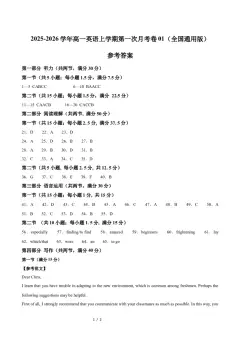
【答案】
41.D 42.D 43.C 44.C 45.B 46.A 47.B 48.C 49.
A 50.B 51.D 52.C 53.B 54.D 55.A
【导语】本文是一篇说明文。主要介绍的是 Jaclyn Jenkins 建立的一所农场学校,这所学校
给孩子们提供更多的实践学习经验,越来越多的家庭支持农场学校。
41.考查名词词义辨析。句意:他们通过间隔 30 厘米播种来学习测量。A. payments 支付;
B. movements 移动;C. developments 发展;D. measurements 测量。根据下文中的“by planting
seeds 30 centimeters apart”可知,此处是通过间隔 30 厘米学“测量”。故选 D 项。
42.考查名词词义辨析。句意:有趣吗?是的,那是农场学校。A. playground 操场;B. factory
工厂;C. shop 商店;D. farm 农场。根据下文中的“The Farm School is a ___5____ —a place
for three and four-year-olds to learn and play.”可知,此处指的是“农场”学校。故选 D 项。
43.考查副词词义辨析。句意:对于弗吉尼亚州汉密尔顿这所学校的学生来说,教室每天都
在外面。A. inside 在里面;B. upside 在上面;C. outside 在外面;D. downside 在下面。根据“农
场学校”的概念以及下文中的“but out in the garden”可知,此处指的是“在外面”。故选 C 项。
44.考查名词词义辨析。句意:创办这样一所学校的想法始于詹金斯和她的丈夫肯尼在结婚
后不久买了一个农场。A. dream 梦想;B. decision 决定;C. idea 想法;D. plan 计划。根据下
文中的“for a school like this”以及语境可知,此处指的是建立农场学校的“想法”。故选 C 项。
45.考查名词短语词义辨析。句意:农场学校是一个学前班——一个供三四岁的孩子学习和
玩耍的地方。A. junior school初中;B. preschool学前班;C. middle school中学;D. senior school
高中。根据下文中的“a place for three and four-year-olds to learn and play.”可知,三四岁孩子
学习玩耍的地方应该指的是“学前班”。故选 B 项。
46.考查名词词义辨析。句意:Alison Huff 老师说,农场学校给学生提供了更多的实践学习
经验。A. experience 经历;经验;B. discussion 讨论;C. progress 进步;D. truth 真相。根据
下文中的“Their children come home with new experiences, new knowledge and sometimes a few
vegetables they plant by themselves.”可知,此处指的是给孩子们提供的是实践学习“经验”。故
试卷第 1 页,共 3 页选 A 项。
47.考查形容词词义辨析。句意:孩子们可以使用正常学前班使用的所有东西,但是在花园
里。A. average 平均的;B. normal 正常的;C. usual 经常的;D. regular 定期的。根据下文中
的“but out in the garden”可知,此处指的是农场学校除在外面花园学习外,孩子们使用“正常”
学前班使用的一切。故选 B 项。
48.考查动词短语词义辨析。句意:除了种植蔬菜和水果,孩子们还帮助准备食物和打扫卫
生。A. show up 露面;B. turn up 出现;C. clean up 清理;D. make up 化妆。结合农场学校的
特点,给孩子们提供实践学习经验以及上文中的“prepare food”可推断,除此指的是“打扫卫
生”。故选 C 项。
49.考查动词词义辨析。句意:他们可以用自己种在花园里的东西,而不是去杂货店买。
A. employ 雇佣;使用;B. perform 履行;C. gather 聚集;D. donate 捐赠。根据上文中的“The
school teaches children to cook using the food they have grown”可知,孩子们可以用自己种的菜
做饭,所以此处指的是“使用”自己种的菜。故选 A 项。
50.考查短语词义辨析。句意:他们可以用自己种在花园里的东西,而不是去杂货店买。
A. because of 因为;B. instead of 而不是;C. in spite of 尽管;D. apart from 此外。根据上文
中“what they have in the garden”和下文中“going to the grocery store and buying it”可知,两者
之间的逻辑关系为替代关系。故选 B 项。
51.考查副词词义辨析。句意:哈夫能说流利的英语和西班牙语。A. slowly 慢慢地;B.
frequently 频繁地;C. quickly 快速地;D. fluently 流利地。根据下文中的“a 3-year-old in her
class speaks four different languages”可知,一个 3 岁孩子能说 4 种语言,由此可推断,Huff
老师应该能“流利地”说英语和西班牙语。故选 D 项。
52.考查副词词义辨析。句意:因此,她班上一个 3 岁的孩子会说四种不同的语言。A. Indeed
的确;B. Otherwise 否则;C. Therefore 因此;D. However 然而。根据上文中的“Huff speaks
________ in both English and Spanish. Her assistant speaks French and Arabic.”和下文中的“a
3-year-old in her class speaks four different languages.”内容可知,老师与助手分别能说两种语
言,“因此”孩子能说四门语言。故选 C 项。
53.考查形容词词义辨析。句意:幼儿们每个月都会学习一种不同的动物。A. unique 独特
的;B. different 不同的;C. endangered 濒危的;D. rare 罕见的。根据上文中的“What’s more,
Farm animals are also playing an important part in the education program.”可知,农场的动物们
在教育中起到重要作用,所以此处指的是每月了解“不同的”动物。故选 B 项。
试卷第 1 页,共 3 页54.考查动词词义辨析。句意:我们用小手套挤牛奶。A. lean 斜靠;B. protect 保护;C. pet
抚摸;D. milk 挤奶。根据下文中的“Using the milk from their work, we make yogurt.”可知,此
处指的是“挤牛奶”。故选 D 项。
55.考查动词词义辨析。句意:越来越多的家庭支持农场学校。A. support 支持;B. access
进入;C. locate 定位;D. object 反对。根据上文中的“Their children come home with new
experiences, new knowledge and sometimes a few vegetables they plant by themselves.”可知,孩
子们收获新经验,新知识,有时还有自己种的蔬菜,家长们应该是“支持”农场学校。故选 A
项。
第二节(共 10 小题:每小题 1. 5 分, 满分 15 分)
阅读下面短文, 在空白处填入 1 个适当的单词或括号内单词的正确形式。
We think that life in Chinese high school is an adventure in which we have to survive
mountains of homework and exams. Yet would you be 56 (surprise) if I tell you that high
school life in the US is almost as stressful as it is in China?
In US high school, everything 57 (record) and graded, including your grades on
quizzes, tests and final examinations. Failing 58 (turn) in your homework on time will
59 (direct) affect your grade for a certain course. Perhaps different from what we used to think
of the US high school 60 (student), they pay great attention 61 getting high
scores to try to get into a key university. Otherwise, they’ll be disappointed after 62
(graduate) from high school.
Like university students, the US high school students have the freedom to choose the
courses 63 most attract them. Even a 9th grader can sit in 64 same classroom as
12th graders. But this also means he or she has to work very hard, because the teacher will not
treat him or her differently just because he or she is a few years 65 (young) than others.
【答案】
56.surprised 57.is recorded 58.to turn 59.directly 60.students 61.to
62.graduating/graduation 63.that/which 64.the 65.younger
【导语】这是一篇说明文。文章主要介绍了美国的高中生活几乎和中国一样紧张和苛刻。
试卷第 1 页,共 3 页56.考查形容词。句意:但如果你知道美国高中的生活压力竟然和中国的一样大,你还会感
到惊讶吗?作表语,修饰人,表示“感到惊讶的”,应使用-ed 结尾形容词 surprised。故填
surprised。
57.考查时态语态。句意:在美国的高中里,一切都会被记录并打分,包括你在测验、考试
和期末考试中的成绩。主语 everything 与谓语 record 为被动关系,陈述事实为一般现在时,
所以用一般现在时的被动语态,且主语是第三人称单数。故填 is recorded。
58.考查动词不定式。句意:未能按时交作业将会直接影响你某门课程的成绩。固定短语
fail to do sth.意为“未能做某事”。故填 to turn。
59.考查副词。句意:未能按时交作业将会直接影响你某门课程的成绩。修饰动词 affect 应
用副词 directly,作状语。故填 directly。
60.考查名词的数。句意:或许与我们过去对美国高中生的认知有所不同,他们非常重视取
得高分,以期能进入重点大学。student 为可数名词,根据后文 they 可知应用复数形式,作
宾语。故填 students。
61.考查介词。句意:或许与我们过去对美国高中生的认知有所不同,他们非常重视取得高
分,以期能进入重点大学。固定搭配 pay attention to 表示“重视,注重”。故填 to。
62.考查非谓语动词或名词。句意:否则,他们高中毕业后就会感到失望。after 为介词,
后跟动名词 graduating 或名词 graduation,作宾语。故填 graduating/graduation。
63.考查定语从句。句意:就像大学学生一样,美国高中生也有权选择最吸引他们的课程。
限制性定语从句修饰先行词 courses,从句缺少主语,指物,故用关系代词 that 或 which 引
导。故填 that/which。
64.考查冠词。句意:甚至一个九年级的学生也能和十二年级的学生坐在同一个教室里。same
表示“相同的”、“同样的”等,通常与定冠词连用。故填 the。
65.考查形容词。句意:但这也意味着他或她必须付出巨大的努力,因为老师不会因为这个
学生比其他人小几岁而对其区别对待。由上文可知,9 年级和 12 年级的学生比较,自然是
年龄更小一些,故用形容词的比较级形式。故填 younger。
第四部分 写作(共两节, 满分 40 分)
第一节(满分 15 分)
66.假定你是李华,下周有新西兰学生访问你校,你将作为学生代表致欢迎辞。为此,请写
试卷第 1 页,共 3 页一篇发言稿,内容包括:
1.表示欢迎;
2.介绍活动安排;
3.表达祝愿。
注意:
1.词数为 80 左右;
2.可适当增加细节,以使行文连贯。
Dear guests,
_______________________________________________________________________________
_______________________________________________________________________________
_______________________________________________________________________________
_______________________________________________________________________________
_______________________________________________________________________________
_________________________________________________________________
Yours,
Li Hua
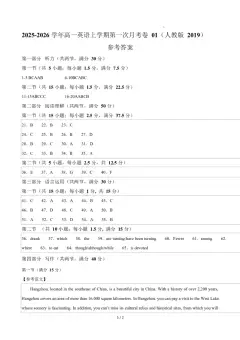
【答案】Distinguished guests,
On behalf of our school, I would like to convey my sincere welcome for your visiting.
At first, it is of significance to fully understand the school. As scheduled, all of you will
visit the museum, which contains the splendid history of our school. Furthermore, our classes are
worthy of being attended, because you can appreciate the differences between Chinese and
western teaching methods. After that, it is at canteen that you can have a special lunch with our
students.
As mentioned above, I extremely expect your coming. May you have an unforgettable
experience.
Yours,
Li Hua
【导语】本篇书面表达属于应用文。要求考生写一篇发言稿,向即将到校的新西兰学生致欢
迎辞。
【详解】1.词汇积累
试卷第 1 页,共 3 页诚挚的:sincere→genuine
首先:at first→first of all
欣赏:appreciate→admire
期待:expect→look forward to
2.句式拓展
简单句变复合句
原句:At first, it is of significance to fully understand the school.
拓展句:At first, it is of great significance that you could fully understand the school.
【点睛】[高分句型 1] As scheduled, all of you will visit the museum, which contains the splendid
history of our school. (运用了 which 引导的非限制性定语从句)
[高分句型 2] After that, it is at canteen that you can have a special lunch with our students. (运用
了强调句型)
第二节(满分 25 分)
67.阅读下面材料,根据其内容和所给段落开头语续写两段,使之构成一篇完整的短文。
Paul, a high school exchange student, came to our school with excitement, hoping to learn
about the culture and language. However, learning Chinese was much harder than he thought. The
characters looked like a puzzle, and the different tones (声调) confused him. Every Chinese class
was a struggle, and Paul felt disappointed. Our classmates tried to help, but it was hard for them to
understand each other. One day, after a difficult lesson, Paul sat down sadly. He felt like giving up.
That’s when I, his partner, decided to step in.
I loved languages and was good at making difficult things easier to understand. I could see
how upset Paul was, so I went up to him. “Paul, I know Chinese is hard, but I believe you can do
it,” I said. “Let’s study together.” Paul looked a little doubtful but felt grateful. We started meeting
after school. I shared some tips on how to remember characters and practice tones. Slowly, Paul
began to improve, but he still had trouble speaking.
One day, while we were practicing, Paul stopped and said, “I still find it difficult to open
my mouth to speak with our classmates freely.” He looked discouraged. I gently reminded him,
“Paul, remember why you came here. You wanted to experience China, and learning the language
试卷第 1 页,共 3 页is part of that.” He nodded. Just then, our Chinese teacher walked by and overheard our
conversation. He smiled and said, “Paul, speaking is the key to learning any language. Don’t be
afraid to make mistakes.” His words gave Paul some encouragement. We continued practicing,
and I had an idea. “Let’s try something different,” I suggested. “We’ll visit a local market and
practice speaking with the vendors (摊贩). Maybe you’ll meet someone at the market, who can
help you practice speaking in real situations. It’ll be more interesting than just studying in the
classroom.”
注意:
1. 续写词数应为 150 个左右;
2. 请按如下格式在答题卡的相应位置作答。
At the market, Paul was nervous but excited.
_______________________________________________________________________________
_______________________________________________________________________________
_______________________________________________________________________________
_______________________________________________________________________________
_______________________________________________________________________________
_____________________________________________________
Weeks later, our Chinese teacher announced there would be a class speech on Chinese
culture.
_______________________________________________________________________________
_______________________________________________________________________________
_______________________________________________________________________________
_______________________________________________________________________________
_______________________________________________________________________________
_____________________________________________________
【答案】One possible version:
At the market, Paul was nervous but excited. The lively atmosphere filled with colorful
stalls and enthusiastic vendors immediately drew him in. I encouraged him to order some fruits in
Chinese. At first, his pronunciation was shaky, but the elderly vendor, noticing his effort, patiently
corrected him with a warm smile. By the third stall, Paul was confidently bargaining for souvenirs
试卷第 1 页,共 3 页using simple sentences. A tea shop owner even invited us to taste different varieties, explaining
their cultural significance in slow Mandarin. That day, Paul didn’t just practice language — he
discovered how communication bridges cultures.
Weeks later, our Chinese teacher announced there would be a class speech on Chinese
culture. To everyone’s surprise, Paul volunteered immediately. He spent days preparing,
incorporating market experiences into his speech about “The Beauty of Daily Communication”.
When he stood before the class, his tones were clear, and his gestures lively as he described how a
street food vendor taught him the difference between baozi and jiaozi. The classroom erupted in
applause. Later, the teacher praised his progress as “the magic of courage meeting opportunity,”
and Paul whispered to me, “Now I understand mistakes are just steps to success.”
【导语】本文以 Paul 学中文为线索展开,讲述了交换生 Paul 因汉语太难想放弃,搭档“我”
主动帮他课后补习,但他仍不敢开口。老师鼓励他“别怕犯错”,“我们”便去市场实践。Paul
从紧张结巴到自信讨价还价,还学到文化知识。几周后,他主动用亲身经历做中文演讲,全
班鼓掌。他最终明白:犯错是进步的阶梯。
【详解】1. 段落续写:
①由第一段首句内容“在市场上,Paul 既紧张又兴奋”可知,第一段可描写起初 Paul 沟通得
不太顺利,但随着小贩们的热情和耐心引导,他的沟通变得流利,而且逐渐了解语言背后的
文化。
②由第二段首句内容“几周后,我们的语文老师宣布将有一个关于中国文化的课堂演讲”可知,
第二段可描写 Paul 报名了演讲,在课堂上将自身在市场的经历讲述出来,演讲很成功,Paul
收获了赞扬,也明白了犯错是进步的阶梯。
2. 续写线索:去市场——Paul 起初受挫——Paul 逐渐流利表达——老师宣布课堂演讲——
Paul 演讲——Paul 收获赞扬,得到感悟
3. 词汇激活
行为类
①鼓励:encourage/inspire/motivate
②注意到:notice/spot/observe
③解释:explain/clarify/account for
④描述:describe/give an account of/recount
情绪类
试卷第 1 页,共 3 页①热情的:enthusiastic/passionate/ardent
②惊讶:surprise/astonishment/amazement
【 点 睛 】 [高 分 句 型 1] That day, Paul didn’t just practice language — he discovered how
communication bridges cultures. (how 引导宾语从句)
[高分句型 2] When he stood before the class, his tones were clear, and his gestures lively as he
described how a street food vendor taught him the difference between baozi and jiaozi. (When 引
导时间状语从句、as 引导时间状语从句、how 引导宾语从句)
试卷第 1 页,共 3 页