文档文本内容
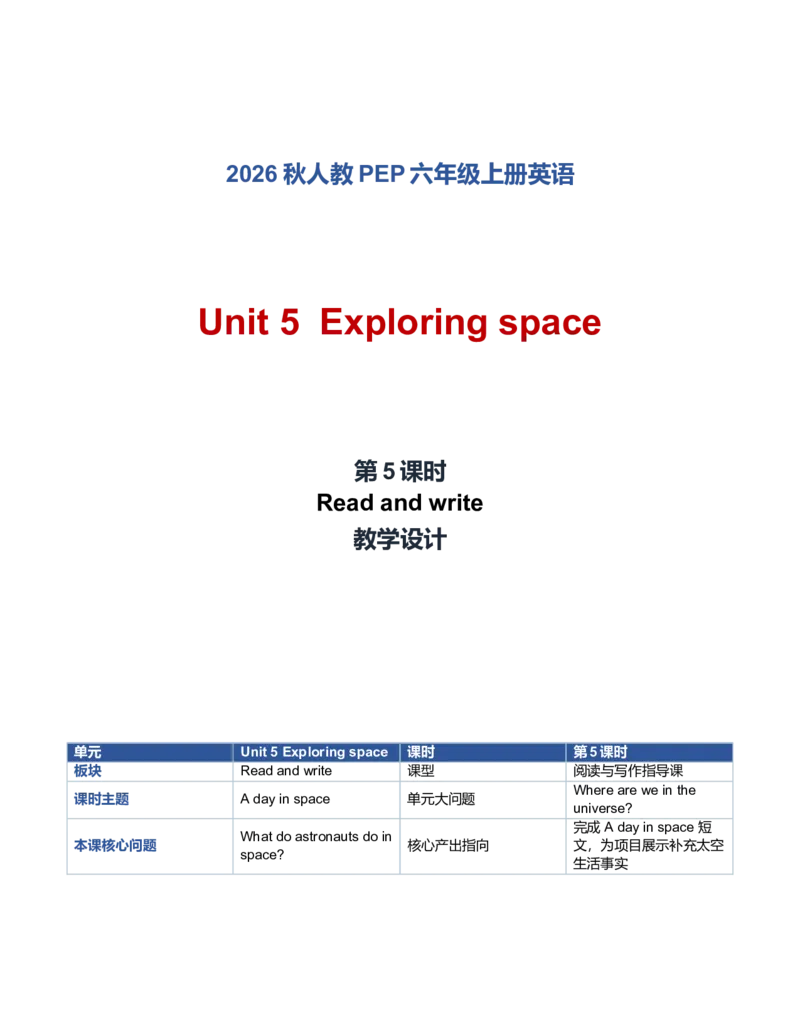
2026 秋人教PEP 六年级上册英语
Unit 5  Exploring space
第5 课时
Read and write
教学设计
单元
Unit 5 Exploring space
课时
第5 课时
板块
Read and write
课型
阅读与写作指导课
课时主题
A day in space
单元大问题
Where are we in the
universe?
本课核心问题
What do astronauts do in
space?
核心产出指向

完成A day in space 短
文,为项目展示补充太空
生活事实
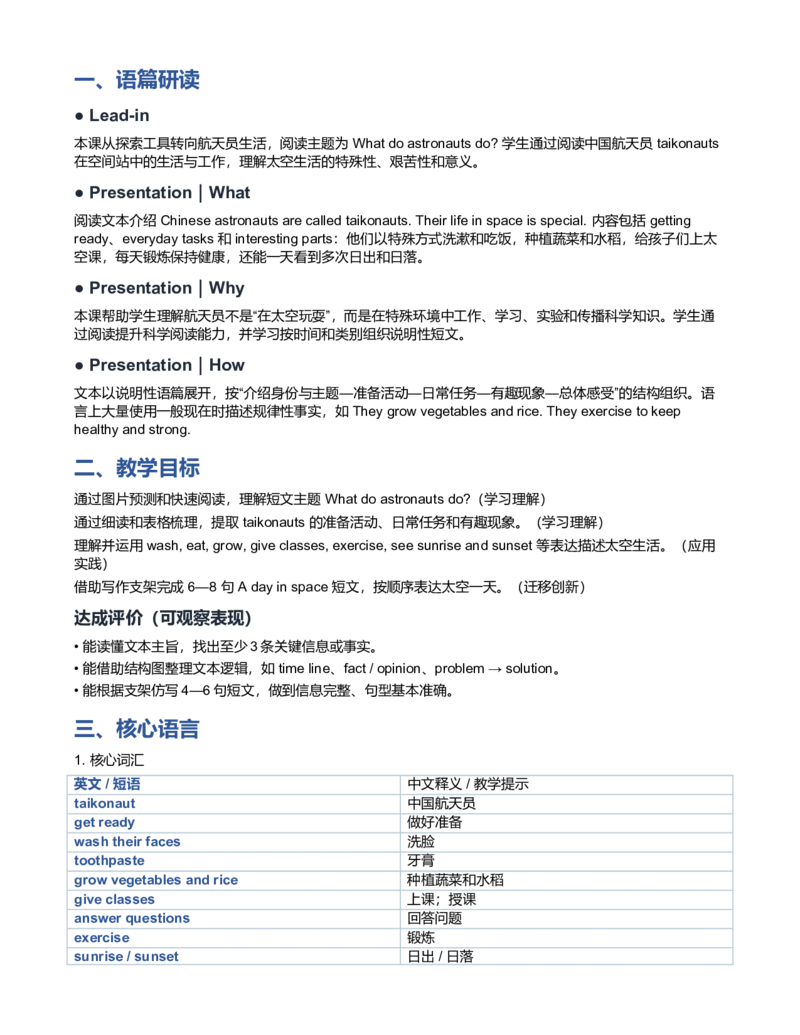
一、语篇研读
● Lead-in

本课从探索工具转向航天员生活,阅读主题为What do astronauts do?

学生通过阅读中国航天员taikonauts
在空间站中的生活与工作,理解太空生活的特殊性、艰苦性和意义。
● Presentation|What

阅读文本介绍Chinese astronauts are called taikonauts. Their life in space is special.

内容包括getting
ready、everyday tasks

和interesting parts:他们以特殊方式洗漱和吃饭,种植蔬菜和水稻,给孩子们上太
空课,每天锻炼保持健康,还能一天看到多次日出和日落。
● Presentation|Why
“
”
本课帮助学生理解航天员不是在太空玩耍,而是在特殊环境中工作、学习、实验和传播科学知识。学生通
过阅读提升科学阅读能力,并学习按时间和类别组织说明性短文。
● Presentation|How
“
—
—
—
—
”
文本以说明性语篇展开,按介绍身份与主题
准备活动
日常任务
有趣现象
总体感受的结构组织。语

言上大量使用一般现在时描述规律性事实,如They grow vegetables and rice. They exercise to keep
healthy and strong.
二、教学目标

通过图片预测和快速阅读,理解短文主题What do astronauts do?(学习理解)

通过细读和表格梳理,提取taikonauts 的准备活动、日常任务和有趣现象。(学习理解)

理解并运用wash, eat, grow, give classes, exercise, see sunrise and sunset 等表达描述太空生活。(应用
实践)

借助写作支架完成6—8

句A day in space 短文,按顺序表达太空一天。(迁移创新)
达成评价(可观察表现)
• 能读懂文本主旨,找出至少3 条关键信息或事实。
•

能借助结构图整理文本逻辑,如time line、fact / opinion、problem → solution。
• 能根据支架仿写4—6 句短文,做到信息完整、句型基本准确。
三、核心语言
1. 核心词汇

英文/ 短语

中文释义/ 教学提示
taikonaut
中国航天员
get ready
做好准备
wash their faces
洗脸
toothpaste
牙膏
grow vegetables and rice
种植蔬菜和水稻
give classes
上课;授课
answer questions
回答问题
exercise
锻炼
sunrise / sunset

日出/ 日落
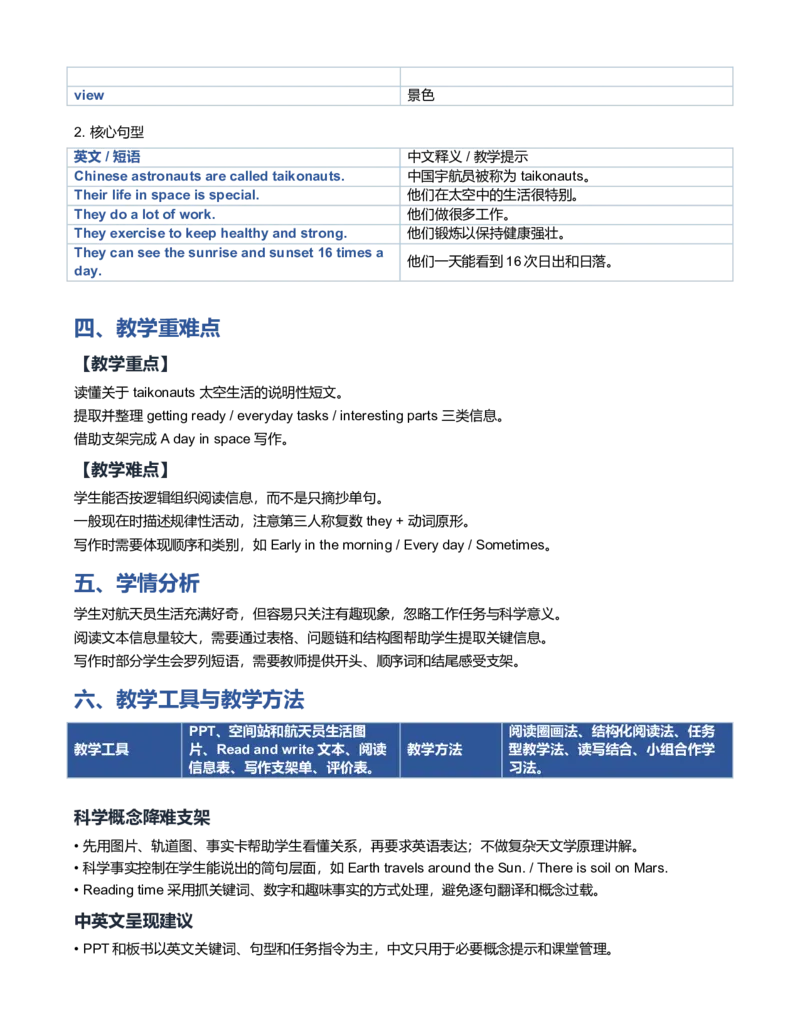
view
景色
2. 核心句型

英文/ 短语

中文释义/ 教学提示
Chinese astronauts are called taikonauts.

中国宇航员被称为taikonauts。
Their life in space is special.
他们在太空中的生活很特别。
They do a lot of work.
他们做很多工作。
They exercise to keep healthy and strong.
他们锻炼以保持健康强壮。
They can see the sunrise and sunset 16 times a
day.
他们一天能看到16 次日出和日落。
四、教学重难点
【教学重点】

读懂关于taikonauts 太空生活的说明性短文。

提取并整理getting ready / everyday tasks / interesting parts 三类信息。

借助支架完成A day in space 写作。
【教学难点】
学生能否按逻辑组织阅读信息,而不是只摘抄单句。

一般现在时描述规律性活动,注意第三人称复数they + 动词原形。

写作时需要体现顺序和类别,如Early in the morning / Every day / Sometimes。
五、学情分析
学生对航天员生活充满好奇,但容易只关注有趣现象,忽略工作任务与科学意义。
阅读文本信息量较大,需要通过表格、问题链和结构图帮助学生提取关键信息。
写作时部分学生会罗列短语,需要教师提供开头、顺序词和结尾感受支架。
六、教学工具与教学方法
教学工具
PPT、空间站和航天员生活图
片、Read and write 文本、阅读
信息表、写作支架单、评价表。
教学方法
阅读圈画法、结构化阅读法、任务
型教学法、读写结合、小组合作学
习法。
科学概念降难支架
• 先用图片、轨道图、事实卡帮助学生看懂关系,再要求英语表达;不做复杂天文学原理讲解。
•

科学事实控制在学生能说出的简句层面,如Earth travels around the Sun. / There is soil on Mars.
• Reading time 采用抓关键词、数字和趣味事实的方式处理,避免逐句翻译和概念过载。
中英文呈现建议
• PPT 和板书以英文关键词、句型和任务指令为主,中文只用于必要概念提示和课堂管理。
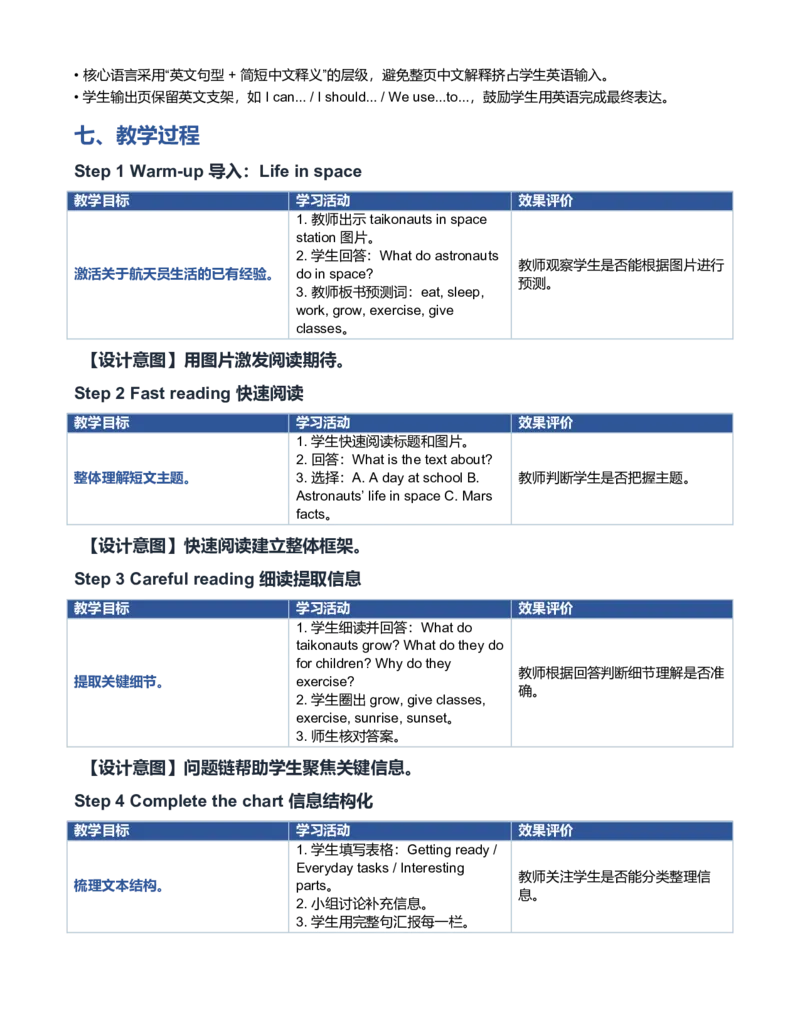
•
“

核心语言采用英文句型+
”
简短中文释义的层级,避免整页中文解释挤占学生英语输入。
•

学生输出页保留英文支架,如I can... / I should... / We use...to...,鼓励学生用英语完成最终表达。
七、教学过程
Step 1 Warm-up 导入:Life in space
教学目标
学习活动
效果评价
激活关于航天员生活的已有经验。
1.

教师出示taikonauts in space
station 图片。
2. 学生回答:What do astronauts
do in space?
3. 教师板书预测词:eat, sleep,
work, grow, exercise, give
classes。
教师观察学生是否能根据图片进行
预测。
【设计意图】用图片激发阅读期待。
Step 2 Fast reading 快速阅读
教学目标
学习活动
效果评价
整体理解短文主题。
1. 学生快速阅读标题和图片。
2. 回答:What is the text about?
3. 选择:A. A day at school B.
Astronauts’ life in space C. Mars
facts。
教师判断学生是否把握主题。
【设计意图】快速阅读建立整体框架。
Step 3 Careful reading 细读提取信息
教学目标
学习活动
效果评价
提取关键细节。
1. 学生细读并回答:What do
taikonauts grow? What do they do
for children? Why do they
exercise?
2.

学生圈出grow, give classes,
exercise, sunrise, sunset。
3. 师生核对答案。
教师根据回答判断细节理解是否准
确。
【设计意图】问题链帮助学生聚焦关键信息。
Step 4 Complete the chart 信息结构化
教学目标
学习活动
效果评价
梳理文本结构。
1. 学生填写表格:Getting ready /
Everyday tasks / Interesting
parts。
2. 小组讨论补充信息。
3. 学生用完整句汇报每一栏。
教师关注学生是否能分类整理信
息。
【设计意图】结构化阅读为写作打基础。
Step 5 Language focus 规律性活动表达
教学目标
学习活动
效果评价
理解一般现在时描述太空生活。
1.

教师板书They grow vegetables
and rice. They give classes. They
exercise.
2.

学生观察they 后动词形式。
3.

教师强调to keep healthy 表示
目的。
4. 学生替换造句:They ______ to
______.
教师纠正动词形式和目的表达。
【设计意图】在阅读语境中巩固一般现在时。
Step 6 Read aloud and retell 朗读与复述
教学目标
学习活动
效果评价
学生能够借助关键词复述文本。
1. 学生跟读文本,注意长句停顿。
2. 教师出示关键词:special, get
ready, grow, give classes,
exercise, sunrise and sunset。
3. 学生根据关键词复述。
教师评价复述是否包含主要信息。
【设计意图】复述促进语言内化。
Step 7 Writing scaffold 写作支架
教学目标
学习活动
效果评价

为A day in space 写作做准备。
1. 教师出示写作框架:It is special
to be an astronaut. Early in the
morning... Every day...
Sometimes... I must... The view
is...
2. 学生选择短语填入框架。
3. 同桌互读修改。
教师检查句子是否完整、有顺序。
【设计意图】从阅读结构迁移到写作结构。
Step 8 Write and share 写作展示
教学目标
学习活动
效果评价
完成短文并进行分享修改。
1.

学生独立写6—8

句A day in
space。
2.

同伴根据checklist 互评:facts,
order, simple present, feeling。
3. 2—3 名学生展示。
教师评价内容准确性和表达完整
性。
【设计意图】读写结合,形成完整输出。
Step 10 Summary 课堂小结
Reading: taikonauts’ life in space is special and hard but amazing.
Structure: Getting ready → Everyday tasks → Interesting parts → Feeling.
Writing: A day in space should include facts, activities and feelings.
八、课堂练习
练习一:True or False
1. Taikonauts live and work on a space station. ( )
2. They grow flowers and apples. ( )
3. They give classes to children from space. ( )
4. They exercise to keep healthy. ( )
练习二:Answer the questions
1. What do taikonauts grow?
2. What do they do for children?
3. Why do they exercise every day?
练习三:Writing frame
It is special to be an astronaut.
Early in the morning, I ______.
Every day, I ______.
Sometimes, I ______.
I must ______ to keep healthy.
The view is ______.
九、课后作业
基础作业

朗读Read and write 短文两遍。
圈出文本中表示太空生活活动的动词。
提高作业

完成并修改一篇6—8

句A day in space。
拓展作业
查找一条中国航天员在空间站工作的事实,用英语写一句。
十、板书设计
Unit 5 Exploring space
Read and write
What do astronauts do?
Chinese astronauts = taikonauts
Life in space is special.
Getting ready: wash / eat in special ways
Everyday tasks: grow vegetables and rice / give classes
Keep healthy: exercise every day
Interesting parts: sunrise and sunset 16 times a day
A day in space:
Early in the morning... Every day... Sometimes... It is...
十一、教学反思参考

本课阅读信息量较大,学生需要结构化支架。通过Getting ready / Everyday tasks / Interesting parts 三栏
表,学生能更清楚地把握文本脉络。
写作时教师应强调事实准确和顺序清楚。若学生语言基础弱,可先完成填空式写作,再逐步过渡到独立短文。