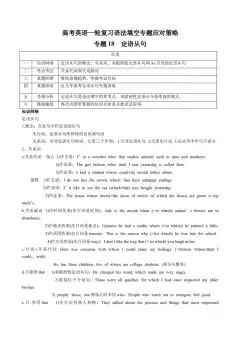
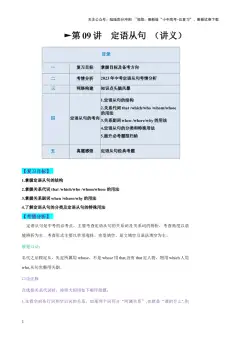
定语从句
第一部分:定语从句-关系代词
知识要点:
知识点1:定语和定语从句
知识点2:定语从句的本质与三要素
知识点3:定语从句关系代词
知识点4:特殊考点
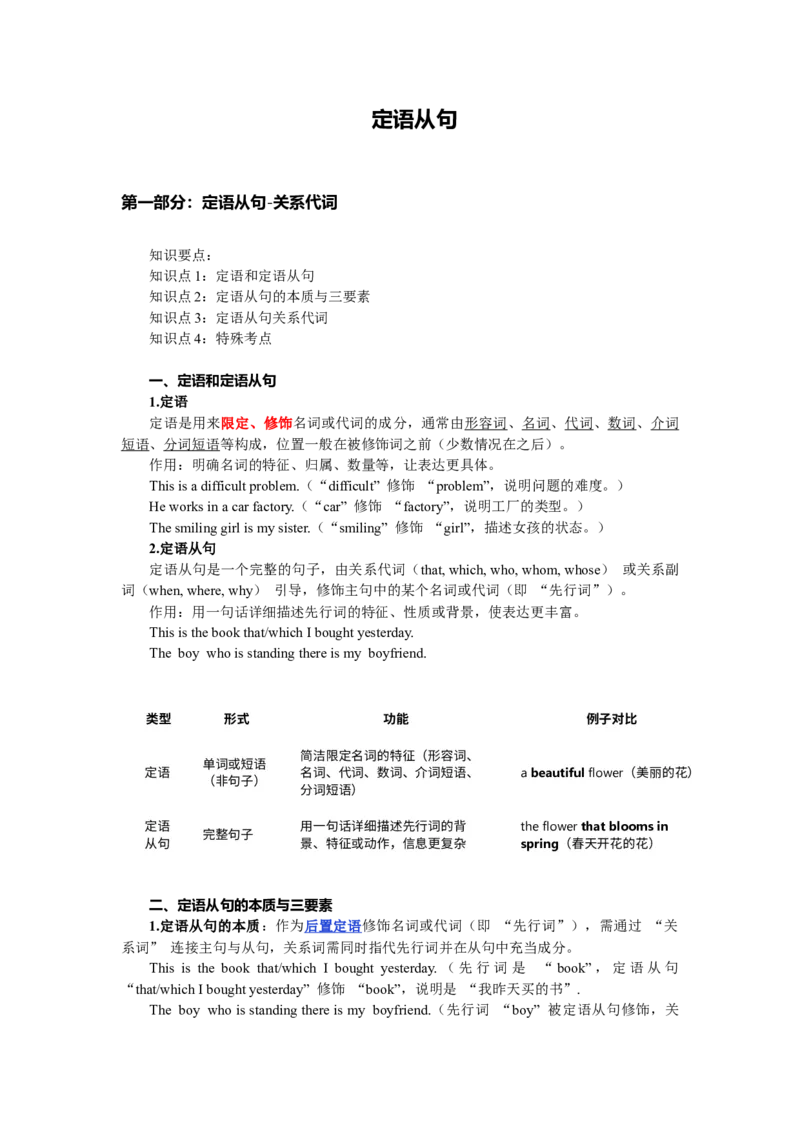
一、定语和定语从句
1.定语
定语是用来限定、修饰名词或代词的成分,通常由形容词、名词、代词、数词、介词
短语、分词短语等构成,位置一般在被修饰词之前(少数情况在之后)。
作用:明确名词的特征、归属、数量等,让表达更具体。
This is a difficult problem.(“difficult” 修饰 “problem”,说明问题的难度。)
He works in a car factory.(“car” 修饰 “factory”,说明工厂的类型。)
The smiling girl is my sister.(“smiling” 修饰 “girl”,描述女孩的状态。)
2.定语从句
定语从句是一个完整的句子,由关系代词(that, which, who, whom, whose) 或关系副
词(when, where, why) 引导,修饰主句中的某个名词或代词(即 “先行词”)。
作用:用一句话详细描述先行词的特征、性质或背景,使表达更丰富。
This is the book that/which I bought yesterday.
The boy who is standing there is my boyfriend.
类型 形式 功能 例子对比
简洁限定名词的特征(形容词、
单词或短语
定语 名词、代词、数词、介词短语、 a beautiful flower(美丽的花)
(非句子)
分词短语)
定语 用一句话详细描述先行词的背 the flower that blooms in
完整句子
从句 景、特征或动作,信息更复杂 spring(春天开花的花)
二、定语从句的本质与三要素
1.定语从句的本质:作为后置定语修饰名词或代词(即 “先行词”),需通过 “关
系词” 连接主句与从句,关系词需同时指代先行词并在从句中充当成分。
This is the book that/which I bought yesterday. (先行词是 “book”,定语从句
“that/which I bought yesterday” 修饰 “book”,说明是 “我昨天买的书”.
The boy who is standing there is my boyfriend.(先行词 “boy” 被定语从句修饰,关系代词 who 在从句中作主语)
2.定语从句结构:
先行词 + 关系词 + 定语从句(关系词在从句中充当主语、宾语、定语等成分)
先行词的判定:
常规位置:直接位于关系词前(如 “The book which I read is good.” 中先行词为
“the book”)。
特殊情况:间隔式定语从句(先行词与关系词被其他成分隔开,如 “I was the only
person in my office who was invited.” 中先行词为 “the only person”)。
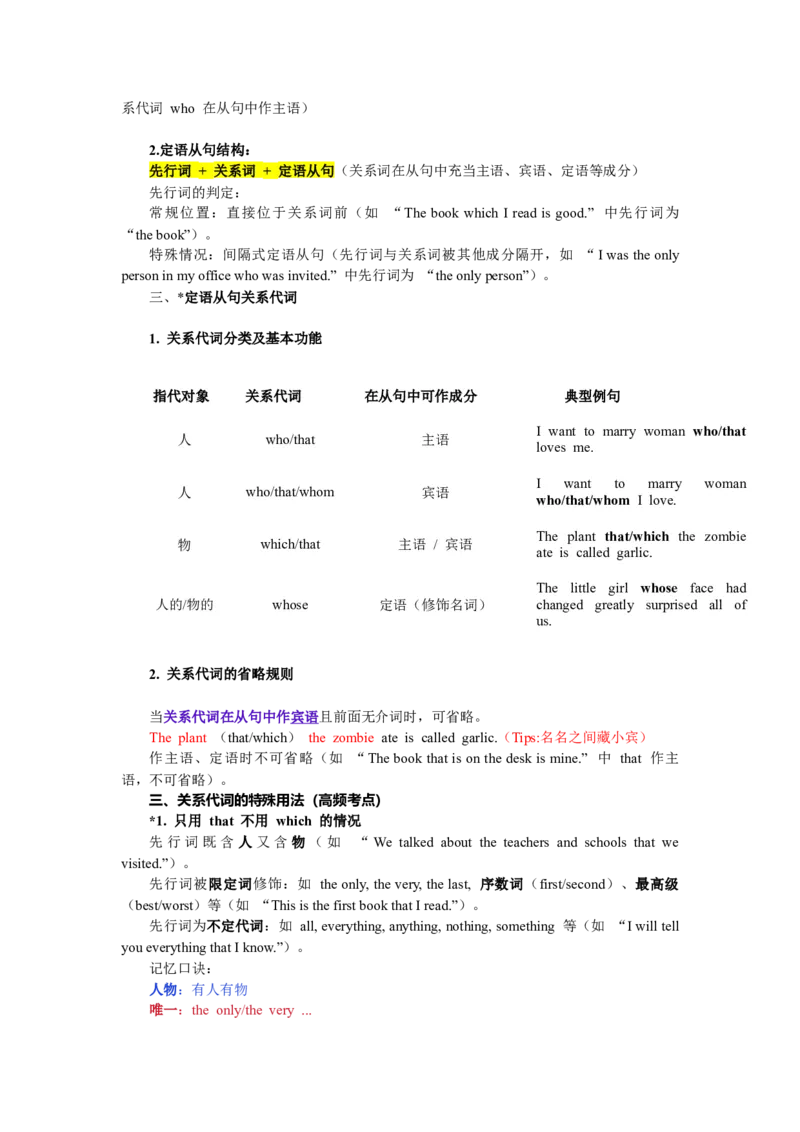
三、*定语从句关系代词
1. 关系代词分类及基本功能
指代对象 关系代词 在从句中可作成分 典型例句
I want to marry woman who/that
人 who/that 主语
loves me.
I want to marry woman
人 who/that/whom 宾语
who/that/whom I love.
The plant that/which the zombie
物 which/that 主语 / 宾语
ate is called garlic.
The little girl whose face had
人的/物的 whose 定语(修饰名词) changed greatly surprised all of
us.
2. 关系代词的省略规则
当关系代词在从句中作宾语且前面无介词时,可省略。
The plant (that/which) the zombie ate is called garlic.(Tips:名名之间藏小宾)
作主语、定语时不可省略(如 “The book that is on the desk is mine.” 中 that 作主
语,不可省略)。
三、关系代词的特殊用法(高频考点)
*1. 只用 that 不用 which 的情况
先行词既含人又含物(如 “We talked about the teachers and schools that we
visited.”)。
先行词被限定词修饰:如 the only, the very, the last, 序数词(first/second)、最高级
(best/worst)等(如 “This is the first book that I read.”)。
先行词为不定代词:如 all, everything, anything, nothing, something 等(如 “I will tell
you everything that I know.”)。
记忆口诀:
人物:有人有物
唯一:the only/the very ...最高:the best/worst...
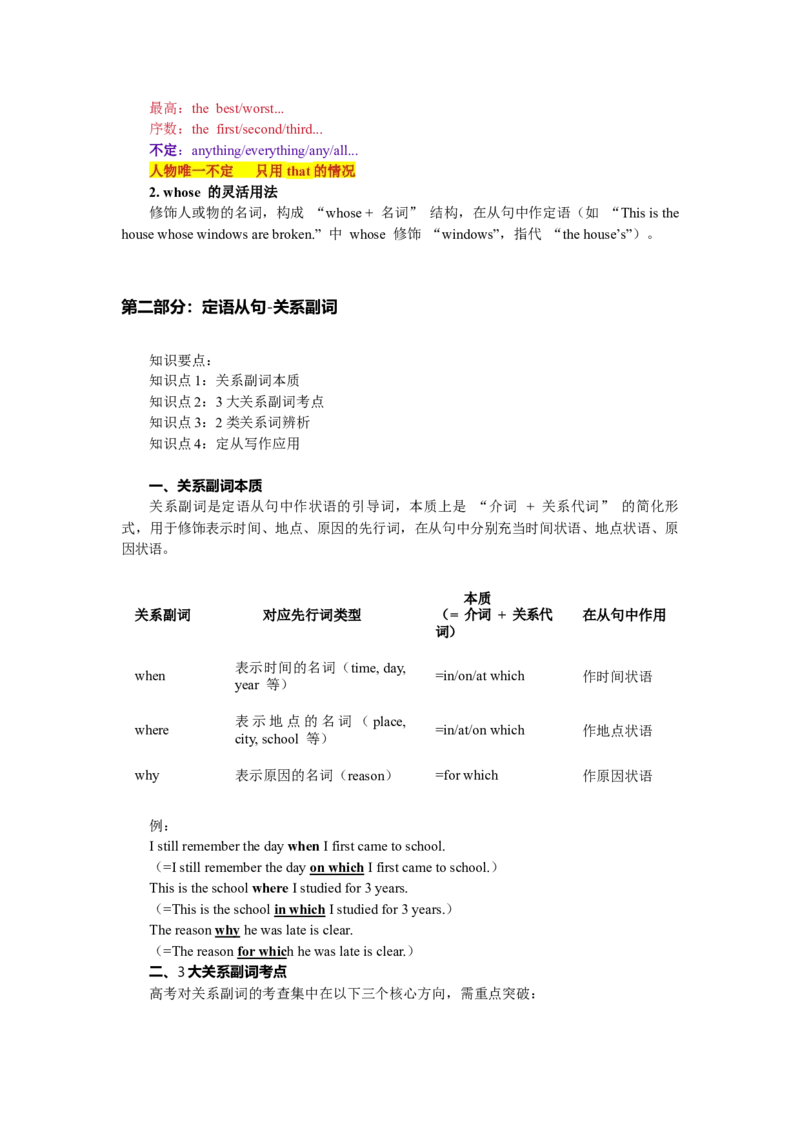
序数:the first/second/third...
不定:anything/everything/any/all...
人物唯一不定 只用that的情况
2. whose 的灵活用法
修饰人或物的名词,构成 “whose + 名词” 结构,在从句中作定语(如 “This is the
house whose windows are broken.” 中 whose 修饰 “windows”,指代 “the house’s”)。
第二部分:定语从句-关系副词
知识要点:
知识点1:关系副词本质
知识点2:3大关系副词考点
知识点3:2类关系词辨析
知识点4:定从写作应用
一、关系副词本质
关系副词是定语从句中作状语的引导词,本质上是 “介词 + 关系代词” 的简化形
式,用于修饰表示时间、地点、原因的先行词,在从句中分别充当时间状语、地点状语、原
因状语。
本质
关系副词 对应先行词类型 (= 介词 + 关系代 在从句中作用
词)
表示时间的名词(time, day,
when =in/on/at which 作时间状语
year 等)
表示地点的名词(place,
where =in/at/on which 作地点状语
city, school 等)
why 表示原因的名词(reason) =for which 作原因状语
例:
I still remember the day when I first came to school.
(=I still remember the day on which I first came to school.)
This is the school where I studied for 3 years.
(=This is the school in which I studied for 3 years.)
The reason why he was late is clear.
(=The reason for which he was late is clear.)
二、3大关系副词考点
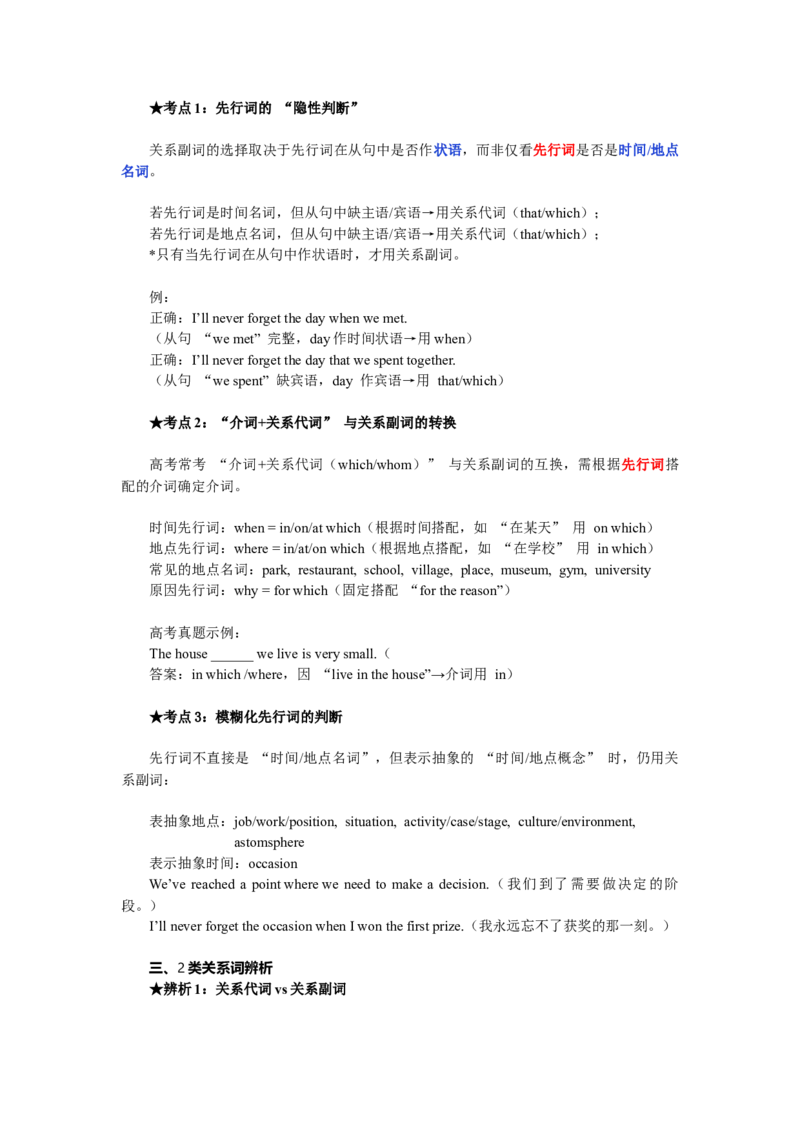
高考对关系副词的考查集中在以下三个核心方向,需重点突破:★考点1:先行词的 “隐性判断”
关系副词的选择取决于先行词在从句中是否作状语,而非仅看先行词是否是时间/地点
名词。
若先行词是时间名词,但从句中缺主语/宾语→用关系代词(that/which);
若先行词是地点名词,但从句中缺主语/宾语→用关系代词(that/which);
*只有当先行词在从句中作状语时,才用关系副词。
例:
正确:I’ll never forget the day when we met.
(从句 “we met” 完整,day作时间状语→用when)
正确:I’ll never forget the day that we spent together.
(从句 “we spent” 缺宾语,day 作宾语→用 that/which)
★考点2:“介词+关系代词” 与关系副词的转换
高考常考 “介词+关系代词(which/whom)” 与关系副词的互换,需根据先行词搭
配的介词确定介词。
时间先行词:when = in/on/at which(根据时间搭配,如 “在某天” 用 on which)
地点先行词:where = in/at/on which(根据地点搭配,如 “在学校” 用 in which)
常见的地点名词:park, restaurant, school, village, place, museum, gym, university
原因先行词:why = for which(固定搭配 “for the reason”)
高考真题示例:
The house ______ we live is very small.(
答案:in which /where,因 “live in the house”→介词用 in)
★考点3:模糊化先行词的判断
先行词不直接是 “时间/地点名词”,但表示抽象的 “时间/地点概念” 时,仍用关
系副词:
表抽象地点:job/work/position, situation, activity/case/stage, culture/environment,
astomsphere
表示抽象时间:occasion
We’ve reached a point where we need to make a decision.(我们到了需要做决定的阶
段。)
I’ll never forget the occasion when I won the first prize.(我永远忘不了获奖的那一刻。)
三、2类关系词辨析
★辨析1:关系代词vs关系副词核心区别:在从句中充当的成分不同。
类别 功能 常见词 从句中成分
指代先行词,在从句中作 that, which, who,
关系代词 主语、宾语、定语
主语/宾语/定语 whom, whose
指代先行词,在从句中作
关系副词 when, where, why 时间、地点、原因状语
状语
判断方法:
若从句缺主语 / 宾语 / 定语→用关系代词;
若从句主谓宾完整,缺状语→ 用关系副词。
例:
This is the factory which produces cars.(从句 “produces cars” 缺主语→关系代词
which)
This is the factory where my father works.(从句 “my father works” 完整,缺地点状语
→关系副词where)
★辨析2:限制性vs非限制性定语从句
核心区别:与先行词的关系及标点符号。
维度 限制性定语从句 非限制性定语从句
限定先行词,去掉后主句意思不 补充说明先行词,去掉后主句意思仍
作用
明确 完整
标点 无逗号隔开 用逗号与主句隔开
引导词 可用 that 不可用that,可用which/who等
先行词范围 单个名词/代词 单个名词/代词,或整个主句内容
高考易错点:
非限制性定语从句中不能用 tha t ,指物用 which ,指人用 wh o ;
逗号是关键标志:看到逗号,优先排 除 tha t 。
例:
限制性:The girl that sits next to me is my friend.(无逗号,that可用)
非限制性:My sister, who is a teacher, works in Shanghai.(有逗号,用who不用 that)
四、定从写作应用在高考书面表达(应用文、读后续写)中,恰当使用定语从句可提升句子丰富度和表
达档次,需注意以下要点:
1. 用定从扩展简单句,丰富信息
简单句:I have a friend. He likes music.
定从升级:I have a friend who likes music.(增加朋友的特征)
简单句:We visited a village. The villagers are very kind.
定从升级:We visited a village where the villagers are very kind.(补充村庄的特点)
2. 避免3类常见写作错误
错误 1:重复先行词(从句中已含指代,无需重复)
× I have a book that it is about history.(去掉 it,that已指代book)
√ I have a book that is about history.
错误 2:错用关系词(混淆代词与副词)
× This is the school which I studied 3 years ago.(studied后缺地点状语,用where)
√ This is the school where I studied 3 years ago.
错误 3:非限制性从句用 that
× My hometown, that is a small city, is very beautiful.(非限制性用which)
√ My hometown, which is a small city, is very beautiful.
3. 高级表达:“介词 + 关系代词” 提升句式多样性
在写作中用 “介词 + which/whom” 替代关系副词,使表达更正式:
原句:This is the library where I often read.
升级:This is the library in which I often read.
原句:I’ll never forget the day when I met you.
升级:I’ll never forget the day on which I met you.
第三部分:定语从句-介词+关系代词
知识要点:
知识点1:“介词 + 关系代词” 定语从句的本质
知识点2:关系代词的选择
知识点3:介词的选择知识点4:与关系副词的转换
一、“介词 + 关系代词” 定语从句的本质
“介词 + 关系代词” 引导的定语从句是定语从句的一种特殊变体,其本质是将定语
从句中原本位于动词后的介词提前至关系代词之前。
核心逻辑:关系代词在定语从句中作介词的宾语(即原本结构为 “动词/名词+介词
+关系代词”),为了强调介词所表达的逻辑关系或使句式更正式,将介词提前至关系代
词前。
特征:此时关系代词在从句中仍承担“介词宾语”的语法功能,且关系代词不可省略
(区别于普通定语从句中作宾语时可省略的情况)。
例:
原句:This is the book which I talked about yesterday.
转换后:This is the book about which I talked yesterday.(about提前至关系代词which
前)
二、关系代词的选择
在 “介词 + 关系代词” 结构中,关系代词的选择受限于语法规则,只能用 which
(指物)或 whom(指人),不可用 that、who 替代。
指代对象 关系代词 示例
物 which The house in which I grew up is gone.
(我长大的房子不见了)
人 whom The teacher to whom I wrote a letter is very kind.
(我写信的那位老师很和蔼)
禁忌:不可用 that 或 who!错误示例:The girl to that I gave a gift is my sister.
(正确应为 to whom)
三、介词的选择
介词的选择需依据三大核心依据,确保逻辑合理、搭配正确:
1. 依据定语从句中动词的固定搭配
介词需与从句中的谓语动词构成固定短语(如 depend on, talk about, look for 等)。
例:
He is the person on whom I depend.(depend on依赖)
This is the topic about which we talked.(talk about谈论)
2. 依据先行词的固定搭配
介词需与先行词构成固定搭配(如 interest in, key to, solution to 等)。
例:
She has a deep interest in which I also show interest.(interest in 对……的兴趣)
This is the key to which the door can be opened.(key to……的钥匙)
3. 依据句子的语义逻辑
根据句意需要选择合适的介词,体现时间、地点、方式等逻辑关系。
例:
The desk on which I put my books is new.(“把书放在桌上” 需用介词on,体现位置
关系)
I’ll never forget the year during which I studied abroad.(“在…… 期间” 用介词during,体现时间范围)
四、与关系副词的转换
关系副词(where/when/why)在定语从句中本质上是 “介词+关系代词” 的简化形
式,二者可相互转换,转换的核心是明确关系副词隐含的介词。
1. where 与 “介词+ which” 的转换
where 在定语从句中表地点,相当于 “in/at/on+which”
(具体介词由先行词的 “地点属性” 决定)。
例:
This is the city where I was born.
= This is the city in which I was born.(“在城市里” 用in)
The desk where I put my bag is near the window.
= The desk on which I put my bag is near the window.(“在桌上” 用on)
2. when 与 “介词+ which” 的转换
when在定语从句中表时间,相当于 “in/at/on/during+which”
(具体介词由先行词的 “时间属性” 决定)。
例:
I remember the day when we first met.
= I remember the day on which we first met.(“在具体某天” 用 on)
The years when I studied in college were happy.
= The years during which I studied in college were happy.(“在…… 期间” 用
during)
3. why 与 “介词 + which” 的转换
why 在定语从句中表原因,仅用于先行词为 reason 的情况,相当于 “for+which”。
例:
The reason why he was late is clear.
= The reason for which he was late is clear.(“因…… 原因” 用 for)
第四部分:定语从句-非限制性定语从句
知识要点:
知识点1:非限制性定语从句的本质
知识点2:非限制性定语从句的关系词
知识点3:as与which 的区别
知识点4:非限制性定语从句与并列句的区别
一、非限制性定语从句的本质非限制性定语从句是对先行词进行补充说明、附加解释的定语从句,与先行词之间逻
辑关系松散,即使去掉也不影响主句意思的完整性。其核心特征如下:
语法标志:从句与主句之间必须用逗号隔开(区别于限制性定语从句无逗号)。
功能定位:提供额外信息,相当于插入语或并列分句的替代形式,增强句子丰富度。
语义逻辑:先行词通常是一个完整的句子或明确指代的人/物,从句不限制先行词的范
围(限制性定语从句则起 “限定范围” 作用)。
限制性:The girl who wears a red coat is my sister.
(穿红外套的女孩是我妹妹,限定 “哪一个女孩”)
非限制性:My sister, who wears a red coat, is a doctor.
(我妹妹是医生,补充说明她穿红外套,去掉后主句 “我妹妹是医生” 仍成立)
二、非限制性定语从句的关系词
非限制性定语从句的关系词使用需遵循语法规则,部分关系词与限制性定语从句存在差
异,具体如下:
指代对象 可用关系词 不可用关系 示例
词
人 who(主格)、 that My mother, who is a teacher, loves her students.
whom(宾格)
物 which that The book, which I bought yesterday, is very interesting.
时间 when Last summer, when I visited Beijing, I met many friends.
地点 where Shanghai, where I was born, is a modern city.
原因(先行 why(较少用,常
词为 用 for which 替 The reason, why/for which he was late, is not clear.
reason) 代)
整个主句内容 as、which that、what He passed the exam, which/as made his parents happy.
关键禁忌:非限制性定语从句中绝对不能用that,也不能省略关系词。
(即使关系词在从句中作宾语)。
错误示例:His father, that works in a factory, is very kind.(正确应为 who)
×
三、as与which 的区别
在非限制性定语从句中,as 和 which 均可指代整个主句内容,但用法和语义侧重不
同,高考高频考点如下:
区别维度 as which
位置特征 可位于主句前、中、后 只能位于主句后(逗号后)
语义侧重 表示 “正如、正像”,符合预期 表示 “这一点、这件事”,引出结果
常用于 as is known(众所周知)、as we all 无固定搭配,需根据句意判
固定搭配 know(正如我们所知)、as often happens 断
(正如常发生的那样)等固定表达
否定转移 不可用于否定意义的从句 可用于否定意义的从句
例:
As is known to all, the earth is round.(as 位于句首,“正如所知”)
The earth is round, as/which is known to all.
(as/which 均可位于句后,as强调 “符合常识”,which强调 “这件事”)
He failed the exam, which made his parents angry.(which 表结果,不可用as)
He didn’t pass the exam, which surprised us.(which可接否定意义,as不可)
四、非限制性定语从句与并列句的区别
非限制性定语从句与并列句(由 and、but、so 等并列连词连接)易混淆,需从连接
方式、逻辑关系、语法功能三方面区分:
区别维度 非限制性定语从句 并列句
连接标志 用关系词(who/which/as等)+ 逗 用并列连词(and/but/so 等)+ 逗号
号 (可选)
逻辑关系 从句对主句/先行词进行补充说明 分句之间是并列、转折、因果等平等
关系
语法独立性 从句依赖主句,不能独立成句 两个分句均可独立成句
改错题常见错 误将关系词换成并列连词 误将并列连词换成关系词(如用
误 (如用and which) which 连接并列关系)
非限制性定语从句:He has a new car, which cost him a lot of money.
(which连接,补充说明车的花费)
并列句:He has a new car, and it cost him a lot of money.
(and连接两个独立分句,表并列关系)
错误辨析:He likes reading, which he often goes to the library.
(错误,从句与主句是并列关系,应改为 and he often goes to the library)