Chapter II Traditional Festivals
传统节日
Lesson 1 Spring Festival春节
The first day of the first lunar month is regarded as the New Year of the Chinese – the Spring Festival. It is the
most important and ceremonious traditional festival in China, just as
Christmas Day to the westerners.
During the Spring Festival, every family is busy cleaning house in the
hope of getting rid of defilements and preventing diseases. Also, they need to
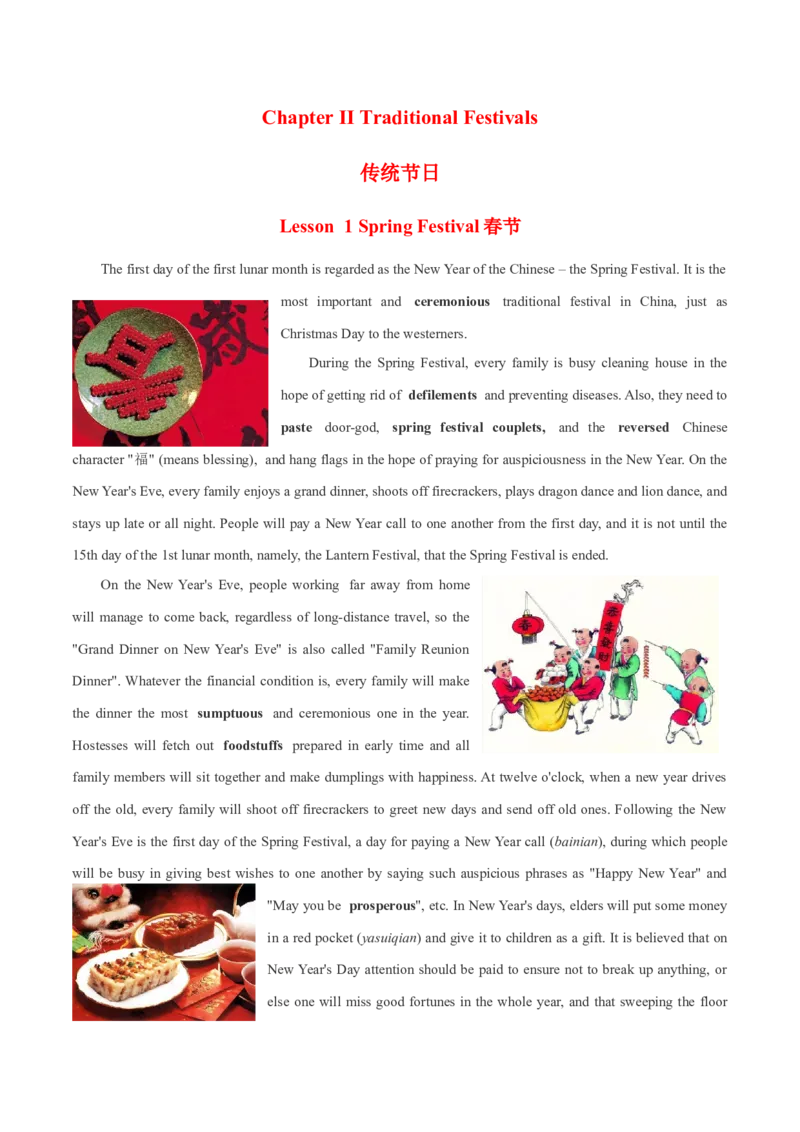
paste door-god, spring festival couplets, and the reversed Chinese
character "福" (means blessing), and hang flags in the hope of praying for auspiciousness in the New Year. On the
New Year's Eve, every family enjoys a grand dinner, shoots off firecrackers, plays dragon dance and lion dance, and
stays up late or all night. People will pay a New Year call to one another from the first day, and it is not until the
15th day of the 1st lunar month, namely, the Lantern Festival, that the Spring Festival is ended.
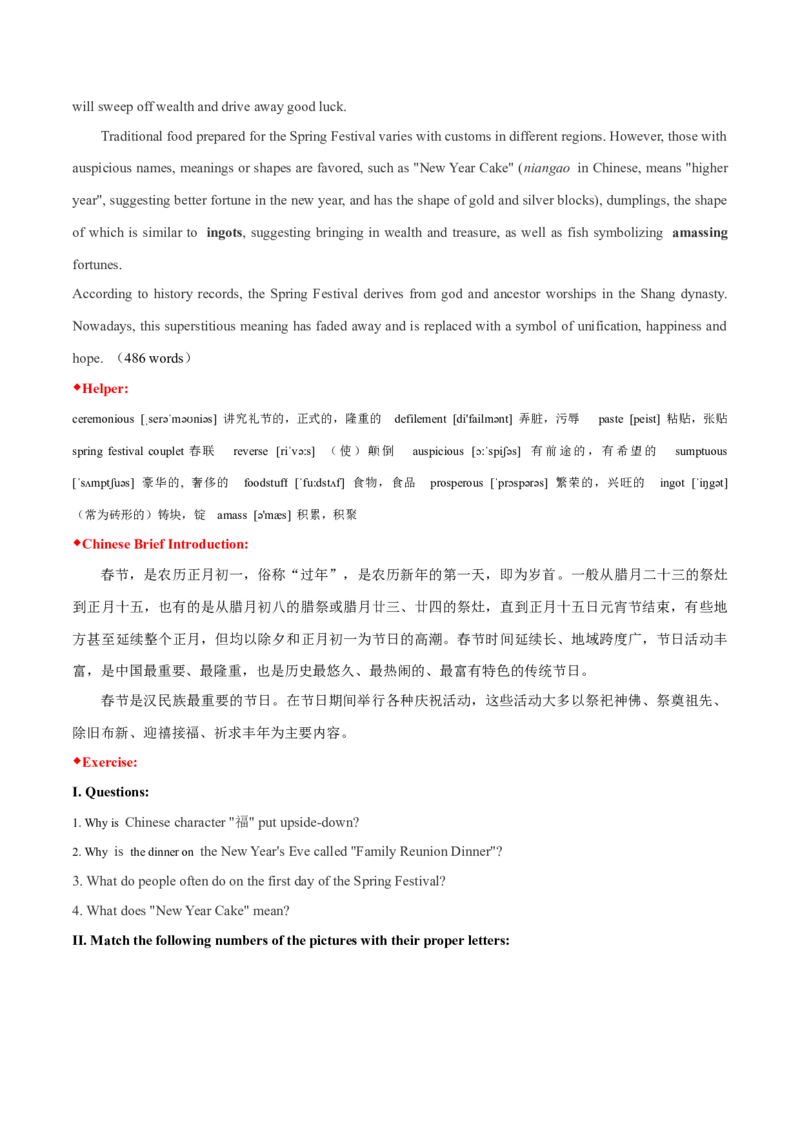
On the New Year's Eve, people working far away from home
will manage to come back, regardless of long-distance travel, so the
"Grand Dinner on New Year's Eve" is also called "Family Reunion
Dinner". Whatever the financial condition is, every family will make
the dinner the most sumptuous and ceremonious one in the year.
Hostesses will fetch out foodstuffs prepared in early time and all
family members will sit together and make dumplings with happiness. At twelve o'clock, when a new year drives
off the old, every family will shoot off firecrackers to greet new days and send off old ones. Following the New
Year's Eve is the first day of the Spring Festival, a day for paying a New Year call (bainian), during which people
will be busy in giving best wishes to one another by saying such auspicious phrases as "Happy New Year" and
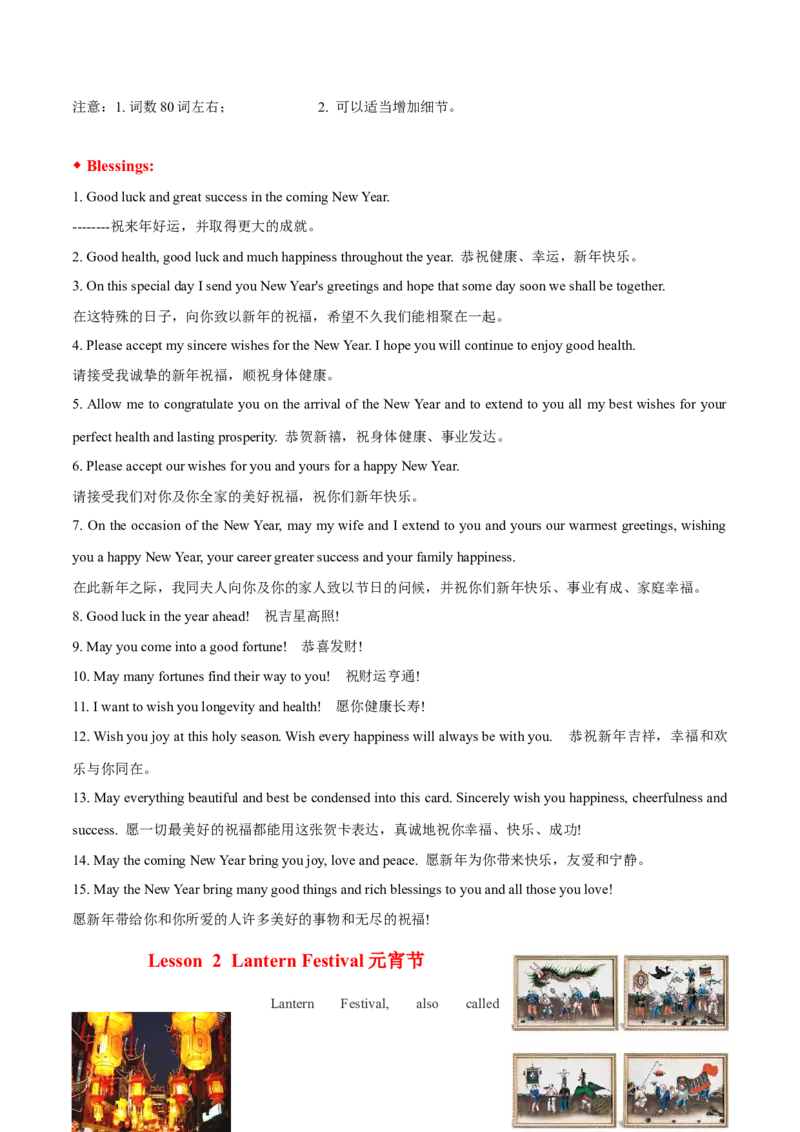
"May you be prosperous", etc. In New Year's days, elders will put some money
in a red pocket (yasuiqian) and give it to children as a gift. It is believed that on
New Year's Day attention should be paid to ensure not to break up anything, or
else one will miss good fortunes in the whole year, and that sweeping the floorwill sweep off wealth and drive away good luck.
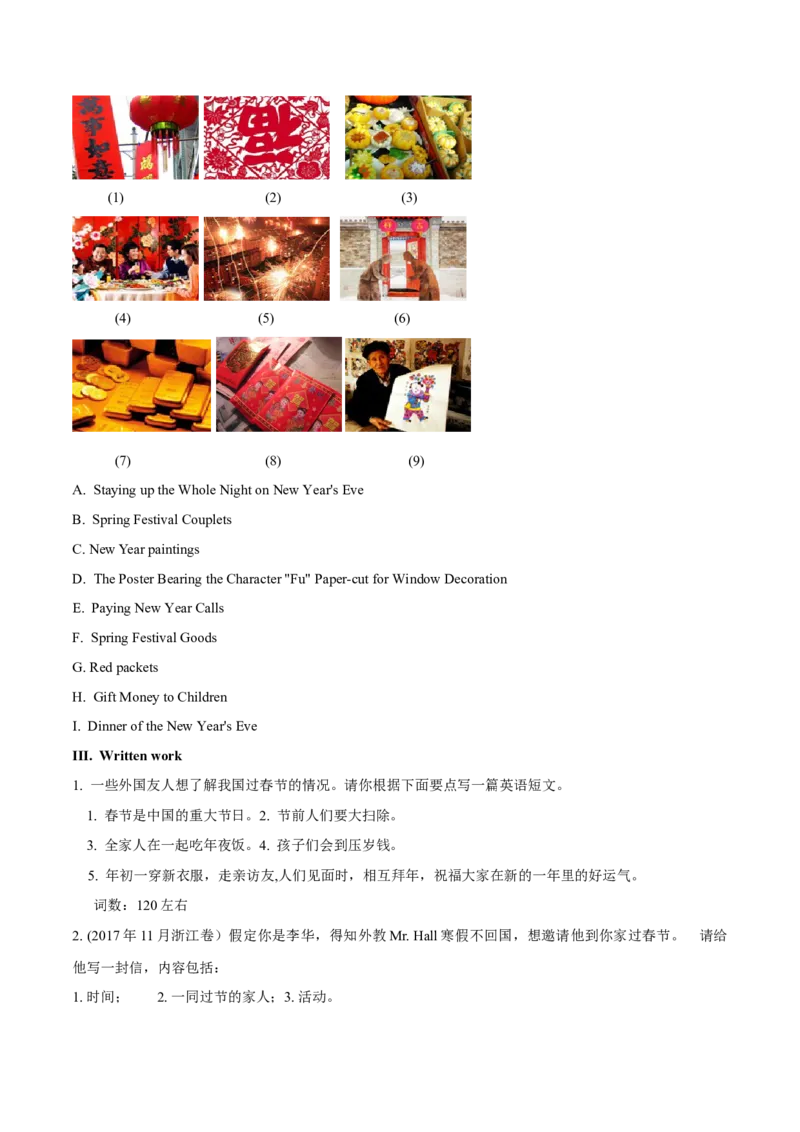
Traditional food prepared for the Spring Festival varies with customs in different regions. However, those with
auspicious names, meanings or shapes are favored, such as "New Year Cake" (niangao in Chinese, means "higher
year", suggesting better fortune in the new year, and has the shape of gold and silver blocks), dumplings, the shape
of which is similar to ingots, suggesting bringing in wealth and treasure, as well as fish symbolizing amassing
fortunes.
According to history records, the Spring Festival derives from god and ancestor worships in the Shang dynasty.
Nowadays, this superstitious meaning has faded away and is replaced with a symbol of unification, happiness and
hope. (486 words)
◆Helper:
ceremonious [ˌserəˈməʊniəs] 讲究礼节的,正式的,隆重的 defilement [di'failmənt] 弄脏,污辱 paste [peist] 粘贴,张贴
spring festival couplet 春联 reverse [riˈvə:s] (使)颠倒 auspicious [ɔ:ˈspiʃəs] 有前途的,有希望的 sumptuous
[ˈsʌmptʃuəs] 豪华的, 奢侈的 foodstuff [ˈfu:dstʌf] 食物,食品 prosperous [ˈprɔspərəs] 繁荣的,兴旺的 ingot [ˈiŋgət]
(常为砖形的)铸块,锭 amass [ə'mæs] 积累,积聚
◆Chinese Brief Introduction:
春节,是农历正月初一,俗称“过年”,是农历新年的第一天,即为岁首。一般从腊月二十三的祭灶
到正月十五,也有的是从腊月初八的腊祭或腊月廿三、廿四的祭灶,直到正月十五日元宵节结束,有些地
方甚至延续整个正月,但均以除夕和正月初一为节日的高潮。春节时间延续长、地域跨度广,节日活动丰
富,是中国最重要、最隆重,也是历史最悠久、最热闹的、最富有特色的传统节日。
春节是汉民族最重要的节日。在节日期间举行各种庆祝活动,这些活动大多以祭祀神佛、祭奠祖先、
除旧布新、迎禧接福、祈求丰年为主要内容。
◆Exercise:
I. Questions:
1. Why is Chinese character "福" put upside-down?
2. Why is the dinner on the New Year's Eve called "Family Reunion Dinner"?
3. What do people often do on the first day of the Spring Festival?
4. What does "New Year Cake" mean?
II. Match the following numbers of the pictures with their proper letters:(1) (2) (3)
(4) (5) (6)
(7) (8) (9)
A. Staying up the Whole Night on New Year's Eve
B. Spring Festival Couplets
C. New Year paintings
D. The Poster Bearing the Character "Fu" Paper-cut for Window Decoration
E. Paying New Year Calls
F. Spring Festival Goods
G. Red packets
H. Gift Money to Children
I. Dinner of the New Year's Eve
III. Written work
1. 一些外国友人想了解我国过春节的情况。请你根据下面要点写一篇英语短文。
1. 春节是中国的重大节日。2. 节前人们要大扫除。
3. 全家人在一起吃年夜饭。4. 孩子们会到压岁钱。
5. 年初一穿新衣服,走亲访友,人们见面时,相互拜年,祝福大家在新的一年里的好运气。
词数:120左右
2. (2017年11月浙江卷)假定你是李华,得知外教Mr. Hall寒假不回国,想邀请他到你家过春节。 请给
他写一封信,内容包括:
1. 时间; 2. 一同过节的家人;3. 活动。注意:1. 词数80词左右; 2. 可以适当增加细节。
◆ Blessings:
1. Good luck and great success in the coming New Year.
--------祝来年好运,并取得更大的成就。
2. Good health, good luck and much happiness throughout the year. 恭祝健康、幸运,新年快乐。
3. On this special day I send you New Year's greetings and hope that some day soon we shall be together.
在这特殊的日子,向你致以新年的祝福,希望不久我们能相聚在一起。
4. Please accept my sincere wishes for the New Year. I hope you will continue to enjoy good health.
请接受我诚挚的新年祝福,顺祝身体健康。
5. Allow me to congratulate you on the arrival of the New Year and to extend to you all my best wishes for your
perfect health and lasting prosperity. 恭贺新禧,祝身体健康、事业发达。
6. Please accept our wishes for you and yours for a happy New Year.
请接受我们对你及你全家的美好祝福,祝你们新年快乐。
7. On the occasion of the New Year, may my wife and I extend to you and yours our warmest greetings, wishing
you a happy New Year, your career greater success and your family happiness.
在此新年之际,我同夫人向你及你的家人致以节日的问候,并祝你们新年快乐、事业有成、家庭幸福。
8. Good luck in the year ahead! 祝吉星高照!
9. May you come into a good fortune! 恭喜发财!
10. May many fortunes find their way to you! 祝财运亨通!
11. I want to wish you longevity and health! 愿你健康长寿!
12. Wish you joy at this holy season. Wish every happiness will always be with you. 恭祝新年吉祥,幸福和欢
乐与你同在。
13. May everything beautiful and best be condensed into this card. Sincerely wish you happiness, cheerfulness and
success. 愿一切最美好的祝福都能用这张贺卡表达,真诚地祝你幸福、快乐、成功!
14. May the coming New Year bring you joy, love and peace. 愿新年为你带来快乐,友爱和宁静。
15. May the New Year bring many good things and rich blessings to you and all those you love!
愿新年带给你和你所爱的人许多美好的事物和无尽的祝福!
Lesson 2 Lantern Festival元宵节
Lantern Festival, also calledShangyuan Festival, is celebrated on January 15 of Chinese lunar calendar. It is the first full moon night in the
Chinese lunar year, symbolizing the coming back of the spring. Lantern Festival may be regarded as the last day of
Spring Festival, the new-year festival of China, in other words, the Spring Festival does not end until the Lantern
Festival has passed. Lasting to Lantern Festival, the busy atmosphere of Spring Festival on that day shows new
visions and amorous feelings. Lantern Festival is regarded as a good day for family gather-together. According to
the folk custom of China, people on that night will lighten up fancy lanterns and go out to appreciate the moon, set
off fireworks, guess riddles written on lanterns, and eat rice glue balls to celebrate the festival.
The tradition of appreciating lanterns on the Lantern Festival originates from the Eastern Han Dynasty, which
has a bearing on the introduction of Buddhism into China at that time. It is a Buddhist convention that the
monks would visit Buddhist relics and lighten up lanterns to show respect to Buddha on Jan. 15. Therefore,
Emperors of that dynasty, who were determined to promote Buddhism, ordered people to lighten up lanterns in
both palaces and temples on that night to show respect to Buddha. Additionally, civilians were all requested to
hang up lanterns on that night, which is why the festival is called "Lantern Festival". In the Song Dynasty, the
custom of guessing riddles written on lanterns on Lantern Festival came into being and people at that time wrote
riddles on paper strips and then pasted them on the colorful lanterns for others to appreciate and guess. In the Qing
Dynasty, fireworks were set off to add fun, and the Lantern Festival by then witnessed a record-breaking grand
occasion.
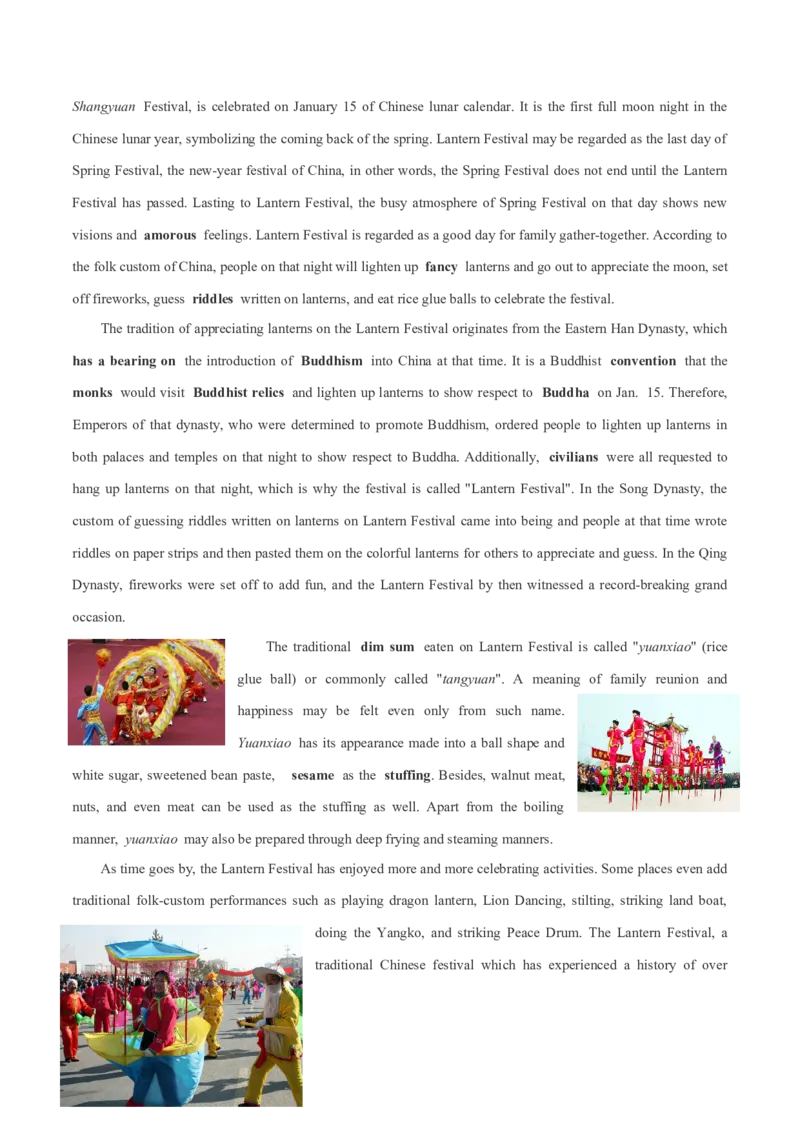
The traditional dim sum eaten on Lantern Festival is called "yuanxiao" (rice
glue ball) or commonly called "tangyuan". A meaning of family reunion and
happiness may be felt even only from such name.
Yuanxiao has its appearance made into a ball shape and
white sugar, sweetened bean paste, sesame as the stuffing. Besides, walnut meat,
nuts, and even meat can be used as the stuffing as well. Apart from the boiling
manner, yuanxiao may also be prepared through deep frying and steaming manners.
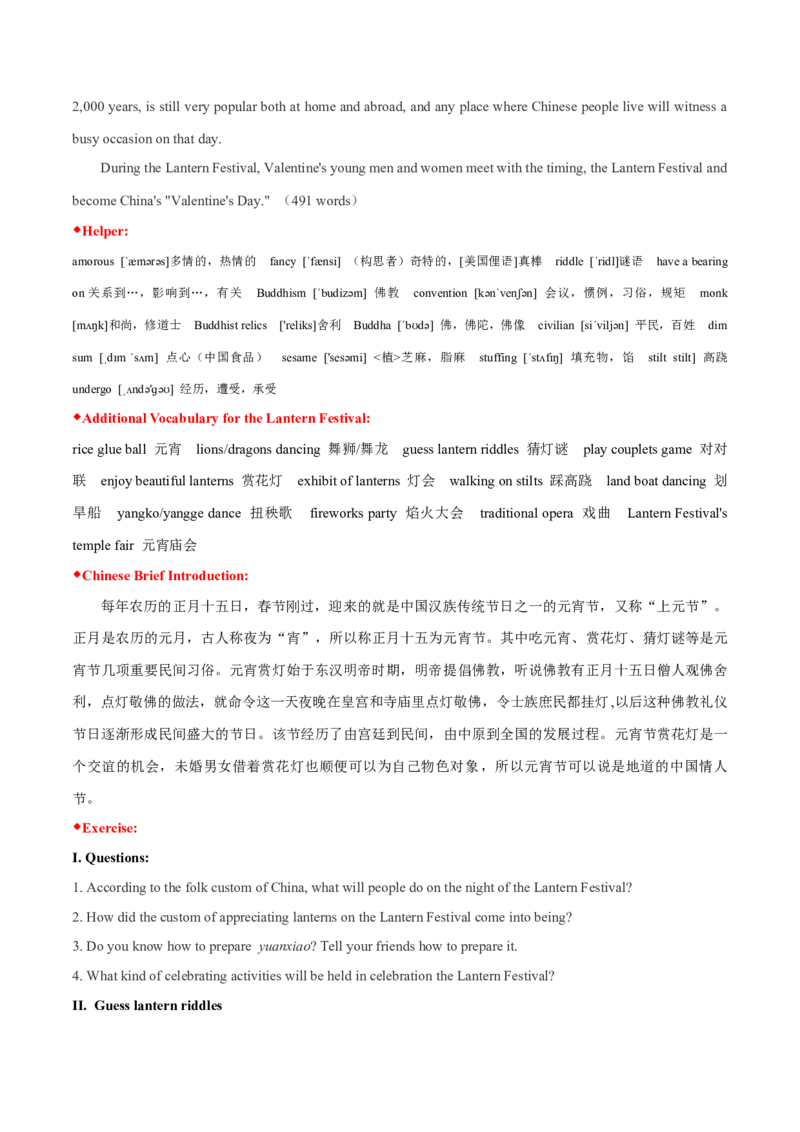
As time goes by, the Lantern Festival has enjoyed more and more celebrating activities. Some places even add
traditional folk-custom performances such as playing dragon lantern, Lion Dancing, stilting, striking land boat,
doing the Yangko, and striking Peace Drum. The Lantern Festival, a
traditional Chinese festival which has experienced a history of over2,000 years, is still very popular both at home and abroad, and any place where Chinese people live will witness a
busy occasion on that day.
During the Lantern Festival, Valentine's young men and women meet with the timing, the Lantern Festival and
become China's "Valentine's Day." (491 words)
◆Helper:
amorous [ˈæmərəs]多情的,热情的 fancy [ˈfænsi] (构思者)奇特的,[美国俚语]真棒 riddle [ˈridl]谜语 have a bearing
on关系到…,影响到…,有关 Buddhism [ˈbudizəm] 佛教 convention [kənˈvenʃən] 会议,惯例,习俗,规矩 monk
[mʌŋk]和尚,修道士 Buddhist relics ['reliks]舍利 Buddha [ˈbʊdə] 佛,佛陀,佛像 civilian [siˈviljən] 平民,百姓 dim
sum [ˌdɪm ˈsʌm] 点心(中国食品) sesame ['sesəmi] <植>芝麻,脂麻 stuffing [ˈstʌfɪŋ] 填充物,馅 stilt stilt] 高跷
undergo [ˌʌndə'ɡəʊ] 经历,遭受,承受
◆Additional Vocabulary for the Lantern Festival:
rice glue ball 元宵 lions/dragons dancing 舞狮/舞龙 guess lantern riddles 猜灯谜 play couplets game 对对
联 enjoy beautiful lanterns 赏花灯 exhibit of lanterns 灯会 walking on stilts 踩高跷 land boat dancing 划
旱船 yangko/yangge dance 扭秧歌 fireworks party 焰火大会 traditional opera 戏曲 Lantern Festival's
temple fair 元宵庙会
◆Chinese Brief Introduction:
每年农历的正月十五日,春节刚过,迎来的就是中国汉族传统节日之一的元宵节,又称“上元节”。
正月是农历的元月,古人称夜为“宵”,所以称正月十五为元宵节。其中吃元宵、赏花灯、猜灯谜等是元
宵节几项重要民间习俗。元宵赏灯始于东汉明帝时期,明帝提倡佛教,听说佛教有正月十五日僧人观佛舍
利,点灯敬佛的做法,就命令这一天夜晚在皇宫和寺庙里点灯敬佛,令士族庶民都挂灯,以后这种佛教礼仪
节日逐渐形成民间盛大的节日。该节经历了由宫廷到民间,由中原到全国的发展过程。元宵节赏花灯是一
个交谊的机会,未婚男女借着赏花灯也顺便可以为自己物色对象,所以元宵节可以说是地道的中国情人
节。
◆Exercise:
I. Questions:
1. According to the folk custom of China, what will people do on the night of the Lantern Festival?
2. How did the custom of appreciating lanterns on the Lantern Festival come into being?
3. Do you know how to prepare yuanxiao? Tell your friends how to prepare it.
4. What kind of celebrating activities will be held in celebration the Lantern Festival?
II. Guess lantern riddles1. What has a mouth and a fork but never eats?
2. What has a hand but can't scratch itself?
3. What has no skin or bones, yet has four fingers and a thumb?
4. What part of a watch was used before by someone else?
5. Why is an empty purse always the same?
6. Where can you always find money when you look for it?
7. What is something that never asks any questions but demands a great many answers?
III. Written work
元宵节你要带你的美国朋友Tom去街上看活动,并给他介绍该节日的一些相关知识。你可以根据以下
要点作介绍:
元宵节是中国的传统 (traditional)节日,每年正月十五人们都要举办许多活动,比如吃汤圆、赏花灯、猜
灯谜、踩高跷、舞狮子等。
注意: (1) 参考词汇: 猜灯谜guess riddles; 踩高跷walk on stilts; 舞狮子do lion dancing; 元宵
节the Lantern Festival
(2) 可适当发挥;词数:100左右。
◆ Blessings:
1. 元宵节之际,祝你心中有首快乐的歌,新年快乐!
Wishing you a merry song in your heart at Lantern Festival and blessings all year long!
2. 在元宵节来临之际,祝你平安,快乐,幸福。万事圆!
Wishing you peace, joy and happiness and everything all the best through Lantern !
3. 致以热烈的祝贺和良好的祝福,元宵节快乐!
Warm greetings and best wishes for Lantern Festival!
4. 快乐的元宵之际,谨致我的想念与祝福。
Think of you and wish you a Happy Lantern Festival.
5. 元宵节转眼又到,快乐也到!我们向你及你的亲人们致以最美好的圣诞祝福,愿你在接下来的日子里事
业兴旺,幸福美满!
It seems that Lantern Festival is here once again, and it is time again to bring in happiness. We wish the merriest of
Lantern Festival to you and your loved ones, and we wish you happiness and prosperity in the days ahead!
6. 愿你元宵节幸福无尽。
May Lantern Festival be filled with happiness for you.Suggested Answers
1. Spring Festival
I. Questions:
1. Why is Chinese character "福" put upside-down?
Key: Because when one sees the Chinese character “福” put upside-down, he must be surprised to say “福倒
(到)了”. Here “倒”and “到”have the same pronunciation “dào” in Chinese pinyin, which means happiness is
coming. It's a blessing phrase.
2. Why is the dinner on the New Year's Eve called "Family Reunion Dinner"?
Key: On the New Year's Eve, people working far away from home will manage to come back, regardless of long-distance travel, so the "Grand Dinner on New Year's Eve" is also called "Family Reunion Dinner".
3. What do people often do on the first day of the Spring Festival?
Key: They pay a New Year call (bainian), during which people will be busy in giving best wishes to one another
by saying such auspicious phrases as "Happy New Year" and "May you be prosperous", etc. Elders will put some
money in a red pocket (yasuiqian) and give it to children as a gift.
4. What does "New Year Cake" mean?
"New Year Cake", niangao in Chinese, means "higher year", suggesting better fortune in the new year.
II. Match the following numbers of the pictures with their proper letters:
Answers: (1) B (2)D (3)F (4) I (5) A (6) E (7) H (8)G (9)C
III. Reading and Writing
1. Spring Festival
As you know, the Spring Festival is the most energetic and important festival in China. We celebrate it
cheerfully. It may take place in January or February and lasts fifteen days. Before the festival, People often do
spring cleaning, and decorate their houses. On the Eve of the Spring Festival, people studying or working in other
cities will come back. In the evening, the whole family are sitting together to have supper, watch the Spring
Festival programs and set off firecrackers until midnight.
On the first day of the New Year, all the people, old and young, especially children will dress up and pay a visit
to their friends and relatives. It’s customs for the Chinese families to have dumplings and give children lucky
money. When meeting each other, people usually say “Happy New year” to each other in order to wish others good
luck in the coming year.
2.
Dear Mr. Hall,
I’m writing to invite you to come to my home to celebrate the Spring Festival on January 19.
It’s traditionally a time for family reunion, so my parents and my brother will all be there. We’ll make
dumplings together and have a big dinner. We’ll also play card games and watch the Spring Festival Gala on TV.
You may even get a gift from my parents. If you’re able to come, I’ll go and pick you up at your place.
Best,
Li Hua
2. Lantern FestivalI. Questions:
1. According to the folk custom of China, what will people do on the night of the Lantern Festival?
Key: People on that night will lighten up fancy lanterns and go out to appreciate the moon, set off fireworks, guess
riddles written on lanterns, and eat rice glue balls to celebrate the festival.
2. How did the custom of appreciating lanterns on the Lantern Festival come into being?
Key: It originates from the Eastern Han Dynasty, when Buddhism was introduced into China. It is a Buddhist
convention that the monks would visit Buddhist relics and lighten up lanterns to show respect to Buddha on Jan. 15.
Therefore, Emperors of that dynasty, determined to promote Buddhism, ordered people to lighten up lanterns in
both palaces and temples on that night to show respect to Buddha. So it was the civilians.
3. Please explain to your foreign friends why we Chinese eat yuanxiao on the Lantern Festival?
Key: Eating small dumpling balls made of glutinous rice flour is important part of the Lantern Festival. We call
these balls Yuan Xiao or Tang Yuan. Obviously, they get the name from the festival itself. Made of sticky rice
flour filled with sweet stuffing and round in shape, it symbolizes family unity, completeness and happiness.
4. What kind of celebrating activities will be held in celebration the Lantern Festival?
Key: People go to streets with a variety of lanterns under the full moon, watching Lion or Dragon Dance, playing
Chinese riddles and games, stilting, striking land boat, doing the Yangko, striking Peace Drum, enjoying Yuan
Xiao and setting off firecrackers and so on.
II. 1.A river.(河流有河口及分叉处)
2. A clock.
3. A glove.
4. The second hand.(此处的second 指的是时钟的秒针,英文中的秒针与二手货正巧是同一个字。)
6. Because there is never any CHANGE in it.(因为空的皮夹中绝对不会有零钱/改变。零钱与改变是同一个字
“change”.)
7. In the dictionary.
III. Written work
The Lantern Festival is a traditional festival in China. It falls on the fifteenth day of the first month of the
Chinese lunar year. Whenever the festival draws near, Chinese people make some preparations and take part in all
kinds of activities, like singing and dancing. As every Chinese person knows, families get together on the day of the
festival and eat tangyuan. In the evening, people go out to look at the bright and colorful lanterns, which is
relaxing and pleasant. In some parts of China, people take part in activities, such as guessing riddles, walking onstilts and doing lion dancing. On the whole, the Lantern Festival is an important festival in China, just like the
Spring Festival.