15. Table manners餐桌礼仪
As we know, the behavior at the sociality occasion, usually reflects someone’s nurture, especially in some
high-class restaurants.
First of all, sit up straight at the table, keep a good impression.
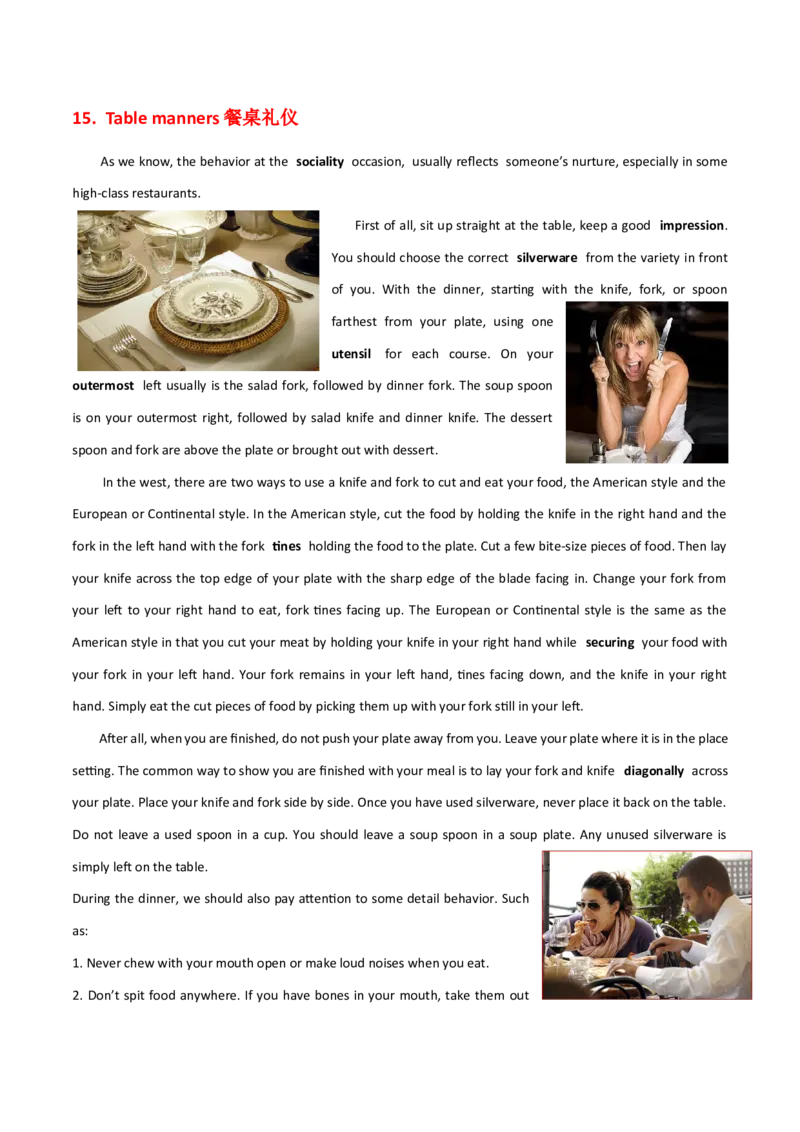
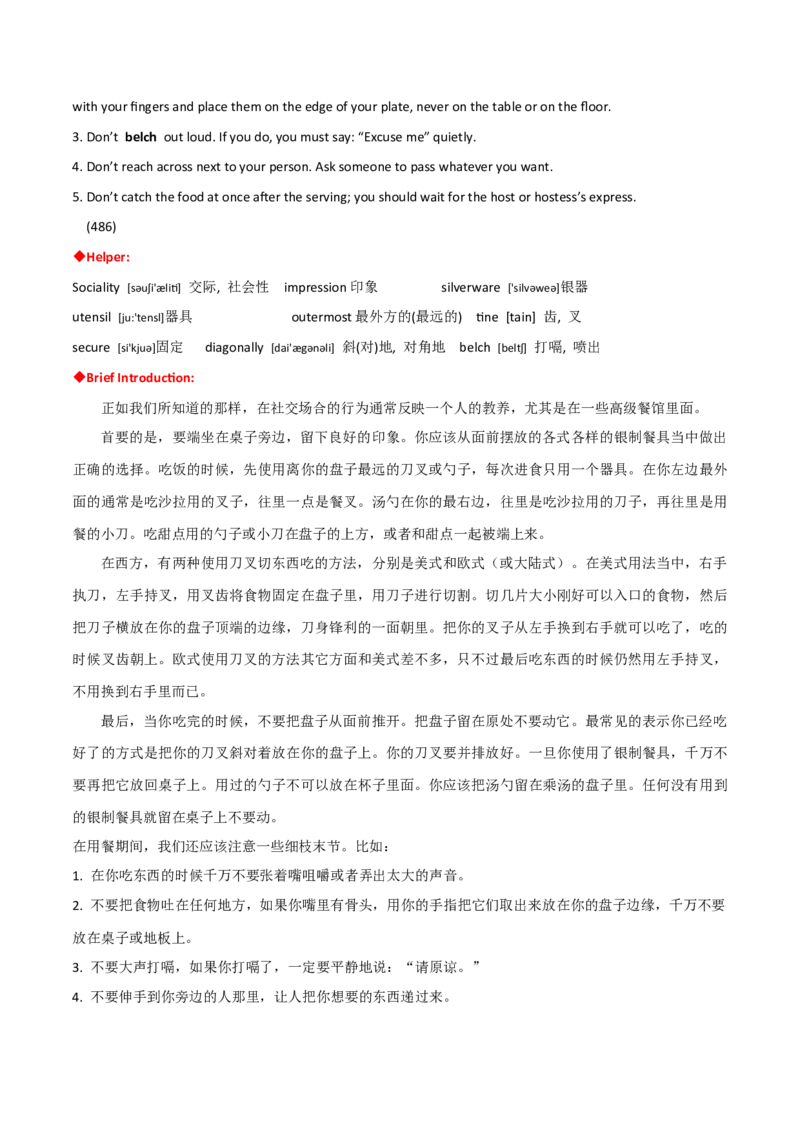
You should choose the correct silverware from the variety in front
of you. With the dinner, starting with the knife, fork, or spoon
farthest from your plate, using one
utensil for each course. On your
outermost left usually is the salad fork, followed by dinner fork. The soup spoon
is on your outermost right, followed by salad knife and dinner knife. The dessert
spoon and fork are above the plate or brought out with dessert.
In the west, there are two ways to use a knife and fork to cut and eat your food, the American style and the
European or Continental style. In the American style, cut the food by holding the knife in the right hand and the
fork in the left hand with the fork tines holding the food to the plate. Cut a few bite-size pieces of food. Then lay
your knife across the top edge of your plate with the sharp edge of the blade facing in. Change your fork from
your left to your right hand to eat, fork tines facing up. The European or Continental style is the same as the
American style in that you cut your meat by holding your knife in your right hand while securing your food with
your fork in your left hand. Your fork remains in your left hand, tines facing down, and the knife in your right
hand. Simply eat the cut pieces of food by picking them up with your fork still in your left.
After all, when you are finished, do not push your plate away from you. Leave your plate where it is in the place
setting. The common way to show you are finished with your meal is to lay your fork and knife diagonally across
your plate. Place your knife and fork side by side. Once you have used silverware, never place it back on the table.
Do not leave a used spoon in a cup. You should leave a soup spoon in a soup plate. Any unused silverware is
simply left on the table.
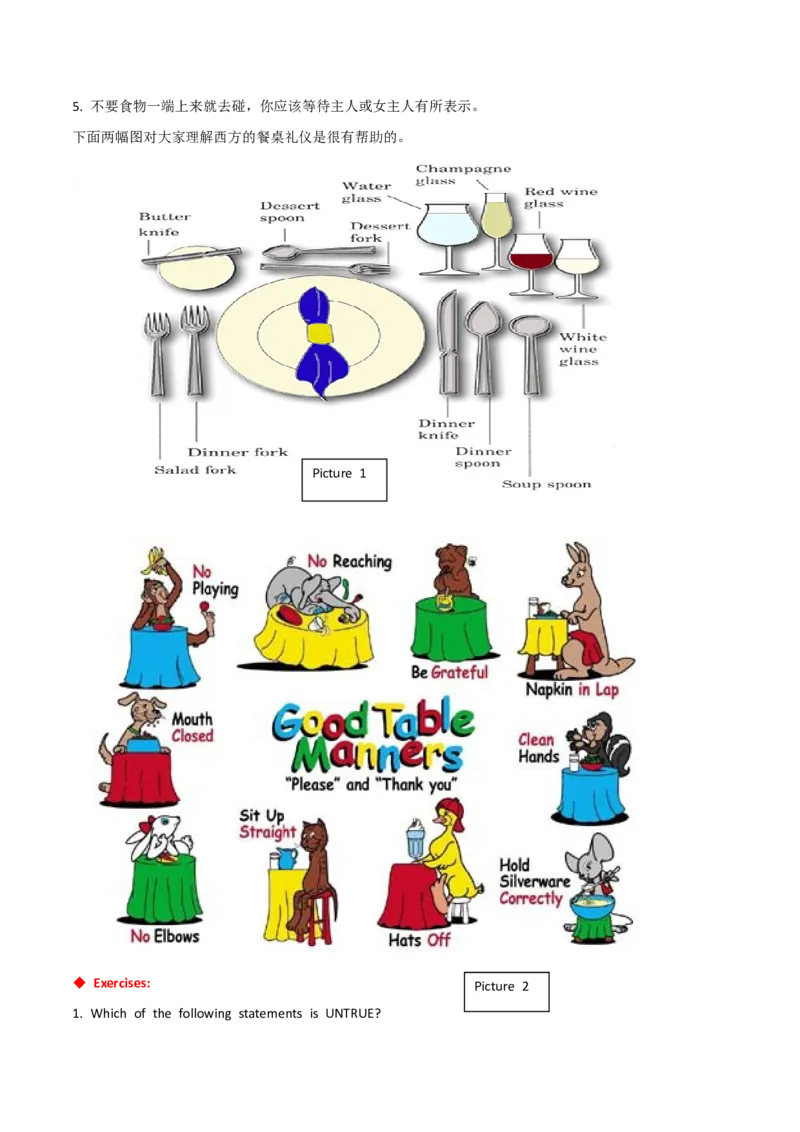
During the dinner, we should also pay attention to some detail behavior. Such
as:
1. Never chew with your mouth open or make loud noises when you eat.
2. Don’t spit food anywhere. If you have bones in your mouth, take them outwith your fingers and place them on the edge of your plate, never on the table or on the floor.
3. Don’t belch out loud. If you do, you must say: “Excuse me” quietly.
4. Don’t reach across next to your person. Ask someone to pass whatever you want.
5. Don’t catch the food at once after the serving; you should wait for the host or hostess’s express.
(486)
◆Helper:
Sociality [səuʃi'æliti] 交际, 社会性 impression印象 silverware ['silvəweə]银器
utensil [ju:'tensl]器具 outermost最外方的(最远的) tine [tain] 齿, 叉
secure [si'kjuə]固定 diagonally [dai'ægənəli] 斜(对)地, 对角地 belch [beltʃ] 打嗝, 喷出
◆Brief Introduction:
正如我们所知道的那样,在社交场合的行为通常反映一个人的教养,尤其是在一些高级餐馆里面。
首要的是,要端坐在桌子旁边,留下良好的印象。你应该从面前摆放的各式各样的银制餐具当中做出
正确的选择。吃饭的时候,先使用离你的盘子最远的刀叉或勺子,每次进食只用一个器具。在你左边最外
面的通常是吃沙拉用的叉子,往里一点是餐叉。汤勺在你的最右边,往里是吃沙拉用的刀子,再往里是用
餐的小刀。吃甜点用的勺子或小刀在盘子的上方,或者和甜点一起被端上来。
在西方,有两种使用刀叉切东西吃的方法,分别是美式和欧式(或大陆式)。在美式用法当中,右手
执刀,左手持叉,用叉齿将食物固定在盘子里,用刀子进行切割。切几片大小刚好可以入口的食物,然后
把刀子横放在你的盘子顶端的边缘,刀身锋利的一面朝里。把你的叉子从左手换到右手就可以吃了,吃的
时候叉齿朝上。欧式使用刀叉的方法其它方面和美式差不多,只不过最后吃东西的时候仍然用左手持叉,
不用换到右手里而已。
最后,当你吃完的时候,不要把盘子从面前推开。把盘子留在原处不要动它。最常见的表示你已经吃
好了的方式是把你的刀叉斜对着放在你的盘子上。你的刀叉要并排放好。一旦你使用了银制餐具,千万不
要再把它放回桌子上。用过的勺子不可以放在杯子里面。你应该把汤勺留在乘汤的盘子里。任何没有用到
的银制餐具就留在桌子上不要动。
在用餐期间,我们还应该注意一些细枝末节。比如:
1. 在你吃东西的时候千万不要张着嘴咀嚼或者弄出太大的声音。
2. 不要把食物吐在任何地方,如果你嘴里有骨头,用你的手指把它们取出来放在你的盘子边缘,千万不要
放在桌子或地板上。
3. 不要大声打嗝,如果你打嗝了,一定要平静地说:“请原谅。”
4. 不要伸手到你旁边的人那里,让人把你想要的东西递过来。5. 不要食物一端上来就去碰,你应该等待主人或女主人有所表示。
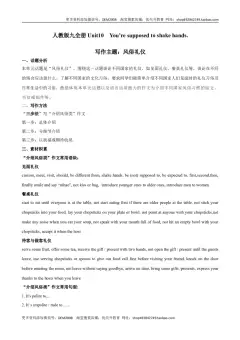
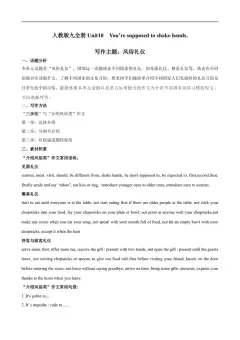
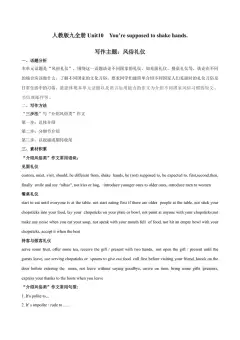
下面两幅图对大家理解西方的餐桌礼仪是很有帮助的。
Picture 1
◆ Exercises: Picture 2
1. Which of the following statements is UNTRUE?A. The salad fork is farthest from your plate on the left.
B. The soup spoon is closest to your plate on the right.
C. The dinner fork is beside the salad fork on the left.
D. The dessert spoon and fork are above the plate or brought out with dessert.
2. What is the difference between the American style (AS) and the European style (ES)?
A. Cut with the knife in the right hand in AS while in the left hand in ES.
B. Cut with the fork in the left hand in AS while in the right hand in ES.
C. Eat with the fork tines facing up in AS while the tines facing down in ES.
D. Eat with the fork in your right hand in AS while in your left hand in ES.
3. When you finish your dinner, you should _________.
A. put your plate away from you
B. place the used silverware back on the table
C. lay your fork and knife diagonally across your plate
D. leave the used spoon in the cup
4. If you belch out by accident, you should _________.
A. keep silent
B. leave the table and go out
C. laugh and apologize to others
D. say “Excuse me” quietly
5. The purpose of the author’s writing the passage is _________.
A. to tell us something about the table manners in western countries
B. to show us the differences between American and European table manners
C. to introduce the western cultures to us
D. to attract us to go for a dinner in a high-class restaurant
◆Keys and Explanations:
1-5 BDCDA
1. 选B。细节理解题。由第二段第五句可知汤勺是在最右边,所以应该离盘子最远,故B项错误。
2. 选D。细节理解题。由第三段最后一句可知欧式使用刀叉的方法其它方面和美式差不多,只不过最后
吃东西的时候仍然用左手持叉,不用换到右手里而已,故D项正确。
3. 选C。细节理解题。由第四段第三句可知通常表示已经吃好了的方式是把刀叉斜对着放在盘子上,故C
项正确;A、B、D项都是不应该做的事。4. 选D。细节理解题。由文章倒数第三句可知如果不小心打了嗝,一定要平静地说:“请原谅。”故D
项正确。
5. 选A。主旨大意题。本文主要向我们讲述了西方国家的餐桌礼仪,故A项正确;B项只概括了第三段的
内容;C项表意不清,西方文化是一个很广泛的概念,而餐桌礼仪不过是其中内容之一;D项和作者写
作意图没有任何关系。16. British Pub Culture英国的酒吧文化
Visitors to Britain may find the best place to know about local culture is in a traditional pub. But these
friendly inns can be minefields of possible clumsy social error for the inexperienced.
An anthropologist and a team of researchers have disclosed some of the mysterious rituals of British
pubs--starting with the difficulty of getting a drink. Most pubs have no waiters--you have to go to the bar to buy
drinks. A group of Italian youths waiting 45 minutes before they realized they would have to fetch their own. This
may sound inconvenient, but there is a hidden purpose.
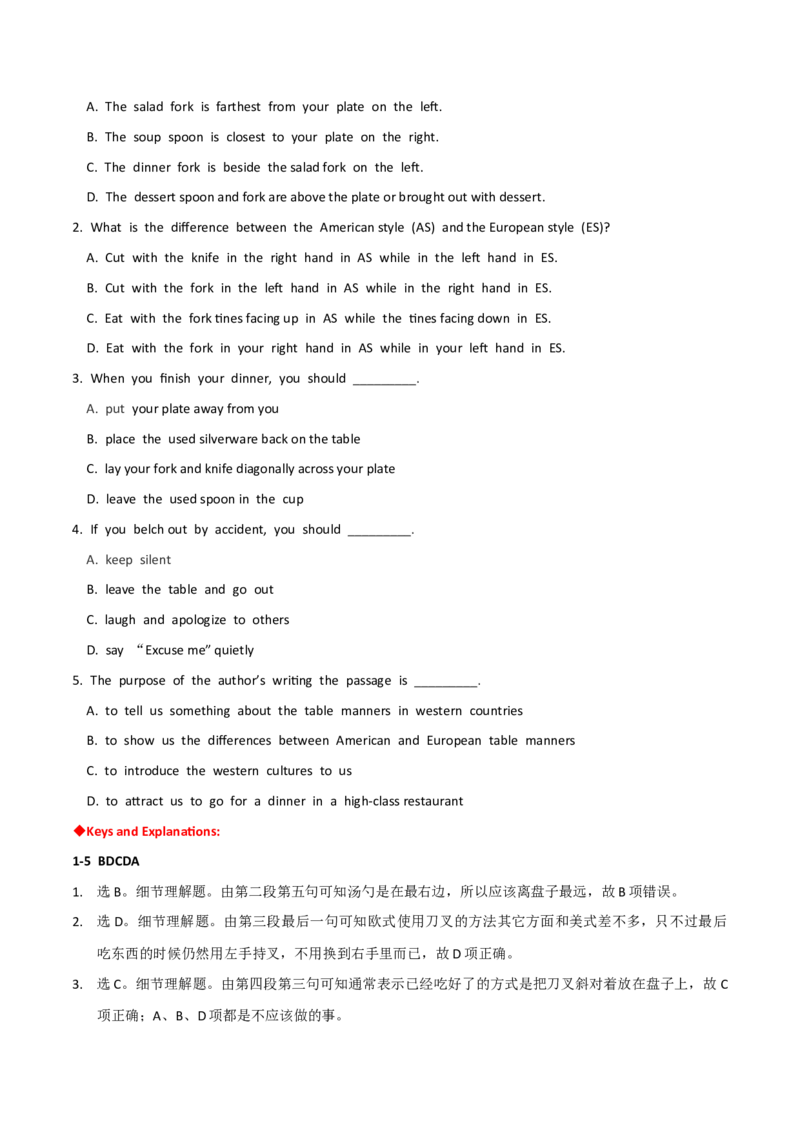
Pub culture is designed to promote sociability in a society known for its reserve. Standing at the bar for
service allows you to chat with others waiting to be served. The bar counter is possibly the only site in the British
Isles in which friendly conversation with strangers is considered entirely appropriate and rea1ly quite normal
behavior. "If you haven't been to a pub, you haven't been to Britain." This tip can be found in a booklet, Passport
to the Pub: The Tourists' Guide to Pub Etiquette, a customers' code of conduct for those wanting to sample "a
central part of British life and culture". The trouble is that if you do not
follow the local rules, the experience may fall flat. For example, if you are
in a big group, it is best if only one or two people go to buy the drinks.
Nothing irritates the regular customers and bar staff more than a gang
of strangers blocking all access to the bar while they chat and dither about
what to order. (275words)
◆Helper:
inns小酒店 minefield['mainfi:ld]雷区 clumsy不得体的
anthropologist[ænθrə'pɔlədʒist]人类学家 disclose披露,揭露 ritual['ritjuəl]例行,习惯
promote促进 reserve保守 booklet指南,小册子
etiquette [eti'ket] 礼节 sample取样,领略 fall flat完全失败;全无效果
irritate['iriteit]激怒 bar staff酒保 dither ['diðə] 犹豫不定
◆ Exercises:
从所给的A、B、C、D四个选项中选出最佳答案。
1. The example that a group of Italian youths waiting 45 minutes before they realized they would have to fetchtheir own suggests that ______.
A. they are not familiar with a British pub
B. the service in the pub is terrible
C. foreigners are not welcome
D. there are cultural shocks between different nations
2. If you go to a pub in England, ______.
A. you can have a friendly conversation with strangers
B. the waiters will serve you immediately
C. you can wait patiently for your service
D. you had better not talk to strangers
3. From this passage we know that pubs contribute to ______.
A. changing traditions B. restoring traditions
C. promoting sociability D. promoting international associations
4. "If you haven't been to a pub, you haven't been to Britain." means it’s a place where ______.
A. you can experience local culture B. you can get to know local people
C. you can meet with famous people D. you can learn Standard English
5. Among the following statements, the true one is ______.
A. a traditional pub usually doesn’t welcome foreigners
B. if you do not follow the local rules, you aren’t allowed into a pub
C. you are always supposed to buy your own drinks in a pub
D. a pub is not just a place to drink, it is a unique social centre
◆Brief Introduction:
访问英国的人会发现传统英国酒吧是最能领略当地文化的地方。但对于初来乍到的异国人来说,这些
友善的酒吧却犹如潜藏着有惹事危险的"地雷区"。
一位人类学家和一组研究人员揭示了某些鲜为人知的英国酒吧文化。人们首先遇到的困难是从买酒开
始的。大多数英国酒吧都没有酒保,你得到吧台去买酒。一伙意大利年轻人等了三刻钟才明白他们得自己
去买。这听上去似乎让人觉得不方便,可却有它深刻的内涵。
在因其冷漠而出名的英国社会里,酒吧文化的形成是为了促进社会交往。排队的时候可以和其他等待
买酒的人交谈。在英伦诸岛上,和陌生人亲切地交谈被认为是完全适宜的正常行为的唯一场所可能就是吧
台了? 你如果没去过酒吧,那就等于没有到过英国。"这个忠告可在名为《酒吧护照:旅游者酒吧仪俗指
南》的小册子中找到,它对那些想要领略"英国生活和文化核心部分"的人是一种行为准则。问题是如果你不入乡随俗的话,你将一无所获。譬如说,你们若是团体前往,那最好是一个或两个人前去买酒。酒吧常
客和酒保最腻味的就是一大伙人一边聊着一边又优柔寡断不知喝什么酒好,把通往吧台的路给堵住。
◆Keys and Explanations:
1-5 AACAD
1. 选A。从第二段starting with the difficulty of getting a drink可知这一段描述对于酒吧的习俗不熟悉会带来
不方便,举此例正是为了说明这一点。
2. 选A。从第二段的描述可以知道大多数英国酒吧没有服务员,要自己去买酒水。从第三句可知A正确。
3. 选C。从第三段第一句可以得出正确答案。
4. 选A。可以从下一句"a central part of British life and culture"."英国生活和文化核心部分"得出答案。
5. 选D。A没有依据;B不按规则只不过是不能深刻体会酒吧文化,并没有禁止进入的说法;C从最后一段
可知如果一群人一起去的话最好一两个人去买而不是都自己去买。