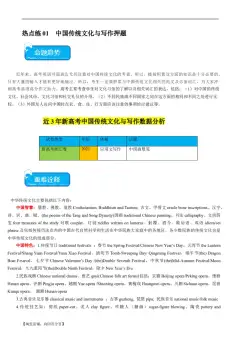
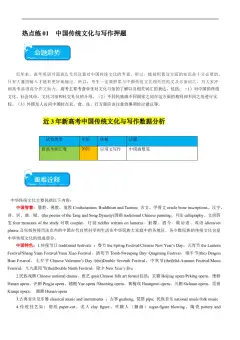
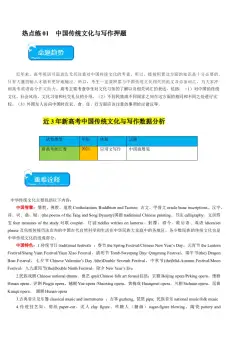
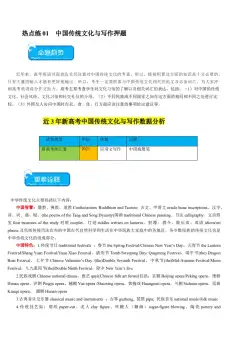
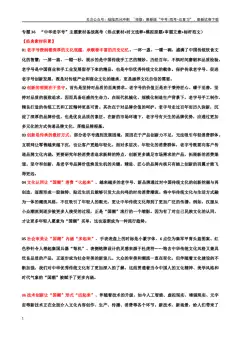
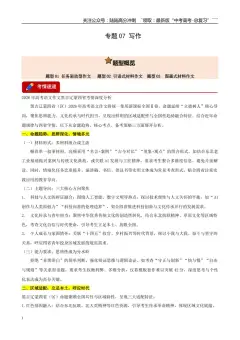
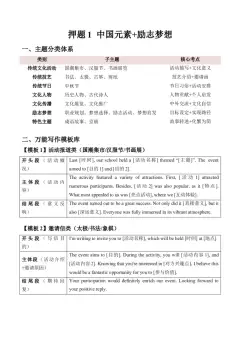
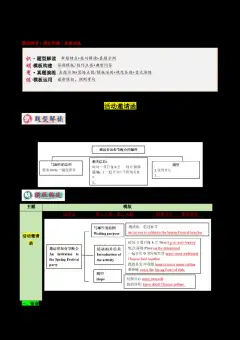
专题 07 传统文化写作高分模板
目录
Part 1 中国特色..............................................................................................................................................2
一、 高考方向和写法指导...................................................................................................................2
二、 实用表达Useful expressions........................................................................................................3
1. 中国传统节日名称Names of Chinese Traditional Festivals....................................................3
2. 西方传统节日名称Names of Western Traditional Festivals....................................................3
3. 节日的日期Dates of Festivals...................................................................................................4
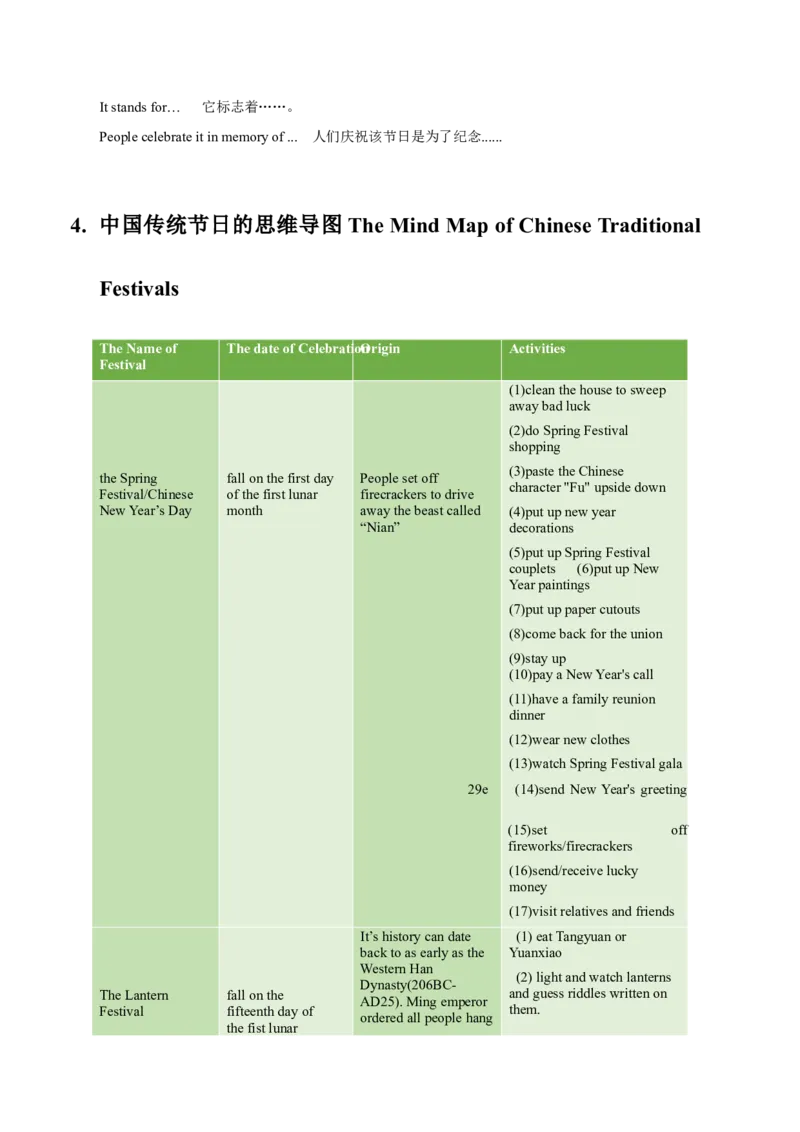
4. 中国传统节日的思维导图The Mind Map of Chinese Traditional Festivals..........................5
三、 高分写作模板1.............................................................................................................................8
(一)水饺dumplings....................................................................................................................8
(二) 丝绸之路...........................................................................................................................9
(三)中国古诗Chinese poetry..................................................................................................11
(四)春节 Spring Festival.........................................................................................................12
(五)红色Chinese red..............................................................................................................13
(六)中国功夫 Chinese Kungfu...............................................................................................15
(七)孔子学院Confucius Institute............................................................................................16
(八)中秋节The Mid-autumn Festival.....................................................................................17
(九)中医Traditional Chinese Medicine...................................................................................18
(十)春联Spring Festival couplets............................................................................................19
(十一)端午节the Dragon Boat Festival..................................................................................21
(十二)茶文化 tea culture in China..........................................................................................22
(十三)成语Chinese idioms......................................................................................................23
(十四)压岁钱lucky money......................................................................................................24
(十五)京剧Beijing Opera........................................................................................................25
(十六)家风Family Rules.........................................................................................................26
(十七)剪纸Chinese paper-cuting............................................................................................28
(十八)福字the character Fu.....................................................................................................29
四、 高分写作模板2...........................................................................................................................30(一) 《孔子和论语》Confucius and Analects of Confucius.................................................33
(二) 中国的京剧(Beijing opera).......................................................................................34
(三) 书法calligraphy..............................................................................................................35
(四) 中国古诗classical Chinese poetry.................................................................................36
(五) 中秋节晚会The Midautumn Festival.............................................................................37
Part 2 中华文化专栏....................................................................................................................................38
一、 文体概述.....................................................................................................................................38
二、 常用语块:.................................................................................................................................39
三、 套用句式.....................................................................................................................................39
四、 经典范文.....................................................................................................................................40
五、 课堂练习.....................................................................................................................................40
六、 课外作业.....................................................................................................................................41
Part 1 中国特色
一、高考方向和写法指导
在中国,一系列重要的传统节日,包括春节、元宵节、清明节、端午节、七夕节、中秋节、重
阳节和冬至节,以及腊八节和除夕,这些都深深植根于我们的生活。此外,我们还熟悉植树节、国
庆节、教师节、圣诞节、复活节、情人节、母亲节和父亲节,以及元旦节、感恩节等众多中西方重
要的节假日。每一个节日都有其独特的起源、发展历程、庆祝方式以及假期活动的安排,包括生日
庆典、周年纪念日、毕业典礼等各类庆祝活动,以及参加这些活动时的感受。同时,也涉及到暑期、
寒假期间的活动以及各类社会实践活动和青年志愿者的活动。在这些方面的考察,通常是通过说明
文、记叙文、日记、邀请信、演讲稿以及媒体报道的形式来进行。
(1)邀请外国友人参与中国传统节日活动(正式邀请函);
(2)向外国友人介绍中国传统节日活动(对询问函的正式回复);
(3)假设考生参加了某项大型节日或活动,需描述节日现场或活动情况(周记或日记)。
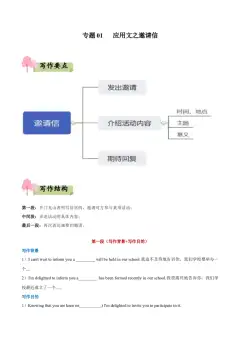
写作时根据不同的体裁,考生应做出不同的回应,例如:邀请信:
Para1. 问候+交代写信背景和写信目的
Para2. 交代该节日的时间、地点、活动安排和要求
Para3. 总结全文,提出期待
另外,请特别留意各类内容的主时态:邀请函和通知主要使用一般未来时态,传统节日介绍
则常采用一般现在时态,日记和叙事文则主要用一般过去时态。
二、实用表达 Useful expressions
1. 中国传统节日名称 Names of Chinese Traditional Festivals
(1)the Spring Festival/Chinese New Year’s Day春节
(2)the Lantern Festival/Shang Yuan Festival/Yuan Xiao Festival元宵节
(3)Tomb-Sweeping Day/ Qingming Festival 清明节
(4)(the) Dragon Boat Festival 端午节
(5)Chinese Valentine’s Day /(the)Double Seventh Festival 七夕节
(6)(the)Mid-Autumn Festival/Moon Festival 中秋节
(7)(the)Double Ninth Festival 九九重阳节
(8)New Year’s Eve 除夕
2. 西方传统节日名称 Names of Western Traditional Festivals
(1)New Year’s Day 新年 (2)Valentine’s Day 情人节
(3)April Fool’s Day 愚人节 (4)Easter Day复活节
(5)Mother’s Day母亲节 (6)Father’s Day 父亲节
(7)Halloween Day万圣节 (8)Thanksgiving Day感恩节
(9)Christmas Day圣诞节 (10)Carnival 狂欢节3. 节日的日期 Dates of Festivals
阳历(国历)solar calendar
一月January 二月February 三月March 四月April 五月May 六月June 七月July
八月August 九月September 十月October 十一月November 十二月December
一月1日January 1(st) 5月5日 May 5(th) 7月7日July 7(th)
注意:国历日期的英式与美式写法以及读法略有不同:
1996年3月2日
英式:2nd March, 1996; 美式: March 2(nd), 1996
1987年4月10日
英式:20th April, 1987; 读成:the twentieth of April, nineteen eighty-seven
美式:April 20(th),1987 读成:April the twentieth, nineteen eighty-seven
阴历(农历)lunar calendar
the first day of the first lunar month. 农历的正月初一(第一个月的第一天)
on the 16th day of the first month of the lunar calendar. 正月16日 (农历一月16日)
(1)It was celebrated on 1stOctober, 1949. 1949年10月1日庆祝该节日。
(2)It is celebrated on July 7th. 7月7日庆祝该节日
(3) It falls on the first day of the first month of the lunar calendar(农历)/solar calendar(国历).
=It is celebrated on the first day of the first lunar month. 农历的正月初一(第一个月的第一天)
每年的农历正月初一庆祝该节日。
(4) People have been celebrating it for 20 years/since 20 years ago.
二十年前人们就开始庆祝该节日。
(5) It lasts three days. 它会持续3天。
(6)The Double Seventh Festival, on the 7th day of the 7th lunar month is a traditional festival full of
romance and also called Chinese Valentine's Day.
双七节,即农历的第七个月的第七天,这是一个充满了浪漫的传统节日,也就是中国的情人节。
It is the symbol of good luck and family reunion. 它象征着好运和家庭团聚。
It is a mark of … 它是……的标志。It stands for… 它标志着……。
People celebrate it in memory of ... 人们庆祝该节日是为了纪念......
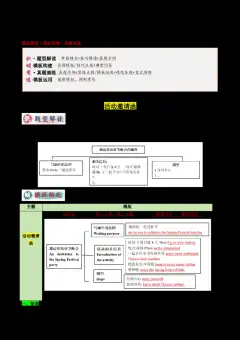
4. 中国传统节日的思维导图 The Mind Map of Chinese Traditional
Festivals
The Name of The date of CelebratioOnrigin Activities
Festival
(1)clean the house to sweep
away bad luck
(2)do Spring Festival
shopping
(3)paste the Chinese
the Spring fall on the first day People set off
character "Fu" upside down
Festival/Chinese of the first lunar firecrackers to drive
New Year’s Day month away the beast called (4)put up new year
“Nian” decorations
(5)put up Spring Festival
couplets (6)put up New
Year paintings
(7)put up paper cutouts
(8)come back for the union
(9)stay up
(10)pay a New Year's call
(11)have a family reunion
dinner
(12)wear new clothes
(13)watch Spring Festival gala
29e (14)send New Year's greeting
(15)set off
fireworks/firecrackers
(16)send/receive lucky
money
(17)visit relatives and friends
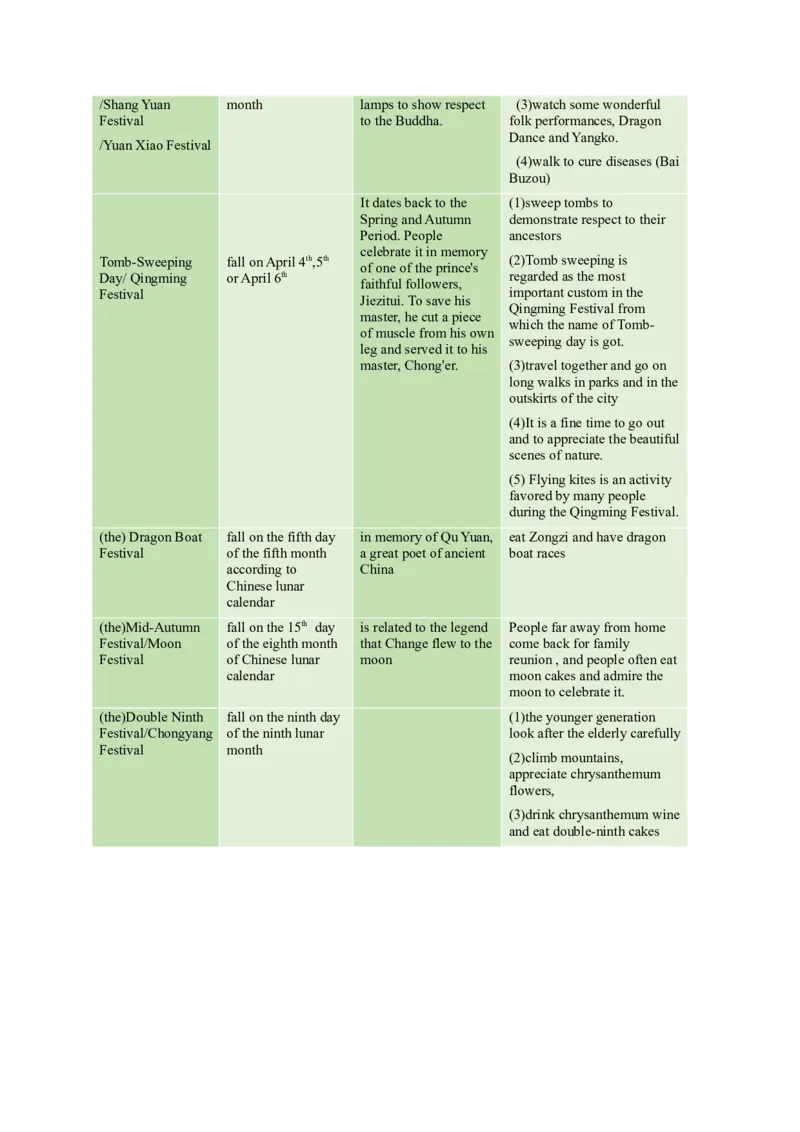
It’s history can date (1) eat Tangyuan or
back to as early as the Yuanxiao
Western Han
(2) light and watch lanterns
Dynasty(206BC-
The Lantern fall on the and guess riddles written on
AD25). Ming emperor
Festival fifteenth day of them.
ordered all people hang
the fist lunar/Shang Yuan month lamps to show respect (3)watch some wonderful
Festival to the Buddha. folk performances, Dragon
Dance and Yangko.
/Yuan Xiao Festival
(4)walk to cure diseases (Bai
Buzou)
It dates back to the (1)sweep tombs to
Spring and Autumn demonstrate respect to their
Period. People ancestors
celebrate it in memory
Tomb-Sweeping fall on April 4th,5th (2)Tomb sweeping is
of one of the prince's
Day/ Qingming or April 6th regarded as the most
faithful followers,
Festival important custom in the
Jiezitui. To save his
Qingming Festival from
master, he cut a piece
which the name of Tomb-
of muscle from his own
sweeping day is got.
leg and served it to his
master, Chong'er. (3)travel together and go on
long walks in parks and in the
outskirts of the city
(4)It is a fine time to go out
and to appreciate the beautiful
scenes of nature.
(5) Flying kites is an activity
favored by many people
during the Qingming Festival.
(the) Dragon Boat fall on the fifth day in memory of Qu Yuan, eat Zongzi and have dragon
Festival of the fifth month a great poet of ancient boat races
according to China
Chinese lunar
calendar
(the)Mid-Autumn fall on the 15th day is related to the legend People far away from home
Festival/Moon of the eighth month that Change flew to the come back for family
Festival of Chinese lunar moon reunion , and people often eat
calendar moon cakes and admire the
moon to celebrate it.
(the)Double Ninth fall on the ninth day (1)the younger generation
Festival/Chongyang of the ninth lunar look after the elderly carefully
Festival month
(2)climb mountains,
appreciate chrysanthemum
flowers,
(3)drink chrysanthemum wine
and eat double-ninth cakes三、高分写作模板 1
(一)水饺 dumplings
如你是李华,最近你的一个外国朋友Peter来信说想了解一些有关中国水饺的情况。根据下列
要点写封回信:
1. 水饺在人们心目中的地位;
2. 水饺的种类和吃法;
3. 一些春节期间吃水饺的习俗。
注意:1. 根据提示要点写一篇不少于80词的文章;
2. 可适当增加细节以使行文连贯;
3. 开头和结尾已给出(不计入总词数)。
Dear Peter,
I’m glad to receive your letter asking for the information about Chinese dumplings. Here is some
information.
Best wishes!
Yours,
Li Hua
【参考范文】
Dear Peter,
I’m glad to receive your letter asking for the information about Chinese dumplings. Here is some
information.
In China, though there are many different kinds of food, dumplings are regarded as real Chinesefood. Everyone in China likes dumplings very much, and there are many different kinds of dumplings.
Some have meat and vegetable in them while others have sugar, eggs and other tasty things. Usually
people make dumplings at home. If you have no time to make them, you can buy them in supermarkets.
Then you take them home, heat them up and eat them with vinegar.
The Spring Festival is very important in China. During the Spring Festival, we make dumplings.
Usually we put a coin in one dumpling. The person who eats the dumpling with the coin in it will be very
lucky in the year.
Best wishes!
Yours,
Li Hua
(二)丝绸之路
the silk culture of China and the Belt and Road Initiative
假定你是李华,美国朋友David来信说他对中国的丝绸文化以及“一带一路”倡议很感兴
趣,请给他回信,要点如下:
1)丝绸始于新石器时代; 2)原料为蚕茧,兼具高雅与环保;
3)古丝绸之路对世界文化交流的作用; 4)“一带一路”倡议将产生的深远影
响。
注意:1.词数100左右; 2.可适当增加细节以使行文连贯。
参考词汇:“一带一路”倡议 the Belt and Road Initiative
新石器时代Neolithic Age 蚕茧cocoon
David, I’m glad
I’m glad that you’re interested in the silk culture of China and the Belt and Road Initiative. I’m more
than happy to tell you something about them.I’m looking forward to your reply.
Yours sincerely,
Li Hua
【参考范文】
Dear David,
I’m glad that you’re interested in the silk culture of China and the Belt and Road Initiative. I’ll be
more than happy to tell you something about them.
As a matter of fact, silk has a long history in China, which dates back to the Neolithic Age. It is
known to all that it is made of silkworm cocoon. So it is not only elegant but also environmental.
Therefore, silk attracts people all over the world. From Han Dynasty. China opened up The Silk Road,
which greatly promoted the communication between China and the other countries in the world.
At present, our government has put forward “The Belt and Road” Initiative, which encourages
cooperation between China and other countries. There is no doubt that it will have a great effect on all the
relevant countries and contribute to the economic and cultural development of the world.
I’m looking forward to your reply.
Yours sincerely,
Li Hua
(三)中国古诗 Chinese poetry
假定你是李华,你的英国朋友Tom对中国古诗(Chinese poetry)很感兴趣。他来信请教有关
知识。请给他回信,内容包括:
1.介绍中国古诗;
2.你学习中国古诗经历和感悟;3.如何推广中国古诗?
注意:1. 词数 100 左右;
2. 可以适当增加细节,以使行文连贯的;
3. 开头语已为你写好。
Dear Tom,
【参考范文】
Dear Tom,
It’s great to hear from you. I’m delighted to know you are interested in Chinese poetry.
The ancient Chinese Poetry is part of our traditional Chinese culture. As an important literary form, it
enjoys great popularity at home and abroad. Nowadays, many famous poets in ancient China and their
great works are still influential, among whom, Li Bai, Du Fu, and Bai Juyi are my favorite ones.
Appreciating ancient Chinese poems is extremely meaningful. I have been absorbed in studying
poems for 10 years. To learn the ancient Chinese poems well, I spare no effort to grasp the meanings first
and read them aloud repeatedly. Besides, trying to create some poems of the ancient Chinese style is also
an effective way to cherish this literary treasure. With great enthusiasm and consistent effort, it can not
only improve my language ability, but also contribute to (=is beneficial to ) my better understanding of the
Chinese culture.
To popularize the classics,it is a good idea to organize a poetry Recital Party. And a poetry show is
also recommended, combining calligraphy, poetry and painting. With various activities, our awareness of
learning Chinese Poetry will be well enhanced.
I sincerely hope the above can be of some help. If you want to learn more, please let me know.
Yours faithfully,
Li Hua
.(四)春节 Spring Festival
假设你是李华,你的外国朋友Mike将要在中国过春节,他想了解我国过春节的情况。请你根
据下面要点写一篇英语短文。
1. 春节是中国的重大节日; 2. 节前人们要大扫除; 3. 全家人在一起吃年夜饭;
4. 孩子们会得到压岁钱; 5. 年初一穿新衣服,走亲访友,互道吉利。
注意:
1.词数:100左右;2.可以适当增加细节,以使行文连贯;3. 开头语已为你写好,不计入总词
数。
Dear Mike,
I’m very glad to know that you will celebrate the Spring Festival inChina.
Yours sincerely,
Li Hua
【参考范文】
Dear Mike,
I’m very glad to know that you will celebrate the Spring Festival in China. As you know, the Spring
Festival is the most colorful and important festival in China. To celebrate it people always make a lot of
preparations for it.
The day before the festival is the eve of the Spring Festival when people have a thorough cleaning
everywhere. In the evening the whole family are sitting together, having supper and watching TV until
midnight. The lucky money in red paper is given to children by elders as a gift. On the first day of the new
year, all the people, old and young, wear new clothes to welcome the New Year's coming, pay a visit to
their relatives and friends and wish each other good luck in the new year.
I hope you will have a good time in China during the Spring Festival.
Yours sincerely,
Li Hua(五)红色 Chinese red
假定你是李华。英国交换生Lucy发现红色在中国使用很广泛,她想更多地了解我国对红色的
使用情况。请根据提示给她写一封信,内容包括:
1. 我们对红色的理解;
2. 经常使用红色的场合;
3. 不宜使用红色的场合。
注意:1. 词数100左右;
2. 可以适当增加细节,以使行文连贯;
3. 信的开头语和结尾已为你写好。
Dear Lucy,
I’m Li Hua.
Yours,
Li Hua
【参考范文】
Dear Lucy,
I’m Li Hua. I’m writing to tell you something about Chinese’s using the colour red.
We do like red, for red stands for happiness and good fortune in our culture. Therefore, you can see
people wear red clothes and hang red lanterns during the Spring Festival. And the senior citizens even
give their grandchildren some lucky money in red envelopes. Besides, young couples are also dressed in
red on their weddings. However, be sure to avoid wearing red clothes during some sad events, such as
attending funerals and visiting some patients. If you do so, it is really rude. I sincerely hope my
explanations will be of great use for you.
Best wishes!
Yours,
Li Hua(六)中国功夫 Chinese Kungfu
假定你是李华,你的美国朋友 Peter来信说对中国功夫很感兴趣,并请你介绍相关情况。请你给
他写封回信,内容包括:
1.历史起源;
2.适宜人群;
3.风格形式。
要求:1.词数:100左右;
2.可合理增加细节,以使行文连贯;
3. 开头和结尾已给出,但不计入总词数。
Dear Peter,
It's great to hear from you.
Best wishes!
Yours,
Li Hua
【参考范文】
Dear Peter,
It’s great to hear from you. I’m glad to learn that you’re interested in Chinese Kungfu. Now I’m
writing to introduce something about it to you.
Kungfu is commonly known as Chinese martial arts, which come from various aspects, such as the
needs of self-defense, hunting activities and the military training in ancient China. It is one of China’s
traditional sports, and is being practiced by the young as well as the old, gradually making it a special
element of Chinese culture. As a national treasure, Kungfu has hundreds of different styles. Some styles
are model(l)ed after the movements of animals, while others are inspired by Chinese culture.
I hope my introduction above can be of help to you.
Best wishes!
Yours,
Li Hua(七)孔子学院 Confucius Institute
假如你是李华,你的美国笔友Peter写信谈到他最近在孔子学院(Confucius Institute) 学习的
部分孔子学说(Confucianism),如“仁”(kindness)、“义”(righteousness) “礼” (etiquette)和
“孝”(filial piety)等,希望你阐释最欣赏点。请你用英语给他写封回信,内容包括:
1.最欣赏点及其理由;
2.个人经历及其感悟。
注意:1.词数100左右。开头和结尾不计入总词数;
2.可以适当增加细节,以使行文连贯。
Dear Peter,
Best wishes!
Yours,
Li Hua
【参考范文】
Dear Peter,
I’m more than pleased to know you’ve learned parts of Confucianism in Confucius Institute. As far
as I’m concerned, filial piety should be put in the first place, for it is universally accepted as an important
virtue in China.
Take me for example. Not only do I study hard in return for my parents’ love and care, but also I
often help do some housework after school in order to lessen their burden. Moreover, I spare my
allowance to buy some gifts for them sometimes, which really makes them happy.
I’m fully convinced that filial piety is caring for parents both physically and mentally, and trying to
follow their advice.
Best wishes!
Yours,
Li Hua(八)中秋节 The Mid-autumn Festival
中秋佳节即将到来,请你给你的美国网友Mike写封信介绍这个中国的传统节日,内容应包
括:
1.中秋节的时间和含义;
2.中秋节的活动习俗;
3.你打算如何度过今年的中秋。
注意:1.词数100左右;
2.可以适当增加细节,以使行文连贯;
3.农历:lunar calendar
Dear Mike,
Yours,
Li Hua
【参考范文】
Dear Mike,
The Mid-autumn Festival, which is one of the most important traditional festivals in China, falls on
August 15th of the Lunar calendar every year. Not only is it popular in China hut it is also celebrated in
many other Asian countries.
People believe that the moon is a symbol of reunion, luck and fortune, and it is a custom to express
best wishes to the beloved ones at this particular time. On that day people usually go back home to have
family reunion, enjoying a large meal with their family. They will also eat moon cakes, which are round
cakes with meat, eggs, nuts and other things inside.
Yours,
Li Hua
(九)中医 Traditional Chinese Medicine
中医,作为中国传统文化的重要组成部分,近年来引起全世界的广泛关注。假如你是李华,你的美国朋友Tony对中医文化很感兴趣,发来邮件向你询问有关中医的事情,比如: 中医的历
史、地位,以及中医的优势(疗效、副作用、价格) 等,请你给他回一封邮件,回答他的问题并欢
迎来体验。
注意:1. 词数100左右;
2. 可以适当发挥,以使行文连贯;
3. 参考词汇:中医 Traditional Chinese Medicine (TCM)
Dear Tony,
Yours,
Li Hua
【参考范文】
Dear Tony,
I am glad to hear that you are extremely interested in Chinese culture, especially Traditional Chinese
Medicine. The TCM, as an important part of Chinese culture, has been attracting attention from all over
the world.
The TCM, with its unique diagnostic methods, long history and remarkable effects, has been used to
treat cancer and other serious diseases. Unlike the western medicine, the TCM has fewer side effects.
Above all, compared with high fees of the western medicine, the TCM has a more reasonable price that
ordinary people can afford.
In a word, the TCM has made great contributions to the development of Chinese health care.
Welcome to experience it.
Yours truly,
Li Hua
(十)春联 Spring Festival couplets
假定你是李华,你的美国朋友Peter对中国春联(Spring Festival couplets)产生了浓厚兴趣,来信
向你了解中国的春联文化。请你用英语写一封回信,为他介绍春联的用途、内容和寓意等。
注意:1. 词数100左右;
2. 可以适当增加细节,以使行文连贯;Dear Peter,
Yours,
Li Hua
【参考范文】
Dear Peter,
I’m glad to know you have interest in Spring Festival couplets. Now, let me introduce some details of
them to you.
As a symbol of Chinese traditional culture, Spring Festival couplets are always stuck on the door or
the wall of a house. They are necessities for Chinese people to celebrate the Spring Festival. Written with
a writing brush on red paper, Spring Festival couplets use some positive words showing wishes for love,
health, success, wealth, happiness and so on. They always have a theme, and they represent better life or
successful future, and some of them include wishes and expectations. Of course, the topic of singing the
praises of our motherland is another good choice.
Hope you find my introduction useful.
Yours,
Li Hua
(十一)端午节 the Dragon Boat Festival
假定你是李华,你的美国朋友 Tom发来邮件说他想了解中国的传统节日——端午节(the
Dragon Boat Festival)。 请你给他回一封邮件,内容主要包括:
1.端午节的时间; 2.端午节的由来; 3.端午节的习俗。
注意:1.词数80左右; 2.可以适当增加细节,以使行文连贯。
参考词汇:阴历lunar calendar
Dear Tom,
Yours,
Li Hua
【参考范文】Dear Tom,
I'm very happy that you are interested in Chinese culture.The Dragon Boat Festival,one of the
Chinese traditional festivals,is celebrated on the fifth day of the fifth month according to the Chinese
lunar calendar,and it falls on June 9 this year.
Dating back to over 2,000 years ago,the festival is celebrated in memory of Qu Yuan,who threw
himself into a river to oppose the emperor's corruption.Over the years,the story of Qu's has been
transformed into the two main traditions:racing dragon boats which need great team spirit and eating
zongzi-a kind of pyramid-shaped rice dumplings wrapped in bamboo leaves.
In my opinion,it is necessary to attach importance to our traditional festivals,for they're part of
our culture.
If you want to know about other Chinese traditional festivals,just write to me.
Yours,
Li Hua
(十二)茶文化 tea culture in China
假设你是李华,你的美国朋友Tom 发来邮件想了解中国的茶文化。请你给他回封邮件,内容包
括:
1. 茶文化的悠久历史:
2. 茶与文学(唐代“茶圣”陆羽写了第一本关于茶的书《茶经》);
3. 茶与健康。
注意:1. 词数100左右;
2. 可适当增加细节,以使行文连贯。
3. 参考词汇: 《茶经》Cha Jing 茶圣Tea Saint
Dear Tom,
Yours,
Li Hua
【参考范文】
Dear Tom,In your email you asked about tea culture in China. Now I want to let you know of something about
it.
Tea is native to China and Chinese tea culture has a long history. It plays an important part in
Chinese culture. A great many famous poets and writers have written many works in appreciation of tea
and about the love for it, among whom was Lu Yu in the Tang Dynasty, who wrote Cha Jing, the first book
on tea and was regarded as the “Tea Saint”.
Tea is part of the Chinese’s daily life. Since ancient times, tea has been known as the “national drink”
of China. Not only do the Chinese believe that having tea regularly can prolong life and benefit health, but
modern science has also proved that tea is a natural health drink good for the body.
I hope you can come to China to learn more about it.
Yours,
Li Hua
(十三)成语 Chinese idioms
假定你是李华,你的美国笔友Eric最近对中国成语很感兴趣,给你写信想要了解更多有关中国成
语的信息,请你给他写一封回信,内容包括:
1. 学习成语的益处;
2. 如何学好成语;
3. 表示祝愿。
注意:1. 词数100左右。
2. 可以适当增加细节,以使行文连贯。
3. 参考词汇:中国成语—Chinese idioms
Dear Eric,
Yours,
Li Hua
【参考范文】
Dear Eric,
Knowing that you are interested in Chinese idioms, I’m very delighted. Chinese idioms are anindispensable part of Chinese culture, from which you can benefit a lot .
Firstly, with many of Chinese idioms widely used in our daily life, a good knowledge of them
contributes to a better understanding of both spoken Chinese and written Chinese. Secondly, they usually
possess vivid and profound meanings, making what you try to convey more convincing. If you want to
study them well, I suggest you learn about the interesting stories behind the idioms first. Not only are they
interesting, but also they tend to teach some wisdom, which helps remember Chinese idioms.
Hopefully, you will take delight in learning Chinese idioms.
Yours,
Li Hua
(十四)压岁钱 lucky money
假如你是李华,你的英国朋友Henry准备在你家过春节,他想了解中国的传统习俗一发压岁
钱。现请你给他写一封电子邮件,内容包括:
1.习俗介绍;2.亲身经历;3.个人感悟。
注意:1.词数100左右,可适当增加细节,以使行文连贯;
2.文章开头和结尾已给出,不计入总词数。
3.参考词汇:压岁钱lucky money
Dear Henry,
I’m very glad to hear that you’re going to experience the Spring Festival with me.
Yours,
Li Hua
【参考范文】
Dear Henry,
I’m very glad to hear that you’re going to experience the Spring Festival with me. Now let me tell
you something about giving lucky money in the Lunar New Year.
It usually falls on the eve of the Lunar New Year when the whole family gets together for an
evening feast. After that, the elders will give money in red paper to children, wishing them good luck and
health.As for me, I remembered my grandparents each handed me a red envelope with lucky money after
the big meal. Although there wasn’t much money, it represented their affection for me. I promised I would
use the money wisely and do something meaningful.
Yours,
Li Hua
(十五)京剧 Beijing Opera
假定你是李华,你的美国笔友Johnson写信表示对中国的京剧感兴趣,想来中国体验京剧文
化。请你根据以下信息写一份电子邮件:
1.对京剧的感情;2.京剧历史简介(起源于19世纪)3.剧院文化体验。
注意:1.词数100左右;2.可以适当增加细节,以使行文连贯;3.开头语已为你写好。
Dear Johnson,
Glad to hear from you. Now I’d like to talk about Beijing Opera.
Looking forward to seeing you.
Yours
Li hua
【参考范文】
Dear Johnson,
Glad to hear from you. Now I’d like to talk about Beijing Opera. It is our national art and my
favorite with a history of only about 200 years. It is said that Peking Opera had its birth in the 1800s,
when performers from Anhui came to Beijing on the 80th birthday of the Emperor. Soon afterwards, some
other theater companies from Hubei followed. In the beginning only male performers were allowed to
participate in a play. It was from the 1870s that women made appearances on the stage.
I’d like to show you to the theater when you come to experience a famous play.
Looking forward to seeing you.
Yours
Lihua(十六)家风 Family Rules
家风是中华传统美德在每个家庭中的传承。假如你是李华,你的留学生朋友 Jim最近观看了
CCTV的《家风》(Family Rules)节目,很想了解家风。请你根据以下提示给他回复一封邮件:
1. 家风的作用;
2. 你家的家风以及对你的影响。
注意:
1.词数100左右;
2.可以适当增加细节,以使行文连贯。
Dear Jim,
Yours,
Li Hua
【参考范文】
Dear Jim,
Learning that you’re interested in the program Family Rules, I’d like to share with you some
information.
There’s no denying that good family rules have played an important role in developing people’s
personalities as well as their competence, which contributes a lot to a harmonious and prosperous society.
As for my family rules, being honest and kind should be put in the first place. Without doubt, it has a
lasting positive influence upon my mental development. At school, I devote myself to studies. Never have
I copied others’ homework or cheated in exams. In addition, I’m always ready to offer help to whoever is
in need. I’m proud of my family rules, which are worth practising all over my life.
What do you think of family rules? If you want to know more about them, let me know.
Yours,
Li Hua
(十七)剪纸 Chinese paper-cuting
假定你是李华。你的澳大利亚朋友Mary对中国传统艺术感兴趣, 特意写信请你向她介绍中国传统艺术。请依据下列要点, 给其写封回信。
要点:
1. 介绍传统艺术——剪纸;
2. 欢迎Mary来中国体验中国剪纸的创作;
3. 向Mary询问澳大利亚的主要传统艺术形式。
注意:
1. 词数100左右;
2. 可适当增加细节, 以使行文连贯。
提示词: 剪纸Chinese paper-cuting
Dear Mary,
Yours truly,
Li Hua
【参考范文】
Dear Mary,
How is everything going? I’m so pleased to know that you are interested in Chinese traditional arts
from your letter. In my opinion, learning Chinese paper-cutting is the best choice. As is known to us all,
many Chinese people would like to put up paper-cuttings on their windows to celebrate the Spring
Festival and other holiday. Since you draw very well, I believe you can learn the art quickly. By learning
it, you can know more about Chinese culture,
By the way, are there any traditional arts in Australia? Please tell me some.
I’m looking forward to seeing you soon in China.
Yours truly,
Li Hua
(十八)福字 the character Fu
假如你是李华,你校外教Mr. Brown春节期间看到邻居房门上的福字是倒着贴的,感到很好
奇,写信向你询问此事。请你给他回一封信,介绍福字倒贴的原因和这一传统的寓意,同时邀请
他高考后来你家过端午节。
参考词汇:端午节the Dragon Boat Festival;福字the character Fu注意:1.词数:100左右;
2.可以适当增加细节,以使行文连贯;
3.开头和结尾已经为你写好,不计入总词数。
Dear Mr. Brown,
I’m really glad to receive your letter.
Looking forward to your reply.
Yours,
Li Hua
【参考范文】
Dear Mr. Brown,
I’m really glad to receive your letter. As you have seen, many Chinese choose to stick the character
Fu on the door upside down during the Spring Festival. This actually expresses their best wishes for the
new year. In Chinese, the character for “upside down” sounds the same as the character for “ to arrive” so
this means that happiness is arriving. Quite interesting, isn’t it?
By the way, I’d like to invite you to celebrate the Dragon Boat Festival with my family after the
College Entrance Exam. It’s a day in memory of the great poet Qu Yuan and we usually eat zongzi and
enjoy dragon boat races. It’ll be a good opportunity to experience truly Chinese culture and tradition.
Looking forward to your reply.
Yours,
Li Hua
四、高分写作模板 2
I高考方向和写法指导
社会话题比较广泛,涉及经济、政治、教育、文化、艺术、健康和环境等等,本专题主要介绍
文化和习俗。文化(culture)的定义:文化是相对于经济、政治而言的人类全部精神活动及其产品。
文化是智慧群族的一切群族社会现象与群族内在精神的既有、传承、创造和发展的总和。中华传统
文化,是中华文明成果根本创造力,是民族历史上道德传承、各种文化思想、精神观念形态的总体。
主要由儒、佛、道三家文化为主流组成。传统文化不仅思想深邃圆融,内容广博。”具体人类文化内容指群族的历史、地理、风土人情、传统习俗、工具、附属物、生活方式、宗教信仰,文学艺术、
规范,律法,制度、思维方式、价值观念、审美情趣,精神图腾等等。
中华传统文化主要包括以下内容:
中国智慧:
儒教、佛教、道教Confucianism, Buddhism and Taoism;
古文、甲骨文oracle bone inscriptions;
汉字、诗、词、曲、赋、(the poems of the Tang and Song Dynasty);
国画traditional Chinese painting;
书法calligraphy
文房四宝four treasures of the study
对联couplet
灯谜riddles written on lanterns
射覆、酒令、歇后语、成语idiom/set phrase
及包括传统历法在内的中国古代自然科学和生活在中华民族大家庭中的各地区、各少数民族的
传统文化也是中华传统文化的组成部分。
中国特色:
1. 传统节日traditional festivals :
春节the Spring Festival/Chinese New Year’s Day
元宵节the Lantern Festival/Shang Yuan Festival/Yuan Xiao Festival
清明节Tomb-Sweeping Day/ Qingming Festival
端午节(the) Dragon Boat Festival
七夕节Chinese Valentine’s Day /(the)Double Seventh Festival
中秋节(the)Mid-Autumn Festival/Moon Festival
九九重阳节(the)Double Ninth Festival
除夕New Year’s Eve
2. 民族戏剧Chinese national drama
曲艺quyi(Chinese folk art forms)包括:京剧Beijing opera/Peking opera
豫剧Henan opera
评剧Pingju opera
越剧Yue opera /Shaoxing opera
黄梅戏Huangmei opera
川剧Sichuan opera
昆曲Kunqu opera
湘剧Hunan opera3.古典音乐及乐器classical music and instruments :
古筝guzheng, 琵琶pipa; 民族音乐national music/folk music
4.传统技艺如:剪纸paper-cut
泥人clay figure
吹糖人(糖画)sugar-figure blowing
陶瓷pottery and porcelain; ceramics
玉雕jade carving
兵马俑terracotta warriors and horses
年画New Year painting
刺绣embroidery
灯笼lantern
京剧脸谱Peking Opera facial make-up
中国结Chinese knot
木偶戏puppet show
舞狮lion dance
舞龙dragon dance
秧歌Yongko dance;rural folk dance和变脸fast mask-changing
皮影戏shadow play等等
3. 5.吃穿住行方面:
餐饮文化food culture
中医、茶文化 tea culture
中国功夫Kung Fu(如:太极拳Tai Chi
武术martial arts)
汉服、社交文化social custom和传统建筑traditional architecture、等。
高考主要考查学生对文化习俗的了解以及相关词汇的表达,包括:
(1)对中国的传统文化
社会风俗:文化习俗和社交礼仪的介绍。
(2)不同民族或不同国家之间在这方面的相同和不同之处进行比较。
(3)外国友人访问中国时在衣、食、住、行方面应该注意的事项给出建议(该类作文的写作涉及
到情态动词的使用)。
社交礼仪是指人们在人际交往过程中所具备的基本素质、交际能力等(Etiquette refers to people
in relation to others in the course of the elementary qualities, communication abilities.)。包括不同场合
的言谈举止、穿着打扮、肢体语言、送礼和收礼习俗和餐宴礼节等方面的运用。除此之外考试还应关注 中国精神: 探月、(人与自然、人与人)和谐共生、奥运精神等。
(一)《孔子和论语》Confucius and Analects of Confucius
假如你是高三学生李华,现在某国外教育杂志向你约稿,请你以 Confucius and Analects of
Confucius(《孔子和论语》)为题写一篇文章,向西方读者介绍孔子和《论语》,要点包括:
1.孔子,生于春秋战国时期的鲁国,著名的大思想家、大教育家,他的思想至今在中国有着深
远的影响;
2.《论语》由孔子弟子编写而成.主要记录孔子及其弟子的言行,反映了孔子的思想,是儒家
学派(Confucian School)的经典著作之一.全书共20篇、492章;
3.介绍你最喜欢的一则论语并说明内涵和原因(例如:三人行必有我师).
注意:
1.词数100左右;
2.可以适当增加细节,以使行文连贯.
【参考范文】
Confucius,born in Lu State in Spring and Autumn Period ,is both a great thinker and an
educator,whose ideas have been influencing China deeply and profoundly .
Consisting of 492 chapters from 20 books,"Analects of Confucius" is written by his students,
showing us what Confucius and his students said and did. It is one of the most classical masterpieces of
Confucian School because it contains a lot of ideas of Confucius'.
One of my favorite pieces from Analects of Confucius is that as three men are working together,
one of them is bound to be good enough to act as my teacher,which means we should learn and benefit
from each other so as to make more progress (128)
(二)中国的京剧(Beijing opera)
假如你是李华,你的英国笔友丹尼斯对中国的京剧(Beijing opera)很感兴趣,来信询问京剧的相关情况。请你根据表格中所给提示信息,用英文给他回一封信。
京剧 中国国粹,传统文化的代表之一
起源于18世纪,盛行于19世纪中期,清朝鼎
发展 盛,现流行于京津沪、台湾、美日等地区和国
家。
你的 老少皆宜……
看法
注意:1.词数100左右;
2.可适当增加细节,以使行文连贯
3.开头和结尾已给出,但不计入总词数。
【参考范文】
Dear Dennis,
Beijing opera is a form of traditional Chinese theatre which combines music, vocal performance,
mime, dance and acrobatics and has come to be regarded as one of the cultural treasures of China. It arose
in the late 18th century and became fully developed and recognized by the mid-19th century. The form
was extremely popular in the Qing Dynasty court. Major performance troupes are based in Beijing and
Tianjin in the north, and Shanghai in the south. The art form is also enjoyed in Taiwan and has spread to
other countries such as the United States and Japan.
Beijing opera can be really appreciated by both the old and the young. We should inherit and carry
forward this kind of art.
Yours,
Li Hua
(三)书法 calligraphy
假如你是李华,你校将迎接英国学生代表团。作为学校书法社团的部长,请你写一篇发言
稿,要点如下:
1.介绍书法用具;
2.阐述学习书法的好处;
3.邀请英国同学参与。注意:1.词数100左右;
2.可以适当增加细节,以使行文连贯;
3. 开头和结尾已为你写好。
参考词汇:书法calligraphy;
文房四宝:the Four Treasures of the study—writing brush, ink stick, paper and ink slab
【参考范文】
Dear friends,
We’d like to share our culture with you by introducing you to the art of Chinese calligraphy.
As you can see, all the Chinese characters hanging here are written with the Four Treasures of the
study---writing brush, ink stick, paper and ink slab, which enjoy a long history and a good reputation as
well.
For Chinese, calligraphy serves the purpose of conveying thoughts and showing the beauty of the
lines. Not only is it a practical technique for writing Chinese characters, but also a unique art which can
help purify our souls.
Afterwards, we’ll break into groups so that you can join us. I promise you can feel the beauty and
power of writing. Please enjoy yourselves! (118)
Yours,
Li Hua
(四)中国古诗 classical Chinese poetry
假定你是李华,你的美国笔友Mike来信说,他和几个同学正在学中国古诗,请你给他写封邮
件,向他推荐一本有助于学习古诗的书籍,内容包括:
1.书名及作者:Read Poetry & Learn History by Wang Chunshui;
2.推荐理由:适宜外国读者学古诗和了解中国历史、文化及古代生活;
3.表达祝愿。
注意:
1.词数100左右;
2.可以适当增加细节,以使行文连贯;3.开头语和结尾语已为你写好。
【参考范文】
Dear Mike,
I’m glad to know you are learning classical Chinese poetry, and I’d like to recommend a book to you.
The book, which is entitled Read Poetry & Learn History by Wang Chunshui, is suitable for the
foreigners to learn classical Chinese poetry.
As is known, China is a great country, which has a long history, and a nation filled with classical
Chinese poetry. The poems of the book can reflect the Chinese history and culture, many of which can
give readers vivid pictures of the life of the ancient Chinese. And they can also improve your appreciation
of Chinese poetry.
So it would be a good choice for you. I believe you will understand the poems easily and
efficiently.Wish you to enjoy the book and know more about China.
Yours,
Li Hua
(五)中秋节晚会 The Midautumn Festival
假定你是李华,中秋节来临之际,你代表你们班向你校外教 James发出邀请,请他参加你们
班组织的中秋节晚会,内容应包括如下要点:
1.时间和地点;
2.活动(赏月、品尝月饼等);
3.其他……
注意:
1.词数100左右;
2.可以适当增加细节,以使行文连贯。
参考词汇:阴历the lunar calendar
【参考范文】
Dear Professor James,The Midautumn Festival, which is one of the most important traditional festivals in China, falls on
August 15th of the lunar calendar every year. I have the honor of inviting you to our celebrating party to
be held in the school auditorium at 8:00 on the evening of the day.
For the party we have arranged some events. First, we have a dinner together with you, during which
we will enjoy Chinese traditional moon cakes. After that, we are to admire the moon (people think it is a
symbol of reunion, luck and fortune) and express best wishes to the beloved ones.
Looking forward to your coming!
Yours,
Li Hua
Part 2 中华文化专栏
一、文体概述
中华文化专栏与物品介绍中艺术类方面的写法相似,不同的是它更偏向于对中华文化层
面的介绍,如谚语、十二生肖、成语、书法、戏曲或其它非物质文化遗产等极具中国特色的文化
介绍。通常包括三部分内容:
二、常用语块:
1. 一门精致的艺术 a fine art2. 古代中国 ancient China
3. 对……表现出浓厚的兴趣 show great interest in
4. ……被广泛/普遍认为be widely/universally acknowledged as…
5. 因……而闻名 be best known for…
6.在....背后的文化the culture behind...
7.起源于.....originate from...
8.口口相传be passed on orally
9.把.....与....联系起来associate... with..
10.中国谚语Chinese proverbs
11.中国文学Chinese literature .
12.中国农历Chinese lunar calendar
13.传统中国文化traditional Chinese culture
14.一代又一代(地) generation by generation
15.文房四宝the Four 1 Treasures of the study
三、套用句式
1. 得知你对中国茶文化表现出浓厚的兴趣,我很高兴能详细地告诉你一些关于它的信息。
Learning that you show great interest in Chinese tea culture, I’m so glad to tell you something about
it in detail.
2. 作为中国传统文化的一部分,中国谚语是人们智慧和经验的总结。As part of the traditional
Chinese culture, Chinese proverbs are summaries of people’s wisdom and experience.
3.茶在中国古今都很受欢迎。Tea enjoys great popularity in both ancient and modern times in China.
4.希望上面所提到的能对你有所帮助。I sincerely hope the above can be of some help.
5.希望我的信息对你有用。Hopefully you can find my information useful.
四、经典范文
Tea has a long history in China, dating back to 5,000 years ago. Obviously, it plays an important part in
Chinese culture. A good many distinguished poets and writers have written many masterpieces about theappreciation of tea and the love for it, among whom was Lu Yu in the Tang dynasty.
He wrote The Classic of Tea, the first book on tea, and he was regarded as the “Tea Saint (圣人)”.
Chinese people take delight in tea-drinking. It is served almost everywhere. Whenever guests visit,
offering a cup of tea to them is a basic social custom. Tea is part of Chinese people’s daily life.
五、课堂练习
假定你是李华,你的英国朋友Jim对中国茶文化感兴趣,请你写封电子邮件向他介绍。内容包括:
1. 茶的历史;
2. 茶的种类;
3. 饮茶的利弊。
注意:
1. 词数100左右;
2. 可以适当增加细节,以使行文连贯。
Dear Jim,
Yours,
Li Hua
【参考范文】
Dear Jim,Learning that you show great interest in Chinese tea culture, I’m so glad to tell you something about it
in detail.
With a long history of almost 5,000 years, tea enjoys great popularity in both ancient and modern
China. The Classic of Tea, written by Lu Yu in the Tang Dynasty, is the first book about tea in the world.
There are various kinds of tea, including green tea, black tea, red tea and others. It has been proven
that drinking tea is good for people’s health. Drinking a moderate amount of tea can help people relax, but
don’t drink too much because it may make you overexcited.
Welcome to China to appreciate Chinese tea!
Yours,
Li Hua
六、课外作业
假定你是李华,你的新西兰朋友Peter来信询问有关中国谚语的知识及其学习方法。请你
给他回信,内容包括:
1. 中国谚语的由来(人们的智慧和经验,口头传承);
2. 中国谚语的特点(简短而富有意义);
3. 实用的学习方法。
注意:
1. 写作词数应为100左右;
2. 可以适当增加细节,以使行文连贯。
参考词汇:中国谚语Chinese proverbs
Dear Peter,Yours,
Li Hua
【参考范文】
Dear Peter,
Delighted to know that you want to learn about Chinese proverbs and their learning methods, I am
writing to tell you something about them.
As part of the traditional Chinese culture, Chinese proverbs are summaries of people’s wisdom and
experience. They are some brief and meaningful sentences created by people and are passed on orally
generation by generation.
Regarding the practical ways to learn Chinese proverbs, I suggest that you find some relevant
materials online, which may give you specific explanations. Additionally, it is beneficial to recite the
proverbs every day, and you can apply them to communicating with Chinese people around you.
Hopefully you can find my information useful.
Yours,
Li Hua