专题 21 应用文写作(清单+专项训练)
目录
应用文写作终极必记词汇清单
应用文写作极必记词汇易错点专项突破
应用文写作终极必记词汇临考抢分技巧
应用文写作终极必记词汇必练题型
应用文写作终极必记词汇综合小测
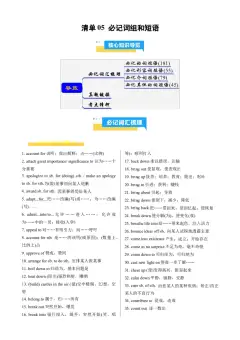
应用文写作终极必记词汇清单
一、 核心框架词汇(构建文章骨架)
1. 开头段必备(直奔主题,亮明目的)
书信/邮件通用:
I am writing to...(最常用,万能开头)
I am writing to inform you that...(通知类)
I am writing to express my sincere gratitude/concern about...(感谢/关切类)
I am writing to apply for.../recommend...(申请/推荐类)
I am writing in response to your inquiry about...(回复咨询)
2. 结尾段必备(礼貌得体,呼应开头)
表达期待:
I am looking forward to your early reply.(最经典)
Your prompt attention to this matter would be greatly appreciated.(正式)
I would appreciate it if you could...(礼貌请求)
表达祝愿/感谢:
Thank you for your time and consideration.
Best wishes!/Wish you all the best!
Please feel free to contact me if you have any further questions.
二、 主体段落功能词汇(充实内容,展现逻辑)
1. 阐述理由/原因(Reason & Cause)
逻辑连接:
The primary reason is that...(首要原因是...)
What also matters is...(同样重要的是...)This is mainly due to the fact that...(这主要是由于...)
..., for the following reasons.(...,理由如下。)
核心名词/动词:
factor (因素), consideration (考量), benefit (益处), advantage (优点)
contribute to (促成), lead to (导致), account for (解释)
2. 提出建议/措施(Suggestion & Solution)
启动建议:
It is highly recommended/suggested that...(强烈建议...)
I would like to propose that...(我想提议...)
Here are some practical suggestions.(以下是一些实用建议。)
具体建议动词:
organize (组织), participate in (参加), enhance (加强), raise awareness of (提高对...的认识)
adjust (调整), seek help from (向...求助), make full use of (充分利用)
3. 描述活动/安排(Activity & Arrangement)
时间顺序词:
To begin with/First and foremost, ...(首先...)
Afterwards/Subsequently, ...(随后...)
Finally/Last but not least, ...(最后...)
核心动词:
schedule (安排), host (主办), deliver a speech (发表演讲)
engage in (参与), interact with (与...互动), be scheduled to start at... (定于...开始)
4. 表达情感与态度(Emotion & Attitude)
积极:
delighted (高兴的), grateful (感激的), enthusiastic (热情的), impressive (令人印象深刻的)
I firmly believe that... (我坚信...)
关注/关切:
concerned (关心的), deeply moved (深受感动的), regret to learn that... (遗憾地得知...)
三、 五大高频场景主题词库
1. 校园生活与学习
活动: extracurricular activity (课外活动), volunteer work (志愿工作), academic competition (学科竞赛),
lecture (讲座)
能力: teamwork spirit (团队精神), communication skills (沟通能力), practical ability (实践能力)设施: facilities (设施), library resources (图书馆资源), campus environment (校园环境)
2. 文化与传统
主题词: cultural heritage (文化遗产), traditional customs (传统习俗), cultural exchange (文化交流)
活动词: exhibition (展览), ceremony (仪式), demonstration (展示), hands-on experience (亲身体验)
3. 健康与生活
问题: mental stress (精神压力), unhealthy diet (不健康饮食), lack of exercise (缺乏锻炼)
建议: balanced diet (均衡饮食), regular workout (规律锻炼), maintain a positive mindset (保持积极心
态)
4. 科技与环境
科技: artificial intelligence (AI) (人工智能), digital tools (数字工具), convenience and efficiency (便捷与
高效)
环境: sustainable development (可持续发展), environmental protection (环境保护), green lifestyle (绿色
生活方式)
5. 人际关系与交流
情感: friendship (友谊), mutual understanding (相互理解), respect (尊重)
行动: offer help (提供帮助), resolve misunderstandings (消除误会), strengthen bonds (加强联系)
四、 高分亮点点缀词(替换平庸表达)
普通表达 升级表达(更准确、更地道)
very important crucial / vital / of great significance
many a wide range of / numerous / a variety of
good positive / beneficial / rewarding
bad negative / unfavorable / disappointing
I think From my perspective, / I am convinced that...
can be able to / be in a position to (表能力)
want to would like to / desire to
like be fond of / have a passion for
try to make every effort to / attempt to
more and more increasingly / a growing number of
五、 实战应用黄金法则
“结构-功能”对应法: 看到题目要求,立刻确定每个段落的功能(如:开头问候+目的,主体1建议+理由,主体2活动安排,结尾期待),并调用对应词句。
“主题词”嵌入法: 审题后,迅速从上述五大主题词库中挑选3-5个核心主题词,并在文章中自然地反复
使用,确保内容紧扣主题。
“亮点”点缀法: 在保证语法正确、结构清晰的基础上,有意识地在每段使用1-2个升级表达或高级逻连
接词,提升语言档次。
“卷面整洁”第一印象: 书写工整、段落分明(通常3-4段)、字数达标(100词左右),是获取基础分
和印象分的关键。
应用文写作终极必记词汇易错点专项突破
易错维度一:词汇误用 —— 看似高级,实则错误
这是最高频的丢分点:使用了错误搭配或语境不符的“高级词汇”。
典型错误与突破策略
1. 滥用 appreciate
错误示例: I appreciate you can help me. (appreciate 后不能接句子)
正确表达:
I would appreciate it if you could help me. (最得体)
I would appreciate your help.
黄金法则: “Appreciate三要素”:① 后接名词/动名词 (your help, your attending);② 接句子必须用 it
作形式宾语;③ 常用 would appreciate 表示委婉请求。
2. 混淆 attend, join, participate in
错误示例: I will join the lecture tomorrow. (讲座不能“加入”)
核心区别:
attend:出席、参加(会议、讲座、课程),强调“在场”。
attend a meeting/lecture/ceremony
join:加入(团体、组织、人群),成为其中一员。
join a club/team/the army; join us (加入我们)
participate in:参与(活动、讨论、比赛),强调主动性和投入。
participate in a competition/discussion/activity
速记口诀: “出席(attend)活动,加入(join)团体,投入(participate in)其中”。
3. 乱用 improve, increase, enhance
错误示例: I hope to increase my English level. (“水平”不能“增加”)
正确搭配:
improve:改善抽象事物(水平、能力、关系)。improve my English/skills/relationship
increase:增加数量、体积、程度(可测量)。
increase the number/speed/income
enhance:增强品质、吸引力、价值(使其更好)。
enhance the ability/image/quality
突破策略: 想到“提高”时,先判断宾语是 “能力” 还是 “数量”。
易错维度二:逻辑连接 —— 句子孤立,缺乏粘合
句子之间只有“然后…然后…”,缺乏体现逻辑关系的“胶水词”。
典型错误与突破策略
错误示例(段落):
We will hold a lecture. It is about Chinese poetry. It will be at 3 pm. You can learn a lot.
修改升级(应用逻辑连接词):
To broaden our understanding of traditional culture, we have arranged a lecture on Chinese poetry, which is
scheduled for 3 pm this Friday. Not only will this event deepen our appreciation, but it will also provide practical
knowledge that you can apply in your studies.
逻辑连接词升级包(替换and, but, so):
表因果: Therefore, ... / As a result, ... / ..., thus enabling us to...
表递进: Moreover, ... / Furthermore, ... / What is more important...
表转折: However, ... / Nevertheless, ... / Despite this, ...
表举例: For instance, ... / ... such as ... / A case in point is...
表总结: In conclusion, ... / To sum up, ... / All in all, ...
突破策略:写完每句话后,问自己:“这句话和上一句是什么关系?”然后选用上表中的词来明确这种关
系。
易错维度三:写作思维 —— 中式直译,空洞喊话
思维受中文影响,导致表达生硬或内容空洞。
典型错误与突破策略
1. 避免“口号式”空洞表达
空洞错误: We must protect the environment because it’s very important.
具体升级: We can start protecting the environment by reducing single-use plastics, such as bringing our own
bags and bottles.
2. 主语单一,只会用“I/We”开头
单一错误: I think it’s good. We should do it.主语升级:
用 It 作形式主语: It is beneficial for us to... / It is widely believed that...
用 There be 句型: There will be a variety of activities for you to choose from.
用动名词开头: Participating in this activity will help you...
用被动语态(凸显客观性): Arrangements have been made for...
突破策略:“主语三步法”
写下以 I/We 开头的原句。
问自己:这个动作可以换一个主语吗?(如用 It, There, 动名词)
改写句子,使主语更多样。
易错维度四:文体格式与得体性 —— 忽视对象和目的
这是应用文的“灵魂”,也是最容易忽略的扣分点。
典型错误与突破策略
1. 语气与身份不符
错误示例(学生给外教写建议信): You must come to our party. (语气像命令)
得体修改: We would be honored if you could join us at the party. (语气尊重)
2. 结尾格式千篇一律
所有信都写 I’m looking forward to your reply.
分文体升级结尾:
邀请信: We sincerely hope you can make it and look forward to the pleasure of your company.
建议信: I hope you will find these suggestions helpful and am ready to discuss them further if needed.
申请信: Thank you for considering my application. I am available for an interview at your convenience.
通知/公告: 无需写期待回复,应写 For further information, please do not hesitate to contact us.
突破策略:“读者意识”练习
动笔前,花30秒问自己三个问题:
我是谁? (学生代表/朋友/申请人)
写给谁? (外教/编辑/组委会)
为什么写? (邀请/建议/申请/告知)
根据答案调整全文的正式程度、语气和用词。
终极实战自查清单(考前必过一遍)
完成作文后,请逐项核对以下7点:
格式:称呼和落款是否正确?(如 Dear Mr. Smith, / Yours sincerely, Li Hua)开头:是否在第一段清晰说明了写作目的?(I am writing to...)
段落:是否分成3-4段?每段是否有明确的中心?
逻辑:句子间是否使用了恰当的连接词?(检查 and, but, so 是否过多)
主语:是否超过三个句子连续用 I 或 We 开头?
内容:是否至少有一个具体细节或例子?(避免全部是空话)
结尾:结尾句是否与文体匹配?(检查是否所有信都用了一样的结尾)
记住: 规避一个错误,比多用一个大词更重要。在保证准确、得体的基础上,再追求语言的丰富性。
应用文写作终极必记词汇临考抢分技巧
第一步:审题定调(2分钟)—— 方向错了,全盘皆输
核心动作:圈出题干“三要素”
圈“身份”(我是谁?写给谁?)
我是:Li Hua / 学生会主席 / 校报记者 → 决定署名和部分语气。
写给:交换生 / 外教 / 编辑 → 决定称呼和全文正式程度。
称呼格式立刻写在草稿上:
Dear + 人名 (最常用)
Dear Sir or Madam (不知对方姓名)
To whom it may concern (正式,如推荐信)
圈“文体”(是什么信?)
邀请信 (Invitation) → 核心:热情,写明时间、地点、活动。
建议信 (Suggestion) → 核心:诚恳,用 could, might, would like to suggest。
申请信 (Application) → 核心:自信、有礼,突出优势。
咨询/求助信 (Inquiry) → 核心:清晰、礼貌,说明需求。
通知/公告 (Notice/Announcement) → 核心:直接、信息全,无称呼落款。
圈“要点”(题干要求写几点?)
用数字 ①②③ 标记所有要点,缺一个要点扣5-7分。
要点是骨架,必须全部覆盖。
第二步:搭建框架(2分钟)—— 结构清晰,分数保底
黄金三段式(90%题目适用):
开头段 (2句):问候 + 写作目的 (I'm writing to...)
主体段 (4-5句):逐点展开。每点:主题句 + 1-2句解释/细节
结尾段 (1-2句):根据文体写结尾句 + 客套语/签名动笔前,在草稿纸上写好每段第一句话的核心词:
开头句: Dear..., I'm writing to... (直接套用)
主体句1: First, ... (对应要点1)
主体句2: Besides, ... (对应要点2)
结尾句: Looking forward to... (根据文体选)
第三步:填充内容(5分钟)—— 精准表达,争取加分
使用“急救包词汇”,避免出错,快速提档:
开头结尾急救包(直接套用,绝不失分):
开头万能公式: I am writing to + [动词原形] + 主题。
邀请:...invite you to...
建议:...offer some suggestions on...
感谢:...express my gratitude for...
结尾按文体选:
邀请信: We would be honored by your presence.
建议信: I hope you will find these proposals helpful.
通知: For further details, please contact us. (注意无“期待回复”)
主体段“提档词汇包”(一升一替换):
升级动词(让动作更精准):
have → possess (拥有) / gain (获得)
make → enable (使能够) / contribute to (有助于)
give → provide (提供) / offer (主动提供)
升级形容词(让描述更生动):
important → essential (至关重要的) / significant (意义重大的)
good → beneficial (有益的) / rewarding (有收获的)
many → numerous (众多的) / a variety of (各种各样的)
升级连接词(让逻辑更清晰):
and → moreover / furthermore (表递进)
but → however / nevertheless (表转折)
so → therefore / as a result (表结果)
关键技巧:每写完一个要点,立刻回头检查该要点是否已被清晰陈述。
第四步:检查修正(1分钟)—— 杜绝低级错误“三看”检查法(从后往前读,更容易发现错误):
一看格式与拼写:
称呼、落款 (Yours, Li Hua) 是否齐全正确?
是否不小心写了自己真实姓名?(必用 Li Hua)
快速扫视,检查有无明显拼写错误(重点关注你“升级”过的词汇)。
二看要点与语法:
对照草稿上标记的①②③要点,是否全部覆盖?
快速检查动词:第三人称单数加 s 了吗?时态统一吗?(全文基本用一般现在时或一般将来时)
三看卷面与字数:
卷面是否整洁?段落是否分明?
字数是否在100词左右?(答题卡上的行数,写满10-12行即可)
应用文写作终极必记词汇必练题型
掌握以下四类题型及其“格式化展开”模板,你就能应对 90%以上的高考应用文题目。核心思路是:识别
题型 → 套用模板 → 个性化填充。
题型一:邀请信/通知
识别特征:
题干关键词:invite, participate, activity, inform, hold, organize。
邀请信有明确对象,需称呼和落款;通知/公告面向群体,无称呼,开头常为 Notice。
格式化展开模板:
第一段:开门见山 (2句话)
I am writing on behalf of [主办方] to extend our warmest invitation to you for [活动名称]. (邀请信)
或
We are pleased to inform you that [活动名称] is scheduled to be held. (通知)
第二段:核心详情 (4-5句话)
时间地点: It will take place at [地点] from [开始时间] to [结束时间] on [日期].
活动内容: The event features a variety of activities, including A, B and C. (用 such as, like 举例)
活动意义/亮点: This activity aims to [目的,如: broaden our horizons in...]. You will have the opportunity to
[能获得什么体验].
第三段:呼吁参与 (2句话)
We sincerely hope that you can join us. For further information, please do not hesitate to contact me at [联系方式]
or visit [网站/地点]. (邀请信)
或Your active participation is highly encouraged. Feel free to contact us for any inquiries. (通知)
落款: Yours sincerely, Li Hua
题型二:建议信/咨询信
识别特征:
题干关键词:give advice/suggestions on, ask for advice, problems, how to, improve。
建议信:你给出建议;咨询信:你请求建议。
格式化展开模板:
第一段:表明意图 (2句话)
I am writing to share some practical suggestions with you regarding [问题/主题]. (建议信)
或
I am writing to seek your valuable advice on [问题/主题], about which I am currently quite confused. (咨询信)
第二段:分层建议/问题 (4-5句话)
建议信 (总分结构):
From my perspective, the following measures could be taken. (总起句)
Firstly, it is advisable to [建议1]. By doing this, you can... (解释好处)
Additionally, you might as well [建议2]. For example, ... (举例说明)
咨询信 (清晰提问):
My primary questions are as follows. First, could you please tell me [具体问题1]?
Second, I would also like to know [具体问题2].
第三段:表达期望 (2句话)
I genuinely hope that my suggestions will prove helpful. I am more than willing to discuss them further if needed.
(建议信)
或
Thank you for your time and patience. I am looking forward to your professional guidance. (咨询信)
题型三:申请信/自荐信
识别特征:
题干关键词:apply for, recommend myself, volunteer, position, qualifications。
核心是“推销自己”,展示能力与热情。
格式化展开模板:
第一段:直陈目的 (2句话)
I am writing with great enthusiasm to apply for the position of [职位名称] that I learned about from [来源].
第二段:展示匹配度 (4-5句话)资质能力: I believe I am a suitable candidate, primarily due to my qualifications and experience.
具体技能1: Not only do I possess a solid command of [技能/知识,如: English], but I also have experience
in [相关经历].
具体技能2/个人品质: Moreover, I am a [个人品质,如: responsible and cooperative] person, which enables
me to work effectively in a team.
第三段:表达渴望与感谢 (2句话)
I am confident that I can make a positive contribution to your team. Thank you for considering my application, and
I am available for an interview at your convenience.
题型四:求助信/告知信
识别特征:
题干关键词:ask for help, inform, tell, problem, need。
核心是“提出请求”或“告知情况”,需礼貌、清晰。
格式化展开模板:
第一段:说明背景与问题 (2句话)
I am writing to kindly ask for your assistance with a problem I have encountered. (求助)
或
I'm writing to bring to your attention an issue regarding [事项]. (告知)
第二段:具体描述与请求/说明 (4-5句话)
问题细节: The situation is that [详细描述问题]. This has caused some inconvenience, such as [举例影响].
具体请求/建议: Therefore, I would be extremely grateful if you could [具体请求]. (求助)
或
To resolve this, I would like to suggest that [你的建议]. (告知并建议)
第三段:感谢与期待 (2句话)
Thank you for your time and understanding. I am looking forward to a favorable reply and a solution to this matter.
两大必练作文题(建议限时20分钟完成)
作文题一(邀请信):
假设你是李华,你校将举办“中国传统文化周”。请给你校交换生Chris写一封邮件,邀请他参加。内容
包括:
活动的时间、地点;
活动内容(如展览、讲座等);
参加活动的意义。
作文题二(建议信):假设你是李华,你的英国朋友Peter在邮件中提到他因学业压力大,经常感到焦虑。请你给他回信,内容
包括:
表示理解;
提出减压建议(至少两点);
送上祝愿。
应用文写作终极必记词汇综合小测
Directions: 以下共有5个应用文写作句子片段,每个都包含一个典型的常见错误。请先找出错误,然后用
正确、得体的表达进行重写。
题目部分
1. 邀请信片段
I am writing to invite you join our club activity this weekend.
2. 建议信片段
I suggest you can read more books to improve your vocabulary.
3. 申请信片段
I am a hard-work student and have many good hobby.
4. 通知片段(格式与语气)
Dear students, We will have a lecture about AI. You must come. Time: 3 p.m., Friday. Place: Hall 1.
(请修正两处不得体表达)
5. 求助信片段
I very appreciate if you can help me solve this problem.