日 录
学习语法的意义? .................................................................................................................... 1
长难句是简单句的合理叠加................................................................................................... 3
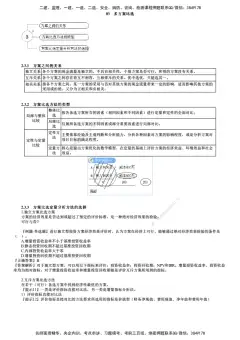
一、简单句的各种成分的认知................................................................................................ 5
二、特殊句型的认知............................................................................................................. 21
三、并列句的认知................................................................................................................. 26
四、各类从句的认知............................................................................................................. 29学习语法的意义?
(一)阅读(新题型+完形填空)
1.长难句的 “简法 ”:
In the Mesa Verde area ofthe ancient North American Southwest, living patterns changed
inthethirteenthcentury,withlargenumbers ofpeoplemoving into large communal dwellings
called pueblos, often constructed at the edges ofcanyons, especially on the sidesofcli s.
ff
(二)写作
1.基础的语法错误: (少谓语动词,多谓语动词,只有从句没有主句)
(1)2011 图画作文描述: Thereisaboat sittingayoungcouple.
(2)Cost performance of Chinese car are become more and more high, thus more and
more Chinese willing to buy Chinese car.
(三)翻译 (源于阅读,高于阅读的学科,对语法有着比较高的要求
)1.后置定语的翻译方式——后置定语前置翻译:
Facts about the world are waiting to be observed and collected by objective researchers
whouse thescientific methodtocarry outtheir work.
有关这个世界的真相等待着使用科学方法执行研究的客观研究人员来观察和收集
关于世界万物的真相正等待着客观的研究人员去观察和收集,这些研究人员会用
科学的方法来开展他们的工作
2.翻译的省略情况:
Formerly, too, pictures hadgiven himconsiderable, andmusic verygreat, delight.
Formerly, too, pictures hadgiven himconsiderable delight, andmusic hadgiven him very
great,delight. 2008年翻译
13.强调句 (倒装 ) 的翻译情况:
Addingtoawoman’sincreaseddoseofstresschemicals,areherincreased“opportunities”
forstress.
原句应该是A woman’s increased “opportunities”for stress are adding to her in-
creaseddoseofstresschemicals.
女性承受压力的“机会”增多,使得产生压力的化学物质也随之增加。
此部分内容的重点:利用语法更好的理解阅读中的长难句内容
学习要点:
1.简单句的各种成分的认知
2.特殊句型的认知
3.并列句的认知
4.各类从句的认知
2r
长难句是简单句的合理叠加
(一)简单句
简单句: 他取得了很好的分数
He gained good marks.
简单句 (成分叠加 ):他最终在考试中取得了很好的分数
Hefinally gainedgood marksinthe exams.
(二)并列句
1.并列句(but作为并列连词):他最终在考试中取得了很好的分数,但是他未能
如愿进入自己的理想大学
Hefinally gainedgood marksinthe exams, buthedidnot enterhisdream university.
2. 原因状语从句 + 并列句:因为他努力的学习,所以他最终在考试中取得了很好
的分数,但是他未能如愿进入自己的理想大学。
Because he worked very hard, he finally gained good marks in the exams, but sadly, he
didnotenter hisdream university.
3. 原因状语从句 + 并列句 + 宾语从句:因为他努力的学习,所以他最终在考试中
取得了很好的分数,但是他之后发现他未能如愿进入自己的理想大学。
Because he worked very hard, he finally gained good marks in the exams, but sadly, he
laterfoundthathe didnotenterhisdream university.
4. 原因状语从句 + 并列句 + 宾语从句 + 定语从句:因为他努力的学习,所以他最
终在考试中取得了很好的分数,但是他之后发现他未能如愿进入自己的理想大学,北
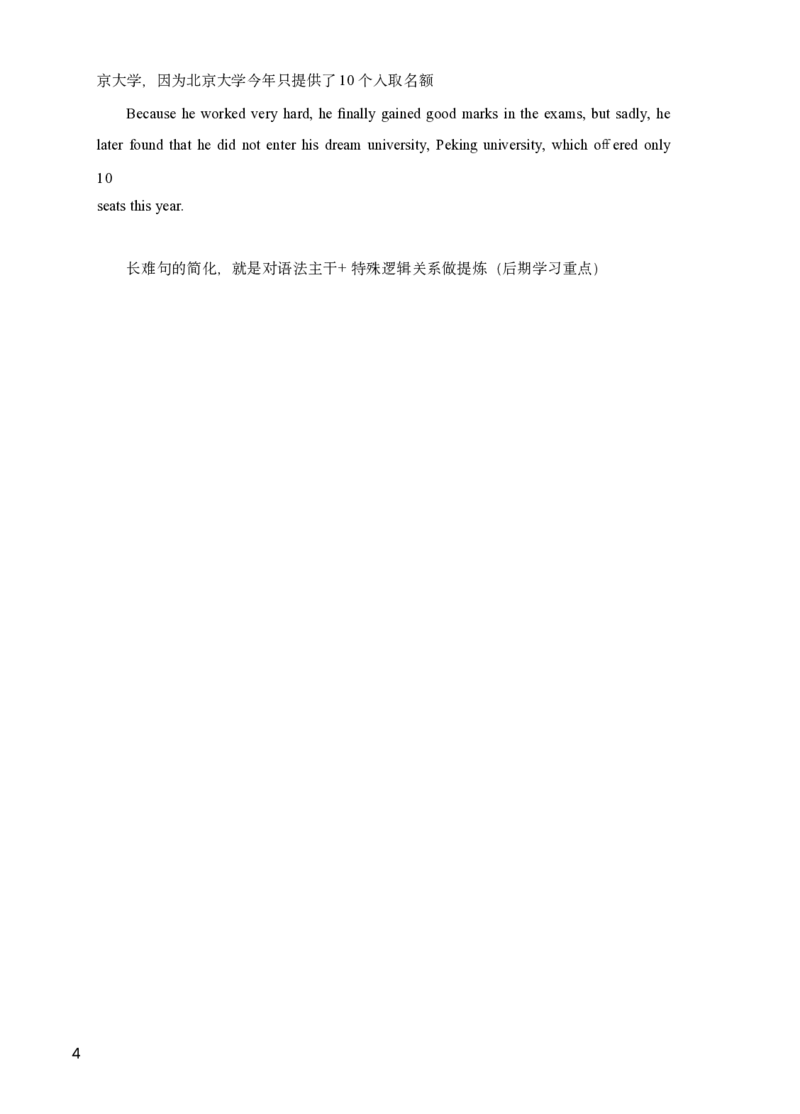
3京大学,因为北京大学今年只提供了10个入取名额
Because he worked very hard, he finally gained good marks in the exams, but sadly, he
later found that he did not enter his dream university, Peking university, which o ered only
ff
10
seatsthisyear.
长难句的简化,就是对语法主干+ 特殊逻辑关系做提炼(后期学习重点)
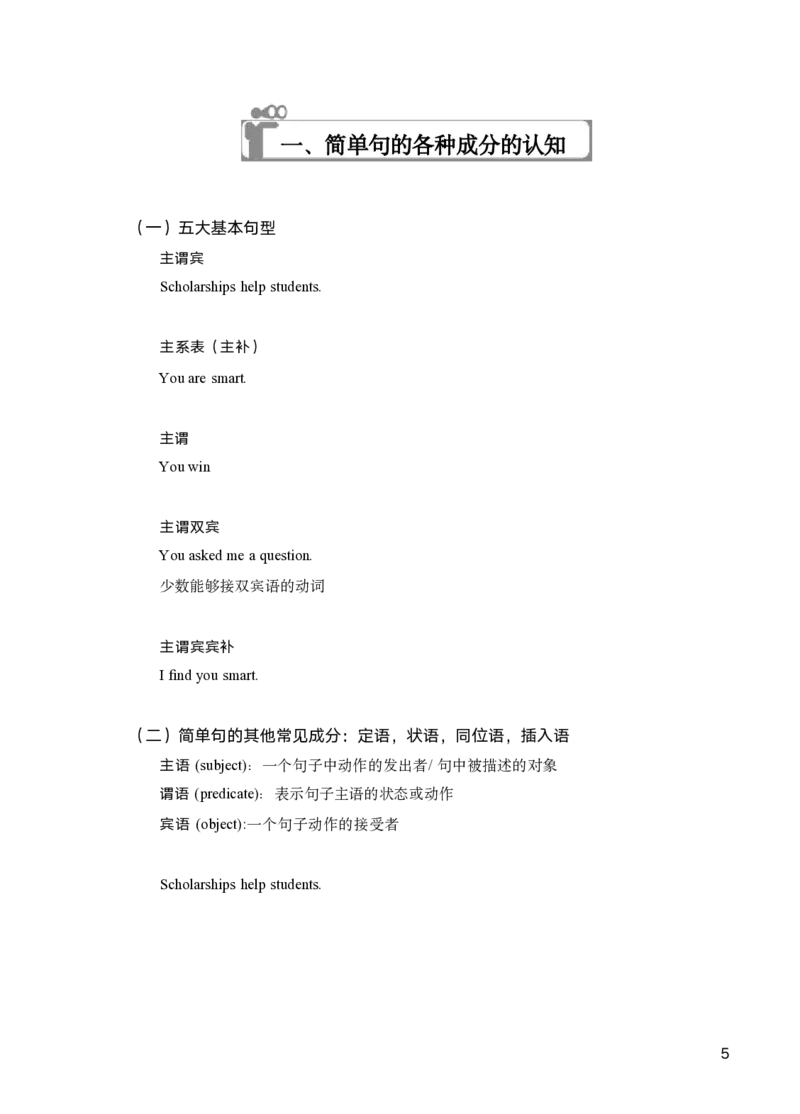
4一、简单句的各种成分的认知
(一)五大基本句型
主谓宾
Scholarships help students.
主系表(主补)
Youare smart.
主谓
Youwin
主谓双宾
Youaskedmeaquestion.
少数能够接双宾语的动词
主谓宾宾补
Ifindyou smart.
(二)简单句的其他常见成分:定语,状语,同位语,插入语
主语 (subject):一个句子中动作的发出者/ 句中被描述的对象
谓语 (predicate):表示句子主语的状态或动作
宾语 (object):一个句子动作的接受者
Scholarships help students.
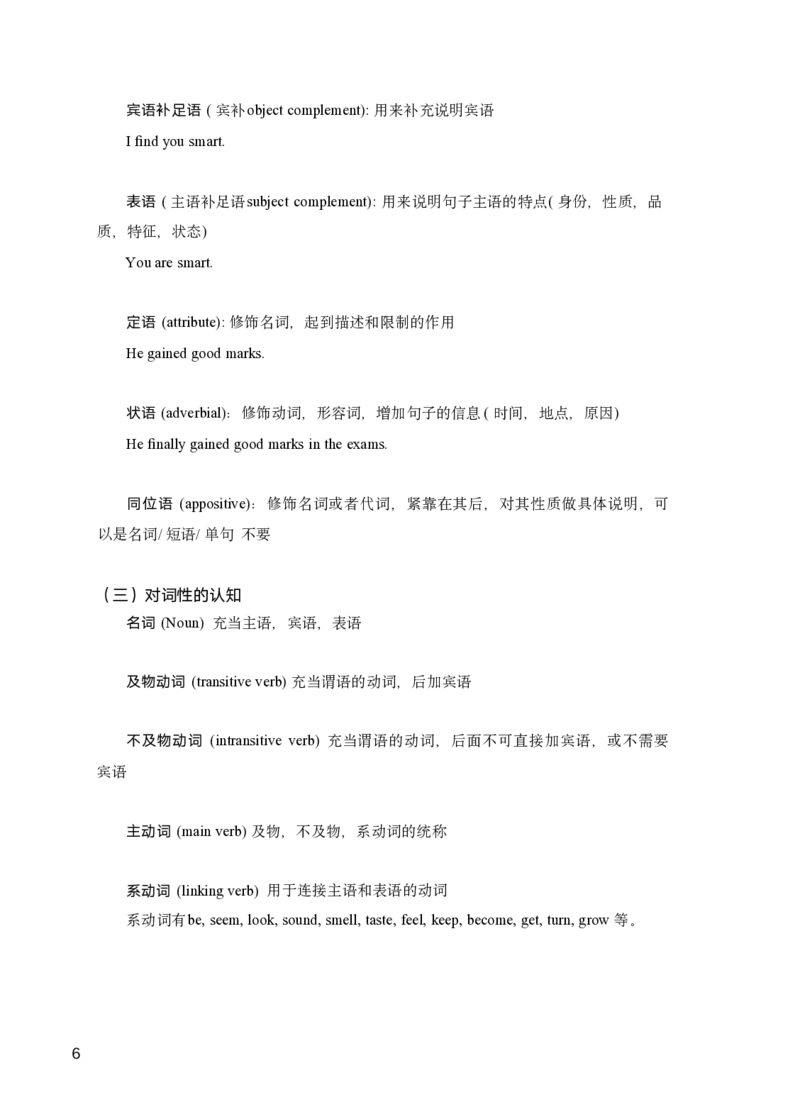
5宾语补足语 (宾补objectcomplement):用来补充说明宾语
Ifindyou smart.
表语 (主语补足语subject complement): 用来说明句子主语的特点(身份,性质,品
质,特征,状态)
Youare smart.
定语 (attribute):修饰名词,起到描述和限制的作用
He gained goodmarks.
状语 (adverbial):修饰动词,形容词,增加句子的信息( 时间,地点,原因)
Hefinallygained goodmarks inthe exams.
同位语 (appositive):修饰名词或者代词,紧靠在其后,对其性质做具体说明,可
以是名词/短语/单句 不要
(三)对词性的认知
名词 (Noun) 充当主语,宾语,表语
及物动词 (transitiveverb)充当谓语的动词,后加宾语
不及物动词 (intransitive verb) 充当谓语的动词,后面不可直接加宾语,或不需要
宾语
主动词 (mainverb)及物,不及物,系动词的统称
系动词 (linkingverb) 用于连接主语和表语的动词
系动词有be,seem,look,sound,smell,taste, feel,keep,become, get,turn, grow等。
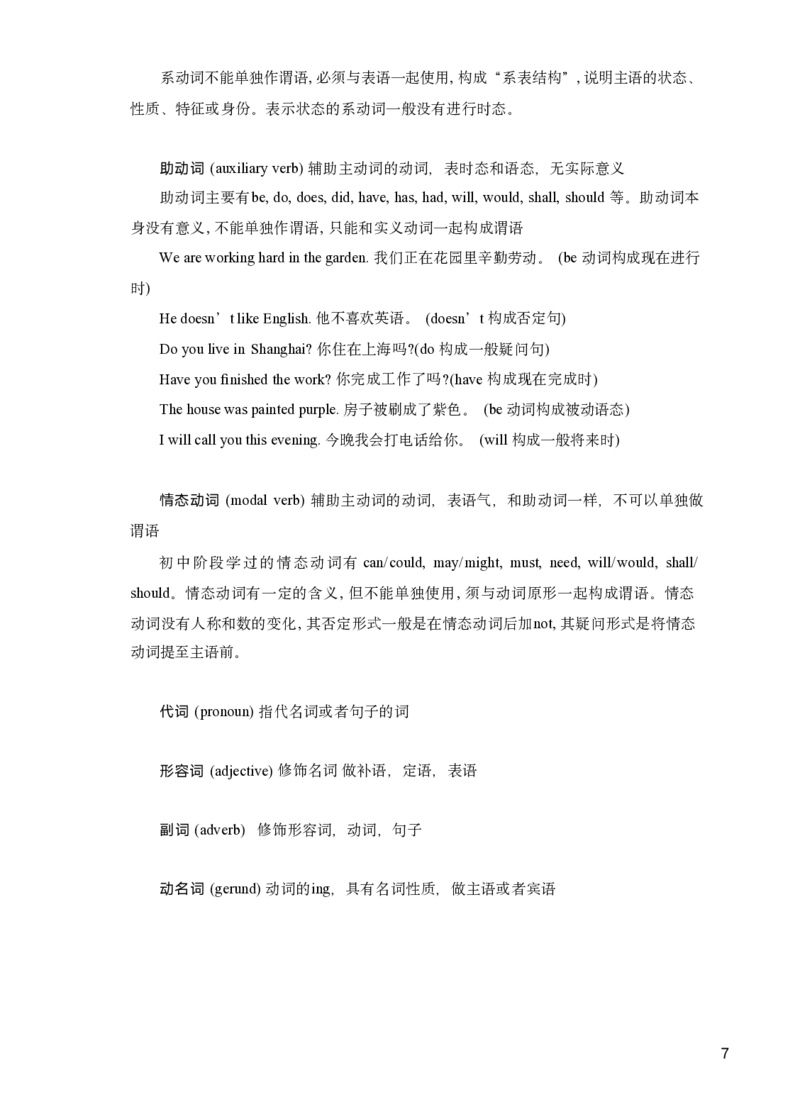
6系动词不能单独作谓语,必须与表语一起使用,构成“系表结构”,说明主语的状态、
性质、特征或身份。表示状态的系动词一般没有进行时态。
助动词 (auxiliaryverb) 辅助主动词的动词,表时态和语态,无实际意义
助动词主要有be, do, does, did, have, has, had,will, would, shall, should等。助动词本
身没有意义,不能单独作谓语, 只能和实义动词一起构成谓语
Weareworkinghardinthegarden. 我们正在花园里辛勤劳动。 (be 动词构成现在进行
时)
Hedoesn’tlikeEnglish.他不喜欢英语。 (doesn’t构成否定句)
Doyoulivein Shanghai?你住在上海吗?(do构成一般疑问句)
Haveyoufinishedthework? 你完成工作了吗?(have构成现在完成时)
Thehousewaspaintedpurple.房子被刷成了紫色。 (be动词构成被动语态)
Iwillcallyouthisevening.今晚我会打电话给你。 (will构成一般将来时)
情态动词 (modal verb) 辅助主动词的动词,表语气,和助动词一样,不可以单独做
谓语
初中阶段学过的情态动词有 can/could, may/might, must, need, will/would, shall/
should。情态动词有一定的含义, 但不能单独使用, 须与动词原形一起构成谓语。情态
动词没有人称和数的变化, 其否定形式一般是在情态动词后加not, 其疑问形式是将情态
动词提至主语前。
代词 (pronoun)指代名词或者句子的词
形容词 (adjective)修饰名词做补语,定语,表语
副词 (adverb) 修饰形容词,动词,句子
动名词 (gerund)动词的ing,具有名词性质,做主语或者宾语
7不定式 (infinitive) todo,具备名词/副词/形容词特性
Haveyoueverusedemailtoapologizetoacolleague?Delivereda26to a subordinate(下
属) with a voice-mail message? Flown by plane across the country just to deliver important
news in person? The various communication options at our fingertips today can be good for
27 and productivity-and at the same time very troublesome. With so many ways to communi-
cate,how should a manager choose the one that’s best--- 28 when the message to be deliv-
ered is bad or unwelcome news for the recipient? We’ve29 business communication consul-
tants and etiquette ( 礼仪) experts to come up with the following guidelines for 30 using the
alternative ways ofdelivering difficult messages.
A) avoid I)reward
B) convenience J)silent
C)e ectively K) specific
ff
D) escape L) surveyed
M) unfriendly
E) intimate
F) particularly N) warning
G) primary O) witnessed
H) prompt
(四)谓语和非谓语
在不使用并列句和复合句的情况下,如果一个句子中需要使用多个动词,那么其
中只能有一个谓语动词形式,其他的都需要使用非谓语动词的形式。
1.谓语部分
谓语动词”即指“动词”附加了“时”和“态”内涵,就是所谓的“时态”
如eating加上过去、现在、将来时间就成为:
waseating过去在吃;
8ameating 现在在吃;
willbeeating将来在吃。
时间
一般 进行 完成 完成进行
状态
过去 一般过去时 过去进行时 过去完成时 过去完成进行时
现在 一般现在时 现在进行时 现在完成时 现在完成进行时
将来 一般将来时 将来进行时 将来完成时 将来完成进行时
过去将来 过去将来时 过去将来进行时 过去将来完成时 过去将来完成进行时
时态 用法 构成 常见标志词语 例句
(1)表示经常性、
习惯性的动作 (1)主语+动词原 Hegoestoschooleveryday.
(2)表示现在的 形 often,usually, 他每天都去上学。
状态、特征或真 (2)主语(第三人 sometimes,every Theearthmovesaroundthe
一般现在
理 称单数)+动词 day(week/month sun.地球绕着太阳转。
时
(3)在时间、条 (第三人称单数) /year...),once Ifsheisfree.shewill come
件状语从句中, (3)主语+am/is aweek等 toseemetomorrow.如果她
常用—般现在时 /are+其他 明天有空就会来看我。
代替将来时
(1)表示过去某 yesterday,lastyear
(1)主语+动词过
时发生的事 (week/Night / Heworked ina factoryin
一般过去 去式
(2)表示过去存 month),threeyea 2015.他2015年在一家工
时 (2) 主语+was /
在的状态或过去 rsago,in2015, 厂工作。
were+其他
反复发生的动作 justnow等
Hewas aangryboy tenyears ago
时态 用法 构成 常见标志词语 例句
(1)表示将来的 Wewillhave aparty
(1) 主语+will /
动作或状态 tomorrow.
—般将来 shall+动词原形 tomorrow,next
(2)表示即将发 明天我们将有个聚会。
时 (2)主语+begoing week(year/month),
生的或最近打算 I'mleavingforBeijing.
to+动词原形
做的事 我将要动身去北京。
I amgoing toBeijing
9时态 用法 构成 常见标志词语 例句
(3)go,come, start,
moveleave等可用
进行时态表将来
Therewillbeameeting
—般将 (3)表示按计划即 【注意】therebe in+时间段,in
tomorrow.
来时 将发生的动作 句型的一般将来 2025等
明天将有一个会议。
时结构为There
willbe/Thereis/are
goingtobe
Look!Theyareplaying
表示说话时刻或 now,look, listen, football.
现在进 主语+am/is/are+
现阶段正在进行 thesedays,atthe 看!他们正在踢足球。
行时 现在分词
的动作 moment等 I'mdoingmyhomeworknow.
现在我正在做我的家庭作业
IwaswatchingTVat8:00
yesterdayeveniing
atthatmoment,
昨天晚上八点我正在看电
表示过去某一时 主语 atthistimeye
过去进 视。
刻、某一阶段正 +was/were+现在 sterday,at...o'clock
行时 Hewasreadinganovelwheni
在进行的动作 分词 yesterdayevening
camein.
等
当我进来的时候,他正在看
小说。
HehasbeentoBeijing.
(1)表示动作在说
他去过北京。
话之前已完成, just,ever,yet,
HehasstudiedEnglishfor5
对现在有影响 already, sofar,in
现在完 主语+have/has+ years.
(2)表示动作开始 thepsat 5years,for
成时 过去分词 他学习英语已经五年了。
于过去,持续到 和since引导的时
Ihavealready finishedmy
现在,并可能继 间状语
homeword.
续进行下去
我已经完成了我的作业。
10[拓展]过去将来时,过去完成时[ 了解]
时态 用法 构成 常见标志词语 例句
判断过去将来时
表示从过去的某 一定要有一个用
Hisunclesaidthattherewould
一时刻来看将要 (1)would+动词原 于表示“过去”
beagoodharvestthenext
过去将来 发生的动作。常 形 的参照物。这个
year.
时 用于主句是一般 (2)was/were+going 参照物往往不是
他叔叔说第二年会有个好收
过去时的宾语从 to+动词原形 时间,而是一个
成。
句中 发生在过去的动
作。
表示过去的某一
by,before短语或 Whenthepoicearrived,the
时刻以前已经发
过去完成 when,before,after, thieveshadrunaway.
生的动作或存在 had+过去分词
时 until等引导的从 当警察到达时,小偷已经逃
的状态,也就是
句作为时间状语 跑了。
“过去的过去”
动词的语态
被动语态的构成
被动语态的基本结构是“be+ 及物动词的过去分词”。与主动语态一样,被动语态
也有各种时态变化,列表如下(以动词do为例):
时态 主动语态 被动语态
一般现在时 do/does am/is/are+done
一般过去时 did was/were+done
一般将来时 will/be(am/is/are)goingto+do will/be(am/is/are)goingto+be+done
现在完成时 have/hasdone have/hasbeen+done
含情态动词 情态动词+do 情态动词+be+done
2.非谓语部分
非谓语的定义:
在句子中充当除谓语以外的各种句子成分的动词形式,叫做非谓语动词(the
Non-Finite Verbs)。非谓语动词也是动词的一种,他们有着动词的其他特点,可以充当
主语、宾语、状语等
11非谓语动词的使用功能:
在不使用并列句和复合句的情况下,如果一个句子中需要使用多个动词,那么其
中只能有一个谓语动词形式,其他的都需要使用非谓语动词的形式。
从功能上区分谓语动词和非谓语动词
一个句号之内,如果没有连词,那么有且只有一个谓语动词(注:宾从和定从存在
省略连词的情况)。其他动词都需要使用非谓语形式。
非谓语的分类和用法
非谓语动词分为不定式、动名词、现在分词、过去分词。
1.不定式
1.1不定式的结构
动词不定式: to+do,具有名词、形容词、副词的特征。
否定式:not+todo
(1)一般式:不定式的一般式所表示的动作与谓语动词动作同时发生或发生在谓
语动词动作之后。
e.g.Weplantopayavisit.
(2)进行式:不定式的进行式所表示的动作与谓语动词动作同时发生。
e.g. Theboypretendedtobeworkinghard.
(3)完成式:不定式的完成式表示的动作发生在谓语动词动作之前。
e.g. He is thought to have acted foolishly. Now he has no one but himself to blame for
losingthejob.
1.2不定式的句法功能
(1)作主语:
e.g.Tofinishtheworkintenminutesisveryhard.
12动词不定式短语作主语时,常用it作形式主语,真正的主语不定式置于句后,例
如上面两句可改为:
e.g. Itisveryhardtofinishtheworkintenminutes.
(2)作表语:
e.g.
Herjob isto clean the hall.
Heappearsto havecaughta cold.
(3)作宾语:
常与不定式做宾语连用的动词有: want,hope,wish, o er, fail,plan,learn,pretend,re-
ff
fuse, manage, help, agree, promise, prefer
e.g.Youpromisedtodosomethinggood.
(4)作宾语补足语:
在复合宾语中,动词不定式可充当宾语补足语,如下动词常跟这种复合宾语:
want, wish, ask, tell, order, beg, permit, help, advise, persuade, allow, prepare, cause, force,
callon,waitfor, invite.
e.g .Iamwritingtoaskyoutocometoourclass foravisit.
(5)作定语:
动词不定式作定语,放在所修饰的名词或代词后。与所修饰名词有如下关系:
1)动宾关系:
e.g.Ihaveameetingto attend.
注意:不定式为不及物动词时,所修饰的名词如果是地点、工具等,应有必要的
介词
e.g.Hefounda goodhousetolivein.
132)说明所修饰名词的内容:
e.g.Wehavemadeaplantofinishthework.
(6)作状语:
1)表目的:
e.g. Heworkeddayandnighttogetthemoney.
注意:不定式放句首时,逻辑主语与句子主语要一致:
e.g.
TolearnEnglishwell,adictionary isneeded. (误)
olearnEnglishwell,heneedsa dictionary. (正)
2)表结果(往往是与预期愿望相反的结果意料之外):常放在never,only后
e.g. Hearrivedlateonlytofindthetrainhadgone.
3)表原因:常放在形容词后面
e.g.Theywereverysadtohearthenews.
4)表程度:
e.g.It’stoodarkforusto seeanything.
2动名词
英语中的动名词是由动词变化而来,它仍一方面保留着动词的某些特征,具有动
词的某些变化形式,用以表达名词所不能表达的较为复杂的意念,另一方面动名词在
句子的用法及功能与名词类同。
2.1.动名词的结构
动名词的形式: doing
14否定式:not+动名词
(1)一般式:Seeingisbelieving.
(2)被动式: Hecametothepartywithoutbeinginvited.
(3)完成式: Werememberedhavingseenthefilm.
2.2动名词的句法功能:
(1)作主语: Readingaloudisveryhelpful.
(2)作表语: Intheantcity,thequeen’sjobislayingeggs.
(3)作宾语: Heriskedlosinghislifetosavethelittleboy.
如下动词及短语只跟动名词作宾语:
enjoy, finish, suggest, avoid,excuse, delay, imagine, keep, miss, consider, admit,
deny,mind, permit, forbid,practice, risk,appreciate,be busy, be worth, feel like, can’t
stand,can’thelp,thinkof,dreamof,befondof,prevent…(from),keep …from,stop…(from),
protect…from, set about, be engaged in, spend…(in), succeed in, beusedto, look forwardto,
objectto,payattentionto,insiston 等等。
(4)作定语:
e.gIsthereaswimmingpoolinyourschool?
注:与现在分词不同,动名词作定语时,一般作前置定语,用来表明被修饰名词
的用途。
3现在分词
3.1.现在分词的形式: doing
否定式:not+现在分词
153.2现在分词的句法功能:
(1)作定语:现在分词作定语,当分词单独做定语时,放在所修饰的名词前;如
果是分词短语做定语放在名词后。
e.g. Themanwalkingonthestreetismybrother.
(2)作表语
e.g.Thefilmbeingshowninthecinema isexciting.
(3)作状语:
1)作时间状语:
e.g.(While)Workinginthefactory,hewasan advancedworker.
2)作原因状语:
e.g. BeingaLeaguemember, heisalwayshelping others.
3)作伴随状语:
e.g. Hestayedathome, cleaning andwashing.
4)作条件状语:
e.g.Playingallday,youwillwasteyourvaluabletime.
5)作结果状语:
e.g. Hedroppedtheglass, breakingitintopieces.
4过去分词
4.1过去分词的形式: done
否定式:not+过去分词
164.2过去分词的句法功能
(1)作定语:
e.g. Ourclasswentonan organizedtriplastMonday.
注意:当过去分词是单词时,一般用于名词前,如果是过去分词短语,就放在名
词的后面。
e.g. Theglassbrokenbymysonhasbeenswept away.
(2)作表语:
e.g.
Thewindowisbroken. (系表)
Thewindowwasbrokenbytheboy. (被动)
(3)作状语,例如:
e.g. Praisedbytheneighbors, hebecame thepride ofhisparents
(四)定语 /状语 / 同位语 /插入语
1.前置定语 /后置定语
常见的前置定语:名词/形容词/代词
常见的后置定语:
A.形容词短语做后置定语
B.介词短语做后置定语
C.非谓语短语做后置定语
Thebookusefulforthestudentsishere.( 形容词短语做后置定语)
Theywouldsubmit theresultsoftheir research( 介词短语做后置定语) to ajournal.
Permissiontorunanuclearplant( 非谓语短语做后置定语) isapublictrust.
Ateam ofresearchers workingtogether inthelaboratory( 非谓语短语做后置定语)
172.状语
引入
In the Mesa Verde area ofthe ancient North American Southwest, living patterns changed
in the thirteenthcentury.
绝大部分的状语,本身并不重要
1.副词做状语(除去否定之外都不重要,可无视)
Iloveyoudeeply.
Iloveyou slightly.
Ihardlyloveyou.
2. 介词短语做状语(时间类,地点类都可以无视,状语本身考察很少)
(1)时间类介词短语
By 1854 slaveryhadbeenabolishedeverywhere except Spain’sremaining colonies.
For years executives and headhunters have adhered to the rule
(2)地点类(范围类)介词短语
The link between dreams and emotions( 定 语 ) shows up among the patients in Cart-
wright’s clinic.
时间类和地点类的介词短语做状语均可无视,不是考点
(3)特殊属性类介词短语(虽然重要,但是考的很少)
Of(表属性,也可以做同位语)
For(表目的,原因,对象) 逻辑上重要
By(方式,原因,相差) 一般不是考点
As(作为,像=like,因为) 表因为逻辑上重要
Despite(尽管) 逻辑上不重要
The growth in public money( 是定语) for academic research(目的) has speeded the
18process
Thelatterwasseenasaconsequenceofgeneticisolation.( 内容上是重要的)
Despite these factors, many social scientists seem reluctant to tackle such problems
3.非谓语短语做状语(一般很少设置考点,太小)
Injust on generation, millions ofmothers have gone to work, transforming basic family
economics.( 与mothers构成主动关系,表结果,状语母句隔离开看就好,一般看两者的
逻辑关系判断其重要性)
Enraged by Entergy’s behavior(与VS构成被动关系,表原因), the Vermont Sen-
atevoted26 to4 lastyearagainstallowing anextension
Topromotethisidea, heturnedtotheuniversity-admissionsprocess( 不定式做非谓语表
目的)
3. 同位语
1.人物出处类同位语都可无视
Bob Liodice, the chief executive ofthe Association ofNational Advertisers( 无视), says
consumers will be worse o ifthe industry cannot collect information about their preferences.
ff
It said that the Internet Explorer 10, the version due to appear with Windows 8, would
haveDNTasadefault.
2. 同位语只取其一看
The number of papers including the keywords “environmental change”or “climate
change”( 同位语)haveincreasedrapidlysince2004.
In another case, American archaeologists Rene Million and George Cowgill( 同位语)
spent years systematically mapping the entire city.
194.插入语
大部分情况下直接无视
一个是双逗号,双逗号的基本判断原则(左右两边为完整的语法结构)
1.主语结构做插入语
You can, Mr. Menandpoints outs( 无视), become a lawyer in three years and a medical
doctorin four.
2.副词做插入语
Adealisadeal---except, apparently( 直接无视), whenEntergyisinvolved
特殊逻辑的插入语要重视
These facts, however( 副词提前到整个句子之前), have previously been thought unre-
lated
3.介词短语做插入语
Amateurs, ontheotherhand, havecontinuedtopursue local studies in theoldway.
最常见的插入语,双破折, 一般可以无视
These labels encourage style-conscious consumers to see clothes as disposable ---meant
to last only a wash or two, althoughthey don’t advertisethat --- andtorenewtheirwardrobe
everyfew weeks.
Lookingback, Tolton says she knewbutalsodidn’t know—at leastnotin a conscious,
articulablekind ofway —that having a kid was going to complicate her goal to make partner.
20二、特殊句型的认知
(一)否定句
特殊句型第一类(否定) 用于阅读理解
1.形式否定
Icouldnotagreeanymorethat 2013 年text1 第二段首句
Amancanneverhavetoomanyties一个男人有再多的领带也不为过
Amother can never be patient enough to her child
总结 否定词+more/too/enough肯定的
2.否定转移
(1)主语是第一人称(I,we);
(2)主句谓语动词是一般现在时;
(3)谓语动词是think,believe,suppose,imagine,expect。
针对谓语的否定可以转移到从句引导词之前
Idon’t thinkyou areright
Idon’ttrustyoubecauseyouarehonest我相信你不是因为你诚实
Idon’tloveyoubecausewhoyouare 出现逗号之后意味完全不同
(二)倒装句
1.倒装的两种类别:全部倒装和部分倒装
(1)全部倒装:谓语部分全部提到主语之前。
e.g. Johnopenedthedoor. Therestooda girlhehadnever seenbefore.
21(2)部分倒装:谓语的一部分(助动词)提到主语之前。
e.g. Littledidherealizethatwewerewatchinghiseverymove.
2. 引起两种倒装的标志词语
(1)全部倒装
表示地点或方位的副词类: here,there,in,out,down,away等。
e.g. Hearingthedogbarkingfiercely, awayfledthethief.
表示地点或方位的介词短语类:underthetree, infrontofthebuilding, atthegate等。
e.g. Inthedarkforestsliemanylakes, and somearelargeenoughtohold severaltowns.
注意:以上两种情况,当主语为代词时保持正常语序,不使用倒装语序。
(2)部分倒装
Only+状语位于句首时:
e.g. Onlywhenthewarwasoverdidtheyoungsoldierreturntohishometown.
表否定的副词或短语位于句首时:
常见否定副词及短语: little,neither,nor,never,seldom,hardly,notonly,notuntil,
bynomeans,atnotime 等。
e.g. Not until he went through real hardship did herealize the lovewe have for our fami-
lies isimportant.
so…that…/such…that…结构中, so/such位于句首
e.g. So successfulwasherbusinessthatMaricwasabletosetupnewbrancheselsewhere.
(三)强调句
1.强调句的定义
功能:对句中的某一部分进行突出强调。
22构成:“Itis(was)+强调部分+that(who)+ 句子的其余部分”
被强调的部分指人时,除可用that 外,还可换用who(强调宾语指人时也可用
whom)
特征:去掉强调结构Itis(was)和that(who),剩余部分能够组成一个完整的句子。
e.g.
原句:EricwantstogotoBeijingthis summer.
【强调主语】ItisEricwhowantstogotoBeijingthissummer.
【强调宾语】ItisBeijingthatEricwantstogoto thissummer.
【强调状语】ItisthissummerthatEricwantstogotoBeijing.
PS :强调句通常强调对象为主语,宾语,状语
(四)虚拟语气
1.识别虚拟语气
语气是英文中谓语动词的变化形式,用来表示说话人的意图和态度。英语中的语
气可分为三种:陈述语气、祈使语气和虚拟语气。
虚拟语气是指说话人将行为或状态以愿望、设想等非事实方式来表达的动词形式。
即在一些场合里,当说话人或作者谈到与事实相反或对某事发生的可能性没有把握、
没有信心,或建议、要求某事发生时,就需要采用虚拟语气来表达。
2.虚拟语气的用法
(1).虚拟语气在非真实条件句中的应用
表示虚拟的时间 If从句的谓语形式 主句的谓语形式
与现在事实相反 did/were should/would/might/could+do
should/would/might/could
与过去事实相反 had+done
+ havedone
did/were
wereto+do should/would/might/could+do
与将来事实可能相反
should+do
23e.g.
. Wewouldbebackinthehotelnowifyoudidn’tlosethemap. ( 与现在事实相反)
. IfMr.Dewey hadbeen present, he would have o ered any possible assistance to the
ff
peoplethere. (与过去事实相反)
. Grace doesn’t want to move to New York because she thinks ifshe were to live
there, shewouldn’tbeabletoseeherparentsveryoften.( 与将来事实相反)
1)错综时间虚拟句
错综时间虚拟句即从句与主句的动作发生的时间不同。此时,谓语动词的确定需
要按其本身发生的时间确定其相应谓语动词形式。常考的混合时间是:从句表示过去,
主句表示现在。
e.g.
. Ifwe had bookeda table earlier, we couldn’t be standingherein aqueue.
. Ifhe had spent more time practicing speaking English before, he would be able to
speakitmuchbetter now.
注意:对于错综时间虚拟句,要特别注意主从句中有无时间状语的提示。有时
只有一句有提示,另外一句需根据句意判断与什么时间相反。
2)省略 if的条件从句
if虚拟语气与倒装的结合:当if从句中有were, had 或should 时,可省略if,把
were,had,should放在句首。
e.g.
. Weretherenomoderntelecommunications, we would have to wait for weeks to get
news from around the world.
. Had hecaught themorning train, he wouldnot havebeen lateforthe meeting.
注意:对于省略if的条件从句,需能够辨别出是省略if,进行倒装。
3)含蓄条件句
a.句中含有without,butfor 的提示,主句动词为虚拟语气的形式。
24e.g.
. I couldn’t have gone throughthat bitter period without your generous help.
. Butforyourhelp, Iwouldn’t havefinishedthework.
b.句中含有but,otherwise,or,orelse等提示。
e.g.
. They were abroad during the months when we were carrying out the investigation,
ortheywouldhavecometoourhelp.
. Iwouldhavegoneto mycousin’sbirthdaypartylastnight, butI wasnotavailable.
(2)虚拟语气在名词性从句中的应用
asif/asthough, wish, wouldrather
与现在事实相反: did (were)
与过去事实相反: haddone
与将来事实相反: would/could/might+do
e.g.
. Itwas Johnwhobroke thewindow. Why are you talking to me as ifI had done it?
—Where arethechildren? Thedinner’sgoingto becompletelyruined.
—Iwishtheyweren’t alwayslate.
25三、并列句的认知
1.定义:两个或两个以上的简单句用并列连词进行连接所构成的单句
2.结构:简单句+并列连词+简单句
例证:Theywerehappyandtheydeservedtheirhappiness
Honeyissweet, butthebee stings
3. 特征:并列结构前后的内容存在对称性(词与词对应,短语与短语对应,句子
与句子对应)
4. 特殊:时常利用逗号,分号,冒号也可将句子分隔开,起到并列连词的效果,
此时往往并列前后有省略
例证:Heavycloudsroseslowlyfromthehorizon;thunderdrummed inthedistance
He knocked at the door again and again: therewasnoanswer
5.常见的并列连词
(1)顺接:最常见的并列连词之一,顺接前后的内容从逻辑上属于“地位相同”,
本质上前后内容存在“情感色彩方向相同”的特征,往往可在完形填空或者阅读理解
中用于并列前后的内容的猜测。
常见顺接连接词: and both...and notonly...but(also), aswellas
例证:The semiaridlandsborderingthedesertsexistin a delicate ecologicalbalance and
are limited in their potential to adjust to increased environmental pressures.
Theword“delicate”in thepassage isclosest inmeaning to
[A]Fragile
[B]Predictable
[C]Complex
[D]Valuable
26But ifrobots are to reach the next stage oflaborsaving utility, they will have to operate
with less human supervision and be able to make at least a few decisions for themselves --
goals that pose a real challenge
(2)转折:最常见的并列连词之一。从功能上说,转折所在的内容有三大功能:
逻辑上对前文做否定(最常见);逻辑上与前文保持并列(但是重点在转折上,作者
会就转折所在内容展开);逻辑上对前文做解释(这一点会在阅读相关部分的书籍中
做出更具体的解释)。总的来说,从应试层面讲,转折后的内容从逻辑上属于“转折
之后更重要”,本质上其前后内容间存在“情感色彩方向相反”的特征,往往可在完
型填空或者阅读理解中用于转折前后的内容的猜测。
常见转折连接词: but yet however
The traditional rule was it’s safer to stay where you are, but that’sbeen fundamental-
ly inverted,”says one headhunter. ④“The people who’ve been hurt the worst are those
who’ve stayed too long.”
The company seems to have concluded that its reputation inVermont is already so dam-
aged that it has nothing left to lose by goingtowarwiththe state. ②Butthere shouldbe con-
sequences.
(3)选择:相对于并列连词和转折连词,选择连词出现在阅读中的频率要更低,
并且选择连词所连接的内容关系不明确(可能两者间是同向关系,也可能两者间是反
向关系),在没有看见明确相反内容之前,优先理解选择前后的方向性是一致的。阅
读中直接对选择结构进行考察的几率比较小,主要原因是因为“选择”并不是确定的
观点或结论,所以阅读中遇到选择结构可以忽略,而完形填空中可以利用选择结构判
断空格内容。
常见选择连接词or either...or... Not...but...
27例证1:完形填空中选择前后方向性一致的考察
If no surplus is available, a farmer cannot be self-sufficient.He must either sell some of
hispropertyor__48__ extrafundsintheformofloans(2000 年完形填空)
A.search B. Save C.o er D.seek
ff
例证2:阅读中出现选择结构并未考察
Either Entergy never really intended to live by those commitments, or it simply didn’t
foreseewhatwouldhappennext.(2012 年阅读text2)
(4)因果 :因果连词从逻辑上说算是顺接的一种变体(很多时候顺接也是可以
表因果的,例如I studyhard andI succeed,表面上表示的是并列结构,其实是因为我努
力所以我成功的因果连词),而因果连词连接的两个句子间则更加明确的表示出两句
话之间的因果关系。虽然原因是考研考试中的重要考点,但是利用for等连接词直接考
察因果显得过于明显,不利于提高考题难度,所以直接考察这个结构的情况并不是很多。
在后续的因果逻辑中会更加集中的进行讲解。
常见因果连词: for so because
例证: None oftheserequirements shoulddeterlargeretailers fromtryingtheirhand, for
thosethatmastertheintricaciesofwholesalinginEuropestandtoreapconsiderablegains(2010
年阅读partB )
28四、各类从句的认知
定语从句
1.识别和划出定语从句
(1)识别定语
a clever/handsome boy theboilingwater fallenleaves
the book onthedesk themanstanding overthere storiesin the Long March
(2)识别定语从句
定语从句的定义:整个从句作定语,用于修饰或限定整个主句或主句中的名词或
代词。
其特点:去掉从句之后,剩余句子完整。
定语从句中的两个重要概念:先行词和关系词
e.g.
. Finally he reached a lonely island which was completely cut o from the outside
ff
world.
先行词:被定语从句所修饰或限制的对象称为先行词。上句中island 即为先行词。
关系词:重复指代先行词,起连接主句和从句的作用并且在定语从句中充当一定
成分的连词。上句中的which 即为关系词。
(3)划分定语从句
起点:定语从句始于关系词;介词+关系词
终点:定语从句截止于第二个谓语动词前;特殊符号;句末
29e.g.
It alsopledgednotto deployAIwhose use would violate international laws or human
rights
Todaywe live in aworldwhere GPS systems, digitalmaps, and othernavigation apps
are all available onour smart-phones
2.定语从句分类:限定性定语从句VS非限定性定语从句
(1)分类与辨别
定语从句分为:限定性定语从句和非限定性定语从句。
辨别:限定性定语从句的关系词和先行词之间没有逗号,而非限定性定语从句则
有逗号分开。
e.g.
The prizewill goto the writer whose story showsthe most imagination.
The school shop, whose customers are mainly students, isclosedduring theholidays.
(2) 区别
先行词上的区别: 限定性定语从句先行词是一个名词或代词,非定性定语从句先
行词是一个名词,代词或句子。
意义上的区别:限定性定语从句起到修饰限定的作用;非限定性定语从句起到解释
说明的作用。两种定语从句句义上有点差别。【注:非限定性定语从句中不能有that】
e.g.
·Hehasagirlfriendwhoisin ClassThree. (限定性定语从句)
他有一个在三班的女朋友。 (可能还有别的班的女朋友)
·Hehasagirlfriend,whois inClassThree. (非限定性定语从句)
他有一个女朋友,她在三班。 (只有一个女朋友)
e.g.
Califormia’splan, whichisexpected tobefinalizedbythegovernornextyear, should
serveasamodel. (2019 英语二text2)
30we have now identified enough ofthe long-term patterns shaping the history ofthe planet,
and our species, to make evidence-based forecasts about the situations in which our descen-
dantswillfindthemselves.
3.定语从句各类关系词
(1) 关系代词(who, whom,that, which, as, whose)
关系代词 先行词 在从句中所做成分
who 人 主语/宾语/表语
whom 人 宾语/表语
that 人/物 主语/宾语/表语
which 事/ 物 主语/宾语/表语
as 事/ 物/人 主语/宾语/表语
whose 人/物 定语
(2)关系副词(when,where, why)
关系副词 先行词 在从句中所做成分
when 表示时间的词 状语
where 表示地点的词 状语
why 表示原因的词 状语
1) when 的用法:在从句中做时间状语,其先行词是表时间的名词如day, year,
time 等。
e.g.
At atimewhenThomasPiketty and other economists are warning ofrising inequality
and the increasing power ofinherited wealth, it is bizarre that wealthy aristocratic fam-
iliesshouldstillbethesymbolicheartofmodern democratic states.
312) where 的用法:在从句中做地点状语,其先行词是表示地点或抽象地点概念的名
词,如place,houses, situation, case, activity, point等。
e.g.
The sensible place to build new houses, factories and offices is in cities and towns
where infrastructure is in place.
3)why 的用法:在从句中做原因状语,先行词是reason等表示原因的名词。
e.g.
Andyet, John Hagel, author ofThe Power ofPull and otherbooks, says Brynjolfsson
andMcAfeemissthereasonwhythesejobsaresovulnerabletotechnology inthefirst
place.
(3)介词+关系代词
介词的选择需要结合先行词和从句中的动词
e.g.
In other words, we need to look at the ways in which machines can augment human
laborratherthanreplaceit.
状语从句
一.判断状语从句
1.识别状语从句
状语从句指句子用作状语时, 起副词作用的句子。它可以修饰谓语、非谓语动词、
定语、状语或整个句子。
2.识记状语从句的分类及连接词
类别 连接词
32类别 连接词
when,while,as,before,after,till/until,as soonas,once,since,
时间 nosooner…than,hardly…when/before,every+时间词,the+ 时间词,
bythetime
让步 while, …+ever,nomatter…,although/though,evenif,eventhough,as,whether…(ornot)
if,unless,as/solongas,onconditionthat,incase,
条件
suppose,supposing(that),providing/provided(that),giventhat
地点 Where
目的 sothat,inorderthat,forfear(that),lest
原因 because,since,as,seeingthat,considering(that),nowthat,inthat
结果 sothat,so…that,such…that
方式 as,justas,asif,asthough
比较 as…as,so…as,than
(1) 时间状语从句
时间状语从句连接词:when, while, as, before, after, till/until, as soon as, once, since,
nosooner…than,hardly…when/before,every+ 时间词,the+ 时间词,bythetime
1)when
when “当…时, 在…期间”,从句所加动词既可以是短暂性动词,也可以是延续
性动词或状态动词。
e.g.
表时间
WhenHo a’sTeamsterswereintheirprimein 1960, only one intenAmerican govern-
ff
mentworkersbelongedtoaunion; now36%do. (2012 年 英语一text4)
表条件
The company, a major energy supplier in New England, provokedjustified outrage in
Vermont last week when it announced it was reneging on a longstanding commitment(2012
英语一text2)
2)once=when表条件
once作连词时,翻译为: “一旦”
33e.g.
Oncea discovery claimbecomespublic, thediscoverer receivesintellectual credit.(2012
英语一text3)
(2)地点状语从句
地点状语从句通常由where引导
e.g.
You’dbetternotleavethemedicinewherekidscangetat it.
注意区分where引导的定语从句与状语从句
Reform has been vigorously opposed, perhaps most egregiously in education, where char-
terschools, academiesandmeritpayallfaceddrawn-outbattles.(2012 英语一 text4)
(3)让步状语从句
让步状语从句由while, …+ever,nomatter…, although/though, evenif,eventhough,
as,whether…(ornot)等词引导。
1)although,though
翻译为:“虽然,尽管”
e.g.
This episode crystallizes the irony that althoughAmerican men tend to talk more than
womeninpublicsituations, theyoftentalklessathome.(2010 英语二 text1)
2)evenif, eventhough
这两个词语气比though,although强,翻译为: “即使”,两者可以通用。
e.g.
Butifyourworkisyourpassion,youllbemorelikelytodevoteyourselfto it, even ifthat
means going home for dinner and then working long after the kids are in bed.(2015 英语二
text3)
343)as
连词as,翻译为“尽管”,也可以引导让步状语从句,但从句中要用特殊语序。
e.g.
Young as he is, he knows a lot. (正常语序句子Although /Though he is young, he
knowsalot.)
Cold as it is, the childrenplay outdoors. (正常语序句子Although/Though it is cold,
the childrenplay outdoors.)
4)while
“当…时候”,后面从句所加动词必须为延续性动词或状态动词,不与短暂性动
词连用。
e.g.
放前半句,不重要
While Europe’s monarchies will no doubt be smart enough to strive for some time to
come, it isthe British royals whohave most to fear from the Spanish example.(2015 英语一
text1)
放后半句,重要
In some ways the scientificpublishing model resembles the economy ofthe social inter-
net:labourisprovided freein exchange forthe hope ofstatus,whilehugeprofits aremadeby
afewbigfirmswhorunthemarketplaces. (2020 英语一text2)
(4)条件状语从句
引导条件状语从句的有if,unless,as/so long as,on condition that,in case,sup-
pose, supposing(that),providing/ provided(that) 等。
1)if
翻译为:“如果”
e.g.
Ifthe trade unionist Jimmy Ho a were alive today, he would probably represent civil ser-
ff
vant.(2012英语一text4)
352)unless 多出现在完形填空考题中
And, unless banks carry toxic assets at prices that attract buyers, reviving the banking
systemwillbedifficult. (2011 英语一text4)
3)aslongas, solongas, onconditionthat
这几个短语意思差不多,都可以翻译为: “只要,条件是…”。
e.g.
Under the plan, for example, the agency said it would not prosecute landowner or busi-
nesses that unintentionally kill, harm, or disturb thebird, as long as they had signed a range-
widemanagementplantorestoreprairiechickenhabitat. (英语二2016 text2)
4) providing, providing that, consideringthat, given that
这几个短语意思相近,可翻译为: “考虑到、只要、假如”等意思。
e.g.
Given that they are inexperienced, they’ve done a goodjob.
稰roviding(that) weinvitehim, hewouldsurelycometodinner.
(5) 目的状语从句
引导目的状语从句的主要连词有so that, in order that, for fear(that), lest等,从句中
常常使用一些情态动词,如can,could,may,might,should等。
1)sothat,inorderthat
表示“为了…,以便…”,一般放在主句之后
e.g.
Carry a book with you at all times”can actually work, too-providing you dip in often
enough, sothatreadingbecomesthe default state from which you temporarily surface to take
careofbusiness, beforedroppingbackdown. (2016 英语二 text3)
36(6)原因状语从句
引导原因状语从句的有because, since, as , now that, in that, seeing that, consider-
ing(that)等。
1)because/since/as/nowthat
翻译为:“因为”
e.g.
Integrity had collapsed, she argued, because of a collective acceptance that the only
“sortingmechanism”insocietyshouldbeprofitandthemarket.(2015 英语一 text4)
2) consideringthat, seeing that,providing that
这两个词和since,nowthat意思相近,翻译为: “鉴于…事实,考虑到…”。
e.g.
Considering that they arejust beginners, they are doing quite a goodjob.
(7)结果状语从句
引导结果状语从句的连词有: sothat,so…that,such…that等。
1)sothat
翻译为:结果…
e.g.
InDecember2010 America’sFederalTradeCommission(FTC) proposedaddinga“do
not track”(DNT) option to internet browsers, sothat users couldtell advertisersthatthey did
notwanttobefollowed. (2013 英语二text2)
2)such...that…
翻译为:如此…以致…
37e.g.
Jenny is such a clever girlthatallofuslikeher verymuch.
(8)方式状语从句
方式状语从句常由as,justas,asif,asthough等词引导,通常位于主句之后。
1) as,justas
这两个连词的意思是“如…,正如…一样”。justas 比as语气要强一些。
Just as some ants farm the bugs called aphidsfor the honeydew they produce when they
feed, soGooglefarmsusforthedatathat ourdigitallivesyield.(2018 英语二text3)
2)asif, asthough
翻译为:“似乎,好像”
e.g.
On a really good day, it no longer feels as if you’re “making time to read,”but just
reading, andmakingtimeforeverythingelse. (2016 英语二 text3)
(9) 比较状语从句
通常由as…as,so…as,than等连词引导
e.g.
Itisnotaseasy asyouthink.
稵heworkdidnotgoso smoothlyaswehoped.
·John, a friend ofmine, who got married only last week, spent $3,000 more than he had
plannedforthewedding.(2006 全国II)
名词性从句
基本形式:名词性从句是指在句子中充当名词功能的从句。
38宾语从句
1. 定义:在单句中充当宾语的从句就是宾语从句
2. 宾语从句的引导词如下: that/what/it/whether/if/who/why/how
例句
JusticeAnthony Kennedy wrote that the previous decisions were flaws
Dr. Wormacknowledgesthatthesefiguresareconservative.
We believe consumers should havemore control.
As a physician, I know the most costly and dramatic measures may be ine ective and
ff
painful.
如果宾语从句太长,且在主谓宾补的结构中,则宾语从句后置,用形式宾语it替代
That kind ofactivity makes it less likely that the court’s decision will be accepted as
impartialjudgments.
表语从句:
定义:在单句中充当表语的从句就是表语从句
表语从句的引导词如下:that/what/who/when/where/which/why/ whether/how/whoev-
er/whichever/whatever/because/as if/as though
例句
Partoftheissueisthatairportshaveonlysomuchroom for screeninglanes
This is why repeated attempts at reform legislation have failed inrecentyears
同位语从句
1.定义:用作同位语的从句叫做同位语从句。
2.从功能上看, 同位语从句和定语从句存在一定的相似之处, 有时候两者都可以看
做是对其所修饰的名词的进一步解释说明,但是从逻辑上说,同位语从句与其先行词
呈对等的关系,阅读是一般只需要理解同位语从句即可,而定语从句则是从属于先行词,
在先行词大意明确的情况之下,可以略过定语从句不看,反之则需要重点阅读定语从句。
3. 同位语从句的先行词往往是抽象的名词,利用同位语从句对其进行进一步的解
释,常见的同位语从句的先行词有:
39advice, announcement, argument, belief, claim, conclusion, decision, evidence, explana-
tion, fact, feeling, hope, idea, impression, information, knowledge, message, news, opinion,
order, probability, promise, proposal, remark, reply, report, saying, statement, suggestion,
thought,treat, warning, wish, word.
4. 同位语从句的引导词常用that/whether/who/which/where/when/why/how也可以作
为其引导词,这点和宾语从句非常的类似。
例句:Theywereallverymuchworriedoverthe factthatyouwere in deepfinancialcri-
sis.
例句:Thequestionwhoshouldcompletethetaskrequirescareful consideration.
5. 同位语从句和定语从句的显著区别。从语法上看,两者最显著的区别是,同位
语从句本身往往是完整句,引导词在句中是不充当成分的,而定语从句的引导词是需
要在从句中充当成分的(主语或者宾语)。从内容上看,同位语从句的先行词一般都
是抽象名词,多数时候需要依靠同位语从句本身来进行句意理解(但是当先行词本身
能够表示特点的褒贬含义的情感色彩时,可略读其后的同位语从句),而定语从句是
对先行词的进一步限定和修饰,在先行词意思明确的情况下,可以直接省去定语从句
不看。
例句
Evidence that the Lovelife program produces lasting change is limited and mixed.
Formypart, IhavenoideawhetherGilbert isagreatconductororevenagoodone.
Buttheideathatthejournalistmustunderstandthelawmoreprofoundlythanan ordinary
citizenrestson anunderstandingofthe established conventions and specialresponsibilities of
thenews media.
主语从句
定义:用于充当主语的名词性从句
40主语从句的引导词: that what how whoever wherever等
例句:Thattheyweretwinsisterwasclearfromtheir facialresemblancebetweenthem
在考研阅读和翻译中,上述形式的主语从句出现之后,因为较为容易识别,以及
句子的复杂性不高,一般不会对考生造成太大的阅读障碍。在写作中,同学们需要特
别注意以下两件事情:
1.主语从句的引导词that不能省略;
2. 只能用whether引导主语从句,而不可以用if
此外,真正容易对考生造成阅读难度的,应该是由 it所引导的主语从句,it做形式
主语,需要考生去其后寻找真正主句的情况。
为何会出现这种it做形式主语的情况?其主要原因是, 当主语从句的过长的时候,
为了保持整个句子的平衡,往往会将较长的内容放在句子后半部分。
考研中常见的两种it引导的主语从句的写法
A. Itisdone+主语从句(表人们对一件事的看法或者观点)
Itwasarguedat the endofthe 19thcenturythat humansdonotcrybecausetheyare sad
B. Itis+adj/n+主语从句(表达对一件事的评价)
Itisnotyetclear howmuch moree ective airline securityhasbecome.
ff
It is obvious that their viewswere less fully intellectualized.
需要稍微区分有it所引导的主语从句和it所引导的强调句之间的区别。
强调句型的结构是It is/was+ 被强调部分+who/that+ 其他部分,将It is/was...who/
that...去掉之后,经过语序调整,原句的语法结构或者意思是不受影响的。
主要的不同就在于去掉强调句式结构或者是调整语序后, 如果句子仍然是完整的,
那本句就是强调句,反之,则是主语从句。
例证:Itwasthewhalethathehadseenbeneaththe sea.
41例证:Itisindisputableafact that Chinahas enjoyedahigh economic growth duringthe
past20years.
主语从句位于句首和句尾的意思是相同的
Thattheseas arebeing over-fishedhasbeenknownforyears.
Whetherthe community’sworkcontributesmuchto an overall accumulation ofknowl-
edgeisdoubtful.
Itisbecominglessclear, however, that sucha theorywouldbe a simplification
42