学习目标
概况
基础积累
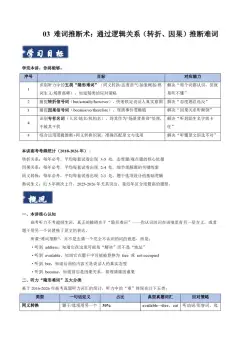
08 日常生活微场景:计划愿望与个人情感
学完本讲,你将能够:
序号
目标
对应能力
1
掌握“计划愿望与个人情感”场景的高频词汇与信号词(意
愿表达/情感变化/态度转折)
解决“分不清是计划还是事实”
2
通过情态动词和意愿表达句式,准确判断说话人的真实意图
解决“意图推断题选不准”
3
捕捉情感变化信号词(转折/让步/态度词),追踪说话人的
情绪走向
解决“感受变化判断不准”
4
区分初始想法与最终决定,识别对话中的“态度翻转”
解决“只听到开头就选答案”
本讲高考考频统计(2020-2026 年) :
计划与意愿:每年必考,平均每套 2-3 题
个人情感与态度:每年必考,平均每套 1-2 题
意图推断:高频考点,平均每套 1-2 题
一、本讲核心认知
“计划愿望与个人情感”是所有场景中“信息密度最高”的话题——说话人的每一句话都在表达
“我想做什么”或“我感觉怎么样”。
二、解题两步走
步骤
做什么
目的
听前
扫描题干和选项,预判是“计划题”还是“情感题” 带着目标去听
听中
抓意愿表达句式 + 辨转折信号词(but/actually)
锁定真实意图和最终情感
📌 一、计划愿望与个人情感三大线索
线索一:计划与意图——关键词库
类别
常见表达
听音要点
意愿表达(肯定)
I’d like to... / I’m going to... / I plan to... / I’m
thinking of... / I want to... / I hope to...
听到即锁定“说话人想做什
么”
意愿表达(已决定)
I’ve decided to... / I’ve changed my mind
表已做出的决定
意愿表达(探寻)
I’d like to see if... / I wonder if...
表探寻可能性
改变计划信号
change of plan / instead / I’ve changed my mind
听到即预判“原计划被推翻”
虚拟语气(未实现的愿望)
I wish I could... / I wish I didn’t...
表达与现实相反的愿望
🎯 真题示例1(2025 年新课标I 卷 Text 2——thinking of 表计划)
考题:What does Sarah plan to do after graduation?
A. Do volunteer work.
B. Pursue a higher degree.
C. Run the family business.
【答案】A
【原文】 M: Have you talked over your future plan with your parents, Sarah?
W: Well, my parents would like me to do my master’s after graduation, but I’m thinking of volunteering as
a social worker for a year.
M: Good for you.
【解析】 thinking of 是计划信号词,后面接具体计划。注意父母希望她“继续读研”,但那是父母
的想法,but 转折后才是说话人自己的计划。
🎯 真题示例2(2020 年I 卷 Text 7——I’ve decided 表已做出的决定)
考题:Why does Cathy want to quit her job?
A. She’ll join another firm.
B. She’ll run her own business.
C. She’s fed up with it.
【答案】A
【原文】 W: Hi, Mark. I’ve decided to leave the company. I had an amazing time here. But it is time for
me to move on.
M: May I ask why, Cathy? I do hope that you stay with us here.
W: Well, you know, I’ve got a new job in a big engineering firm. It’s a management position.
【解析】 I’ve decided 是“已做出决定”的标志,不是“正在考虑”。听到decided 要意识到计划已
确定。
🎯 真题示例3(2026 年新课标I 卷 Text 6——originally 表初始计划)
考题:Why did Lisa originally come to Copenhagen?
A. To look for a permanent job.
B. To do a short-term project.
C. To visit a famous museum.
考点分析
【答案】B
【原文】 M: Was this lifestyle why you first came?
W: No, I originally came for a three-month project at a law firm. After finishing it, they offered me a
permanent job. I took it and stayed.
【解析】 originally 是核心信号词,直接表明“最初的计划”。听到originally 要预判后面会出现计
划或态度的变化——短期项目后来变成了长期工作。
线索二:愿望与期待——关键词库
类别
常见表达
听音要点
直接愿望
I hope to... / I wish I could...
直接表达希望做的事情
期待表达
I’m looking forward to... / I was really looking forward to...
was + looking forward to 表期待落空
目标表达
She’s hoping... / She’s aiming...
表达个人目标
线索三:情感与态度——关键词库
类别
常见表达
听音要点
直接情感词
anxious / upset / nervous / excited
直接锁定情感
间接暗示
nowhere to be found / haven’t touched the water
通过描述推断情感
委婉拒绝
I’d love to, but... / I’m afraid...
客套+转折=真实拒绝
📌 二、情感变化追踪——三阶段判断法
在计划愿望与个人情感场景中,说话人的情感往往不是一成不变的。听到以下结构时,注意追踪情感变化:
结构
第一阶段
第二阶段
考点
I thought... but...
原本的预期/想法
实际结果/真实想法
认知修正
I was going to... but...
原本的计划
改变后的行动
计划变更
At first... but now...
初始情感
当前情感
情感变化
I used to... but now...
过去的想法/感受
现在的想法/感受
态度转变
I’d love to... but...
表面接受/客套
真实拒绝原因
委婉拒绝
🎯 考点1:计划与意图——区分“想法”与“决定”
🎯 真题示例4(2026 年新课标II 卷 Text 6——I’d like to see if 表意图探寻)
考题:What does the man want to do?
A. Book a ticket.
B. Reschedule a flight.
C. Cancel a flight.
【答案】B
【原文】 W: Good morning, sir. Can I help you?
M: Yes. I’ve booked a ticket for June 22nd to Swansea. I’d like to see if there’s an earlier flight available.
W: What date do you have in mind?
【解析】 I’d like to see if 是探寻意图的典型句式。关键信号:I’ve booked(已订票)+ earlier flight
available(更早航班)→ 改签。booked 是过去时,说明不是要订票,排除A。
🎯 真题示例5(2025 年新课标II 卷 Text 8——was looking forward to... but 表期待落空)
考题:What was Max originally expecting to do?
A. Go rock climbing.
B. Play table tennis.
C. Go horseback riding.
【答案】B
【原文】 W: Max, are you ready to go?
M: Sure, honey. Why are you dressed like that? I thought we were going to play table tennis with Billy and
Karen.
W: Oh, change of plan. Billy suggested we go rock climbing instead.
M: But I was really looking forward to playing table tennis.
【解析】 I thought we were going to + was looking forward to,两处同时表达“原本的计划和期待”,后
文instead 提示计划变更。注意was(过去时)说明这是“原本”的期待。
🎯 考点2:情感态度——通过描述推断情感
🎯 真题示例6(2025 年1 月浙江首考 Text 3——动作描述推断焦虑)
考题:How does the woman probably feel now?
A. Regretful.
B. Anxious.
C. Confused.
【答案】B
【原文】 W: Jim, have you seen Bob?
M: Not since he left my office an hour ago. Why?
W: He’s supposed to be at the airport now to pick up Mr. Anderson, but he’s nowhere to be found.
【解析】 女士没有直接说“I’m anxious”,但supposed to be(本该在)与nowhere to be found(到处
都找不到)的落差,直接体现焦虑。
🎯 真题示例7(2026 年新课标II 卷 Text 2——负面描述表不满)
考题:What is Larry unhappy about regarding the swimming class?
A. The slow progress.
B. The cold water.
解题技巧
C. The poor facilities.
【答案】A
【原文】 W: Larry, how is your swimming class going?
M: Well, believe it or not, we haven’t touched the water so far. It’s just the same bodybuilding exercises
every day.
【解析】 haven’t touched the water so far(还没下过水)+ same exercises every day(每天重复)→
进度缓慢,内容单调。这直接解释了Larry 的不满。
🎯 考点3:委婉拒绝——I’d love to, but 的套路
🎯 真题示例8(2026 年新课标II 卷 Text 1——委婉拒绝)
考题:Why is Rose going downtown?
A. To host a party.
B. To pick up Kevin.
C. To buy a gift.
【答案】C
【原文】 M: We’re going to the park for a picnic. Would you like to come, Rose?
W: I’d love to, but I have to go downtown to get Kevin a birthday present. He invited me to his party.
【解析】 I’d love to 是客套(表面接受),but 后是真实原因。这是委婉拒绝的标准套路——先用礼
貌回应,再用but 引出真实理由。
🎯 考点4:评价他人品格——通过具体描述推断
🎯 真题示例9(2026 年1 月浙江/贵州卷 Text 7——通过行为描述评价品格)
考题:What does the man think of Katie?
A. She’s ambitious.
B. She’s open-minded.
C. She’s energetic.
【答案】A
【原文】 M: Do you have plans?
W: Yes. I’ll meet Katie at the Olympia Exhibition Centre. Remember her? We went to the same art school.
Some of her designs are going to be exhibited there. She’s hoping one of the big clothes companies might
buy them.
M: Setting her sights high, isn’t she?
W: Yeah, she is aiming high, but she has what it takes to get there.
【解析】 Setting her sights high(目标定得很高)和aiming high(志向高远)都直接指向“ambitious”
(有雄心的)。这是通过说话人的具体描述(行为/言语)来推断人物品格。
强化训练
技巧1:计划题“三看”
步骤
看什么
为什么
一看
时态
I’m thinking of=考虑中;I’ve decided=已决定
二看
信号词
originally=最初;change of plan=计划变
三看
转折词
but 后才是最终决定
技巧2:情感题“两判断”
判断方式
怎么判断
示例
直接判断
听到情感词直接选
anxious / upset / excited
间接判断
通过描述推断
nowhere to be found→焦虑;haven’t touched the water→不满
技巧3:委婉拒绝“拆解三步”
步骤
拆什么
说明
Step 1
I’d love to / Sounds great
客气回应,不是真实态度
Step 2
找but / however
转折信号
Step 3
but 后的内容
真实原因/真实态度
基础过关
听下面10 段录音。每段录音后有一个小题,从题中所给的A、B、C 三个选项中选出最佳选项。听完每段
录音后,你都有10 秒钟的时间来回答有关小题和阅读下一小题。每段录音读两遍。
1. Where was the man when he saw Rita?
A. At a clinic.
B. At a pet store.
C. At a gas station.
【答案】C
【原文】W: Have you seen Rita lately?
M: Yes, I saw her last week when I was out picking up some medicine. On the way, I stopped for gas and saw her
going into a pet store.
2. What does the man prefer for his holiday?
A. Lively scenes.
B. Peaceful moments.
C. Social interactions.
【答案】B
【原文】W: I’m planning a winter trip to great ski spots with a lively social scene.
M: I’d rather go somewhere quieter, away from crowds, to recharge.
W: So you prefer to avoid crowds?
M: Yes, peace matters most.
3. What is the man going to do tomorrow?
A. Attend a book fair.
B. Finish his project.
C. Recommend a book.
【答案】A
【原文】W: Are you going to the book fair tomorrow?
M: I won’t miss it for the world. My favorite writer is going to recommend a new book then.
W: But I think your history project needs to be finished tomorrow.
M: Well, there’s no rush.
4. What will the family do this year?
A. Ride bikes.
B. Go walking.
C. Do water sports.
【答案】A
【原文】M: What are you going to do on holiday?
W: The children want to go cycling, but their father wants to do water sports. And I’d like to go walking. Finally,
we let the children decide.
5. How does the woman feel now?
A. Relaxed.
B. Confident.
C. Worried.
【答案】C
【原文】W: I’m afraid that I can’t pass the exam tomorrow.
M: You’ll do a great job, I’m sure. You just need to relax.
6. What will the woman do first?
A. Go to the airport.
B. Take an exam.
C. Have a rest.
【答案】A
【原文】M: Where are you heading now? You don’t look very well.
W: I planned to have a physical exam in the hospital, but I need to meet my parents at the airport first.
7. What are the speakers talking about?
A. Their daily activities.
B. Their personal qualities.
C. Their career plans.
【答案】B
【原文】W: What makes you different from other people?
M: Mmm … some people say I’m good at drawing, but I hardly ever practice. What about you?
W: I’m quite an inventor. I have ideas for new things and then try to make them work.
8. When does the man suggest having a picnic?
A. On Friday.
B. On Saturday.
C. On Sunday.
【答案】A
【原文】W: This weekend will be perfect for a picnic. What do you think?
M: I’ll be busy on Saturday and Sunday, but I think we could do it right before the weekend.
9. When will the speakers get together?
A. Next month.
B. This weekend.
C. Next weekend.
【答案】C
【原文】M: I heard you’re going on your honeymoon next month. You must be too busy.
W: Being married doesn’t mean I stop making time for friends. Why don’t we hang out this weekend?
M: Oh, wait. Not available for me. How about next weekend?
W: OK.
10. How does the woman sound?
A. Shocked.
B. Dissatisfied.
C. Embarrassed.
【答案】B
【原文】M: We’re all sitting around for the debate.
W: Except Rusty, who hasn’t turned up. Hmph. Typical.
能力提升
听下面5 段录音。每段录音后有几个小题,从题中所给的A、B、C 三个选项中选出最佳选项,并标在试卷
的相应位置。听每段对话前,你将有时间阅读各个小题,每小题5 秒钟;听完后,各小题将给出5 秒钟的
作答时间。每段录音读两遍。
Dialogue 1
听下面的录音,回答第6、7 题。
6. What is the probable relationship between the speakers?
A. Classmates.
B. Neighbours.
C. Teacher and student.
7. What concerns Daniel?
A. His mother was very sick.
B. He may lose the competition.
C. His mother may suffer his practice.
【答案】6. A
7. C
【原文】W: You don’t look well. What troubles you, Daniel?
M: Well, you know, our music teacher has asked me to prepare something for the city piano competition. I have
chosen a piece of Beethoven’s music.
W: That is great, Daniel. We all know you are the best in our class and I hope you will win.
M: The only problem is that my mother is not feeling well. Can you imagine what my practicing at home would do
to her?
W: There must be a solution.

Dialogue 2
听下面的录音, 回答第8 至10 小题。
8. What is the probable relationship between the speakers?
A. Old schoolmates.
B. Business partners.
C. Fellow workers.
9. Where does Peter work?
A. In a school.
B. At a restaurant.
C. At a travel agency.
10. What will the speakers do next?
A. Go to school.
B. Take a trip.
C. Have a coffee.
【答案】8. A
9. A
10. C
【原文】W: Peter? Hi, how are you? I haven’t seen you for ages!
M: Hello Fiona! Wow, yes, it must be at least 5 years since we graduated. What are you doing here?
W: I came for a meeting, business trip, you know. Anyway, how are you?
M: I’m good, thanks. I still work in a school. What about you?
W: I have a new job now so I have to travel a lot.
M: What do you do?
W: I work for a travel agency. Working in a restaurant was just too boring.
M: That sounds interesting. Listen, have you got time for a coffee so we could catch up?
W: Sure. Do you know a nice place?
M: Yes, there is a nice cafe, just round the corner, about two minutes from here.
W: Let’s go, then.

Dialogue 3
听下面的录音,回答6、7 小题。
6. What seemed to have ruined the man’s holiday mood?
A. The trouble with taking photos.
B. The lack of cell phone signal.
C. The boredom of fishing.
7. What does the woman imply in the end?
A. Life could be fun without social media.
B. Family activities are necessary.
C. Social media destroys life.
【答案】6. B
7. A
【解析】
【原文】W: Did you have a nice weekend, Charlie?
M: Not really, I went camping with my family.
W: That sounds fun.
M: It wasn’t. Camping is so boring. I didn’t have any service on my phone, so I couldn’t check Facebook or
Twitter the whole weekend.
W: That doesn’t sound like a big deal. Didn’t you enjoy spending time together with your family?
M: Not really. I was taking pictures of my parents, fishing all day long, but I couldn’t even post them on Twitter
until we got back on Monday. However, my brother enjoyed swimming very much.
W: Hmm, it sounds to me that you need to learn how to enjoy life without sharing every moment on social media.
Dialogue 4
听下面的录音,回答6、7 小题。
6. Where are the speakers going next?
A. Henry’s home.
B. A farm.
C. A restaurant.
7. Why does the man invite the woman there?
A. To show his appreciation.
B. To help with the farm work.
C. To learn farming skills
【答案】6. B
7. A
【原文】W: Henry, are we going home now?
M: No. Before we go back home, let’s take a break on Dream Field Farm. The farm is just a twenty-minute drive
away.
W: OK. But why did you choose this farm?
M: Because there’s a Mother’s Day event. You’ve been the heart and soul of our family. You take care of me, our
kids, and manage everything so beautifully. I want you to have an unforgettable Mother's Day this year. You can
enjoy delicious treats, have tea and play with the kids after we get there.
W: Oh, honey, that’s so sweet of you. Maybe we can even meet some old friends there.
M: Probably.

Dialogue 5
听下面的录音,回答第8 至10 小题。
8. Who is Nichole probably?
A. The man’s sister.
B. The man’s mother.
C. The man’s teammate.
9. What did the man leave at home?
A. His smartphone.
B. His keys.
C. His sports watch.
10. What will the man probably do next?
A. Eat some food.
B. Give a call.
C. Make some cookies.
【答案】8. A
9. B
10. A
【原文】M: Nichole, you finally come back.
W: Oh, didn’t you go jogging with your teammates?
M: Yeah, we just finished it.
W: Why don’t you go inside the house? It’s so hot outside. I went out to pick up my packages and I am sweating.
M: Well, I forgot to take my keys before I went out. I only grabbed my smartphone, Bluetooth earphones and
sports watch when I left.
W: Oh, I didn’t take my keys, either, because Mom was still at home when I went out. Did you knock at the door?
M: Yes, but no one answered it. I called Mom, and she said she was out shopping. It looks like we have to wait for
her.
W: There’s no better choice.
M: Anyway, what’s in your packages? Is there anything to eat? I’m hungry. I feel like I could eat a horse.
W: Well, you’re lucky. I have a package with cookies in it.

培优冲刺
Passage 1
听下面一段录音,回答第17 至20 小题。
17. What kind of place does Party Time Events provide?
A. Restaurants.
B. Boats.
C. Offices.
18. What are listeners advised to discuss with Mr. Johnson?
A. How much to pay for the rent.
B. How to arrange atmosphere for a party.
C. How many courses to prepare for a meal.
19. What do people need to pay extra for?
A. Country music.
B. Dance music.
C. Live entertainment.
20. Where is the office of Party Time Events?
A. Next to a bar.
B. At the back of a bar.
C. In front of the Lochmead Leisure Center.
【答案】17. B
18. B
19. C
20. A
【原文】W: Are you thinking of having a celebration but aren’t sure what to do or where to go? Party Time Events
offer an original and popular place to celebrate any event, and it is perfect for office parties. We have boats
available 12 months of the year to entertain groups of between 10 and 50 people. Trips are usually between two and
five hours, and can take place in the evening or afternoon. We can supply a delicious three-course meal—all
prepared on board of course by our top chefs. However, we do ask you to order your meal at least one week before
the event. Please feel free to talk with Mr. Johnson, our general manager, in order to arrange the perfect atmosphere
for your party. With 15 years’ experience, we’re able to make suggestions to suit any mood. The price of hiring the
boat includes country or dance music. We can also supply live entertainment at an extra cost, which varies from
jazz bands to a comedy show or magician. You can book through our website or by telephone.
Alternatively you can come to our office, which is in the Lochmead Leisure Center. Our office is at the back of the
center beside the bar, and our staff will be very happy to discuss your arrangements.

Passage 2
听下面一段录音,回答第17 至20 小题。
17. Who was going to give a party for Mary?
A. Mr. Green.
B. Mary’s friends.
C. Mrs. Green.
18. How old was Mary going to be?
A. Thirty.
B. Twenty.
C. Thirteen.
19. What did Mrs. Green buy for the party?
A. Some fruit like apples, oranges and bananas.
B. Some food like cakes, bread and meat.
C. Some drinks like tea, coffee and milk.
20. When did the party begin?
A. At three o'clock.
B. Before three o'clock.
C. After three o'clock.
【答案】17. C
18. C
19. A
20. C
【原文】Mrs. Green was going to give a birthday party for Mary. Mary was her daughter. Mary was going to be
thirteen years old. A lot of Mary's friends were going to come to the party. Twenty girls were going to come to the
party. Mrs. Green was getting ready for the party. Mrs. White was helping her. “That's a nice cake,” Mrs. White
said to Mrs. Green. “Thank you very much,” said Mrs. Green. Mrs. Green was going shopping. She bought a lot of
oranges, apples and bananas. Then she went home.
It was three o'clock in the afternoon. Everything was ready. Now the first girl was arriving. The party was going to
start.
Passage 3
听下面一段录音,回答第17 至20 小题。
17.What did the speaker manage to do each day last year?
A. Run for 40 minutes.
B. Play with her phone for only one hour.
C. Start the day with making plans.
18.What percentage of people make New Year plans in the world?
A. About 25%.
B. About 50%.
C. About 75%.
19.What does John think of making plans on the New Year's Day?
A. It’s difficult.
B. It’s useful.
C. It’s unnecessary.
20.What is the speaker going to discuss next?
A. When to make New Year plans.
B. Why to make New Year plans.
C. How to stick to New Year plans.
【答案】17. A
18. A
19. C
20. B
【原文】 W: Almost every year, I start the New Year with a set of plans that I'm determined to stick to. The results, as you
can guess, have been variable. Last year, I reached my fitness goal of running for forty minutes each day. But I didn't achieve
my aim of spending less time on social media. According to my weekly screen-time reports, I still spent between two and
three hours each day on my phone. I'm not alone in starting the New Year with a plan for self-improvement. Around a quarter
of people in the world make at least one New Year plan. But fifty percent of the good intentions end in disappointment. For
those who don't follow this tradition, like my brother John, creating a New Year plan may seem unreasonable. In his opinion,
January 1st should be no better than any other day in a year to make a change. So, why on earth do people put the needless
pressure on themselves at the beginning of a year? However, recent psychological research suggests that there are many
reasons for beginning a new rule on the first day of a new year.
Passage 4
听下面一段录音,回答第17 至20 小题。
17. Why did the speaker go to Mexico?
A. To learn its culture.

B. To take a job.

C. To study a language.
18. What was the speaker taught by looking after the dog?
A. Understanding.
B. Patience.

C. Determination.
19. What made the speaker excited?
A. Taking classes.
B. Talking to the locals.
C. Learning about the country.
20. How does the speaker feel about the move now?
A. Positive.

B. Uncomfortable.
C. Worried.
【答案】17. B
18. B
19. C
20. A
【原文】M: When I left the United States for Mexico, I was excited but worried. Although I had a job waiting for
me there and I had met my new boss, I had to learn a new culture, make friends, and I also had to learn a new
language. Despite the challenges, I was determined to make the most of the opportunity.
Shortly after arriving, I kept a rescue dog that I named Marley. She helped me find my footing in the new country
and kept me company when I was homesick. She was afraid of loud noise, and it took time and effort to help her
become more comfortable in a new environment. This taught me patience.
I was determined to learn Spanish. I took classes and practiced the language by talking to the locals. As I slowly
began to pick up the language, I realized that understanding the culture and the history was exciting and it was
more than just remembering vocabulary and grammar. Soon, it was about making the most of the experience.
I’ve been in Mexico for a few years now, and I can confidently say that I am doing well here.