文档文本内容
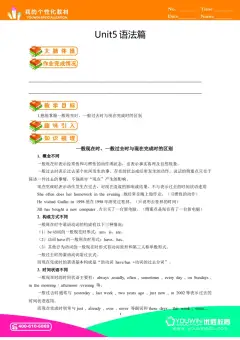
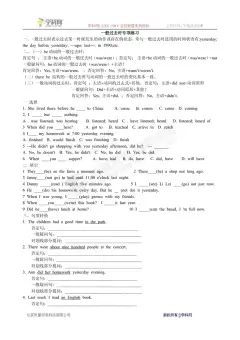
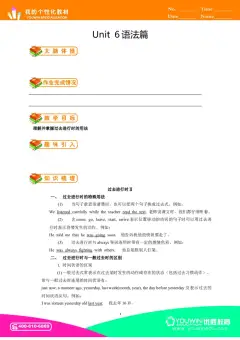
专项语法讲练——一般过去时
【概念引入】
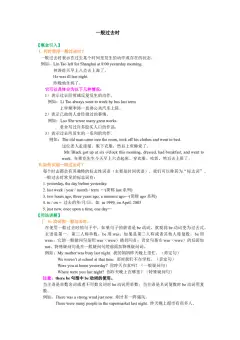
一般过去时是初中英语中非常重要的一个时态。表示过去某个时间发生的动作或存在的状态,有时
也表示过去经常或反复发生的动作。
例如: He left home at half past five yesterday.
他昨天五点离开家的。
    Li Ming always went to work by bike in the past.
    过去李明总是骑自行车去上班。
【语法讲解】
I、用法:
1. 表示在过去某个时间里发生的动作或存在的状态。例如:
Lin Tao left for Shanghai at 8:00 yesterday morning.
  林涛昨天早上八点去上海了。
  He was ill last night.
  昨晚他生病了。
2. 表示过去经常或反复发生的动作。例如:
  Li Tao always went to school by bus last term.
  上学期李涛一直乘公共汽车上学。
3. 表示已故的人曾经做过的事情。例如:
  Lao She wrote many great works.
  老舍写过许多脍炙人口的作品。
4. 表示过去所发生的一系列的动作。例如:
   The old man came into the room, took off his clothes and went to bed.
  这位老人走进屋,脱下衣服,然后上床睡觉了。
  Mr. Black got up at six o'clock this morning, dressed, had breakfast, and went to work.
  布莱克先生今天早上六点起床、穿衣服、吃饭,然后去上班了。
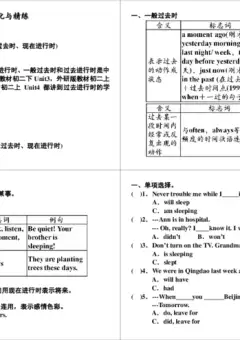
II、一般过去时如何识别?
  每个时态,都会有其独特的标志性词语(主要是时间状语)。可以称其为“标志词”。通常来讲,一般
过去时常见的标志词有:
1. yesterday, the day before yesterday.
2. last week / year / month / term…(简称last 系列)
3. two hours ago, three years ago, a moment ago…(简称ago 系列)
4. in / on + 过去的年/月/日,如 in 1999, in April, 2005
5. just now, once upon a time, one day…
III、分类:
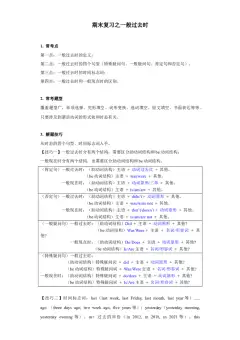
1. 含有be 动词的一般过去时:
 系动词be 的过去式有两种形式:was 和were。其中was 是am 和is 的过去式,were 是are 的过去式。
含有was 和were 的句子的转换方式与含有am / is /are 的句子相似,即:否定句在was 或were 后加not
(was not 可缩略成wasn’t,were not 可缩略成weren’t); 疑问句是把was 或were 提前放在句首。 例如:
He was in Grade 6 last year. (肯定句)
→He was not (wasn’t) in Grade 6 last year. (否定句)
→Was he in Grade 6 last year? (一般疑问句)
There were many trees here years ago. (肯定句)
→There were not (weren’t) many trees here years ago. (否定句)
→Were there many trees here years ago? (一般疑问句)
2. 含有实义动词的一般过去时:
(1)常见句式:主语 + v.-ed + 其它(宾语/状语/表语……)例如:
  He Lived in Guangzhou 5 years ago.
五年前他住在广州。
  I met one of my classmates in the street yesterday.
  昨天我在大街上遇见了一位同班同学。
(2) 动词过去时的变化可分为规则变化和不规则变化。规则变化如下:
  1) 一般情况下在动词原形后直接加-ed。例如:wanted;played。
2) 以不发音的字母e 结尾的动词,在单词末尾直接加字母d。例如:hoped;lived
3) 重读闭音节单词需双写最后一个辅音字母再加-ed。例如:shopped;stopped
4) 以辅音字母+y 结尾的动词变y 为i,再加-ed。例如:studied;worried
IV、一般过去时的否定和疑问句
1. 含有be 动词的句子
含有be 动词的句子在变成否定句时,在be 动词之后加not;在变成疑问句时,直接将be 动词提到主
语之前,并在句尾加上问号。如果是特殊疑问句,则在句首加上相应的特殊疑问词即可。例如:
 He was born in 1996. 他出生于1996 年。
→ He wasn’t born in 1996.
  They were at home at that moment. 当时他们在家里。
→ They were not at home at that moment.
— Was he born in 1996? 他是出生于1996 年吗?
— No, he wasn’t.  不,他不是。
— When was he born? 他是什么时候出生的?
— He was born in 1996.  他出生于1996 年。
2. 含有行为动词的句子
含有行为动词的句子在变成否定句或疑问句时,则需要助动词did 来帮助完成。在进行变化时,将助动
词放在行为动词的前边(否定句)或句首(疑问句),同时将该行为动词还原成原形。例如:
 Mr. Liu lived in Beijing twenty years ago. 二十年前,刘先生住在北京。
→ Mr. Liu didn’t live in Beijing twenty years ago. 二十年前,刘先生没有住在北京。
→ — Did Mr. Liu live in Beijing twenty years ago? 二十年前刘先生住在北京吗?
— No, he didn’t. / Yes, he did. 不是。/ 是的。
巧记:行为动词一般过去时用法歌诀:
动词一般过去时,表示过去发生事。句中谓语用过去时,过去时间作标记。否定句,很简单,主语后面
didn’t 添。疑问构成也有法,主语前把did 加。还有一点不能删,后面的动词要还原。