ARTICLE · 1411592
六年级上册英语Unit 4语法,把「打算」说清楚
六上 Unit 4 叫 Managing money well,合理理财。主题看着挺大人,语法上其实只解决一句话:怎么把「我打算怎么花、打算存多少」说清楚。
be going to 挑大梁,need 和 want 负责分家,How much 负责问金额。课本最后的 Project 就是让孩子写一份自己的 spending plan,这一单元的语法全落在那张表上。
一、语法主要内容
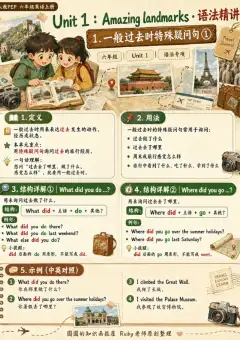
1. be going to + 动词原形:说计划
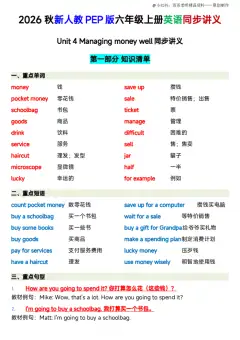
课本(Part A / B):I'm going to buy a schoolbag. / What else are you going to buy? / I'm going to save my pocket money.
结构:主语 + am / is / are + going to + 动词原形。
疑问句把 be 提前:Are you going to buy a microscope? — Yes, I am. / No, I'm not.
否定句在 be 后面加 not。
易错:He is going to buys ❌ I am going to buying ❌。to 后面那个动词永远原形,主语是谁都不改。
这个结构专管「已经想好、还没做」的事,跟 spending plan 天生一对。课本给的写作支架就是 First, I'm going to …,一句就能把计划开个头。
2. need 和 want:这一单元最值钱的一对区分
课本(Part C Project):I need … I want … First, I'm going to …
need 是生活、学习上必须要的:My schoolbag is old, so I need a new one. 旧书包坏了,得换。
want 是心里想要的:I want a new toy. 不买也过得去。
课本那张支出计划表专门留了 Need / Want 两栏,还配一句 Some things we need, some things we just want. 写作文时弄反,整篇的立意就歪了。
后面接名词如上;要接动作,用 need to / want to + 动词原形:I still need to save more. / I want to buy a microscope.
3. How much 问金额,money 不可数
课本(Part B Let's talk):How much pocket money do you have? — I have one hundred and forty-six yuan.
How much + 不可数名词;money 不可数,不说 a money、many money。回答金额按数位读,146 拆成 one hundred / and / forty-six yuan,分段读会顺很多。
4. 一组理财动词短语,介词别丢
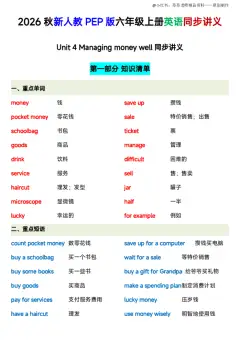
课本(Part A / B):She uses this money to buy goods, like books. / We use money to pay for services. / Chen Jie puts money there to save up for big things. / Maybe you can wait for a sale!
goods 和 services 也顺手分一下:books、food 是 goods,买得走;haircut 是 service,买不走。课本把这个区分放进购物的情境里,不是让你背定义。
5. 提建议的软说法:maybe / should
课本(Part C):Your plan is nice, but maybe you can … / We should use our money wisely.
想给别人改计划,先夸一句再提,比直接说 No 客气。写作里加个 maybe,语气立刻柔和下来。
插播:一份 spending plan 的语法骨架
This is my spending plan for the next month. I have 146 yuan. I need ... I want ... First, I'm going to buy ... because I need it. I'm going to save ... yuan. I also want to buy ..., but I can wait for a sale.
六句话,把 be going to、need / want、How much、save up、wait for a sale 全用上了。课本 Part C 就是照这个架子让孩子填的,先读顺再动笔,比硬凑句子轻松。

二、配套十道小题
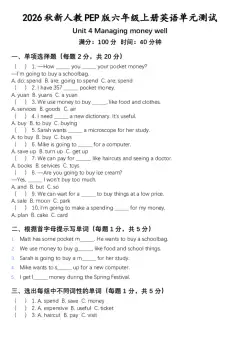
I ______ buy a new schoolbag next month. A. am going to B. am going C. go to —______ you going to buy a microscope? —Yes, I ______. A. Are / am B. Do / do C. Are / am not My schoolbag is old, so I ______ a new one. A. want B. need C. am going —______ pocket money do you have? —I have 146 yuan. A. How many B. How much C. What She uses this money ______ goods, like books. A. buy B. to buy C. buying 用括号内单词的适当形式填空:I'm going to ______ (save) twenty yuan this month. 用括号内单词的适当形式填空:He still needs to ______ (save) more money. 改错:We use money to pay services. 连词成句:am / I / going to / save up / for a bike / . 中译英:我打算攒钱买一辆新自行车。
三、答案与讲法
A。next month 说计划,be going to 才完整;B 少了 to,C 是一般现在时。 A。句里已有 going to,疑问只需把 Are 提前;Yes 后面配 I am。C 的 am not 跟 Yes 打架。 B。旧书包坏了属于「必须要」,用 need。这正是这一单元最爱考的辨析。 B。money 不可数,问金额用 How much。How many 后面得跟可数复数。 B。use … to do … 是固定搭配,to 后面动词原形。 save。be going to 后一律原形。 save。need to 后面也是原形,别写成 saves 或 saving。 We use money to pay for services. pay for 的 for 不能丢;也可以写 pay for services, like haircuts. I am going to save up for a bike. save up for 是一个整体,别拆开。 I'm going to save up for a new bike.(也可写 I want to save up for a new bike.)注意 bike 前那个 a,new 放在 a 后面。

更多学习资料