 夜雨聆风
夜雨聆风Section II Reading Comprehension
Part A
Directions: Read the following four texts. Answer the questions below each text by choosing A, B, C or D. Mark your answers on the ANSWER SHEET.
Text 3
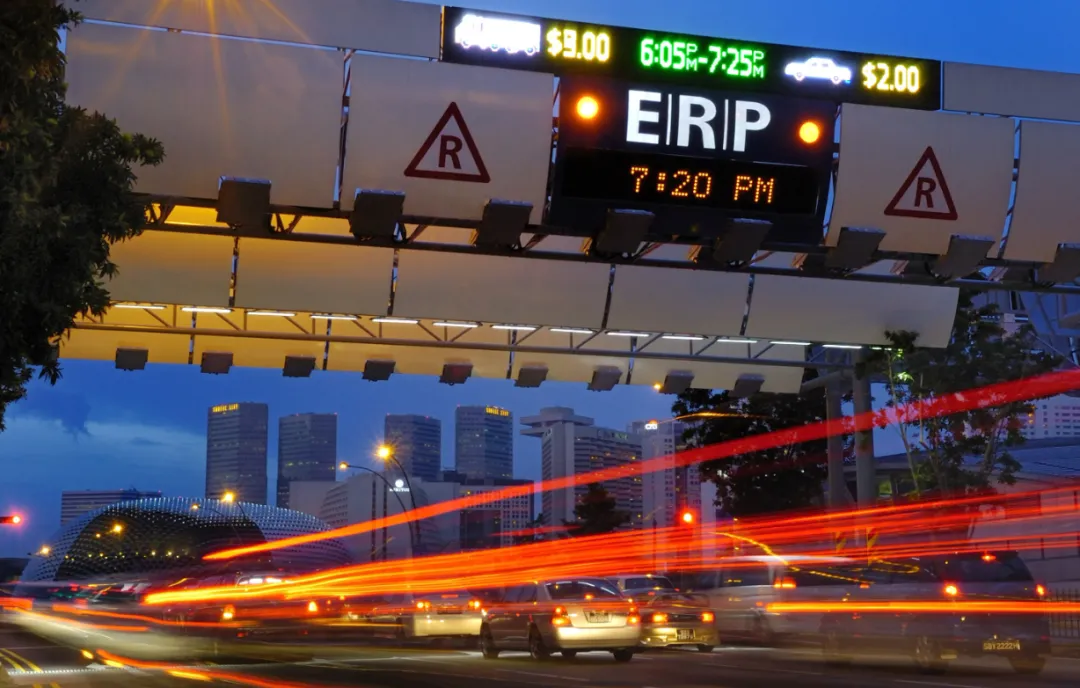
In 1975, Singapore became the first city in the world to charge drivers for entering a congested downtown zone, a policy that other major cities—London, Stockholm, Milan, and eventually New York—would later adapt in various forms. Two decades afterward, the city-state replaced its manual checkpoints with wireless transponders that communicated with roadside gantries, an innovation that also shaped American toll systems such as E-Z Pass. Now Singapore is preparing to switch its gantries off for good.
Their replacement, called ERP 2.0, dispenses with roadside hardware altogether. A compact unit installed in each vehicle, wired to a windshield antenna, exchanges signals continuously with satellites to determine a car's location and calculate whatever toll applies. Once the remaining gantries are decommissioned early next year, the entire process will unfold invisibly, without a single physical checkpoint. Government figures show that more than 95 percent of the roughly 660,000 private cars on the island are already fitted with the necessary equipment.
Officials frame the switch as a remedy for a stubborn flaw in gantry-based pricing: tolls have always depended on where a fixed checkpoint happens to sit, not on how far or how long a trip actually lasts. A motorist who drives a few dozen meters past a gantry pays exactly as much as one who continues for several kilometers. Satellite positioning would, in theory, let regulators price each journey according to its actual distance—an outcome transport economists have long argued is fairer than a flat fuel levy, which burdens owners of older, less fuel-efficient cars disproportionately, exempts electric vehicles entirely, and charges the same rate for a gridlocked morning commute as for an empty road at midnight.
Yet Singapore has been notably cautious about switching on precisely this capability. Researchers point to a simple explanation: charging by distance would require the state to track, continuously, where every car goes, for how long, and at what time of day—a degree of monitoring that unsettles even residents of a tightly governed society. Transport authorities have tried to soften that unease by deleting individual toll records within days of each trip, a policy they describe as both a privacy safeguard and a way to hold down data-storage costs.
Elsewhere, satellite-based tolling remains more experiment than norm. European countries have relied on it for years to charge heavy trucks, and a few American states have run pilot programs aimed at ordinary drivers. But officials who have overseen those trials are careful to note the limits of the comparison: an American state, unlike an island city-state with sweeping regulatory authority, cannot simply compel every resident to install a tracking device, and it must also contend with vehicles crossing in from jurisdictions with entirely different rules. Most experts therefore expect a slower, opt-in path in the United States, one in which satellite tolling competes for years alongside transponders and other existing systems, gaining ground only as drivers are given a clear incentive to switch.
Whether or not Singapore's approach spreads beyond its shores, ERP 2.0 illustrates a tension likely to intensify as more governments look to satellites to manage their roads: the very technology that promises fairer, more precise tolling also demands a level of public trust that not every population may be prepared to grant.
31. Why has Singapore not yet enabled distance-based pricing under ERP 2.0, according to Paragraph 4?[A] Insufficient satellite coverage across the island prevents accurate measurement of individual trip distances.[B] Automotive-industry lobbying has successfully stalled the rollout of usage-based pricing models.[C] Persistent public unease over comprehensive location tracking outweighs the system's technical readiness.[D] The financial burden of processing continuous location data exceeds the anticipated toll revenue.
32. What can be inferred about the future of satellite-based tolling in the United States?[A] Adoption is likely to proceed gradually alongside existing tolling methods rather than by government decree.[B] States plan to mandate satellite devices for all vehicles within the next several years.[C] Cross-border driving patterns make satellite tolling technically impossible to implement in the US.[D] American drivers have shown markedly less resistance to location tracking than their Singaporean counterparts.
33. Why is distance-based pricing considered fairer than fuel taxes?[A] It exclusively benefits owners of newer, fuel-efficient vehicles who already pay less in tax.[B] It eliminates the need for any government involvement in setting transportation policy.[C] It guarantees identical costs for all drivers regardless of when or how far they travel.[D] It accounts for variations in vehicle age, timing, and usage that a flat fuel levy overlooks.
34. How does the author appear to view the tension between precise, satellite-based tolling and privacy?[A] As an unavoidable trade-off that most governments will resolve in exactly the way Singapore has.[B] As a dilemma that will likely determine how widely such technology is ultimately embraced.[C] As a minor concern that is unlikely to influence future transportation policy decisions.[D] As a problem that has already been fully resolved through Singapore's data-deletion practices.
35. Which of the following best encapsulates the author's primary argument?[A] Satellite-based tolling is technologically superior but will inevitably fail without strict government mandates.[B] The transition from gantries to satellites is driven primarily by the need to cut infrastructure costs.[C] Singapore's ERP 2.0 demonstrates both the promise and the unresolved trust challenges of satellite-based tolling.[D] Distance-based road pricing has been almost universally rejected worldwide due to overwhelming privacy concerns.
附注:根据历年考研英语真题阅读题源外刊等,摘选最新文章,模拟仿真出题。
参考答案见以下。
Quick look: CADBC
31.【正确答案】C【解析】题型:因果细节题定位:第四段 "Researchers point to a simple explanation: charging by distance would require the state to track, continuously, where every car goes... a degree of monitoring that unsettles even residents of a tightly governed society."分析:第四段指出,尽管系统技术上早已具备按里程收费的能力("precisely this capability"),新加坡却迟迟未启用,原因在于全面持续追踪车辆位置所带来的隐私顾虑。选项C"公众对全面位置追踪持续存在的不安,超过了系统本身的技术准备程度"精准对应了这一"技术已就绪、顾虑未消除"的对比逻辑。干扰项:[A] 卫星覆盖不足导致无法准确测量行程距离——无中生有,原文未提及任何技术缺陷;[B] 汽车行业游说延缓了推行——无中生有,全文未涉及行业游说;[D] 处理位置数据的财务负担超过通行费收入——张冠李戴,原文提及删除记录是为控制存储成本,但并未说财务负担"超过收入"。
32.【正确答案】A【解析】题型:推理判断题定位:第五段 "Most experts therefore expect a slower, opt-in path in the United States, one in which satellite tolling competes for years alongside transponders and other existing systems..."分析:与新加坡"一刀切"式强制推行不同,专家预期美国将采取渐进、可选择加入的方式,与现有收费系统长期并存。选项A"其推广很可能是渐进式地与现有收费方式并存,而非通过政府法令强制推行"准确对应该推断。干扰项:[B] 各州计划强制安装——事实相反,原文明确指出"cannot simply compel";[C] 技术上完全无法实现——程度夸大,原文只说情况更复杂;[D] 美国司机抵触情绪明显更低——无中生有,原文未做此类比较。
33.【正确答案】D【解析】题型:因果细节题定位:第三段 "...fairer than a flat fuel levy, which burdens owners of older, less fuel-efficient cars disproportionately, exempts electric vehicles entirely, and charges the same rate for a gridlocked morning commute as for an empty road at midnight."分析:第三段列举燃油税的三重弊端——对老旧低能效车主负担过重、电动车主完全免税、且不区分高峰与平峰时段。按里程收费恰好弥补这些不足。选项D"它考虑到了车龄、时段、使用量等方面的差异,而这些恰恰是统一燃油税所忽视的"精确概括了这一点。干扰项:[A] 只让新车/省油车主受益——曲解原意,原文无"exclusively"这一限定;[B] 消除政府参与——无中生有;[C] 保证所有司机费用相同——与原文相悖,这恰是原文批评燃油税之处。
34.【正确答案】B【解析】题型:观点态度题定位:末段 "...ERP 2.0 illustrates a tension likely to intensify as more governments look to satellites to manage their roads: the very technology that promises fairer, more precise tolling also demands a level of public trust that not every population may be prepared to grant."分析:作者在末段点明,该技术所承诺的公平与精确,与其所要求的公众信任之间存在"会愈演愈烈的张力"(likely to intensify),暗示这一矛盾尚未解决,且将决定技术未来的接受范围。选项B"作为一种可能决定该技术最终被接受程度的两难困境"精准捕捉了这一着眼未来、未下定论的态度。干扰项:[A] 大多数政府将以与新加坡完全相同方式解决——过度引申,原文强调"not every population may be prepared"恰恰说明存在差异;[C] 次要问题——与作者态度相悖;[D] 已通过数据删除完全解决——与原文相悖,末段明确说张力"intensify"而非消解。
35.【正确答案】C【解析】题型:主旨大意题定位:全文逻辑结构及末段总结分析:文章从新加坡收费史切入(第一段),介绍ERP 2.0的运作方式及其在精准计费、公平性上的潜力(第二、三段),转向该能力引发的隐私顾虑及新加坡的克制态度(第四段),再扩展至国际视角(第五段),末段点明"promise"与"demand trust"并存的核心张力。选项C"新加坡的ERP 2.0系统展示了卫星收费技术的前景,也展示了其尚未解决的信任难题"完整涵盖了这一"技术优势+隐私隐忧"的双线结构。干扰项:[A] "inevitably fail"表述绝对,缺乏原文支持;[B] 以偏概全,原文将公平性/精准计费作为核心驱动,成本因素未被提及为主因;[D] 与事实相反,原文提及欧洲、美国均在尝试推行,并非"普遍拒绝"。
【词汇注释】
【长难句】Satellite positioning would, in theory, let regulators price each journey according to its actual distance—an outcome transport economists have long argued is fairer than a flat fuel levy, which burdens owners of older, less fuel-efficient cars disproportionately, exempts electric vehicles entirely, and charges the same rate for a gridlocked morning commute as for an empty road at midnight.
理论上,卫星定位将使监管者能够按照每次出行的实际距离收费——交通经济学家长期以来认为,这一结果比统一征收的燃油税更为公平,因为燃油税让老旧、油耗较高的汽车车主承受了过重的负担,让电动车车主完全免于缴费,并且无论是拥堵的早高峰通勤还是午夜的空旷道路,都征收相同的费用。
【参考译文】
1975年,新加坡成为全球首个对驶入市中心拥堵区域的驾驶员征收费用的城市,这一政策后来被伦敦、斯德哥尔摩、米兰以及最终的纽约等其他主要城市以各种形式效仿。二十年后,这个城邦国家用可与路边门架通信的无线应答器取代了人工检查站,这一创新也影响了美国E-Z Pass等收费系统的设计。如今,新加坡正准备永久关闭这些门架。
其替代系统名为“ERP 2.0”,完全摒弃了路边硬件设备。每辆车上安装的一个紧凑型设备通过前挡风玻璃天线,与卫星持续交换信号,从而确定车辆位置并计算相应的过路费。待明年年初剩余的收费门架全部退役后,整个过程将悄无声息地进行,不再设有任何实体检查点。政府数据显示,岛上约66万辆私家车中,已有超过95%安装了必要的设备。
官员们将此次转型视为对门架式收费体系中一个顽固缺陷的补救措施:过路费一直取决于固定收费点的位置,而非行程的实际距离或时长。一名司机若仅驶过门架几十米,其支付的费用与继续行驶数公里的司机完全相同。理论上,卫星定位技术将使监管机构能够根据实际行驶距离对每次行程进行计费——交通经济学家长期以来一直认为,这种做法比统一的燃油税更公平。燃油税不仅给老旧、燃油效率较低的汽车车主带来了不成比例的负担,还完全豁免了电动汽车,并且对早高峰拥堵时段的通勤与午夜空荡荡的道路收取相同的费率。
然而,新加坡在启用这一功能方面却表现得格外谨慎。研究人员给出了一个简单的解释:按里程收费要求政府持续追踪每辆车的行驶路线、时长及时间段——这种程度的监控甚至会让生活在高度管控社会中的居民感到不安。交通主管部门试图通过在每次行程后数日内删除个人通行费记录来缓解这种不安,他们将这一政策描述为既是对隐私的保护,也是控制数据存储成本的一种方式。
在其他地区,基于卫星的收费系统仍更多是试验而非常态。欧洲国家多年来一直依靠该技术对重型卡车收费,美国也有少数几个州针对普通驾驶员开展了试点项目。但负责监督这些试点的官员们谨慎地指出,这种比较存在局限性:与拥有广泛监管权的岛屿城邦不同,美国各州无法简单地强制要求每位居民安装追踪设备,而且还必须应对从规则截然不同的管辖区驶入的车辆。因此,大多数专家预计美国将采取更缓慢的“自愿参与”路径,即卫星收费系统将在未来数年内与应答器及其他现有系统并存竞争,只有当驾驶员获得明确的转换激励时,该系统才会逐渐占据上风。
无论新加坡的做法能否推广到其国境之外,ERP 2.0都凸显出一种随着越来越多的政府寻求利用卫星管理道路而可能加剧的矛盾:这项承诺实现更公平、更精准收费的技术,同时也要求公众给予一定程度的信任,而并非所有民众都准备好给予这种信任。
附注: