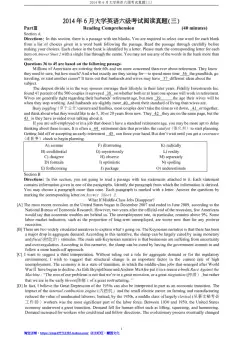
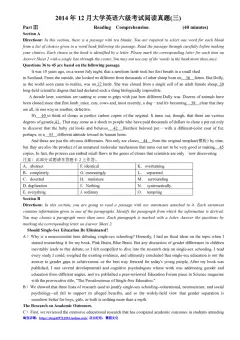
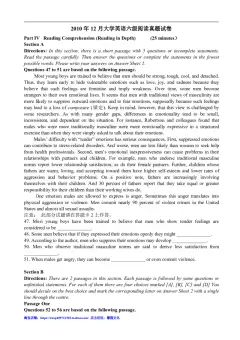
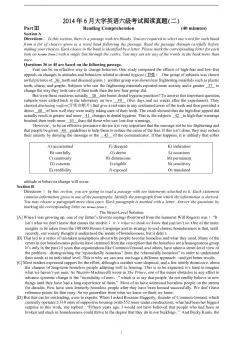
2013年12月六级考试真题(第二套)
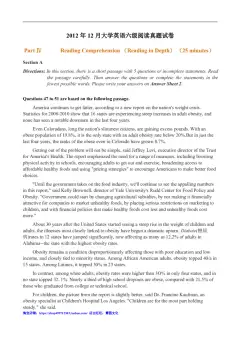
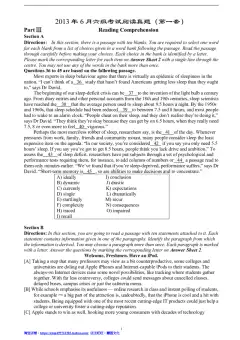
2013 年 12 月六级考试阅读真题(第二套)
Part Ⅲ Reading Comprehension
SectionA
Directions:Inthissection, thereisapassagewithtenblanks. Youarerequired toselect oneword
fareach blankfromalistof choices given inawordbankfollowing thepassage. Read thepassage
throughcarefully beforemaking your choices. Each choice in thebankis identified byaletter.
PleasemarkthecorrespondingletterforeachitemonAnswerSheet2withasinglelinethroughthe
centre. You maynot use anyof thewordsin thebank morethan once.
Questions36to 45are basedon thefollowing passage.
Cellphones provide instantaccess to people. They are creating amajor 36 inthesocial
experiences of both children and adolescents. In onerecent U.S. survey, about halfthe teens polled
saidthat their cell phone had 37 theircommunications with friends. Almostall said that theircell
phonewasthewaytheystayedintouchwithpeers,one-thirdhadusedthecellphonetohelpapeerin
need, and about 80%said thephone madethem feel safer. Teenagers in Australia, 38 ,said that
theirmobilephones provided numerous benefits and were an
39 part oftheirlives; somewere so 40 totheirphones that theresearchers considered itan
addiction. In Japan, too,researchers are concerned about cell phone addiction. Researchers in one
studyin Tokyo found that more thanhalfof juniorhigh school studentsused their phones to
exchange e-mails with schoolmates more than10times aday.
Cellphones 41 socialconnectionswithpeersacrosstimeandspace.Theyallowyoungpeople
toexchange moment-by-moment experiences in theirdaily lives withspecial partners and thus to
haveamore 42 senseofconnectionwithfriends.Cellphonesalsocan 43 socialtolerancebecause
theyreducechildren’sinteractionswithotherswhoaredifferentfromthem.Inadditiontoconnecting
peers, cell phones connect children andparents. Researchers studying teenagers in Israel concluded
that,in that 44 environment, mobilephones were regarded as “security objects” inparent-teen
relationships—important because they provided thepossibility of 45 and communication at all
times.
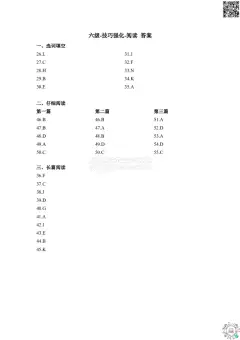
A)affiliated I) hazardous
B) attached J)improved
C)contact K) instantaneous
D)contend L) intrinsic
E)continuous M)relatively
F) diminish N)shift
G)endurance O) similarly
H)foster
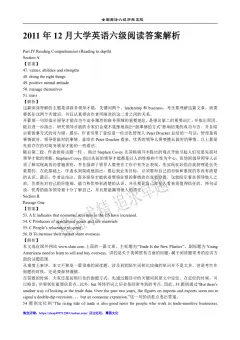
SectionB
Directions:In thissection, you aregoing toread apassagewithten statements attached to it.Each
statement contains informationgiven in one ofthe paragraphs.Identify theparagraph fromwhich
theinformationisderived.Youmaychooseaparagraphmorethanonce.Eachparagraphismarked
with aletter. Answer thequestions bymarking the corresponding letter onAnswer Sheet 2.
WasteNot, Want Not
Feeding the9Billion:The Tragedy ofWaste
[A]By 2075,theUnited Nations’ mid-range projection for global populationis about 9.5billion.
Thismeans thatthere couldbeanextrathreebillionmouthstofeedbytheendofthecentury, a
period in which substantial changes are anticipated inthe wealth, calorie intakeand dietary
preferences ofpeople in developing countries across theworld. Such aprojection presents
mankindwithwide-rangingsocial,economic,environmentalandpoliticalissuesthatneedtobe
addressed todayto ensure asustainablefuture for all. Onekey issueishow toproduce more
food ina world offinite resources.
[B] Today, we produce about fourbillion metrictones of food per year. Yet duetopoor practices in
harvesting, storage and transportation, as well as market and consumer wastage, it isestimated
that30-50%ofallfoodproducedneverreachesahumanstomach.Furthermore,thisfiguredoesnotreflectthefactthatlargeamountsofland,energy,fertilisersandwaterhavealsobeenlostin
theproduction offoodstuffs which simplyend upas waste. Thislevel ofwastage is atragedy
thatcannotcontinueifwearetosucceedinthechallengeofsustainablymeetingourfuturefood
demands.
WhereFoodWasteHappens
[C]In 2010,theInstitutionof Mechanical Engineers identified three principal emerging population
groups across theworld, based oncharacteristics associated withtheircurrent andprojected
stage ofeconomic development.
·Fullydeveloped, mature, post-industrial societies, such as thosein Europe, characterised by
stableordeclining populations which are increasing in age.
·Late-stage developing nations that are currently industrialisingrapidly, forexampleChina,
which willexperience declining rates of populationgrowth, coupled with increasing
affluence (富裕)and age profile.
·Newlydevelopingcountriesthatarebeginningtoindustrialise,primarilyinAfrica,withhigh
toveryhighpopulationgrowthrates,andcharacterisedbyapredominantlyyoungageprofile.
[D]Each groupover thecoming decades willneed to address different issues surrounding food
production, storage and transportation, as well as consumer expectations, ifweare tocontinue
tofeed all our people.
[E]In less-developed countries, such as thoseofsub-Saharan Africa andSouth-East Asia, wastage
tendsto occur primarily at thefarmer-producer endof thesupplychain. Inefficient harvesting,
inadequate local transportation and poorinfrastructure(基础设施)mean that produce is
frequentlyhandled inappropriately and stored underunsuitablefarm siteconditions.
[F] In mature, fullydeveloped countries such as the UK, more-efficient fanning practices and better
transport, storage and processing facilities ensure that alarger proportion of thefood produced
reaches markets and consumers. However, characteristics associated with modem consumer
culturemean produce is often wasted through retail andcustomer behaviour.
[G]Majorsupermarkets,inmeetingconsumerexpectations,willoftenrejectentirecropsofperfectly
ediblefruit and vegetables at thefarm because they donot meet exacting marketing standards
fortheirphysical characteristics, such as sizeand appearance.
[H]Oftheproducethatdoesappearinthesupermarket,commonlyusedsalespromotionsfrequently
encouragecustomers topurchase excessivequantities which, in thecase ofperishable
foodstuffs,inevitablygeneratewastageinthehome.Overallbetween30%and50%ofwhathas
been bought in developed countries is thrown away bythepurchaser.
Better Useof OurFiniteResources
[I] Wasting foodmeans losing not onlylife-supporting nutritionbut also precious resources,
includingland, water and energy. As aglobal society, therefore, tackling food wastewill help
contributetowards addressing anumber ofkey resourceissues.
[J]LandUsage: Over thelast five decades, improved farming techniques and technologies have
helped to significantly increasecrop yields along with a12%expansion of. farmed land use.
However,afurtherincreaseinfarmingareawithoutimpactingunfavourablyonwhatremainsof
theworlds natural ecosystems appears unlikely. Thechallenge isthat an increase in animal-
based production will require more land, andresources, as livestock(牲畜)farming demands
extensiveland use.
[K]WaterUsage:Overthepastcentury,humanuseoffreshwaterhasincreasedatmorethandouble
therateof population growth. Currently about 3.8trillionm3of water isused byhumans per
year. About 70% ofthis isconsumed bytheglobal agriculture sector, and thelevel ofusewill
continueto riseover thecoming decades.
[L]Betterirrigationcandramaticallyimprovecropyieldandabout40%oftheworldsfoodsupplyis
currentlyderived from irrigated land. However, water used inirrigation is often sourced
unsustainably. In processing foods after theagricultural stage, thereare largeadditional uses of
waterthat need to be tackled in aworld ofgrowing demand. This isparticularly crucial in the
caseof meat production, where beef uses about 50times morewater than vegetables. In the
future, more effectivewashing techniques, management procedures, and recycling and
淘宝店铺:https://shop499712503.taobao.com/ 店主旺旺:慧园文化2013年12月六级考试真题(第二套)
purification ofwater will beneeded to reduce wastage.
[M]Energy Usage: Energy is anessential resource across theentire food production cycle, with
estimates showingan average of7-10 calories of inputbeing required inthe productionof one
calorieof food. This varies dramatically depending oncrop, from three calories forplant crops
to35caloriesintheproductionofbeef.Sincemuchofthisenergycomesfromtheutilisationof
fossilfuels, wastage offood potentially contributes to unnecessary global warming as well as
inefficient resource utilisation.
[N]In themodern industrialised agricultural process —which developing nationsare moving
towards in order to increase future yields —energy usage inthe making and application of
fertilisers andpesticides represents thesingle biggest component. Wheat production takes 50%
ofitsenergy input forthese two itemsalone. Indeed, ona global scale, fertiliser manufacturing
consumes about 3-5% oftheworld’sannual natural gas supply. With production anticipated to
increase by25%between nowand 2030,sustainableenergysourcing willbecome an
increasingly majorissue. Energy to power machinery, both onthefarm and inthestorage and
processing facilities, adds to theenergy total, which currently represents about 3.1%of annual
global energyconsumption.
Recommendations
[O]Rising populationcombined with improved nutritionstandards andshifting dietary preferences
willexertpressure for increases in global food supply. Engineers, scientists and agriculturalists
havetheknowledge, tools and systems that willassist in achieving productivity increases.
However, pressure will grow onfiniteresources ofland, energyand water. Thepotential to
provide60-100%morefoodbysimplyeliminatinglosses,whilesimultaneouslyfreeingupland,
energyandwaterresourcesforotheruses,isanopportunitythatshouldnotbeignored.In order
tobegin tackling the challenge, theInstitution recommends that:
·TheUNFood and Agriculture Organisation work with theinternational engineering
communityto ensure governments ofdeveloped nationsput in place programmes that
transfer engineering knowledge, design know-how, and suitabletechnology to newly
developingcountries.Thiswillhelpimproveproducehandlingintheharvest,andimmediate
post-harvest stages offood production.
·Governmentsofrapidlydevelopingcountriesincorporatewasteminimisationthinkingintothe
transport infrastructureand storage facilities currently being planned, engineered and built.
·Governments indeveloped nations deviseand implement policy that changes consumer
expectations.These should discourage retailers from wasteful practices that lead to the
rejection of foodonthebasis ofcosmetic characteristics, and losses in thehomedueto
excessivepurchasing byconsumers.
46.Elimination ofwaste alonecan potentiallyprovide over sixtypercent morefoodfor thegrowing
world population.
47.Theproduction and application offertilisers and pesticides account forthelargest part ofenergy
useinthe modem industrialisedagricultural process.
48.Consumers indeveloped countries throwaway nearly halfof theirfood purchases because they
tend tobuyin excessivequantities.
49.Itisrecommendedthatengineeringknowledgeandsuitabletechnologyindevelopedcountriesbe
introduced to developing countries toimprove produce handling in theharvest.
50.Thepredicted global population growth means that ways have tobe found toproduce morefood
withfiniteresources.
51.Afurther expansionof farming areawill adversely impact ontheworlds natural ecosystems.
52.Perfectlyeatable fruit and vegetable crops often fail toreach supermarkets dueto theirsizeor
physical appearance.
53.Poorpractices inharvesting, storage andtransportation haveresulted in awaste ofmuch ofthe
food weproduce and thus awaste ofland and resources.
54.Foodwaste inless-developed countries happens mainly at theproducers’ end.
55.Beefconsumes farmore water to produce than vegetables.
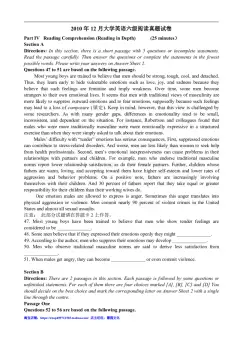
SectionCDirections:There are2passages in thissection. Each passage isfollowedby somequestions or
unfinishedstatements.ForeachofthemtherearefourchoicesmarkedA),B),C)andD).Youshould
decideonthe best choice andmarkthecorresponding letter onAnswer Sheet2with asingleline
throughthecentre.
Passage One
Questions56to 60are basedon thefollowing passage.
Callitthe“learningparadox”:themoreyoustruggleandevenfailwhileyou’retryingtolearn
newinformation, thebetter you’re likely to recalland apply that information later.
Thelearning paradox isat theheart of “productive failure,”aphenomenon identified by
researcherManu Kapur. Kapur points outthat while themodel adopted bymany teachers when
introducingstudentstonewknowledge—providinglotsofstructureandguidanceearlyon,untilthe
studentsshowthattheycandoitontheirown—makesintuitivesense,itmaynotbethebestwayto
promotelearning.Rather,it5sbettertoletthelearnerswrestle(较劲)withthematerialontheirown
forawhile, refraining from giving them anyassistance at thestart. In apaper published recently,
Kapurapplied theprincipleof productivefailure tomathematical problem solvingin three schools.
Withone group ofstudents, theteacher provided strong “scaffolding”—instructional support
—and feedback. With theteacher’s help, thesepupils were ableto find theanswers totheir set of
problems.Meanwhile,asecondgroupwasdirectedtosolvethesameproblemsbycollaboratingwith
oneanother, withoutany promptsfrom theirinstructor. These students weren’t able tocomplete the
problemscorrectly. Butinthecourseoftryingtodoso,theygeneratedalotofideasaboutthenature
oftheproblems andabout what potential solutionswould look like. Andwhen the two groups were
tested onwhat they’dlearned, thesecond group “significantly outperformed” thefirst.
Theapparent struggles ofthe floundering(挣扎的)group have what Kapur calls a“hidden
efficacy”:they lead peopleto understand thedeep structure of problems, not simplytheircorrect
solutions.When these students encounter anew problem ofthe sametype ona test, they’reable to
transfertheknowledge they’re gathered moreeffectively than thosewho were thepassive recipients
ofsomeoneelse’s expertise.
In thereal world, problems rarely come neatly packaged, sobeing able todiscern theirdeep
structureis key. But, Kapur notes, noneofus liketofail, nomatter howoften Silicon Valley
entrepreneurs praisethebeneficialeffectsofan ideathatfailsorastart-up companythatcrashes and
bums.So weneed to “design for productive failure” bybuildingit intothe learning process. Kapur
hasidentifiedthreeconditionsthatpromotethiskindofbeneficialstruggle.First,chooseproblemsto
workonthat“challengebutdonotfrustrate.”Second, providelearners with opportunitiestoexplain
and elaborateonwhat they’re doing. Third, give learners thechance to compare and contrast good
and bad solutionsto theproblems. And tothose studentswho protest thistough-love teaching style:
you’llthank me later.
56.Whydoes theauthor call thelearning process aparadox?
A)Pains donot necessarily lead to gains.
B) Whatis learned is rarely applicable inlife.
C)Failure moreoften thannotbreeds success.
D)Themore is taught, theless islearnt.
57.Whatdoes Kapur disapprove ofin teaching?
A)Asking students to findand solveproblems ontheirown.
B) Developing students’ability toapply what they learn.
C)Givingstudents detailed guidance and instruction.
D)Allowing studentsa free hand in problem solving.
58.Whatdopeople tend to thinkofproviding strong “scaffolding”in teaching?
A)It will maketeaching easier.
B) It is a sensibleway of teaching.
C)It can motivateaverage students.
D)It will enhance students’confidence.
59.Whatkind ofproblem should begiven tostudents to solveaccording to Kapur?
A)It should beable toencourage collaborativelearning.
淘宝店铺:https://shop499712503.taobao.com/ 店主旺旺:慧园文化2013年12月六级考试真题(第二套)
B) It should be easy enough so as not tofrustrate students.
C)It should be solvablebyaverage studentswith ease.
D)It should bedifficult enough butstillwithin theirreach.
60.Whatcan beexpected of“this tough-love teaching style”(Lines 8-9, Para. 5)?
A)Students willbegrateful in thelong run.
B) Teachers will meet with alot ofresistance.
C)Parents willthink ittoo harsh ontheirkids.
D)It may not beable to yield thedesired results.
Passage Two
Questions61to 65are basedon thefollowing passage.
VernonBowman,a75-year-oldfarmerfromruralIndiana,didsomethingthatgothimsued.He
planted soybeans(大豆)sold as cattle feed. But Monsanto, theagricultural giant, insists ithas a
patentonthekindofgeneticallymodifiedseedsBowmanused—andthatthepatentcontinuestoall
oftheprogeny(后代)ofthoseseeds.
Havewe really gotten to thepointthat planting aseed can lead to a high-stakes SupremeCourt
patentlawsuit?Wehave,andthatcaseisBowmanvs.Monsanto,whichisbeingarguedonTuesday.
Monsanto’scritics haveattacked thecompanyforits“mercilesslegalbattlesagainst smallfarmers,”
and theyare hopingthiswill bethe case that putsit in itsplace. They are alsohopingthecourt’s
rulingwill rein in patent law, which is increasingly being usedto claim new lifeforms as private
property.
Monsanto and itssupporters, not surprisingly, see thecase very differently. They argue that
whenacompany likeMonsanto goes to great expenseto createa valuable newgenetically modified
seed, it mustbe abletoprotect its property interests. If farmers likeBowman are able to usethese
seeds without paying thedesignated fee, it will remove theincentives for companies likeMonsanto
toinnovate.
Monsantoaccused Bowman ofpatent infringement and wonan $84,456damageaward. Rather
thanpayuporworkoutasettlement,Bowmandecidedtoappeal—allthewaytotheSupremeCourt.
Hesaid “Monsanto should not beable, justbecause they’ve got billionsof dollars to spend onlegal
fees, to try to terrify farmers into obeying theiragreements bymassiveforce and threats.”
Thecentral issuein thecase iswhether patent rights to living things extend to theprogeny of
thosethings. Monsanto argues that itspatents extendto latergenerations. But Bowman’s supporters
arguethat Monsanto is trying to expandthe scopeof patents in ways that would enrich big
corporationsand hurt smallfarmers. They say that if Monsanto wins,the impact willextend far
beyondagriculture—lockinguppropertyrightsinanarrayofimportantareas.KnowledgeEcology
International contends that theSupremeCourt’sruling could have “profound effects” onother
biotech industries.
If thiswere aHollywood movie, thecourageous old Indianafarmer would beat the
profit-mindedcorporationbefore thecreditsrolled.But thisisareal-lifeargumentbefore aSupreme
Courtthat has a well-earned reputation for lookingout for theinterests of largecorporations. This
casegives thecourt an opportunityto rein inthe growing useofpatents toprotect genetically
engineered crops and other lifeforms — but thecourt may well useit to give thistrend apowerful
newendorsement.
61.Whydid Vernon Bowman get sued?
A)He used geneticallymodified seeds to feed his cattle.
B) Heplanted soybeans without paying forthepatent.
C)Hemade aprofit out ofMonsanto’s commercial secrets.
D)He obtained Monsanto’s patented seeds byillegal means.
62.Whatare Monsanto’s critics hoping theSupremeCourt willdo?
A)Allowsmall farmers to grow genetically modified soybeans.
B) Punish Monsanto forinfringing onsmall farmer’s interests.
C)Ruleagainst Monsanto’s excessiveextension ofits patent rights.
D)Abolish thepatent law concerning genetically engineered seeds.
63.Whatis theargument ofMonsanto and its supporters?A)Patent rights shouldbe protected toencourage innovation.
B) Bowman cannot plant theseeds withoutMonsanto’sconsent.
C)Monsanto has theright to recoverthecosts of itspatented seeds.
D)Patent lawongenetically modified seeds should not be challenged.
64.Whatis thekey issuein theBowman vs. Monsanto case?
A)Whetherpatent for seeds isharmful to agricultural production.
B) Whetherthebiotech industry should takepriority over agriculture.
C)Whethermeasures should beintroduced toprotect small farmers.
D)Whetherpatent for livingthings applies to theirgenerations.
65.Whatdowe learn from thelast paragraph?
A)Hollywood movies usually havean unexpected, dramatic impact onreal-life arguments.
B) TheSupremeCourt will try to change itsreputation for supporting large corporations.
C)TheSupremeCourt is likely topersuade theparties concerned to work outa settlement.
D)Theruling would be inBowman’s favor ifthecase were argued ina Hollywood movie.
淘宝店铺:https://shop499712503.taobao.com/ 店主旺旺:慧园文化