文档文本内容
动词时态一
    责编:王晓丽
    【真题再现】
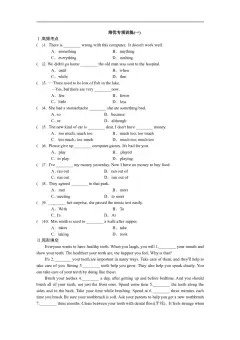
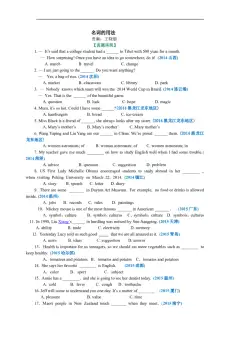
1. — What are you busy doing these days, Mr. Zhao?  (2014 山西)
  — I __________ my newborn baby. You can’t imagine how busy I am!
A. look after
B. looked after
C. am looking after
2. — Tina, breakfast is ready. Dad cooked it for us. (2014 黄冈)
  — It can’t have been Father. He __________ early on Sundays.
A. always gets up  B. often got up   C. had got up    D. never gets up
3.My husband always __________ me flowers every week before we got married, but now
he never ________. (2014 呼和浩特)
A.sends; doesB.sent; does C.was going to send; doD.sent; do
    4. Robots __________ more heavy work for us in the future. (2014 天津)
    A. will do
B. did              C. have done
D. were doing
    5.Look! Some visitors __________ for the bus over there. (2015 南宁)
A.are waiting    B.is waiting    C.waiting    D.wait
    6. — Mum, where is Dad? (2015 北京)
      — He _________ flowers in the garden now.
    A. planted       B. plants         C. will plant         D. is planting
    7.Do you think __________ a meeting tomorrow afternoon? (2015 宁夏回族自治区)
        A.is there       B.there is    C.there was     D.there is going to be
    8. Many city people ___________ their bikes to work every day. (2015 陕西)
        A. ride    B. will ride   C. rode     D. have ridden
    9. — Why didn’t you buy any bread? (2015 重庆)
      — Sorry, I __________.
      A. forget
B. forgot
C. remember
D. remembered
    10.Don’t disturb Allen now.He __________ for the Spelling Bee competition. (2015 广东)
    A.prepares   B.prepared    C.is preparing    D.will prepare
【答案与解析】
1. C。句意:——最近你在忙着做什么,赵先生?——我在照顾我的新生儿。你无法
想象我有多忙!由题干中的are you busy doing 可知应用现在进行时,故答案为C 项。
2. D。句意:――Tina,早饭好了,爸爸为我们做的。――不可能是爸爸。他在周日从来不
会早起。由on Sundays 可知泛指在周日,应该使用一般现在时态,又由语境可知应选D 项。
3. B。句意:在我们结婚前我丈夫总是每周送花给我,但现在再也不送了。由before we
got married 可知第一设空处应用一般过去时;由now 可知第二设空处用一般现在时,又因为
主语he 为第三人称单数,故选B 项。
    4. A。此题最后有明显的一般将来时标志“in the future”,故选A。
    5. A。由“Look!”可知,应用现在进行时;“some visitors”作主语,谓语动词应用复数形
式,故选A。
   6. D。句意:——妈妈,爸爸在哪儿?——他正在花园里种花。根据答语时间状语now 可
知应选用现在进行时,故选D。
    7. D。根据“tomorrow afternoon”可知,应用一般将来时;there be 结构的将来时为there
is going to be/there will be,故选D。句意为:你认为明天下午会开会吗?
8. A。句意:许多市民每天骑车去上班。根据时间状语every day 可知,描述的是通常的
动作,应该用一般现在时,故选A。
  9. B。句意:——为什么你不买一些面包呢?——对不起,我忘了。上句为一般过去时,
所以答语也要用一般过去时。根据题意可知答案为B 项。
   10. C。句意为:现在不要打扰Allen。他正在准备拼写比赛。根据语境可知,表示某个时刻
正在进行的动作应用进行时;根据“now”可知,应该是现在进行时。故选C。
【用法讲解】
考试要求:
英语的动词的时态共有十六种,但是中考常考的主要有八种,一般现在时、一般过去时、一般
将来时、现在进行时、现在完成时、过去进行时、过去将来时,过去完成时等时态的构成和用
法。本节先讲述一下一般现在时,一般过去时、一般将来时和现在进行时。
1. 一般现在时
一般现在时的构成:
一般现在时主要用动词原形表示,如果主语是第三人称单数,一般在动词原形后加-s 或-es。
例如:
I have breakfast at 7 every morning.   我每天早晨7 点吃早餐。
He goes swimming on Sundays.  每周日他都去游泳。
一般现在时的用法:
(1)表示经常发生的动作或者经常存在的状态。经常和表示时间的状语often,always,
usually,sometimes,every day 等连用。
例如:My sister usually goes to school on foot.
 我姐姐经常步行去上学。
We often come to school at six in the morning.
我们经常在早上六点到学校。
(2)表示某种习惯或者能力,也可以表示职业、特征等。
例如:My mother often gets up very early in the morning.
我的妈妈经常在早上起床很早。
This kind of car runs very fast.
这种小汽车跑得非常快。
(3)表示客观事实、客观规律或者客观真理。
例如:This kind of trees never grows in the desert.
这种树从来不在沙漠里生长。
Do you know that knowledge is power?
你知道知识就是力量吗?
(4)在时间、条件、让步等状语从句中,表示将来的动作。
例如:They’ll be so happy when I tell them.
我告诉他们时,他们会很高兴的。
If you aren’t here on time tomorrow, I’ll write to your parents.
如果你明天不准时到,我就给你父母亲写信。
注意:
(1)一般现在时的第三人称单数:在一般现在时中,如果句子的主语是第三人称单数形式,谓
语动词用其第三人称单数形式。
例如:My father often watches TV after dinner at home.
我的爸爸经常在晚饭后在家看电视。
(2)一般现在时的谓语如果是实义动词,其否定句和一般疑问句要用助动词do,如果主语是
第三人称单数时,要用does,doesn’t 来构成。
例如:My little brother doesn’t do his homework at school.
我的小弟弟不在学校做家庭作业。
2. 一般过去时
一般过去时的构成:
 一般过去时用动词的过去式表示。
   Last week Tom made a model plane with his friend Jack.
    上周汤姆和他的朋友杰克做了一个飞机模型。
   Tom was at home yesterday.  汤姆昨天在家。
一般过去时的用法:
(1)表示过去经常发生的动作或者过去经常存在的状态。常与表示过去的时间状语
yesterday,just now,a moment ago,last week/ year/ night,in 1985,in those days,when I
was at middle school 等连用。
例如:They went to college last year. 他们是去年上大学。
We had a good time in the park yesterday. 我们昨天在公园玩得很高兴。
(2)表示过去接连发生的一系列动作。
例如:We played football first,then went boating and fishing,,and at last had a picnic
there.
我们先踢足球,然后去划船、钓鱼。最后我们在那里野餐。
注意:
(1)表示过去经常或反复的动作,而现在却不这样做了,也可以用used to +动词原形来表示。
例如:I used to get up very late. 我过去总是起床很晚。
(2)如果主句的谓语动词是现在完成时,since 引导的时间状语从句用一般过去时。
例如:We have made a lot of friends since we came here.
自从我们来到这里以来已经交了很多的朋友。
(3)谈论某人的出生日期经常用一般过去时。
例如:—When were you born? 你是什么时候出生的?
—I was born in 1983. 我出生于1983 年。
3. 一般将来时
一般将来时的构成:
(1) will/shall+动词原形, 其中shall 常用于第一人称的疑问句。
(2)be going to+动词原形。
例如:What are you going to do next Sunday?  下周日你打算做什么?
I’ll come and help you tomorrow.  我明天来帮助你。
       Shall we go to the zoo? 我们去动物园好吗?
一般将来时的用法:
表示将来发生的动作或者存在的状态。常和表示将来的时间状语,如tomorrow,next week/
year/ month,this afternoon/ evening,tonight,in a few days,when he comes 等连用。
例如:He will go to Beijing and see his father next week.
他下个星期打算去北京看他的爸爸。
注意:
(1)will 用来表示有礼貌地询问对方是否愿意或表示客气的邀请或命令时。
    Will you please lend me your bike?
请你把你的自行车借我用一下好吗?
(2)shall 一般和第一人称的代词连用构成,shall I 或者shall we 的一般疑问句,用来询问对
方的意图和愿望,征求别人同意等。助动词shall 引起的一般疑问句征求别人同意时,回答不
能用Yes, you shall 或者No, you shall not,应该用Yes, please do.或者No, please don’t.
例如:—Shall I close the window? 我把窗户关上好吗?
—No, please don’t. 不,别关。
(3)be going to+动词原形,常用来表示已经决定或安排要做的事,也用于表示必然或很可能
发生的事。
例如:They are going to finish the work this evening.
他们打算今天晚上完成这项工作。
It’s going to snow. 要下雪了。
(4)对于动词go,come,start,move,sail,leave,arrive,stay,live, fly 等可用进行时态表示按
计划即将发生的动作(行进时动词)。
例如:I'm leaving for Beijing.  我要去北京。
4. 现在进行时
1. 现在进行时的构成:
主语+be+v-ing〔现在分词〕:
I am+v-ing;
You/They/We are+v-ing;
He/ She/It is+v-ing
2.现在进行时的用法:
(1)表示此时此刻正在发生的动作,经常与时间状语now,at present,at this time/ moment
等连用。
例如:The boys are playing football over there now.
这些男孩子们正在那边踢足球。
   My father is watching TV with my mother now.
我的爸爸正在和妈妈一起看电视。
(2)表示现阶段正在进行着的动作,但不一定在说话时正在进行。经常与now,these days 等
时间状语连用。
例如:I am learning French in Beijing these days.
这些天我正在北京学法语。
(3)一些瞬间动词的现在进行时可以表示一般将来时的意义。表示“即将……”,常伴有表
示将来的时间状语。常用的这类动词有come,leave,go,arrive,die 等。
例如:Hurry up! The bus is coming. 快点!公共汽车马上就要开了。
   He is coming back tomorrow. 他明天会回来。