ARTICLE · 1051312
初中英语 | 新版外研社英语八年级上册 Unit 4 Digital life!
2026
初中英语
外研版八年级上册
重点课文 1
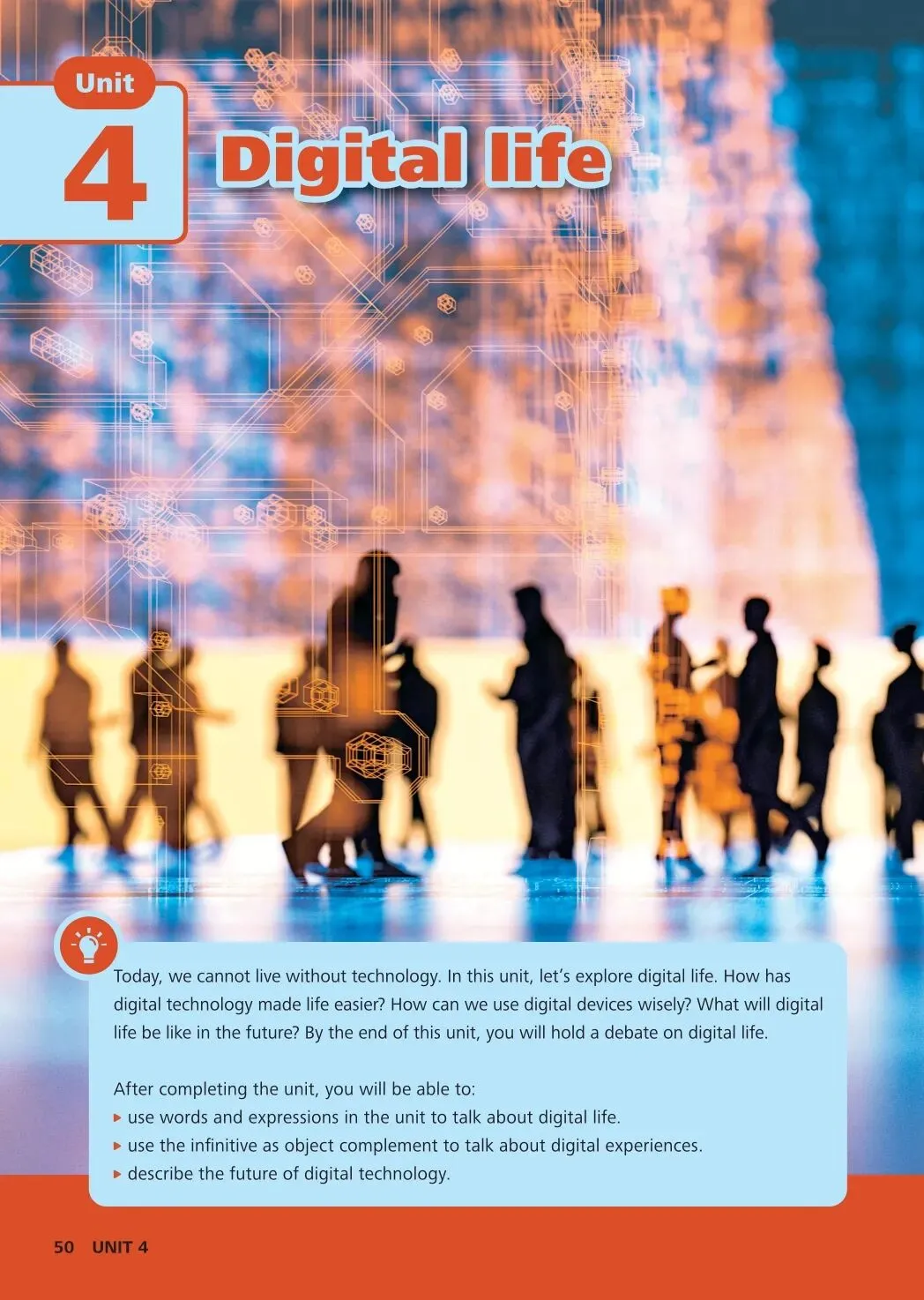
Today, we cannot live without technology. In this unit, let’s explore digital life. How has digital technology made life easier? How can we use digital devices wisely? What will digital life be like in the future? By the end of this unit, you will hold a debate on digital life.
如今,我们的生活离不开科技。在本单元,我们一起探索数字生活吧。数字技术是如何使生活变得更简单的呢?我们可以怎样明智地使用数码设备?未来的数字生活将是什么样的?在本单元的结尾,你将针对数字生活进行一场辩论。
单元主题:本单元以 Digital life(数字生活)为主题,围绕电子产品、网络与数字化工具,探讨数字科技融入日常生活的表现,介绍数码设备和网络在线学习、下载资料、社交分享等便利用途,同时客观分析数字生活利弊,引导我们健康、安全、规范使用网络与电子产品,树立正确的数字观念。
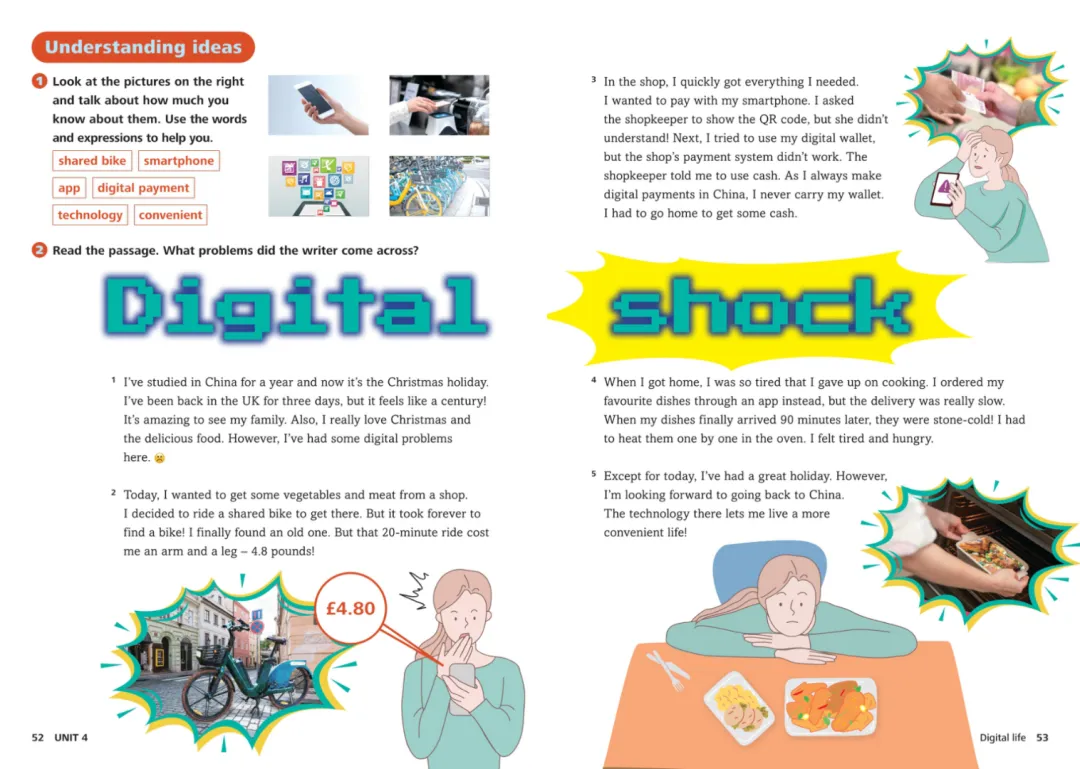
Digital shock
1 I’ve studied in China for a year and now it’s the Christmas holiday. I’ve been back in the UK for three days, but it feels like a century! It’s amazing to see my family. Also, I really love Christmas and the delicious food. However, I’ve had some digital problems here.
2 Today, I wanted to get some vegetables and meat from a shop. I decided to ride a shared bike to get there. But it took forever to find a bike! I finally found an old one. But that 20-minute ride cost me an arm and a leg – 4.8 pounds!
3 In the shop, I quickly got everything I needed. I wanted to pay with my smartphone. I asked the shopkeeper to show the QR code, but she didn’t understand! Next, I tried to use my digital wallet, but the shop’s payment system didn’t work. The shopkeeper told me to use cash. As I always make digital payments in China, I never carry my wallet. I had to go home to get some cash.
4 When I got home, I was so tired that I gave up on cooking. I ordered my favourite dishes through an app instead, but the delivery was really slow. When my dishes finally arrived 90 minutes later, they were stone-cold! I had to heat them one by one in the oven. I felt tired and hungry.
5 Except for today, I’ve had a great holiday. However, I’m looking forward to going back to China. The technology there lets me live a more convenient life!
数字冲击
1 我在中国留学一年,现在圣诞假期回到英国,回家三天却像过了一个世纪。见到家人很开心,我也十分期待圣诞美食,但这里的数字生活处处让我不习惯。
2 今天我想去超市买菜,打算骑共享单车过去,可找车找了超级久。好不容易找到一辆旧车,短短 20 分钟路程花了我 4.8 英镑,贵得离谱!
3 进超市买好食材,我想用手机扫码付款,让店员出示二维码,她完全不懂。我又尝试数字钱包,店里支付系统无法使用。店员让我付现金,可在中国我一直手机支付,从不带钱包,只能回家取钱。
4 到家我累得不想做饭,就在软件点外卖,配送慢得离谱,90 分钟才送到,饭菜已经凉透。我只能放进烤箱逐个加热,又累又饿。
5 除了今天这件糟心事,假期整体不错。但我无比期待回到中国,那里的数字科技让生活便利太多!
重要课文 2
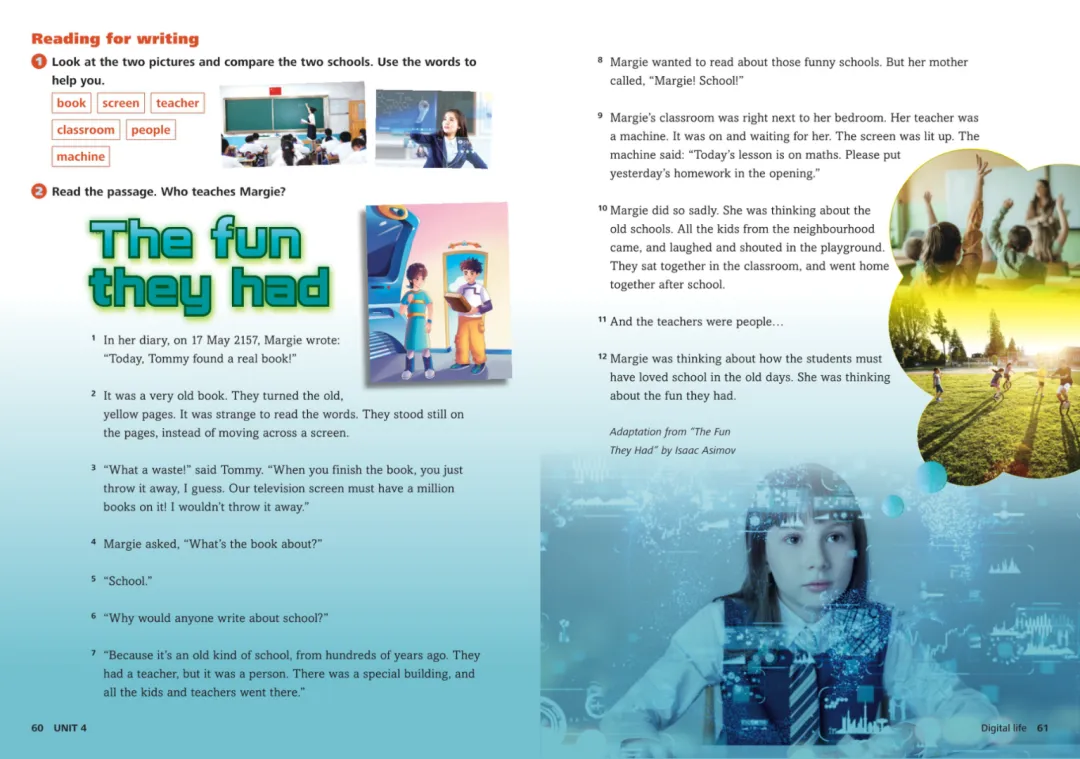
The fun they had ( Isaac Asimov )
1 In her diary, on 17 May 2157, Margie wrote: “Today, Tommy found a real book!”
2 It was a very old book. They turned the old, yellow pages. It was strange to read the words. They stood still on the pages, instead of moving across a screen.
3 “What a waste!” said Tommy. “When you finish the book, you just throw it away, I guess. Our television screen must have a million books on it! I wouldn’t throw it away.”
4 Margie asked, “What’s the book about?”
5 “School.”
6 “Why would anyone write about school?”
7 “Because it’s an old kind of school, from hundreds of years ago. They had a teacher, but it was a person. There was a special building, and all the kids and teachers went there.”
8 Margie wanted to read about those funny schools. But her mother called, “Margie! School!”
9 Margie’s classroom was right next to her bedroom. Her teacher was a machine. It was on and waiting for her. The screen was lit up. The machine said: “Today’s lesson is on maths. Please put yesterday’s homework in the opening.”
10 Margie did so sadly. She was thinking about the old schools. All the kids from the neighbourhood came, and laughed and shouted in the playground. They sat together in the classroom, and went home together after school.
11 And the teachers were people…
12 Margie was thinking about how the students must have loved school in the old days. She was thinking about the fun they had.
他们曾经拥有的快乐(艾萨克・阿西莫夫)
1 2157 年 5 月 17 日,玛吉在日记中写道:“今天汤米找到了一本真正的纸质书!”
2 书页泛黄老旧,文字静止印在纸上,不像屏幕上滚动的文字,读起来十分新奇。
3 “太浪费了!” 汤米说,“看完就要丢掉,我们电视屏幕能存上百万本书,永远不用扔。”
4 玛吉问书写的是什么。
5 “学校。”
6 “怎么会有人写学校?”
7 “这是几百年前老式学校。那时老师是真人,大家集中到一栋建筑里上课。”
8 玛吉很想读这本书,可妈妈喊她上课。
9 玛吉的教室就在卧室隔壁,老师是一台机器,机器已经启动,正等着她使用。屏幕亮起:“今日数学课,请把昨日作业放入投递口。”
10 玛吉闷闷照做,心里向往旧式校园:邻里孩子一同上学,在操场嬉笑打闹,同坐一间教室,放学结伴回家。
11 老师都是活生生的人……
12 玛吉暗自猜想,从前的孩子们一定无比热爱校园,拥有无数欢乐时光。
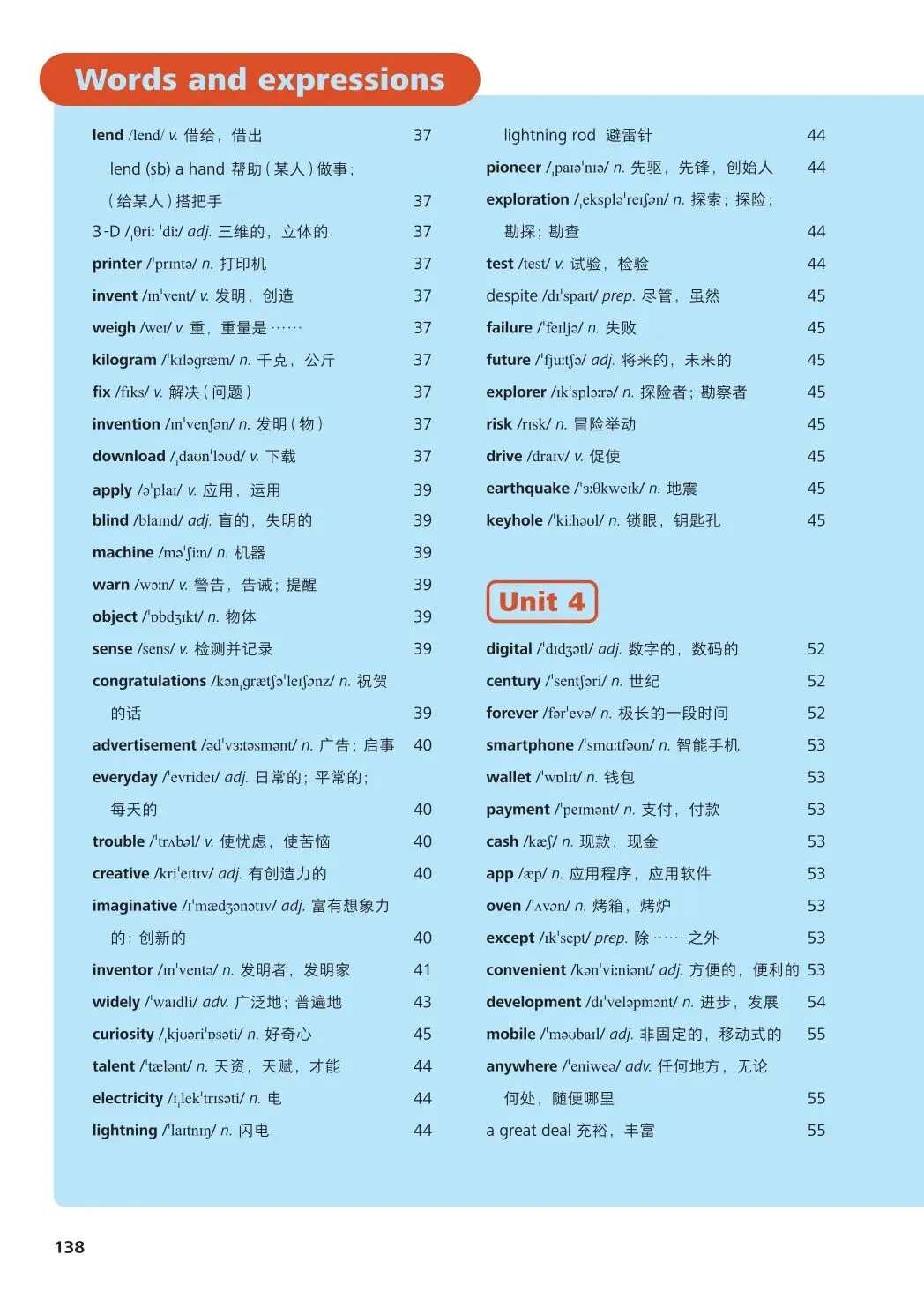
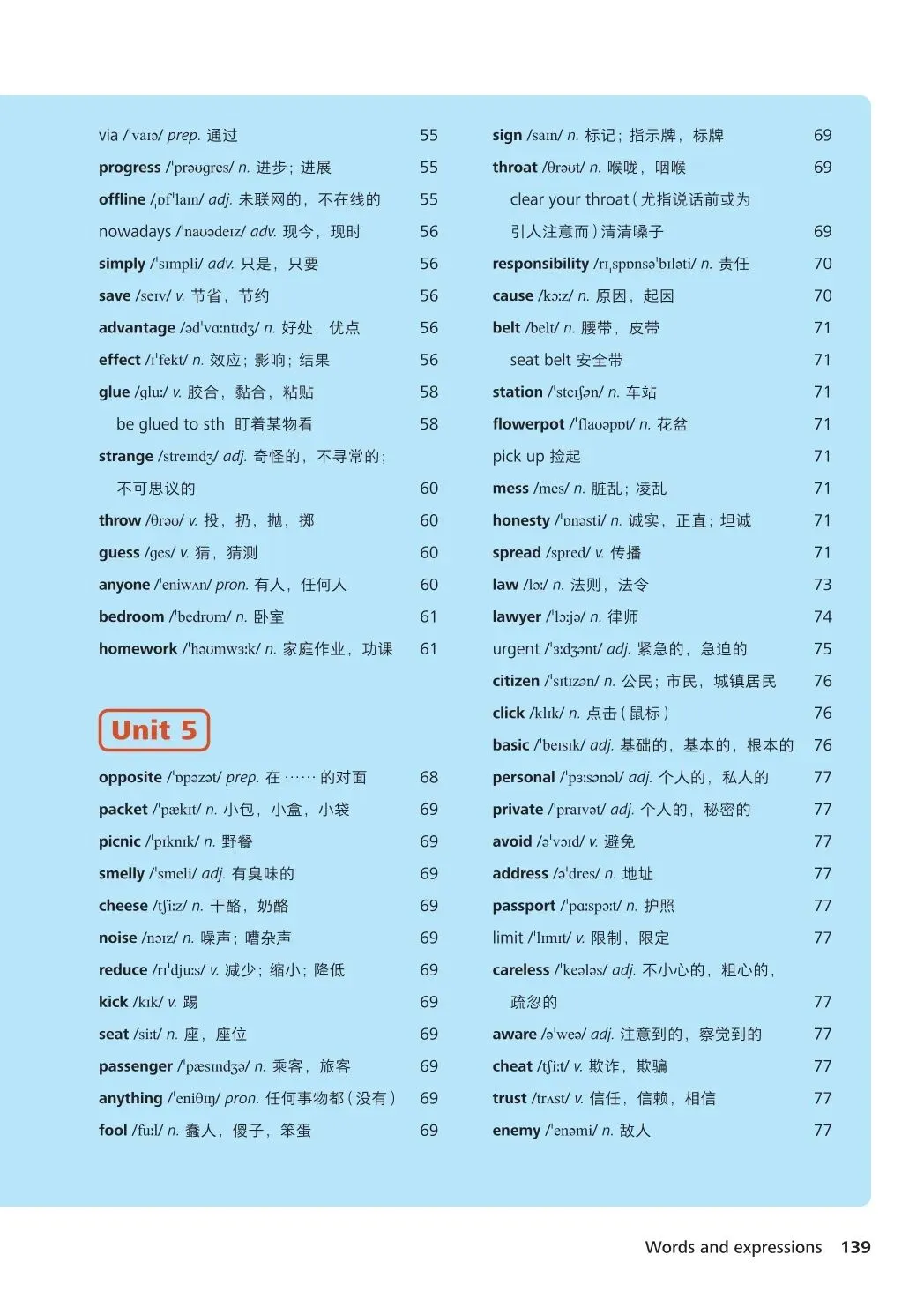
核心词汇+重点短语
核心词汇
digital adj. 数字的
①digital life 数字生活
②digit n. 数字
③反义词:analog 模拟的
century n. 世纪
①in the 21st century 在 21 世纪
②复数:centuries
smartphone n. 智能手机
①mobile smartphone 智能手机
②近义词:mobile phone 手机
wallet n. 钱包
①electronic wallet 电子钱包
②近义词:purse(女士钱包)
payment n. 支付
①mobile payment 移动支付
②pay v. 支付
cash n. 现金
①pay in cash 现金支付
②反义词:cashless adj. 无现金的
convenient adj. 便利的
①It's convenient to do sth. 做某事很方便
②convenience n. 便利
③近义词:easy
oven n. 烤箱
①electric oven 电烤箱
app n. 应用程序
①shopping app 购物软件
②完整形式:application
except prep. 除…… 之外
①except for 除了
②近义词:besides(补充:except 排除,besides 包含)
screen n. 屏幕
①phone screen 手机屏幕
still adj. 静止的
①keep still 保持静止
②still adv. 仍然
③近义词:quiet
throw v. 扔掉
①throw away 扔掉
②过去式:threw
③过去分词:thrown
bedroom n. 卧室
①digital bedroom 智能化卧室
offline adj. 离线的
①go offline 下线
②反义词:online adj. 在线的
advantage n. 优点
①have many advantages 有许多优点
②disadvantage n. 缺点(反义词)
③近义词:good point
effect n. 影响,效果
①have an effect on 对…… 有影响
②affect v. 影响
③近义词:influence
development n. 发展
①the development of digital technology 数字科技的发展
②develop v. 发展
③developing adj. 发展中的
④developed adj. 发达的
simply adv. 仅仅
①simply put 简单来说
②simple adj. 简单的
③近义词:only
progress n. 进步
①make progress 取得进步
②progress v. 进步
③近义词:improvement
单词变形
digit n. 数字
digital adj. 数字化的
pay v. 支付
payment n. 付款
convenient adj. 方便的
convenience n. 便利
develop v. 发展
development n. 发展
effect n. 影响
effective adj. 有效的
progress n. 进步
progressive adj. 进步的
advantage n. 优点
advantaged adj. 占优势的
动词短语
ride a shared bike 骑共享单车
take forever 花费极长时间
show QR code 出示二维码
make digital payments 电子支付
give up on cooking 放弃做饭
order dishes through app 软件点外卖
heat food in oven 烤箱加热食物
light up 点亮(屏幕)
throw away 扔掉
look forward to doing 期待做某事
名词短语
digital wallet 数字钱包
payment system 支付系统
stone-cold food 凉透的食物
television screen 电视屏幕
real book 纸质实体书
介词短语
cost sb an arm and a leg 价格极其昂贵
one by one 逐个
except for 除了
hundreds of years 数百年
in the neighbourhood 在社区里
be addicted to doing 沉迷做
think about doing 考虑做
instead of doing 代替做
without doing 没有做
重点句型
重点句型
1. It took forever to find a shared bike.
我花了超级久的时间才找到一辆共享单车。
注:it takes sb + 时间 to do
2. As I always use digital payment, I never carry cash.
因为我习惯电子支付,从不带现金。
注:as 引导的原因状语从句。
3. I was so tired that I gave up cooking.
我太累,干脆不做饭了。
4. The words stood still instead of moving on screen.
文字静止在纸上,而非在屏幕滚动。
5. The technology lets me live a convenient life.
科技让我生活更便利。
6. What will digital life be like in ten years?
十年后的数字生活会是什么样?
7. In order to protect privacy, don't share your ID.
为保护隐私,不要泄露身份证。
8. It's important to set screen time limits.
设定屏幕使用时长很重要。
9. Online shopping becomes easier and easier.
网购变得越来越方便。
10. Staring at screens too long is bad for eyes.
长时间盯着屏幕伤眼睛。
11. You should be polite online.
上网时你应当文明有礼。
12. You must log in with your password.
你必须输入密码登录。
13. You'd better not post personal photos.
你最好不要发布个人照片。
14. The information is stored in the cloud.
信息储存在云端。
15. The QR code was invented years ago.
二维码是多年前发明的。
16. I need somewhere to charge my phone.
我需要一个给手机充电的地方。
17. Is there anywhere to download the video?
有什么地方可以下载这个视频吗?
18. Information spreads everywhere on the Internet.
信息在网上四处传播。
19. Nowhere is safe if you share your password.
如果你泄露密码,没有一处是安全的。
20. However, every coin has two sides.
然而事物都有两面性。
语法1-不定式作宾语补足语
1. 定义:动词不定式(to do 或 do)作宾语补足语时,主要用于补充说明宾语的动作、状态或特征,使句子语义完整。
2. 结构:不定式与宾语形成逻辑上的主谓关系,即宾语是不定式动作的执行者。
① 肯定形式:主语 + 谓语动词 + 宾语 + to do/do(有些情况to可省略)
② 否定形式:主语 + 谓语动词 + 宾语 + not to do(直接在to前加not)
3. 带 to 的不定式(to do)作宾语补足语
① 表“意愿、命令、要求、请求”类动词:ask(要求)、tell(告诉)、want(想要)、wish(希望)、order(命令)、require(要求)、teach(教)、invite(邀请)、encourage(鼓励)等。
例句:
The teacher asks us to finish the homework.
老师要求我们完成作业。
③表“认知、判断、意见”类动词:believe(相信)、consider(认为)、think(认为)、find(发现)、suppose(料想)等,常为 to be + 名词/形容词,to be 有时可省略。
例句:④ 表“情感、心理”类动词:like(喜欢)、hate(讨厌)、prefer(偏爱)、expect(期望)等。
例句:⑤ 表“使、让”类动词(get):注意:get 后必须带 to,与 let/make 不同。
例句:⑥ 表“成语动词”类:call on(号召)、arrange for(安排)等。
例句:4. 不带 to 的不定式(do)作宾语补足语
① 感官动词类(一感二听五看):feel(感觉)、hear(听见)、listen to(听)、see(看见)、watch(观看)、notice(注意到)、observe(观察)等,强调感知到宾语动作的“全过程”或“一次性动作”。
例句:
I saw him cross the street.
我看见他过马路了。
② 使役动词类(三使):let(让)、make(使)、have(使、让),强调“让/使/迫使”宾语做某事,后接不带to的不定式,但被动语态需恢复to。
例句:
She made me cry.(主动语态无to)
她让我哭了。
I was made to apologize.(被动语态加to)
我被迫道歉。
③ 半帮助类(help 帮助)
例句:
I helped my grandma (to) carry the box.
我帮奶奶搬箱子。
语法2-as引导的各类从句(扩展)
1. as 引导原因状语从句:as 引导原因,语气比 because 弱,侧重显而易见、双方都知道的理由,常放句首,表 “因为、由于”。
①As + 从句,主句
As I have a phone, I seldom take cash.
因为我有手机,我很少带现金。
②主句 + as + 从句
I don’t play games as I have much homework.
我不玩游戏,因为我作业很多。
2. as 引导时间状语从句:有两层含义,表示 “当…… 时;随着”。
①当…… 的时候(= when,强调同步发生)
As she was reading, her mum came in.
她看书的时候,妈妈进来了。
②随着(伴随变化)
As you grow older, you will know more.
随着你长大,你会懂得更多。
3. as 引导同级比较状语从句(as…as…)
①肯定:A+动词+as+原级 (adj./adv.) +as+B,表示“和…… 一样”
Online shopping is as convenient as going to shops.
网购和实体店购物一样方便。
②否定:A+动词+not as/so+原级+as+B,表示“不如......”
This app is not so useful as that one.
这个软件不如那个好用。
备注:中间必须用形容词 / 副词原级,不能用比较级、最高级。
4. as 引导方式状语从句:表示“按照…… 的方式”;“像…… 那样”;“如同”。
①Do as I told you.
照我说的做。
②You should behave online as you do in real life.
你上网举止要和现实中一样。
5. 固定复合连词 as 引导从句
①as soon as 一…… 就……(时间状语从句,主句一般将来时/从句一般现在时)
I will call you as soon as I get home.
我一到家就给你打电话。
②as long as 只要(条件状语从句)
You can surf the Internet as long as you protect your privacy.
只要保护隐私,你就可以上网。
③as if /as though 好像(方式状语从句)
He talks as if he knew everything about phones.
他说得好像他精通所有手机一样。
语法3-不定副词用法
1. somewhere:在某处,到某处(肯定句)
①I want to go somewhere interesting this weekend.
这周末我想去个好玩的地方。
②She keeps her phone somewhere in the room.
她把手机放在房间某个地方。
2. anywhere:
① We can see screens everywhere in daily life.
日常生活中我们随处可见电子屏幕。
② People carry mobile phones everywhere.
人们走到哪都带着手机。
4. nowhere 无处,哪里都不(自带否定,句子不用 not)
① There is nowhere to hide your personal information online.
网上没有地方能隐藏你的个人信息。
② I looked for the app, but it was nowhere.
我找那款软件,可到处都找不到。
2. 统一规则
①这四个副词的前面不加介词 in /to/at
❌ go to somewhere
✅ go somewhere
②修饰词后置:形容词 / 不定式放后面
somewhere quiet 安静的地方
somewhere to relax 可以放松的地方
学习主线
1. 词汇层面:与数字生活相关的词汇短语
数码设备 & 网络类:digital (adj. 数字的), screen (n. 屏幕), download (v. 下载), upload (v. 上传), online (adj. 线上的), website (n. 网站), keyboard (n. 键盘), mouse (n. 鼠标), printer (n. 打印机)
线上行为类:post online (网上发布), search for information (查找资料), chat online (线上聊天), do online courses (上网课), share works (分享作品)
网络利弊 & 安全类:advantage (n. 优点), disadvantage (n. 缺点), risk (n. 风险), safety (n. 安全), dangerous (adj. 危险的), control (v. 控制), waste (v. 浪费)
短语:for free (免费), one after another (接连地), be able to (能够), look through (浏览), blow away (使震撼), take risks (冒险), in return (作为回报)
post online (发布到网上), download designs (下载资料), search websites (浏览网站)
2. 语法:本单元核心语法是动词不定式作宾语补足语,主要用于补充说明宾语的动作、状态或特征,使句子语义完整。
3. 写作输出:如今我们身处数字化时代。网络与数码设备为我们的学习和日常生活带来了诸多便利,但网络中也潜藏着诸多风险。请以“My digital life” 和“ AI Changes Our Life”为主题写英语短文。词数不少于 80 词,合理表达个人观点。
英文范文
例文1:
My digital life
Now we are living in a fast-developing digital age. My digital life has become an indispensable part of my daily study and life. Digital technology greatly changes our living ways and brings us many surprises.
I have a smartphone and I use various useful apps every day. I often search for learning materials online to improve my study. I also take online courses and share my creative works on the Internet in my spare time. These digital tools make my study more efficient and my life more convenient and colorful.
However, every coin has two sides. Staring at electronic screens for a long time is harmful to my eyesight and may influence my study. To avoid these problems, I decide to use digital products wisely and strictly control my online time. I will let digital technology serve me better.
翻译:
我的数字生活
如今我们生活在飞速发展的数字时代,数字生活已然成为我日常学习和生活中不可或缺的一部分,数字科技极大地改变了我们的生活方式,为我们带来了诸多惊喜。
我拥有一部智能手机,每天都会使用各类实用的应用程序。我经常上网查阅学习资料来提升学业,课余时间还会参与网课学习,在网上分享自己的创意作品。这些数字化工具让我的学习更高效,生活也变得便捷多彩。
但凡事皆有利弊,长时间盯着电子屏幕会损害视力,还可能影响学习。为规避这些问题,我会理智使用数码产品,严格控制上网时长,让数字科技更好地为我所用。
例文2:
AI Changes Our Life
Nowadays, artificial intelligence is changing the world quickly and becoming an important part of our daily life.
AI brings us plenty of advantages. It makes our life more convenient and efficient. We can use AI to search for useful information, finish study tasks and solve different problems. It also helps people work better and saves lots of time. With the development of AI, our society is making great progress.
However, every coin has two sides. If people depend on AI too much, they may become lazy and lose the ability to think independently.
In my opinion, we should make good use of AI. It is a good helper if we use it wisely. We should let AI serve us instead of controlling us.
翻译:
人工智能改变我们的生活
如今,人工智能正在快速改变世界,成为我们日常生活的重要组成部分。
人工智能为我们带来了许多优势。它让我们的生活更加便捷高效。我们可以利用人工智能查阅资料、完成学习任务、解决各类难题。它也帮助人们更好地工作,节省大量时间。随着人工智能的发展,社会取得了巨大进步。
但凡事有利有弊。如果人们过度依赖人工智能,就会变得懒惰,失去独立思考的能力。
在我看来,我们应当好好利用人工智能。只要理性使用,它就是我们的好帮手。我们要让人工智能为我们服务,而不是被它支配。
往期回顾
单词音频
10、小学英语 | 新版外研社英语五年级上册单词跟读音频合集
电子课本
英语合集
注:文字原创,图片来源于网络。
与您分享,与君共勉!