ARTICLE · 1112739
议论文说明文作文如何体现读者意识?——以杭二中高三开学考和China daily文章为例
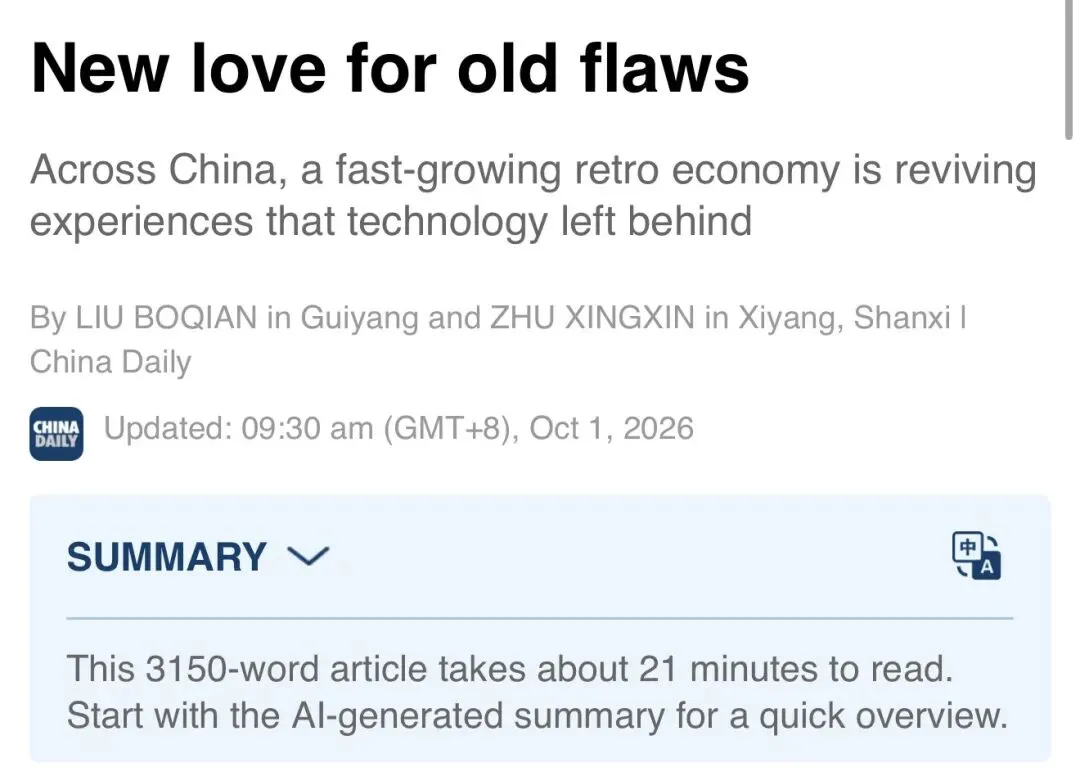
一 作者先给一个具体可见的场景:
- young shoppers
- old CCD cameras
- photographed one another
- compared the results 先建立共同的感知基础。
crowded = popularity 很生动的小词photographed = participationcompared = evaluation(学生如果能get到这一步就相当满意了)
也就是: Young people are attracted → they try the old technology → they judge its distinctive aesthetic effect.
完整的动作链就构成了。
二 补齐读者理解所需要的背景
原文如下:Most of the cameras on the counter have been out of production for years. CCD, short for charge-coupled device, was once the dominant sensor technology in consumer digital cameras, but around 2010 CMOS (complementary metal-oxide semiconductor) gradually took over the market, and CCD disappeared from mainstream shelves. Now, the old cameras are back in demand, with prices rising with them.
这一步看似很普通,实则另有玄机
作者知道普通读者未必知道:为什么CCD算“旧技术”?所以先补技术背景。而且也为后文的反常现象做出铺垫。只有先知道它被淘汰,才会觉得它重新流行很奇怪。
三 打破读者的默认理解
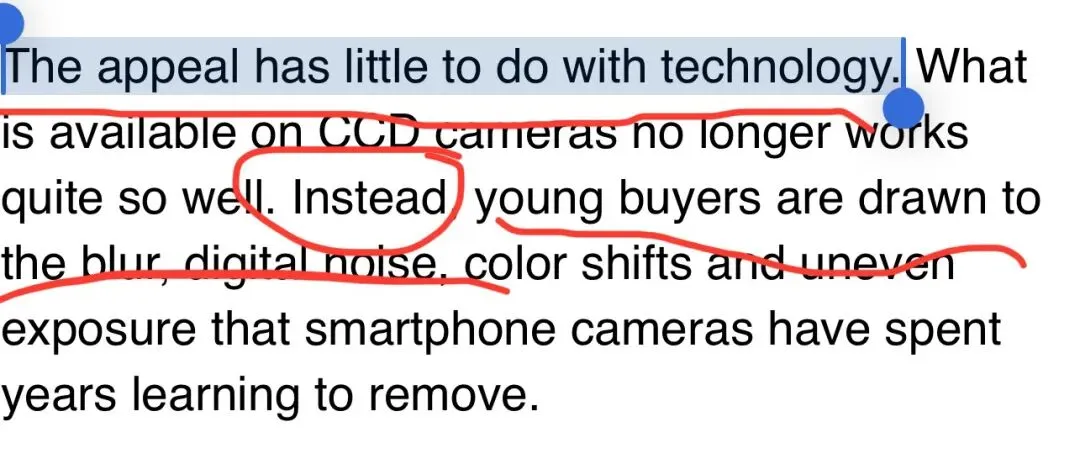
读者原本可能会想:旧相机重新流行,是不是因为它有什么独特技术优势?作者马上否定:No. 更反常的是:现代技术努力消除的缺陷,反而成了年轻人喜欢的东西。
你看你看卖点来了吧☺️
好的文章需要一个:“事情没这么简单”的时刻。
常用结构:
Yet… But…
What seems… may actually…
The real reason has little to do with…
插一句:原文的时态大家可以观察一下,时态就构成了paradox 一般现在时(are drawn)到现在完成时态(have spent years learning to do)从过去积累到现在的技术进步。以此来说明: 手机多年努力消除的“缺陷”,现在反而吸引年轻人。
四 从一个案例扩大到一个趋势
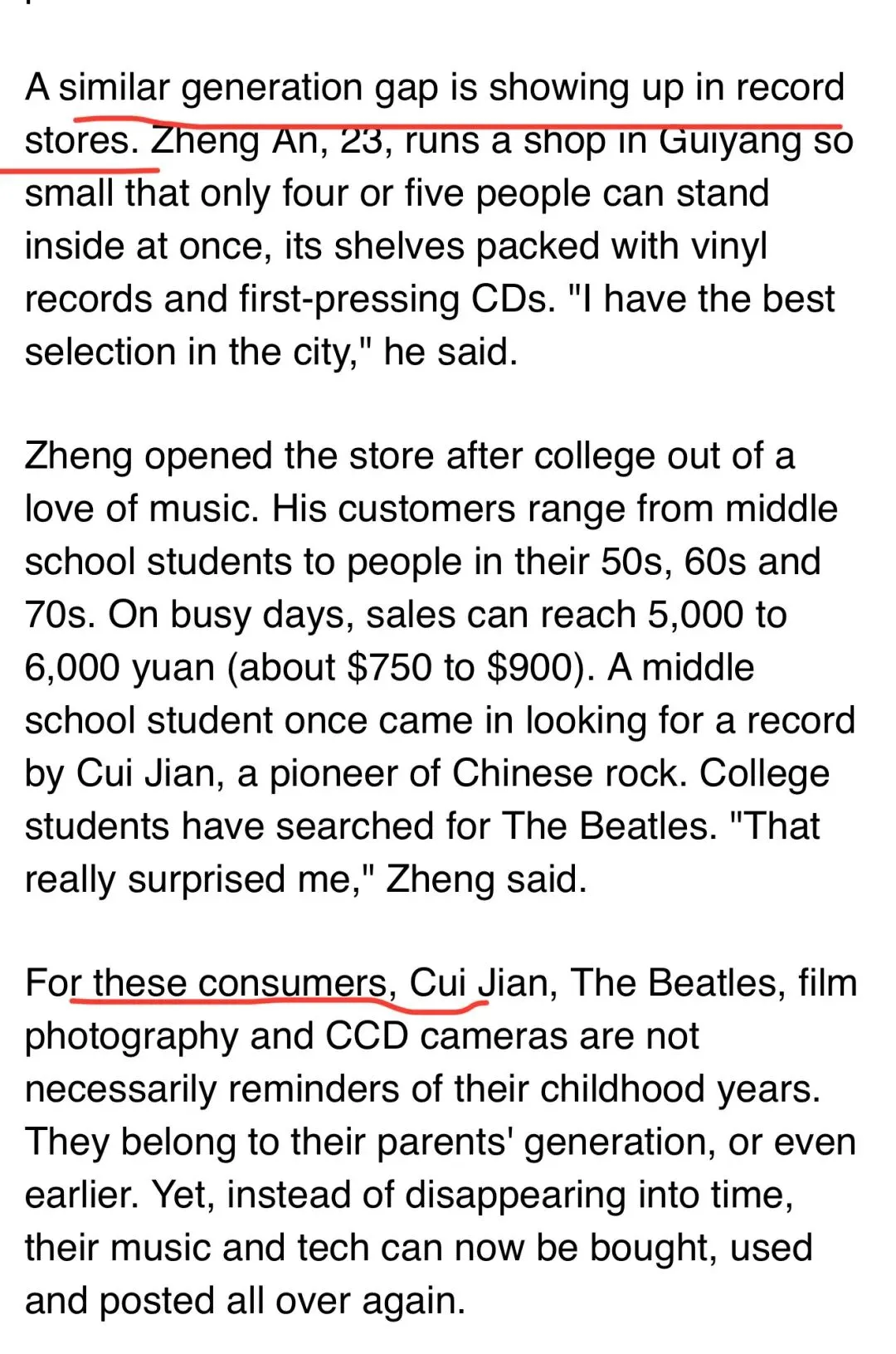
作者引入:
- vinyl records
- CDs
- The Beatles
- Cui Jian
这两段话又制造新的认知问题:
这些年轻人根本没有经历过那个时代,为什么还会“怀旧”?
所以这一段既是扩大案例,也是第二次引发读者思考?
五 阻止读者形成过于简单的判断
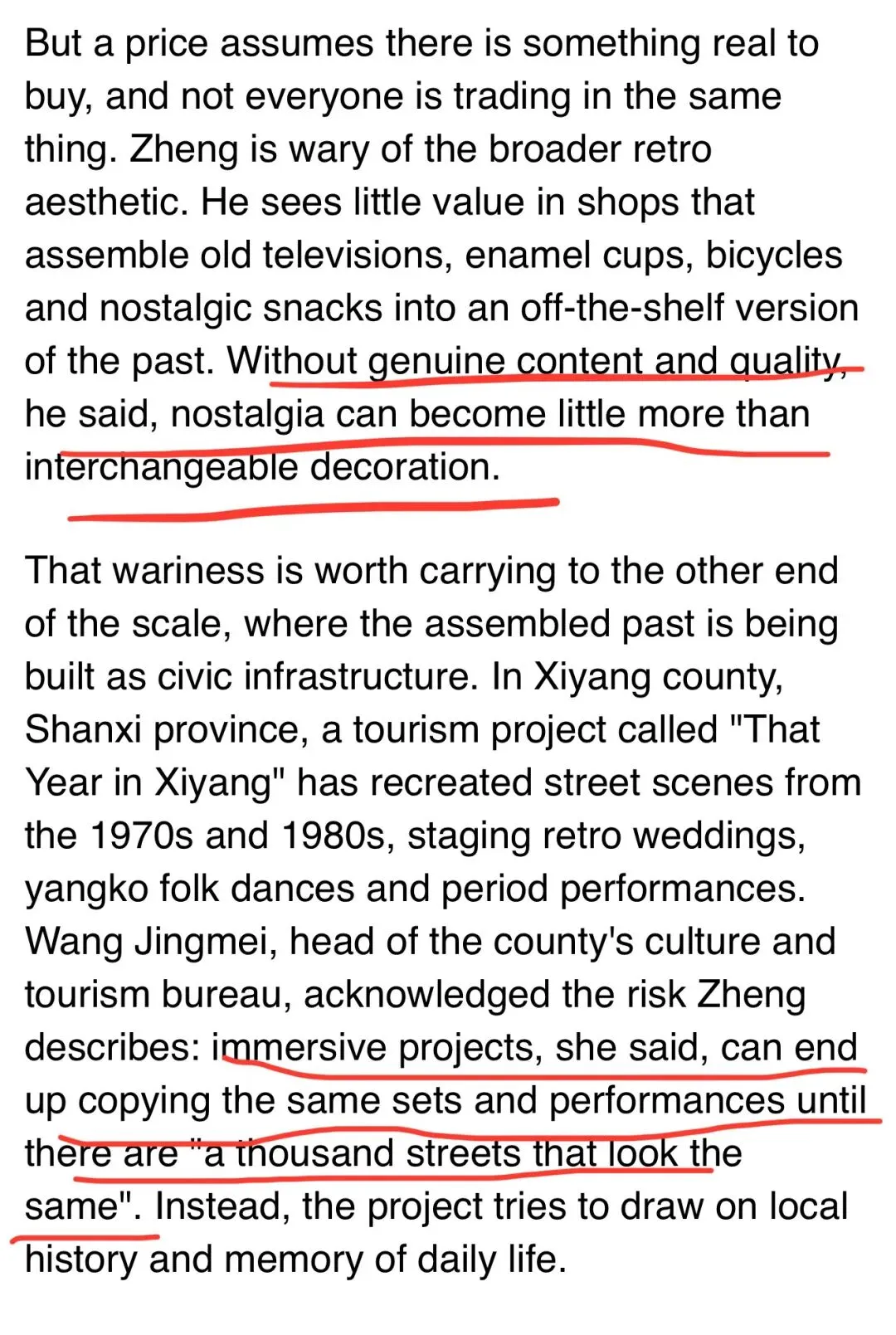
前面读到 CCD、黑胶唱片、胶片摄影时,读者很容易形成一个判断:
旧东西重新流行,是因为它们有独特的文化价值。
这时候作者没有顺着这个结论继续夸“复古”,而是突然提醒:
nostalgia can become little more than interchangeable decoration
“a thousand streets that look the same”
意思是:看起来很复古,不等于真的有文化。
这时候读者就会想了:
阅读到这里 | 读者怎么想 |
|---|---|
前面 | 复古很有意义 |
作者加入反面例子 | 等等,不是所有复古都有意义 |
继续思考 | 那什么样的复古才真正有价值? |
所以我们也可以模仿这种写作手法,先阻止读者过完下判断。
高考阅读中也有类似思路的考察:2021年真题
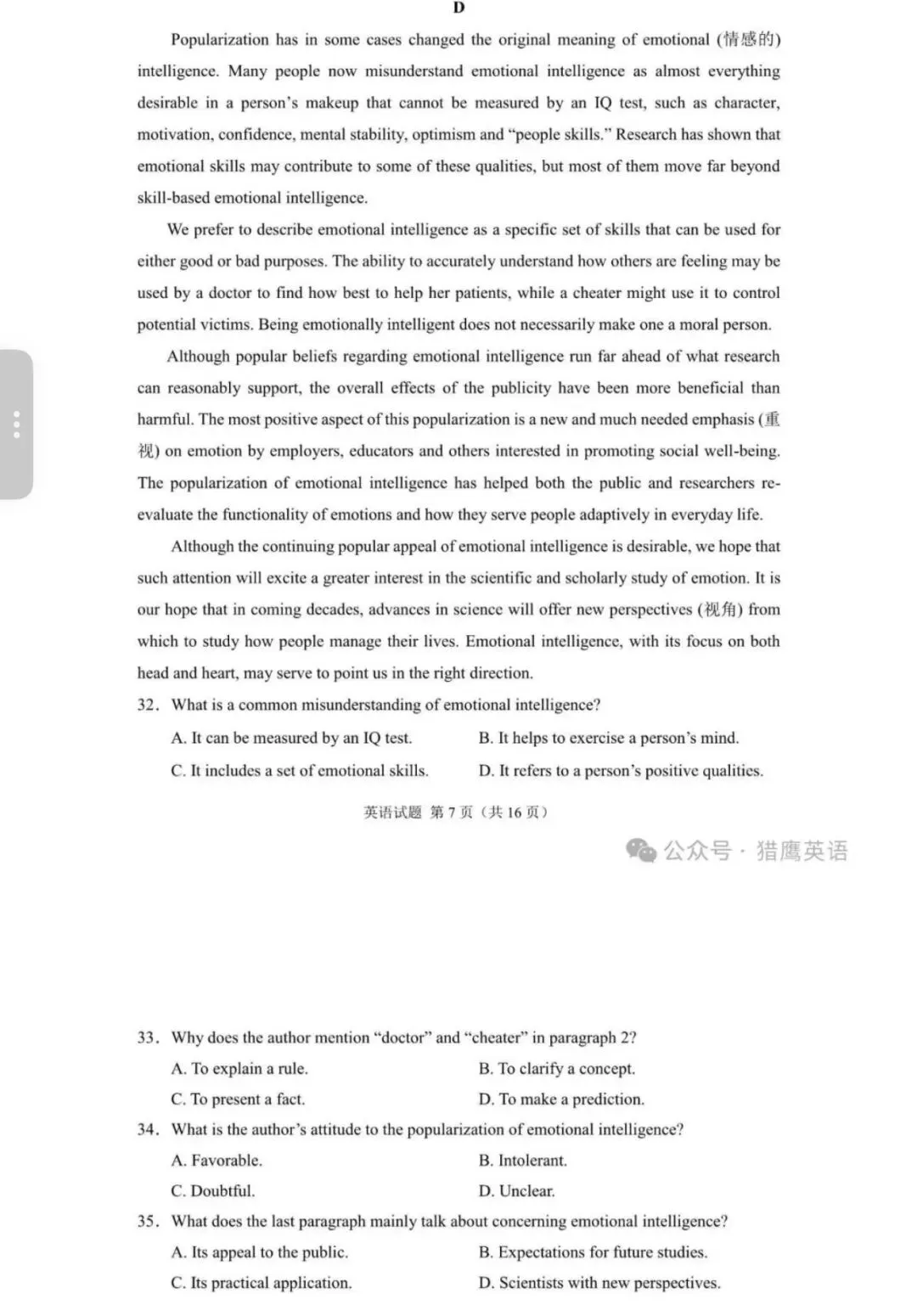
33题 大众容易认为 emotional intelligence = positive qualities → 作者加入 doctor / cheater:同一种能力既可帮助人,也可操纵人 → EI并不天然等于“好”
总结出来就是: 先让你形成一个判断 → 加入限制/反例 → 阻止过度概括 → 得到更准确的上位认识
六 重新定义
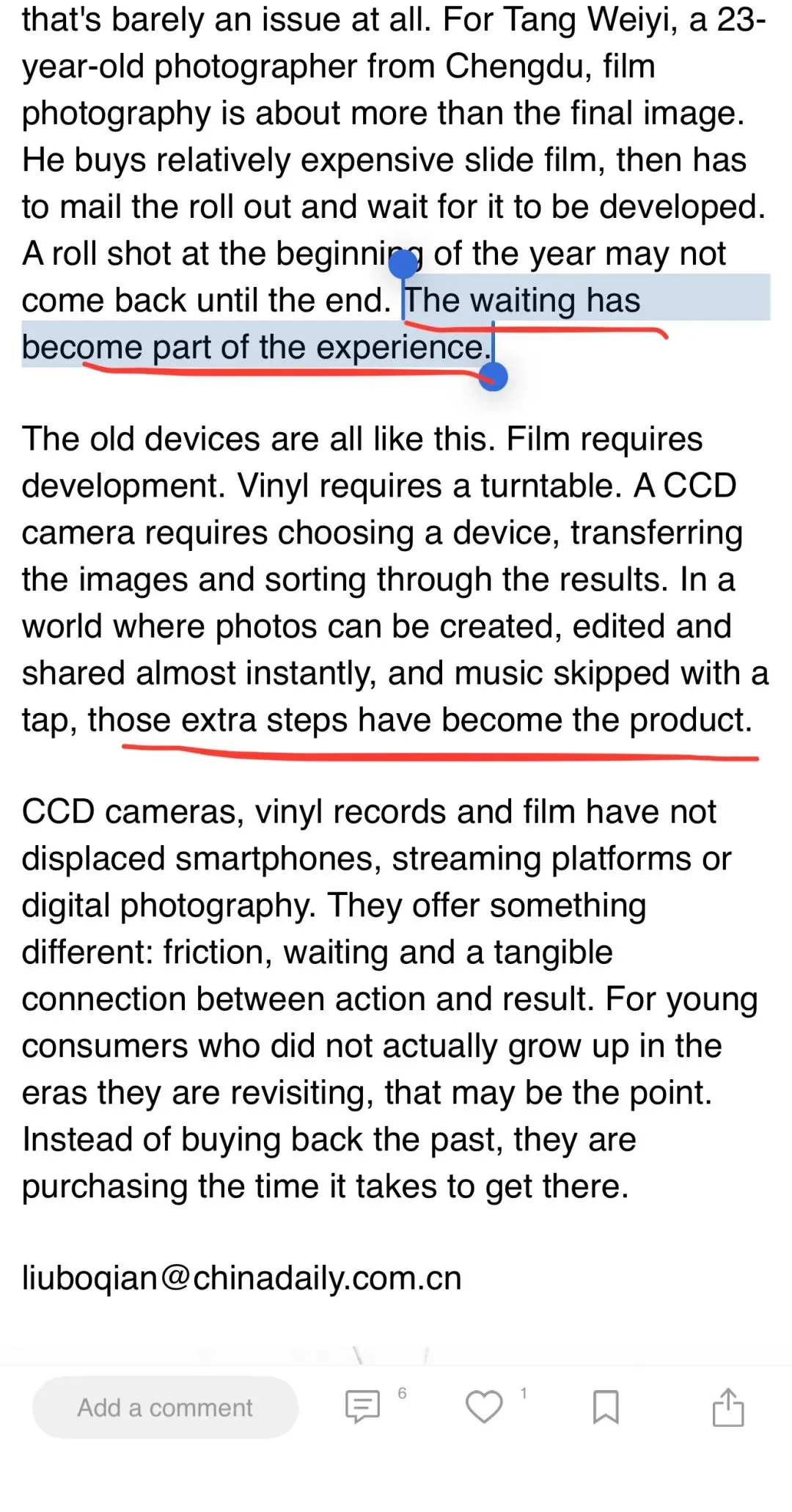
前面读者一直在看:camera / record / film
但作者在这里把注意力从“物”移到“过程”。原本:
waiting = inconvenience; extra steps = inefficiency现在变成:waiting = experience; extra steps = product
也就是:Cost → Value
七 引导读者反思
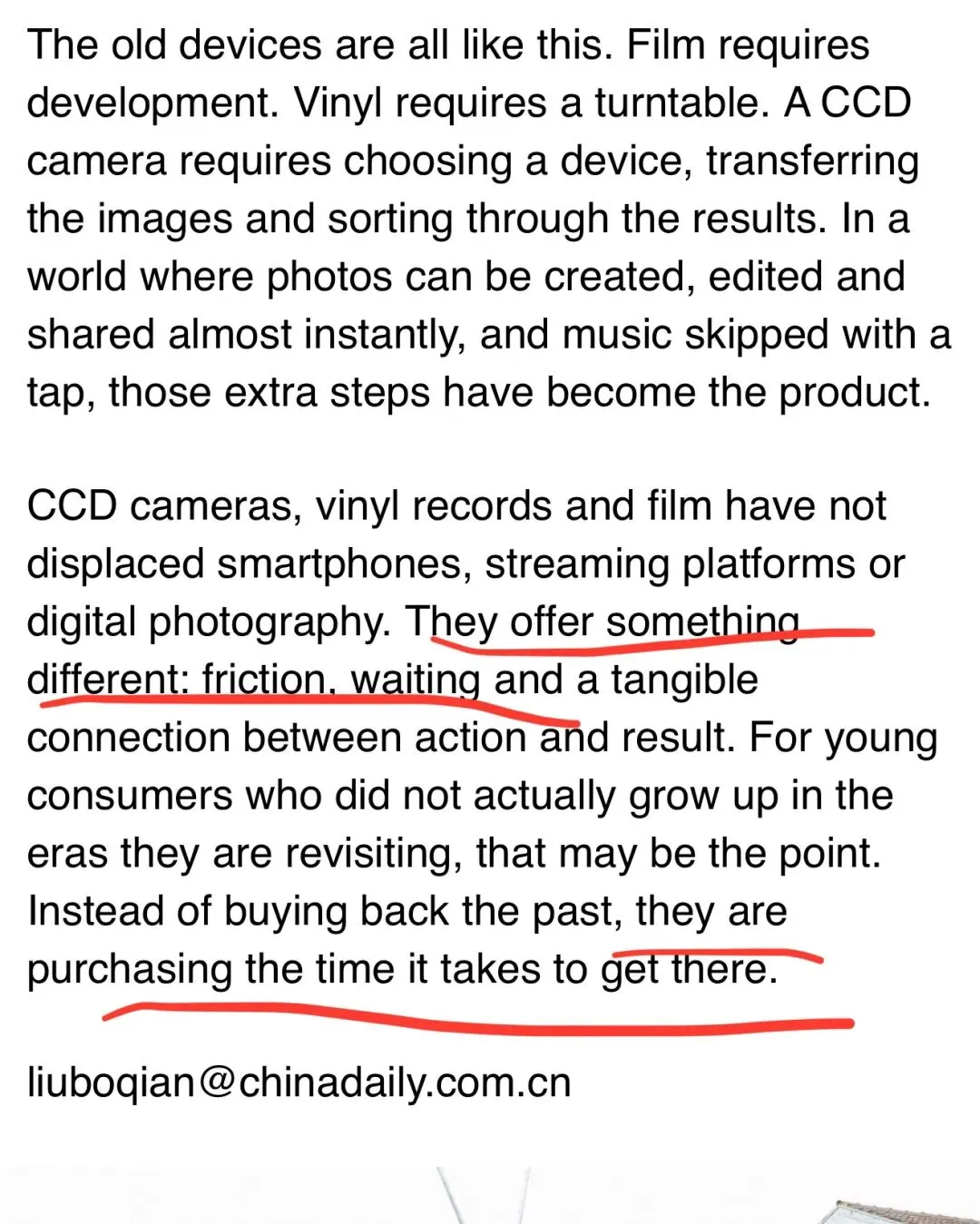
现代生活一直追求:faster ,easier,more convenient
但这些年轻人为什么偏偏喜欢:waiting / friction / extra steps?
作者其实在提醒我们:是不是“越快越好”也不一定永远成立?
所以这里是在让读者反思自己原来的判断标准。
我们最开始可能觉得:买CCD、黑胶、胶片 = 怀旧。
但作者最后说:Instead of buying back the past…
他们不只是为了“过去”。他们更喜欢的是:拍完以后要等,要冲洗, 要整理, 最后才得到结果
所以真正吸引他们的是:
the process, not just the result
总结如下:
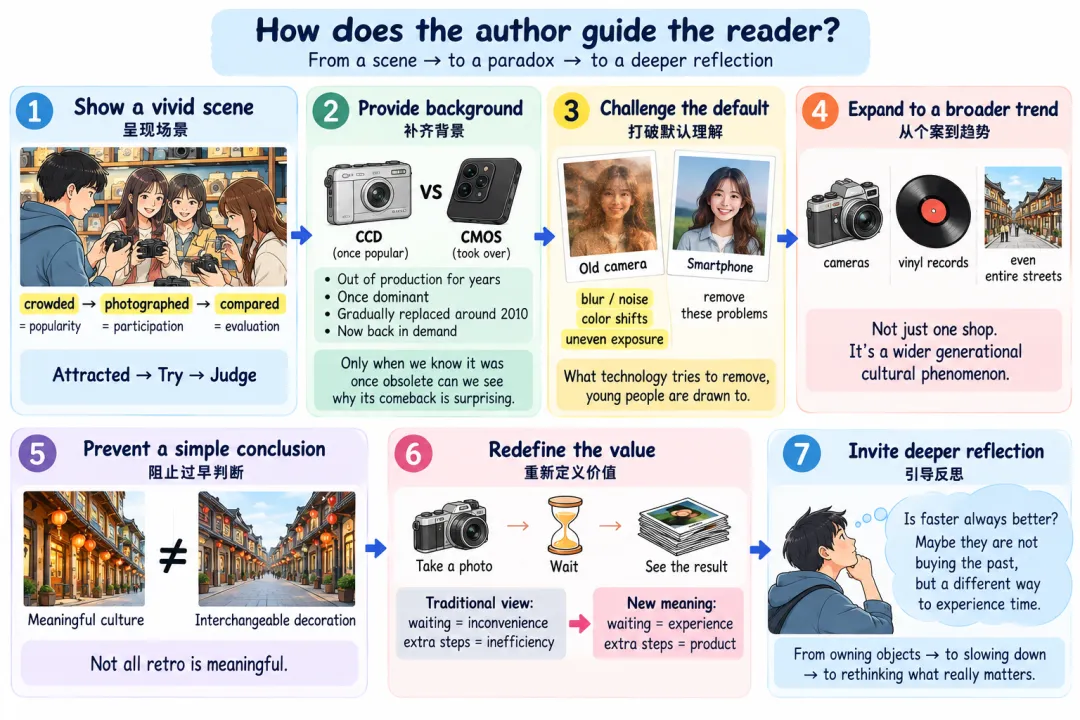
那如何迁移到作文中:
杭二中高三开学考:

The bell is about to ring. A student rushes into the classroom, drops into a seat and waits for the break to unwrap a piece of bread. Skipping breakfast may seem like an easy way to steal a few extra minutes of sleep, but those saved minutes can come back as tiredness and poor concentration.
The answer does not have to be complicated. Preparing milk, fruit or sandwiches the night before can make mornings less rushed, while getting up ten minutes earlier leaves enough time to eat calmly. The school could also offer simple grab-and-go breakfasts for students in a hurry.
After all, real efficiency is not about cutting breakfast out of the morning, but about giving ourselves the energy to make the whole day count.