ARTICLE · 1169425
小学新课标英语二级考试复习总结(三)
孩子,你慢慢来(新四年级) 369298356
孩子,你慢慢来(新三年级) 488438402
一、名 词
表示某一事物,有具体的和抽象的之分。分为可数名词和不可数名词。强调:不可数名词都默认为单数,所以总是用is或者was;最好不要根据some、any、a lot of等词去作判断,以免受误导。
1、可数名词如何变“复数形式”:
a.一般情况下,直接加-s,如:book-books, bag-bags, cat-cats, bed-beds ;读音:清辅音后读[s],浊辅音和元音后读[z]。
b.以s. x. sh. ch结尾,加-es,如:bus-buses, box-boxes, brush-brushes,
watch-watches ;读音:[iz]。c.以“辅音字母+y”结尾,变y为i, 再加-es,如:family-families, strawberry-strawberries ;读音:[z]。d.以“f或fe”结尾,变f或fe为v, 再加-es,如:knife-knives ,thief-thieves;读音:[z]。e.以“o”结尾的词,分两种情况
1)有生命的+es 读音:[z] 如:mango-mangoes tomato-tomatoes hero-heroes
2) 无生命的+s 读音:[z] 如:photo-photos radio-radios
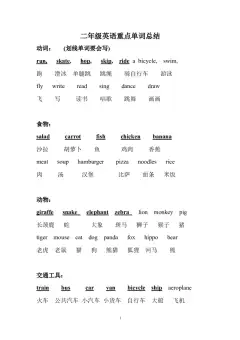
f. 不规则名词复数: man-men, woman-women, policeman-policemen,
policewoman-policewomen,
snowman-snowmen, mouse-mice, child-children, foot-feet, tooth-teeth, fish-fish,
people-people, Chinese-Chinese, Japanese-Japanese
2、不可数名词没有复数:
如果要计算不可数名词所表达的数量,就得在数词和不可数名词之间加上“量词+of”。例如:a glass of water, a piece of paper, a bottle of juice.
判断步骤:↗如是am、is或was→原形读句子→读该单词→认识该单词→理解意思→看be动词↘如是are或were→加s或es
二、冠 词
冠词是一种虚词,不能独立使用,通常放在名词的前面,分为“不定冠词”和“定冠词”两种。1、不定冠词:a、an。用在单数名词前,表示“一个,一件……”。an用在以元音“音素”开头的单词前。如:an e-mail, an orange, an old man, an English watch, an hour…
2、定冠词:the。用在单数或者复数名词前。the没有具体意思,有时翻译为这、那。它的基本用法:(1)用来表示特指某(些)人或某(些)事物。如:The map on the wall is new.(2)表示说话者双方都知道的人或事物。如:Look at the picture, please.(3)表示再次提到前面谈过的人或事物。如:This is a stamp. The stamp is beautiful.(4)用在表示世界上独一无二的事物前。如:the sun太阳 the moon月亮 the earth地球(5)用在由普通名词构成的专有名词前。如:the Great Wall长城(6)用在江河、湖海等专有名词前。如:the Changjiang River长江(7)此外,序数词、形容词最高级、乐器名称等词前面和一些习惯用语中一般都用定冠词the。如:the first day, the best boy, play the piano, in the same class
确定用a、an还是the时可根据汉语意思。

三、数 词
我们学过两类:基数词和序数词。基数用于表示数量多少,而基数词用于表示次序,常在日期中出现。区别:基数词前面没有“the”;序数词前一定要有“the”。1、超过二十以上的两位数需要在个位和十位之间加上“-”。如:21 twenty-one2、三位数以上的则需要在百位数后再加上and。如:101 a/one hundred and one3、用基数词来修饰可数名词时,一定别忘了它的复数形式。如:十八个男孩 eighteen boys4、用基数词修饰不可数名词时,如是复数,变它的量词为复数。
如:两碗米饭 two bowls of rice5、序数词一般加“th”,特殊的有:first, second, third, fifth, eighth, ninth, twelfth以及二十及二
十以外的整十:twentieth, thirtieth, fortieth… “第几十几”:前面整十不变,后面“几”改为序
数词。如:88 eighty-eighth

四、代词
代词有两种:人称代词和物主代词。1、人称代词分为:第一、第二、第三人称,且有单复数之分。2、人称代词的主格在句中做主语,一般用在动词前(疑问句除外);宾格在句中做宾语,多用于动词、介词后。
3、形容词性物主代词起形容词的作用,后面一定要跟名词,表示该名词是属于谁的。4、名词性物主代词=形容词性物主代词+名词。如: This is my bag. = This is mine. That is her ruler. = That is hers.一般看后面有没有名词,如有,就用形容词性物主代词;如无,就用名词性物主代词。请牢记下表:
单数 | 复数 | |||||||||
人称代词 | 主格 | I | you | he | she | it | we | you | they | |
宾格 | me | you | him | her | it | us | you | them | ||
物主代词 | 形容词性 | my | your | his | her | its | our | your | their | |
名词性 | mine | yours | his | hers | its | ours | yours | theirs |

五、形容词、副词
1、形容词表示某一事物或人的特征,副词表示某一动作的特征。形容词和副词有三种式:原形、比较级、最高级。比较级:+er 最高级:the …+est,两个重要特征:as……as中间一定用原形,than的前面一定要+er。
2、形容词、副词比较级的规则变化如下:
(1)一般直接+er。如:tall - taller, fast - faster 单音节词如果以-e结尾,只加-r。
如:late - later(2)重读闭音节词如末尾只有一个辅音字母,须双写这个字母,再加-er。
如:big - bigger, fat - fatter(3)以辅音字母加-y结尾的词,变y为i,再加-er。
如:heavy - heavier, early - earlier(4)双音节和多音节词的比较级应在原级前加more构成。如:beautiful - more beautiful, careful - more careful, quietly - more quietly, interesting - more interesting
(5)有些不规则变化的,须逐一加以记忆。如:good/well – better, bad/ill – worse, many/much – more, far – farther/further, old – older/elder…

六、介 词
1、一种虚词。不能单独作句子成分,它只有跟它后面的宾语一起构成介词短语,才能在句子中起作用。有:in, on, under, with, behind, about, near, before, after, for, to, up, down, from, in front of, out of, from…to…, at the back of…
2、表示时间的介词有:at, on, in。
(1)at表示“在某一个具体的时间点上”,或用在固定词组中。如:at ten o’clock, at 9:30 a.m., at night, at the weekend…
(2)on表示“在某日或某日的时间段”。
如:on Friday, on the first of October, on Monday morning…
(3)in表示“在某一段时间(月份、季节)里”。
如:in the afternoon, in September, in summer, in 2005…
3、in一词还有其他的固定搭配,
如:in blue(穿着蓝色的衣服),in English(用英语表达),take part in(参加)。
七、动 词
这里所说的动词是指各种动词总称,其中包括be动词、情态动词、助动词、行为动词(就是我们平时总说的那种动词)。动词、名词和形容词不太容易区分,如不能一眼看出,可用如下方法:先用“一(量词)”(如:一个、一张等)和这个词连起来说,如说得通,一般认为是名词;说不通再用“很”去判断,就是把“很”和为个词连起来说,说得通一般就是形容词;都说不通就是动词。(目前我们学过的,以后可能不同)(另外一些很明显的,如人称代词、数词、情态动词等一下就可以知道)
1、be动词( am, is, are, was, were )1)am—was, is –was, are--were 口诀:我用am, 你用are, is用在他她它,所有复数全用are。2)肯定和否定句 I am (not) from London. He is(not) a teacher. She is(not) in the dining room. My hair is(not) long. Her eyes are(not) small.
3)一般疑问句 Am I a Chinese? Yes, you are. No, you aren’t. Are they American?
Yes, they are. No, they aren’t. Is the cat fat? Yes, it is. No, it isn’t.
4)be动词的否定形式:am not(没有缩写形式),are not = aren’t ,is not = isn’t 。
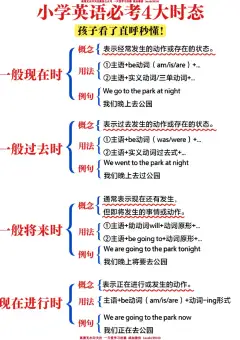
2、助动词( do, does, did )do, does用于一般现在时,其过去式did用于一般过去时。它们通常用在疑问句和否定句中。它们的否定形式:do not = don’t, does not = doesn’t, did not = didn’t。注意:在一般现在时中,does用于第三人称单数,其余一律用助动词do;助动词do, does, did后面一定要用动词原形。
3、情态动词情态动词也是一类特殊的动词,平时我们不把它说成是动词。情态动词可以和行为动词同时出现在同一个句子中。我们现在学过的情态动词有:can、could、shall、should、will、would、may、might 、must。注意:情态动词后动词总是用原形。(不受其他任何条件影响)其否定形式:can not = can’t, must not = mustn’t, … 注意:may not和shall not(无缩写形式)。
4、行为动词就是我们平时上课时说的动词,表示某一动作或行为。如:sweep、live等。行为动词我们已学过它们的四种形式:原形、第三人称单数+s/es、现在分词(也叫动名词)+ing、
过去式+ed。(1)动词第三人称单数变化规则:A、一般直接加“s”,如:play – plays, visit – visits, speak – speaks ;
B、以“s”,“x”,“sh”,“ch”结尾时,加“es”,如:catch – catches, watch – watches ;
C、以“辅音字母+y”结尾时,变“y”为“i”再加“es”,如:carry – carries, study – studies 。(2)现在分词(动名词)构成规则:A、一般直接加“ing”,如:go – going, do – doing, look – looking ;
B、以不发音的“e”结尾的单词,去“e” 加“ing”,
如:take – taking, make – making, have – having ;
C、以重读闭音节结尾的词,如末尾只有一个辅音字母,需要双写这个字母再加“ing”,如:
put – putting, stop – stopping, run – running, get – getting, swim – swimming, sit – sitting, begin – beginning, jog – jogging, forget – forgetting 。
(3)过去式构成规则:A、一般直接加“ed”,如:plant – planted, visit – visited, pick – picked ;
B、以不发音字母“e”结尾,直接加“ed”,如:like – liked, hope – hoped, taste – tasted ;
C、以“辅音字母+y”结尾时,变“y”为“i”再加“ed”,
如:try – tried, carry – carried, study – studied ;
D、有些动词要双写最后一个字母,再加“ed”,如:stop – stopped ;
E、还有很多动词的过去式是不规则的,请记忆:
是-am(be)-was-being;是-are(be)-were-being;是-be-was, were-being;
成为-become-became-becoming; 开始-begin-began-beginning;
弯曲-bend-bent-bending; 吹-blow-blew-blowing;买-buy-bought-buying;
能-can-could-----; 捕捉-catch-caught-catching;选择-choose-chose-choosing;
来-come-came-coming; 切-cut-cut-cutting; 做-do, does-did-doing;
画-draw-drew-drawing; 饮-drink-drank-drinking; 吃-eat-ate-eating;
感觉-feel-felt-feeling; 发现-find-found-finding; 飞-fly-flew-flying;
忘记-forget-forgot-forgetting;得到-get-got-getting; 给-give-gave-giving;
走-go-went-going; 成长-grow-grew-growing; 有-have, has-had-having;
听-hear-heard-hearing; 受伤-hurt-hurt-hurting; 保持-keep-kept-keeping;
知道-know-knew-knowing; 学习-learn-learned, learnt-learning; 允许,让-let-let-letting;
躺-lie-lay-lying; 制造-make-made-making; 可以-may-might----;
意味-mean-meant-meaning; 会见 -meet-met-meeting; 必须-must-must----;
放置-put-put-putting; 读-read-read-reading; 骑、乘-ride-rode-riding;
响、鸣-ring-rang-ringing; 跑-run-ran-running; 说-say-said-saying;
看见-see-saw-seeing; 将-shall-should----; 唱歌-sing-sang-singing;
坐下-sit-sat-sitting; 睡觉-sleep-slept-sleeping; 说-speak-spoke-speaking;
度过-spend-spent-spending 。

八、there/here be结构
1、there be结构表示“某时、某地存在着什么事物或人”,包括there is、there are、there
was、there were。
here be结构与它类似,用法也完全相同,只不过是表示“这里存在着什么事物或人”。
2、和have、has、had的区别:
(1)There be 句型表示:在某地有某物(或人);而have、has、had表示:某人拥有某物。(2)在there be 句型中,主语是单数,be 动词用is;主语是复数,be 动词用are;如有几件物品,be 动词根据最近be 动词的那个名词决定——“就近原则”。
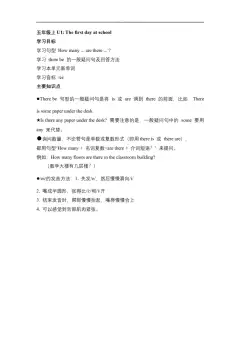
(3)there be 句型的否定句在be 动词后加not , 一般疑问句把be 动词调到句首。(4)there be句型与have(has) 的区别:there be 表示在某地有某物(或人);have(has) 表示某人拥有某物。(5)some和any在there be 句型中的运用:some 用于肯定句, any 用于否定句或疑问句。(6)and 和or 在there be句型中的运用:and 用于肯定句, or 用于否定句或疑问句。(7)针对数量提问的特殊疑问句的基本结构是: How many + 名词复数 + are there + 介词短语? How much + 不可数名词 + is there + 介词短语?
(8)针对主语提问的特殊疑问句的基本结构是: What’s + 介词短语?(9)There be结构一般用在句子的开头,而have等词只能用于某一个主语后面。

(未完待续)
本文为原创作品,未经许可不得转载。
备注
寒假、春季高效阅读与作文班(4年级、3年级)、英语(新概念1、3L、新课标英语等级考试冲刺班)、4年级数学(奥数、课内)火热报名中……
可直接公众号回复报名,小编稍后会与您联系!