ARTICLE · 1234061
CATTI英语一级笔译模拟试题6
CATTI
英语一级笔译模拟试卷 6
《笔译实务》
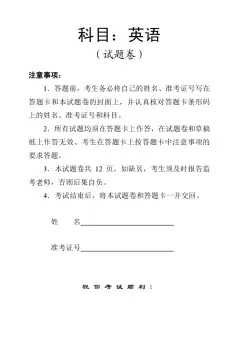
考 生 须 知
1. 本试卷依据《CATTI 全国翻译专业资格(水平)考试英语笔译大纲》命制,选材来自近期公开报道的重大时事、科技、财经与文化动态。
2. 答案必须填涂/书写在答题卡/答题纸的相应位置,在试卷上作答无效。
3. 考试结束后,试卷与答题卡一并收回。
-----------------------------------------
CATTI模拟试题等PDF打印版本已放在 ima 知识库「CATTI 英语:学习与考试」中,可用微信扫一扫下面的二维码,用小程序或 APP 打开即可免费获取
----------------------------------------------
笔译实务(180 分钟,满分 100 分)
本卷仅设《笔译实务》一科,含翻译与审定稿两部分。请将文章译成目的语,并审校给定译文。
Section 1英译汉(40 分)
将下列英语文章译成汉语。要求译文忠实原文、行文通顺、术语准确。
English Source
Few industries have rebranded themselves as thoroughly as sport in China. What was long treated as public welfare is now marketed as an economic engine. Under a new plan released by the General Administration of Sport, the national sports industry is targeted to top 7 trillion yuan in total value by 2030, up from 3.8 trillion yuan in 2024, which implies compound annual growth of 10.52 percent over the six-year period. The ambition belongs to a booming global market: the worldwide sports economy is estimated at about 2.3 trillion dollars in 2025 and is projected to reach 3.7 trillion dollars by 2030, expanding by roughly 10 percent a year.
The most visible growth is coming from events rather than factories. In Rongjiang County, Guizhou, the self-organised Village Super League has fielded 137 rural teams and staged more than 520 matches since the start of 2026, while a companion programme of village galas attracted about 5.06 million visitor-trips in six months, up 7.2 percent year on year. Jiangsu's provincial amateur league tells a similar story: in its first 16 rounds, sales among 1,000 key monitored enterprises reached 9.15 billion yuan, up 8 percent, and combined attendance summed to 53.32 million visits. The final of the inaugural Northeast Super League drew 63,259 spectators, a record for an amateur football event in China.
Premium events command premium crowds. The 2026 China Open was extended to a four-week window for the first time and drew more than 270,000 visits, 37 percent more than a year earlier. For five consecutive days it exceeded 35,000 visitors, and on October 1 and 2 it passed 40,000 in a single day. By October 4, spending inside the venue had exceeded 32 million yuan, of which licensed merchandise accounted for nearly 22 million. Economists note that every yuan spent on tickets can trigger more than seven yuan of related consumption, a multiplier that explains why cities now compete to host. Ticket sales, food stalls and short trips all ride on the same fixtures.
Mega-events amplify the effect. During the 2026 World Cup viewing season, online sales of football-related goods rose 113 percent, sales of football peripherals jumped 1,108 percent, fan apparel 270 percent and sports books 115 percent. Over the past year one leading platform recorded 38 percent growth in sports consumption and an 88 percent rise in active merchants, with transactions up 41 percent in first-tier cities and 40 percent in county-level markets. Bookings for pitches rose 40 to 50 percent, and the Chinese Super League continues to top Asia in average attendance. Grassroots leagues, rather than star signings, are doing much of the heavy lifting.
Policy is following the money. A recent State Council General Office opinion called for supporting domestically branded events in going global and for expanding overseas sponsorship and media rights markets. The sports plan for the 15th Five-Year Period proposes improving the value chain of the competition and performance industry and building an event economy ecosystem centred on home-grown event IP. In effect, officials want to own the formats rather than merely stage those created elsewhere, a shift from renting crowds to retaining rights.
Risks remain. Ticket booms can fade, and stadiums built for prestige often stand idle. Grassroots enthusiasm, channelled through the integration of sports and education and professional venue operation, is more durable than hype. The real test is whether the 10.52 percent growth path yields jobs, service exports and year-round participation rather than headline numbers alone. If it does, the event economy could become one of the more dependable engines of Chinese domestic consumption.
Section 2汉译英(40 分)
将下列汉语文章译成英语。要求译文忠实原文、行文通顺、术语准确。
汉语原文
民以食为天,粮以安为先。2026年全国夏粮产量达3014.9亿斤,首次突破3000亿斤大关,比上年增加20.0亿斤,增长0.7%;其中小麦2779.0亿斤,增加15.7亿斤。夏粮单产378.8公斤/亩,提高3.2公斤,25个夏粮产区中22个实现增产,粮食生产实现良好开局。夏粮播种面积3.98亿亩,基本保持稳定;早稻产量565.8亿斤,连续六年稳定在560亿斤以上。
成绩来之不易,源于“藏粮于地、藏粮于技”战略深入实施。全国累计建成高标准农田超10亿亩,农作物自主选育品种面积占比超95%。中央财政安排13.31亿元重点支持秋粮抗逆防灾喷施作业,农业农村部组织开展“奋战100天强田管抗灾害夺秋粮丰收行动”,集成推广良种良法良机良配套。山东德州建成全国首个大面积“吨半粮”示范区,小麦、玉米两季亩产超1.5吨。
秋粮约占全年粮食产量四分之三,全年粮食产量有望稳定在1.4万亿斤左右。“十五五”规划纲要提出,粮食综合生产能力达到1.45万亿斤左右。下一步,要严守18亿亩耕地红线,坚持产量产能、生产生态、增产增收一起抓,深入推进种业振兴和单产提升,坚决把中国人的饭碗牢牢端在自己手中。2025年全国粮食总产1.43万亿斤,人均粮食占有量稳定超过500公斤。
Section 3审定稿(英译汉,10 分)
下面是某译者将英语原文译成的汉语译文,其中植入了若干实质性错误。请对照原文,指出错误所在(序号—位置—错误性质—修改意见),并给出修改后的完整定稿。
English Source(原文)
China's intellectual property system, long measured by how many rights it registered, is increasingly judged by what those rights are worth. By the end of June 2026, domestic entities held 5.394 million valid invention patents, making China the first country in the world to exceed five million. High-value invention patents reached 2.36 million, or 16.8 per 10,000 people, already above the target of 16 set for the 14th Five-Year Plan with time to spare. Valid trademark registrations stood at 50.816 million.
Speed has improved alongside scale. The average examination cycle for invention patents has been cut from 20 months at the end of the 13th Five-Year Plan to 15 months, while trademark registration is examined within four months, among the fastest periods under comparable examination regimes anywhere. Brand owners, who once waited far longer to secure a trademark, now routinely clear examination within a single quarter. In the first half of 2026 alone, 453,000 invention patents were granted and 2.055 million trademarks registered. PCT international patent applications have ranked first in the world for seven consecutive years. In WIPO's 2025 Global Innovation Index, China climbed to tenth place, its first entry into the top ten, and the country is home to 24 of the world's top 100 innovation clusters, more than any other country for three years running.
The economic weight of patents is now visible in national accounts. Value added by patent-intensive industries has surpassed 18 trillion yuan and accounts for 13.38 percent of GDP, against 11.97 percent in 2020. For policymakers, that ratio matters more than the raw count of filings. Trade in intellectual property use fees exceeds 400 billion yuan a year, and exports reached 45.5 billion yuan in the first half of 2026, up 64.9 percent year on year. Enterprises hold 4.254 million valid invention patents, 74.8 percent of the domestic total, and more than 70 percent of high-value patents serve strategic emerging industries, with next-generation information technology alone accounting for 16.5 percent of all valid invention patents.
Turning patents into productive capacity remains the frontier. A special campaign for the commercialization and utilization of patents inventoried 1.349 million stock patents held by more than 2,700 universities and research institutes. Nationwide, record-filing of assignments and licences reached 1.458 million transactions, 48 percent higher than before the campaign, with filings by universities and institutes up 105.6 percent. Technology contracts involving patents are now worth more than one trillion yuan, and IP-pledged financing has exceeded 900 billion yuan cumulatively. In the first half of 2026 alone, patent and trademark pledge financing supported more than 19,000 enterprises across the country.
Protection has kept pace. China has built 129 national IP protection centers and rapid rights-defense centers, which have handled 480,000 cases in total; 116 platforms guiding responses to overseas IP disputes have handled more than 4,200 cases and helped enterprises recover nearly 41 billion yuan in losses. Public satisfaction with IP protection rose from 80.05 points in 2020 to 82.81 points in 2025. More than 40,000 data IP registration certificates have been issued, unlocking nearly 15 billion yuan of financing and licensing deals. In July 2026, an executive meeting of the State Council approved the 15th Five-Year Plan on IP Protection and Utilization.
Challenges persist. Monetizing university research is still slower than policymakers would like, and small firms often lack the capacity to enforce their rights. Yet the direction is clear: having built the quantity, China is now building the quality. From data IP registration certificates to the pledge market, the emphasis has shifted from filing applications to financing, trading and defending ideas, the difference between owning a right and capturing its value. The plan approved in July in turn sets the direction for the coming five years of policy.
待审定译文(Draft Translation)
长期以来,中国的知识产权体系以注册数量衡量,如今则越来越多地以这些权利的价值来评判。截至2026年6月底,国内权利人持有有效发明专利53.94万件,使中国成为全球首个突破500万件的国家。高价值发明专利达236万件,折合每十万人16.8件,距“十四五”规划确定的每万人口16件目标仍有差距。有效商标注册量为5081.6万件。
规模扩大的同时,速度也在提升。发明专利平均审查周期已由“十三五”末的20个月压缩至12个月,商标注册审查稳定在4个月,均为相同审查制度下国际最快水平。过去为拿到商标等候更久的品牌所有者,如今通常一个季度内即可完成审查。仅2026年上半年就授权发明专利45.3万件、核准注册商标205.5万件。PCT国际专利申请量连续7年位居全球第一。在世界知识产权组织《2025年全球创新指数报告》中,中国升至第10位,连续第二年跻身全球前十;全球百强创新集群达24个,连续三年居各国之首。
专利的经济分量如今已在国民经济核算中显现。专利依赖型产业增加值突破1.8万亿元,占GDP比重13.38%,高于2020年的11.97%。对政策制定者而言,这一比重远比单纯的申请数量更重要。知识产权使用费年进出口总额超4000亿元,2026年上半年出口额达455亿元,同比下降64.9%。企业拥有有效发明专利425.4万件,占国内总量74.8%;高价值发明专利中战略性新兴产业占比超七成,其中新一代信息技术领域占有效发明专利总量的16.5%。
让专利转化为生产力仍是前沿课题。专利转化运用专项行动对2700余所高校和科研机构的134.9万件库存专利进行了盘点分析。全国专利转让许可备案达145.8万次,较专项行动前增长48%,其中高校和科研机构增长105.6%。知识产权质押贷款累计发放超9000亿元。2026年上半年,专利商标质押融资惠企超1.9万家。
保护工作同步推进。中国已建成129家国家级知识产权保护中心和快速维权中心,累计受理维权案件48万件;116家海外知识产权纠纷应对指导平台累计指导纠纷应对4200余起,帮助企业挽回损失近41亿元。知识产权保护社会满意度由2020年的80.05分提升至2025年的82.81分。数据知识产权登记证书超4万张,融资增信和许可交易金额近150亿元。2026年7月,国务院常务会议审议通过《知识产权保护和运用“十五五”规划》。
挑战依然存在。高校科技成果的货币化速度仍不及政策制定者的期待,中小企业往往缺乏执法能力。但方向是明确的:中国在建成数量之后,正在打造质量。从数据知识产权登记证书到质押融资市场,重心已从申请文件转向对创意的融资、交易与保护——这正是拥有权利与实现其价值之间的区别。7月通过的这份规划又为未来五年的工作指明了方向。
Section 4审定稿(汉译英,10 分)
下面是某译者将汉语原文译成的英语译文,其中植入了若干实质性错误。请对照原文,指出错误所在(序号—位置—错误性质—修改意见),并给出修改后的完整定稿。
汉语原文
今年以来,人民币跨境使用规模稳步扩大。2026年1—7月,人民币跨境收付总额超过50万亿元,其中货物贸易超过9万亿元,占本外币跨境收付总额的三成。上半年,人民币在跨境收支中的比重达52.9%,较2025年提高1.3个百分点,人民币已成为我国对外收支第一大结算货币。
市场基础设施持续完善。截至2026年6月末,已有1200家境外机构进入我国银行间债券市场,境外主体持有境内债券3.2万亿元、股票4.7万亿元;中国人民银行已在36个国家和地区授权设立41家人民币清算行。上半年,跨境银行间支付系统(CIPS)累计处理跨境人民币支付业务100.9万亿元,同比增长11.9%,直接参与者210家,业务覆盖192个国家和地区。
离岸市场与国际合作同步推进。熊猫债累计发行规模超过1.3万亿元,发行主体覆盖26个国家和地区;点心债上半年发行8961亿元,同比增长94.4%。我国已与境外央行签署33份双边本币互换协议,金额达4.6万亿元,80多个国家和地区将人民币纳入外汇储备。《2026年人民币国际化报告》提出,要顺应市场需求,进一步完善人民币跨境使用基础性制度安排。
待审定译文(Draft Translation)
Cross-border use of the renminbi has expanded steadily this year. From January to July 2026, total cross-border receipts and payments in renminbi exceeded 50 trillion yuan, of which trade in goods topped 9 trillion yuan, accounting for 30 percent of total cross-border receipts and payments in foreign and renminbi currencies. In the first half, the renminbi's share of cross-border income and expenditure reached 52.9%, falling by 1.3 percentage points from 2025, and the renminbi has become the largest settlement currency for China's external payments.
The market infrastructure remains sound and perfect. By the end of June 2026, 1,200 foreign institutions have been entered into China's interbank bond market, and offshore investors held 32 trillion yuan in domestic bonds and 47 trillion yuan in domestic stocks. The People's Bank of China has authorized 41 renminbi clearing banks in 36 countries and regions. In the first half, the Cross-border Interbank Payment System (CIPS) have processed 100.9 trillion yuan of cross-border renminbi payments, a year-on-year rise of 11.9 percent, with business covering 192 countries and regions.
Offshore markets and international cooperation are advancing together. Panda bonds, which are renminbi bonds issued in the offshore market, have exceeded 1.3 trillion yuan in cumulative issuance, with issuers covering 26 countries and regions; dim sum bond issuance in the first half reached 8,961 billion yuan, an 94.4% year-on-year increase. China has signed 33 bilateral local-currency swap agreements with foreign central banks, totaling 4.6 trillion yuan, and more than 80 countries and regions have included the renminbi in their foreign exchange reserves.
------End of Test------
相关文章:
CATTI英语一级笔译模拟试题5 CATTI英语一笔模拟试卷4