ARTICLE · 1261570
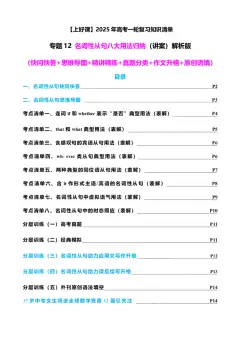
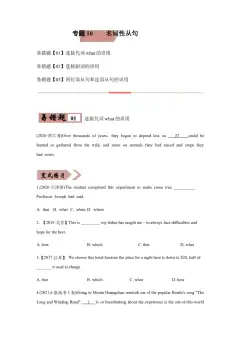
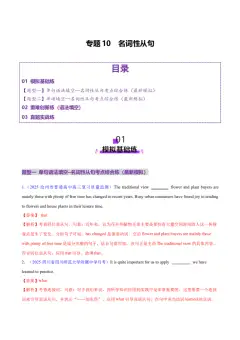
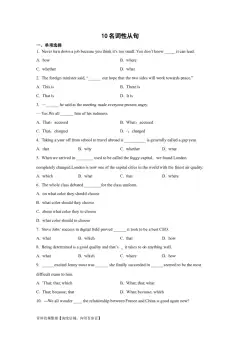
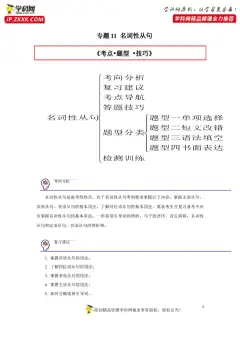
高考英语:专题十一 名词性从句
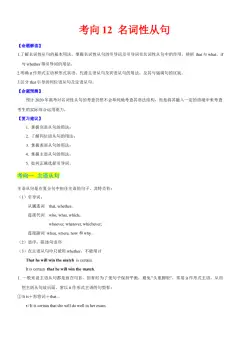
一、考情概览
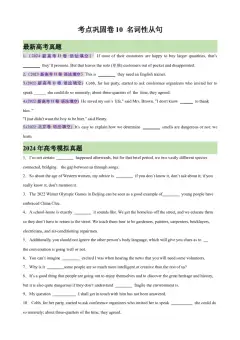
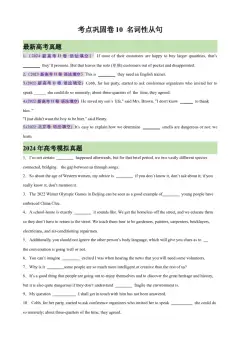
名词性从句是高考英语语法的核心考点之一,在近五年高考中几乎每年必考,考查频率极高。
1. 各题型中的名词考查分布
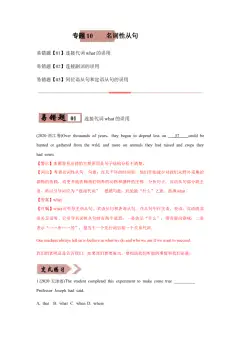
(1)语法填空:重点考查连接词(that/what/whether/if/how等)的选择,尤其是that与what的辨析、whether与if的用法区别,以及it作形式主语/宾语的固定句型。
(2)完形填空:以宾语从句和同位语从句的连接词辨析为主,需根据从句所缺成分和上下文逻辑选择正确的连接词。
(3)书面表达:名词性从句是提升作文档次的重要句式,主语从句(It is widely believed that...)、宾语从句、表语从句的灵活运用可显著提高语言得分。
2. 近年考情趋势
(1)that与what的辨析、whether与if的用法区别持续高频;
(2)同位语从句与定语从句的区别是区分度最大的考点;
(3)it作形式主语/宾语的固定句型年年出现;
(4)虚拟语气在名词性从句中的运用(suggestion, order, demand等词后的从句)是拉分点。
二、高频考点与易错点
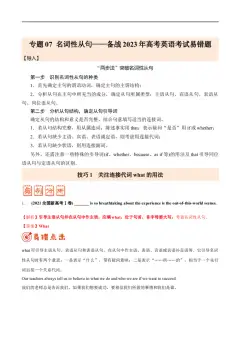
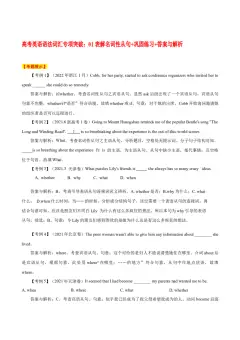
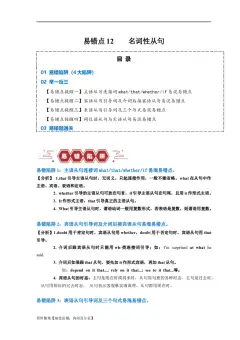
1. that与what的辨析
that在名词性从句中只起连接作用,不作任何成分,无词义;what在从句中一定作主语、宾语或表语,意为“所……的(事/人)”。
2. whether与if的用法区别
①介词后只能用whether;
②whether可与or not直接连用,if不可;
③whether可接不定式,if不可;
④引导主语从句、表语从句、同位语从句时只能用whether;
⑤it作形式主语/宾语时,whether与if可互换。
3. that的省略规则
①that引导宾语从句时口语中可省略;
②介词后的that不可省略;
③多个that从句并列时,从第二个起不可省略;
④引导主语从句、表语从句、同位语从句时,that不可省略。
4. it作形式主语/宾语的固定句型
①It is + adj./n./p.p. + that从句;
②It + 动词 + that从句;
③主语 + 动词 + it + adj./n. + that从句。
5. 同位语从句与定语从句的区别
①同位语从句的that不作成分、不可省略;定语从句的that作成分(主/宾/表)、作宾语时可省略;
②同位语从句解释名词内容,定语从句修饰限定名词。
6. 语序问题
名词性从句一律使用陈述语序,连接词后接主语+谓语,不可用疑问语序。
7. doubt后接从句的用法
肯定句用whether/if引导(表怀疑),否定句和疑问句用that引导(表不怀疑)。
8. 虚拟语气在名词性从句中的运用
在suggestion, order, demand, advice, request等词后的同位语从句或表语从句中,谓语用(should) + 动词原形。
三、背诵建议
1. that与what辨析口诀法
口诀:“that只连不作伴,what既连又当班。”
that在从句中不作任何成分(只连接),what一定在从句中充当主语、宾语或表语(既连接又当成分)。
2. whether与if对比速记卡
制作双栏对比卡,左栏写“只能用whether”,右栏写“whether/if均可”。左栏五条:介词后、or not直接连用、接不定式、引导主语从句(句首)、引导表语/同位语从句。右栏:it作形式主语/宾语时、宾语从句中不与or not直接连用时。
3. it作形式主语句型分类背诵法
①It is + 形容词 + that从句(obvious/certain/likely/possible等);
②It is + 名词词组 + that从句(a pity/no wonder/a surprise等);
③It is + 过去分词 + that从句(said/reported/believed等);
④It + 动词 + that从句(seems/happens/occurs to等)。
4. that省略规则三步判断法
遇到that从句时,按三步判断是否可省:
第一步——判断从句类型(宾语从句可能省,其他不可省);
第二步——宾语从句看位置(介词后不可省,动词后可省);
第三步——看是否多从句并列(第二个起不可省)。
5. 同位语从句vs定语从句对比
画表格对比四要素:①that的作用(同位语不作成分/定语作成分);
②that是否可省(同位语不可省/定语作宾语可省);
③从句与名词的关系(同位语解释内容/定语修饰限定);
④常见名词(同位语接抽象名词如news, fact, idea/定语从句先行词不限)。
6. 虚拟语气名词性从句专项清单
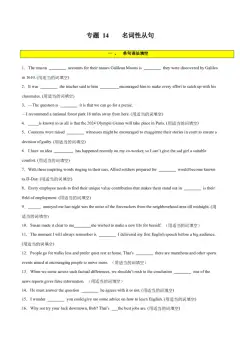
①主语从句:It is necessary/important/essential/strange/surprising that... (should) do;
②同位语/表语从句:suggestion/order/demand/advice/request/insistence/requirement + that... (should) do。
口诀:“一坚持二命令三建议四要求”(insist, order/commands, suggest/advise, demand/require/request)。
7. 连接词选择实战三步法
第一步——判断从句类型(主/宾/表/同位语);
第二步——分析从句成分(是否缺主/宾/表);
第三步——根据句意选词(缺成分且表“所……的”用what,不缺成分用that,表“是否”看位置选whether/if,表疑问选wh-词)。
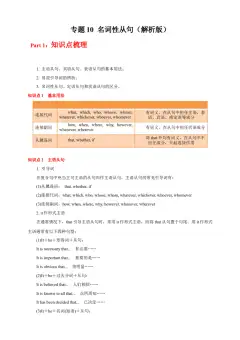
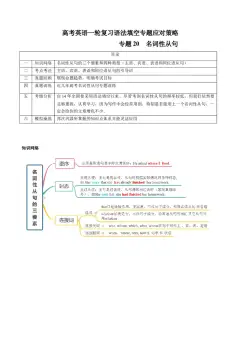
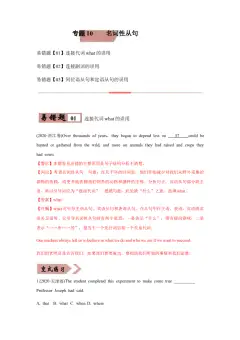
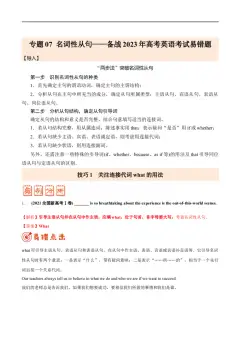
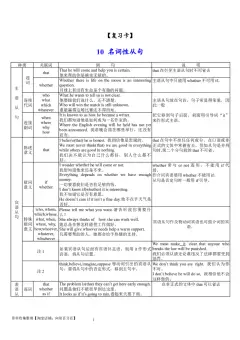
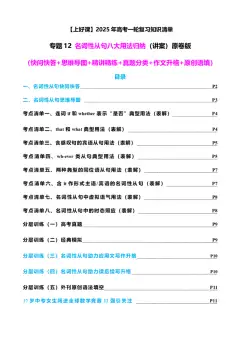
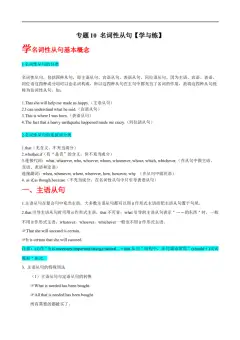
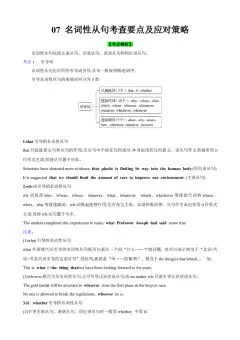
一、名词性从句的概述
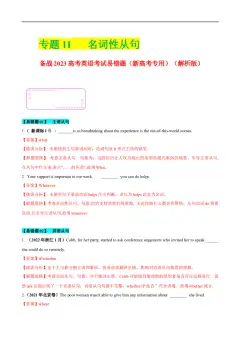
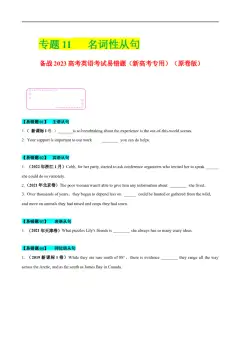
在句子中起名词作用的句子叫作名词性从句。名词性从句的功能相当于名词词组,是一种具有名词功能的非独立分句,包括主语从句、宾语从句、表语从句和同位语从句。
二、主语从句
1. 定义
在主从复合句中充当主语的从句叫作主语从句。主语从句通常放在主句谓语动词之前或由形式主语it代替,而本身放在句子末尾。
2. 引导词
从属连词只起连接作用,不在从句中作成分;
连接代词在从句中作主语、宾语、表语或定语;
连接副词在从句中作状语。
(1)that引导的主语从句
that引导主语从句时,在从句中不作任何成分,且无词义。一般不可省略。
That they were in truth sisters was clear from the facial similarity between them.
从她们的面貌相似度就能清楚地看出她们是亲姐妹。
(2)wh-类连接词引导的主语从句
wh-类连接词包括wh-类的连接代词(who, whom, whose, what, whoever, whomever, whatever等)和连接副词(when, where, how, why, whenever, wherever, however等)。语序为wh-类连接词加陈述句。
What Barbara Jones offers to her fans is honesty and happiness.
芭芭拉·琼斯展现给她的粉丝们的是诚实和快乐。
(3)whether引导的主语从句
whether引导的主语从句常置于句首,有时也可用it作形式主语代替。
Whether he can finish his task on time is of great importance.
他能否按时完成任务非常重要。
注意:
whether与if引导主语从句的区别:
主语从句位于主句谓语动词前,表示“是否”,只能用whether,不可用if引导;若用it作形式主语,则if与whether可互换
Whether we can have clean drinking water lies in what effective measures will be taken by the government about water pollution.
我们能否有干净的饮用水取决于政府将采取什么样的有效措施处理水污染问题。
It's uncertain whether/ if he'll come this evening.
他今天晚上是否会来还不确定。
3. it作形式主语的主语从句
(1)it作形式主语,从属连词that引导的从句作真正的主语
① It+be+形容词(obvious, true, natural, surprising, good, wonderful, funny, possible, likely, certain, probable 等)+that 从句
It isn't likely that I should accept such an offer as that.
我不可能接受像那样的帮助。
注意:
在“It is necessary/ important/ surprising/ unthinkable/ unbelievable/ strange/ incredible+that从句”结构中,从句的谓语动词常用“should +动词原形”,should可以省略。
It's necessary that a college student (should) master one or two foreign languages.
大学生掌握一两门外语是必要的。
② It+be+名词词组(no wonder, an honor, a good thing, a pity, no surprise等)+that从句
It's no wonder that he didn't want to go.
难怪他不想去。
③ It+be+过去分词(said, reported, thought, expected, decided, announced, arranged等)+that从句
It is decided that the meeting has been put off till next Monday.
会议被推迟到下周一召开已经定下来了。
注意:
在“It+be+suggested/ advised/ ordered/ requested/ required/ insisted/ demanded+that从句”结构中,that 从句的谓语动词应用“should +动词原形”,should可省略。
It is suggested that you (should) spend more time in studying English.
建议你花更多的时间学习英语。
④ It+动词/ 动词短语(seem, appear, happen, matter, turn out, occur to, make no difference等)+that从句
It suddenly occurred to her that Joe was afraid of being alone.
她突然想到乔害怕独自一个人待着。
(2)it作形式主语,连接代词、连接副词或whether/ if引导的主语从句作真正的主语。
It is not immediately clear whether/ if the financial crisis will soon be over.
经济危机是否会很快结束,短时间内不会很明显。
It is uncertain what side effect the medicine will bring about, although about two thousand patients have taken it.
尽管大约两千名患者已经服用了这种药,但是它会带来什么样的副作用还不清楚。
三、宾语从句
1. 定义
在主从复合句中充当宾语的从句叫作宾语从句。宾语从句位于及物动词、动词短语或介词之后,或由形式宾语it代替,而本身放在句子末尾。
2. 引导词
从属连词只起连接作用,不作句子成分,that无词义,whether和if意为“是否”;
连接代词在从句中作主语、宾语、表语或定语;
连接副词在从句中作状语
We promise whoever attends the party a chance to have a photo taken with the movie star.
我们保证,任何参加这个聚会的人都有机会与那个电影明星合影。
Scientists study how human brains work to make computers.
科学家研究人脑如何运作以制造计算机。
(1)that引导的宾语从句
that引导宾语从句时无词义,在从句中不作任何成分,口语中一般可以省略。常见的可以接that引导的宾语从句的动词有see, know, imagine, discover, believe, tell, show, think, consider等,that一般可以省略
I think (that) you should turn to the teacher for help.
我认为你应该向老师寻求帮助。
注意:
that引导宾语从句在下列情况下不能省略:
①当that从句作介词的宾语时
I don't know exactly where he lives, except that it's somewhere out in the wilds.
他住在哪里我不是很清楚,只知道是远离城市的荒野之中。
②动词后跟有多个that引导的宾语从句时,只有第一个that可以省略,从第二个从句开始that不可省略
He told me he had to leave and that he would be back soon.
他告诉我他得离开且很快就会回来。
③宾语从句前有插入语时
We hope, on the contrary, that he will stay at home with us.
恰恰相反,我们希望他和我们待在家里。
④ that引导的从句位于句首时
That prices will go up I know.
我知道物价将要上涨。
(2)连接代词或连接副词引导的宾语从句
① wh-类连接词包括连接代词(who, whom, what, which, whoever, whichever等)和连接副词(when, where, why, how, whenever, wherever, however等),这些词在从句中既作特定的成分,又有一定的词义,不可省略
②能接疑问词引导的宾语从句的动词或动词短语有study, see, tell, ask, know, decide, find out, imagine, suggest, doubt, wonder, show, discuss, understand, inform, advise, believe in, search for等。
Our teachers always tell us to believe in what we do and who we are if we want to succeed.
我们的老师总是告诉我们,如果我们想成功,就要相信我们所做的事情以及我们自己。
(3)whether与if引导的宾语从句
whether与if引导宾语从句时,在从句中不作任何成分,但有具体的含义,意为“是否”。whether与if不能省略。
I don't know whether/ if he will attend the meeting tomorrow.
我不知道他明天是否会参加这次会议。
注意:
whether与if均为“是否”的意思。但在下列情况下只能用whether而不能用if:
①宾语从句中的whether与 or not直接连用时,不能换成if;不直接连用时,可互换
I don't know whether or not the report is true.
I don't know whether/ if the report is true or not.
我不知道这个报道是否是真的。
②介词后的宾语从句要用 whether引导,whether可与不定式连用
It depends on whether we have enough time.
这取决于我们是否有充足的时间。
They don't know whether to go there.
他们不知道是否去那里。(与不定式连用)
③引导表语从句或同位语从句时
The question is whether we can get in touch with her.
问题是我们能否和她取得联系。
④ whether引导主语从句并置于句首时
Whether he can come to the party on time depends on the traffic.
他是否能按时来参加聚会要看交通状况。
注意:
doubt后接宾语从句时,如果用于肯定句,从句的引导词常用whether或if;用于否定句或疑问句时,从句的引导词常用that。
The doctor really doubts whether my mother will recover from the serious disease soon.
医生真正怀疑的是我妈妈能否从严重的疾病中很快康复。
Never once did I doubt that I would be able to carry out my plan.
我从未怀疑过我能执行自己的计划。
3. it作形式宾语的宾语从句
(1)一些动词后的宾语从句有宾语补足语时,则需要用it作形式宾语,而将that引导的宾语从句后置。这类动词常见的有find, feel, think, consider, believe, guess, suppose, make等
He has made it clear that the meeting will not be postponed.
他清楚地表明会议不会被推迟。
(2)hate, like, dislike, appreciate, enjoy等表示“喜欢”、“厌恶”的动词以及一些动词短语see to, depend on, rely on等常用it作形式宾语,而将宾语从句后置
I shall see to it that he is taken good care of when you are absent.
你不在的时候,我负责把他照顾好。
四、表语从句
1. 定义
在主从复合句中充当表语的从句叫作表语从句。表语从句位于系动词之后。
2. 引导词
从属连词只起连接作用,其中if不能引导表语从句,that一般不能省略;
连接代词在从句中作主语、宾语、表语或定语;
连接副词在从句中作状语
The problem is whether the air pollution can be controlled.
问题是空气污染能否被控制住。
I'd like to start my own business—that's what I'd do if I had the money.
我想要自己创业——那就是如果我有钱将会做的事情。
What I want to know is how we can solve this problem.
我想知道的是,我们该如何解决这个问题。
3. 其他连接词引导的表语从句
(1)as if/ as though 引导的表语从句
as if/ as though引导的表语从句常跟在be动词, seem, look, taste, sound, feel, appear等连系动词之后。
The thick smog covered the whole city. It was as if a great black blanket had been thrown over it.
厚重的烟雾覆盖着整个城市,好像把一个厚厚的黑色的毯子扔到了它的上面。
(2)because和why引导的表语从句
because和why也可引导表语从句,但because后接原因,why后接结果。because引导表语从句时,主语不能是reason或cause。常用于以下句型:
This/ That is why… 这/ 那是……的原因。
This/ That is because… 这/ 那是因为……
He was fired. That is because he didn't work hard.
他被解雇了。那是因为他没有努力工作。
He didn't work hard. That's why he was fired.
他没有努力工作。那就是他被解雇的原因。
五、同位语从句
1. 定义
在主从复合句中充当同位语的从句叫作同位语从句。同位语从句对其前面的抽象名词(news, fact, idea, desire, suggestion, promise, information等)进行解释说明。
2. 引导词
主要有that, whether, why, who, where, how, when等。在同位语从句中, that和whether不作句子成分, that无词义, whether表示“是否”。if不能引导同位语从句。引导同位语从句的连词一般都不能省略。
The report that he was going to resign was false.
他将要辞职的报道是假的。
3. 常跟同位语从句的名词
后常跟同位语从句的名词有advice, fact, doubt, suggestion, hope, demand, conclusion, idea, news, order, request, thought, word, wish, promise, truth, information, message, belief, report, desire, problem, possibility等。
When the news came that the war broke out, he decided to serve in the army.
当战争爆发的消息传来时,他决定参军。
注意:
同位语从句与定语从句的区别:
①同位语从句是对从句前面的名词进行说明或解释;而定语从句是对其前的名词加以修饰或限定。
②同位语从句说明的名词一般是news, fact, idea, thought, hope, order等抽象名词;而定语从句的先行词可以是名词、代词、主句的一部分或整个主句。
③引导同位语从句的that不充当句子成分,没有任何词汇意义,但通常不可省略。在定语从句中,引导词that在从句中代替先行词作主语、宾语或表语;作宾语时,that可省略。
The news that our football team won the match was encouraging.
我们的足球队赢得比赛的消息令人鼓舞。(同位语从句)
The news (that) we heard on the radio was not true.
我们从收音机里听到的消息是不准确的。(定语从句)