ARTICLE · 1388809
初中英语 被动语态
初中英语 被动语态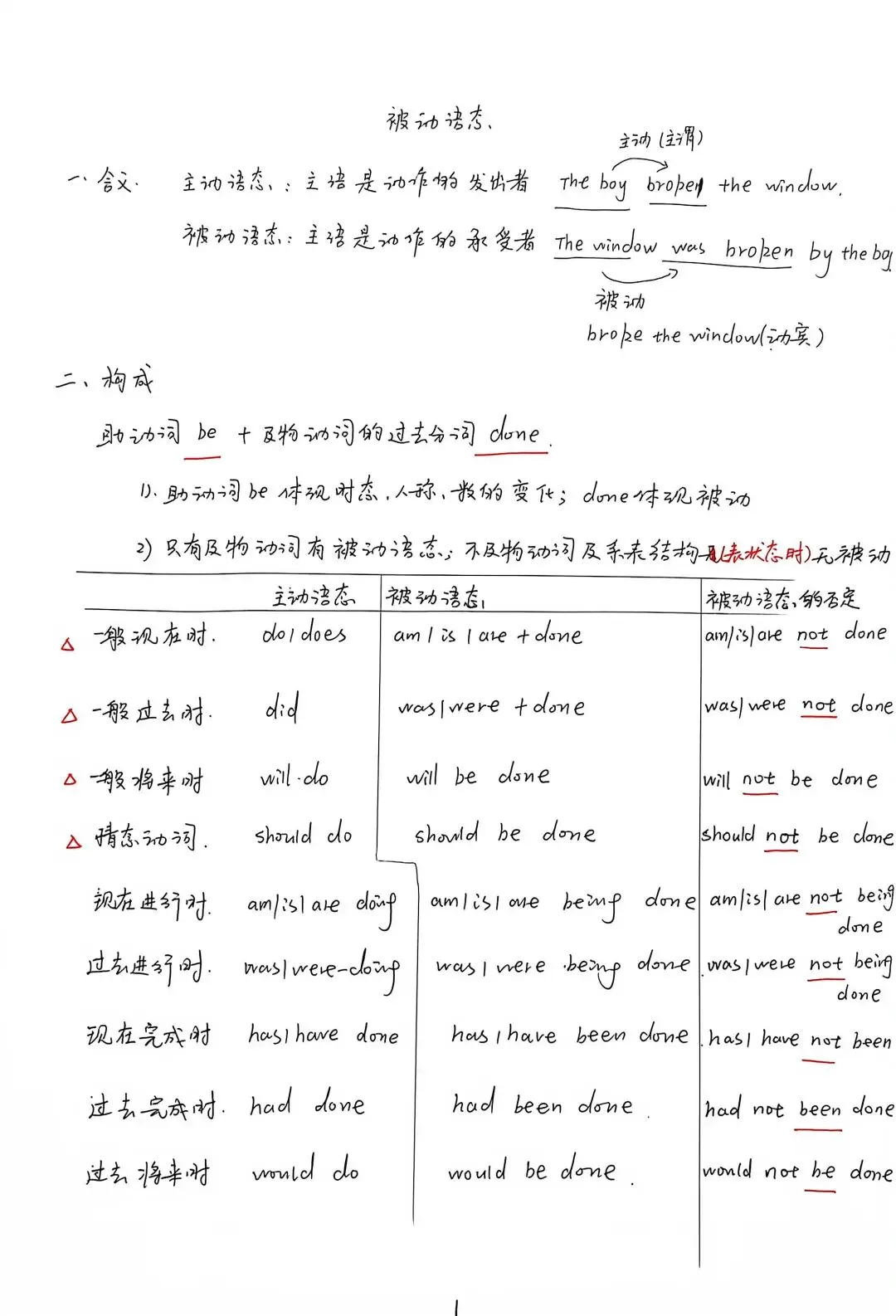
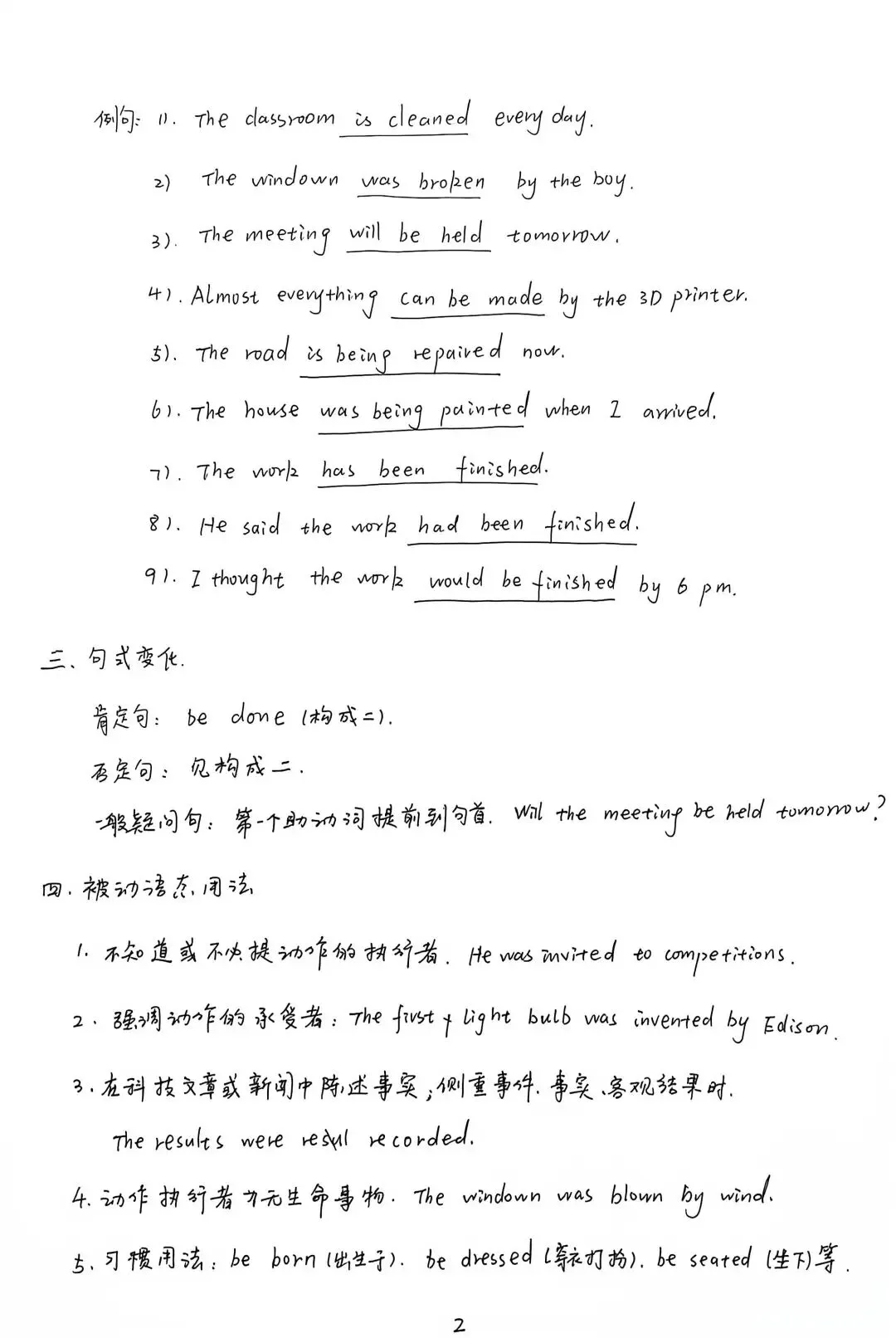
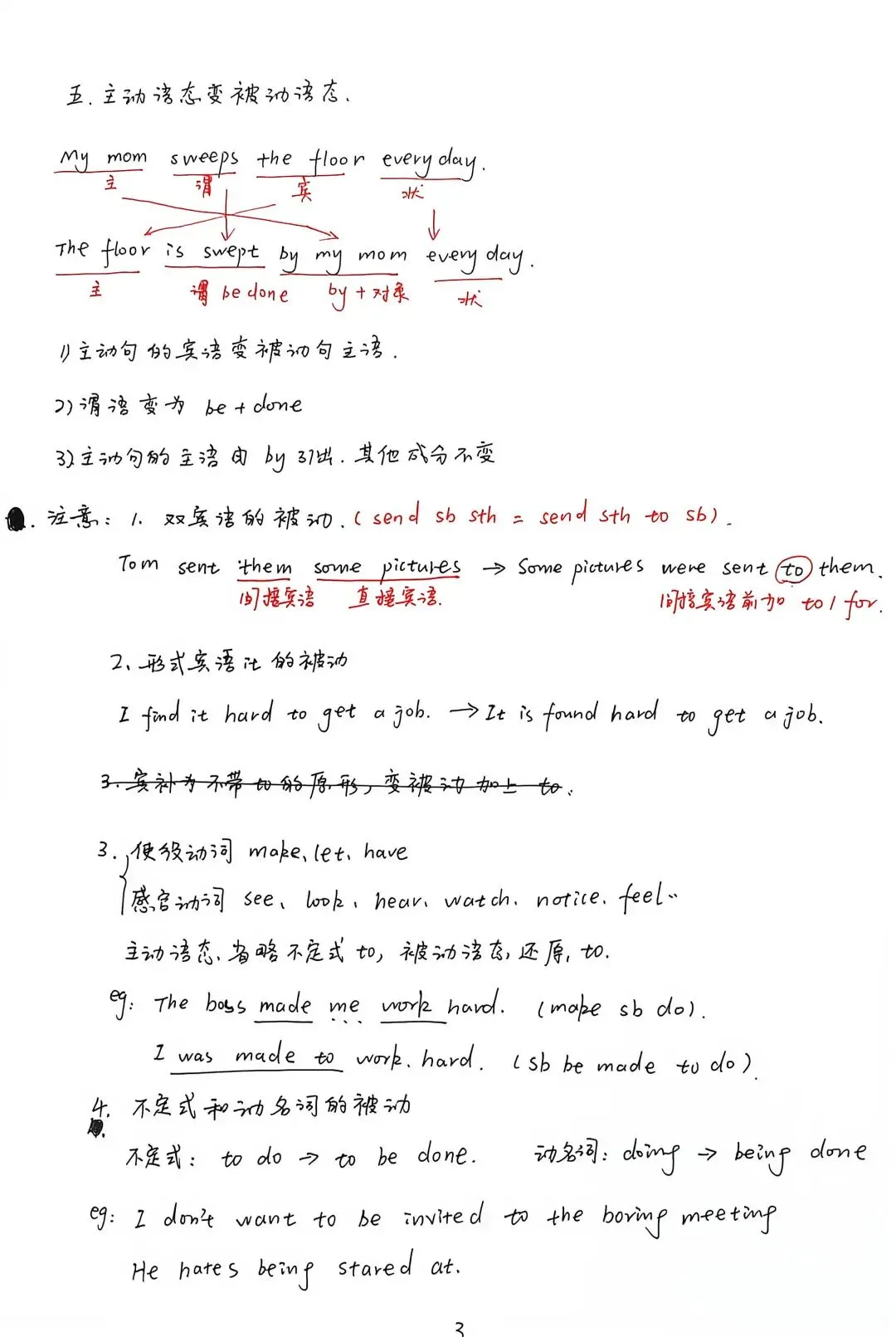
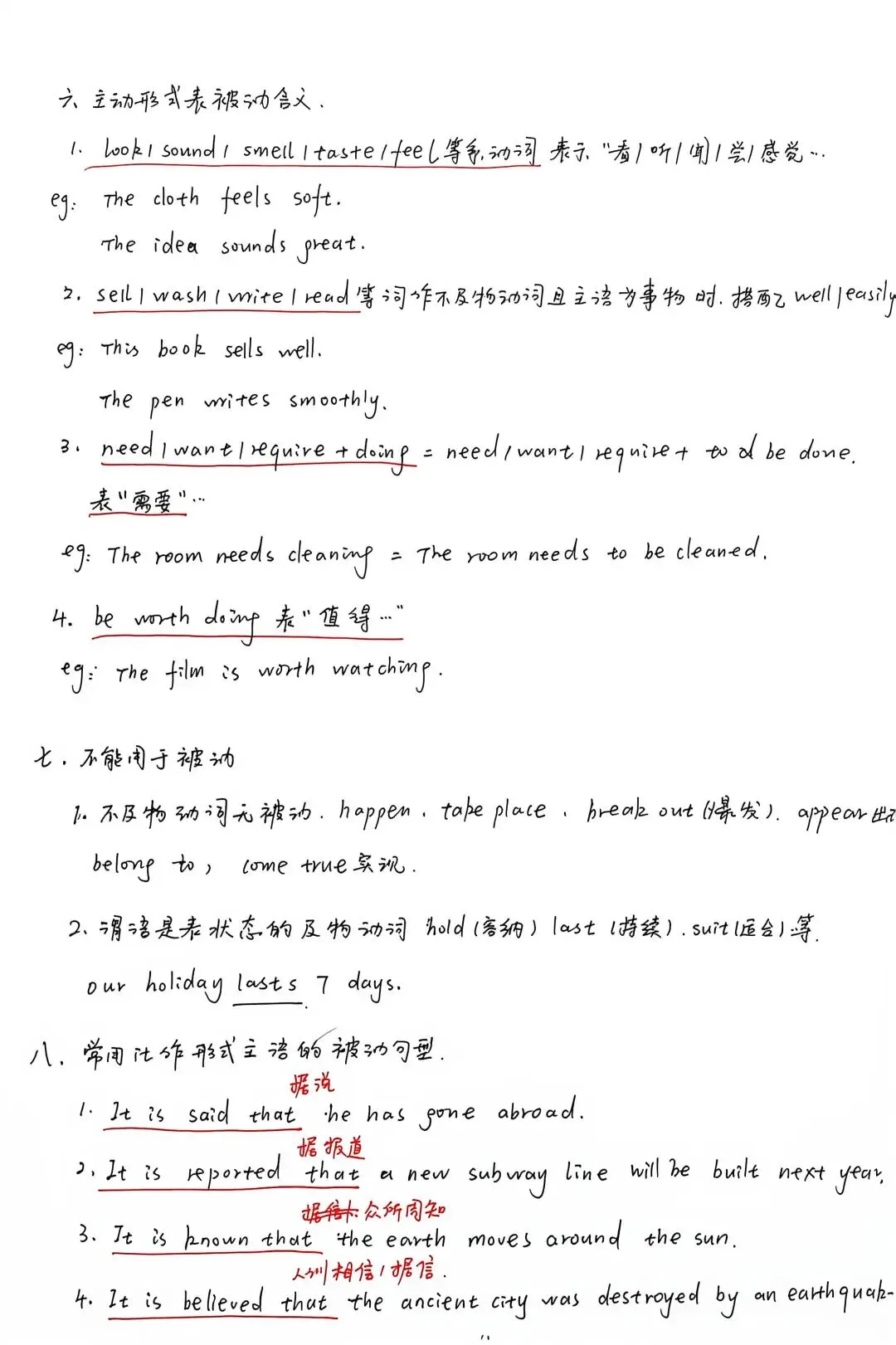
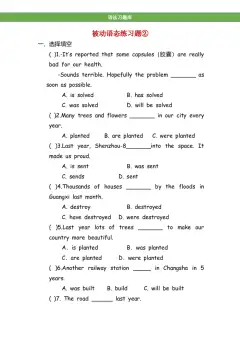
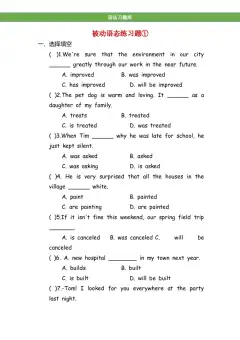
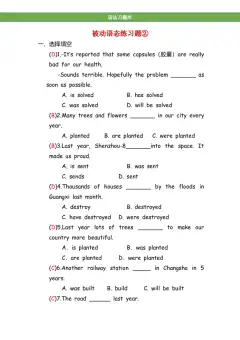
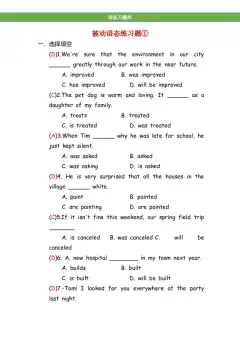
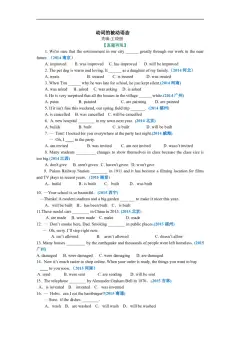
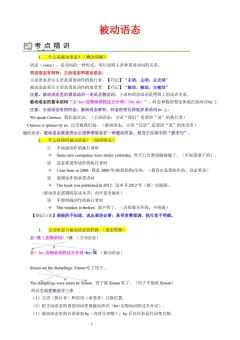
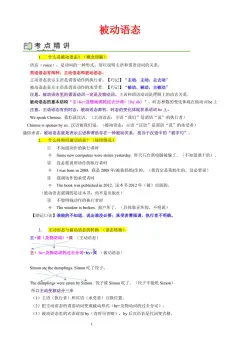
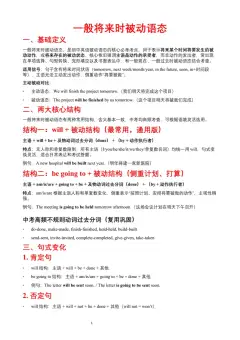
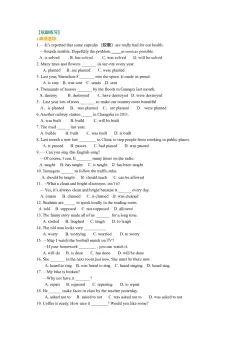
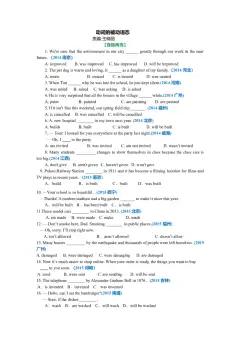
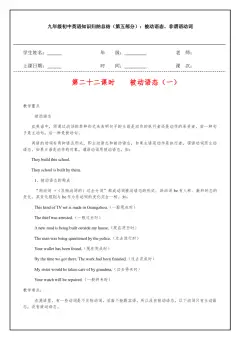
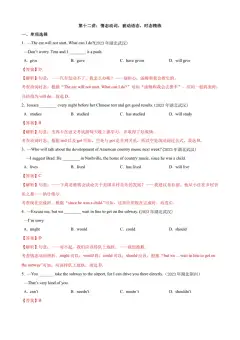
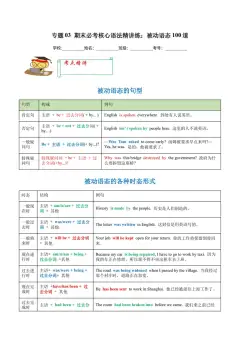
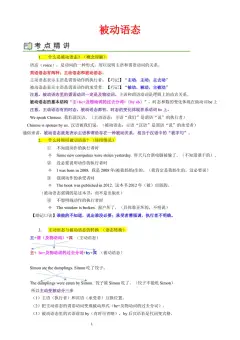
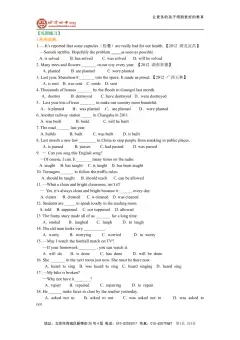
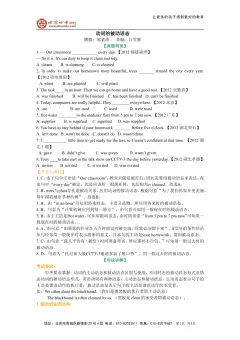
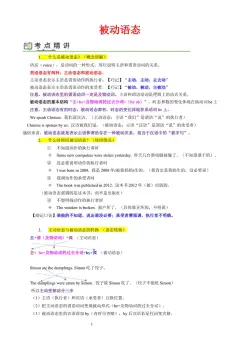
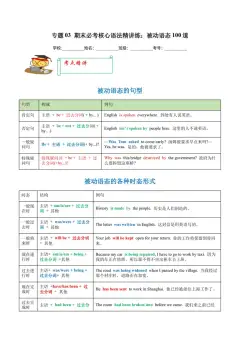
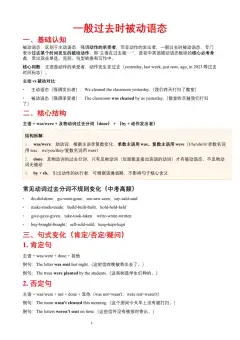
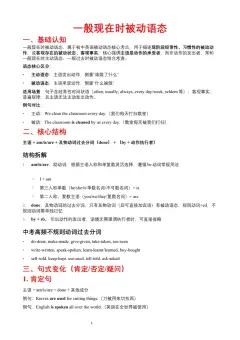
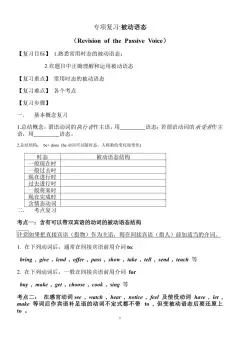
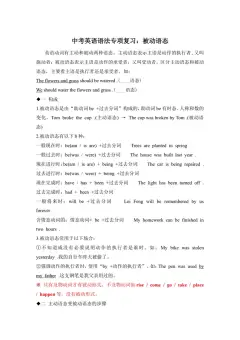
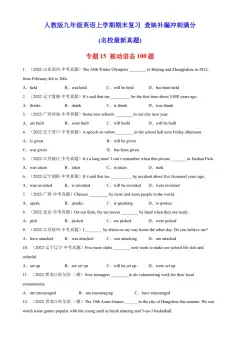
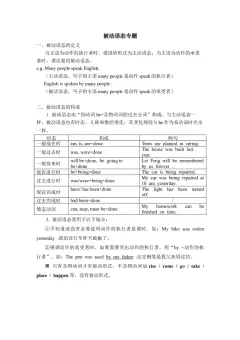
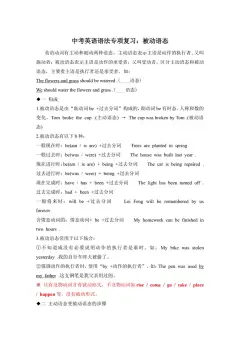
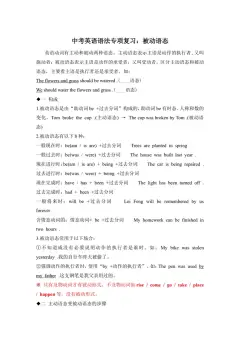
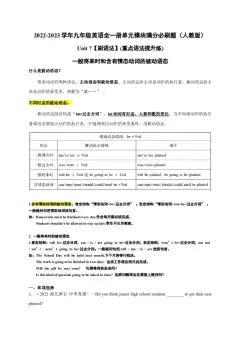
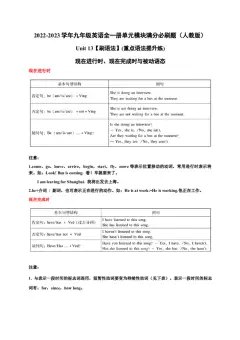
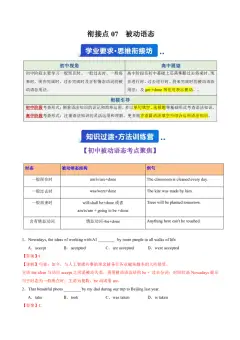
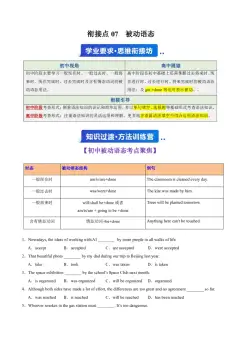
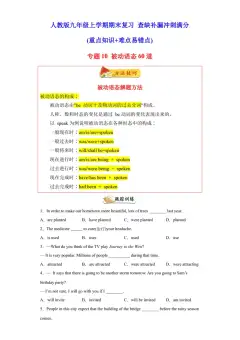
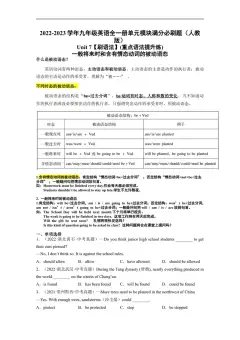
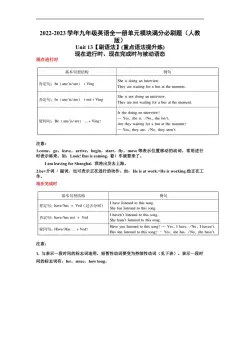
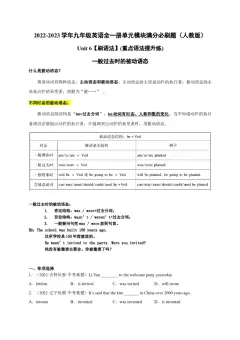
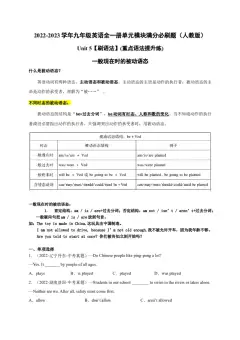
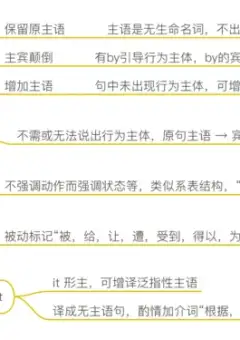
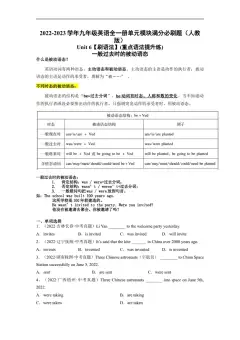
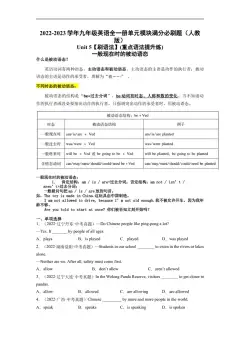
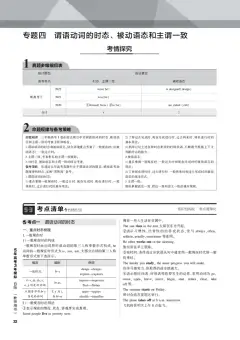
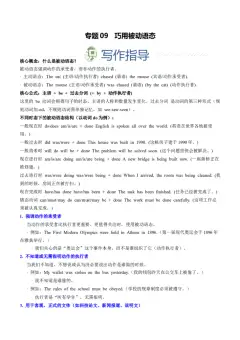
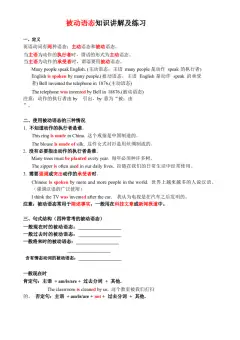
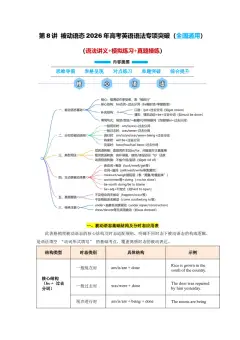
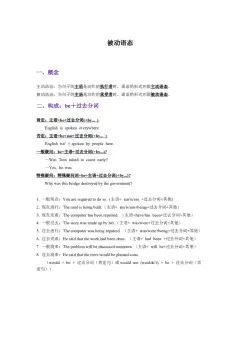
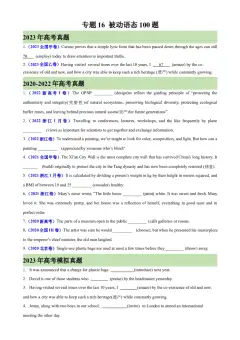
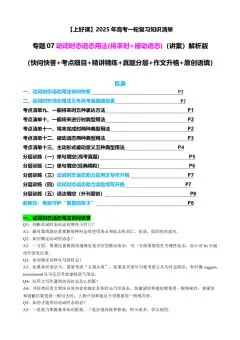
被动语态 一、含义 主动语态:主语是动作的发出者 例:The boy broke the window. 被动语态:主语是动作的承受者 例:The window was broken by the boy. 二、构成 助动词 be + 及物动词的过去分词(done) 1. 助动词be体现时态、人称、数的变化;done体现被动 2. 只有及物动词有被动语态;不及物动词及系表结构(表状态时)无被动 主动语态 被动语态 被动语态否定 一般现在时: do/does am / is / are + done am/is/are not done 一般过去时: did was / were + done was/were not done 一般将来时: will do will be done will not be done 情态动词: should do should be done should not be done 现在进行时: am/is/are doing am / is / are being done am/is/are not being done 过去进行时: was/were doing was / were being done was/were not being done 现在完成时:has/have done has / have been done has/have not been done 过去完成时: had done had been done had not been done 过去将来时: would do would be done would not be done 例句 1. The classroom is cleaned every day. 2. The window was broken by the boy. 3. The meeting will be held tomorrow. 4. Almost everything can be made by the 3D printer. 5. The road is being repaired now. 6. The house was being painted when I arrived. 7. The work has been finished. 8. He said the work had been finished. 9. I thought the work would be finished by 6 pm. 三、句式变化 肯定句: 见上表构成 否定句:见上表构成 一般疑问句:第一个助动词提到句首 例:Will the meeting be held tomorrow? 四、被动语态用法 1. 不知道或不便提动作的执行者。 例:He was invited to competitions. 2. 强调动作的承受者。 例:The first light bulb was invented by Edison. 3. 在科技文章或新闻中陈述事实,侧重事件、事实、客观结果时。 例:The results were recorded. 4. 动作执行者为无生命事物。 例:The window was blown by wind. 5. 习惯用法:be born(出生于)、be dressed(穿衣打扮)、be seated(坐下)等。 五、主动语态变被动语态 例句:My mom sweeps the floor every day. (主语:My mom;谓语:sweeps;宾语:the floor;状语:every day) → The floor is swept by my mom every day. (主语:The floor;谓语:is swept;by + 对象:by my mom;状语:every day) 变换规则: 1. 主动句的宾语变被动句主语。 2. 谓语变为 be + done。 3. 主动句的主语由by引出,其他成分不变。 ⚠️ 注意: 1. 双宾语的被动(send sb sth = send sth to sb) 例:Tom sent them some pictures. → Some pictures were sent to them. (间接宾语前加to / for) 2. 形式宾语it的被动 例:I find it hard to get a job. → It is found hard to get a job. 3. 宾补为不带to的原形,变被动加上to 使役动词 make, let, have 感官动词 see, hear, watch, notice, feel… 规则:主动语态,省略不定式to;被动语态,还原to。 例:The boss made me work hard.(make sb do) → I was made to work hard.(sb be made to do) 4. 不定式和动名词的被动 不定式:to do → to be done 动名词:doing → being done 例:I don’t want to be invited to the boring meeting. 例:He hates being stared at. 六、主动形式表被动含义 1. look / sound / smell / taste / feel 等系动词,表示“看/听/闻/尝/感觉……” 例:The cloth feels soft. 例:The idea sounds great. 2. sell / wash / write / read 等词作不及物动词且主语为事物时,搭配 well / easily 例:This book sells well. 例:The pen writes smoothly. 3. need / want / require + doing = need / want / require + to be done,表“需要……” 例:The room needs cleaning. = The room needs to be cleaned. 4. be worth doing 表“值得……” 例:The film is worth watching. 七、不能用于被动 1. 不及物动词无被动:happen、take place、break out(爆发)、appear、belong to、come true(实现) 2. 谓语是表状态的及物动词:hold(容纳)、last(持续)、suit(适合)等 例:Our holiday lasts 7 days. 八、常用it作形式主语的被动句型 1. It is said that … 据说 例:It is said that he has gone abroad. 2. It is reported that … 据报道 例:It is reported that a new subway line will be built next year. 3. It is known that … 据知、众所周知 例:It is known that the earth moves around the sun. 4. It is believed that … 人们相信 / 据信 例:It is believed that the ancient city was destroyed by an earthquake.