文档文本内容
学科网(北京)股份有限公司
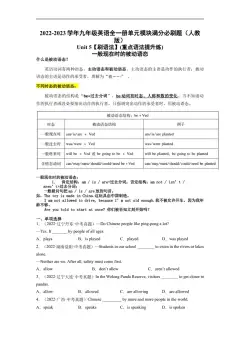
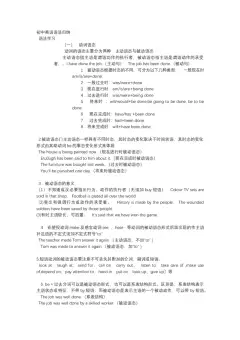
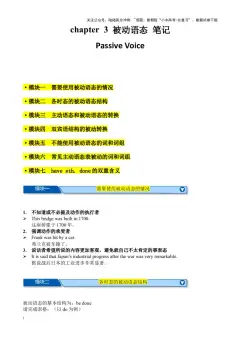
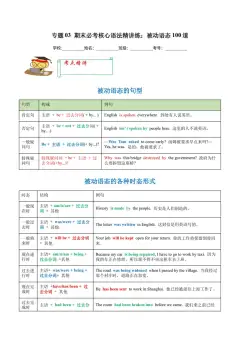
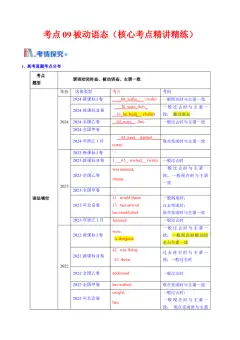
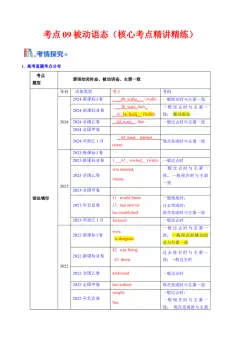
被动语态专题
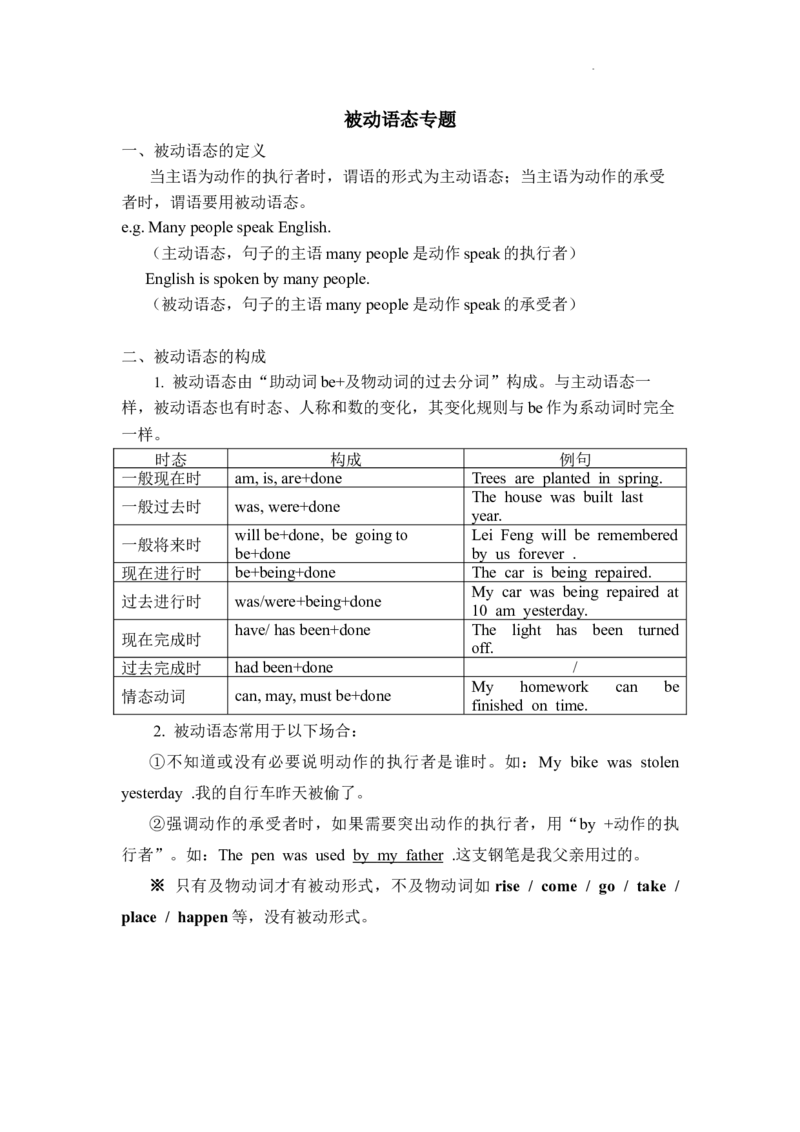
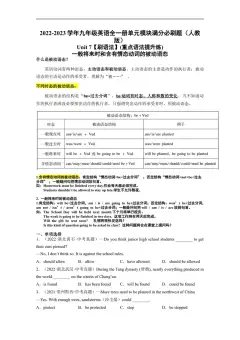
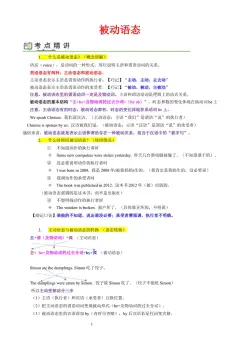
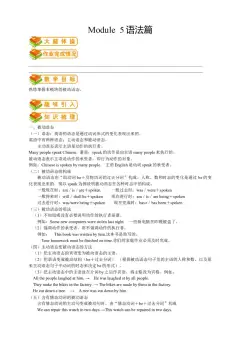
一、被动语态的定义
当主语为动作的执行者时,谓语的形式为主动语态;当主语为动作的承受
者时,谓语要用被动语态。
e.g. Many people speak English.
   (主动语态,句子的主语many people 是动作speak 的执行者)
   English is spoken by many people.
   (被动语态,句子的主语many people 是动作speak 的承受者)
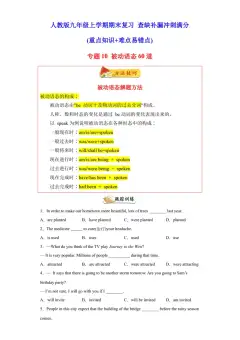
二、被动语态的构成
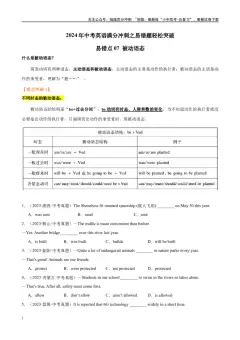
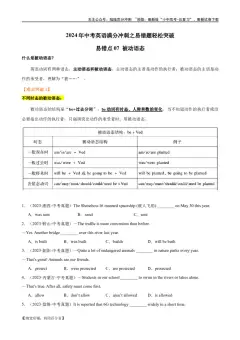
1. 被动语态由“助动词be+及物动词的过去分词”构成。与主动语态一
样,被动语态也有时态、人称和数的变化,其变化规则与be 作为系动词时完全
一样。
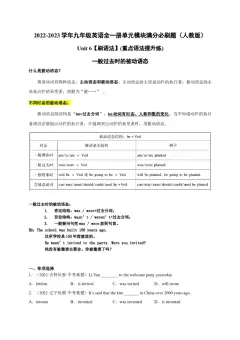
时态
构成
例句
一般现在时
am, is, are+done
Trees are planted in spring.
一般过去时
was, were+done
The house was built last
year.
一般将来时
will be+done, be going to
be+done
Lei Feng will be remembered
by us forever .
现在进行时
be+being+done
The car is being repaired.
过去进行时
was/were+being+done
My car was being repaired at
10 am yesterday.
现在完成时
have/ has been+done
The light has been turned
off.
过去完成时
had been+done
/
情态动词
can, may, must be+done
My
homework
can
be
finished on time.
2. 被动语态常用于以下场合:
①不知道或没有必要说明动作的执行者是谁时。如:My bike was stolen
yesterday .我的自行车昨天被偷了。
②强调动作的承受者时,如果需要突出动作的执行者,用“by +动作的执
行者”。如:The pen was used by
    my
    father

  .这支钢笔是我父亲用过的。
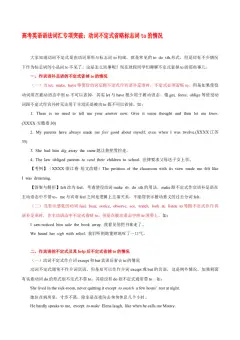
※ 只有及物动词才有被动形式,不及物动词如rise / come / go / take /
place / happen 等,没有被动形式。
学科网(北京)股份有限公司
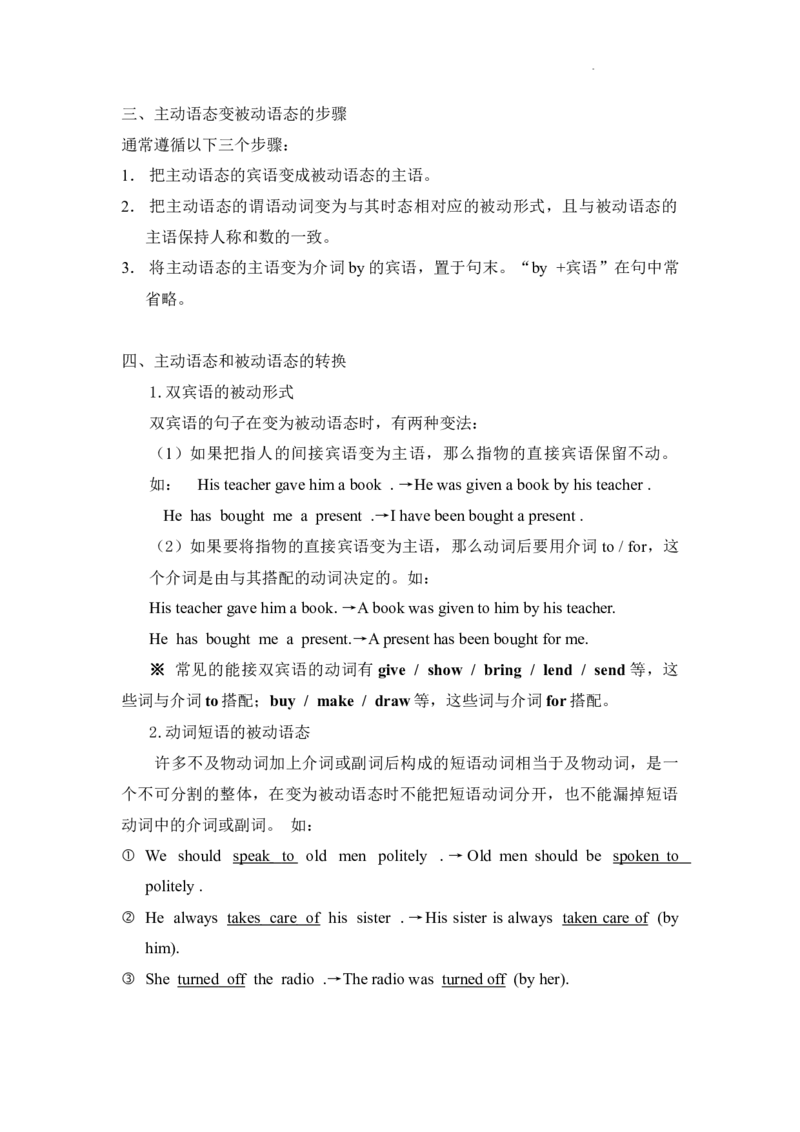
三、主动语态变被动语态的步骤
通常遵循以下三个步骤:
1.把主动语态的宾语变成被动语态的主语。
2.把主动语态的谓语动词变为与其时态相对应的被动形式,且与被动语态的
主语保持人称和数的一致。
3.将主动语态的主语变为介词by 的宾语,置于句末。“by +宾语”在句中常
省略。
四、主动语态和被动语态的转换
1.双宾语的被动形式
双宾语的句子在变为被动语态时,有两种变法:
(1)如果把指人的间接宾语变为主语,那么指物的直接宾语保留不动。
如:  His teacher gave him a book .→He was given a book by his teacher .
He has bought me a present .→I have been bought a present .
(2)如果要将指物的直接宾语变为主语,那么动词后要用介词to / for,这
个介词是由与其搭配的动词决定的。如:
His teacher gave him a book.→A book was given to him by his teacher.
He has bought me a present.→A present has been bought for me.
※ 常见的能接双宾语的动词有give / show / bring / lend / send 等,这
些词与介词to 搭配;buy / make / draw 等,这些词与介词for 搭配。
2.动词短语的被动语态
    许多不及物动词加上介词或副词后构成的短语动词相当于及物动词,是一
个不可分割的整体,在变为被动语态时不能把短语动词分开,也不能漏掉短语
动词中的介词或副词。 如:
①We should speak

  to  old men politely .→Old men should be spoken to
politely .
②He always takes

   care

   of
   his sister .→His sister is always taken care of (by
him).
③She turned

   off
   the radio .→The radio was turned off (by her).
学科网(北京)股份有限公司
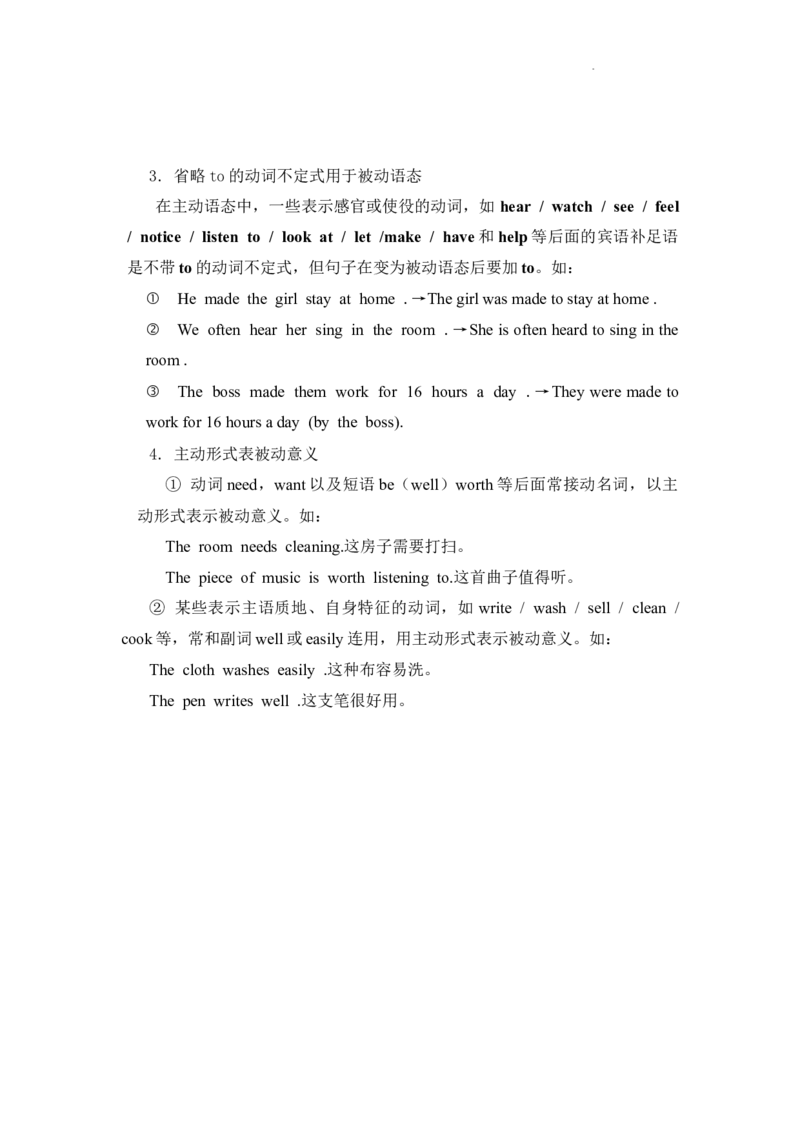
3. 省略to 的动词不定式用于被动语态
在主动语态中,一些表示感官或使役的动词,如hear / watch / see / feel
/ notice / listen to / look at / let /make / have 和help 等后面的宾语补足语
是不带to 的动词不定式,但句子在变为被动语态后要加to。如:
①
He made the girl stay at home .→The girl was made to stay at home .
②
We often hear her sing in the room .→She is often heard to sing in the
room .
③
The boss made them work for 16 hours a day .→They were made to
work for 16 hours a day (by the boss).
4. 主动形式表被动意义
① 动词need,want 以及短语be(well)worth 等后面常接动名词,以主
动形式表示被动意义。如:
The room needs cleaning.这房子需要打扫。
The piece of music is worth listening to.这首曲子值得听。
② 某些表示主语质地、自身特征的动词,如write / wash / sell / clean /
cook 等,常和副词well 或easily 连用,用主动形式表示被动意义。如:
The cloth washes easily .这种布容易洗。
The pen writes well .这支笔很好用。
学科网(北京)股份有限公司
练习
一、用括号内所给动词的适当形式填空
1. Many TV sets ________ (make) every year in this factory .
2. All the exercises must ________ (finish) before class is over .
3. Corns           (grow) in Spring.
二、单项选择
1. English _____ by many countries, but Chinese people _____ Chinese.
A. is spoken; speak     B. is spoken; are speak     C. speaks; speak
2. They _____ a new school in the village now. It _____ before September
this year .
A. are building; will be built             B. are building; will build
C. are building; will built
3. If the small trees _____ , they will grow up quickly .
A. are taken good care of     B. are taken good care    C. take good care
of
4. –Where did you go last night ?
  –I _____ to Tom’s birthday party.
A. am invited     B .was invited    C. invited
5. These shirts _____ well , because they _____ nice .
A .are sold ; are looked     B. sell ; look     C. sell ; are looked
6. The flowers _____ every day , or they’ll die .
A. should be water      B. must be watered     C. must water
7. Don’t worry , Your son _____ .
A. must be find     B. must be found     C. must be found
8. –Your dress looks beautiful.
  –Thank you .It _____ by my mother last year.
A. made      B. is made     C. was made
学科网(北京)股份有限公司
9. The window _____ last night, so it _____.
A. isn’t closed; was broken            B. didn’t close; was broken
C. wasn’t closed; was broken
10. Most science books _____ in English.
A. are written     B. is written     C .wrote
11. Bob _____ by his boss.
A .was made to work     B. was made work     C. made to work
12. The little boy _____ Jack.
A. is called     B. called      C. is calling
13. Water _____ into ice.
A. can been changed      B .can be changed      C. can change
14. What _____ last night ?
A. was happening     B. happened     C. was happened
15. The Party _____ in 1921 .
A. is found     B. was founded     C .was found

三、按要求改写句子,每空一词。
1. She made her son do his homework after supper. (改为被动语态)
Her son _____  _____  _____  _____ his homework after supper .
2. Is this game often played by them in the afternoon?( 改为主动语态)
_____  _____ often _____ this game in the afternoon ?
3. You can answer my question after you think it over.(改为同义句)
My question _____  _____  _____ after it is thought over .
四、翻译句子,每空一词。
1. 我的汽车出毛病了,需要修理。
Something is wrong with my car and it _____  _____ .
2. 老年人应该受到很好的照顾。
Old people should _____  _____  _____  _____  _____ .
学科网(北京)股份有限公司
3. 这个故事很值得听。
This story is well worth _____  _____ .
4. 昨天有人给他买了一个MP4。
An MP4 _____  _____  _____ him yesterday .