ARTICLE · 1409389
26年11月南京市期中教学质检高二英语试题及完整答案解析纯净版
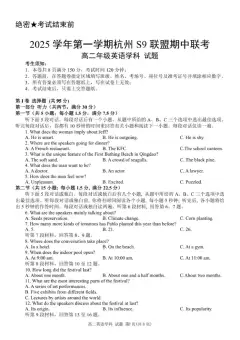
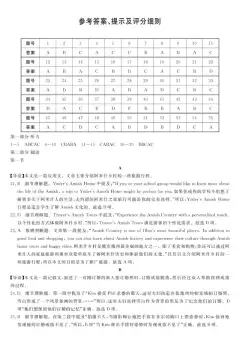
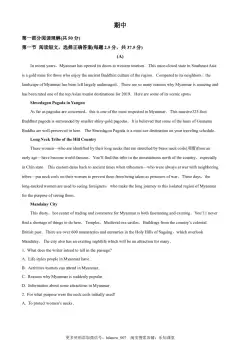
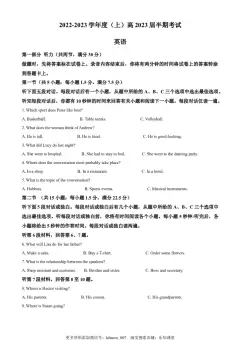
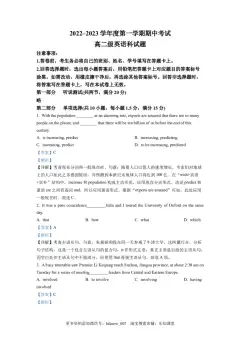
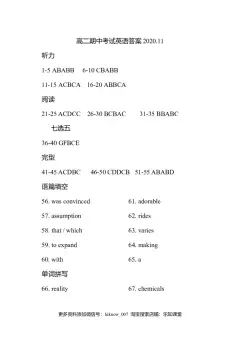
26年11月南京市期中教学质检高二英语试题及完整答案解析纯净版第一部分听力(共两节,满分30分) 做题时,先将答案标在试卷上,录音内容结束后,你将有两分钟的时间将试卷上的答案转涂到答题卡上。 第一节(共5小题;每小题1.5分,满分7.5分) 听下面5段对话。每段对话后有一个小题,从题中所给的A、B、C三个选项中选出最佳选项。听完每段对话后,你都有10秒钟的时间来回答有关小题和阅读下一小题。每段录音读两遍。 1. What will the woman do next? A. Cook some rice B. Pour some milk. C.Add some sugar. 2. What are the speakers talking about? A. Planning a move. B. Renting a flat. C. Watching a film. 3. Why does the man make the phone call? A. To cancel a repair service B. To reach an AI assistant C. To return a broken TV. 4. What is the relationship between the speakers? A. Classmates. B. Fellow workers. C. Doctor and patient. 5. Why does the woman learn Spanish? A. To get a job in Spain B. To enjoy the trip more. C. To interview local people. 第二节(共15小题;每小题1.5分,满分22.5分) 听下面5段对话或独白。每段对话或独白后有几个小题,从题中所给的A、B、C三个选项中选出最佳选项。听每段对话或独白前,你将有时间阅读各个小题,每小题5秒钟;听完后,各小题将给出5秒钟的作答时间。每段录音读两遍。 听第6段录音,回答第6、7题。 6. Where does the conversation probably take place? A. At the cleaner's B. At home. C. At a market 7. How does the woman feel in the end? A. Regretful. B.Sad. C. Happy. 听第7段录音,回答第8至10题。 8. What is the woman concerned about? A. What grade to receive. B. How to introduce herself. C. Whether to go to the party. 9.Why did the woman join the Debate Club? A. To do what she enjoys. B. To follow her brother's advice. C.To win more awards. 10. What does the man suggest the woman focus on? A. Showing her personality. B. Listing her achievements C. Improving her appearance. 听第8段录音,回答第11至13题。 11. What did Zoe write on the first page of her diary? A. A goal for swimming B. A message to her mom. C.A note to her future self. 12. How does the man feel toward Zoe's diary? A. Impressed B. Relieved. C.Amused. 13. Who is the man? A. A coach B. A publisher. C.A host. 听第9段录音,回答第14至16题。 14. What does the man say about his trip to Berlin? A. He enjoyed himself. B.He was tired. C. He went sightseeing 15. How does Lisa manage her time on business trips? A. By planning in advance. B. By limiting her entertainment C. By setting a fixed work schedule 16. What did Lisa discover about herself? A. Working from home suits her better. B. She prefers living near her workplace. C. New environments improve her efficiency. 听第10段录音,回答第17至20题。 17. What is the key to machine learning? A. Clear rules. B. Brain structure. C. Pattern study. 18. How many steps are there before an AI is ready to go? A. Two. B.Three C. Four. 19. What may show an AI has passed the test? A. It recognizes new things. B. It memorizes answers C. It analyzes lots of data. 20. What is the speaker doing? A. Launching a product B. Giving a lecture. C. Hosting a discussion. 第二部分阅读理解(共两节,满分50分) 第一节(共15小题;每小题2.5分,满分37.5分) 阅读下列短文,从每题所给的A、B、C和D四个选项中,选出最佳答案。 A Capital One Arena is the heart of a $9.2 billion redevelopment that began 25 years ago. Since then, it has hosted 47 million people and more than 4,500 events. All Upcoming Events Aespa‑2026‑27 LIVE TOUR ,Tuesday, December 22,8:00 PM Washington Mystics vs. Chicago Sky,Thursday, December 24,7:30 PM Washington Capitals vs. Boston Bruins,Friday, December 25,7:00 PM Gorillaz‑The Mountain Tour 2026,Saturday, December 26,7:00 PM Food & Drinks As part of a continued effort to improve the guest experience by increasing the speed of service, Capital One Arena is now a cashless business. Credit cards and online payment through smartphone apps will be the only form of payment that will be accepted. Capital One cardholders receive 10% off their food and drink orders and the discount is only applicable at the time of sale. Guests should consume alcoholic drinks in a responsible manner. And we welcome reports on any inappropriate behavior to the nearest Guest Relations team member. Parking We have teamed up with SpotHero, the national leader in online parking booking, to allow fans to purchase (购买) guaranteed parking at lots within easy walking distance of Capital One Arena. Once purchased, parking passes are emailed immediately and can be printed at home, and entry (进入) to your selected location is 100% guaranteed. Visit the SpotHero Parking Page and book a spot with rates up to 50% off. 21. Which event will be held on December 24? A. Aespa‑2026‑27 LIVE TOUR. B. Washington Mystics vs. Chicago Sky. C. Washington Capitals vs. Boston Bruins. D. Gorillaz‑The Mountain Tour 2026. 22. What are the guests encouraged to do? A. Pay by cash. B. Become a team member. C. Drink a lot. D. Report improper behavior. 23. What is one advantage of booking parking through SpotHero? A. Free parking B. Guaranteed parking access C. Long‑term rights to park. D. Early entry to the parking lot. B Gathered around small tables, groups of second‑ and third‑graders are staying after school for extra help to catch up with their classmates in reading. What's unusual is that the tutors (指导教师) are only about six to eight years older — high school students who themselves have been struggling with their study or social life. The man who started this program, Mark Hecker, says the idea is that by being paired together, both the tutors and the students can discover potential they didn't know they had — not just in reading but in life. The program, called Reach Incorporated, is rooted in a philosophy of unconditional love and support. In Reach, the tutors aren't "fired" or kicked out of the program if they don't do what's being asked of them. One boy, named Tre' Shawn, hardly came at all during his first year. As Hecker sees it, Tre' Shawn "was just really nervous about being asked to read in front of people." Reach offered a non‑judgmental environment, and also an opportunity. Instead of the negative feelings that can come from being in a special program for students who are behind in reading, Tre' Shawn was given a chance to make a difference in the life of a primary school student. Now, Hecker says, Tre' Shawn has warmed to the role of tutor. As Hecker observes, the young kids are excited to have a tutor who's like an older brother or sister and the tutors can talk to the kids on a more personal level. What's more, Hecker says it's typical for the primary students to grow their reading ability by about 1.5 grade levels per year, while the tutors themselves improve by about two grade levels per year. The results don't come just by putting students of different ages in the same classroom, Hecker points out. The climate of love and support created by Reach members is also essential."Kids need a place where they can mess up and learn, and mess up and learn," Hecker says. 24. What is unusual about the tutors in Reach? A. They are especially fond of reading B. They have some problems of their own. C. They are determined to become teachers. D. They already know what they are good at. 25. Why does the author mention the story of Tre' Shawn? A. To explain why Hecker appreciated the boy. B. To introduce how Hecker selected the tutors. C. To show how Reach helps the tutors grow. D. To tell why Reach values reading skills. 26. What is paragraph 4 mainly about? A. Hecker's devotion to the program. B. The ways to form connections. C. Students' scores in reading tests D. The benefits of the program. 27. According to the last paragraph, what is central to Hecker's idea of Reach? A. A safe place to learn from mistakes. B. The support of students' parents. C. A competitive climate for learning D. The diversity of the student body. C Birds can fly above and around obstacles(障碍), so roads may seem harmless to them. But is that really true? With the question in mind, we examined how roads affect birds in Australia through old‑fashioned bird watching and careful recording of what we saw. We selected 12 roads: four small, four medium, and four large. Sitting at each road, we counted birds crossing it. We also walked 100 meters off the road and counted the bird species living there. It turns out that fewer bird species crossed as roads became wider. More surprisingly, fewer birds were present in the forests near large roads than near small roads. Small forest birds were the least likely to cross roads, while large birds did not seem to mind crossing roads all that much. Why? Small forest birds like dense (浓密的) plant cover, with plenty of food and space and places to hide from animals that may eat them. Building roads often makes the forest near a road more open. Food and space that were previously there become harder to find, so many animals may be fighting over them. Traffic noise can also make it difficult for birds to call to and hear one another or to hear animals approaching to catch them. To make matters worse, lights and gardens near newly‑built roads are perfect for some larger birds, which may drive smaller birds away. These are problems small birds face near roads. But they still have another problem: crossing the road. Small forest birds have wings generally suited for short flights in dense tree cover,so a wide treeless gap may be impossible to cross in a single flight. Outside tree cover, they are also easier for other animals to catch. As more roads are built, it is important to understand how birds behave when they face man‑made changes to the environment. It would be interesting to compare how birds react to roads with how they react to natural openings in forests, such as rivers. Such work, along with our study, will help us protect wildlife while we still meet our need to use roads. 28. The researchers carried out the study by A. placing various obstacles B. counting birds at and near different roads C. updating the observational methods D. grouping birds based on their living habits 29. Which is one of the researchers' findings? A. Larger gardens bring more food. B. Heavier traffic attracts smaller birds. C. Fewer birds cross wider roads. D. Bigger birds avoid brighter areas. 30. What makes it difficult for smaller birds to cross the road? A. The dense tree cover B.The size of forests. C. Their body structure. D. Their sense of direction. 31. What is the main value of the study? A. To help birds improve their behaviour. B. To encourage man‑made changes C. To balance road use and wildlife protection D. To discover natural openings for birds. D When Mount Vesuvius erupted in 79 CE, volcanic ash buried a library of papyrus (纸莎草) scrolls in the ancient city of Herculaneum, carbonizing the documents. Nearly 2,000 years later, the scrolls remain too delicate to open. X‑ray scans (扫描) have failed to reveal the text clearly because the ink and papyrus are both carbon‑based, so X‑rays pass through each material at nearly the same rate. Researchers at the University of California, Berkeley (UCB), and the National Institute of Standards and Technology (NIST) now report a two‑step method that may solve this problem. Study leader Douglas Seiler of UCB and his team realized that lead (铅) takes in X‑rays more strongly than papyrus does. Therefore, a scroll whose ink contained lead would produce images in which the letters stand out against the surrounding papyrus. Not all ancient inks contained lead, but some Herculaneum scrolls did. The team decided to first use a handheld X‑ray fluorescence (XRF) instrument to look for lead. If XRF discerns lead, the team sends the scrolls for further imaging to distinguish the letters from the papyrus. Then the team made model scrolls from modern Egyptian papyrus. They wrote on them with a special pen, using carbon‑black ink mixed with different amounts of lead, and carbonized the scrolls. They tested samples with different lead concentrations (浓度). To the researchers' satisfaction, the XRF instrument returned a lead signal from every sample. The researchers then scanned a carbonized model scroll from multiple angles to build a 3D image of the writing. Custom software virtually unrolls the data, showing the lead‑marked words. Although the process does not work for scrolls written in lead‑free ink, the researchers have uncovered metals other than lead in ancient inks. "We would try to look for these other metals in the scans as well," says Douglas. 32. According to the first paragraph, why is it difficult to read the text in the scrolls? A. The volcanic ash makes the scrolls dirty. B. The X‑ray scans involve complicated steps. C. The carbonized scrolls are too delicate to scan D. The ink and papyrus are hard to tell apart in X‑ray images. 33. What does the underlined word "discerns" in paragraph 2 mean? A. Detects. B. Stores. C. Removes D.Estimates. 34. Why did the researchers make and test model scrolls? A. To uncover why some ancient inks contained lead. B. To learn how scrolls were made in ancient Egypt C. To determine which material suits the test best. D. To see whether their method could work. 35. What do the researchers plan to do next? A. Test other metals in the ink. B. Digitalize the scroll texts C. Apply the lead‑free ink. D. Improve scan accuracy. 第二节(共5小题;每小题2.5分,满分12.5分) 阅读下面短文,从短文后的选项中选出能填入空白处的最佳选项。选项中有两项为多余选项。 Why take a kid to the museum? When my son was a year old,he saw a cow in"real life" for the first time.He had seen plenty in books, both photographs and cartoon drawings. However, there just aren't that many cows around where we live. _36_He pointed at it, and said "MOO!" _37__For me, it clearly shows why visiting museums is so important for him. He needs to see things for real and not just in his books. His brain is ready to take in these concepts and make meaningful connections. Along with farm animals, my son loves anything that has wheels such as trains. However, like cows, trains are rarely seen in our neighborhood. _38_There, I can take him to America on the Move and he can see a train in "real life." Suddenly, the pictures in his book come to life with size, color, lights, and noise — a train means something to him in a very different way than it did when it was just in his book. The museum is a place where I can expose him to things that he doesn't see in his daily life. For right now, that means real objects like trains. Over time, he will learn that some of these objects belong to the past.39 He can't read yet or fully understand the story behind what he is seeing. He can only last about 30 minutes before needing a snack and then another 30 before he is really done._40___In the museum, he gets a chance to experience things and ideas that I can't give him at home. Each time he builds connections between the things he knows and the things he is seeing, one more building block for future learning is clicked into place for him. A. He picked them out in his books. B. That's where the museum comes in. C. That day, he walked right up to that cow. D. He is still too young to understand history E. However, taking him to the museum is still worth it F. Eventually, these visits will help him understand history G. So, what does seeing a cow have to do with visiting a museum? 第三部分语言知识运用(共两节,满分30分) 第一节(共15小题;每小题1分,满分15分) 阅读下面短文,从短文后各题所给的A、B、C、D四个选项中,选出可以填入空白处的最佳选项。 It was a day to remember. As the evening cold_41_, I found myself outside with a group of Chinese friends, about to try something new: making a Chinese hotpot. I had never cooked this way before and felt__42_.I had no idea that the night would turn into one of laughter and_43_. The setup was simple yet fascinating. At the center of our table sat a large pot___44_in two. One side held a spicy (辣的) red soup, the other held a_45_chicken soup. Our table was a colorful display of raw ingredients waiting to be_46_in the hotpot: thinly_47_meats, ranging from beef to lamb, and a variety of vegetables. Chopsticks in hand, we began to put food into the boiling soup. At first,I was not skillful and_48_a large piece of tofu in the pot, which made everyone laugh. The spicy side cooked everything quickly, giving them a strong taste, while the mild side brought out the natural_49_of each ingredient. Every_50_was a pleasant surprise. Yet what I remember most is not the food. It is the way we_51_together, talking and laughing while steam rose into the_52_night air. It was a celebration of_53_,and a proof of the power of food to bring people together. That late autumn night I understood why hotpot_54_in China: it is not about what is in the pot, but about who sits__55_it. 41 A. broke down B.set in C. took off D.died away 42 A. nervous B.inspired C. depressed D.confident 43 A. purpose B.wisdom C.warmth D.respect 44 A. struck B.wrapped C. torn D.divided 45 A. hot B.sour C.mild D.salty 46 A. cooked B.eaten C.cleaned D.steamed 47 A.sliced B.baked C. roasted D.fried 48 A. processed B.dropped C.shared D.placed 49 A.shape B.color C. flavor D.structure 50 A. touch B.glance C.breath D.bite 51 A. gathered B.worked C.lived D.fought 52 A. polluted B.cool C.smelly D.thin 52 A. victory B.ambition C. responsibility D.friendship 54 A. disappears B. matters C.fails D.varies 55 A. for B.behind C. through D.around 第二节(共10小题;每小题1.5分,满分15分) 阅读下面短文,在空白处填入1个适当的单词或括号内单词的正确形式。 When we are asked which real‑life rulers appear most often on TV, one answer that comes to mind would be a three‑generation trio (三人组): Kangxi, Yongzheng and Qianlong. Their rule led to a period in Chinese history 56__(characterize) by vast land, effective leadership and cultural achievements. This history,_57 modern‑day writers draw on for rich resources and imagination, is a great source for period dramas. Aside from their devotion to state affairs, the trio_58_(prefer) to spend their short free time in the world of ink and brush. They left_59_wealth of paintings and calligraphic works. Their calligraphy reflects an important dimension of systematic and strict training throughout the years. By copying the great works housed in the court, the three excelled in calligraphy and took in the_60_(strength) of ancient masters from various schools. Yongzheng was recognized_61_one of the most distinguished emperor‑calligraphers. His models included the "two Wangs", Wang Xizhi and his son Xianzhi. And his rhythmic strokes (笔画) generated an energetic flow on paper,62(expose) the emperor's admiration for Dong Qichang. The trio were fascinated by gathering famous masterpieces from previous dynasties, building a_63_ (remark) collection. Emperor Qianlong collected three valuable works from the fourth century___64__built a study called Sanxi Tang in the Forbidden City to house them.65(mark) the occasion, he also wrote The Record of the Hall of Three Rarities, reflecting his excitement in acquiring the pieces. 第四部分写作(共两节,满分40分) 第一节(满分15分) 你校英文报"Opinion"栏目正在征稿,请同学们就高中生是否需要读诗陈述观点并阐述理由。请你写一篇短文向该栏目投稿。 注意: (1)写作词数应为80左右。 (2)请按如下格式在答题卡的相应位置作答。 Do We Need To Read Poems? 第二节(满分25分) 阅读下面材料,根据其内容和所给段落开头语续写两段,使之构成一篇完整的短文。 Elias had been painting at the same square for eleven years. Every morning the old man laid out his canvas beside the fountain (喷泉)where birds rose and settled like smoke. Most evenings he carried home paintings that nobody had bought. His shoes were worn, and their toes (鞋头) had given up their argument with the rough road. But he did not mind. One Tuesday evening, he got a customer: a girl, in her early twenties, wearing a yellow coat, clearly a college student. She stood there before his painting of a bridge at dawn, her eyes shining with an appreciation of its beauty. "It reminds me of my hometown. The bridge looks like the one I used to cross every day. How much is it?" The girl counted coins into her palm(手掌),but Elias saw they were not enough. He rolled the painting and pressed it into her hands. "It is already yours." he said, "You have looked at it longer than I have." She tried to pay but he only shook his head. "Pay me by enjoying it." She thanked him and went away, the painting held against her chest. But on Saturday morning the girl came back, carrying a box, and Elias knew why her face was familiar: she was the one who had taken the painting of a bridge at dawn. "I'm Clara," she said. "This Tuesday we met.""I remember." "Could you open the box, please?" Clara handed the box to him, looking at him with expectation. He opened the box: a pair of new shoes. On top of them lay a piece of paper that read: For You. "For me?" Elias couldn't believe his eyes, "How much did you spend on them?""Don't worry about it. I have pocket money." Clara said quickly, "I didn't know your size, so I just guessed." 注意: (1)续写词数应为150左右。 (2)请按如下格式在答题卡的相应位置作答。 Paragraph 1:"Try them on!" Clara encouraged him. Paragraph 2: After the hug, Elias picked up his paintbrush. 21. 答案B 解析:原文活动列表写明Washington Mystics vs. Chicago Sky的时间是Thursday, December 24。A是12月22日;C是12月25日;D是12月26日。故选B。 22. 答案D 解析:根据Food & Drinks部分最后一句“And we welcome reports on any inappropriate behavior to the nearest Guest Relations team member.”场馆欢迎客人上报不当行为。 A错误:场馆无现金,不能现金支付;B错误,文中没有邀请游客成为工作人员;C错误,要求客人理性饮酒,不是多喝。故选D。 23. 答案B 解析:Parking段“entry to your selected location is 100% guaranteed”,通过SpotHero预订可以保证能够进入预定停车场。 A错,不是免费;C错,没有长期停车权限;D错,没有提早入场的福利。故选B。 B篇(说明文,Reach Incorporated帮扶项目) 24. 答案B 解析:文章第一段“What's unusual is that the tutors are only about six to eight years older — high school students who themselves have been struggling with their study or social life.”不寻常之处在于这些辅导的高中生自身在学习或者社交上存在困境。 A文中未提他们特别热爱阅读;C没有说立志当老师;D他们并没有知道自己擅长什么。故选B。 25. 答案C 解析:第三段举Tre' Shawn的例子:第一年几乎不来,内心紧张,项目给了包容环境,最后适应辅导者角色。这个例子用来证明这个项目同样帮助辅导者本身获得成长。 A:不是为表达Hecker欣赏男孩;B:不是介绍选拔辅导老师的方式;D:不是解释为什么项目重视阅读。故选C。 26. 答案D 解析:第四段:一方面小学生得到大哥哥大姐姐一样的辅导;另一方面小学生阅读能力一年提升约1.5个年级,辅导者自身提升约2个年级。整段讲这个项目给双方带来的益处。 A,没有讲Hecker个人奉献;B,不是讲建立联系的方法;C,没有罗列阅读测试分数。故选D。 27. 答案A 解析:最后一段“He points out. The climate of love and support created by Reach members is also essential. "Kids need a place where they can mess up and learn, and mess up and learn"”项目的核心理念是给孩子一个可以犯错、从错误中学习的安全环境。 B,没有提到家长支持;C,不是竞争的学习氛围;D,不是学生群体多样化。故选A。 C篇(科普文,道路对鸟类的影响) 28. 答案B 解析:第一段“We selected 12 roads…Sitting at each road, we counted birds crossing it. We also walked 100 meters off the road and counted the bird species living there.”研究方法就是在不同宽度道路上以及道路附近统计鸟类数量和种类。 A没有设置障碍物;C没有更新观察方法;D没有依据生活习性给鸟分组。故选B。 29. 答案C 解析:第二段“It turns out that fewer bird species crossed as roads became wider.”研究发现:道路越宽,穿越道路的鸟类种类越少。 A,文中没有说更大花园带来更多食物;B,交通会驱赶小鸟,不会吸引;D,大鸟不回避明亮区域。故选C。 30. 答案C 解析:第四段“Small forest birds have wings generally suited for short flights in dense tree cover, so a wide treeless gap may be impossible to cross in a single flight.”森林小鸟翅膀的身体构造只适合树林里短途飞行,难以飞跃宽阔无树木的路面。这是身体结构的限制。 A茂密树林是它们喜欢的生存环境,不是过马路的阻碍;B森林大小无关;D文中没有提方向感。故选C。 31. 答案C 解析:最后一段“Such work, along with our study, will help us protect wildlife while we still meet our need to use roads.”该研究价值在于平衡人类道路使用需求与野生动物保护。 A,不是改变鸟类行为;B,不是鼓励人为改造环境;D,不是为鸟类寻找自然缺口。故选C。 D篇(科普,检测碳化纸莎草卷轴文字的新技术) 32. 答案D 解析:第一段“X‑ray scans have failed to reveal the text clearly because the ink and papyrus are both carbon‑based, so X‑rays pass through each material at nearly the same rate.”墨水和纸莎草都含碳,X光穿透速率几乎一样,X光图像中二者难以区分,看不清文字。 A火山灰只是埋藏卷轴,不是读不出文字的直接原因;B没有说X光扫描步骤复杂;C卷轴脆弱是不能直接打开,不是扫描读不出文字的原因。故选D。 33. 答案A 解析:词义猜测。上下文:先用手持XRF仪器寻找/检测铅;如果仪器检测到铅,再送去进一步成像。discern此处含义为“检测,察觉”,对应detect。 B储存;C移除;D估计,均不符合语境。故选A。 34. 答案D 解析:第三段:研究人员用现代纸莎草制作模型卷轴,调配不同含铅墨水,做碳化处理,开展测试。目的就是验证整套技术方案能不能生效。 A不是探究古墨水为什么含铅;B不是学习古埃及卷轴制作工艺;C不是挑选最合适的实验材料。故选D。 35. 答案A 解析:最后一段“Although the process does not work for scrolls written in lead‑free ink, the researchers have uncovered metals other than lead in ancient inks. "We would try to look for these other metals in the scans as well," says Douglas.”接下来计划在扫描中检测墨水里其他种类金属。 B数字化文本文中未提及;C不会使用无铅墨水;D没有说要提升扫描精确度。故选A。 第二节 七选五 36. C 解析:前句说居住地很少见到奶牛;后句写“He pointed at it, and said "MOO!"”。C选项“That day, he walked right up to that cow.”那一天,他径直走向那头奶牛。承接前后,it指代奶牛。 37. G 解析:上段讲孩子现实中见到奶牛的经历,本段开始转入博物馆话题。G“So, what does seeing a cow have to do with visiting a museum?”那见到奶牛这件事和参观博物馆有什么关系?承上启下,引出下文解释博物馆的意义。 38. B 解析:前文说小区也很少见到火车;后文“There, I can take him to America on the Move and he can see a train in "real life".”there指代博物馆。B“That's where the museum comes in.”这时博物馆就派上用场了。 39. F 解析:上句“Over time, he will learn that some of these objects belong to the past.”随着时间推移,他会知道有些物品属于过去。F“Eventually, these visits will help him understand history.”最终,这些参观会帮助他理解历史。past和history对应。 40. E 解析:前面写孩子阅读能力有限,在博物馆只能集中几十分钟,还要吃零食;后句讲博物馆依然可以给到家庭给不了的体验。E“However, taking him to the museum is still worth it.”但是,带他去博物馆依然值得。形成转折。 完整顺序:36‑40 CGBFE 第三部分 语言知识运用 第一节 完形填空 文章讲述作者和中国朋友吃火锅,感悟火锅的意义不在于锅里食物,而在于围坐一起的朋友。 41. B set in 解析:As the evening cold set in 夜晚的寒意降临。 break down出故障;take off起飞、脱下;die away(声音)逐渐消失。 42. A nervous 解析:I had never cooked this way before 我以前从来没有这样烹饪过,内心紧张。inspired受鼓舞的;depressed沮丧的;confident自信的。 43. C warmth 解析:the night would turn into one of laughter and warmth。这一晚充满欢笑与温暖。purpose目的;wisdom智慧;respect尊重。 44. D divided 解析:a large pot divided in two 一个大锅被分成两半(鸳鸯锅)。strike击打;wrap包裹;tear撕扯。 45. C mild 解析:一边是麻辣红汤,另一边是清淡的鸡汤。mild清淡温和。hot烫的;sour酸的;salty咸的。 46. A cooked 解析:raw ingredients waiting to be cooked in the hotpot 等待在火锅中被烹煮的生鲜食材。eat吃;clean清洗;steam蒸。 47. A sliced 解析:thinly sliced meats 切得薄薄的肉片。bake烘烤;roast烤制;fry油炸。 48. B dropped 解析:I was not skillful and dropped a large piece of tofu in the pot。我动作不熟练,一大块豆腐掉进锅里,引得大家大笑。process加工;share分享;place放置(刻意安放)。 49. C flavor 解析:the mild side brought out the natural flavor of each ingredient。清汤锅底可以凸显食材本身天然风味。shape形状;color颜色;structure结构。 50. D bite 解析:Every bite was a pleasant surprise。每一口都是惊喜。touch触碰;glance一瞥;breath呼吸。 51. A gathered 解析:It is the way we gathered together。最难忘的是大家聚在一起的模样。work工作;live生活;fight争斗 52. B cool 解析:steam rose into the cool night air 蒸汽升腾进入凉爽的夜晚空气。polluted被污染的;smelly有臭味的;thin稀薄的。 53. D friendship 解析:这是一场友谊的庆祝,也证明食物凝聚人的力量。victory胜利;ambition抱负;responsibility责任。 54. B matters 解析:I understood why hotpot matters in China 我理解为什么火锅在中国如此重要。disappear消失;fail失败;vary变化。 55. D around 解析:it is not about what is in the pot, but about who sits around it。重点不是锅里是什么,而是谁围坐在锅的四周。sit around围坐。 答案:41‑45 BACDC;46‑50 AABCD;51‑55 ABDBD 第二节 语法填空 56. characterized 解析:a period in Chinese history characterized by vast land… 过去分词作后置定语,相当于which is characterized by,be characterized by“以……为特征”。 57. which 解析:This history, which modern‑day writers draw on for rich resources and imagination, is a great source for period dramas. 非限制性定语从句,先行词history,draw on which = draw on this history,关系代词which。 58. preferred 解析:叙述古代帝王,整体为过去时态。the trio preferred to spend their short free time… 三位帝王更喜欢把短暂空闲时间投入笔墨书画。 59. a 解析:固定搭配 a wealth of 大量的、丰富的。They left a wealth of paintings and calligraphic works.他们留下大量书画作品。 60. strengths 解析:take in the strengths of ancient masters from various schools。吸收各个流派古代大师的长处。strength此处表示“长处、优势”,是可数名词,用复数strengths。 61. as 解析:固定短语 be recognized as 被公认为。Yongzheng was recognized as one of the most distinguished emperor‑calligraphers.雍正被公认为最杰出帝王书法家之一。 62. exposing 解析:现在分词作结果状语。his rhythmic strokes generated an energetic flow on paper, exposing the emperor's admiration for Dong Qichang。纸上富有节奏的笔画流露,体现出皇帝对董其昌的欣赏。 63. remarkable 解析:形容词修饰名词collection。build a remarkable collection,建立可观、非凡的藏品收藏。remark动词,remarkable形容词“非凡的”。 64. and 解析:Emperor Qianlong collected three valuable works… and built a study… 乾隆收集三件珍贵作品,并且建造三希堂来存放。并列谓语,用并列连词and。 65. To mark 解析:不定式作目的状语。To mark the occasion,为纪念这件事,他写下《三希堂记》。