夜雨聆风
夜雨聆风高考英语作文占分比重高、题型相对固定,掌握经典模板能帮考生在考场上快速搭建框架、规范表达。结合近十年全国卷及省市自主命题规律,以下从应用文、议论文、特殊题型三大维度,系统梳理15套高频模板的核心逻辑与使用要点。
一、应用文模板:格式规范+场景化表达(7类)
应用文侧重“实用”,需严格遵循格式,同时根据场景调整语气与内容重心。
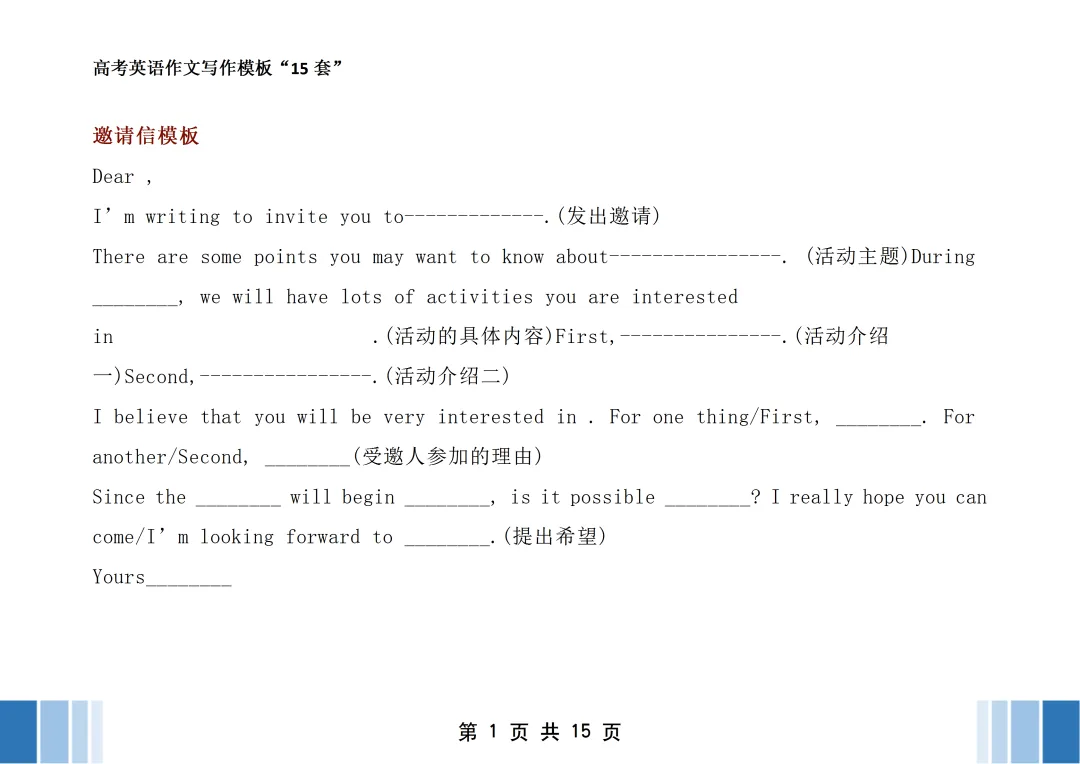
1. 邀请信
核心框架:开门见山邀约→活动详情(时间/地点/目的)→受邀理由(对方优势)→期待回复。
常用句式:
开头:I am writing to invite you to... / Knowing that you are interested in..., I’d like to...
活动详情:The activity, aimed at..., will be held in... from... to...
结尾:Your presence will add color to the event. Looking forward to your reply!
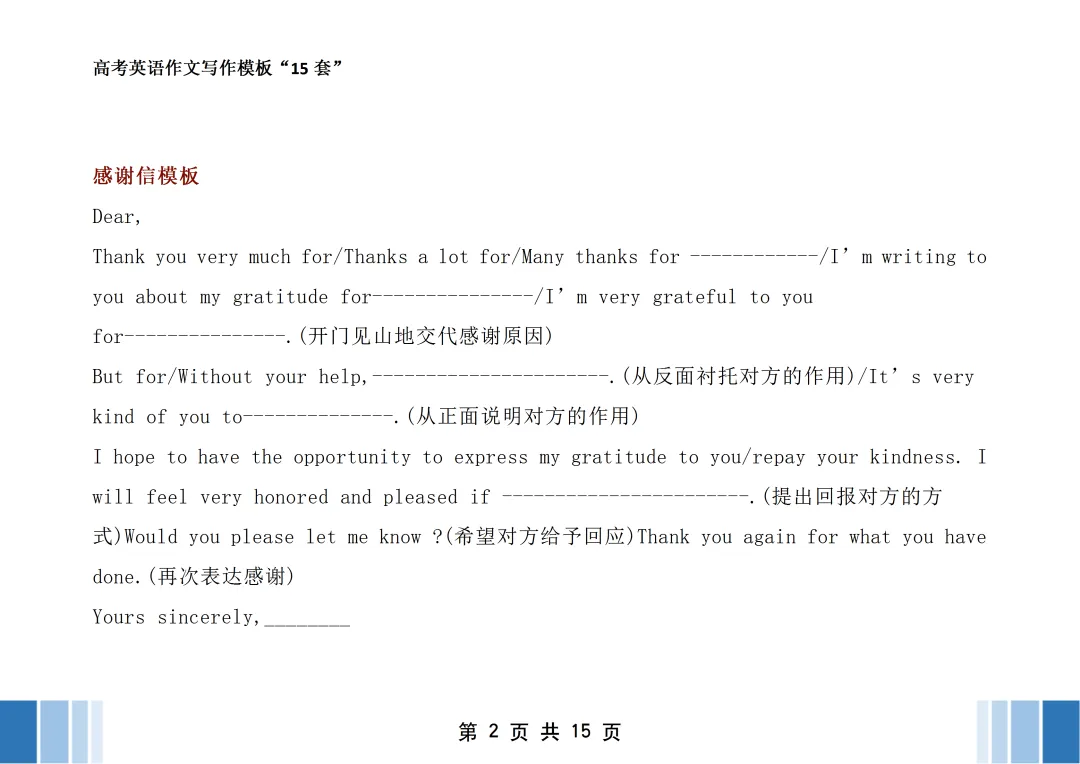
2. 感谢信
核心框架:致谢→具体感谢事由(帮助/礼物/机会)→感受与回报承诺→再次致谢。
注意:避免空泛,需细节化(如“Thank you for tutoring me in English, which improved my score by 20 points”)。
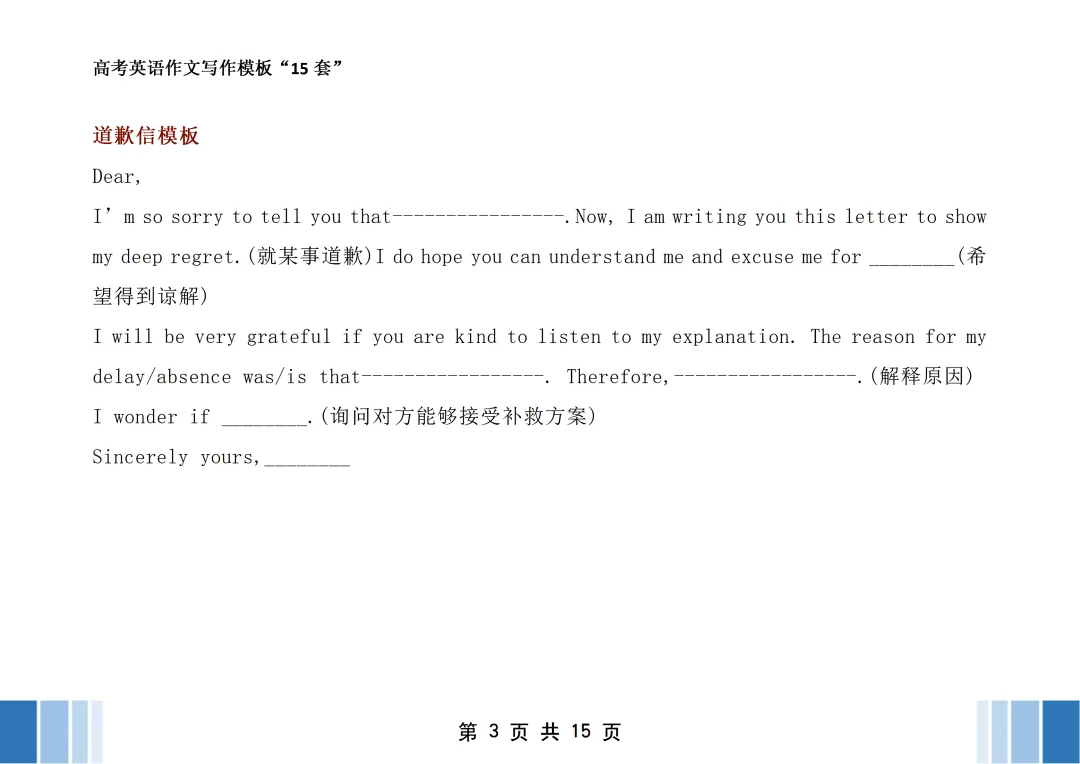
3. 道歉信
核心框架:道歉→说明理由(客观+诚恳,避免借口)→补救措施(具体方案)→请求谅解。
常用句式:I am writing to apologize for... / It was my fault that... / To make up for it, I suggest...
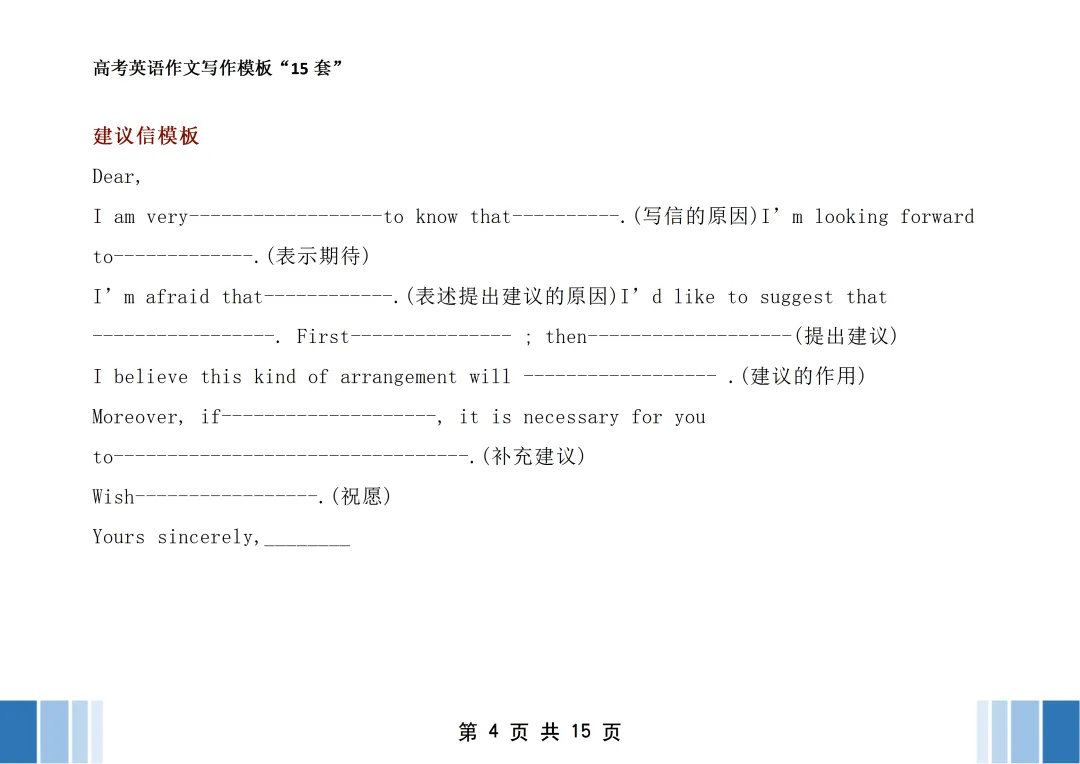
4. 建议信
核心框架:点明建议主题→具体建议(分点,2-3条)+理由→总结祝福。
技巧:用“First and foremost”“What’s more”分层,建议需贴合实际(如给学校提建议可写“organize more extracurricular activities to reduce stress”)。
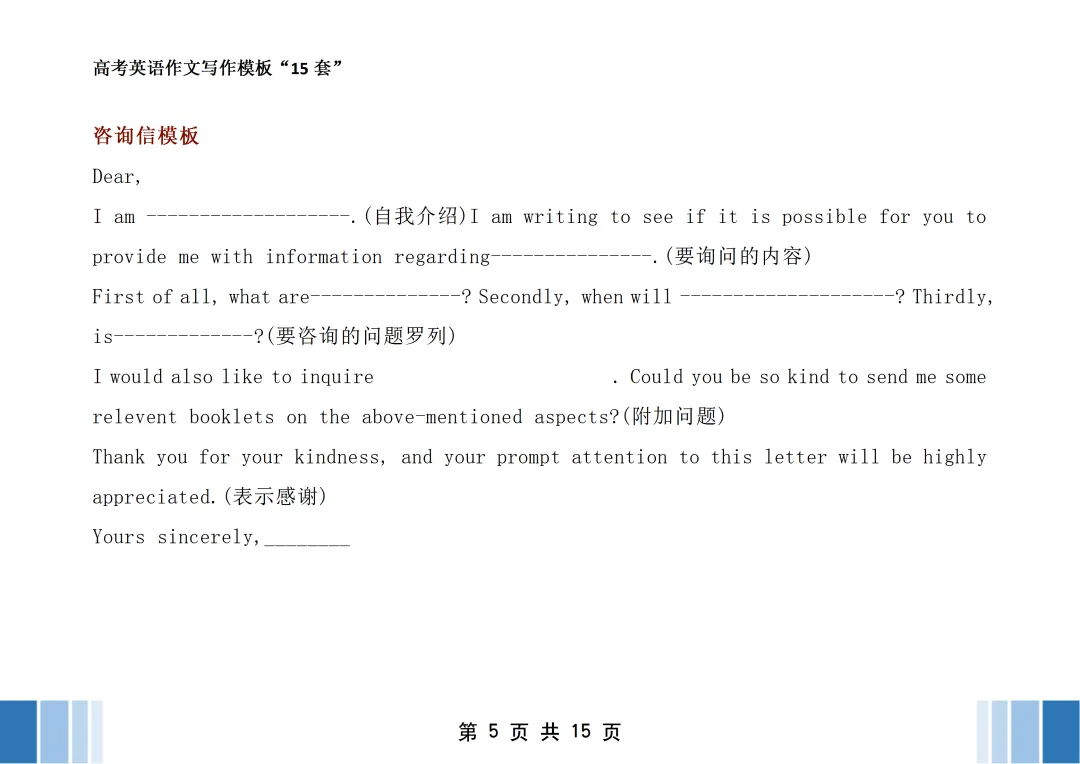
5. 咨询信
核心框架:自我介绍→咨询目的→具体问题(分点列,清晰明确)→感谢与期待回复。
示例:I am a high school student planning to study abroad. Could you please inform me of...(如application requirements/deadline)?
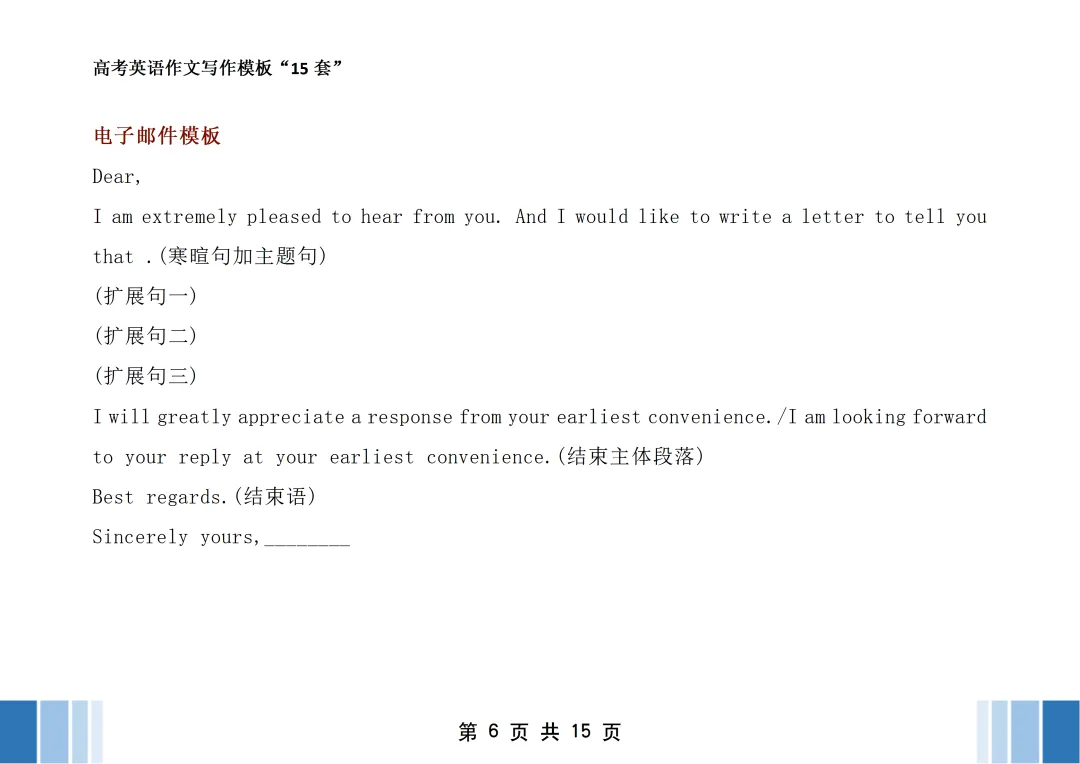
6. 电子邮件
核心框架:与书信类似,但更简洁,需标注“Subject:”(主题)。
注意:若写给老师/长辈,语气正式;写给同学/朋友,可稍随意(如用“Hi Tom”而非“Dear Mr. Smith”)。
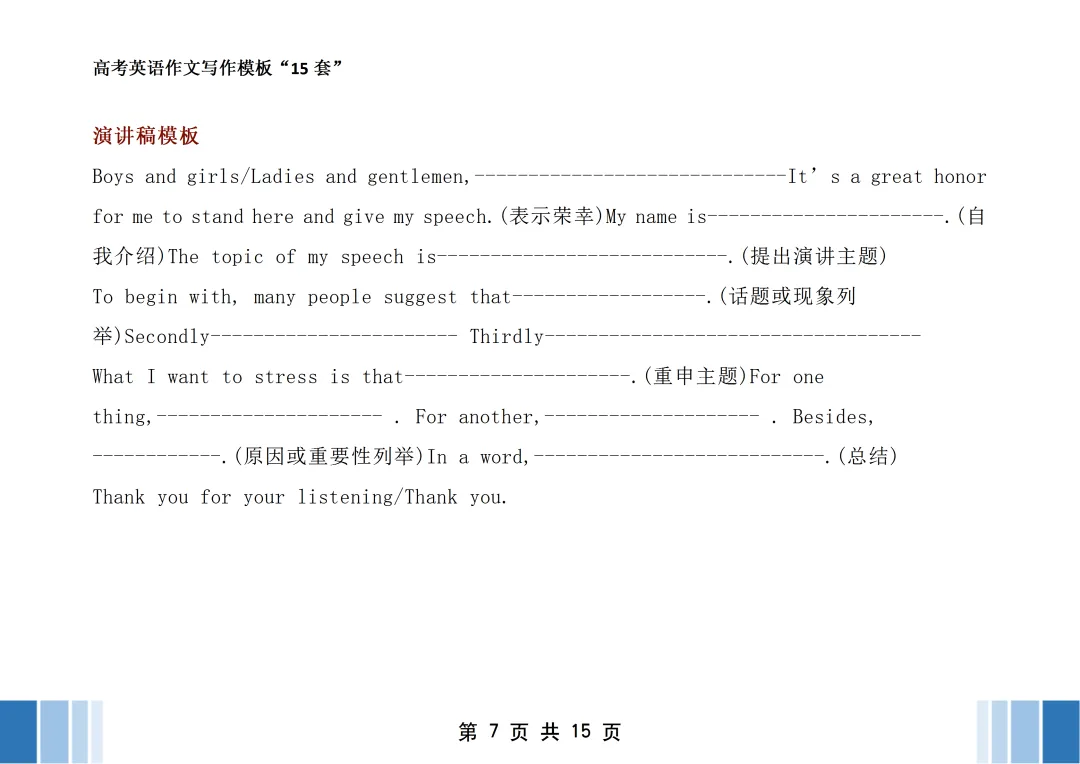
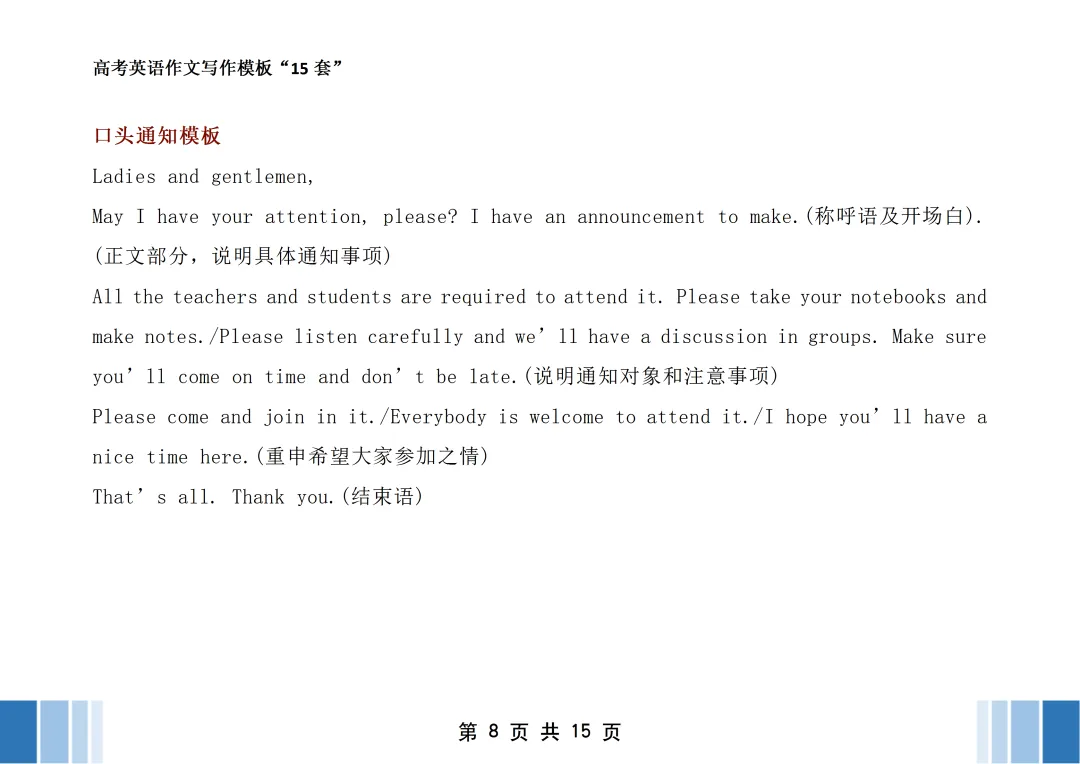
7. 演讲稿/口头通知
核心框架:称呼→开场白(问候+主题)→主体(观点+论据)→结尾(呼吁/感谢)。
特色句式:
开场:Good morning, everyone! Today I’d like to talk about...
结尾:Let’s work together to... / Thank you for listening!
二、议论文模板:逻辑分层+观点支撑(6类)
议论文侧重“逻辑”,需用“总-分-总”结构,观点明确、论据充分。
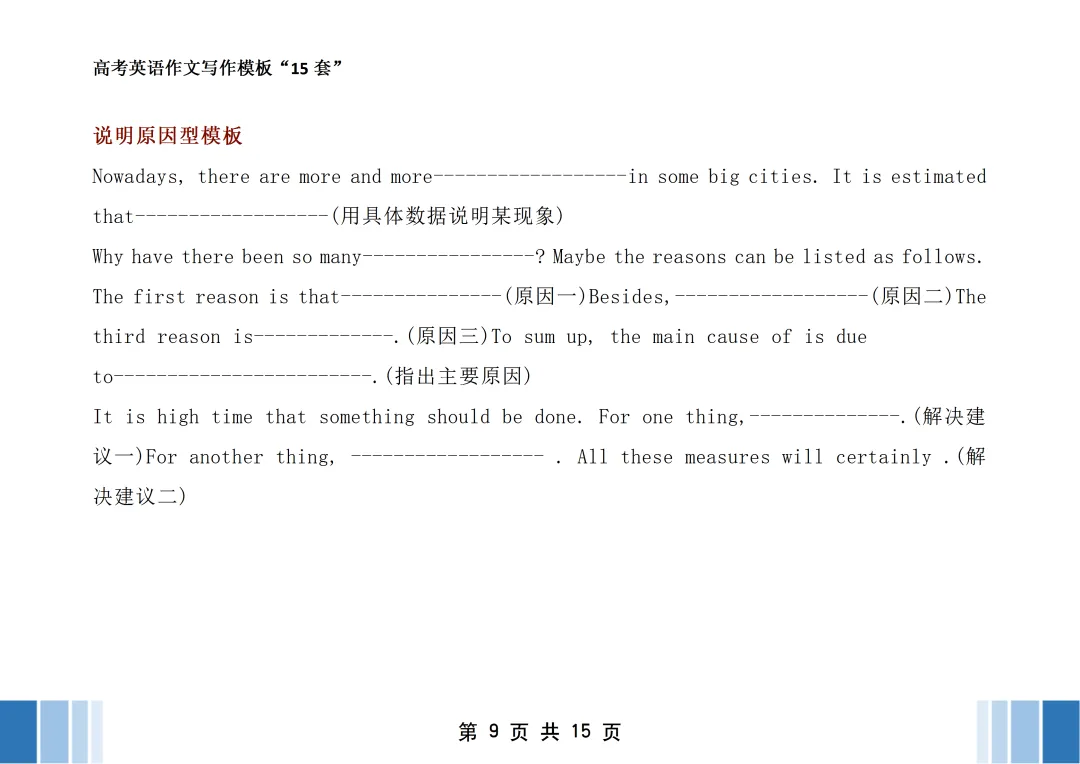
8. 说明原因型(Why型)
核心框架:现象引入→原因分析(2-3个,如个人、社会、时代层面)→总结/对策。
示例(主题:为何青少年沉迷手机):
原因1:Smartphones offer convenient access to entertainment.
原因2:Lack of parental supervision and peer pressure.
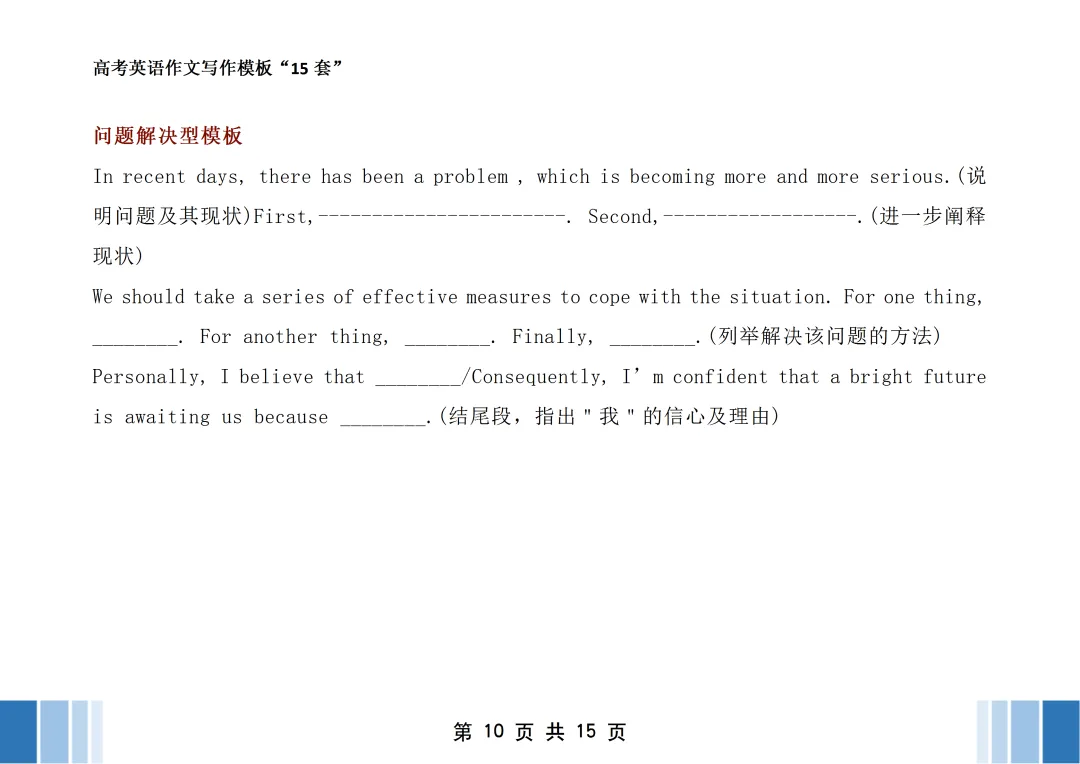
9. 问题解决型(How型)
核心框架:提出问题→影响分析→解决措施(分主体:个人/学校/社会)。
示例(主题:缓解校园浪费):
个人:Develop the habit of saving food.
学校:Launch campaigns to raise awareness.
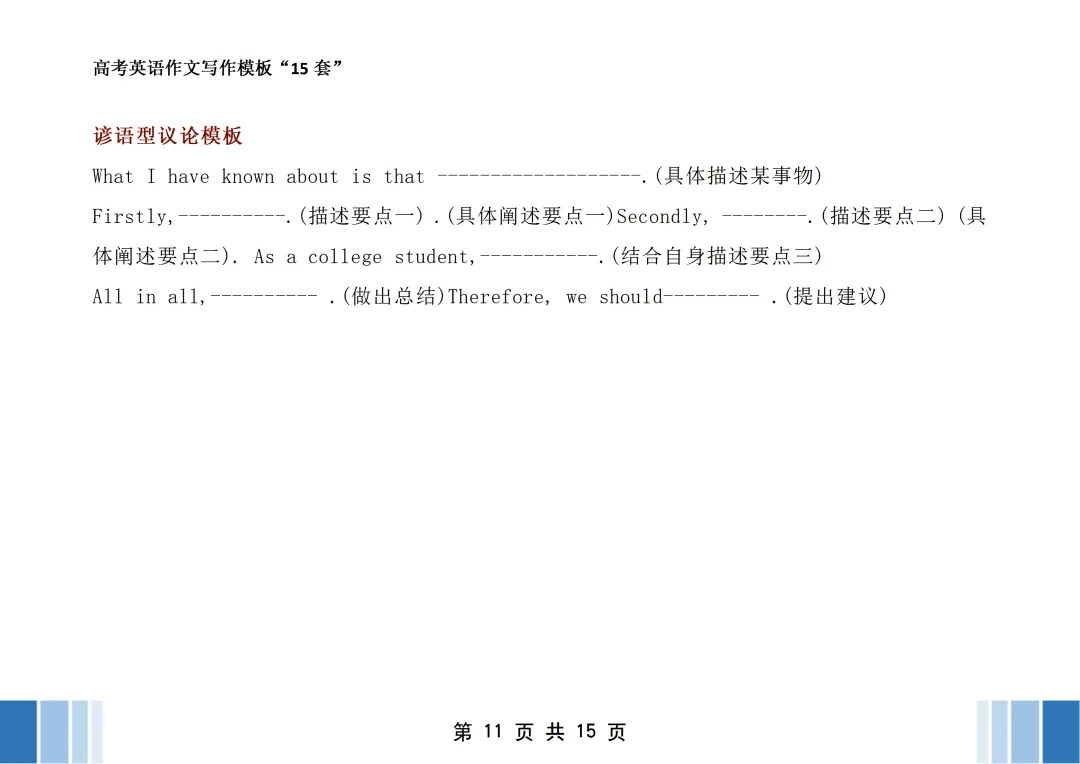
10. 谚语型
核心框架:解释谚语含义→举例论证(名人故事/生活实例)→联系自身/现实启示。
示例(谚语:“Where there is a will, there is a way”):
举例:Thomas Edison failed thousands of times but finally invented the light bulb.
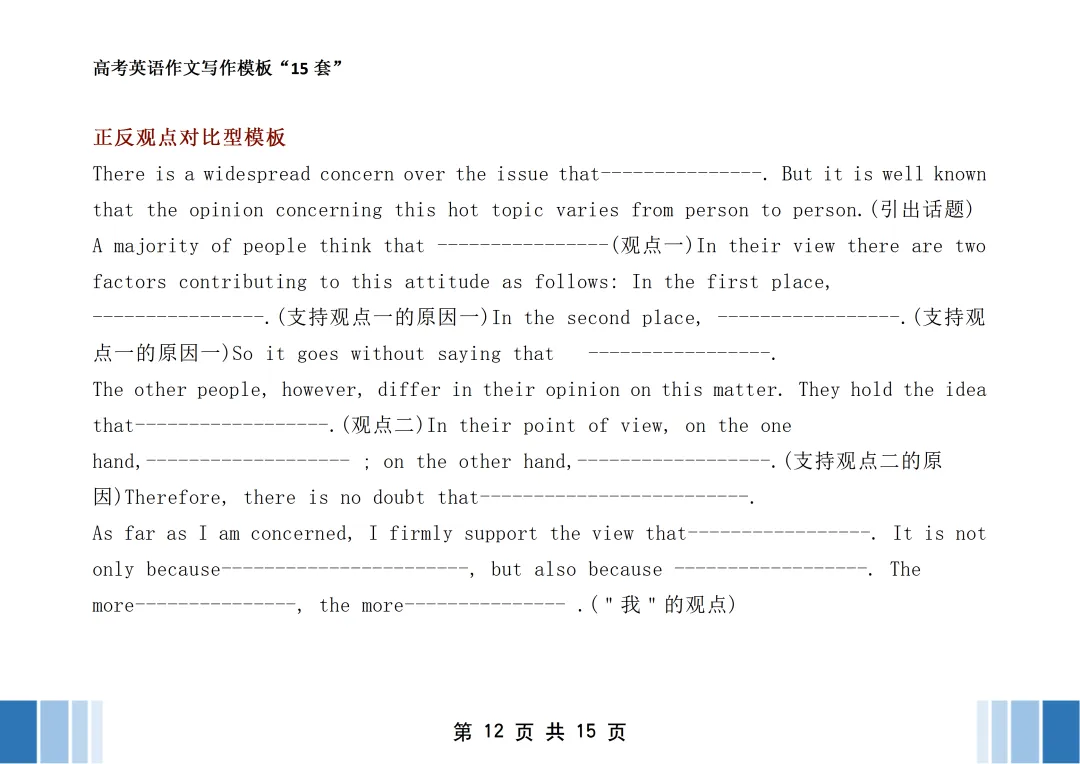
11. 正反观点对比型
核心框架:引出争议话题→正方观点+论据→反方观点+论据→自己的看法(倾向一方或辩证看待)。
常用句式:
正方:Supporters believe that... because...
反方:However, opponents argue that...
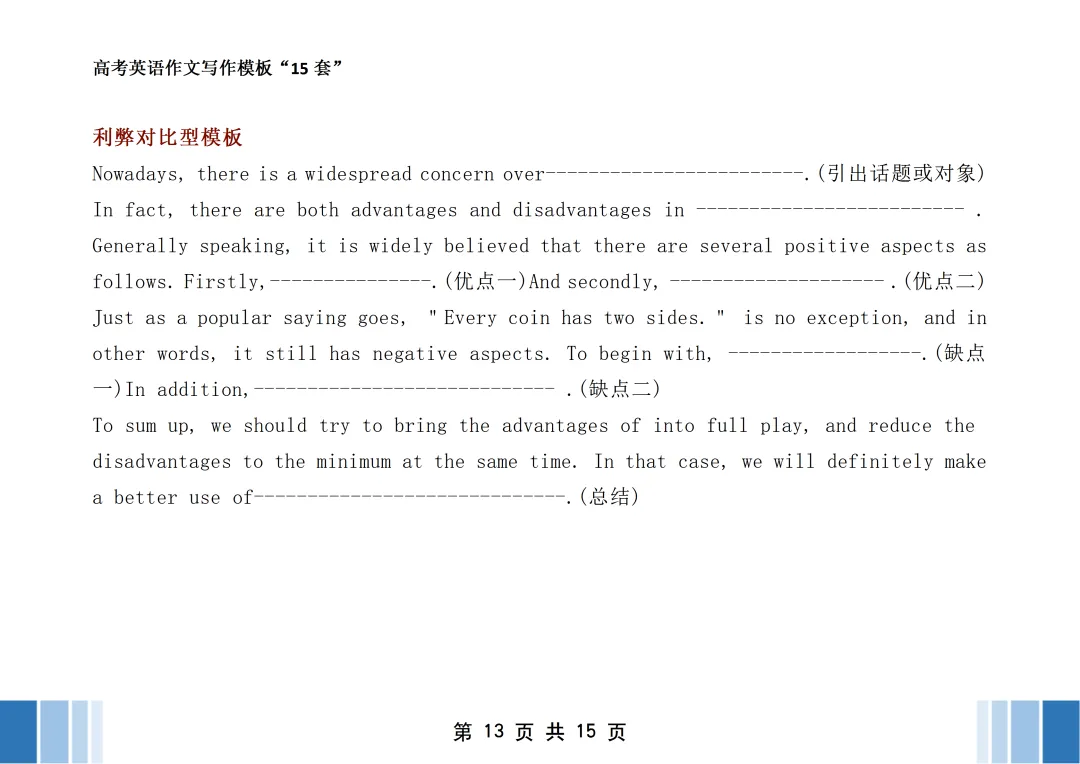
12. 利弊对比型
核心框架:事物引入→优点(2-3个)→缺点(2-3个)→总结(扬长避短)。
示例(主题:在线学习):
优点:Flexible schedule; Access to diverse resources.
缺点:Lack of face-to-face interaction; Easy to get distracted.
三、特殊题型模板:图文转换+细节描述(2类)
此类题型需先“描述图表/图画”,再“挖掘内涵”。
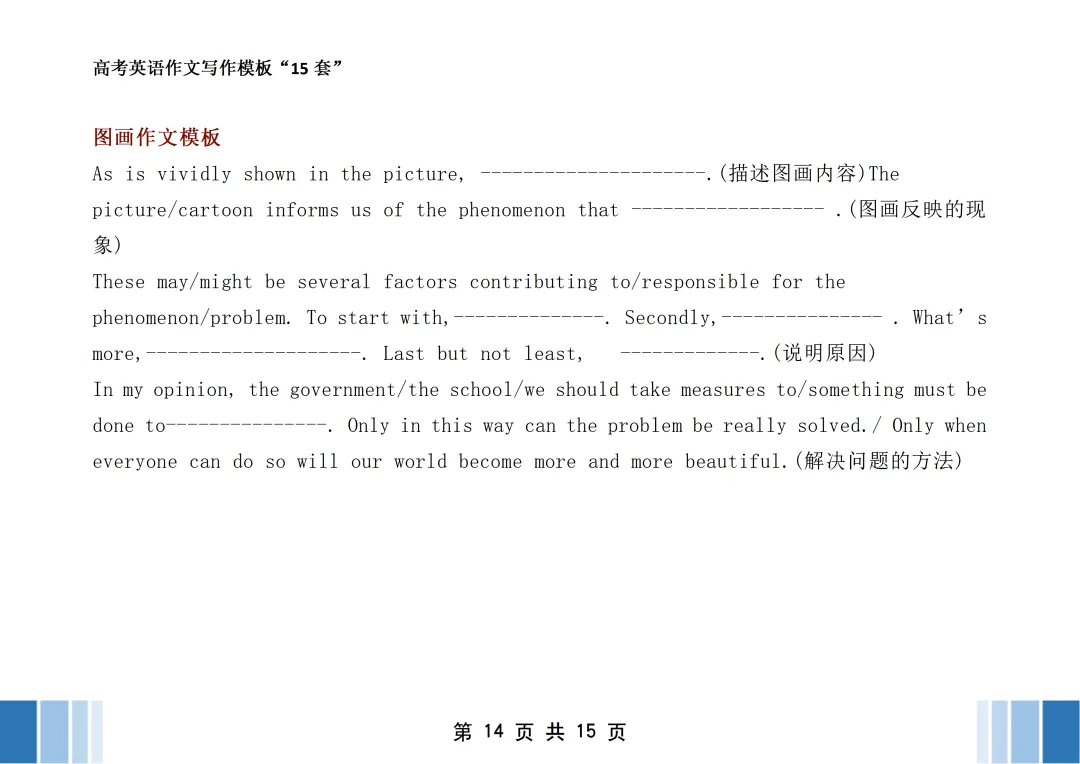
13. 图画作文
核心框架:描述图画(人物/动作/文字)→揭示寓意(反映社会现象/人生哲理)→分析原因/提出建议。
关键:描述需准确(如“In the picture, a boy is sitting on the sofa, playing with his phone while his mother is cooking alone”),寓意需升华(如“it reflects the generation gap in family communication”)。
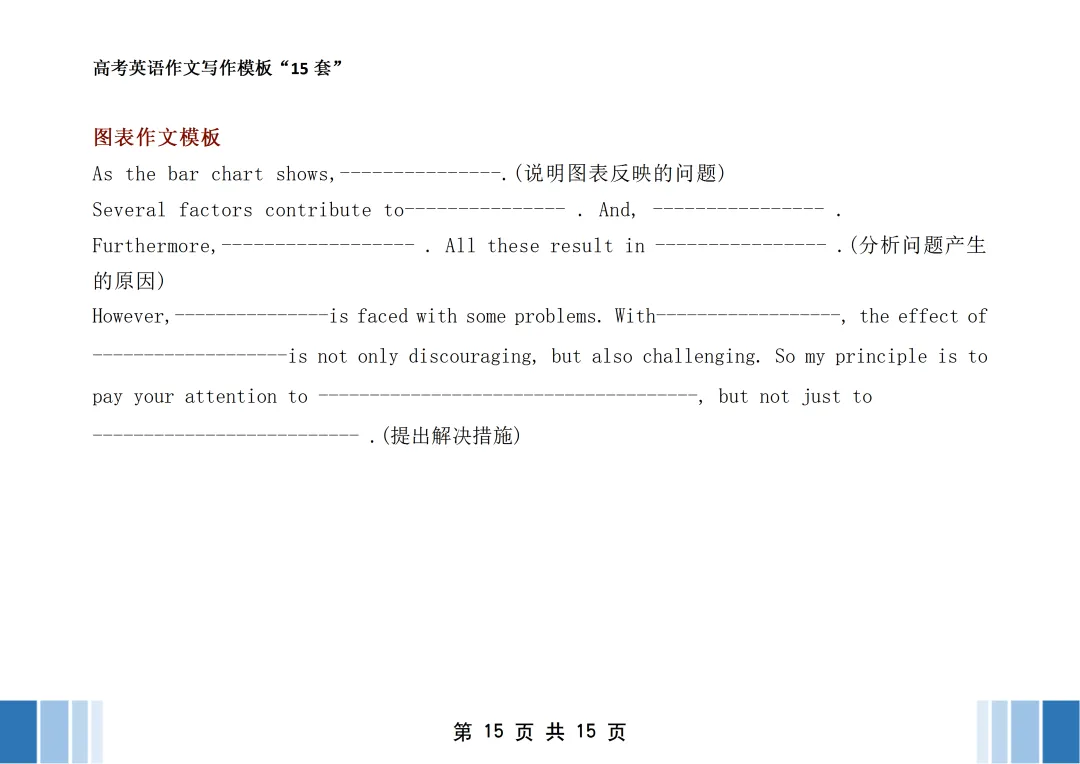
14. 图表作文
核心框架:描述图表数据(趋势/变化,用具体数字)→分析原因→预测趋势/提出建议。
常用句式:
数据描述:As can be seen from the chart, the number of... increased by 30% from 2018 to 2023.
15. 通用万能模板(应急用)
若考场紧张忘模板,可用“三段式”:
首段:Nowadays, there is a widespread concern over...(引出话题).
中段:On the one hand,... On the other hand,...(分两点论述).
尾段:In conclusion, it is high time that we...(总结+建议).
模板使用提醒
模板是“骨架”,需填充“血肉”(具体事例、真情实感)才能拿高分。平时练习时,应结合真题仿写,避免生硬套用;考场上可根据主题灵活调整句式,让表达更自然。掌握这些模板,能让作文结构更清晰、语言更规范,为高考英语加分护航。