Unit 10 单元知识清单
Section B
一、 基础知识清单
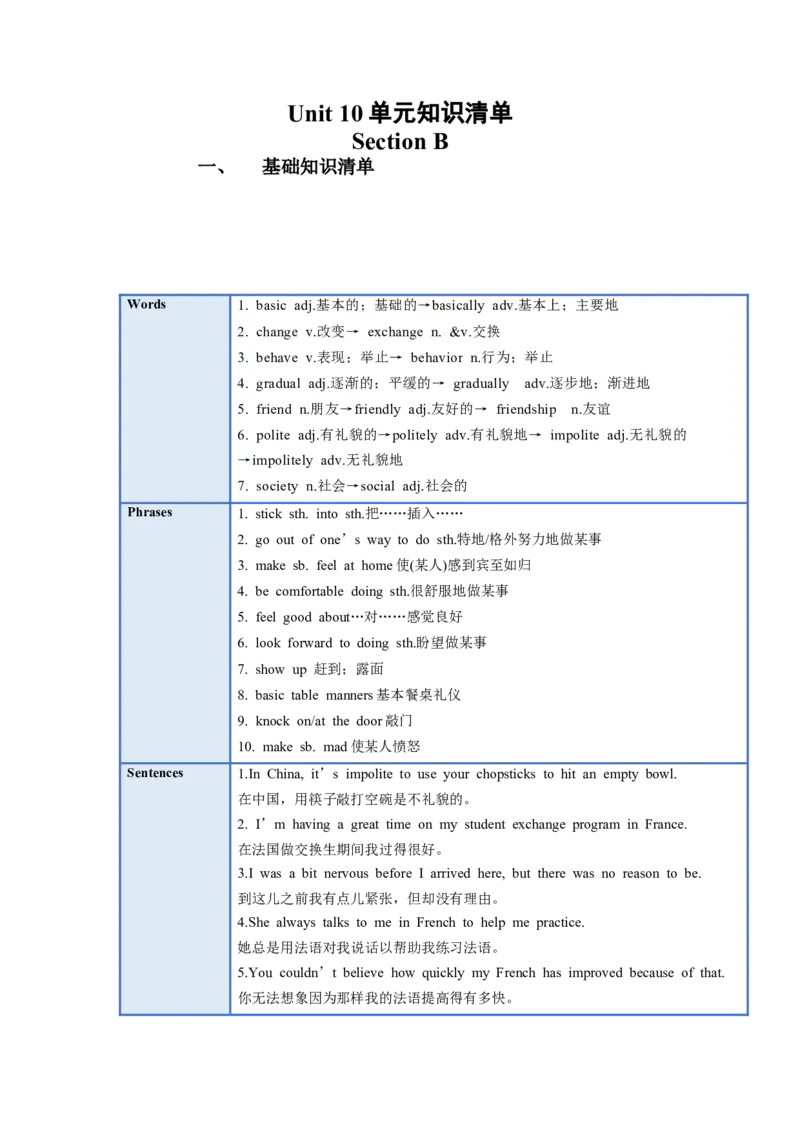
Words 1. basic adj.基本的;基础的→basically adv.基本上;主要地
2. change v.改变→ exchange n. &v.交换
3. behave v.表现;举止→ behavior n.行为;举止
4. gradual adj.逐渐的;平缓的→ gradually adv.逐步地;渐进地
5. friend n.朋友→friendly adj.友好的→ friendship n.友谊
6. polite adj.有礼貌的→politely adv.有礼貌地→ impolite adj.无礼貌的
→impolitely adv.无礼貌地
7. society n.社会→social adj.社会的
Phrases 1. stick sth. into sth.把……插入……
2. go out of one’s way to do sth.特地/格外努力地做某事
3. make sb. feel at home使(某人)感到宾至如归
4. be comfortable doing sth.很舒服地做某事
5. feel good about…对……感觉良好
6. look forward to doing sth.盼望做某事
7. show up 赶到;露面
8. basic table manners基本餐桌礼仪
9. knock on/at the door敲门
10. make sb. mad使某人愤怒
Sentences 1.In China, it’s impolite to use your chopsticks to hit an empty bowl.
在中国,用筷子敲打空碗是不礼貌的。
2. I’m having a great time on my student exchange program in France.
在法国做交换生期间我过得很好。
3.I was a bit nervous before I arrived here, but there was no reason to be.
到这儿之前我有点儿紧张,但却没有理由。
4.She always talks to me in French to help me practice.
她总是用法语对我说话以帮助我练习法语。
5.You couldn’t believe how quickly my French has improved because of that.
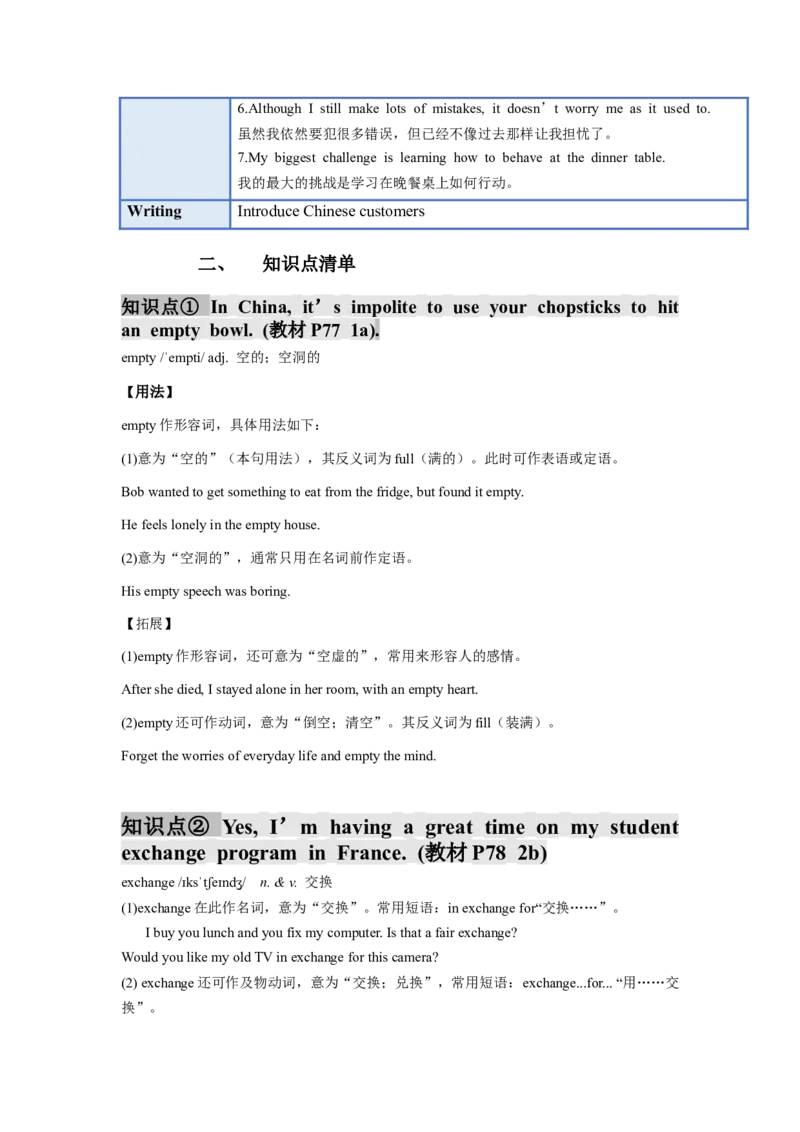
你无法想象因为那样我的法语提高得有多快。6.Although I still make lots of mistakes, it doesn’t worry me as it used to.
虽然我依然要犯很多错误,但已经不像过去那样让我担忧了。
7.My biggest challenge is learning how to behave at the dinner table.
我的最大的挑战是学习在晚餐桌上如何行动。
Writing Introduce Chinese customers
二、 知识点清单
知识点① In China, it’s impolite to use your chopsticks to hit
an empty bowl. (教材P77 1a).
empty /ˈempti/ adj. 空的;空洞的
【用法】
empty作形容词,具体用法如下:
(1)意为“空的”(本句用法),其反义词为full(满的)。此时可作表语或定语。
Bob wanted to get something to eat from the fridge, but found it empty.
He feels lonely in the empty house.
(2)意为“空洞的”,通常只用在名词前作定语。
His empty speech was boring.
【拓展】
(1)empty作形容词,还可意为“空虚的”,常用来形容人的感情。
After she died, I stayed alone in her room, with an empty heart.
(2)empty还可作动词,意为“倒空;清空”。其反义词为fill(装满)。
Forget the worries of everyday life and empty the mind.
知识点② Yes, I’m having a great time on my student
exchange program in France. (教材 P78 2b)
exchange /ɪksˈtʃeɪndʒ/ n. & v. 交换
(1)exchange在此作名词,意为“交换”。常用短语:in exchange for“交换……”。
I buy you lunch and you fix my computer. Is that a fair exchange?
Would you like my old TV in exchange for this camera?
(2) exchange还可作及物动词,意为“交换;兑换”,常用短语:exchange...for... “用……交
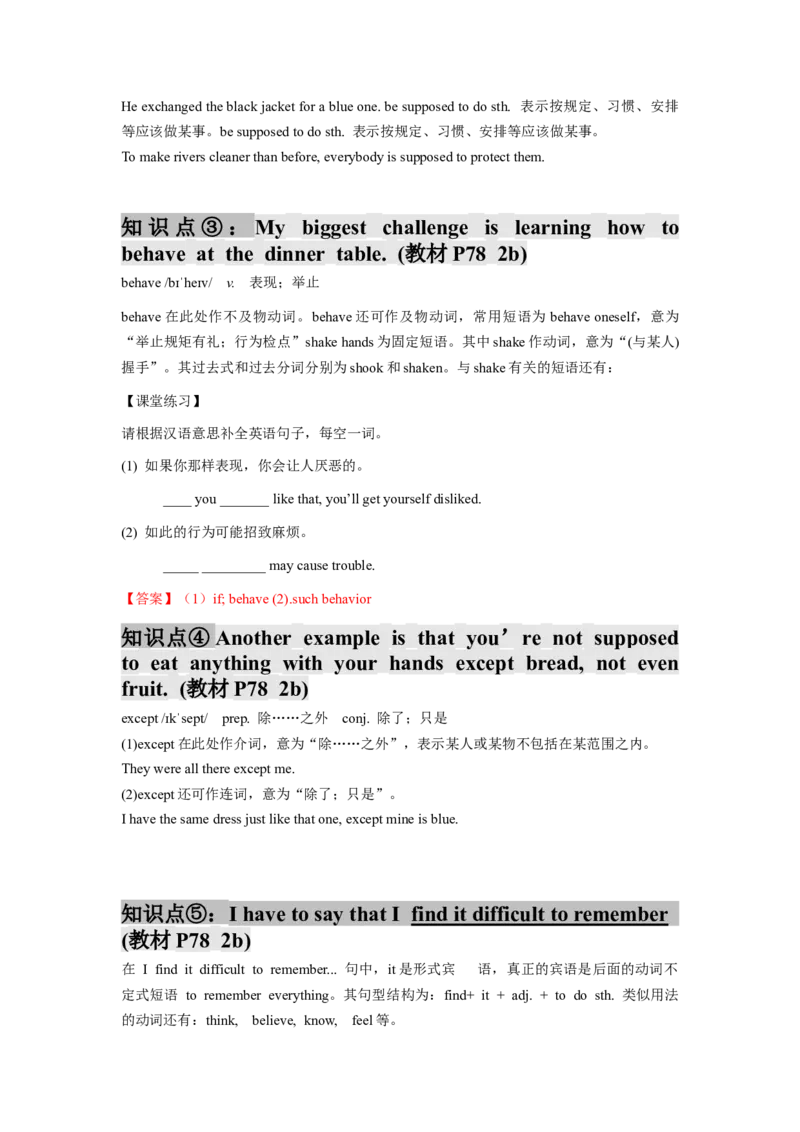
换”。He exchanged the black jacket for a blue one. be supposed to do sth. 表示按规定、习惯、安排
等应该做某事。be supposed to do sth. 表示按规定、习惯、安排等应该做某事。
To make rivers cleaner than before, everybody is supposed to protect them.
知 识 点 ③ : My biggest challenge is learning how to
behave at the dinner table. (教材 P78 2b)
behave /bɪˈheɪv/ v. 表现;举止
behave在此处作不及物动词。behave还可作及物动词,常用短语为 behave oneself,意为
“举止规矩有礼;行为检点”shake hands为固定短语。其中shake作动词,意为“(与某人)
握手”。其过去式和过去分词分别为shook和shaken。与shake有关的短语还有:
【课堂练习】
请根据汉语意思补全英语句子,每空一词。
(1) 如果你那样表现,你会让人厌恶的。
____ you _______ like that, you’ll get yourself disliked.
(2) 如此的行为可能招致麻烦。
_____ _________ may cause trouble.
【答案】(1)if; behave (2).such behavior
知识点④ Another example is that you’re not supposed
to eat anything with your hands except bread, not even
fruit. (教材 P78 2b)
except /ɪkˈsept/ prep. 除……之外 conj. 除了;只是
(1)except在此处作介词,意为“除……之外”,表示某人或某物不包括在某范围之内。
They were all there except me.
(2)except还可作连词,意为“除了;只是”。
I have the same dress just like that one, except mine is blue.
知识点⑤:I have to say that I find it difficult to remember
(教材 P78 2b)
在 I find it difficult to remember... 句中,it是形式宾 语,真正的宾语是后面的动词不
定式短语 to remember everything。其句型结构为:find+ it + adj. + to do sth. 类似用法
的动词还有:think, believe, know, feel等。【课堂练习】
I find ______ important to get along well with others.
A. that B. this C. it D. them
【答案】:选C。本题考查it 作形式宾语的用法。句中it代替不定式短语 “to get along
well with others”作形式宾语。
三、 单元写作
Writing
本单元以“习俗”为话题,谈论各国不同习俗。要求给外国友人x写一封信来介绍我国的
各种习俗。
1. 写作素材积累:
bow, shake hands, kiss, be on time, wear the right clothes, drop by friends’ homes, make plans to
see friends, not keep others waiting, eat with your hands, eat something with a fork , put your bread
on the table;not stick your chopsticks into the food, not point at someone with your chopsticks,
not put your elbows on the table
2.写作步骤
【优秀范文】
Dear Mary,
You must be excited about coming to China soon. Let me give you some suggestions and advice
about Chinese customs.
When you’re eating at the table, it’s impolite to start eating first if there are older people at the table.
You should let them start first. When you are eating with chopsticks, it is impolite to point at other
people with your chopsticks. It is also impolite to stick your chopsticks into the bowl of rice and
leave them there. In our house, you’re supposed to take off your shoes before you enter the house
or just inside the front door. In our culture, we don’t usually hug or kiss people. When you go out
with people, you should tell the hostess where you are going, who you are going with and when youwill come back. In our culture, the hostess will worry a lot about the safety of her guests, so a polite
guest will always let her know these things.
Have a safe trip, and I look forward to meeting you soon!
Best wishes,
Xiao Wei