第 15 讲 语法填空之无提示词
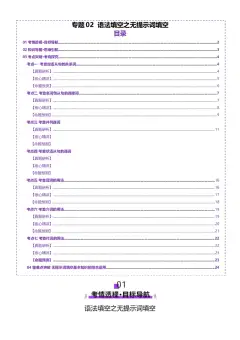
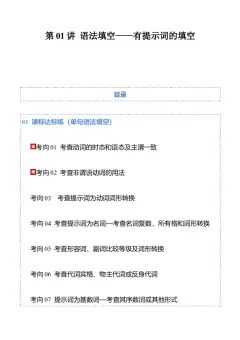
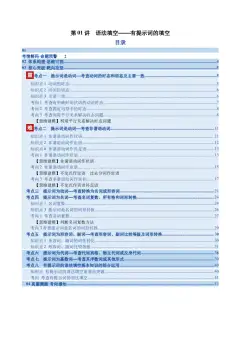
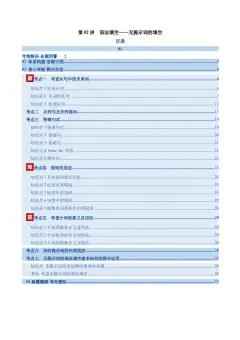
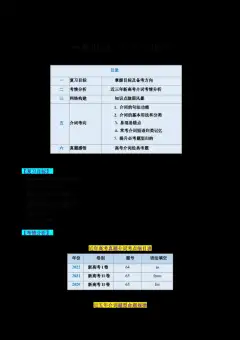
目录
01 考情透视·目标导航········································································································································1
02 知识导图·思维引航········································································································································2
03 考点突破·考法探究········································································································································2
考点一 题型破解···················································································································································2
知识点1 题型特点···································································································································3
知识点2 高分技巧···································································································································3
考点二 介词····························································································································································3
考点三 代词····························································································································································5
考点四 冠词····························································································································································5
考点五 连词····························································································································································6
04真题练习·命题洞现
1.真题实战 ·················································································································································8
2.命题演练 ·················································································································································9
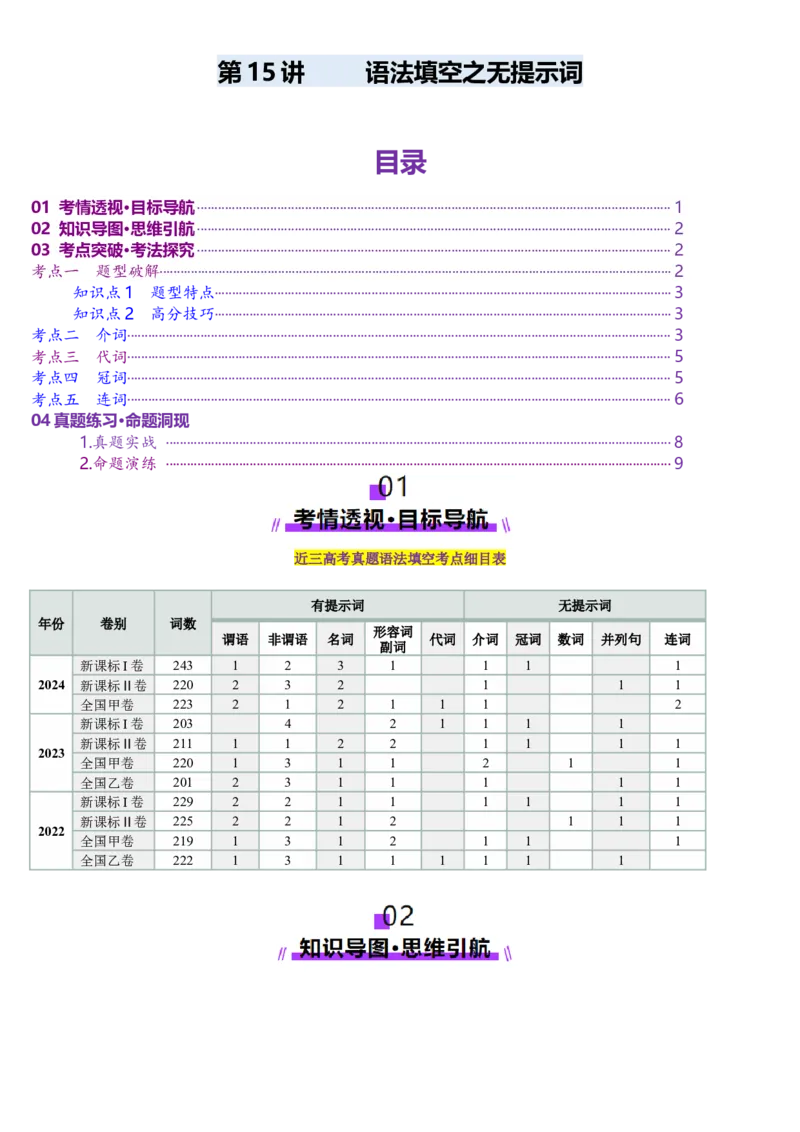
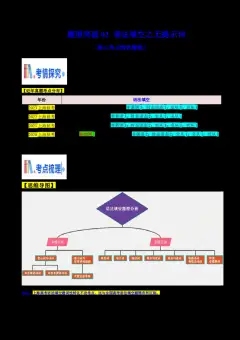
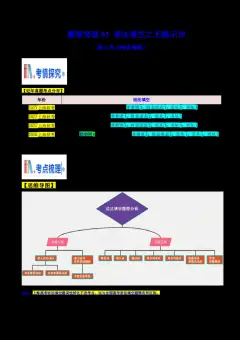
近三高考真题语法填空考点细目表
有提示词 无提示词
年份 卷别 词数
形容词
谓语 非谓语 名词 代词 介词 冠词 数词 并列句 连词
副词
新课标I卷 243 1 2 3 1 1 1 1
2024 新课标Ⅱ卷 220 2 3 2 1 1 1
全国甲卷 223 2 1 2 1 1 1 2
新课标I卷 203 4 2 1 1 1 1
新课标Ⅱ卷 211 1 1 2 2 1 1 1 1
2023
全国甲卷 220 1 3 1 1 2 1 1
全国乙卷 201 2 3 1 1 1 1 1
新课标I卷 229 2 2 1 1 1 1 1 1
新课标Ⅱ卷 225 2 2 1 2 1 1 1
2022
全国甲卷 219 1 3 1 2 1 1 1
全国乙卷 222 1 3 1 1 1 1 1 1考点一 题型破解
知识点1 题型特点
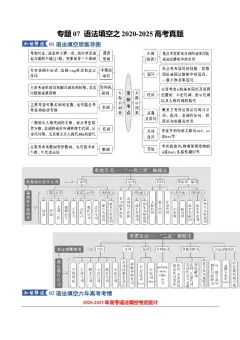
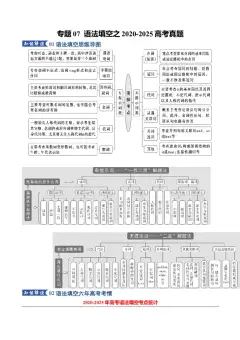
分析近几年新高考语法填空题可知,语法填空命题侧重三个方面:中国传统文化、世界科技进步、自然环境。注重
通过语篇体现中华文明与世界文明的交流互鉴,引导学生增强国家认同和家国情怀,坚定文化自信,拓展国际视野,在
跨文化交流学习中增进国际理解,推动世界文明共同发展。一是考查中国传统文化,二是考查生活故事,三是考查科学
技术进步。
从2024年新高考卷语法填空看,长难句进一步增加,强化考生英语的实际运用能力、理解能力和逻辑推理能力的
综合考查。语法填空题命题突出语境,命题包含“词、句、篇”三个层面,彰显“无语境不命题”。
整体分布:考查以实词为主,虚词为辅;有词填空占6-7空,无词填空占3-4空;谓语和非谓语动词是每年必考点,并
列句和复合句也是高考热点;介词考查相对比较频繁。
无提示词:介词、冠词、连接词、代词等;且每空只能填一个单词。知识点2 高分技巧
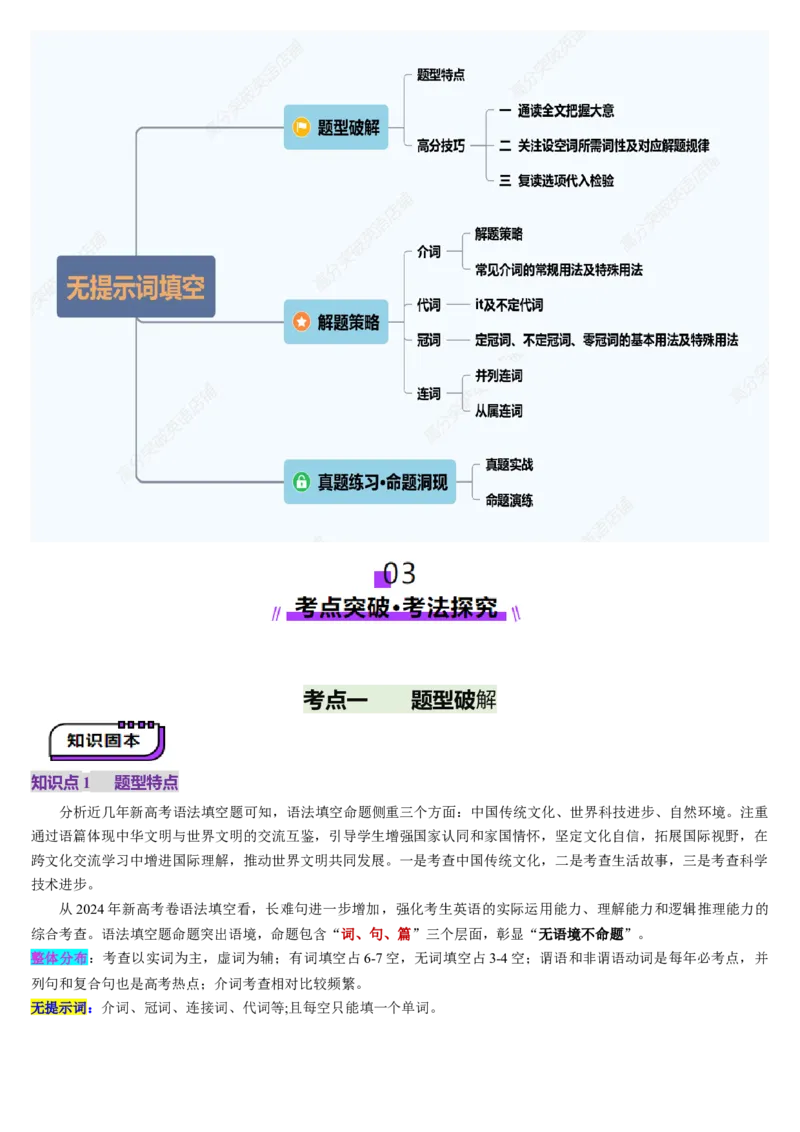
一 通读全文把握大意.
通读全文有利于读懂全文大意,也有利于填空时必要的逻辑推理,解决相关的难题如动词的时态语态题。
二 精读文章,关注设空词的词性及对应的解题规律。
1. 考虑与空格前的词语搭配组成固定短语 ;
介词 2.考虑介词在复杂语境中的核心意思。(详见本专辑专题第06讲)
代词 无提示词。 可能填 :① 人称代词主格 , ②不定代词 ; ③ i t ,包括填作形式主语的 i t ,替代后面作真正主语 或宾语 的
不定式、动名词或从句。(具体详见本专辑专题第03讲)
冠词 考虑冠词的基本用法和特殊用法;(具体详见本专辑专题第02讲)
1.考虑并列连词;
连词 2.考虑定语从句、名词性从句、状语从句引导词。(具体详见本专辑专题第07、21、22、23讲)
三 复读选项代入检验
通读全文,将所有答案代入短文中进行检查,注意上下文之间的逻辑关系,避免出现前后矛盾或句子不通顺的问题。
考点二 介词
解题策略:介词是语法填空的必考点和难点,高考通常考查介词与动词、形容词或者名词的搭配。学生应该熟练掌握
常见介词的基本用法及介词与其他词类的搭配; 如果名词或者代词在句子中不作主语、表语或者动词的宾语时 , 其前面
一般是填介词。在学习的过程中应注意对短语的归纳、积累、比较和记忆。
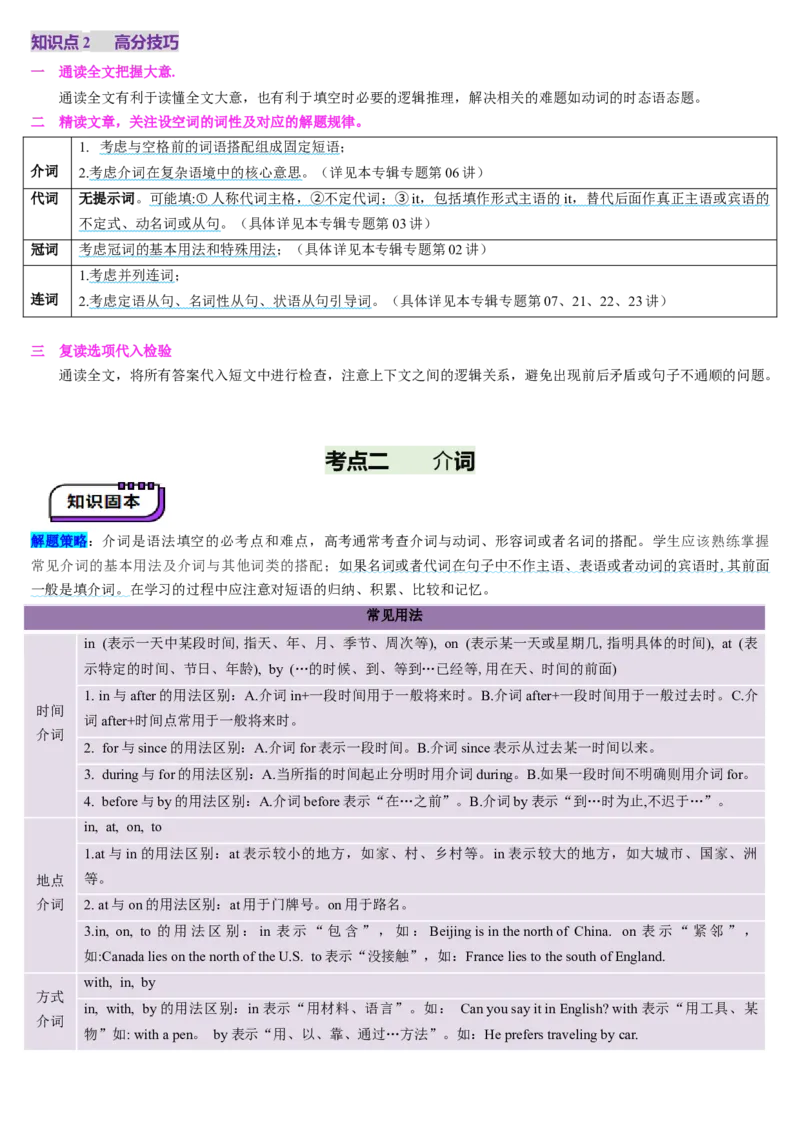
常见用法
in (表示一天中某段时间,指天、年、月、季节、周次等), on (表示某一天或星期几,指明具体的时间), at (表
示特定的时间、节日、年龄), by (…的时候、到、等到…已经等,用在天、时间的前面)
1. in 与after的用法区别:A.介词in+一段时间用于一般将来时。B.介词after+一段时间用于一般过去时。C.介
时间
词after+时间点常用于一般将来时。
介词
2. for与since的用法区别:A.介词for表示一段时间。B.介词since表示从过去某一时间以来。
3. during与for的用法区别:A.当所指的时间起止分明时用介词during。B.如果一段时间不明确则用介词for。
4. before与by的用法区别:A.介词before表示“在…之前”。B.介词by表示“到…时为止,不迟于…”。
in, at, on, to
1.at 与in 的用法区别:at表示较小的地方,如家、村、乡村等。in表示较大的地方,如大城市、国家、洲
地点 等。
介词 2. at与on的用法区别:at用于门牌号。on用于路名。
3.in, on, to 的用法区别:in 表示“包含”,如:Beijing is in the north of China. on 表示“紧邻”,
如:Canada lies on the north of the U.S. to表示“没接触”,如:France lies to the south of England.
with, in, by
方式
in, with, by的用法区别:in表示“用材料、语言”。如: Can you say it in English? with表示“用工具、某
介词
物”如: with a pen。 by表示“用、以、靠、通过…方法”。如:He prefers traveling by car.at, in, on, to, beneath, over, under, above, below, in front of / in the front of / behind, between / among,
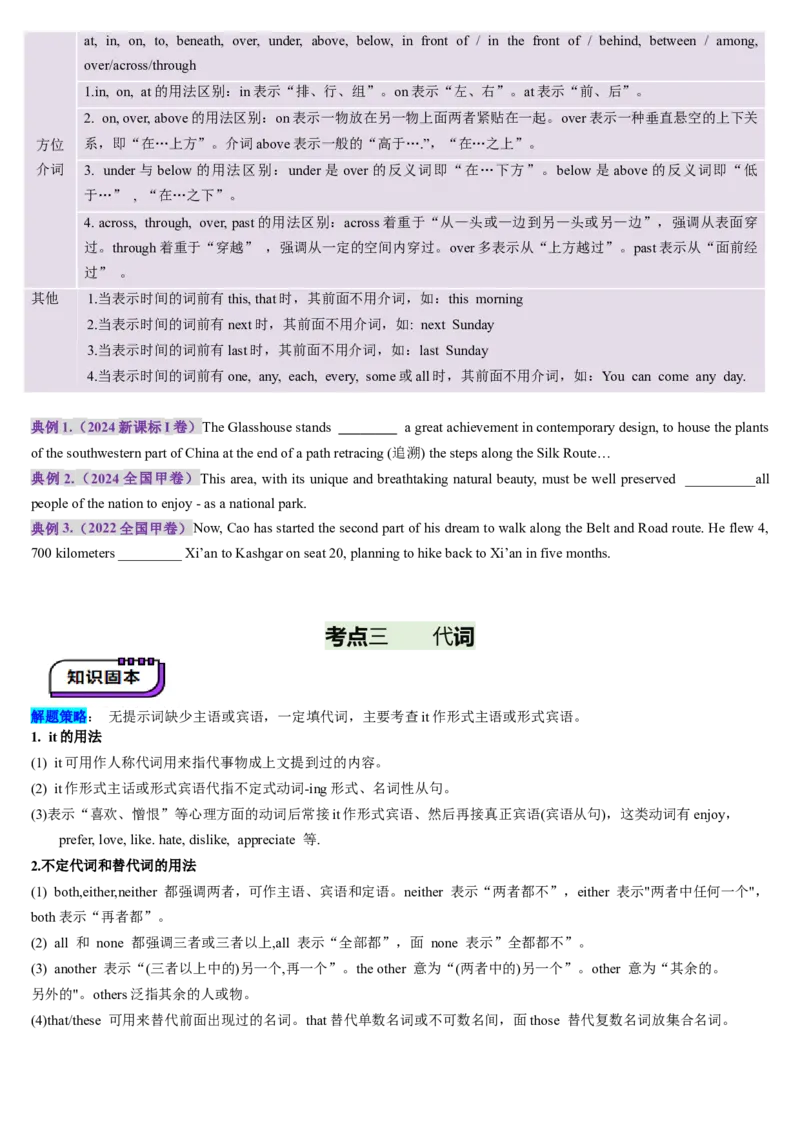
over/across/through
1.in, on, at 的用法区别:in表示“排、行、组”。on表示“左、右”。at表示“前、后”。
2. on, over, above的用法区别:on表示一物放在另一物上面两者紧贴在一起。over表示一种垂直悬空的上下关
方位 系,即“在…上方”。介词above表示一般的“高于….”,“在…之上”。
介词 3. under 与 below 的用法区别:under 是 over 的反义词即“在…下方”。below 是 above 的反义词即“低
于…” , “在…之下”。
4. across, through, over, past的用法区别:across着重于“从—头或—边到另—头或另—边”,强调从表面穿
过。through着重于“穿越” ,强调从一定的空间内穿过。over多表示从“上方越过”。past表示从“面前经
过” 。
其他 1.当表示时间的词前有this, that时,其前面不用介词,如:this morning
2.当表示时间的词前有next时,其前面不用介词,如: next Sunday
3.当表示时间的词前有last时,其前面不用介词,如:last Sunday
4.当表示时间的词前有one, any, each, every, some或all时,其前面不用介词,如:You can come any day.
典例1.(2024新课标I卷)The Glasshouse stands a great achievement in contemporary design, to house the plants
of the southwestern part of China at the end of a path retracing (追溯) the steps along the Silk Route…
典例 2.(2024全国甲卷)This area, with its unique and breathtaking natural beauty, must be well preserved __________all
people of the nation to enjoy - as a national park.
典例3.(2022全国甲卷)Now, Cao has started the second part of his dream to walk along the Belt and Road route. He flew 4,
700 kilometers _________ Xi’an to Kashgar on seat 20, planning to hike back to Xi’an in five months.
考点三 代词
解题策略: 无提示词缺少主语或宾语,一定填代词,主要考查it作形式主语或形式宾语。
1. it的用法
(1) it可用作人称代词用来指代事物成上文提到过的内容。
(2) it作形式主话或形式宾语代指不定式动词-ing形式、名词性从句。
(3)表示“喜欢、憎恨”等心理方面的动词后常接it作形式宾语、然后再接真正宾语(宾语从句),这类动词有enjoy,
prefer, love, like. hate, dislike, appreciate 等.
2.不定代词和替代词的用法
(1) both,either,neither 都强调两者,可作主语、宾语和定语。neither 表示“两者都不”,either 表示"两者中任何一个",
both表示“再者都”。
(2) all 和 none 都强调三者或三者以上,all 表示“全部都”,面 none 表示”全都都不”。
(3) another 表示“(三者以上中的)另一个,再一个”。the other 意为“(两者中的)另一个”。other 意为“其余的。
另外的"。others泛指其余的人或物。
(4)that/these 可用来替代前面出现过的名词。that替代单数名词或不可数名间,面those 替代复数名词放集合名词。(5)one指代前面出现过的那类事物中的“一个”,其复数形式为ones。
典例1.(2024年广东省新高考高中联合质量测评省级联考试题)When the BBC asked her what kind of person______
takes to walk around the world, Maxwell said, “It’s probably a combination of ambition, a little stubbornness and a pinch of
passion—not for hiking as a sport, but for self-discovery and adventure.
典例2.(广东省执信中学2024年高三开学试题)So before you return home from work tonight, put the burden of work down.
Don’t carry back home.
考点四 冠词
解题策略:名词前面如果没有限定词(冠词、形容词性物主代词等),很可能填冠词。(具体考查泛指、特指、固定短
语中的冠词)
种类 常见用法
1. 修饰可数名词单数,表示泛指。以元音音素开头的单词前需要用an,而以辅音音素开头的单词前用
不定冠词 a。如:an apple, a banana, an umbrella。
(a / an) 2. 与序数词连用,表示再一,又一”。如:You can try it a second time if you fail.
3. 固定搭配。如:all of a sudden; as a matter of fact; as a result; as a rule; as a whole; at a distance; in a way。
1. 表复指上文提到过的人或物。如:We have a cat and two dogs. The cat is black and the dogs are white.
定冠词
2. 表特指说话双方都知道的人或物。如: Pass me the dictionary, please.
(the)
3. 用于比较级前,特指两个被比较的对象的一个。如:Of the two brothers, the younger is more interesting.
1. 记忆口诀:下列情况应免冠,代词限定名词前,专有名词不可数,学科球类三餐饭,复数名词表泛
零冠词 指,两节星期月份前,颜色语种和国名,称呼习语及头衔。
2. 固定搭配。如:lose heart, by chance, in time, catch sight of, in place of。
1.抽象名词或物质名词具体化。如:a surprise 一件意外的事情;a pleasure一个令人快乐的事情。
特殊用法 2. 序数词前的冠词活用。如:Can you give me a second chance, please?
3.表示乐器的名词前的冠词活用。如:play the piano;play erhu。
典例1.(广东省新高考高中联合质量测评省级联考试题)Walking around the world may seem impossible, but that didn’t
stop one American woman from putting one foot in front of other.
典例2.(广东省湛江市第一中学 2023-2024学年高三试题) It also has 342-metre pathway on the side of a
mountain.
变式训练1.(湖南省邵阳市邵东创新实验学校2024年高三试题)Having visited several times over the last 10 years, I was
amazed by ______co-existence of old and new, and how a city was able to keep such a rich heritage (遗产) while
constantly growing.变式训练2.(2024届浙江省强基联盟适应性考试试题)As expert for the Baby Annabell Ask
The Experts campaign, people have asked me if having a shy personality is something we are born with or if it’s something we
develop based on our experiences.考点五 连词
解题策略:两个主谓之间一定有连词。(如果两个主谓结构的句子之间没有句号或分号,也没有连词,则空格处一定填
连接词或关系词。)
并列连词:
(1) 若两个或两个以上的单词或短语之间没有连词,此时就考虑填连接词。主要的连词有表示并列关系的and和表示选择
关系的or等。
(2) 并列句一般由“简单句+并列连词+简单句”构成,有时并列连词前有逗号,可以根据上下句的内在联系判断连词,如同
等关系(and)转折关系(but)选择关系(or)、因果关系(so)等。
典例1.(2024新课标I卷)Edmondson said, “It was very exciting to hear the Chinese language ________ see how Tang’s play
was being performed.”
典例2.(2023新高考I卷)To eat one, you have to decide whether to bite a small hole in it first, releasing the stream and risking
a spill (溢出), 38 to put the whole dumpling in your mouth, letting the hot soup explode on your tongue.
典例3.(2023全国乙卷)It is a distinct visual contrast (反差) that shouldn’t work, 65 somehow these two very
different worlds make a good combination.
从属连词:
用来引导名词性从句、定语从句和状语从句的引导词,它们。判断空格处填哪一类引导词,首先要看它所引导的是哪
一种从句,然后根据引导词的种类和功能来确定填哪一个引导词。
(1) 名词性从句:当确定为名词性从句后,可以分析从句是否缺少主语、宾语或表语,如果缺少以上成分,一般情况下要使
what,有时可能使用who/whom或which;如果不缺少以上成分,则考虑句子意思是否完整,完整的句子可以使用 that,意思完
整的则考虑if/whether,where,why,how, because 等。
典例1.(2023新高考II卷)They also need to be ready to give interviews in English with international journalists. This is
_________ they need an English trainer.
典例 2. (2019 全国 I 卷)While they are rare north of 88°,there is evidence ________ they range all the way across the
Arctic, and as far south as James Bay in Canada.
(2) 定语从句:当确定为定语从句后,首先要看看先行词指人、物、时间、地点,还是其他,然后判断引导词在从句中的成
分。再根据定语从句的有关规则确定使用哪个引导词。
考点 解题思路
1.先行词指人且所填关系词在从句中作主语时,可以用关系词that或who。
2.先行词指人且所填关系词在从句中作宾语时,可以用关系词that或whom或who,也可以不填。
3.先行词指物且所填关系词在从句中作主语或宾语时,可以用关系词that或which。
关系代词 4.先行词指人或物且所填关系词在从句中作定语时,可以用关系词whose。
5.在非限制性定语从句中不能用关系词that。
6.在非限制性定语从句中,如果先行词是前面的整个句子或句子的一部分时,可以用关系词as或
which。as译为“正如”;which译为“这一点,这件事”,表明事物的状态或结果。
关系副词 先行词是表示时间、地点或原因的名词且所填关系词在从句中作状语时,可以用关系词when,where或why。
注意:先行词是表示时间、地点或原因的名词且所填关系词在从句中作主语或宾语时,可以用关系词
that或which。
1.关系词依据先行词来确定,如果先行词指人,用whom;如果先行词指物,用which;如果先行词指
介词+关
人或物,且关系词在从句中作定语,则用whose。
系词
2.介词根据以下原则来确定:(1)与先行词的搭配;(2)与从句谓语的搭配。
典例1.(2024新课标I卷)The Glasshouse stands as a great achievement in contemporary design, to house the plants of the
southwestern part of China at the end of a path retracing (追溯) the steps along the Silk Route _______ brought the plants from
their native habitat in Asia to come to define much of the richness of gardening in England.
典例2.(2020全国III卷)In ancient China lived an artist______ paintings were almost lifelike.
(3) 状语从句:当确定为状语从句后,就要通过语境理解,判断上下文的逻辑关系是时间、地点、条件、原因、让步、目的
或其他,最后确定从属连词。
典例1.(2021年天津卷) Feeling fearful is healthy ________ it helps you slow down and evaluate risks properly.
典例2.(广东省东莞实验中学高三试题)In 1988, 75 Nobel prizewinners said that __ mankind is to survive, it must go
back 25 centuries in time to tap the wisdom of Confucius.
变式训练(广东省新高考高中联合质量测评省级联考试题)After six-and-a-half years and over 32, 000 kilometers,
Maxwell’s walk ended it began.
无论考向是什么,都涉及基础的句子成分分析,故详细句子分析可见本专辑第07、19、20讲及21、22、23
专题。
一、 真题实战(无提示词填空)
1.(2023新高考II卷)It’s been an honor to watch the panda programme develop 44 to see the pandas settle into their
new home.
2.(2022新高考II卷)He hung on for a few minutes ___________ screamed for his father, but his father didn't hear him.
3.(2021浙江卷1月)Although Mary loved flowers, __________ she nor her husband was known as a gardener.
4.(2024全国甲卷)Yellowstone was the largest United States national park - 2.2 million acres - until Wrangell-Saint Elias in
southern Alaska, became a national monument in 1978, took the honors as a national park in 1980 with 12.3 million
acres.
5.(2024浙江1月卷)If most of their customers are happy to buy larger quantities, that’s _________ they’ll promote.
6.(2021年北京卷)The poor woman wasn't able to give him any information about ________ she lived.
7.(2020全国III卷)__________ he asked the villagers on the banks of the river where he could find the legendary (传奇的)
artist, they smiled and pointed down the river.
8.(2024九省联考卷) He feels that neat handwriting is still an important skill, so he has his students write not only by hand butalso __________ old fashioned fountain pens.
9.(2022新课标I卷) Giant pandas also serve __________ an umbrella species(物种), bringing protection to a host of plants
and animals in the southwestern and northwestern parts of China.
10.(2022新高考II卷)___________ Brown family live in an apartment building outside Toronto. On the day of the accident,
Mrs. Brown was at work and Eric was at home with his father.
11.(2021年新高考I卷)While you’re in China, Mount Huangshan is ___________ must to visit!
12.(2024全国甲卷)This area, with 66 (it) unique and breathtaking natural beauty, must be well preserved for all
people of the nation to enjoy - as a national park.
二、 命题演练
1.(2024·浙江·二模)阅读下面短文,在空白处填入1个适当单词或括号内单词的正确形式。
For most of us, popcorn is synonymous (同义的) with movie theaters. We go to the movies, buy a popcorn, and enjoy the
show 1 even thinking twice about it. But, why? Why do we always eat popcorn at the movies?
One reason for popcorn’s increasing 2 (popular) was its mobility: in 1885, the first steam-powered popcorn
maker hit the streets, invented by Charles Cretor. The mobile nature of the machine made 3 the perfect production
machine to serve customers 4 (attend) outdoor sporting events, or circuses and 5 (fair). Not only was popcorn
mobile, but it could be mass-produced without a kitchen, an advantage 6 another crunchy snack — the potato chip —
lacked. Another reason for its dominance over other snacks was its appealing smell when 7 (heat).
But it wasn’t super fancy to movie theatres at first as they didn’t allow such a loud and messy food into their performances.
8 relationship between popcorn and the movies was really set in stone during World War II. Things like chocolate and sugar
were limited during the war while salt and popcorn kernels were never limited. So the country’s favorite go-to-movie snack was
even 9 (available) and popular. Ever since, popcorn and movies 10 (continue) to be as iconic as any duo (二
重奏) out there.
2.(2024·山东东营·高三试题)阅读下面短文,在空白处填入1个适当的单词或括号内单词的正确形式。
My name is Haroon Ali Kabeer. I am from Pakistan. I’d like to share my personal experience of living and working in
China. China is a country 11 (fill) with diverse culture, rich history and breathtaking landscapes.
My first impression of China was 12 mix of awe and amazement. On the second day I arrived in Jinan at
Shandong University, 13 I did my IMBA.My first few months were a bit 14 (challenge) because of the
language barrier, but I was able to navigate my way around quickly. After completing my IMBA, I 15 (land) a job as a
teacher at the Shandong Institute of Commerce and Technology (SICT).
One of the things I noticed was how Chinese people value education. From primary schools to universities, education is
highly regarded. The education system in China has been modeled to ensure that students 16 (equip) with the necessary
knowledge and skills to succeed in life.
Recently, I participated in a speech contest 17 the theme of “The Yellow River in My Eyes” and I won third
prize. I also got an opportunity 18 (learn) the history of the Yellow River and explore the Yellow River estuary in
Dongying.
In conclusion, China has become my second home. Living and working in China has been a 19 (true) unique and
remarkable experience. I have learned so much about China’s rich culture and history, met inspiring people and gained a far 20
(broad) understanding of the world.3.(2024·湖南衡阳·模拟预测)阅读下面短文,在空格处填入1个适当的单词或括号内单词的正确形式。
When Zhao Shuxian started working at 21 art and craft factory in Nanjing in Jiangsu province in 1973, the
then 19-year-old was given the job of mastering the time-honored craft of making “velvet” flowers from silk. His goal was 22
(promote) to the designer’s workshop where he would be able to make whatever he wanted. Today, Zhao is recognized as one of
the few seasoned makers of this ornament, 23 (produce) of which is still done by hand.
His colorful silk flowers are popular with young women, 24 have turned them into a new urban trend and
share pictures on social networks. The 25 (die) floral ornaments have also featured in popular period dramas, on red
carpet outfits, at fashion shows 26 in the new collections of luxury brands.
The practice of wearing velvet flowers 27 (believe) to date to the Tang Dynasty (618-907). They were sent to
imperial palaces as 28 (item) of tribute and became a popular hair accessory for aristocrats (贵族) and women 29
(serve) at the court.
The trend spread to ordinary people. In Nanjing, the commercial area near Sanshan Street and Changle Road used to be
known 30 the “flower market”, and was a hub of boutiques making and selling velvet flowers.