文档文本内容
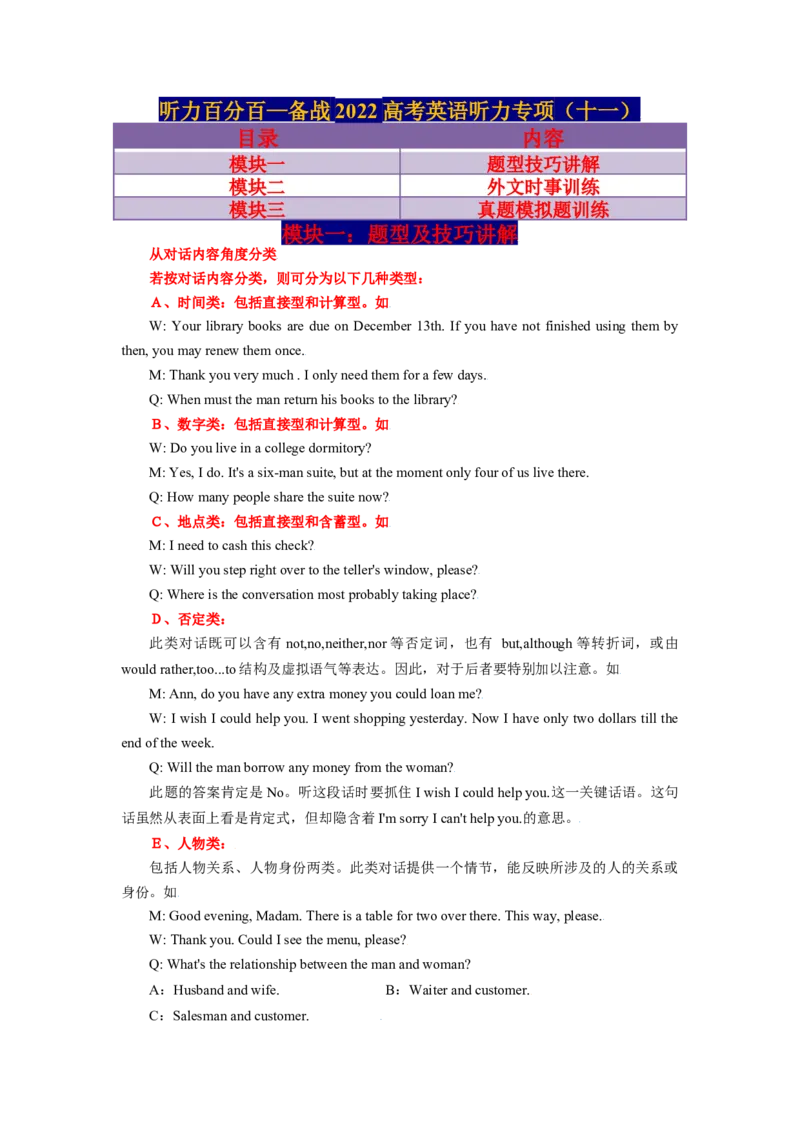
听力百分百—备战 2022 高考英语听力专项(十一)
目录 内容
模块一 题型技巧讲解
模块二 外文时事训练
模块三 真题模拟题训练
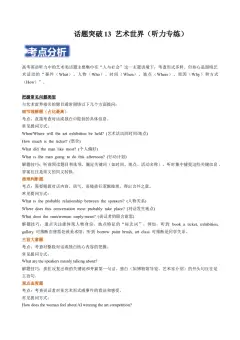
模块一:题型及技巧讲解
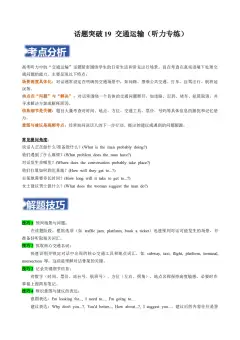
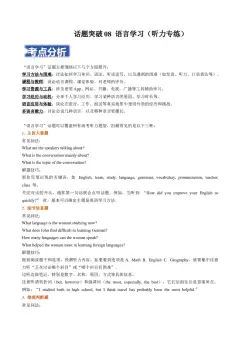
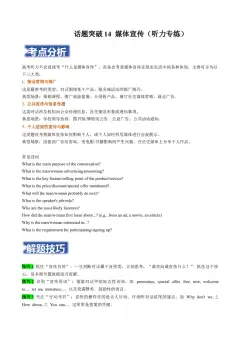
从对话内容角度分类
若按对话内容分类,则可分为以下几种类型:
A、时间类:包括直接型和计算型。如
W: Your library books are due on December 13th. If you have not finished using them by
then, you may renew them once.
M: Thank you very much . I only need them for a few days.
Q: When must the man return his books to the library?
B、数字类:包括直接型和计算型。如
W: Do you live in a college dormitory?
M: Yes, I do. It's a six-man suite, but at the moment only four of us live there.
Q: How many people share the suite now?
C、地点类:包括直接型和含蓄型。如
M: I need to cash this check?
W: Will you step right over to the teller's window, please?
Q: Where is the conversation most probably taking place?
D、否定类:
此类对话既可以含有 not,no,neither,nor等否定词,也有 but,although等转折词,或由
would rather,too...to结构及虚拟语气等表达。因此,对于后者要特别加以注意。如
M: Ann, do you have any extra money you could loan me?
W: I wish I could help you. I went shopping yesterday. Now I have only two dollars till the
end of the week.
Q: Will the man borrow any money from the woman?
此题的答案肯定是No。听这段话时要抓住I wish I could help you.这一关键话语。这句
话虽然从表面上看是肯定式,但却隐含着I'm sorry I can't help you.的意思。
E、人物类:
包括人物关系、人物身份两类。此类对话提供一个情节,能反映所涉及的人的关系或
身份。如
M: Good evening, Madam. There is a table for two over there. This way, please.
W: Thank you. Could I see the menu, please?
Q: What's the relationship between the man and woman?
A:Husband and wife. B:Waiter and customer.
C:Salesman and customer.F、活动类:
这一类谈话内容可涉及上课、娱乐、工作、日常生活等各种情况。如
W: Are you going to New York next weekend?
M: Yes, I'm going to look up Bill while I'm there.
Q: What's the man going to do?
这类对话中往往先后出现几种情况,要注意听问句是什么,然后再作出选择。
3、 几种常见的解题方法
A节中的对话虽然简短,但多数情况下,往往不能从听到的内容中找到与选择项内容
完全相同的部分,即对话中一般没有现成的答案。因此,在听的时候要注意抓住选择项的
同义或反义词(组)用辨别法答题(解活动类多用此方法),或根据对话内容采用归纳、
推论或辨别的方法回答。用这种方法答题,类型不仅仅限于诸如"what does the man
mean?"这样的题目,其它如含蓄人物类、人物身份类、含蓄地点类、否定类题目也与此类
似。如:
W: How do you like the play you saw last night?
M: Well, I should have stayed at home.
Q: What does the man think of the play?
A:It is exciting. B:It is boring.
C:He didn't see the play.
对话中"I should have stayed at home."(我真该待在家里),这句话已婉转地表明他不
喜欢这出戏,而对没有待在家里表示遗憾、后悔(should have done something这种结构可
用来表示"对应该发生而实际上没有发生的事情表示遗憾、后悔或谴责)。能使他产生此感
想的原因自然是"The play is boring."(演出令人厌烦),因而B是正确的答案。否定类题目
多含有虚拟语气、语气否定、暗示比喻、强化意见等形式。对于数字类题目,多出现两处
甚至三、四处数字或时间,因此,除了用辨别方法外,有时必须用计算方法才能得出正确
答案。
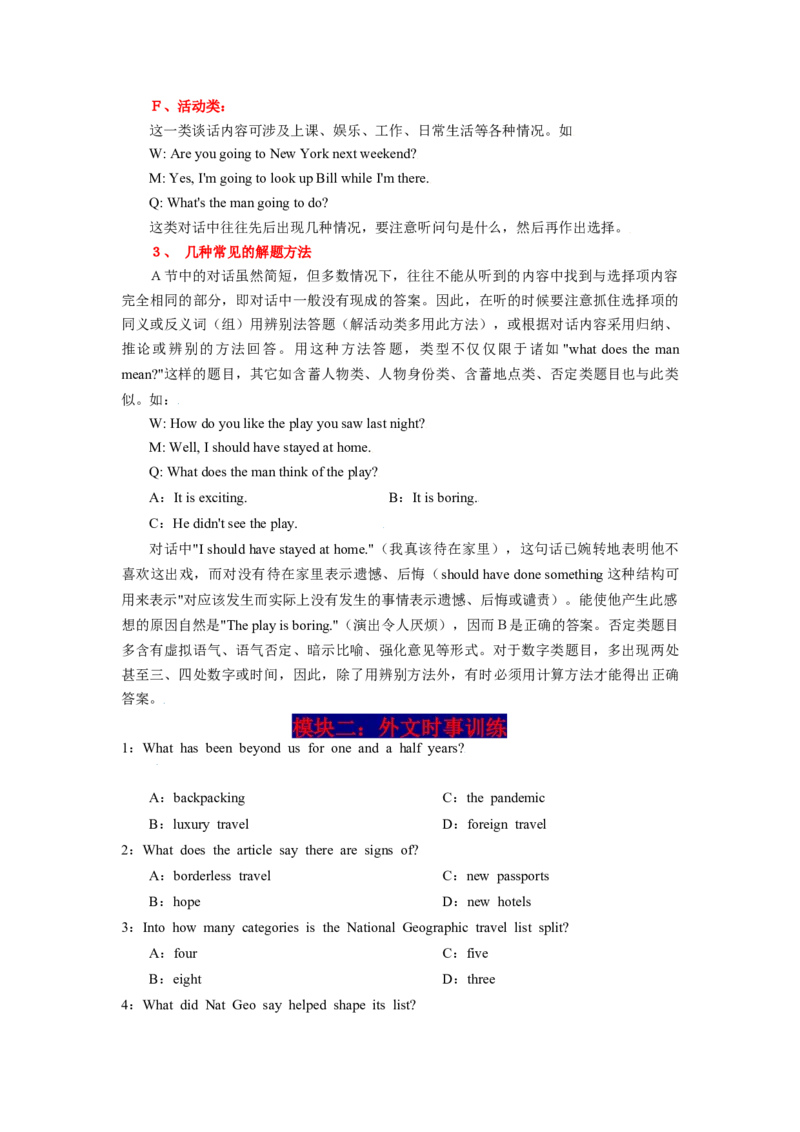
模块二:外文时事训练
1:What has been beyond us for one and a half years?
A:backpacking C:the pandemic
B:luxury travel D:foreign travel
2:What does the article say there are signs of?
A:borderless travel C:new passports
B:hope D:new hotels
3:Into how many categories is the National Geographic travel list split?
A:four C:five
B:eight D:three
4:What did Nat Geo say helped shape its list?A:the pandemic C:a mould
B:a think tank D:travel statistics
5:Who did Nat Geo say reflected on how we explore the world?
A:hotel reservation websites C:travelers and communities
B:hoteliers D:tourists
6:What is London's Tin Pan Alley famous for?
A:calypso C:metal
B:music D:kitchen equipment
7:Where is the Caprivi Strip?
A:Patagonia C:Hokkaido
B:Italy D:Namibia
8:What did Nat Geo say people are getting choosier about?
A:their vacations C:domestic travel
B:prices D:mask wearing
9:What kind of choices did Nat Geo say people are making?
A:monetary choices C:conscientious choices
B:vaccine processes D:difficult choices
10:What kind of travel opportunities did Nat Geo say would be in the future?
A:resilient opportunities C:innovative opportunities
B:thrilling opportunities D:superlative opportunities
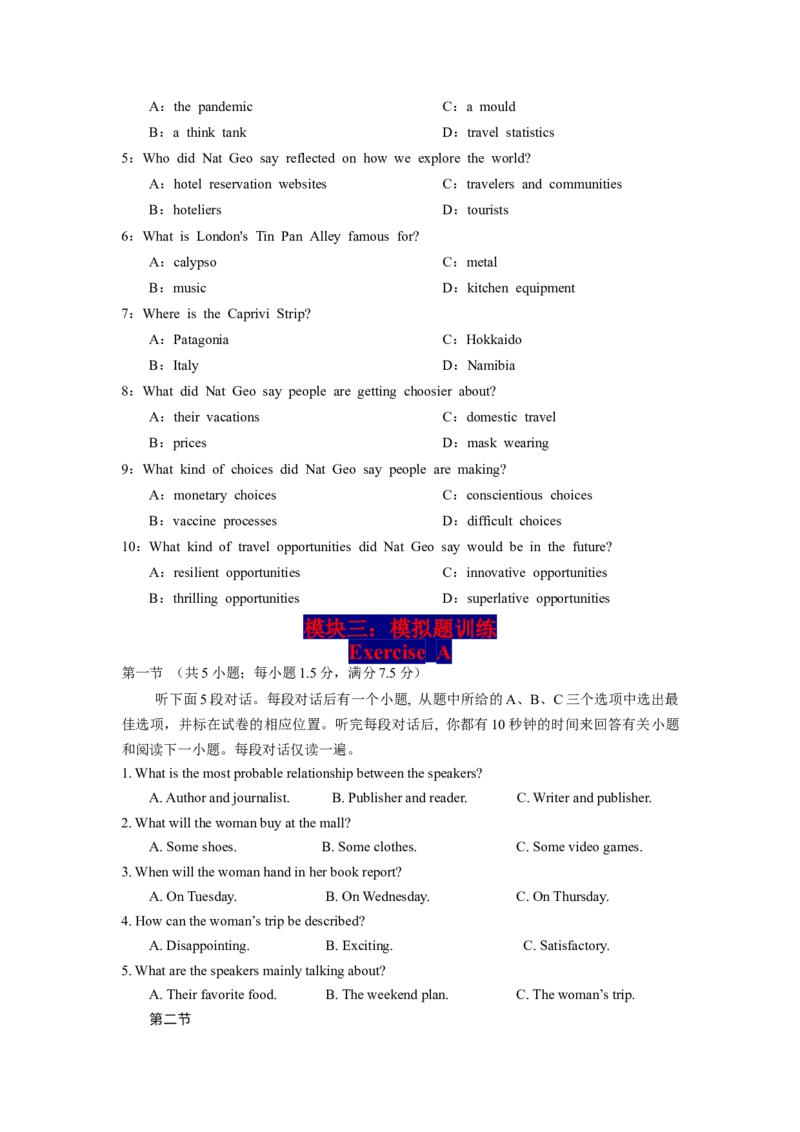
模块三:模拟题训练
Exercise A
第一节 (共5小题;每小题1.5分,满分7.5分)
听下面5段对话。每段对话后有一个小题, 从题中所给的A、B、C三个选项中选出最
佳选项,并标在试卷的相应位置。听完每段对话后, 你都有10秒钟的时间来回答有关小题
和阅读下一小题。每段对话仅读一遍。
1. What is the most probable relationship between the speakers?
A. Author and journalist. B. Publisher and reader. C. Writer and publisher.
2. What will the woman buy at the mall?
A. Some shoes. B. Some clothes. C. Some video games.
3. When will the woman hand in her book report?
A. On Tuesday. B. On Wednesday. C. On Thursday.
4. How can the woman’s trip be described?
A. Disappointing. B. Exciting. C. Satisfactory.
5. What are the speakers mainly talking about?
A. Their favorite food. B. The weekend plan. C. The woman’s trip.
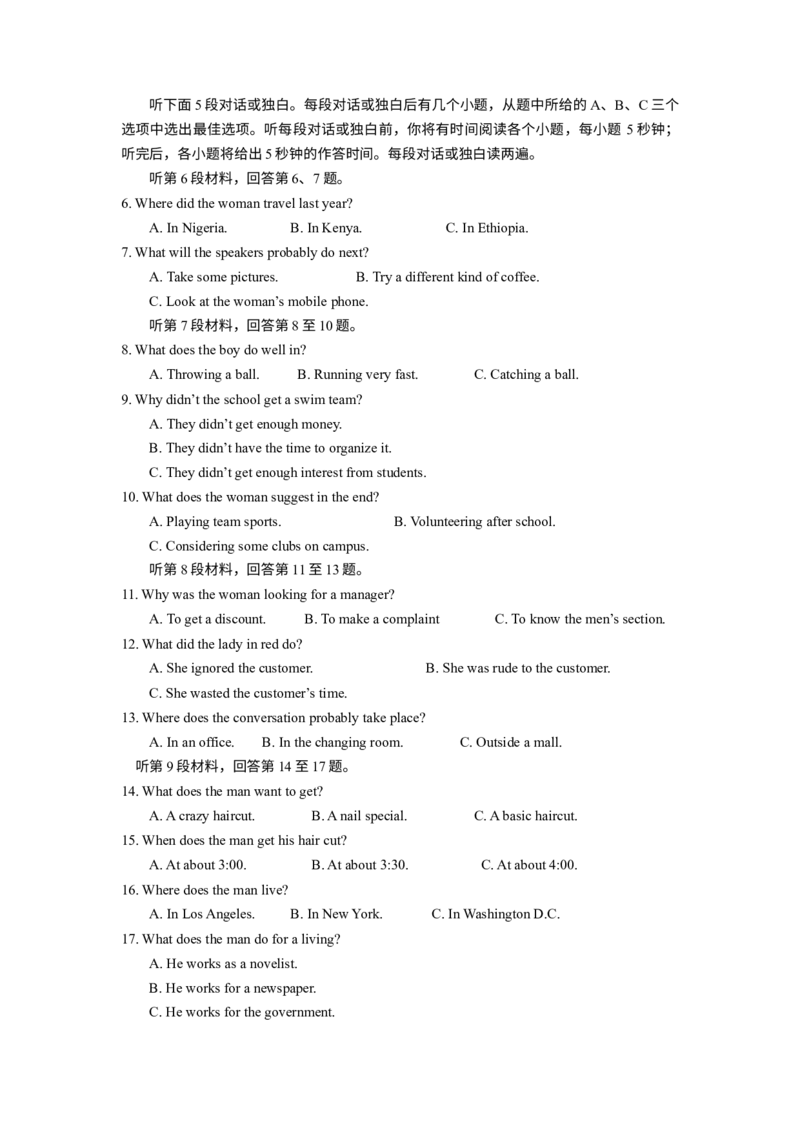
第二节听下面5段对话或独白。每段对话或独白后有几个小题,从题中所给的A、B、C三个
选项中选出最佳选项。听每段对话或独白前,你将有时间阅读各个小题,每小题 5秒钟;
听完后,各小题将给出5秒钟的作答时间。每段对话或独白读两遍。
听第6段材料,回答第6、7题。
6. Where did the woman travel last year?
A. In Nigeria. B. In Kenya. C. In Ethiopia.
7. What will the speakers probably do next?
A. Take some pictures. B. Try a different kind of coffee.
C. Look at the woman’s mobile phone.
听第7段材料,回答第8至10题。
8. What does the boy do well in?
A. Throwing a ball. B. Running very fast. C. Catching a ball.
9. Why didn’t the school get a swim team?
A. They didn’t get enough money.
B. They didn’t have the time to organize it.
C. They didn’t get enough interest from students.
10. What does the woman suggest in the end?
A. Playing team sports. B. Volunteering after school.
C. Considering some clubs on campus.
听第8段材料,回答第11至13题。
11. Why was the woman looking for a manager?
A. To get a discount. B. To make a complaint C. To know the men’s section.
12. What did the lady in red do?
A. She ignored the customer. B. She was rude to the customer.
C. She wasted the customer’s time.
13. Where does the conversation probably take place?
A. In an office. B. In the changing room. C. Outside a mall.
听第9段材料,回答第14至17题。
14. What does the man want to get?
A. A crazy haircut. B. A nail special. C. A basic haircut.
15. When does the man get his hair cut?
A. At about 3:00. B. At about 3:30. C. At about 4:00.
16. Where does the man live?
A. In Los Angeles. B. In New York. C. In Washington D.C.
17. What does the man do for a living?
A. He works as a novelist.
B. He works for a newspaper.
C. He works for the government.听第10段材料,回答第18至20题。
18. Where did western culture begin?
A. In Western Europe. B. In Rome. C. In Ancient Greece.
19. What influenced the North American culture most in recent centuries?
A. Arts. B. Science. C. Government.
20. What is the speaker probably doing?
A. Giving a lecture. B. Conducting a TV show. C. Hosting a radio program.
Exercise B
第一节 (共5小题;每小题1.5分,满分7.5分)
第一节(共5小题;每小题1.5分,满分7.5分)
听下面5段对话。每段对话后有一个小题,从题中所给的A、B、C三个选项 中选出
最佳选项。听完每段对话后,你都有10秒钟的时间来回答有关小题和阅读下 一小题。每
段对话仅读一遍。
1. What kind of place are the speakers probably talking about?
A.A theatre. B.A stadium. C.An apartment.
2. What is the probable relationship between the speakers?
A.Doctor and patient. B.Boss and secretary.
C.Teacher and student.
3. What does the man dislike?
A.Flying. B.Driving. C.Travelling.
4. Why does the man look worried?
A.He has lost his car. B.He can’t meet Jim on time.
C.He will be late for an appointment.
5. What are the speakers mainly talking about?
A.Work. B.Clothes. C.A party.
第二节(共15小题;每小题1.5分,满分22.5分)
听下面5段对话或独白。每段对话或独白后有几个小题,从题中所给的A、B、C三个
选项中选出最佳选项,并标在试卷的相应位置。听每段对话或独白前,你将有时间阅读各
个小题,每小题5秒钟;听完后,各小题将给出5秒钟的作答时间。每段对话或独白读两
遍。
听第6段材料,回答第6~8小题。
6.What does the man’s pet eat?
A.Meat. B.Grass. C.Insects.
7.Who mainly looks after the pet?
A.The man. B.The man’s friend. C.The man’s mother.
8.What does the man have in common with his pet?
A.They are both hairy. B.They are both cool.
C.They are both tough.听第7段材料,回答第9~11小题。
9. What is the phone number of Greg Hunter?
A.555-1234. B.555-2134. C.555-1243.
10. What does the woman mainly worry about?
A.Her age. B.Her health. C.The cost.
11.What does the man suggest the woman do?
A.Walk faster. B.Take the subway.
C.Go swimming regularly.
听第8段材料,回答第12~14小题。
12. How did the man go to London?
A.By bus. B.By car. C.By underground.
13.What did the man and his friends have for the meal?
A.Spanish food. B.Chinese food. C.Mexican food.
14. What does the man say about the restaurant?
A.It was full. B.It was quiet. C.It was expensive.
听第9段材料,回答第15~17小题。
15.Where does the conversation most probably take place?
A.In a police station. B.In a school. C.On the phone.
16.How long has Max been away from home?
A.Two days. B.A whole day. C.The whole morning.
17.What colour are Max’s shoes?
A.Red. B.Blue. C.White.
听第10段材料,回答第18~20小题。
18.Where did the speaker take the course?
A.In the mountains. B.In the office. C.In the forest.
19.How many people took the course with the speaker?
A.8. B.9. C.10.
20.What did the speaker learn from the course?
A.How to solve emergencies.
B.How to be an expert climber.
C.How to be more brave and confident.
Exercise C
第一节(共5小题;每题1.5分,满分7.5分)
听下面5段对话。每段对话后有一个小题,从题中所给的A、B、C三个选项中选出最
佳选项,并标在试卷的相应位置。听完每段对话后,你都有10秒钟的时间来回答有关小题和
阅读下一小题。每段对话仅读一遍。
1. What does the woman imply?
A. For the first time the team has become the league champion.B. The team did a good job again this time.
C. The team has little chance to win this time.
2. What program does the man generally listen to?
A. News. B. Talk shows. C. Education program.
3. Where is the conversation taking place?
A. In a park. B. In a museum. C. In a pet store.
4. How does Mike feel?
A. Satisfied. B. Puzzled. C. Worried.
5. What does the woman mean?
A. She doesn’t understand the man. B. She gave the change to someone else.
C. She’s unable to help the man.
第二节(共15小题,每小题1.5分,满分22.5分)
听下面5段对话或独白。每段对话或独白后有几个小题。从题中所给的 A、B、C三个
选项中选出最佳选项,并标在试卷的相应位置。听每段对话或独白前,你将有时间阅读各
个小题,每小题5秒钟;听完后,各小题将给出5秒钟的作答时间,每段对话或独白读两
遍。
听第6段材料,回答第6、7题。
6.Why is the woman talking to the man?
A. Because of the poor quality of the goods she bought.
B. Because of not getting the promised discount.
C. Because of the impolite attitude of the salesgirl.
7. What will the man give to the woman?
A. Some money. B. A letter of apology. C. A new product.
听第7段材料,回到第8-10题。
8.Which place would the man like to go?
A. An exciting modern city. B. A popular tourist attraction.
C. A quiet and far-away place.
9. What does the woman worry about?
A. The weather. B. The food and water. C. The language.
10. What does the woman plan to do now?
A. Travel with the man. B. Do some gardening. C. Go to the travel agency.
听第8段材料,回答第11-13题。
11. How often does the man contact his aunt?
A. Once a month. B. Once a week. C. Seldom.
12. Why didn’t his aunt chat with him online?
A. Her kids keep her busy all the time.
B. She does not have a computer in her house.
C. She’s not interested in using the computer.13. What will he do next?
A. Ask his cousins for help. B. Teach his aunt himself.
C. Ask his uncle for help.
听第9段材料,回答第14-17题。
14. Who is the woman?
A. A police officer. B. An immigration official. C. An air hostess.
15. Which line is for the residents?
A. The line on the man’s right. B. The line on the woman’s left.
C. The line on the woman’s right.
16. How long will the man study in the UK?
A. For a few months. B. For a year. C. For two years.
17. How will the man pay for living costs and tuition fees?
A. His father has paid for that in advance. B. He has won a scholarship.
C. He will take a part-time job to pay for that.
听第10段材料,回答第18-20题。
18. What is the talk mainly about?
A. How to keep young. B. How to improve memory.
C. How to open our mind.
19. What is the key to achieving this goal?
A. Going back to school. B. Playing no attention to age.
C. Using the mind as much as possible.
20. What did the man who entered school at 70 become later?
A. An active lawyer. B. A successful doctor. C. A highly paid artist.
Exercise D
第一节(共5小题;每小题1.5,分,满分7.5分)
听下面 5 段对话。每段对话后有一个小题,从题中所给的 A、B、C 三个选项中选出
最佳选项,并标在试卷的相应位置。听完每段对话后,你都有 10 秒钟的时间来回答有关
小题和阅读下一小题。每段对话仅读一遍。
1.Where does the conversation probably take place?
A. In a library. B. In a bookstore. C. In a classroom.
2.How does the woman feel now?
A. Relaxed. B. Excited. C. Tired.
3.How much will the man pay?
A. $520. B. $80. C. $100.
4.What does the man tell Jane to do?
A. Postpone his appointment. B. Meet Mr. Douglas. C. Return at 3 o’clock.
5.Why would David quit his job?
A. To go back to school. B. To start his own firm. C. To work for his friend.第二节(共15小题;每小题1.5分,满分22.5分)
听下面5段对话或独白。每段对话或独白后有几个小题,从题中所给的A、B、C三个
选项中选出最佳选项。听每段对话或独白前,你将有时间阅读各个小题,每小题 5秒钟;
听完后,各小题将给出5秒钟的作答时间。每段对话或独白读两遍。
听下面一段较长对话,回答以下小题。
6. What does the man want the woman to do?
A. Check the cupboard.
B. Clean the balcony.
C. Buy an umbrella.
7. What is the probable relationship between the speakers?
A. Husband and wife.
B. Employer and employee.
C. Shop assistant and customer.
听下面一段较长对话,回答以下小题。
8. Where did the woman go at the weekend?
A. The city centre.
B. The forest park.
C. The man’s home.
9. How did the man spend his weekend?
A. Packing for a move.
B. Going out with Jenny.
C. Looking for a new house.
10. What will the woman do for the man?
A. Take Henry to hospital. B. Stay with his kid. C. Look after his pet.
听下面一段较长对话,回答以下小题。
11. What is Mr. Stone doing now?
A. Eating lunch. B. Having a meeting. C. Writing a diary.
12. Why does the man want to see Mr. Stone?
A. To discuss a program. B. To make a travel plan. C. To ask for sick leave.
13. When will the man meet Mr. Stone this afternoon?
A. At 3:00. B. At 3:30. C. At 3:45.
听下面一段较长对话,回答以下小题。
14. What are the speakers talking about?
A. A company. B. An interview. C. A job offer.
15. Who is Monica Stansfield?
A. A junior specialist. B. A department manager. C. A sales assistant.
16. When will the man hear from the woman?
A. On Tuesday. B. On Wednesday. C. On Thursday.听下面一段独白,回答以下小题。
17. What did John enjoy doing in his childhood?
A. Touring France. B. Playing outdoors. C. Painting pictures.
18. What did John do after he moved to the US?
A. He did business. B. He studied biology. C. He worked on a farm.
19. Why did John go hunting?
A. For food. B. For pleasure. C. For money.
20. What is the subject of John’s works?
A. American birds. B. Natural scenery. C. Family life.