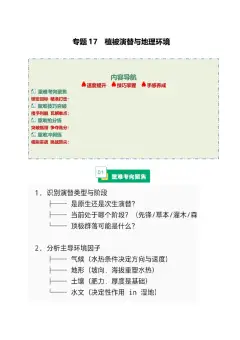
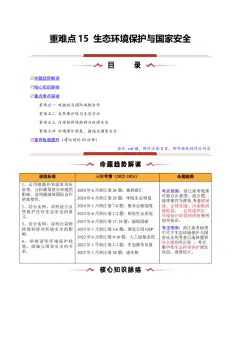
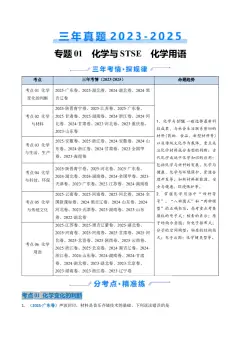
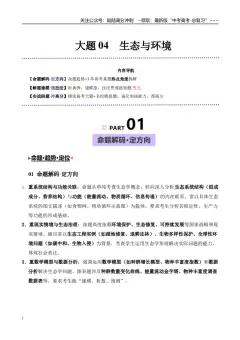
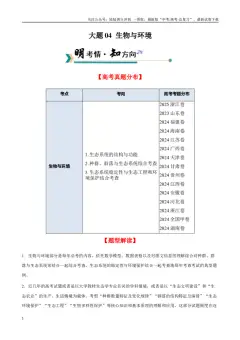
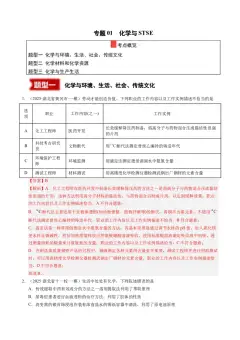
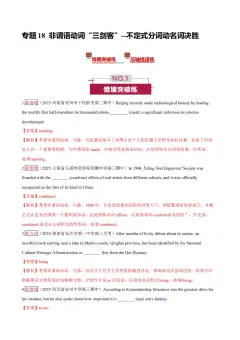
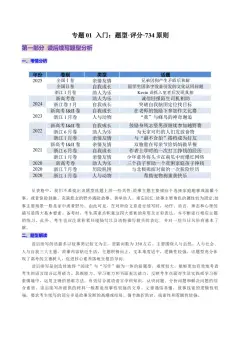
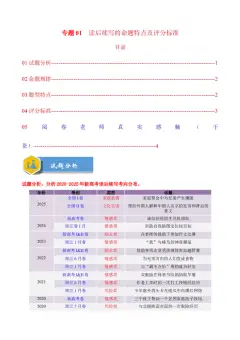
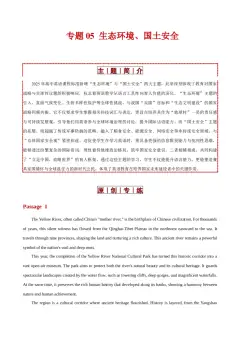
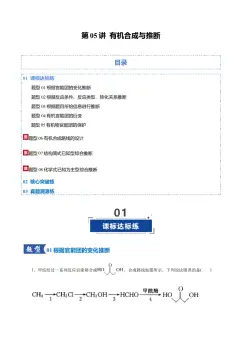
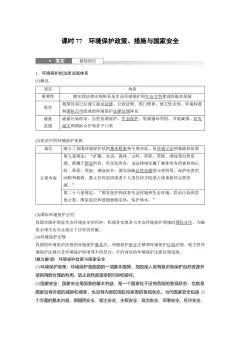
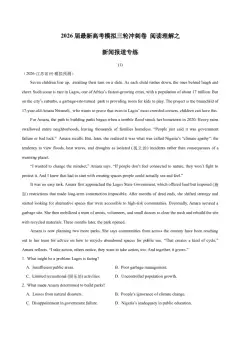
考点分析
解题技巧
语料总结
话题突破17 环境保护(听力专练)

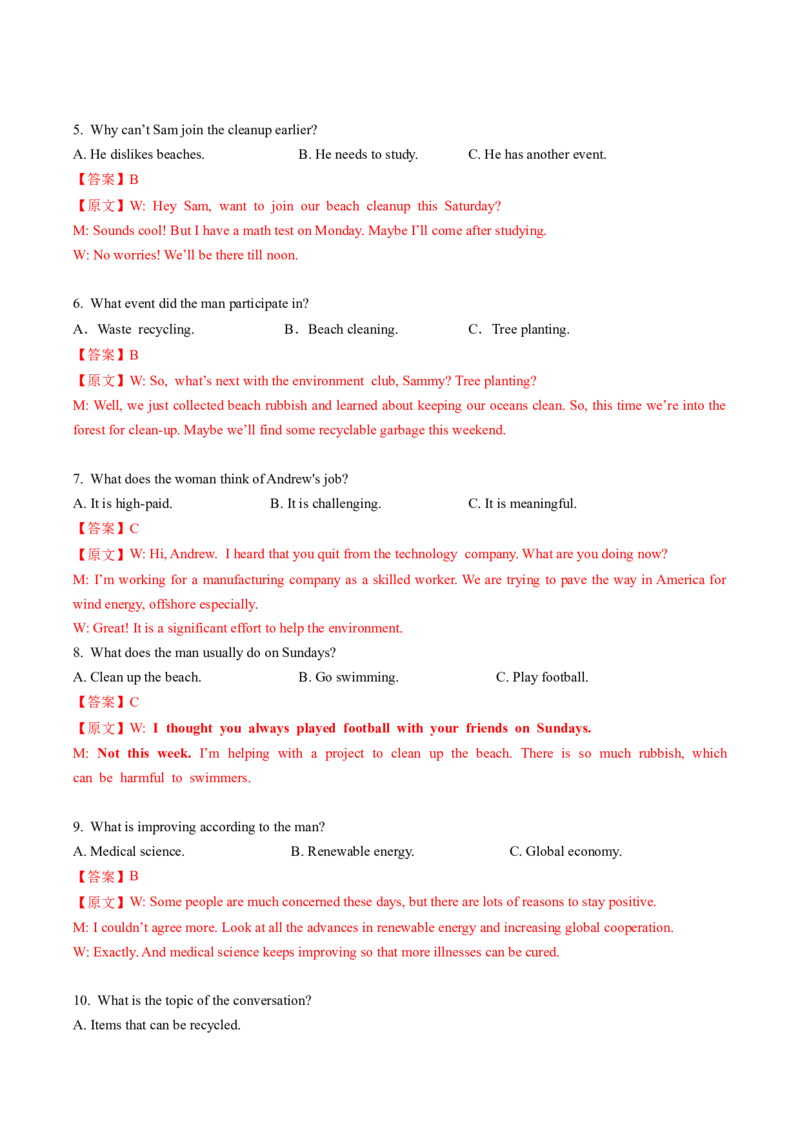
环境保护主题的听力试题主要考察以下能力:
捕捉具体细节:识别数字(如垃圾吨数)、时间、地点、具体措施(如用山羊除草)、物种名称等。
理解主旨要义:判断对话或独白的核心议题(如气候变化、废物管理、物种保护)。
推断观点态度:识别说话者对某一环保政策或行动的看法(如支持、怀疑、强调执行的重要性)。
理解行动与目的:将某个具体行动(如海滩清理)与其背后的目的(如减少污染、准备环境报告)联系起
来。
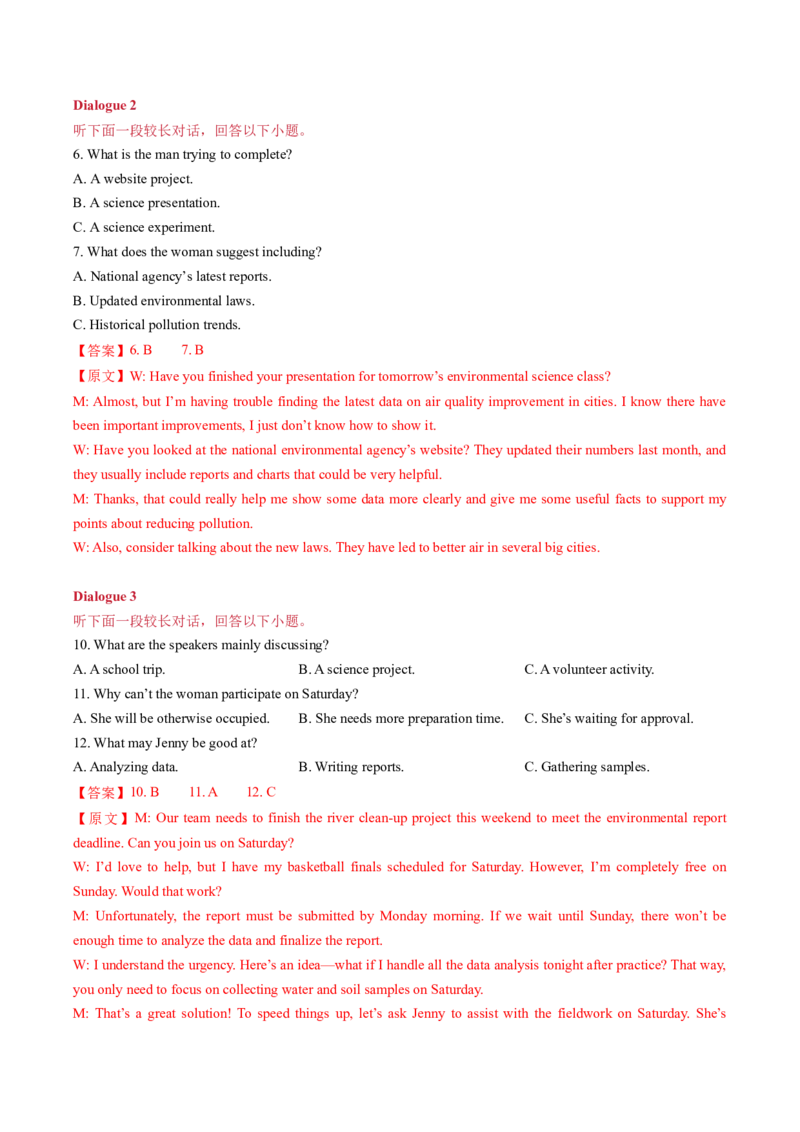
技巧1 预判关键词:在读题阶段,迅速圈定选项和题干中的环保关键词,在听的过程中集中捕捉这些词及
其同义替换。
技巧2 抓住开头结尾:对话或独白的开头常点明主题,结尾常总结目的或发出倡议,是理解主旨的关键。
技巧3 注意转折和强调:留意 but, however, actually, the point is 等词后面的内容,往往是说话者的真实
观点或重要信息。
技巧4 识别“问题-解决方案”结构:很多对话会围绕一个环境问题(如河流污染)展开,并讨论其解决
方案(如清理、采样、写报告)。理清这个逻辑链有助于答题。
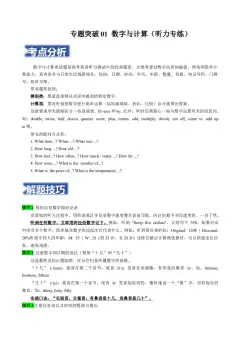
高频词汇
环境问题
climate change 气候变化
global warming 全球变暖
solid waste 固体废物
plastic pollution / plastic waste 塑料污染 / 塑料垃圾
air/water/soil pollution 空气/水/土壤污染
oil spills 石油泄漏
biodiversity loss 生物多样性丧失
endangered species 濒危物种
habitat destruction / loss 栖息地破坏 / 丧失
保护行动与解
决方案
environmental protection / conservation 环境保护
sustainable development 可持续发展
wildlife protection 野生动物保护
beach clean-up / river clean-up 海滩/河流清理
marine protection area 海洋保护区
reduce carbon footprint 减少碳足迹
green building 绿色建筑
renewable energy 可再生能源
waste management 废物管理
community-led initiative 社区主导的倡议
相关组织与人
物
non-profit (organization) 非营利组织
government agency 政府机构
environmental expert / scientist 环境专家 / 科学家
wildlife ranger 野生动物护林员
program director 项目主任
科学研究与监
测
environmental monitoring 环境监测
scientific data 科学数据
collect samples 收集样本
conduct research 进行研究
analyze data 分析数据
environmental report 环境报告
实用对话句式
讨论问题与影
响
 What impact would this have on the environment? 这会对环境产生什
么影响?
Pollution is associated with negative health and environmental effects. 污
染与负面的健康和环境效应相关。
Their numbers are dropping fast. 它们的数量正在快速下降。
提出解决方案
与建议
We should look for ways to make sure that things are sustainable. 我们
应该寻找方法以确保事物的可持续性。
Why not use goats instead of poison to remove weeds? 为什么不用山
羊来代替毒药清除杂草呢?
Consider talking about the new laws that have led to better air. 可以考
虑谈谈那些改善了空气质量的新法律。
Small actions do accumulate. 微小的行动确实会累积起来。
表达观点与态
度
It's a positive step, but strict enforcement is necessary. 这是积极的一
步,但严格的执行是必要的。
Reducing your personal footprint doesn't require perfection — just
progress. 减少你的个人足迹不需要完美——只需要进步。
It sounds like a dream come true for anyone who cares about the
environment. 这对于任何关心环境的人来说都像是梦想成真。
描述工作与活
We'll be studying climate patterns and monitoring environmental changes.
强化训练
动
我们将研究气候模式并监测环境变化。
We organize monthly beach clean-ups to keep the area litter-free. 我们
组织每月的海滩清理活动以保持该区域无垃圾。
I'm interested in things related to nature protection. 我对与自然保护相关
的事情感兴趣。


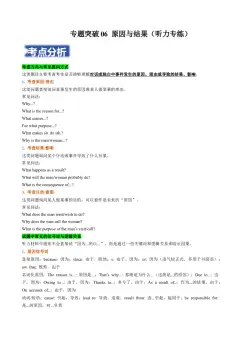
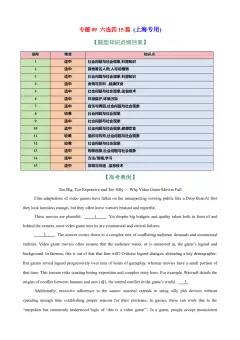
试题总览
短对话
1
男士的兴趣从生物丰富的环境转向了干旱地区。
2
男士联系教授是为了解其发明对环境的影响。
3
对话主要谈论养宠物及其带来的环境清洁责任。
4
男士认为社区行动能有效应对气候变化。
5
Sam 因为要学习而不能早点参加海滩清理。
6
男士刚参加完海滩清理,并计划去森林清理。
7
女士认为Andrew 从事的风能工作很有意义。
8
男士本周日不去踢足球,而是去清理海滩垃圾。
9
男士认为可再生能源领域正在取得进步。
10
对话主题是关于塑料瓶、玻璃罐等可回收物品的再利用。
长对话
1
一位女团队成员在节目中介绍他们在太空监测环境变化的工作。
2
女士为男士的环境科学课演示文稿提供了数据和法律方面的建议。
3
团队成员讨论如何协作完成河流清理项目及环境报告。
4
女士向Mr. Johnson 寻求在环境保护领域寻找实习项目的建议。
5
摄影师David 分享他在北极拍摄的挑战,以及他将书收益用于保护野生动物的善
举。
6
两人讨论南非为保护企鹅而禁止在海洋保护区内进行船对船转运的新政策。
7
男士找到一份科技初创公司的新工作,并和女士讨论公司将建造的绿色环保新办
公楼。
独白
1
介绍欧洲海洋帆船赛,以及船队在比赛中为科学家收集气候变化数据的目的。
2
关于全球废物危机的独白,阐述了问题的严重性并鼓励个人采取行动减少生态足
迹。
3
介绍华盛顿一墓地为保护环境,使用山羊而非农药来清除杂草的创新方法。
4
一则学院讲座通知,内容涵盖气候变化本身以及气候教育的重要性。
5
格林菲尔德保护小组秘书介绍其团队的自然保护活动和即将举行的招募新成员的
活动。
练习 1 短对话
听下面10 段对话。每段对话后有一个小题,从题中所给的A、B、C 三个选项中选出最佳选项。听完每段
对话后,你都有10 秒钟的时间来回答有关小题和阅读下一小题。每段对话仅读一遍。
1. What has recently caught the man’s interest?
A. Areas with little rainfall.
B. Places full of animals.
C. Regions full of plants.
【答案】A
【原文】W: Reading about different types of habitats has been a real learning experience.
M: Right, it’s so interesting. For a long time, I have been curious about natural environments known for their
colorful and rich plant and animal life. But now, I’m more curious about dry places.
2. Why did the man contact Professor Higgins?
A. To design an invention.
B. To learn more about the invention.
C. To discuss departmental matters.
【答案】B
【原文】W: I don't really understand why you called Professor Higgins. He has nothing to do with our department
and project.
M: Well, we wanted to understand what impact an invention like this would have on the environment. And that's his
area of expertise.
3. What is the main topic of the conversation?
A. Keeping pets.
B. Cleaning the dogs.
C. Running a company.
【答案】A
【原文】W: There are many pet dogs in our neighborhood.
M: Nowadays, many people have pets for amusement and company. But they should keep the environment clean
when they walk their dogs.
4. What is the man’s view on addressing climate change?
A. Only government policies matter.
B. Individual efforts are meaningless.
C. Community actions can be effective.
【答案】C
【原文】W: Professor Johnson’s lecture on climate change was quite alarming. Do you think individual
actions can really make a difference?
M: While systematic change is crucial, I’ve seen firsthand how community-led initiatives in coastal towns have
significantly reduced plastic waste. Small actions do accumulate.
5. Why can’t Sam join the cleanup earlier?
A. He dislikes beaches.
B. He needs to study.
C. He has another event.
【答案】B
【原文】W: Hey Sam, want to join our beach cleanup this Saturday?
M: Sounds cool! But I have a math test on Monday. Maybe I’ll come after studying.
W: No worries! We’ll be there till noon.
6. What event did the man participate in?
A.Waste recycling.
B.Beach cleaning.
C.Tree planting.
【答案】B
【原文】W: So, what’s next with the environment club, Sammy? Tree planting?
M: Well, we just collected beach rubbish and learned about keeping our oceans clean. So, this time we’re into the
forest for clean-up. Maybe we’ll find some recyclable garbage this weekend.
7. What does the woman think of Andrew's job?
A. It is high-paid.
B. It is challenging.
C. It is meaningful.
【答案】C
【原文】W: Hi, Andrew. I heard that you quit from the technology company. What are you doing now?
M: I’m working for a manufacturing company as a skilled worker. We are trying to pave the way in America for
wind energy, offshore especially.
W: Great! It is a significant effort to help the environment.
8. What does the man usually do on Sundays?
A. Clean up the beach.
B. Go swimming.
C. Play football.
【答案】C
【原文】W: I thought you always played football with your friends on Sundays.
M: Not this week. I’m helping with a project to clean up the beach. There is so much rubbish, which
can be harmful to swimmers.
9. What is improving according to the man?
A. Medical science.
B. Renewable energy.
C. Global economy.
【答案】B
【原文】W: Some people are much concerned these days, but there are lots of reasons to stay positive.
M: I couldn’t agree more. Look at all the advances in renewable energy and increasing global cooperation.
W: Exactly. And medical science keeps improving so that more illnesses can be cured.
10. What is the topic of the conversation?
A. Items that can be recycled.
B. Advice on choosing cat food.
C. The key to growing flowers.
【答案】A
【原文】W: Don’t throw away this plastic bottle. We can use it to store cat food.
M: Okay. We can also clean this glass jar and use it to hold flowers.
W: Good idea! And don’t forget these cardboard boxes. They’re useful for packing when we move house.
练习2  中长对话
听下面几段对话。每段对话后有几个小题,从题中所给的A、B、C 三个选项中选出最佳选项,并标在试
卷的相应位置。听每段对话前,你将有时间阅读各个小题,每小题5 秒钟;听完后,各小题将给出5 秒钟
的作答时间。每段对话读两遍。
Dialogue 1
听下面一段较长对话,回答以下小题。
11. How does the woman’s team avoid losing data?
A. By sending the data back to Earth for storage.
B. By checking the cloud data regularly.
C. By keeping a copy of the data.
12. Why do the team members exercise according to the woman?
A. To keep their energy.
B. To pass the time.
C. To have fun.
13. Who is the man?
A. A host.
B. A manager.
C. A programmer.
【答案】11. C    12. A    13. A
【原文】M: Welcome to our program! (13)
W: Thanks, Steve.
M: I heard your team will be working in space again. So we’re here to talk about it. What are you going to do?
W: We’ll be studying climate patterns and monitoring environmental changes.
M: That must require a lot of work.
W: You’re right.
M: I guess you must have great computers managing all that.
W: Yes, but we check and save a copy of our findings by hand. If something fails, we can’t afford to lose data. (11)
M: How much data do you process?
W: Normally we collect 6 GB a day, but during special projects, it can reach 12 GB.
M: It sounds amazing. Do you have enough time to rest?
W: There’s little time for breaks, and it’s often tiring.
M: That does sound tough. So, you don’t exercise at all? (12)
W: Of course we do. Exercise is important — without it, we’d lose strength. (12)
M: Makes sense. That’s all for now. Thank you! (13)
Dialogue 2
听下面一段较长对话,回答以下小题。
6. What is the man trying to complete?
A. A website project.
B. A science presentation.
C. A science experiment.
7. What does the woman suggest including?
A. National agency’s latest reports.
B. Updated environmental laws.
C. Historical pollution trends.
【答案】6. B    7. B
【原文】W: Have you finished your presentation for tomorrow’s environmental science class?
M: Almost, but I’m having trouble finding the latest data on air quality improvement in cities. I know there have
been important improvements, I just don’t know how to show it.
W: Have you looked at the national environmental agency’s website? They updated their numbers last month, and
they usually include reports and charts that could be very helpful.
M: Thanks, that could really help me show some data more clearly and give me some useful facts to support my
points about reducing pollution.
W: Also, consider talking about the new laws. They have led to better air in several big cities.
Dialogue 3
听下面一段较长对话,回答以下小题。
10. What are the speakers mainly discussing?
A. A school trip.
B. A science project.
C. A volunteer activity.
11. Why can’t the woman participate on Saturday?
A. She will be otherwise occupied.
B. She needs more preparation time.
C. She’s waiting for approval.
12. What may Jenny be good at?
A. Analyzing data.
B. Writing reports.
C. Gathering samples.
【答案】10. B    11. A    12. C
【原文】M: Our team needs to finish the river clean-up project this weekend to meet the environmental report
deadline. Can you join us on Saturday?
W: I’d love to help, but I have my basketball finals scheduled for Saturday. However, I’m completely free on
Sunday. Would that work?
M: Unfortunately, the report must be submitted by Monday morning. If we wait until Sunday, there won’t be
enough time to analyze the data and finalize the report.
W: I understand the urgency. Here’s an idea—what if I handle all the data analysis tonight after practice? That way,
you only need to focus on collecting water and soil samples on Saturday.
M: That’s a great solution! To speed things up, let’s ask Jenny to assist with the fieldwork on Saturday. She’s
experienced with sample collection.
W: Perfect! I’ll send you the analyzed data by midnight tonight. Good luck with the fieldwork, and let me know if
you need anything else.
M: Thanks! This plan should ensure we meet the deadline without compromising quality.
Dialogue 4
听下面一段较长对话,回答以下小题。
14. What is the woman looking for?
A. A campus part-time job.
B. A chance to work online.
C. A program for job experience,
15. What field is the woman interested in?
A. Government policy.
B. Business management.
C. Environmental work.
16. Why does Mr. Johnson suggest visiting the career center?
A. To attend workshops.
B. To find listed programs.
C. To meet the club leaders.
17. What advice is given on the application process?
A. Building up contacts.
B. Volunteering at the centre.
C. Focusing less on coursework.
【答案】14. C    15. C    16. B
17. A
【原文】W: Mr. Johnson, I have a favor to ask. I'm looking for programs that can build my job experience. Can
you help me?
M: Of course, what kind of program are you looking for?
W: I'm interested in things related to nature protection, maybe with a non - profit or government agency.
M: That's a great area. Have you checked the career center on campus? They list programs with organizations you
might like.
W: I haven't looked there yet. I'll check it out. But do you have any other suggestions?
M: Absolutely, websites like indeed or LinkedIn have plenty of things. You can also check specific environmental
organizations' websites for openings.
W: What should I focus on when applying?
M: Highlight relevant coursework or volunteer work. And don't be afraid to reach out to people in the field.
W: Thanks, Mr. Johnson, this is really helpful.
M: You're welcome. Good luck with your search.
Dialogue 5
听下面一段较长对话,回答以下小题。
14. What was the main difficulty during David’s Arctic project?
A. Equipment failures.
B. Uncooperative animals.
C. Windy and rainy conditions.
15. What are David’s book profits used for?
A. Buying photography equipment.
B. Supporting wildlife education.
C. Protecting animals.
16. What helped David switch to wildlife photography?
A. His journalism degree.
B. His teaching experience.
C. His childhood love for nature.
17. What did David think of teaching at the camp?
A. Simple.
B. Rewarding.
C. Troublesome.
【答案】14. A    15. C    16. A    17. B
【原文】W: David, thank you for joining us today. Your wildlife photos are amazing!
M: My pleasure! I’m glad to share my passion.
W: Your recent Arctic series went viral. What challenges did you face there?
M: Extreme cold was the biggest part! Low temperatures made the batteries die quickly. And waiting hours for the
perfect shot tested my patience.
W: We heard you’re donating all earnings from your new book. Why?
M: Yes! Every penny goes to support wildlife rangers fighting illegal hunting in Kenya.
W: Your career shifted from fashion to wildlife photography. What inspired this change?
M: A journey through wild habitats awakened my love for nature. My journalism degree actually helped —
storytelling through a camera feels similar.
W: How was your experience teaching photography at the conservation camp?
M: It wasn’t as simple as I originally thought. The kids had trouble with the cameras at first. But seeing kids
develop both skills and environmental awareness was priceless.
W: Thank you for your inspiring work, David!
Dialogue 6
听下面一段较长对话,回答以下小题。
14. Where are ship-to-ship transfers banned?
A. In all ocean areas.
B. In marine protection areas.
C. In northern African's coasts.
15. Why is the ban issued?
A. To control and monitor sea ships.
B. To promote tourism and economy.
C. To prevent pollution and protect penguins.
16. What do we know about African penguins?
A. Their numbers decreases fast.
B. Most live in northern Africa.
C. They face no extinction risk.
17. What do experts think of the new policy?
A. It will make a big difference.
B. It's a waste of time and money.
C. It's effective with strict enforcement.
【答案】11. B    12. C    13. A    14. C
【原文】M: Emma, did you see South Africa’s new maritime policy about protecting African penguins?
W: No. What did the government announce?
M: Its Fisheries and Environment Department made new rules on ship - to - ship transfers. They totally banned this
activity in marine protection areas (Q14), fish farming areas, and within 3 nautical miles of the coast.
W: Why? I know African penguins are endangered, but how does this help?
M: To prevent pollution. Those transfers might cause oil spills or waste, destroying penguins’ habitats. The policy
also helps monitor penguins and marine mammals (Q15).
W: Right. I know they’re endangered, and most live along southern Africa’s coasts.
M: Exactly. Their numbers are dropping fast (Q16). This policy is part of South Africa’s efforts to protect the
coastal ecosystem.
W: Do you think it will work?
M: Experts say it’s a positive step. But they also note that strict enforcement is necessary. Otherwise, the ban won’t
have much effect. (Q17)
W: I hope it works. It’s sad if these penguins disappear.
Dialogue 7
听下面一段较长对话,回答以下小题。
14. What is the company working on?
A. Green energy.
B. Urban planning.
C. Digital innovation.
15. What is the man's new job?
A. A tech developer.
B. A project manager.
C. A marketing director.
16. What does the woman think of the man?
A. Capable.                  B. Flexible.
C. Humorous.
17. What is special about the new office building?
A. It will be culture-rich.
B. It will be eco-friendly.
C. It will be artistic-looking.
【答案】14. C    15. B    16. A    17. B
【原文】M: I guess what, I just got a new job offer?
W: Oh, wow, that's amazing. Where is it?
M: It's at a tech startup downtown. They're working on some really cool projects like virtual reality and artificial
intelligence.
W: That sounds so exciting. What's the job title?
M: I'll be a project manager, it's a bit demanding, but I'm super excited about the challenge.
W: I'm sure you'll do great. You've always been so organized and cared about details.
M: Thanks. I really hope so. By the way, have you heard about the new office building they’re planning to build
near the river?
W: Yeah, I've heard about it. It's supposed to be a huge building with a rooftop garden and everything.
M: That's right. It's going to be the greenest building in the city. I can't wait to see it.
W: It sounds like a dream come true for anyone who cares about the environment. Maybe we can visit it once it's
done.
M: Absolutely, it'll be a great place to work and a great place to visit.
练习 3 独白
Passage 1
听下面一段较长独白,回答以下小题。
17. Where did the race end?
A. In France.
B. In the US.
C. In Italy.
18. What achievement did Offshore Team Germany make?
A. Winning the VO65 class.
B. Winning the IMOCA class race.
C. Winning second place of the VO65 class.
19. What was life like on the boat?
A. No fresh food was served.
B. Phone calls were not allowed.
C. People couldn’t get enough sleep.
20. Why was data collected?
A. To provide information for the next race.
B. To help the teams perform better.
C. To help scientists do research.
【答案】17. C
18. B    19. A    20. C
【原文】M: In the spring of 2021, 12 sailing teams from around the world competed in the first-ever Ocean Race
Europe. The race set off from Lorient, France, on May 29, 2021. Teams of 6 to 10 people spent 22 days sailing the
Atlantic Ocean and the Mediterranean Sea to the finish line, in Genoa, Italy. That’s where the race ended, on June
19, 2021. Two classes of speedy sailboats raced in the event: the IMOCA and the VO65. Offshore Team Germany
won the IMOCA class race. And Portugal’s Mirpuri Foundation Racing Team won the VO65 class. The Ocean
Race Europe presented plenty of challenges. Teams were on their boats for three straight weeks. When you were on
board, all you do was race, eat, and sleep. There was no Internet connection and there were no movies. There
wasn’t even a fridge or a freezer inside the boat. The Ocean Race Europe has a larger purpose. During the race, the
boats collected scientific data from the salty waters. The data is shared with scientists. It provides insight about how
the ocean is affected by climate change. Scientists use the data to further understand and advocate the world’s
changing environment and seas.
Passage 2
听下面一段独白,回答以下小题。
18. What is the estimated amount of yearly solid waste by 2050?
A.2.1 billion tons.
B.3.8 billion tons.
C.4.9 billion tons.
19. What does the speaker say about the waste crisis?
A. It can be solved perfectly.
B. It is driven by economic growth.
C. It is linked to other environmental issues.
20. What does the speaker intend to do in the end?
A. Promote a new policy.
B. Encourage individual action.
C. Call for government attention.
【答案】18. B    19. C    20. B
【原文】Let's take a moment to talk about something that affects all of us —— waste and its impact on our planet.
In 2018, the EPA reported that the United States generated 292.4 million tons of solid waste—— about 4.9 pounds
per person per day.
Globally, the UN projected that solid waste generation would grow from about 2. I billion tons in 2023 to about 3.8
billion tons per year by 2050. In their 2024 Global Waste Management Outlook report, they stated that uncontrolled
waste knows no national borders. It is carried by waterways across and between countries. Pollution from waste is
associated with a range of negative health and environmental effects, many of which will last for generations.
In other words, the waste crisis affects all of us. It's also tied to the three major crises of biodiversity loss, climate
change, and pollution. While addressing such a massive problem may feel unmanageable, reducing your personal
footprint doesn't require perfection—— just progress.
Whether you're taking up more sustainable habits or purchasing more environmentally friendly products, every
small change counts.
Passage 3
听下面一段独白,回答以下小题。
17. Where is the cemetery located?
A. In a mountainous area.
B. Beside an animal reserve.
C. Near the Anacostia River.
18. Why do cemetery officials use goats to kill the weeds?
A. To develop local economy.
B. To protect the environment.
C. To reduce the cost.
19. Who is Mary Bowen?
A. A company owner.
B. A program director.
C. An environmental expert.
20. What is used to keep the goats from leaving the cemetery?
A. A wooden fence.B. An electronic fence.
C. A brick wall.
【答案】17. C    18. B    19. A    20. B
【原文】M: A burial place in Washington D.C. is using goats instead of poison to remove weeds. In
recent years, many weeds have grown in the cemetery. Officials do not want to use poisons to kill the
weeds. The cemetery is near the Anacostia River. Lauren Maloy is the program director in the cemetery.
“Because it is close to the river, we are always looking for ways to make sure that things are sustainable — we are
not using poisons that might hurt the environment.” She said. So cemetery officials have decided to use goats. The
animals are less costly than chemicals and do not hurt the environment. The animals are owned by Mary Bowen.
The cemetery pays her company $11,000 to have the goats remove unwanted plants from each spot of the cemetery.
Mary Bowen says that is about half the cost of using poisons. An electronic fence keeps the goats from leaving the
cemetery. She hopes that the goats will help more people understand that they can keep their property free of weeds
without hurting the environment.
Passage 4
听下面一段独白,回答以下小题。
18. How long will Keith Shine’s lecture last?
A. 30 minutes.
B. 40 minutes.
C. 45 minutes.
19. Where does Dr. Johnson work?
A. At a college.
B. At a weather station.
C. At a research center.
20. What is the main topic of Dr. Johnson’s talk?
A. Major causes of climate change.
B. Importance of climate education.
C. Social response to climate change.
 【答案】18. B    19. A    20. B
【原文】M: Good morning, everyone. Now I will tell you about the annual lecture of our college. This year’s
lecture will focus on climate change and education. Our first guest, Keith Shine, a professor of meteorology and
climate science, will give a lecture on climate change. It’ll be from 3:30 pm to 4:10 pm. His talk will review our
current understanding of climate change—what we know and what we are not yet certain about. You can know how
climate change occurs, its impacts and how society responds to it through his lecture. Our second guest, Dr.Jo Anna
Reed Johnson, is one of the Directors for Climate and Sustainable Education at our college. She will follow up
Professor Shine’s talk about the role of education in understanding climate change. It’ll begin at 4:15 pm and end at
4:50 pm. This talk will focus on the importance of climate education in building an understanding of climate
change. After that it’s discussion time. It’ll last 30 minutes. The two professors will answer questions collected
from students. If you’re interested, go to Room 101 in No.1 Teaching Building on Friday afternoon next week.
Passage 5
听下面一段较长独白,回答以下小题。
18. What is the regular activity of the group?
A. Guided walks.
B. Seaside tidy-ups.C. Identifying butterflies.
19. What is the group doing now?
A. Repairing a nearby wall.
B. Increasing wildlife variety.
C. Putting up bird nesting boxes.
20. What is the purpose of the speech?
A. To bring in new participants.
B. To launch a project.
C. To raise funds.
【答案】18. B    19. B    20. A
【原文】M: Hello, everyone! I’m Peter, the secretary of the Greenfield Conservation Group. Let me
introduce some of our main activities and upcoming events. We organize monthly beach clean-ups to keep
the area litter-free.
We also manage a local nature reserve, maintaining paths so they’re safe and enjoyable for visitors. We’ve recently
completed putting up bird nesting boxes and are now working on encouraging insects to help different kinds of
living things live there. There’s also an ongoing special project to identify the various butterfly species found in the
area. One of our upcoming tasks is to repair a wall nearby that was damaged in a storm not long ago.
In addition, we host guided walks and skill-building sessions. Our next guided walk is scheduled for the following
Sunday, heading out to Willow Island. It’s a wonderful place to see deer and diverse habitats. Participants should
bring strong boots that keep out water and pack a picnic for this all-day adventure.
Additionally, later this month, we’re offering a beginner-friendly woodwork session in Oakley Wood. Participants
will craft wooden spoons and learn basic skills—£45 including lunch, or £65 if camping overnight. Hope you’ll
join us soon!