文档文本内容
考点分析
解题技巧
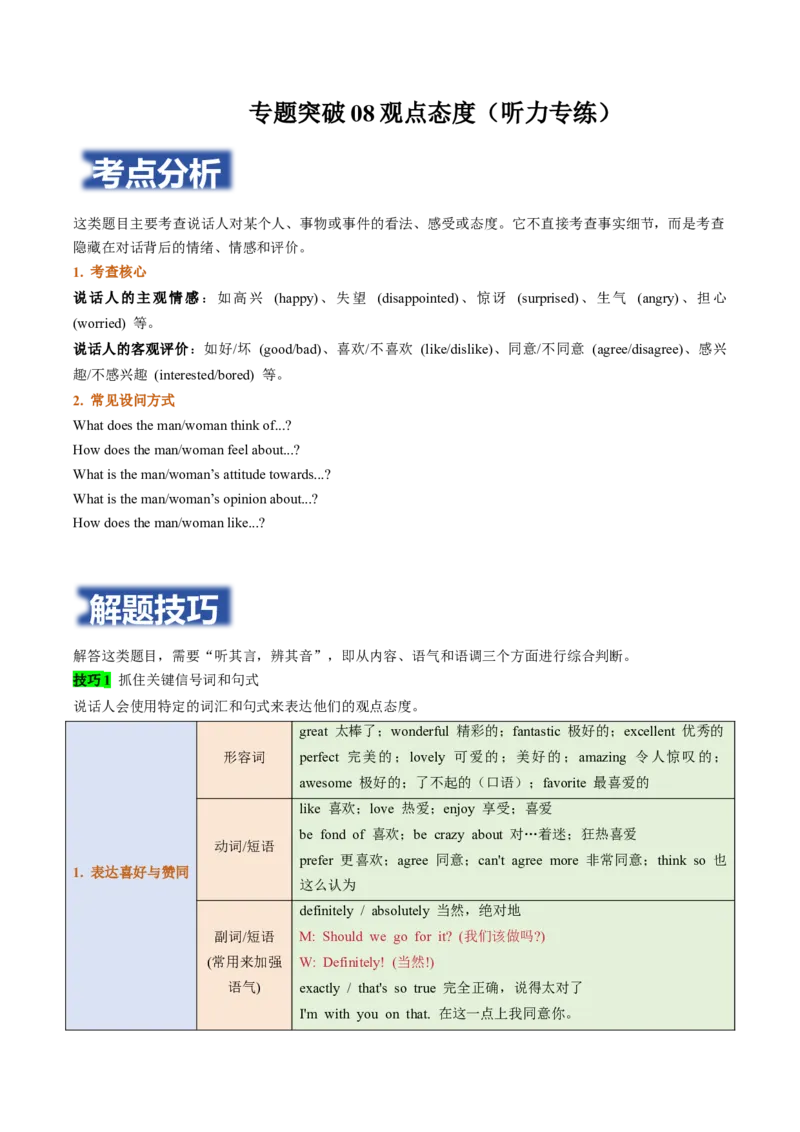
专题突破08 观点态度(听力专练)

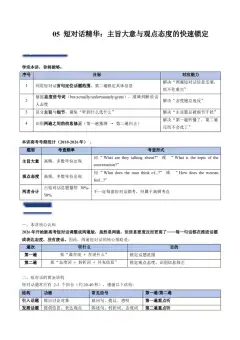
这类题目主要考查说话人对某个人、事物或事件的看法、感受或态度。它不直接考查事实细节,而是考查
隐藏在对话背后的情绪、情感和评价。
1. 考查核心
说话人的主观情感:如高兴 (happy)、失望 (disappointed)、惊讶 (surprised)、生气 (angry)、担心
(worried) 等。
说话人的客观评价:如好/坏 (good/bad)、喜欢/不喜欢 (like/dislike)、同意/不同意 (agree/disagree)、感兴
趣/不感兴趣 (interested/bored) 等。
2. 常见设问方式
What does the man/woman think of...?
How does the man/woman feel about...?
What is the man/woman’s attitude towards...?
What is the man/woman’s opinion about...?
How does the man/woman like...?
解答这类题目,需要“听其言,辨其音”,即从内容、语气和语调三个方面进行综合判断。
技巧1 抓住关键信号词和句式
说话人会使用特定的词汇和句式来表达他们的观点态度。
1. 表达喜好与赞同
形容词
great 太棒了;wonderful 精彩的;fantastic 极好的;excellent 优秀的
perfect 完美的;lovely 可爱的;美好的;amazing 令人惊叹的;
awesome 极好的;了不起的(口语);favorite 最喜爱的
动词/短语
like 喜欢;love 热爱;enjoy 享受;喜爱
be fond of 喜欢;be crazy about 对…着迷;狂热喜爱
prefer 更喜欢;agree 同意;can't agree more 非常同意;think so 也
这么认为
副词/短语
(常用来加强
语气)
definitely / absolutely 当然,绝对地
M: Should we go for it? (我们该做吗?)
W: Definitely! (当然!)
exactly / that's so true 完全正确,说得太对了
I'm with you on that. 在这一点上我同意你。
No doubt about it. 毫无疑问。
Why not? 好啊!(表示欣然同意)
句式
I think it's... 我认为它很…
That's a good idea. 好主意。
Sounds perfect. 听起来很棒。
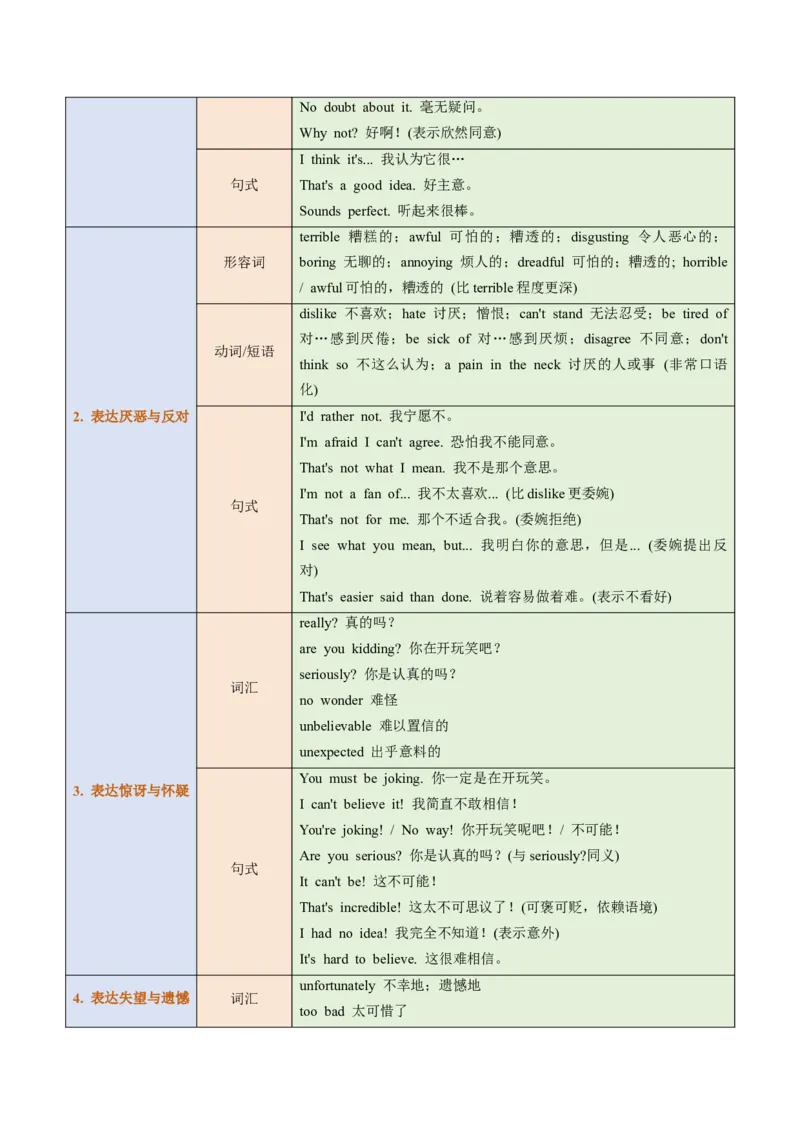
2. 表达厌恶与反对
形容词
terrible 糟糕的;awful 可怕的;糟透的;disgusting 令人恶心的;
boring 无聊的;annoying 烦人的;dreadful 可怕的;糟透的; horrible
/ awful 可怕的,糟透的 (比terrible 程度更深)
动词/短语
dislike 不喜欢;hate 讨厌;憎恨;can't stand 无法忍受;be tired of
对…感到厌倦;be sick of 对…感到厌烦;disagree 不同意;don't
think so 不这么认为;a pain in the neck 讨厌的人或事 (非常口语
化)
句式
I'd rather not. 我宁愿不。
I'm afraid I can't agree. 恐怕我不能同意。
That's not what I mean. 我不是那个意思。
I'm not a fan of... 我不太喜欢... (比dislike 更委婉)
That's not for me. 那个不适合我。(委婉拒绝)
I see what you mean, but... 我明白你的意思,但是... (委婉提出反
对)
That's easier said than done. 说着容易做着难。(表示不看好)
3. 表达惊讶与怀疑
词汇
really? 真的吗?
are you kidding? 你在开玩笑吧?
seriously? 你是认真的吗?
no wonder 难怪
unbelievable 难以置信的
unexpected 出乎意料的
句式
You must be joking. 你一定是在开玩笑。
I can't believe it! 我简直不敢相信!
You're joking! / No way! 你开玩笑呢吧!/ 不可能!
Are you serious? 你是认真的吗?(与seriously?同义)
It can't be! 这不可能!
That's incredible! 这太不可思议了!(可褒可贬,依赖语境)
I had no idea! 我完全不知道!(表示意外)
It's hard to believe. 这很难相信。
4. 表达失望与遗憾
词汇
unfortunately 不幸地;遗憾地
too bad 太可惜了
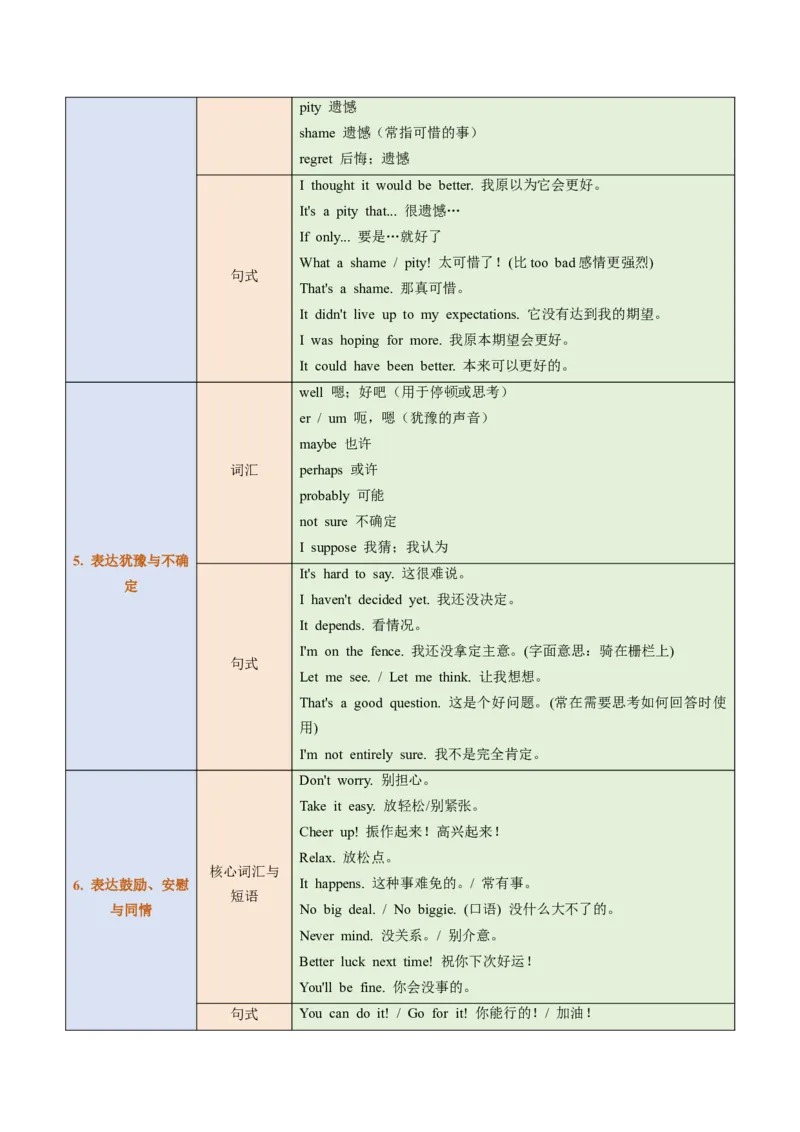
pity 遗憾
shame 遗憾(常指可惜的事)
regret 后悔;遗憾
句式
I thought it would be better. 我原以为它会更好。
It's a pity that... 很遗憾…
If only... 要是…就好了
What a shame / pity! 太可惜了!(比too bad 感情更强烈)
That's a shame. 那真可惜。
It didn't live up to my expectations. 它没有达到我的期望。
I was hoping for more. 我原本期望会更好。
It could have been better. 本来可以更好的。
5. 表达犹豫与不确
定
词汇
well 嗯;好吧(用于停顿或思考)
er / um 呃,嗯(犹豫的声音)
maybe 也许
perhaps 或许
probably 可能
not sure 不确定
I suppose 我猜;我认为
句式
It's hard to say. 这很难说。
I haven't decided yet. 我还没决定。
It depends. 看情况。
I'm on the fence. 我还没拿定主意。(字面意思:骑在栅栏上)
Let me see. / Let me think. 让我想想。
That's a good question. 这是个好问题。(常在需要思考如何回答时使
用)
I'm not entirely sure. 我不是完全肯定。
6. 表达鼓励、安慰
与同情
核心词汇与
短语
Don't worry. 别担心。
Take it easy. 放轻松/别紧张。
Cheer up! 振作起来!高兴起来!
Relax. 放松点。
It happens. 这种事难免的。/ 常有事。
No big deal. / No biggie. (口语) 没什么大不了的。
Never mind. 没关系。/ 别介意。
Better luck next time! 祝你下次好运!
You'll be fine. 你会没事的。
句式
You can do it! / Go for it! 你能行的!/ 加油!
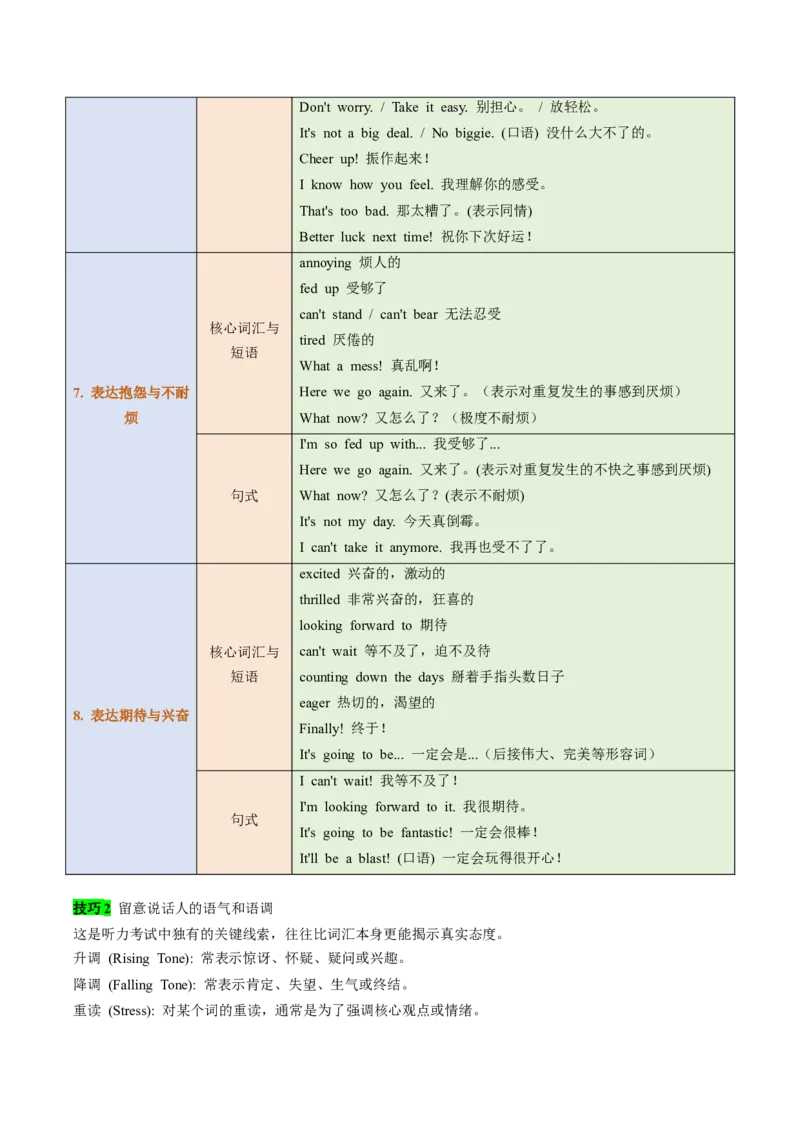
Don't worry. / Take it easy. 别担心。 / 放轻松。
It's not a big deal. / No biggie. (口语) 没什么大不了的。
Cheer up! 振作起来!
I know how you feel. 我理解你的感受。
That's too bad. 那太糟了。(表示同情)
Better luck next time! 祝你下次好运!
7. 表达抱怨与不耐
烦
核心词汇与
短语
annoying 烦人的
fed up 受够了
can't stand / can't bear 无法忍受
tired 厌倦的
What a mess! 真乱啊!
Here we go again. 又来了。(表示对重复发生的事感到厌烦)
What now? 又怎么了?(极度不耐烦)
句式
I'm so fed up with... 我受够了...
Here we go again. 又来了。(表示对重复发生的不快之事感到厌烦)
What now? 又怎么了?(表示不耐烦)
It's not my day. 今天真倒霉。
I can't take it anymore. 我再也受不了了。
8. 表达期待与兴奋
核心词汇与
短语
excited 兴奋的,激动的
thrilled 非常兴奋的,狂喜的
looking forward to 期待
can't wait 等不及了,迫不及待
counting down the days 掰着手指头数日子
eager 热切的,渴望的
Finally! 终于!
It's going to be... 一定会是...(后接伟大、完美等形容词)
句式
I can't wait! 我等不及了!
I'm looking forward to it. 我很期待。
It's going to be fantastic! 一定会很棒!
It'll be a blast! (口语) 一定会玩得很开心!
技巧2 留意说话人的语气和语调
这是听力考试中独有的关键线索,往往比词汇本身更能揭示真实态度。
升调 (Rising Tone): 常表示惊讶、怀疑、疑问或兴趣。
降调 (Falling Tone): 常表示肯定、失望、生气或终结。
重读 (Stress): 对某个词的重读,通常是为了强调核心观点或情绪。
强化训练
语速 (Speed): 语速加快可能表示兴奋或紧张;语速放慢可能表示犹豫、不确定或在思考。
示例:
一个慢速的、带降调的 “Well... that's great.” 很可能表达的是失望而非真正的开心。
技巧3 识别“言外之意”和“转折”
高考听力题很少直接说 “I'm angry”,而是通过上下文和转折词来暗示。
转折词后是重点: 但 (but), 然而 (however), 实际上 (actually), 问题是 (the thing is) 后面的内容,往往是
说话人真正的态度。
例如:“The movie had great special effects, but I found the story really boring.” (态度是:不喜欢)
委婉表达: “I'll think about it.” 通常意味着拒绝。“It's interesting.” 在某些语境下可能表示“不怎么
样”。
技巧4 注意区分说话人
一定要听清问题是问谁的态度。对话中男女双方的观点可能相反。可以在听的时候简单笔记,用 M
(Man) 和 W (Woman) 分别记录关键词。


练习 1 听下面10 个句子。每段句子后有一个小题,从题中所给的A、B、C 三个选项中选出最佳选项。听
完每个句子后,你都有10 秒钟的时间来回答有关小题和阅读下一小题。每个句子仅读一遍。难度:三星
1. What does the man think of the restaurant?
A. It’s a bad one.
B. It’s the best one.
C. It’s the cheapest one.
2. What does the woman think of the party?
A. It's successful.
B. It's not good.
C. It's too noisy.
3. What does the woman think of the movie?
A. It's amusing.
B. It's exciting.
C. It's disappointing.
4. What does the man think of working as a salesman?
A. Demanding.
B. Changing.
C. Attractive.
5. What does the man think of his job?
A. He enjoys it very much.
B. He doesn't care about it.
C. He hates working overtime.
6. What does the man think of Mr. Washington?
A. Useful.
B. Interesting.
C. Respectable.
7. What does the man think of the movie?
A. Engaging.
B. Dull.
C. Frightening.
8. What does the man think of Dr. Green's lectures?
A. Chilly.
B. Organized.
C. Boring.
9. What does the man think of the on-campus housing?
A. Bad.
B. Noisy.
C. Expensive.
10. What does the woman think of her father’s opinion?
A. Completely true.
B. Absolutely untrue.
C. Unreasonable.
练习 2 听下面30 段对话。每段对话后有一个小题,从题中所给的A、B、C 三个选项中选出最佳选项。听
完每段对话后,你都有10 秒钟的时间来回答有关小题和阅读下一小题。每段对话仅读一遍。难度等级:
四星
1. What does the woman think of the literature class?
A. Helpful.
B. Tiring.
C. Confusing.
2. What does the woman think of the art exhibition?
A. Most unwelcome.
B. Quite fantastic.
C. Extremely boring.
3. How does John sound?
A. Upset.
B. Excited.
C. Curious.
4. How does the man think of the test?
A. Tough.
B. Easy.
C. Interesting.
5. What does the woman think of the movie?
A. Extraordinary.
B. Average.
C. Terrible.
6. How does the man feel about the history lecture?
A. It’s interesting.
B. It’s informative.
C. It’s boring.
7. How does the woman sound?
A. Unhappy.
B. Curious.
C. Puzzled.
8. What does the man think of the book?
A. Boring.
B. Useful.
C. Interesting.
9. How does the man feel about car racing?
A. Excited.
B. Tired.
C. Worried.
10. How does the man sound?
A. Nervous.
B. Confident.
C. Terrified.
11. What does the man mean?
A. The woman is lazy.
B. The woman is helpful,
C. The woman should refuse John.
12. How might the woman feel?
A. Relaxed.
B. Disappointed.
C. Confident.
13. How does the woman feel about the man’s words?
A. Convinced.
B. Annoyed.
C. Surprised.
14. How is the man probably feeling?
A. Confused.
B. Annoyed.
C. Happy.
15. What is the man’s attitude toward downloading music for free?
A. Disagreeable.
B. Supportive.
C. Unclear.
16. How did the woman probably feel before walking over the glass bridge?
A. Calm.
B. Proud.
C. Frightened.
17. How does the woman feel about her team’s performance?
A. Satisfied.
B. Bored.
C. Disappointed.
18. What does the man think of Frank’s new songs?
A. Amazing.
B. Acceptable.
C. Unappealing.
19. How does the woman sound?
A. Upset.
B. Excited.
C. Determined.
20. What does the woman think of the building of the hospital?
A. It is a waste of time.
B. It is a tough task.
C. It should have been done earlier.
21. What does the woman think of Mr. Brown's lectures?
A. Interesting.
B. Boring.
C. Instructive.
22. How does the man feel?
A. Frightened.
B. Proud.
C. Excited.
23. How does the man feel about the article in the end?
A. Annoyed.
B. Satisfied.
C. Bored.
24. What does the woman think of French food?
A. It is delicious.
B. It is easy to make.
C. It is time-consuming.
25. What does the woman think of the pet dog?
A. Lovely.
B. Annoying.
C. Lazy.
26. How docs the woman feel about attending the class party?
A. Excited.
B. Uncertain.
C. Scared.
27. What does the man think of storms?
A. He thinks they’re exciting.
B. He doesn’t mind driving in them.
C. He feels safe about them while in a house.
28. What does the woman think of the man’s deed?
A. Stupid.
B. Great.
C. Confusing.
29. How does the woman feel about the trip?
A. Surprised.
B. Regretful.
C. Excited.
30.How does the woman sound?
A. Grateful.
B.Embarrassed.
C.Nervous