专题09 读后续写之师生类
第一部分:核心情节与情感走向
1. 常见开头情境:
· 学生陷入困境:成绩下滑、比赛失利、与同学冲突、缺乏自信、迷茫未来。
· 老师发现异常:注意到学生的沉默、成绩波动、在某个领域有特殊天赋但被埋没。
· 一个关键事件:一篇日记、一次糟糕的考试、一场被搞砸的演讲、一次课堂上的公开质疑。
2. 核心情感脉络:
· 学生:焦虑/沮丧/自卑 → 被理解/被鼓励 → 尝试/努力 → 感动/成长/自信
· 老师:观察/关心 → 思考方法/给予帮助 → 欣慰/自豪
3. 经典情节模板:
· 鼓励式:老师通过一句箴言、一次谈心、一本好书,点燃学生内心的火焰。
· 契机式:老师为学生创造一个机会(如演讲、比赛、展示才华的舞台),助其突破自我。
· 秘密式:老师发现学生不为人知的困难(家庭、健康等),并暗中或巧妙地提供帮助。
· 传承式:学生最终也成为了老师,将当年受到的恩情传递下去(常用于结尾升华)。
第二部分:人物描写素材库(让角色活起来)
1. 老师的描写:
· 外貌与神态:
  · He had a pair of gentle eyes behind his glasses, which always seemed to see the potential in every
student. (他戴着一副眼镜,镜片后是一双温柔的眼睛,似乎总能看见每个学生的潜力。
  · A warm and encouraging smile often graced her face, making us feel safe to ask any questions. (她
脸上常常带着温暖而鼓励的微笑,让我们觉得可以安心地问任何问题。)
  · His forehead was furrowed with concern as he glanced at my test paper. (他看了一眼我的试卷,关
切地皱起了额头。)
· 动作与行为:
  · She patted me gently on the shoulder, a simple gesture that filled me with immense strength. (她轻
写作指导
识
轻地拍了拍我的肩膀,这个简单的举动让我充满了力量。)
  · He would always bend down to my eye level when explaining a difficult problem. (在解释难题时,
他总是弯下腰,与我的视线平齐。)
  · Mr. Smith scribbled a note on the margin of my essay: "Your ideas are brilliant. Don't be afraid to
let them shine!" (史密斯先生在我文章的边缘匆匆写下一张字条:“你的想法很棒,别害怕让它们发
光!”)
2. 学生的描写:
· 心理与情感:
  · A wave of disappointment washed over me. I felt like I had let my teacher down. (一阵失望涌上心
头。我觉得自己让老师失望了。)
  · My heart pounded like a drum against my ribs, nervous and excited at the same time. (我的心像打
鼓一样砰砰直跳,既紧张又兴奋。)
  · A glimmer of hope ignited within my chest, something I hadn't felt for a long time. (一丝希望在我
心中点燃,这是我很久没有感受到的了。)
· 动作与状态:
  · I stared blankly at the red marks on my paper, tears welling up in my eyes. (我茫然地盯着试卷上
的红叉,泪水涌上了眼眶。)
  · Biting my lip nervously, I handed the folded letter to my teacher. (我紧张地咬着嘴唇,把折好的信
递给老师。)
  · With my teacher's words echoing in my mind, I took a deep breath and stepped onto the stage. (老
师的话语在我脑中回响,我深吸一口气,走上了舞台。)
第三部分:关键对话与哲理金句
1. 老师的鼓励话语:
· “The journey of a thousand miles begins with a single step.” I will never forget what you told me.
(“千里之行,始于足下。” 我永远忘不了您告诉我的话。)
· "Mistakes are proof that you are trying." Your words lifted a heavy weight off my chest. (“错误证明
你正在努力。” 您的话卸下了我心中的重负。)
· "I see great potential in you. You just need to believe in yourself." (“我在你身上看到了巨大的潜力。
你只需要相信自己。”)
· "This grade does not define who you are. What defines you is how you rise after the fall." (“这个分
数不能定义你是谁。定义你的是你如何从跌倒中站起来。”)
2. 学生的感悟与成长:
· At that moment, it dawned on me that my teacher's strictness was actually her unique way of showing
care. (在那一刻,我恍然大悟,老师的严厉其实是她表达关心的独特方式。)
· That simple gesture taught me more about kindness and patience than any textbook ever could. (那个
简单的举动教会我的关于善良和耐心的东西,比任何课本都多。)
· I came to realize that the greatest lesson was not about knowledge, but about courage and
perseverance. (我逐渐意识到,最伟大的一课不是关于知识,而是关于勇气和毅力。)
第四部分:万能亮句 & 主题升华句
1. 情节转折句 (推动故事发展):
· Just as I was about to give up, a familiar voice called my name from behind. (就在我准备放弃时,一
个熟悉的声音从身后叫了我的名字。)
· Little did I know that this conversation would become a turning point in my life. (我当时不知道,这
次谈话会成为我人生的一个转折点。)
· What happened next was completely beyond my expectation. (接下来发生的事完全出乎我的意料。)
2. 情感升华句 (用于高潮或结尾):
· Tears of gratitude streamed down my face, not of sadness, but of profound gratitude. (感激的泪水顺着
我的脸颊流下,不是悲伤,而是深深的感激。)
· A sense of warmth and accomplishment flooded my heart, and I knew I owed it all to my teacher.
(一股温暖和成就感涌上心头,我知道这全都归功于我的老师。)
· Looking back, I now understand that the greatest gift a teacher can give a student is not knowledge,
but the confidence to unlock their own potential. (回首往事,我现在明白了,老师能给学生最好的礼物
不是知识,而是开启自身潜能的自信。)
3. 经典结尾句 (首尾呼应,点明主题):
· Years may have passed, but Mr. Smith's words still resonate in my heart, guiding me through life's
challenges. (多年过去,史密斯先生的话语依然在我心中回响,指引我穿越人生的挑战。)
· And there, on that stage, I finally found my voice, all thanks to the teacher who never stopped
believing in me. (就在那里,在那个舞台上,我终于找到了自己的声音,这一切都要感谢那位始终相信我
的老师。)
· Now, as I stand in my own classroom, I strive to be the same beacon of hope for my students that
my teacher was for me. (现在,当我站在自己的教室里,我努力成为我的学生的希望灯塔,就像我的老
师当年对我一样。)
温馨提示:
1. 紧扣原文:续写的情节和人物性格必须与原文设定一致。
2. 细节制胜:多运用本讲义中的描写素材,让故事生动具体。
3. 情感真挚:师生情贵在真诚,避免过度夸张。
4. 首尾呼应:确保两段之间以及续写与原文之间衔接流畅。
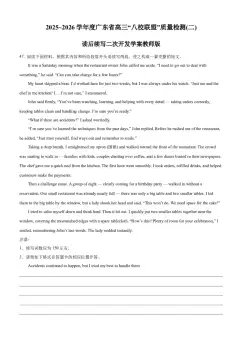
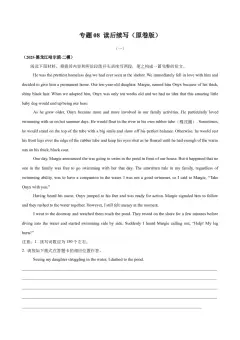
I was the quietest girl in my class, always hiding behind my books. My English was poor, and the
upcoming speech contest filled me with dread. My English teacher, Ms. Lily, must have noticed my
anxiety because one day after class, she asked me to stay behind.
Para 1:
She looked at me with her kind eyes and said, "I've chosen you to represent our class in the speech
contest."
Para 2:
On the day of the contest, my palms were sweaty as I waited backstage.
答案:
Para 1:
She looked at me with her kind eyes and said, "I've chosen you to represent our class in the speech
contest." My heart sank and I immediately shook my head in panic. "I... I can't, Ms. Lily. My
pronunciation is terrible," I stammered. But she placed a reassuring hand on my shoulder. "I see a spark
in you," she said firmly. "And I will be here to help you every step of the way." In the following
weeks, she spent countless after-school hours with me, patiently correcting my intonation and helping me
craft a speech from the heart. Her belief in me was a tiny flame that began to grow.
Para 2:
On the day of the contest, my palms were sweaty as I waited backstage. When my name was called, I
walked to the podium, my legs feeling like jelly. The bright lights blinded me for a second, and my
mind went blank. Just then, I spotted Ms. Lily in the front row. She gave me a firm nod and a warm,
encouraging smile. Taking a deep breath, I remembered her words: "Speak your truth." The words started
to flow, not perfectly, but sincerely. When I finished, the applause was thunderous. I didn't win first
prize, but I had won a battle against my own fear. That day, the quiet girl found her voice, all thanks
to a teacher who saw not who I was, but who I could become.