绝密★启用前
2026 年高考二轮信息必刷卷02
英  语
考情速递
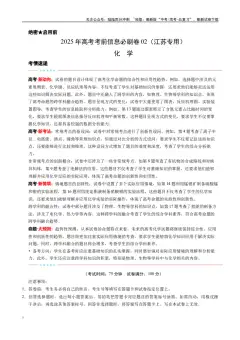
高考·新动向:参考历年高考真题变化趋势,高考英语在题型上保持稳定延续性。选材聚焦现实生活与多
元主题,语篇兼具真实性、实用性与育人价值,着重考查真实语境下的语言运用能力。本卷阅读 A 篇
(巴尔的摩大学入学申请)聚焦教育升学场景,传递积极求学导向;阅读C 篇(脑机接口技术突破)融合
科技前沿与人文关怀,体现跨学科融合趋势,助力提升科学素养与创新思维。
高考·新情境:命题紧扣时代脉搏,围绕人与自然、人与自我、人与社会三大核心主题语境,兼具思想性
与教育性,引导学生深度思考。阅读D 篇(表演性阅读现象)切入社交文化热点,贴近学生生活体验,体
现命题时效性;七选五(即兴沟通技巧)以实际社交场景为依托,融合语言策略与生活技能,凸显学科育
人功能。
命题·大预测:基于本卷题目结构与内容,并结合近年高考英语真题命题趋势作出如下预测。
1. 阅读语篇选材更贴近真实生活与多元领域。说明文涵盖教育申请、科技突破、社会现象等主题(如A 篇
入学申请、C 篇脑机接口、D 篇表演性阅读),呼应人与社会、人与自我主题;应用文注重实用性与信息
传递(如 A 篇申请要求);记叙文聚焦生活体验与情感共鸣(如B 篇教学经历、完形填空意外救助故
事)。
2. 命题强化深度思维与综合能力考查。推理判断(如 24、27 题)、词义猜测(如 29、34 题)需结合语
境逻辑与语篇分析;侧重信息整合能力(如A 篇申请材料梳理)、现象分析与观点提炼(如D 篇表演性阅
读利弊)。
3. 语用能力考查更注重实用性与灵活性。七选五(36-40 题)聚焦实际沟通策略,强调语篇连贯与逻辑衔
接;完形填空(41-55 题)围绕人文关怀主题,通过意外救助故事考查情感语境下的词义辨析与叙事逻辑;
语法填空侧重时态、语态等基础语法在真实语篇中的运用,贴合语言使用实际。
(考试时间:120 分钟  试卷满分:150 分)
注意事项:
1. 答题前,考生先将自己的姓名、准考证号码填写清楚,将条形码准确粘贴在条形码区域内。
2. 选择题必须使用2B 铅笔填涂;非选择题必须使用0. 5 毫米黑色字迹的签字笔书写,字体工整,笔迹清
楚。
3. 请按照题号顺序在答题卡各题目的答题区域内作答,超出答题区域书写的答案无效;在草稿纸、试卷上
答题无效。
4. 作图可先使用铅笔画出,确定后必须用黑色字迹的签字笔描黑。
5. 保持卡面清洁,不要折叠、不要弄破、弄皱,不准使用涂改液、修正带、刮纸刀。
第一部分  听力(共两节,满分 30 分)
做题时,先将答案标在试卷上。录音内容结束后,你将有两分钟的时间将试卷上的答案转涂到答题卡上。
第一节(共5 小题;每小题1.5 分,满分7.5 分)
听下面5 段对话。每段对话后有一个小题,从题中所给的A、B、C 三个选项中选出最佳选项。听完每
段对话后,你都有10 秒钟的时间来回答有关小题和阅读下一小题。每段对话仅读一遍。
1. What is the man doing?
A. Making a complaint.
B. Asking for information.
C. Renting an apartment.
2. Where does the conversation take place?
A. In a bookstore.
B. In a restaurant.
C. In a cinema.
3. What is the man?
A. A driver.
B. A doctor.
C. A nurse.
4. What is the man’s attitude towards teleworking?
A. Indifferent.
B. Unfavorable.
C. Supportive.
5. What does the man think of the draft?
A. Its beginning needs more creative themes.
B. Its first chapter requires improvement.
C. Its last part lacks high points.
第二节(共15 小题;每小题1.5 分,满分22.5 分)
听下面5 段对话或独白。每段对话或独白后有几个小题,从题中所给的A、B、C 三个选项中选出最佳
选项。听每段对话或独白前,你将有时间阅读各个小题,每小题5 秒钟;听完后,各小题将给出5 秒钟的
作答时间。每段对话或独白读两遍。
听第6 段材料,回答第6、7 题。
6. Who might the woman turn to for help at last?
A. Her math teacher.
B. The man.
C. Herself.
7. Which subject is the man poor at?
A. English.
B. Science.
C. Math.
听第7 段材料,回答第8 至10 题。
8. Why will the man have a family gathering?
A. For an anniversary ceremony.
B. For his cousin’s birthday.
C. For a boat racing challenge.
9. What will the man do at the gathering?
A. Attend a wedding.
B. Swim in the river.
C. Listen to old music.
10. Who prepared a big cake?
A. Henry’s mother.
B. Henry’s father.
C. Henry’s sister.
听第8 段材料,回答第11 至13 题。
11. Why does the woman get mad at the man?
A. He forgot to make dinner tonight. B. He will work late once again.
C. He has refused the extra work.
12. How many hours has the man been working recently?
A. 20 hours.
B. 40 hours.
C. 60 hours.
13. What is the relationship between the speakers?
A. Husband and wife.
B. Coworkers.
C. Roommates.
听第9 段材料,回答第14 至16 题。
14. What made Miss Lines get the award?
A. Her outstanding singing level.
B. Her encouragement to others.
C. Her talents in music composition.
15. Why does Miss Lines love working with top artists?
A. To offer advice.
B. To learn from them.
C. To show her talent.
16. What played the crucial role in Miss Lines’s success?
A. Talent in writing.
B. Passion for music.
C. Advice from audience.
听第10 段材料,回答第17 至20 题。
17. Who found the stone tablet?
A. An expert.
B. Some villagers.
C. A tourist.
18. When was the stone tablet created?
A. In the Tang Dynasty.
B. In the Song Dynasty.
C. In the Han Dynasty.
19. Which part of the stone tablet is damaged?
A. The top.
B. The back.
C. The two sides.
20. What is the value of the stone tablet?
A. It proves the ancestors’ loyalty to emperors.
B. It is the carrier of historical information.
C. It records the destruction of a temple.
第二部分  阅读(共两节, 满分50 分)
第一节(共15 小题;每小题2.5 分, 满分37.5 分)
阅读下列短文, 从每题所给的A、B、C 和D 四个选项中选出最佳选项。
A
Since its opening in 1925, the University of Baltimore (UBalt) has sought to improve lives through
education and career development. Join us and explore how a UBalt degree can advance your career. Now, UBalt
welcomes students who are more than three years beyond high school.
Submit (提交) the following items:
1. application for admission
2. essay / personal statement
3. an official high-school transcript (成绩单) that must be sent directly to UBalt
4. a list of extracurricular (课外的) activities and letters of recommendation that are optional but highly
encouraged
5. a second essay that may be requested
For your Essay / Personal Statement, we ask that each applicant submit 250 — 500 words on one of the
following:
●the major that interests you and why
●why you believe UBalt is the school for you
●a significant experience and its impact on you
At UBalt, students can apply for admission for the next semester (学期) when it is convenient for them to do
so. Early admission is encouraged, of course — you’re more likely to find a spot in the classes you want when you
apply early — but we accept applications up to the start of every semester.
After we get your application, we will send you an email to check your application online. We will let you
know about your admission as soon as your application is complete. We make decisions on applications throughout
the process, so you won’t have to wait long for a response. If you are unable to submit your application online,
download the required forms and send your application by mail.
21.What is required for a complete application to UBalt?
A.A high school academic record.
B.Proof of social activities.
C.A letter of recommendation.
D.The submission of two papers.
22.Which of the following can applicants choose for their personal statement?
A.Future career plans.
B.Reasons for picking the university.
C.Favourite professors.
D.Views on educational expectations.
23.How will applicants receive their admission decisions?
A.Through email.
B.Through postal mail.
C.Through a phone call.
D.Through in-person interviews.
B
A few months into my first year of teaching middle-school English, I carefully structured the class
time for silent, light-dimmed independent reading. Most of the students were buried in a novel at their desks. But
six or seven kids would just be window-staring or doodling (涂鸦), the book lying sad and forgotten before them.
I saw their resistance to reading as both a teaching challenge and a personal offence. I tried “sticks and
carrots” method: assigning mini book reports and giving nonreaders bad grades as punishment, creating whole-
class reading challenges with pizza parties as rewards and offering graphic novels and magazines to encourage
them. None worked. Instead, nonreaders hated reading and me more.
The problem kept me awake. Then I remembered my 11th-grade English teacher, Ms. Germanas. She had
made the whole class read The Scarlet Letter by having everyone sit in a circle and read aloud each afternoon.
Though no one enjoyed the novel, we finished it. This went against my goal of fostering independent-minded
students driven by love for literature and human connection, but I had to change. I abandoned independent reading
and decided to read a book together as a class.
That Friday, students found desks in a circle, each with a copy of Of Mice and Men written by Steinbeck. I
told them we’d read aloud page by page. It worked. Gradually, nonreaders stopped staring or doodling. A few
weeks later, even the most inveterate (积习难改的) nonreader listened, followed the book, and mouthed the words.
I taught English for another decade after that class. Each year, although I was asked to spend less time on
literature, more time training students to hunt down main ideas of the text, I refused and kept reading novels aloud.
I’ll never forget the dark, quiet classroom when we reached the tragic final pages of Steinbeck’s classic. There
seemed to be very little happening in the world outside the windows.
24.Why does the author mention his early teaching experience?
A.To express his complaints.
B.To arouse readers’ sympathy.
C.To present his puzzlement.
D.To inform readers of a finding.
25.How did the author try to deal with the students’ resistance to reading?
A.Punishing nonreaders with low marks.
B.Treating top students to pizzas.
C.Rewarding top students with magazines.
D.Assigning nonreaders more reports.
26.What did the writer learn from Ms. Germanas?
A.Focusing on literature.
B.Reading aloud together.
C.Searching for main ideas.
D.Highlighting independent reading.
27.What does the underlined sentence imply?
A.The students’ reading ability improved.
B.The students’ interests have changed.
C.The students were absorbed in reading.
D.The students preferred tragic novels.
C
Scientists are advancing forward in brain-computer interface (BCI) technology, and a newly
developed system can translate our thoughts into text or sound.
It’s essentially an inner speech decoder (解码器), developed by researchers from institutions across the US.
In tests on four volunteers with severe disabilities, the decoder has an accuracy rate of up to 74 percent in
translating thoughts into audible (听得见的) speech. The potential here is for a BCI that can help those with speech
disabilities to communicate more effectively than ever before.
Previous BCIs have relied on brain activity that is created when a person tries to speak or write, even though
their bodies cannot carry out the action. This new technology gets a step closer to the source. “If you just have to
think about speech instead of actually trying to speak, it’s potentially easier and faster for people,” says
neuroscientist Benjamin Meschede-Krasa, from Stanford University in the US.
Machine learning was used to train the BCI to connect brain signals to words as the four participants thought
about them. The researchers found that there was overlap between certain brain patterns when the volunteers tried
to speak and when they only imagined words and phrases. Despite this, the signals could be distinguished from
each other. With some probability calculations thrown in, the new BCI can recognize up to 125,000 words using
only inner speech. “We found that we could decode these signals well enough to demonstrate a proof of principle,
although still not as well as we could with attempted speech,” says neuroscientist Frank Willett, from Stanford
University.
There’s still a long way to go there, and the BCI often falls far short of that 74 maximum accuracy rating.
However, by employing more advanced technology, the researchers are confident that the system can be quickly
improved over the next few years. “This work gives real hope that speech BCIs can one day restore communication
that is as fluent, natural, and comfortable as conversational speech,” says Willett.
28.How does the new BCI system differ from previous ones?
A.It helps healthy people communicate fluently.
B.It doesn’t require the user to try to speak or write.
C.It uses a more advanced machine learning model.
D.It can identify more words with higher accuracy.
29.What does the underlined word “overlap” in paragraph 4 refer to?
A.Gap.
B.Conflict.
C.Balance.
D.Similarity.
30.What is the main problem with the new BCI?
A.Security.
B.Speed.
C.Accuracy.
D.Convenience.
31.What is the text mainly about?
A.A breakthrough in decoding inner speech.
B.The working principle of a new BCI system.
C.Differences between a new BCI and previous ones.
D.Challenges for people with severe speech disabilities.
D
When you see someone absorbed in a highbrow( 深奥的)novel on the train or posing with a
philosophical volume on social media, you shouldn’t automatically assume they are reading the book.
It’s known as “performative reading” as the “reader” wants “everyone to know” they read, wrote Alaina
Demopoulos in The Guardian. They’re signalling they have the “taste and attention span” to “pick up a physical
book”.
The phenomenon has its roots in 2021, when a boom in book clubs led by celebrities along with “BookTok”,
the section of TikTok dedicated to promoting and discussing commercial fiction, turned favored books into a trend-
driven accessory(配饰), said Sarah Manavis in The New Statesman.
BookTok is seen as performative, with trendy books going viral not because of the quality of the literature
but because it suggests an increasingly fashionable, intellectual- looking style. And when reading becomes a
competition, with countless users showing off about having read more than 35 books in a single month, supposedly,
quality takes a backseat to demonstrating yourself to be an eager reader. And there’s a danger it could lead to
publishers focusing their efforts on books that are feed-friendly.
But the inconvenient truth is that the virality of literature has led to an uptick in book sales. In 2023, 669
million physical books were sold, the highest overall level ever recorded, along with a boost in visits to UK
libraries.
One of life’s “simplest pleasures” remains “falling into a story” and “tuning the world out”, without
“worrying about what someone’s going to think of you”, said Demopoulos. Enjoy the story. Many people are still
doing exactly that, so rather than “finger-wagging” about performative reading, next time you see someone with a
book at a coffee shop or the park, just leave them alone, because “this is not for you”, they’re simply “enjoying the
moment”.
32.Why do some people engage in performative reading?
A.To popularize book clubs.
B.To promote reading habits.
C.To improve their social image.
D.To stress the importance of literature.
33.What risk does turning books into accessories create?
A.Online reading could take over.
B.Physical book sales will decline.
C.Book clubs may become exclusive.
D.Meaningful content might get ignored.
34.What does the underlined word “uptick” in paragraph 5 probably mean?
A.drop
B.increase
C.change
D.loss
35.According to Demopoulos, those who read in public should be ________.
A.urged to read privately
B.guided to select better materials
C.discouraged from posting online
D.respected without direct intervention
第二节(共5 小题;每小题2. 5 分, 满分12. 5 分)
阅读下面短文, 从短文后的选项中选出可以填入空白处的最佳选项。选项中有两项为多余选项。
While most of us work hard to shine at the presentations and speeches we can prepare for, we may find
impromptu ( 即兴的) communication scary. Actually, you just need to learn specific skills to communicate
effectively when put on the spot. Here are a few pointers.


 3  6

 What do you want your audience to know? How do you want them to feel, and what do you
want them to do? Having a clear objective paired with an awareness of your audience will narrow your focus. Then
you can prioritize what to say and choose your exact words more wisely.
Organize Your Thoughts. When making formal presentations, most people give a logical structure that
audiences can easily follow. But few of us adequately organize thoughts in impromptu situations.

 3  7

  In
fact, the best speakers maintain audience interest by demonstrating connections among specific points, ideas, for
example.
Listen as well as you talk.

 3  8

  You should do the opposite: focus on listening so that you can better
understand the in-the-moment needs and interests of your conversation partners and respond more effectively.
Paraphrasing or asking open-ended follow-up questions can help confirm your understanding and provide extra
time to think about your response.
Dare to be dull. Don’t feel you need to give a standout performance. One popular saying applies here, “
3  9

 ” Listeners are more likely to trust and approve of you when you speak like a human being rather than an
actor or a robot. Research shows that the most effective speech includes moderate use of fillers such as “um” and
“uh”.
The real problem in impromptu communication isn’t an inability to communicate.

 4  0

 Fortunately, a
measure of experimentation thought, and practice of the skills can make impromptu speaking opportunities your
time to shine.
A.Identify a communication goal.
B.He knows most who speaks least.
C.Don’t let the perfect be the enemy of the good.
D.It’s being so nervous that we struggle with the talks.
E.We may assume that it’s impossible to do so on the fly.
F.A clear structure enhances comprehension and engagement.
G.Most people obsess over what to say during impromptu encounters.
第三部分 语言运用(共两节,满分30 分)
第一节(共15 小题,每小题1 分,满分15 分)
阅读下面短文, 从每题所给的A、B、C 和D 四个选项中选出可以填入空白处的最佳选项。
During my college years in Bangalore, our days were filled with simple pleasures. One weekend,
my friend Bella and I decided to

 4  1

  the Rex Theatre on Brigade Road. I can’t remember the name of the
film, but I do

 4  2

  the noisy and shaky ride in a three-wheeled vehicle.
That afternoon, Brigade Road was in

 4  3

  — bikes, cars, buses, and people flowing across the
streets. We

 4  4

  at the theatre, and I stepped onto the road. Suddenly, I

 4  5

 . My right leg might
have given way. I found myself on the side of the road, my foot twisted in pain.
In India, any event, however small, tends to attract an

 4  6

 . People gathered around curiously. Bella
tried to

 4  7

  a vehicle, but drivers

 4  8

  one after another. We sat alone among a sea of strangers,
with me in pain, Bella feeling

 4  9

 .
Then, a young man

 5  0

  forward from the crowd. He

 5  1

  beside me and asked about my
pain, gentle and soft-spoken. He then managed to

 5  2

  a passing taxi. He helped me in, and

 5  3

“take care” before disappearing into the crowd. A short while later, I was home and spent the rest of the week
recovering from my injury.
My pain faded, but the man’s kind

 5  4

  has stayed with me. It

 5  5

  me that in a fast-
moving world, we can still find the best of humanity in simple acts of care — in those who pause to notice and
help, leaving warmth that lasts forever.
41.A.visit
B.build
C.decorate
D.leave
42.A.forget
B.regret
C.ignore
D.recall
43.A.silence
B.chaos
C.repair
D.order
44.A.cut down
B.got off
C.broke down
D.met up
45.A.collapsed
B.fled
C.hesitated
D.waved
46.A.audience
B.ambulance
C.accident
D.alarm
47.A.drive
B.buy
C.find
D.offer
48.A.pushed
B.welcomed
C.refused
D.thanked
49.A.excited
B.powerless
C.content
D.proud
50.A.stepped
B.looked
C.fell
D.sent
51.A.jumped
B.knelt
C.slipped
D.lay
52.A.collect
B.crash
C.stop
D.design
53.A.whispered
B.shouted
C.wrote
D.added
54.A.trick
B.status
C.gesture
D.donation
55.A.shocks
B.fails
C.warns
D.reminds
第二节(共10 小题;每小题1.5 分 ,满分15 分)
阅读下面短文,在空白处填入1 个适当的单词或括号内单词的正确形式。
The 8th China International Import Expo

 5  6

  (hold) in Shanghai from November 5 to 10,
2025. As a key platform for China’s high-level opening-up, it

 5  7

  (attract) widespread attention from the
international community since its preparation.
A total of 155 countries, regions and international organizations

 5  8

  (participate) in the expo, and
4,108 overseas enterprises

 5  9

  (bring) their core products to the exhibition. The exhibition area

 6  0
(exceed) 430,000 square meters, setting a new record. Many world top 500 enterprises

 6  1

  (choose) to
display their latest technologies here, including 461 new products, technologies and services that

 6  2

  (cover)
multiple cutting-edge fields.
The CIIE

 6  3

  (play) an important role in promoting global trade cooperation. It
  6  4

  (help)
international enterprises enter the Chinese market and

 6  5

  (promote) mutual benefit and win-win results
between countries.
第四部分  写作(共两节, 满分40 分)
第一节(满分15 分)
假定你是李华,本学期你选修了你校外教Chris 开设的“西方艺术欣赏”课程,但你发现许多同学课堂参
与度不高。请你给他写一封邮件,内容包括:
1. 分析原因;
2. 提出建议。
注意:
1. 词数80 左右;
2. 请按如下格式在答题卡的相应位置作答。
Dear Chris,
I’m a student in your Western Art Appreciation course this term.
____________________________________________________________________________________________
____________________________________________________________________________________________
____________________________________________________________________________________________
____________________________________________________________________________________________
____________________________________________________________________________________________
____________________________________________________________________________________________
____________________________________________________________________________________________
Yours,
Li Hua
第二节(满分25 分)
阅读下面材料,根据其内容和所给段落开头语续写两段,使之构成一篇完整的短文。
Last year, when my big brother Jed got Shyla, he said I could help take care of her. He added that in about a
year, we’d give Shyla back to The Seeing Eye. And then she’d be ready to learn to be a dog guide for someone who
can’t see. A year seemed like a long time back then.
I remember the day when Shyla was brought to our house. She was only eight weeks old, and she came with
a bag of puppy food and a lot of instructions. That night she whimpered and cried. Jed said she missed her puppy
brothers and sisters.
“She can sleep in my bed,” I told Jed, but he said Shyla could never sleep on any furniture, not even the
couch. He rolled out his sleeping bag on the floor and lay down with Shyla by his bed. I put my sleeping bag on the
other side of Shyla. “Remember, Jenny, everything we do for Shyla is because of the blind person she’ll work for
later on,” Jed said to me. He had his arm around Shyla and his eyes were closed. “If her blind person wakes up in
the night and needs her, Shyla will have to be right there on the floor by the bed,” added Jed.
When I woke up early the next morning, Jed was already heading out the back door with Shyla in his arms. I
hurried to go along. I thought maybe we’d all play in the yard before breakfast. But Jed said no. It wasn’t playtime.
Our puppy needed to learn to go to the bathroom outside. Jed brought her back in right away, saying “Good dog.”
I did get to play with Shyla then. But we stayed in the kitchen behind the baby gates where Mom used to
keep me safe when I was little. Everything was more fun with Shyla around. Even dinner time. Jed trained Shyla to
lie on the floor near his left foot every time he ate. “That’s where the blind person will need her to be,” he
explained.
1.续写词数应为150 左右;
2.请按如下格式在答题卡的相应位置作答。
After Shyla was 13 weeks old, we took her everywhere. . __________________________________________
____________________________________________________________________________________________
____________________________________________________________________________________________
____________________________________________________________________________________________
____________________________________________________________________________________________
____________________________________________________________________________________________
____________________________________________________________________________________________
____________________________________________________________________________________________
____________________________________________________________________________________________
____________________________________________________________________________________________
Last
week
our
year
was
up.
________________________________________________________________
____________________________________________________________________________________________
____________________________________________________________________________________________
____________________________________________________________________________________________
____________________________________________________________________________________________
____________________________________________________________________________________________
____________________________________________________________________________________________
____________________________________________________________________________________________
____________________________________________________________________________________________
____________________________________________________________________________________________