专题01 劳动实践、劳动价值与工匠精神

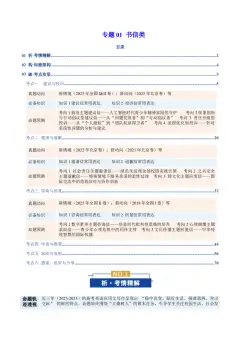
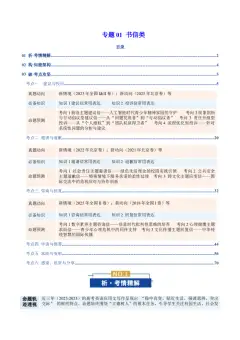
主|题|简|介
2025 年高中英语课程标准新增“劳动实践、劳动价值与工匠精神”主题,是教育理念的一次深刻变
革,具有深远的战略意义。此举标志着对“五育并举”教育方针的全面落实,旨在扭转长期以来存在的
重智育、轻劳动的倾向,将劳动教育从边缘地带拉回核心育人环节。该主题并非简单的技能培训,而是
将“劳动实践”的动手操作、“劳动价值”的认知塑造与“工匠精神”的品格追求融为一体,为英语教
学注入了鲜活、真实的时代语境。在英语课堂上,学生将通过阅读关于大国工匠的报道、探讨人工智能
对就业的影响、设计社区服务项目等方式,在语言运用中深刻理解劳动的尊严与价值。这不仅极大地丰
富了教学内容,提升了学生解决实际问题的语言能力,更重要的是引导他们树立正确的劳动观,尊重各
行各业的创造,理解个人奋斗与社会发展的紧密联系,最终培养出既有国际视野、又具实干精神和家国
情怀的新时代人才。
原|创|专|练
Passage 1
Once a vast wasteland, Saihanba in Hebei province has been transformed into a thriving forest with 500
million trees. This remarkable change is the result of sixty years of hard work by three generations of foresters.
Their story serves as a powerful example of how human determination and nature can work together to create a
sustainable environment, showing that long-term effort can bring huge rewards for the planet.
The task was incredibly challenging, especially on the final 7,000 hectares of rocky mountainsides. Since
machines could not reach these steep areas, all the work had to be done by hand or with the help of animals to
carry supplies. Workers had to dig out rocks before planting a single tree, showing incredible physical strength
and deep commitment to their goal. This difficult process laid the foundation for the green landscape we see today.
Initially, the forest was planted with only a single type of tree, which made it vulnerable to pests and
diseases. To build a stronger and healthier forest, the foresters began introducing various tree species, creating a
more balanced and natural ecosystem. This shift from a monoculture to a mixed forest greatly improved its ability
to resist harm and ensured its long-term survival.
Protecting this huge forest also requires modern technology. An advanced system, powered by artificial
intelligence, now constantly monitors the forest for signs of pests and diseases, allowing for quick action.
Furthermore, a complete fire prevention system uses satellites, drones, and ground patrols to provide 100%
coverage, ensuring any potential fire can be spotted and dealt with immediately. Through projects like Saihanba,
China has become the world's largest contributor to new green areas, accounting for about a quarter of the global
increase over the last two decades.
1.What is the main purpose of the passage?
A. To promote the use of modern technology in forestry.
B. To describe the history of tree planting in Hebei province.
C. To present the Saihanba project and its significance.
D. To compare different methods of forest management.
2.What can be inferred about the foresters' work on the rocky mountainsides?
A. It was a job that required great patience and strength.
B. It was mainly completed with the help of machines.
C. It was considered less important than planting on flat land.
D. It was finished in a short period due to high efficiency.
3.How did the foresters improve the forest's ability to survive?
A. By planting more trees of the original kind.
B. By increasing the number of tree species.
C. By relying solely on natural recovery processes.
D. By using more chemical fertilizers.
4.What is the global significance of the Saihanba project according to the passage?
A. It has set a new standard for fire prevention technology.
B. It has made China a leader in increasing global green space.
C. It has solved the problem of desertification worldwide.
D. It has provided a new model for international cooperation.
Passage 2
Forty years ago, Yin Yuzhen arrived at her new home in a vast desert in northern China. Her new house lay
half buried under sand dunes. Strong winds howled, and terrible heat made life extremely difficult. While many
people would have fled, Yuzhen chose to stay. "I would rather die planting trees than live buried by the desert,"
she said, beginning a lifelong battle against the harsh environment.
Yuzhen and her husband worked tirelessly to afford young trees. She slept only a few hours each night, her
hands and arms covered in wounds from her hard work. After many trials, she finally found a successful method.
She first planted shrubs and grasses to hold the soil. Then, she planted taller trees like poplars and pines to protect
the fruit trees inside. Slowly, her efforts paid off. The barren land transformed into a green oasis. Over four
decades, she has turned over 70,000 acres of desert into woodland, becoming a symbol of China’s large-scale tree-
planting project.
Yuzhen’s story also inspired an American teacher, Donald Jones. In 2015, he traveled to meet her and joined
her team. He learned to plant trees, working hard under difficult conditions. He planted over 2,000 trees and
formed a deep bond with Yuzhen, calling her his "sister." Their friendship showed that environmental protection is
a shared mission that connects people across borders. It is no longer a lonely struggle but a story of international
cooperation.
Yuzhen’s personal effort is part of a much larger picture. China is making significant progress in protecting
the environment. In the past 20 years, a quarter of the world’s newly added green areas have come from China.
The country has met its 2030 goals for forest growth and solar and wind power capacity years ahead of schedule.
These achievements show China’s strong and consistent commitment to a sustainable future.
The message from Yuzhen’s story is profound: whether it is planting trees or developing clean energy, every
effort shares the same vision. Green development is not just China’s choice, but its contribution to the entire
planet. Environmental challenges like sandstorms know no borders. By working together, humanity can create not
only oases in the desert but also a greener, cleaner world for all.
1. What is the main purpose of the article?
A. To introduce an American teacher’s experience in China.
B. To highlight China’s global contribution to environmental protection.
C. To describe the harsh living conditions in China’s deserts.
D. To provide a practical guide on planting trees in deserts.
2. What can be inferred from the story of Donald Jones?
A. Learning Chinese is necessary for environmental work.
B. Environmental protection can bridge cultural gaps.
C. Foreigners are more concerned about nature than locals.
D. Planting trees is the only way for foreigners to help.
3. How did Yin Yuzhen successfully turn the desert into an oasis?
A. By planting a large number of fruit trees directly.
B. By first planting smaller, hardier plants to secure the soil.
C. By using modern technology and government funding.
D. By focusing only on fast-growing trees like poplars.
4. What is the author's attitude towards the future of environmental protection?
A. Skeptical about achieving global environmental goals.
B. Worried about the increasing speed of climate change.
C. Hopeful about international cooperation creating positive change.
D. Uncertain about the impact of individual efforts.
Passage 3
Pang Donglai, a major retail chain in Central China, is gaining widespread attention for its progressive
policies that protect workers' rights and dignity. The company recently released detailed records showing how it
compensates employees whose personal dignity was violated at work. In the cases recorded during a recent
period, the company paid out a total of 359,000 yuan. The company firmly believes that personal dignity is a
fundamental right for everyone and should always be respected.
According to the new policy, employees receive over 5,000 yuan if they are wrongly accused of wrongdoing,
more than 10,000 yuan if they are insulted, and over 30,000 yuan if they are physically attacked while on duty. In
one specific case, an employee was slapped twice while handling a difficult customer, and the company
compensated him with 30,000 yuan. The company's founder has made it clear that customers who cause such
trouble will also face legal consequences.
The company stated that the main goal of this system is to build a corporate culture filled with respect,
fairness, and justice. A legal expert praised the plan, noting that it goes beyond what is legally required of
employers. By offering compensation that is far above the standard, Pang Donglai sets a positive example for
other companies and shows a true commitment to the well-being of its staff.
This people-first approach has been welcomed by the public. A regular customer commented that when a
company truly treats its employees as individuals rather than just tools, it earns their genuine dedication. This
mutual respect not only motivates the workforce but also builds trust among consumers, creating a solid
foundation for the company's long-term development.
Pang Donglai has long been known for its employee-friendly environment, offering generous paid annual
leave. Founded in 1995, the company has grown to 13 stores with around 8,300 workers. This positive culture
seems to translate into business success, as the retailer reported a significant increase in its sales for the current
year, proving that a respectful workplace can be a profitable one.
1. Why did Pang Donglai implement the compensation policy?
A. To meet the basic requirements of labor laws.
B. To create a culture of respect and fairness.
C. To compete with other retail companies.
D. To reduce the number of customer complaints.
2. What can be inferred from the legal expert's comment?
A. Most companies in China fail to protect their workers.
B. Pang Donglai's policy is considered unusual and admirable.
C. Legal protection for workers is the main issue in China.
D. The company will soon be required by law to pay more.
3. What is the main purpose of the passage?
A. To report the financial success of a supermarket chain.
B. To introduce a company's successful employee-first model.
C. To criticize the poor treatment of retail workers in general.
D. To explain the details of a new labor contract law.
4. What result did the new policy bring about?
A. Employees became more dedicated and consumer trust grew.
B. The company was able to open more new stores.
C. All difficult customers were banned from the stores.
D. The founder became a famous star on social media.
Passage 4
Fanjia Primary School offers a special education that focuses on students' personal growth, not just their
academic scores. Located in a village in Sichuan, the school combines traditional learning with nature-based
activities, creating a unique learning environment. Originally, it mainly served local rural children, but its
innovative approach has now attracted families from across the country.
This approach has drawn families from China's big cities who are escaping the fierce academic competition.
A mother from Nanjing, Zheng Min, moved her son out of a top public school because he was stressed and losing
interest in learning. The strict rules and heavy homework burden in the city had dampened his enthusiasm.
Similarly, a father from Beijing, Wu Wei, transferred his son to seek a more natural and relaxed growing
environment, as his son had become anxious under strict management where he wasn't even allowed to play
during breaks.
Principal Zhang Pingyuan supports a student-centered philosophy. The school does not rank students by
grades; instead, it encourages personal development. When a student makes a mistake, teachers use a five-step
conversation method to understand their thoughts and guide them, rather than punishing them. This approach
helps students feel supported and valued. The curriculum often takes place outdoors, with students connecting to
nature through activities like exploring caves and observing plants, turning their world into a vast classroom.
These changes have led to significant positive results. Zheng's son now looks forward to school, enjoying his
learning experience even though his grades haven't improved dramatically. Wu's son has become more outgoing
and even confidently talks with the principal. Parents observe that their children are growing not just
academically, but also socially and emotionally, building stronger relationships with teachers and classmates.
The school’s success has gained official recognition. It moved away from relying only on exam scores,
adopting a broader system to evaluate student progress, including reading and labor habits. Fanjia Primary’s
innovative model recently won a major provincial award. The school is now planning to expand, adding new
facilities and introducing middle school education to meet the growing demand and share its successful
experience.
1. What is the main purpose of the passage?
A. To criticize the pressure of urban education.
B. To introduce a school’s successful educational method.
C. To argue for the education in rural schools.
D. To compare the different lives of urban and rural children.
2. What did parents think was wrong with their children’s previous schools?
A. The management of students was overly strict.
B. The academic challenges were not sufficient.
C. The extracurricular activities were not diverse.
D. The teacher-student ratio was too low.
3. What can be inferred about the five-step conversation method?
A. It is more effective than punishment.
B. It helps build a positive teacher-student relationship.
C. It is a complicated method for solving behavior problems.
D. It is based on modern educational theories.
4. What does the school’s plan to expand indicate?
A. Its educational philosophy has gained wide acceptance.
B. Rural education is becoming a new trend.
C. It needs more space for nature activities.
D. The government is providing more support for the school.
Passage 5
China is actively transforming its subway construction by introducing smart equipment, aiming to shift from
traditional manual labor to more intelligent methods. This significant change is driven by the desire to improve
workplace safety, enhance construction quality, and reduce overall costs. The adoption of advanced technology
represents a major step forward for the nation's urban transit development.
Traditionally, building the solid concrete walls of a subway station was a tough and risky job. Workers had to
use heavy vibrating rods to compact the concrete, which often led to physical exhaustion. This manual process
was not only dangerous but also prone to human error. Common problems included uneven shaking, which left
holes and rough surfaces on the walls. These defects meant that construction quality was often inconsistent,
requiring repairs that caused delays and increased expenses.
To overcome these challenges, a new type of intelligent machine has been developed. This equipment moves
on a track and features a long, movable arm to cover large areas. It is equipped with various sensors, including
cameras and vibration detectors, which allow it to operate with high precision. The machine can automatically
plan its working route and adjust its movements in real-time to ensure the concrete is perfectly compacted. It can
be controlled remotely or run fully automatically, with one operator able to monitor two devices at once.
The benefits of this new technology are remarkable. In terms of quality, it has nearly eliminated human-
related construction errors, achieving a nearly perfect finish that is strong on the inside and smooth on the outside.
For efficiency, a single machine can do the work of four to six workers and can operate continuously without
getting tired. Furthermore, the use of this smart equipment leads to significant cost savings for each station,
making the entire construction project more economical and efficient.
1. What is the main idea of the passage?
A. The history of China's subway development.
B. The advantages of smart equipment in subway building.
C. A detailed guide for operating construction machines.
D. The daily life of a construction worker in China.
2. What can be inferred about the traditional construction method?
A. It was considered a very safe and easy job.
B. It always produced high-quality concrete walls.
C. It often faced issues with quality and efficiency.
D. It required very few workers to complete a task.
3. How does the new smart equipment ensure high construction quality?
A. By relying on the skill of experienced workers.
B. By using sensors and automatically adjusting its work.
C. By working much faster than any human can.
D. By using less concrete to build the walls.
4. What is the primary motivation for developing the new equipment?
A. To completely replace human workers in construction.
B. To solve the problems existing in the old methods.
C. To show off China's advanced technology to the world.
D. To make the construction sites look more modern.
Passage 6
A Chinese research team has developed a new AI tool called DeepWheat, designed to revolutionize crop
breeding. This innovation offers a way to predict how genes will behave in different parts of a plant, a long-
standing challenge in agriculture. The wheat genome is especially complex, even larger than the human genome,
which has made understanding its functions difficult. By overcoming this barrier, DeepWheat provides a new path
to creating excellent crop varieties with desirable qualities.
DeepWheat’s key strength lies in its ability to handle the complex effects of genes. Many important genes
can have a dual role, being either helpful or harmful depending on where and when they are active. For instance, a
gene might increase grain size but reduce the number of branches on a plant. This complex interaction has made
traditional breeding difficult. The AI tool helps scientists see these potential trade-offs by predicting tissue-
specific outcomes, allowing for more informed decisions.
Traditional methods often relied on a slow and unpredictable process of trial and error. Researchers would
have to edit countless gene sites, hoping to find one that worked, which was both time-consuming and wasteful.
DeepWheat offers a smarter alternative. It uses computer simulations to test all possible gene changes and
pinpoint the ones most likely to produce the desired result. This targeted approach means scientists only carry out
the edits most likely to succeed, greatly improving efficiency and accuracy.
The impact of DeepWheat extends beyond wheat. It has been successfully applied to other major crops like
rice and corn. By providing a way to fine-tune gene control, the tool helps solve a key breeding problem:
improving one trait (like yield) might unintentionally weaken another (like disease resistance). DeepWheat helps
balance these competing needs, speeding up the development of high-performance plants that combine multiple
positive characteristics. It represents a major leap forward in agricultural science.
1. What is the main purpose of the passage?
A. To introduce an AI tool for improving crops.
B. To explain the complexity of the wheat genome.
C. To compare traditional and modern farming methods.
D. To discuss the risks of using AI in science.
2. What can be inferred about traditional breeding methods?
A. They are no longer used by scientists.
B. They are costly and inefficient.
C. They focus mainly on growing rice.
D. They are more accurate than AI tools.
3. How does DeepWheat help solve a key problem in breeding?
A. By making the wheat genome smaller.
B. By predicting gene changes to balance traits.
C. By increasing the number of genes in plants.
D. By removing the need for laboratory editing.
4. What does DeepWheat do before scientists perform actual edits?
A. It grows new crops in fields.
B. It runs computer simulations to find the best edits.
C. It analyzes historical data on successful crops.
D. It consults with other plant breeding experts.
Passage 7
阅读下面短文,在空白处填入1 个适当的单词或括号内单词的正确形式。
Promoting 1.       market-driven allocation of resources is key to building a single national market and a
modern economy. Currently, China's resource markets face some limits. Local interests often create barriers for
land, labor, and technology, preventing the best use of these resources and weakening economic growth.
Advancing this reform depends on a balance between an efficient market and a helpful government. The
market should play the main role in deciding how resources are used. Meanwhile, the government must ensure the
smooth flow of all factors and create a fair environment for 2.      (compete).
Resources are not fixed; they change as the economy grows. Besides traditional factors like land and labor,
new ones such as technology and data are becoming more important. These new factors do not replace traditional
ones 3.       enhance them. For example, when empowered by digital technologies, traditional factors can shift
4.       low-efficiency use to high-value transformation. This combination provides strong support for the
application of new technologies and is crucial for developing modern economic growth.
China 5.      (start) pilot reform plans in key regions to advance this process. The reform will guide
resources toward high-end manufacturing and green industries. It will also encourage the free flow of new
resources like data, 6.       (give) rise to new business models and creating new opportunities. By unifying rules
and improving trading platforms, these actions will build confidence among businesses and attract more private
investment into innovation.
To achieve success, it is essential to improve the overall 7.       (efficient) of resource allocation. Prices
should be decided by market supply and demand, with less unnecessary government control. Compensation
should reflect the true market value of each factor's 8.      (contribute). Building a unified, well-regulated,
and secure resource market requires a system 9.       can work effectively. This will surely support sustainable
and high-quality development for the future, 10.        (make) our country stronger and more competitive.