绝密★启用前
2026 年高考二轮信息必刷卷01
英  语
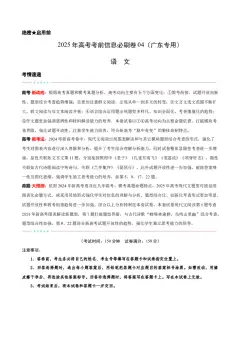
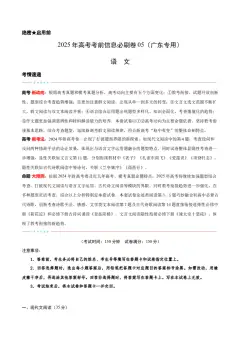
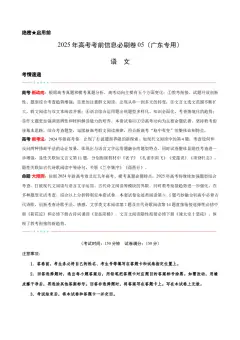
考情速递
高考·新动向:近年来高考英语进一步深化“素养立意”与“应用导向”,强调在真实、多元的语境中考
查学生的综合语言能力与文化品格。本卷紧密贴合这一趋势,选材广泛覆盖志愿服务(A 篇)、健康生活
(B 篇)、科技环保(C 篇)、数字伦理(D 篇)等现实议题,引导学生关注社会、科学思考与自我成长。
试题设计注重对文本深层逻辑、作者态度及社会价值的理解与评价,体现从“解题”到“解决问题”的能
力迁移。
高考·新情境:试题情境突出时代性、教育性与学科融合。阅读B 篇以个人饮食改变为载体,融入心理健
康与生活选择;七选五探讨“小睡与创造力”,结合心理学、脑科学与学习方法,贴近学生生活体验;语
用第二节以“长城”为主线,融历史、文化、生态保护于一体,凸显用英语讲述中国故事、传递文化自信
的命题意图。全卷情境真实、层次丰富,助力学生在语言学习中实现价值塑造与认知拓展。
命题·大预测:结合本卷结构与近年命题特点,2026 年高考英语可能呈现以下走向:
1. 语篇选材更重价值引领与跨学科视野。文本将继续聚焦“人与自然、人与社会、人与自我”三大主题群,
并增强科技、生态、心理、文化等元素的有机融合,强化育人功能与思维含量,如C 篇(AI+生态)、A
篇(志愿精神)所示。
2. 试题强化分析、整合与批判性思维。题目设置将进一步考查信息归纳、推理判断、观点评价等高层级思
维能力,如D 篇对算法公平性的思辨、B 篇对行为改变背后动因的分析,要求学生不仅读懂文本,更能形
成独立见解。
3. 语言运用突出语境适切性与文化意识。完形填空通过生活化叙事(如“打破规则日”)考查词汇在具体
情境中的准确使用;语法填空依托文化主题(长城)融合语言形式与意义表达,体现“语言服务于内容”
的考查理念。
4. 写作强调交际真实性与成长叙事。应用文(邀请信)注重交际目的、对象意识与得体表达;读后续写
(勇气挑战)聚焦心理变化、细节描写与主题升华,引导学生进行有温度、有思想的表达,体现语言运用
与人格发展的统一。
(考试时间:120 分钟  试卷满分:130 分)
注意事项:
1. 答题前,考生先将自己的姓名、准考证号码填写清楚,将条形码准确粘贴在条形码区域内。
2. 选择题必须使用2B 铅笔填涂;非选择题必须使用0. 5 毫米黑色字迹的签字笔书写,字体工整,笔迹清楚。
3. 请按照题号顺序在答题卡各题目的答题区域内作答,超出答题区域书写的答案无效;在草稿纸、试卷上
答题无效。
4. 作图可先使用铅笔画出,确定后必须用黑色字迹的签字笔描黑。
5. 保持卡面清洁,不要折叠、不要弄破、弄皱,不准使用涂改液、修正带、刮纸刀。
第一部分  听力(略)
第二部分  阅读(共两节, 满分50 分)
第一节(共15 小题;每小题2.5 分, 满分37.5 分)
阅读下列短文, 从每题所给的A、B、C 和D 四个选项中选出最佳选项。
A
Beautiful China Volunteers Program
What is it?
The Beautiful China Volunteers Program is a national initiative launched by the Ministry of Ecology and
Environment. It aims to mobilize the public to participate in environmental protection activities, including river clean-
ups, biodiversity monitoring, and green lifestyle promotion.
Who can join?
Everyone! From students and corporate employees to retirees, all citizens aged 18 or above (16 with parental
consent) are welcome to contribute their time and skills.
What do volunteers do?
Ecological Guardian: Participate in field activities like water quality testing and forest patrols.
Green Promoter: Organize and engage in community events to raise environmental awareness.
Digital Advocate: Use social media to spread knowledge and document environmental changes.
Why join?
Gain valuable hands-on experience in environmental science.
Receive professional training and a certificate of participation.
Connect with like-minded individuals and make a tangible difference to your community.
How to apply?
Scan the QR code below to register on our official website. Applications for the 2026 Spring Session are now
open until February 28th.
For more details, visit www.beautifulchinavolunteers.org.
21. What is the main purpose of the Beautiful China Volunteers Program?
A. To promote the development of social media.
B. To raise funds for national ecological projects.
C. To offer professional degrees in environmental science.
D. To encourage public involvement in environmental protection.
22. What is a requirement for a 17-year-old high school student to join the program?
A. Obtaining permission from parents.
B. Having prior volunteer experience.
C. Passing a professional training test.
D. Organizing a community event first.
23. Which role best suits a volunteer who is good at making short videos?
A. Green Promoter.
B. Digital Advocate.
C. Community Leader.
D. Ecological Guardian.
B
 For over twenty years, fried chicken had been my absolute favorite food. I would have it at least
three times a week, whether it was from a fast- food joint, a local diner, or even homemade. I planned my outings
around places that served delicious fried chicken. There were times when I tried to cut back on it, especially when I
started to gain some weight, but I always ended up giving in to my cravings within a few days.
This year, a series of events changed my relationship with fried chicken forever. I began experiencing frequent
stomachaches and indigestion. Doctors couldn’t directly link these problems to fried chicken, but I noticed that every
time I ate it, my discomfort worsened. Additionally, I started to realize that the once- mouthwatering smell and taste
now left a heavy, greasy feeling in my mouth that I couldn’t ignore. One evening, after finishing a large bucket of
fried chicken, I felt so sick that I couldn’t sleep well all night. That was the turning point. I decided that enough was
enough, after two decades of indulgence.
Why was it so hard to let go before? Is there really something addictive in fried chicken? While there’s no official
“fried chicken addiction” listed in medical books, experts point out factors that could contribute to its allure. Dr.
Johnson from a nutrition research center mentions two main elements: the high-fat content and the combination of
spices. The high-fat content triggers the release of endorphins in the brain, making us feel good, while the unique
blend of spices stimulates our taste buds, making us want more.
Now, I’m on Day 35 of my “fried-chicken-free” journey. The first week was tough. I had strong cravings and
even felt a bit down at times, almost like going through a mild withdrawal. But as the days passed, I started to feel
better. My stomach problems became less frequent, and I even noticed that I had more energy. I’m really proud of
myself for breaking this long-standing habit. If I can overcome my love for fried chicken, I believe I can overcome
any other challenging habit in my life.
24. What can be inferred about the author from the first paragraph?
A. Fried chicken was only a casual part of the author’s diet.
B. The author never worried about the health risks of eating fried chicken.
C. The author had a deep and long-lasting love for fried chicken.
D. The author successfully reduced the intake of fried chicken several times.
25. What led the author to give up fried chicken?
A. A doctor’s strict order.
B. Health problems and an unpleasant feeling after eating.
C. A newfound dislike for the smell of chicken.
D. A friend’s advice on a healthier diet.
26. What does the underlined word “allure” in paragraph 3 probably mean?
A. harm
B. cost
C. waste
D. attraction
27. How does the author feel about giving up fried chicken?
A. Regretful
B. Confused
C. Satisfied
D. Uncertain.
C
In the remote mountains of Costa Rica, a quiet revolution is taking place. Dr. Elena Ortiz and her team are
pioneering a groundbreaking approach to wildlife conservation: using artificial intelligence to "listen" to the
rainforest's health.
The system is deceptively simple. Dozens of solar-powered audio recorders, strategically placed throughout
the cloud forests, continuously capture the area's soundscape. This results in thousands of hours of audio, an
impossible amount for humans to process. This is where AI comes in. The team developed a machine learning
model trained to identify the calls of specific endangered species, like the elusive Baird's tapir or the haunting
call of the resplendent quetzal.
"But we're not just listening for single species," Dr. Ortiz explains. "We're analyzing the entire acoustic
environment — the biodiversity orchestra. The health of an ecosystem is reflected in its sound. A rich, layered
soundscape with a variety of frequencies indicates a thriving environment. A quiet one, or one dominated by a
single type of sound, like logging trucks, signals trouble."
The AI can detect changes in this orchestra that would be invisible to the human ear. A slight decrease in
the frequency of a certain frog's croak might indicate a change in water quality days before it becomes visually
apparent. This early-warning system allows conservationists to intervene more quickly and effectively than ever
before.
The project, dubbed "Guardian Ear," has already yielded success. Last year, the AI detected a marked
decrease in bird vocalizations in a specific sector. The team investigated and found evidence of illegal hunting
activity, leading to increased patrols and the apprehension of the poachers. "It's like having a dedicated, tireless
ranger monitoring the forest 24/7," says Dr. Ortiz. "This technology doesn't replace traditional conservation; it
empowers it, giving us a deeper understanding and a faster response time to protect these irreplaceable
ecosystems."
28. What does the underlined word "elusive" in paragraph 2 mean?
A. Rarely seen.
B. Easily found.       C. Highly dangerous.       D. Very loud.
29. According to Dr. Ortiz, what does a "rich, layered soundscape" indicate?
A. The presence of illegal hunters.
B. A decline in biodiversity.
C. A healthy and thriving ecosystem.
D. The need for more audio recorders.
30. How does the AI serve as an "early-warning system"?
A. By predicting weather patterns in the forest.
B. By identifying the sounds of logging trucks.
C. By detecting subtle acoustic changes that signal environmental shifts.
D. By directing rangers to the exact location of poachers.
31. What is the main idea of the passage?
A. The challenges of protecting Costa Rica's cloud forests.
B. The use of AI in analyzing animal communication patterns.
C. An innovative AI-powered method for conservation monitoring.
D. The life and work of a prominent conservationist, Dr. Elena Ortiz.
D
Whether you’re looking for a job, a house, or a romantic partner, there’s an app for that. But as people
increasingly turn to digital platforms in search of opportunity, Daniela Saban, an associate professor of operations,
information, and technology at Stanford Graduate School of Business, says it’s time to take a critical look at the role
of algorithms (算法). She explores how properly designed algorithms can improve the fairness and effectiveness of
matching processes.
Saban has focused much of her research on what she calls “matching markets,” and she’s been particularly
fascinated by online dating. In one study, she and several coauthors partnered with a major U.S. dating platform to
explore how updates to the app’s algorithm could improve outcomes for romantic hopefuls looking to spark new
connections.
Analyzing data from the app, Saban developed a model that not only prioritized potential matches based on a
user’s preferences but also took into account the likelihood that the person on the other side of the potential match
would be interested. “I not only want to show you people that you will like, I also want to show you people that will
like you back,” Saban notes. Factoring in users’ history, activity levels, and this two-sided approach to preference led
to a substantial increase in matches during field experiments in Texas. “Our algorithm increased the number of
matches by 27% in Houston and by over 37% in Austin,” Saban says.
Similarly, when working with the volunteer matching platform VolunteerMatch, Saban identified an imbalance
in how volunteer opportunities were being distributed. Some organizations were receiving an overwhelming number
of sign-ups, sometimes even more than they needed, while others struggled to attract any volunteers at all. By adjusting
the search algorithm to consider the number of volunteers an organization needs and has already received, Saban and
her team were able to ensure a more reasonable distribution of volunteers across opportunities.
The technical details of algorithms may be complicated, but our commitment to fairness and equity doesn’t have
to be. If we want algorithms to work for good, we need to make conscious choices about how we design them.
32. How do people search for opportunities nowadays?
A. By learning algorithms.                        B. By making use of online tools.
C. By developing critical thinking.
D. By analyzing the matching processes.
33. What do we know about the model Saban developed for the dating app?
A. It has attracted more users to the app.
B. It makes a user’s preferences a top priority.
C. It focuses on two-sided preference matching.
D. It presents more potential matches to the users.
34. On what basis did Saban adjust the algorithm of VolunteerMatch?
A. The preferences of the volunteers.
B. The popularity of the organizations.
C. A match between volunteer and organization types.
D. A balance between the demand and supply of volunteers.
35. Which of the following can be a suitable title for the text?
A. The Power of Digital Matchmaking
B. A New Era of Opportunity Searching
C. Designing Algorithms for Better Matches
D. Volunteering Better with Equal Distribution
第二节(共5 小题;每小题2. 5 分, 满分12. 5 分)
阅读下面短文, 从短文后的选项中选出可以填入空白处的最佳选项。选项中有两项为多余选项。
 Spark Your Creativity With a Nap
Many famous creative thinkers like Thomas Edison and Salvador Dali were known to take regular daytime naps.
Recent scientific studies suggest this wasn’t just coincidence — there appears to be a real connection between brief
naps and enhanced creativity. Researchers have discovered that a specific sleep stage called non-rapid-eye-movement
(the N1 state), which occurs just as we begin to fall asleep, may be particularly important for generating innovative
ideas.
A study conducted at the Paris Brain Institute provides strong evidence for this connection. ____36____. After
a 20-minute rest period where some participants napped, those who reached the N1 sleep state were nearly three times
more likely to solve challenging math problems compared to those who stayed awake.
 ____37____. The famous chemist August Kekulé reportedly discovered the ring structure of benzene (苯) after
visualizing a snake biting its own tail during this half-awake state. Similarly, many artists and inventors throughout
history have credited their nap-time visions with breakthrough ideas.
Scientists call this process “targeted dream incubation (孵化).” ____38____. When people focus on a specific
problem as they begin to nap, their brains continue working on it during this special sleep stage, often making
unexpected connections that lead to creative solutions.
You can try this creative napping technique yourself: Before napping, take a few moments to write down an
issue or creative challenge facing you. ____39____ Then, when the timer goes off, stand up, grab the note and pen,
and write down whatever jumps into your mind.
 ____40____. Just like any skill, learning to harness the creative power of naps takes practice. Researchers
suggest trying this method several times before expecting significant results.
A. Set an alarm for 15-20 minutes to avoid sleeping too deeply.
B. Some people believe longer naps are always more beneficial.
C. The brain remains partially active during this early sleep phase.
D. Regular practice can improve your ability to generate creative solutions.
E. Participants were given difficult math problems they couldn’t initially solve.
F. Historical records show many scientific discoveries came from such moments.
G. It involves consciously thinking about a certain challenge before you fall asleep.
第三部分 语言运用(共两节,满分30 分)
第一节(共15 小题,每小题1 分,满分15 分)
阅读下面短文, 从每题所给的A、B、C 和D 四个选项中选出可以填入空白处的最佳选项。
My son is tidying the living room with proper attention. This has never happened before and he’s doing it all
with a ____

 4  1____

  on his face.
He is to be ____

 4  2____

  for these exercises, but what really delights him is that this money will fund his
____

 4  3____

  in Break The Rules Day.
We first became ____

 4  4____

  of this fundraising event for his school when he started talking about it last week.
This, in itself, was extremely ____

 4  5____

 , since my son usually refuses to reveal anything that ____

 4  6____

  between
9 and 3:30 unless medically necessary.
Break The Rules Day was clearly, ____

 4  7____

 , something worth getting excited about. When the letter from
school arrived, we ____

 4  8____

  why. It read like a menu, itemising all the rules he and his classmates would be
____

 4  9____

  to break, 11 in all, each priced at 50p.
Some of the ____

 5  0____

  items were so specific that they cast a strange new ____

 5  1____

  on the usual do’s
and don’ts of classroom life, like “Choose where you sit” or “Wear a cap in class”. My son had ticked every single
____

 5  2____

  once — some with such ____

 5  3____

  that he’d very nearly torn through the paper with his pen. This
makes his sudden willingness to do chores immediately ____

 5  4____

 .
As my son busies himself, I remind him to ____

 5  5____

  his uniform in the laundry basket (洗衣篮). “What’s
the laundry basket?” comes his cheerful, and definitive, reply.
41. A. tear
B. smile
C. mask
D. shadow
42. A. paid
B. punished
C. tested
D. praised
43. A. education
B. project
C. research
D. participation
44. A. proud
B. cautious
C. tired
D. aware
45. A. moving
B. novel
C. annoying
D. lucky
46. A. goes on
B. stands out
C. catches up
D. pulls through
47. A. instead
B. besides
C. therefore
D. still
48. A. wondered
B. learned
C. explained
D. examined
49. A. allowed
B. encouraged
C. required
D. forbidden
50. A. removed
B. donated
C. listed
D. invented
51. A. spell
B. light
C. doubt
D. vote
52. A. box
B. word
C. deadline
D. role
53. A. ease
B. care
C. force
D. precision
54. A. suspicious
B. acceptable
C. surprising
D. comprehensible
55. A. hide
B. adjust
C. place
D. recycle
第二节(共10 小题;每小题1.5 分 ,满分15 分)
阅读下面短文,在空白处填入1 个适当的单词或括号内单词的正确形式。
The Great Wall, one of the most iconic symbols of China, stretches for thousands of miles across northern
China. It is not a single wall but a series of fortifications ___56___ (make) of stone, brick, and other materials.
___57___ (original) built over 2,000 years ago during the Qin Dynasty, ___58___ primary purpose of the Wall was
to protect the Chinese states and empires against invasions from the north.
Today, the Great Wall ___59___ (recognize) as one of the greatest wonders of the world and a UNESCO World
Heritage Site, ___60___ attracts millions of visitors from home and abroad every year. Walking on the ancient
stones, they can admire the ___61___ (astonish) scenery and imagine ___62___ life was like for the soldiers who
guarded this vast frontier centuries ago.
However, many sections of the Wall are now ___63___ ruins or have disappeared completely. Natural erosion and
human activities have caused significant damage to this priceless ___64___ (culture) treasure. Therefore, protection
and restoration efforts are of great ___65___ (important) to preserve the Wall for future generations.
第四部分  写作(共两节, 满分40 分)
第一节(满分15 分)
假定你是李华,你校“心灵驿站(Soul Station)”心理社团即将组织一次以“释放压力,健康生
活”为主题的活动。请给你校留学生朋友写一封电子邮件,邀请他们参加,内容包括:
1. 活动主题及目的;
2. 活动时间、地点及主要内容;
3. 表达期待。
注意:
1. 词数100 左右;
2. 可以适当增加细节,以使行文连贯。
Dear friends,
____________________________________________________________________________________________
____________________________________________________________________________________________
____________________________________________________________________________________________
____________________________________________________________________________________________
____________________________________________________________________________________________
Yours,
Li Hua
第二节(满分25 分)
阅读下面材料,根据其内容和所给段落开头语续写两段,使之构成一篇完整的短文。
I never thought I'd be the one standing at the edge of the high diving platform, my knees trembling
uncontrollably. The water below, a shimmering, terrifying sheet of blue, seemed impossibly distant. This was the
culmination of our summer camp's "Courage Challenge," and from this dizzying height, I could see the tiny, upturned
faces of my fellow campers and counselors, their cheers a faint murmur swallowed by the wind and the pounding of
my own heart.
My fear of heights had been a lifelong companion, a monstrous shadow that loomed over any hint of elevation. I
had perfected the art of avoidance—skipping school trips to observation decks, feigning illness during rock-climbing
sessions. But this summer, something within me had shifted. Perhaps it was the relentless enthusiasm of my camp
counselor, Sarah, or the quiet encouragement I saw in the eyes of my new friend, Sam, who had himself conquered a
fear of deep water just days before. Watching others repeatedly face their own demons with a deep breath and a
determined leap sparked a small, rebellious flame within me. I was tired of being a spectator in my own life.
The climb up the ladder had been an epic battle in itself. Each metal rung felt both icy and scorching under my
grip. My mind replayed a montage of every worst-case scenario, but beneath the panic, Sarah's words from our
morning talk echoed with a persistent clarity. "Fear is a reaction, Leo," she had said, her gaze steady and kind. "But
courage is a decision. It's the voice that says 'I am scared, and I will do it anyway.' The goal isn't to eliminate the fear;
it's to build a life so compelling that you're willing to move forward despite it." Now, standing on the precipice, the
world seemed to slow to a crawl. The roar in my ears was deafening, but I clung to the memory of her voice like a
lifeline. I took a deep, shuddering breath, filling my lungs with the crisp summer air, and fixed my eyes on the horizon,
trying to focus on the promise of liberation rather than the paralyzing drop.
注意:
1. 续写词数应为150 左右;
2. 请按如下格式在答题卡的相应位置作答。
I closed my eyes for a second, gathering every ounce of courage I had.______________________________
____________________________________________________________________________________________
____________________________________________________________________________________________
____________________________________________________________________________________________
____________________________________________________________________________________________
____________________________________________________________________________________________
Two hours later, I sat with Sarah and the others, holding my "Courage Challenge" certificate.___________
____________________________________________________________________________________________
____________________________________________________________________________________________
____________________________________________________________________________________________
____________________________________________________________________________________________
____________________________________________________________________________________________