文档文本内容
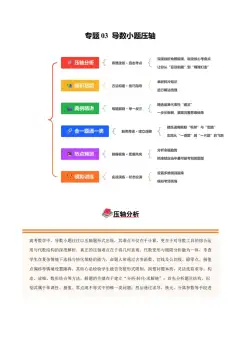
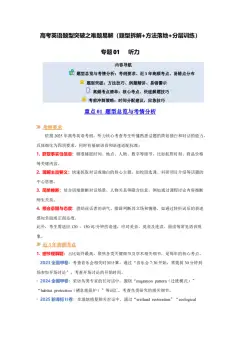
考点分析
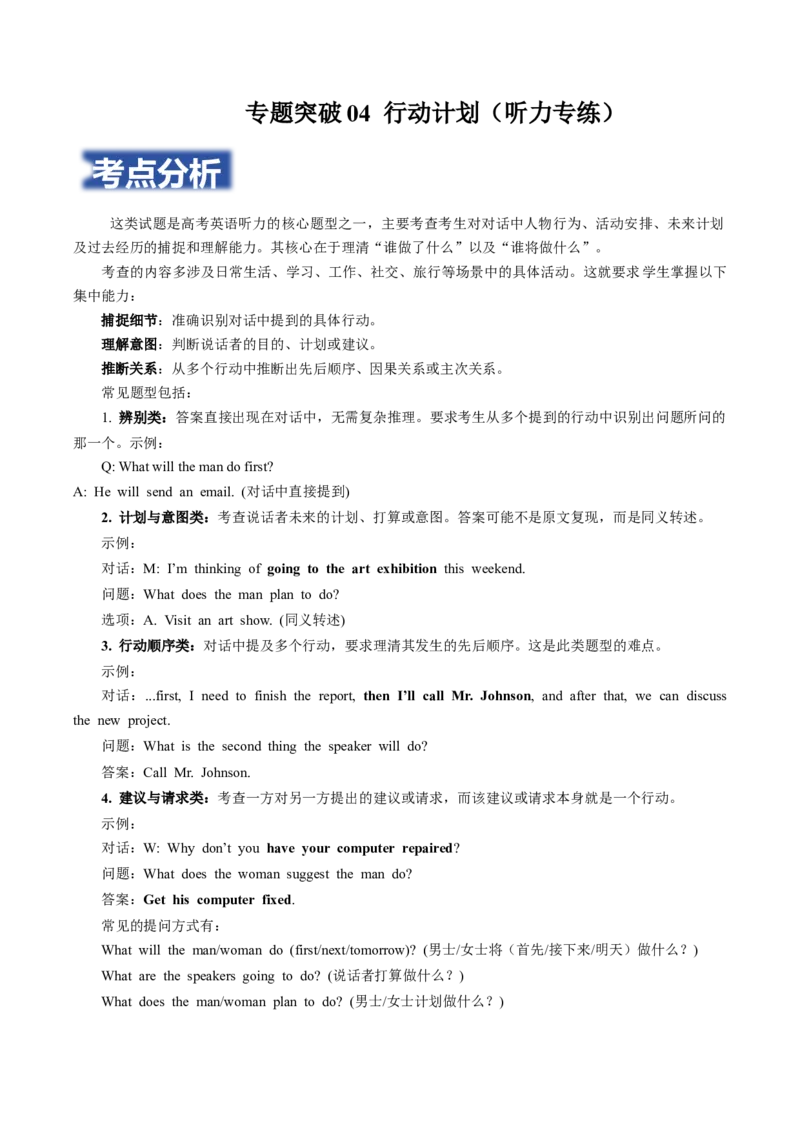
专题突破04 行动计划(听力专练)

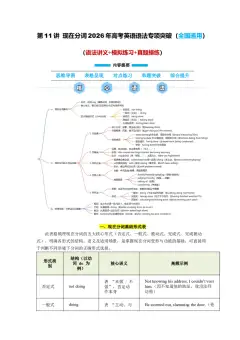
     这类试题是高考英语听力的核心题型之一,主要考查考生对对话中人物行为、活动安排、未来计划
及过去经历的捕捉和理解能力。其核心在于理清“谁做了什么”以及“谁将做什么”。
考查的内容多涉及日常生活、学习、工作、社交、旅行等场景中的具体活动。这就要求学生掌握以下
集中能力:
捕捉细节:准确识别对话中提到的具体行动。
理解意图:判断说话者的目的、计划或建议。
推断关系:从多个行动中推断出先后顺序、因果关系或主次关系。
常见题型包括:
1. 辨别类:答案直接出现在对话中,无需复杂推理。要求考生从多个提到的行动中识别出问题所问的
那一个。示例:
Q: What will the man do first?
A: He will send an email. (对话中直接提到)
2. 计划与意图类:考查说话者未来的计划、打算或意图。答案可能不是原文复现,而是同义转述。
示例:
对话:M: I’m thinking of going to the art exhibition this weekend.
问题:What does the man plan to do?
选项:A. Visit an art show. (同义转述)
3. 行动顺序类:对话中提及多个行动,要求理清其发生的先后顺序。这是此类题型的难点。
示例:
对话:...first, I need to finish the report, then I’ll call Mr. Johnson, and after that, we can discuss
the new project.
问题:What is the second thing the speaker will do?
答案:Call Mr. Johnson.
4. 建议与请求类:考查一方对另一方提出的建议或请求,而该建议或请求本身就是一个行动。
示例:
对话:W: Why don’t you have your computer repaired?
问题:What does the woman suggest the man do?
答案:Get his computer fixed.
常见的提问方式有:
What will the man/woman do (first/next/tomorrow)? (男士/女士将(首先/接下来/明天)做什么?)
What are the speakers going to do? (说话者打算做什么?)
What does the man/woman plan to do? (男士/女士计划做什么?)
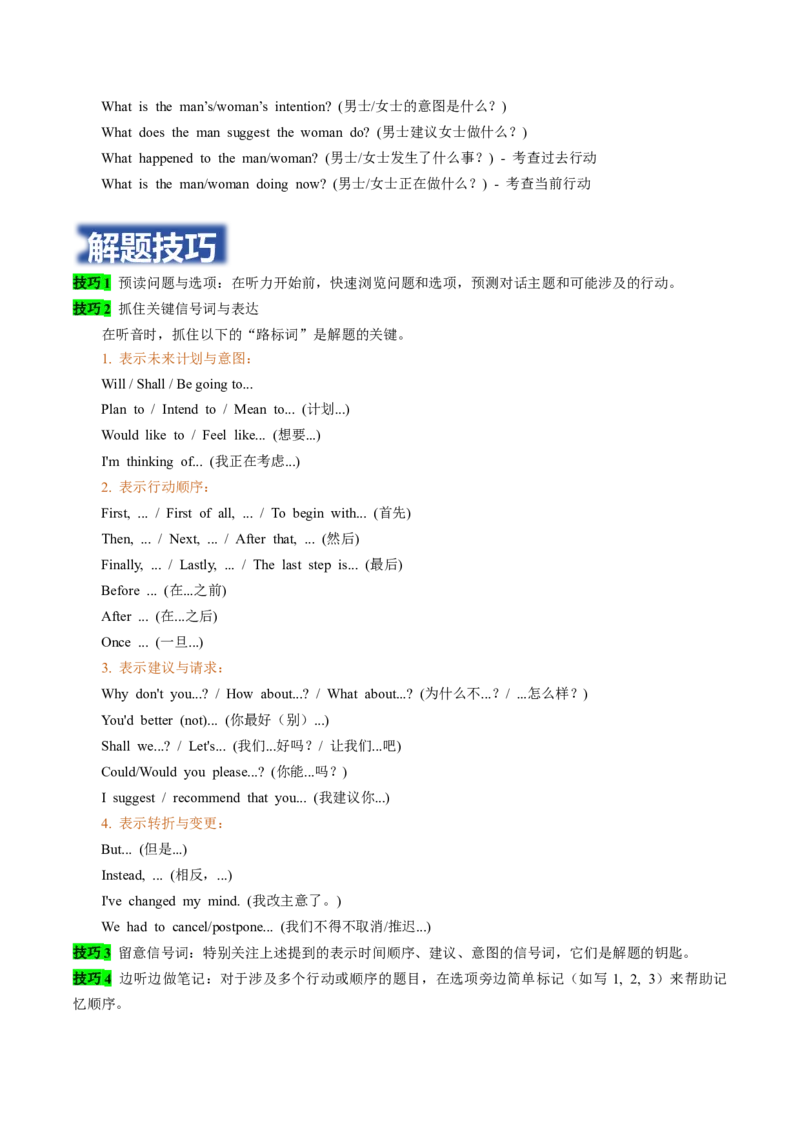
解题技巧
What is the man’s/woman’s intention? (男士/女士的意图是什么?)
What does the man suggest the woman do? (男士建议女士做什么?)
What happened to the man/woman? (男士/女士发生了什么事?) - 考查过去行动
What is the man/woman doing now? (男士/女士正在做什么?) - 考查当前行动
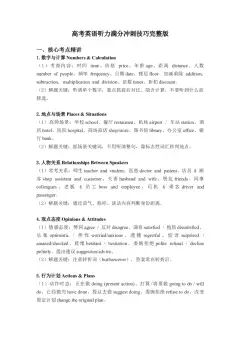
技巧1 预读问题与选项:在听力开始前,快速浏览问题和选项,预测对话主题和可能涉及的行动。
技巧2 抓住关键信号词与表达
在听音时,抓住以下的“路标词”是解题的关键。
1. 表示未来计划与意图:
Will / Shall / Be going to...
Plan to / Intend to / Mean to... (计划...)
Would like to / Feel like... (想要...)
I'm thinking of... (我正在考虑...)
2. 表示行动顺序:
First, ... / First of all, ... / To begin with... (首先)
Then, ... / Next, ... / After that, ... (然后)
Finally, ... / Lastly, ... / The last step is... (最后)
Before ... (在...之前)
After ... (在...之后)
Once ... (一旦...)
3. 表示建议与请求:
Why don't you...? / How about...? / What about...? (为什么不...?/ ...怎么样?)
You'd better (not)... (你最好(别)...)
Shall we...? / Let's... (我们...好吗?/ 让我们...吧)
Could/Would you please...? (你能...吗?)
I suggest / recommend that you... (我建议你...)
4. 表示转折与变更:
But... (但是...)
Instead, ... (相反,...)
I've changed my mind. (我改主意了。)
We had to cancel/postpone... (我们不得不取消/推迟...)
技巧3 留意信号词:特别关注上述提到的表示时间顺序、建议、意图的信号词,它们是解题的钥匙。
技巧4 边听边做笔记:对于涉及多个行动或顺序的题目,在选项旁边简单标记(如写1, 2, 3)来帮助记
忆顺序。
强化训练
技巧5 注意人称和时态:听清问题是关于“男声”、“女声”还是“他们”,并注意对话中动词的时态,
避免张冠李戴或混淆时间。
技巧6 理解同义转述:正确答案往往不是原文的简单重复,而是其同义表达。例如,“see a doctor” 可
能被转述为 “go to the clinic”。


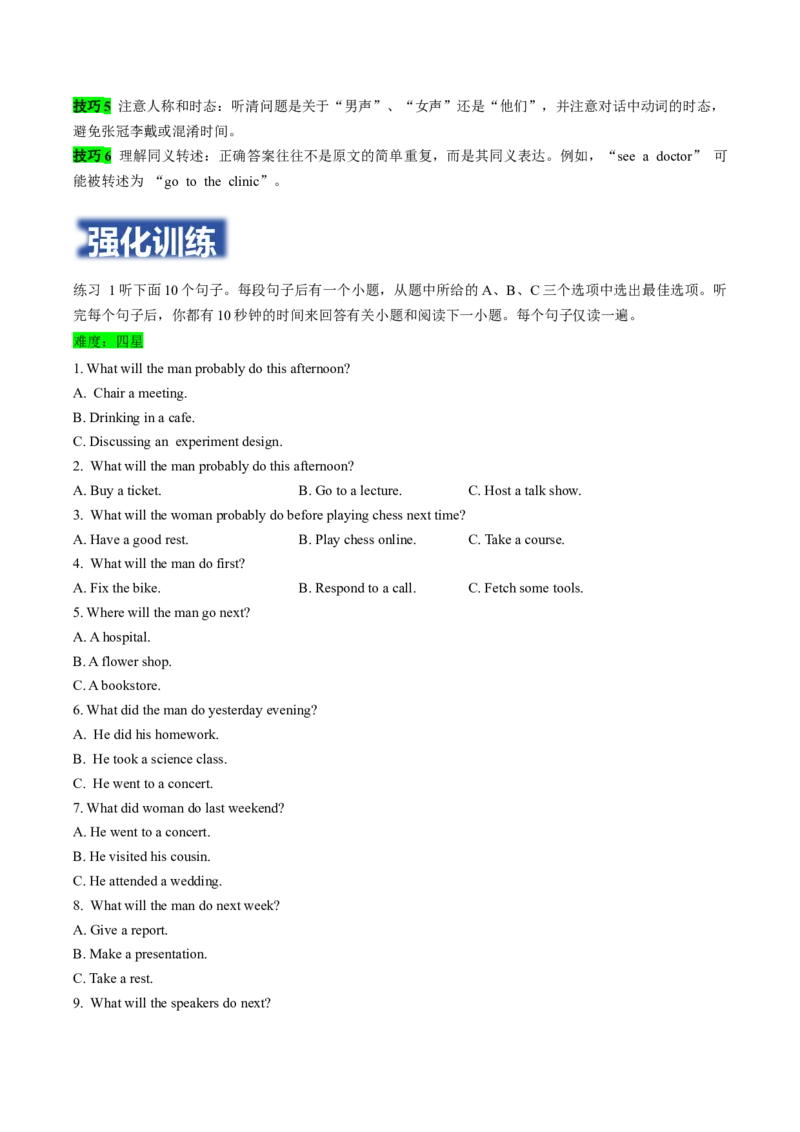
练习 1 听下面10 个句子。每段句子后有一个小题,从题中所给的A、B、C 三个选项中选出最佳选项。听
完每个句子后,你都有10 秒钟的时间来回答有关小题和阅读下一小题。每个句子仅读一遍。
难度:四星
1. What will the man probably do this afternoon?
A. Chair a meeting.
B. Drinking in a cafe.
C. Discussing an experiment design.
2. What will the man probably do this afternoon?
A. Buy a ticket.
B. Go to a lecture.
C. Host a talk show.
3. What will the woman probably do before playing chess next time?
A. Have a good rest.
B. Play chess online.
C. Take a course.
4. What will the man do first?
A. Fix the bike.
B. Respond to a call.
C. Fetch some tools.
5. Where will the man go next?
A. A hospital.
B. A flower shop.
C. A bookstore.
6. What did the man do yesterday evening?
A. He did his homework.
B. He took a science class.
C. He went to a concert.
7. What did woman do last weekend?
A. He went to a concert.
B. He visited his cousin.
C. He attended a wedding.
8. What will the man do next week?
A. Give a report.
B. Make a presentation.
C. Take a rest.
9. What will the speakers do next?
A. Watch a film.
B. Have lunch.
C. Work on a report.
10. What will the woman do this afternoon?
A. Go to see a doctor.
B. Visit Karen in hospital.
C. Go skating with the man.
练习 2 听下面30 段对话。每段对话后有一个小题,从题中所给的A、B、C 三个选项中选出最佳选项。听
完每段对话后,你都有10 秒钟的时间来回答有关小题和阅读下一小题。每段对话仅读一遍。
难度等级:四星
1. What will Mary probably do before skiing next time?
A. Have a good rest.
B. Wear better shoes.
C. Take a training course.
2. What will the man do first?
A. Repair the jeep.
B. Answer an email.
C. Fetch some tools.
3. What did the man do yesterday evening?
A. He worked on a project.
B. He took a science class.
C. He went to a concert.
4. What does the man ask the woman to do?
A. Arrange for food to be delivered.
B. Send an email to all team leaders.
C. Book a meeting room.
5. What will the speakers do next?
A. Attend a meeting.
B. Have lunch.
C. Work on a report.
6. What will the woman do next?
A. Turn off the stove.
B. Do the laundry.
C. Watch a match.
7. What did the woman do last night?
A. She made rice balls.
B. She sang on the street.
C. She joined a celebration.
8. What is the man going to do?
A. Go on a trip.
B. Visit his friends.
C. Prepare for an exam.
9. What does the man suggest doing?
A. Doing some shopping.
B. Cooking dinner.
C. Eating out.
10. How will the man’s sister help the woman?
A. Buy her a dress.
B. Alter her dress.
C. Make her a new dress.
11. What does the man advise the woman to do?
A. Drink some water.
B. Get some rest.
C. Go for a walk.
12.What will the speakers probably do next?
A.Visit the woman’s mother
B.Learn to cook noodles.

C.Go to a restaurant.
13. What does the man advise the woman to do?
A.Put on safety equipment.
B.Ride her bike more slowly.
C.Drive to another park.
14. What will the woman help the man with?
A. Writing a history paper.
B. Giving him a newspaper.
C. Finding some information.
15. What does the woman need to do?
A. Borrow a different item to write with.
B. Learn more of the material on the exam.
C. Ask the teacher for instructions on the test.
16. What should they do first according to the woman?
A. Paint the walls.
B. Remove a tree.
C. Get a new window.
17. What does Jack want to do?
A. Take fitness classes.
B. Buy a pair of gym shoes.
C. Change his work schedule.
18. What is the man going to do?
A. To stay inside.
B. To find his umbrella.
C. To go out with an umbrella.
19. Why does the woman advise the man to run?
A. To catch the postman.
B. To borrow some stamps.
C. To reach the post office before closing.
20. What will the woman do next?
A. Attend a meeting.
B. Pick up the man’s client.
C. Send the man to his office.
21. What will the speakers do tonight?
A. Play video games.
B. Walk in a park.
C. Study at home.
22. What will the man do next?
A. Rewrite the report.
B. See a doctor.
C. Correct the text.
23. What is the woman doing now?
A. Baking cookies.
B. Making a list.
C. Shopping for groceries.
24. What does the woman want to do?
A. Ask for leave.
B. Eat something.
C. Talk with the man
25. What are the speakers going to do next?
A. Book seats.
B. Have a rest.
C. Take another flight.
26. What does the man advise the woman to write about?
A. Her grades in class.
B. Her musical talent.
C. Her experiences outside class.
27. What is the man trying to do?
A. Cross the road.
B. Learn about traffic lights.
C. Explain the traffic rules in America.
28. What does the women advise the man to do?
A. Find the article at the reference desk.
B. Read the article on the computer.
C. Turn to the librarians for help.
29. What will the woman probably do?
A. Cancel her membership.
B. Rush to catch a bus
C. Call the man back later.
30. What is the woman probably doing?
A. Conducting a job interview.
B. Discussing costume designs.
C. Sharing her work experience.