文档文本内容
考点分析
专题突破07 方式与方法(听力专练)

这类题目在高考听力中属于高频考点,它主要考查考生对对话中涉及的具体步骤、手段、途径或工具等细
节信息的捕捉和理解能力。
1. 核心考点与设题方向
方式方法题主要围绕以下几个生活场景展开:
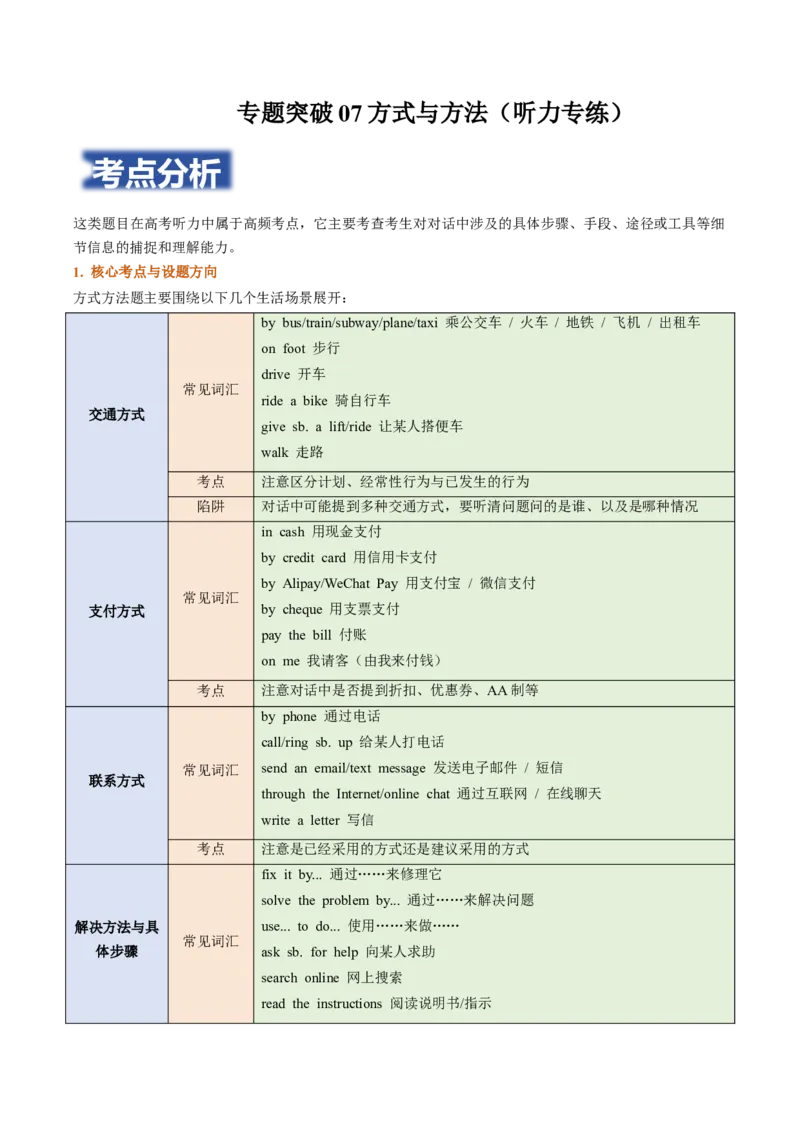
交通方式
常见词汇
by bus/train/subway/plane/taxi 乘公交车 / 火车 / 地铁 / 飞机 / 出租车
on foot 步行
drive 开车
ride a bike 骑自行车
give sb. a lift/ride 让某人搭便车
walk 走路
考点
注意区分计划、经常性行为与已发生的行为
陷阱
对话中可能提到多种交通方式,要听清问题问的是谁、以及是哪种情况
支付方式
常见词汇
in cash 用现金支付
by credit card 用信用卡支付
by Alipay/WeChat Pay 用支付宝 / 微信支付
by cheque 用支票支付
pay the bill 付账
on me 我请客(由我来付钱)
考点
注意对话中是否提到折扣、优惠券、AA 制等
联系方式
常见词汇
by phone 通过电话
call/ring sb. up 给某人打电话
send an email/text message 发送电子邮件 / 短信
through the Internet/online chat 通过互联网 / 在线聊天
write a letter 写信
考点
注意是已经采用的方式还是建议采用的方式
解决方法与具
体步骤
常见词汇
fix it by... 通过……来修理它
solve the problem by... 通过……来解决问题
use... to do... 使用……来做……
ask sb. for help 向某人求助
search online 网上搜索
read the instructions 阅读说明书/指示
解题技巧
考点
考查对具体操作方法的理解
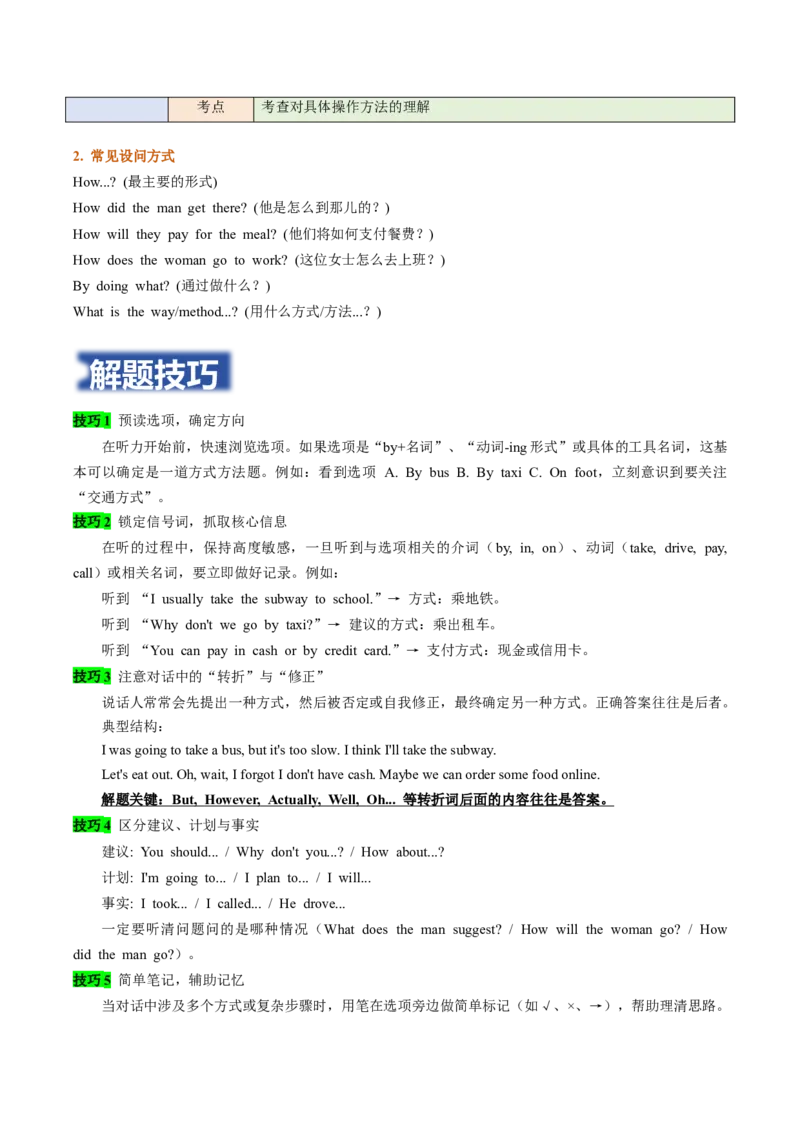
2. 常见设问方式
How...? (最主要的形式)
How did the man get there? (他是怎么到那儿的?)
How will they pay for the meal? (他们将如何支付餐费?)
How does the woman go to work? (这位女士怎么去上班?)
By doing what? (通过做什么?)
What is the way/method...? (用什么方式/方法...?)
技巧1 预读选项,确定方向
在听力开始前,快速浏览选项。如果选项是“by+名词”、“动词-ing 形式”或具体的工具名词,这基
本可以确定是一道方式方法题。例如:看到选项 A. By bus B. By taxi C. On foot,立刻意识到要关注
“交通方式”。
技巧2 锁定信号词,抓取核心信息
在听的过程中,保持高度敏感,一旦听到与选项相关的介词(by, in, on)、动词(take, drive, pay,
call)或相关名词,要立即做好记录。例如:
听到 “I usually take the subway to school.”→ 方式:乘地铁。
听到 “Why don't we go by taxi?”→ 建议的方式:乘出租车。
听到 “You can pay in cash or by credit card.”→ 支付方式:现金或信用卡。
技巧3 注意对话中的“转折”与“修正”
说话人常常会先提出一种方式,然后被否定或自我修正,最终确定另一种方式。正确答案往往是后者。
典型结构:
I was going to take a bus, but it's too slow. I think I'll take the subway.
Let's eat out. Oh, wait, I forgot I don't have cash. Maybe we can order some food online.
解题关键:

 But,

  However,

  Actually,

  Well,

  Oh...

  等转折词后面的内容往往是答案。


技巧4 区分建议、计划与事实
建议: You should... / Why don't you...? / How about...?
计划: I'm going to... / I plan to... / I will...
事实: I took... / I called... / He drove...
一定要听清问题问的是哪种情况(What does the man suggest? / How will the woman go? / How
did the man go?)。
技巧5 简单笔记,辅助记忆
当对话中涉及多个方式或复杂步骤时,用笔在选项旁边做简单标记(如√、×、→),帮助理清思路。
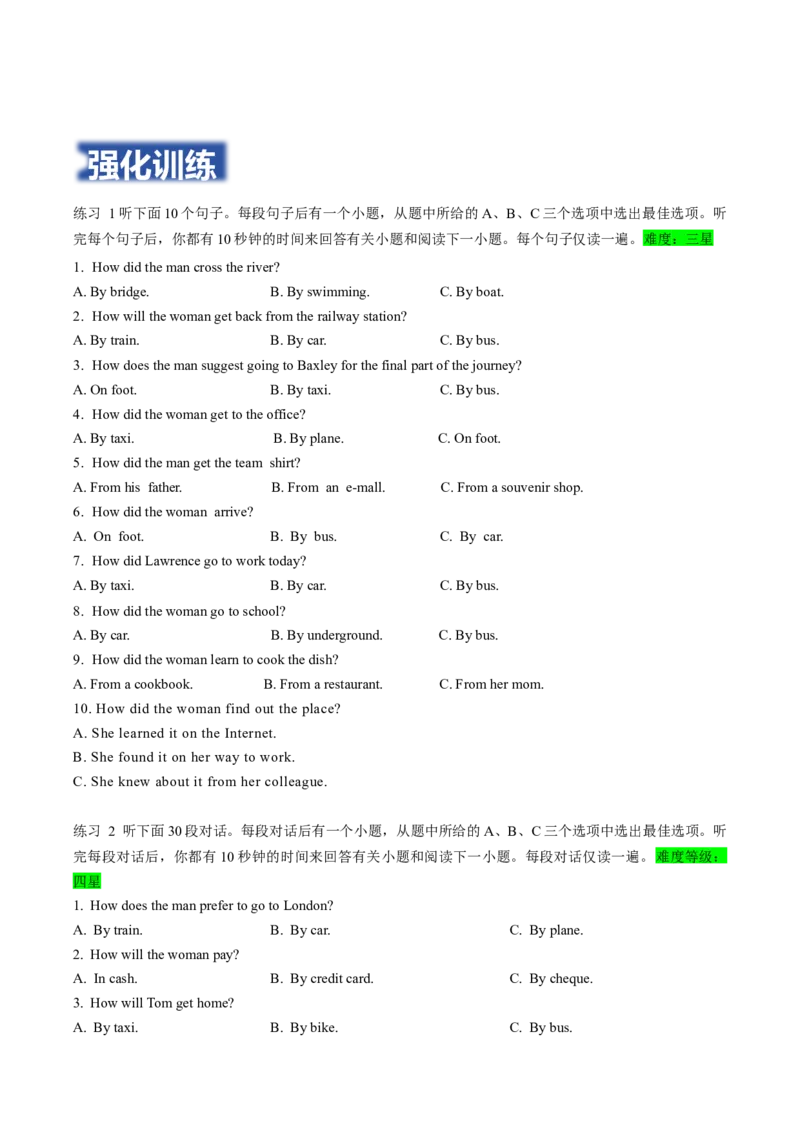
强化训练


练习 1 听下面10 个句子。每段句子后有一个小题,从题中所给的A、B、C 三个选项中选出最佳选项。听
完每个句子后,你都有10 秒钟的时间来回答有关小题和阅读下一小题。每个句子仅读一遍。难度:三星
1. How did the man cross the river?
A. By bridge.
B. By swimming.
C. By boat.
2. How will the woman get back from the railway station?
A. By train.
B. By car.
C. By bus.
3. How does the man suggest going to Baxley for the final part of the journey?
A. On foot.
B. By taxi.
C. By bus.
4. How did the woman get to the office?
A. By taxi.
B. By plane.
C. On foot.
5. How did the man get the team shirt?
A. From his father.
B. From an e-mall.
C. From a souvenir shop.
6. How did the woman arrive?
A. On foot.
B. By bus.
C. By car.
7. How did Lawrence go to work today?
A. By taxi.
B. By car.                C. By bus.
8. How did the woman go to school?
A. By car.                    B. By underground.        C. By bus.
9. How did the woman learn to cook the dish?
A. From a cookbook.          B. From a restaurant.        C. From her mom.
10. How did the woman find out the place?
A. She learned it on the Internet.
B. She found it on her way to work.
C. She knew about it from her colleague.
练习 2 听下面30 段对话。每段对话后有一个小题,从题中所给的A、B、C 三个选项中选出最佳选项。听
完每段对话后,你都有10 秒钟的时间来回答有关小题和阅读下一小题。每段对话仅读一遍。难度等级:
四星
1. How does the man prefer to go to London?
A. By train.
B. By car.
C. By plane.
2. How will the woman pay?
A. In cash.
B. By credit card.
C. By cheque.
3. How will Tom get home?
A. By taxi.
B. By bike.
C. By bus.
4. How does Emily often go to work?
A. By subway.
B. On foot.
C. By car.
5. How will the speakers go home?
A. By subway.
B. By taxi.
C. By bus.
6. How will the man go to school tomorrow?
A. By car.
B. By bicycle.
C. By bus.
7. How did the man go to the cinema?
A. By car.
B. By bike.
C. By bus.
8. How will the man’s sister help the woman?
A. Buy her a dress.
B. Alter her dress.
C. Make her a new dress.
9. How does the woman go to work?
A. By car.
B. On foot.
     C. By bike.
10. How would the woman like to look for a house?
A. In the newspapers.
B. In the magazines.
     C. From the Internet.
11. How does the woman prefer to pass the time on the plane?
A. By doing some useful work.
B. By reading a magazine sometimes.
C. By looking out of the window all the time.
12. How is the man different from what he was?
A. He expresses himself less.
B. He is more outgoing.
C. He becomes less patient.
13. How did the man travel?
A. By plane.
B. By train.
C. By bus.
14. How did the man know about the accident?
A. He witnessed it.
B. He read about it.
C. He saw it on TV.
15. How will the man pay?
A. By credit card.
B. By cheque.
C. In cash.
16. How does Dr. Heath spend most of his time?
A. Giving lectures.
B. Conducting research.
C. Doing office work.
17. How does the man suggest the woman send her package?
A. By surface mail.
B. By air mail.
C. By surface air lifted.
18. How does the man make progress this year?
A. He spends less time playing sports.
B. He has a tutor to help him.
C. His mother helps him with his study.
19. How did the man learn skating?
A. By taking classes.
B. By learning from friends.
C. By watching videos online.
20. How will the man pay for the shopping?
A. With a card.
B. With his cash.
C. With the woman's money.
21. How would the woman like to get to the post office?
A. By bike.
B. By car.
C. By bus.
22. How does the woman deal with difficult lectures?
A. By recording them.
B. By talking with lecturers.
C. By attending them again.
23. How will the woman go to the show?
A. By subway.
B. By taxi.
C. By bus.
24. How does Ken usually go to work?
A. By train.
B. By bus.
C. By car.
25. How did the man know the ending of the film?
A. He just guessed it.
B. He has watched the film.
C. He read the book in advance.
26. How would the woman like to watch movies?
A. At the cinema.
B. On the computer.
C. On the smartphone.
27. How does the girl want to go to the zoo?
A. By subway.

B. By car.
   C. By bus.
28. What will the woman help the man with?
A. Writing a history paper.
B. Giving him a newspaper.
C. Finding some information.
29. How will the man go to Hong Kong from Shanghai?
A. By air.
B. By subway.
C. By bus.
30. How does the woman usually contact her friends?
A. By writing letters.
   B. By sending e-mail.
  C. By sending cards.