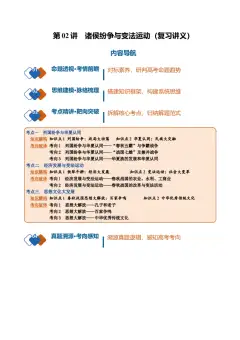
主题01 中华优秀传统文化

01 话题词汇佳句
02 时文热点阅读(全文翻译,词汇积累,长难句分析)
03 高考真题链接
04 话题阅读精练
分类
主题词汇
电影
1.documentary n.纪录片,纪实节目    2.horror n.恐怖电影(或故事等);震惊,恐惧
3.romance n.爱情故事;浪漫史;爱情4. performer n.演员;表演者
5.location n.外景拍摄地;地方,地点   6.classic n.经典作品,名著 adj.经典的;古典的
7,prop n.道具;支柱,支撑物          8.type n.类型,种类 vt.& vi.打字
9.comedy n.喜剧片,喜剧            10.fantasy n.幻想作品;幻想,想象
11.fiction n.小说;虚构的事          12.studio n.电影摄影棚;录音室
13.award n.奖,奖品,奖金 vt.授予,给予14.audience n.观众,听众
15.title n.名称,标题;称号;职位名称   16. science fiction 科幻电影(或小说等)
17.behind the scenes 在后台,在幕后       18. factor n.因素,要素
中国节
日与风
俗
1.couplet n.对联,对句                  2.firecracker n.鞭炮,爆竹
3.lantern n.灯笼,提灯                   4.riddle n.谜,谜语
5.wedding n.婚礼,结婚庆典              6.ceremony n.典礼,仪式
7.custom n.风俗,习俗;个人习惯;光顾   8.band n.乐队,乐团;一伙,一帮;带,
箍
9.costume n.戏装,装扮用服装        10.honour(AmE honor) n.尊敬,尊重;荣幸;
荣誉
11.generation n.一代人;代,一代;产生    12.source n.来源;起源;源头
13.identity n.特性;身份                  14.snack n.点心,小吃
15.firework n.烟火,烟花             16.decorate vt.& vi.装饰;点缀;粉刷,油
漆
17.tradition n.传统,传统的信仰(或风俗)  18.in the air 可感觉到;在传播中
19.pass down 使世代相传,流传             20.fall on 适逢,正当
21.in honour of 为向……表示敬意             22.dress up 穿上盛装;打扮;装扮
23.stand for 象征,代表;主张              24.be covered with 被……覆盖;充满着……
中国文
化
1.castle n.[C]城堡       2.heritage n.遗产
3.spear n.矛;枪         4.temple n.庙;寺
5.relic n.遗物;遗迹      6.amber n.琥珀;琥珀色
7.jewel n.珠宝;宝石     8.pyramid n.(古埃及的)金字塔;棱锥体
9.calligraphy n.[U]书法   10.hammer n.[C]锤子;榔头
11.glacier n.冰川         12.cuisine n.烹饪,风味;饭菜,菜肴
13.fiddle n.小提琴       14.hockey n.冰球运动,冰上曲棍球;曲棍球
15.valley n.山谷,溪谷   16.strait n.海峡,水道
17.statue n.雕像,雕塑   18.antique n.文物,古董 adj.古老的,古董的
19.vase n.花瓶,装饰瓶   20.furniture n.家具
21.fleet n.舰队;捕鱼船队;车队22.compass n.罗盘,指南针;圆规
23.log n.航海日志,正式记录;原木24.eagle n.雕
25.deck n.甲板,舱面        26.heritage n.遗产
27.pyramid n.金字塔         28.missile n.导弹
29.corridor n.走廊,地带;通道 30. showcase n.展示的场合;玻璃柜台
中医文
化
1.gene n.基因2.game-changing adj.改变游戏规则的
3.genome n.基因组,染色体组4.lifespan n.寿命,有效期
5.limb n.肢,臂,腿         6.centimetre (AmE centimeter) n.厘米
7.acupuncture n.针刺疗法     8.tongue n.舌头;语言
9.pulse n.脉搏 vi.搏动,跳动;洋溢着10.wrist n.手腕,腕关节
11.bandage n.绷带             12.surgeon n.外科医生
13.physician n.医师,内科医生 14.dentist n.牙科医生
15.cell n.细胞                16.virus n.病毒;(计算机程序中的)病毒
17.cancer n.癌症;邪恶,毒瘤18.means n.(pl.means)方法,方式;财富,钱财
19.delete vt.删去,删除         20.restore vt.恢复;修复;使复原,使复位
21.flu n.流行性感冒,流感    22.characteristic n.特征,特点 adj.典型的,独特的
23.needle n.针;注射针;指针 24.clinic n.私人诊所;门诊部;门诊时间
25.organ n.器官;风琴;机构,机关 26.drug n.毒品;药物
27.phenomenon n.(pl.phenomena)现象  28.substance n.物质;要点
29.symbol n.象征;符号,代号    30.department n.(医院的)科,部门,局,系
31.chemist n.药剂师,药商;化学家32.resistance n.抵抗力;抵制,反对;抵抗,反抗
佳句背诵
1.There is no doubt that the boxes were then put on a train for Königsberg...毫无疑问,这些箱子后来被装
上火车运往哥尼斯堡……
2.Not only had the countries found a path to the future that did not run over the relics of the past,but they had
also learnt that it was possible for countries to work together to build a better tomorrow.
这些国家不仅找到了一条不以牺牲古迹为代价的未来发展之路,而且明白了多个国家合作创造美好未来
的可能性。
3.It is said that the archaeological work is of great significance and has attracted wide attention.据说这次考
古工作意义重大,引起了大家的广泛关注。
4.Archaeologists are seriously considering when to dig up the ancient tombs in this area.
考古学家们正在认真考虑什么时候挖掘这个地区的古墓。
5.What we are supposed to do is that we will spare no efforts to preserve our cultural heritages.
我们所要做的就是尽全力保护我们的文化遗产。
在全球化背景下,文化交流与互鉴有助于增进不同国家和民族之间的相互理解和友谊,促进世界和
平与发展。通过举办文化博览会等活动,可以展示各国的文化特色和成就,推动文化产业的发展,同时
也为解决全球性问题提供文化智慧和精神动力。
Dunhuang Cultural Expo seeks to receive the Silk Road spirit
On Sunday the expo is hosted by the Gansu provincial government. Themed "Strengthening Cultural
Exchanges and Promoting Mutual Learning Among Civilizations", the event has brought more than 1,200
delegates (代表)from 97 countries and regions and eight international organizations to Dunhuang, the
historical oasis (绿洲)city in Gansu province and a key hub (枢纽)on the ancient Silk Road.
Tie Ning, president of the China Federation of Literary and Art Circles, emphasized Dunhuang's historic role as
a crossroads of civilizations, in her keynote speech at the event's opening ceremony. "I hope the expo will inject
deeper civilizational strength into promoting harmonious coexistence of civilizations and building a community
with a shared future for humanity," she said.
"In our contemporary world, fractured by the impacts of climate change and conflict, revitalizing the spirit of
the Silk Road is particularly crucial. This spirit embodies the flow of ideas, openness to new knowledge and new
friends, and the power of mutual respect," Qu said.
Aimed at promoting cultural exchanges and cooperation among countries participating in the Belt and Road
Initiative, the event has facilitated BRI co-development, promoted Dunhuang culture and increased the influence
of Chinese culture since the first expo was held in 2016.
The ancient Silk Road, established over two millennia ago, facilitated trade and cultural exchanges between
the East and West. Dunhuang, located at a strategic junction on the route, therefore became a melting pot of
diverse cultures.
Kyle Dillingham noted,"It is my honor to help strengthen the friendship between Oklahoma and Gansu, as
well as between China and the United States," he said.
"If not for the Silk Road, many musical instruments that originated in Central Asia would never have reached
Europe and America," Dillingham said. "The Silk Road contributed to thousands of years of cultural and
intellectual exchanges. To now be actively involved in shaping the future of the modern Silk Road is truly
exciting."
Paul Craig, from the School of Advanced Technology at Xi'an Jiaotong-Liverpool University, said that one of
the key motivations for focusing on cultural heritage is to encourage the sharing of diverse cultures.
"It's fascinating to learn more about Chinese culture here at the expo, especially the different types of
traditions and expressions, because people often tend to think of China as rather uniform," he said.
语篇翻译
敦煌文化博览会旨在重振丝绸之路精神
本届文博会于周日开幕,由甘肃省人民政府主办。此次活动以“加强文化交流,促进文明互鉴”为
主题,吸引了来自97 个国家和地区以及8 个国际组织的1200 多名代表来到敦煌——这座位于甘肃省的历
史绿洲城市,也是古丝绸之路上的重要枢纽。
    中国文学艺术界联合会主席铁凝在开幕式主旨演讲中强调了敦煌作为文明交汇地的历史作用。 “我
希望本届文博会能为推动不同文明和谐共处、构建人类命运共同体注入更深厚的文明力量。”
曲星表示:“在我们这个因气候变化和冲突影响而分裂的当代世界,重振丝绸之路精神尤为关键。
这种精神体现了思想的交流、对新知识和新朋友的开放态度,以及相互尊重的力量。”
自2016 年首届文博会举办以来,该活动旨在促进共建“一带一路”国家之间的文化交流与合作,
推动了“一带一路”共建,弘扬了敦煌文化,提升了中华文化的影响力。
古丝绸之路始建于两千多年前,促进了东西方之间的贸易和文化交流。敦煌位于这条路线的战略交
汇处,因此成为了多元文化的大熔炉。
凯尔·迪林厄姆说:“我很荣幸能为加强俄克拉何马州与甘肃省以及中美两国之间的友谊贡献力
量。”
迪林厄姆说:“如果没有丝绸之路,许多起源于中亚的乐器永远也到不了欧美。丝绸之路促成了数
千年的文化和知识交流。如今能积极参与塑造现代丝绸之路的未来,真的令人兴奋。”
西交利物浦大学先进技术学院的保罗·克雷格表示,关注文化遗产的一个关键动机是鼓励多元文化的共
享。
他说:“在文博会了解更多中国文化非常有趣,尤其是不同类型的传统和表现形式,因为人们往往
认为中国文化比较单一。”
知识拓展
1. 丝绸之路:
丝绸之路起源于西汉汉武帝派张骞出使西域开辟的以首都长安(今西安)为起点,经甘肃、新疆,
到中亚、西亚,并连接地中海各国的陆上通道。它不仅是贸易通道,更是文化交流的桥梁,促进了东西
方文化、宗教、科技等方面的传播与融合。
2. 敦煌文化:
敦煌是古代丝绸之路上的重要节点,敦煌文化以莫高窟为代表,莫高窟保存了大量的壁画、彩塑等
艺术瑰宝,融合了中西方文化元素,反映了不同历史时期的社会风貌和艺术风格,是世界文化遗产中的
璀璨明珠。
3.“一带一路”倡议:
“一带一路”是“丝绸之路经济带”和“21 世纪海上丝绸之路”的简称,旨在借用古代丝绸之路的
历史符号,高举和平发展的旗帜,积极发展与沿线国家的经济合作伙伴关系,共同打造政治互信、经济
融合、文化包容的利益共同体、命运共同体和责任共同体。
重点单词
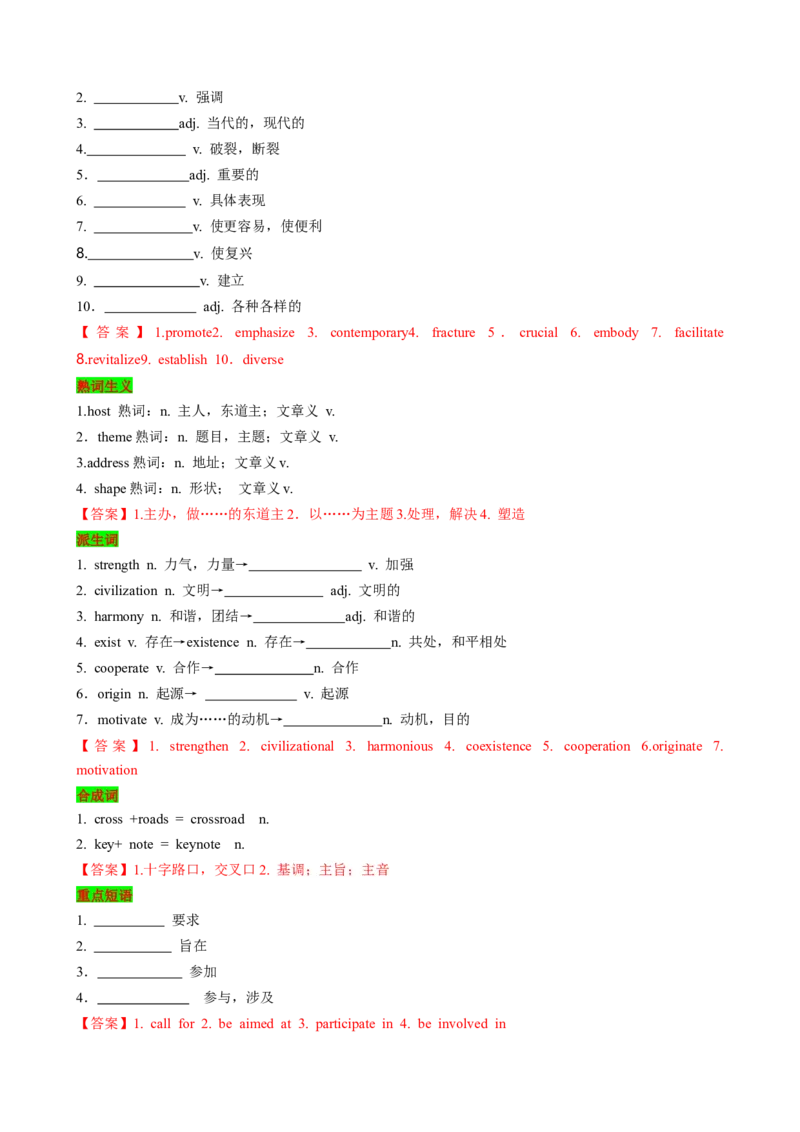
1.             v. 促进,提升
2.             v. 强调
3.             adj. 当代的,现代的
4.               v. 破裂,断裂
5.             adj. 重要的
6.               v. 具体表现
7.               v. 使更容易,使便利
8.

  v. 使复兴
9.                v. 建立
10.              adj. 各种各样的
【答案】1.promote2. emphasize 3. contemporary4. fracture 5 .crucial 6. embody 7. facilitate
8.revitalize9. establish 10.diverse
熟词生义
1.host 熟词:n. 主人,东道主;文章义 v.
2.theme 熟词:n. 题目,主题;文章义 v.
3.address 熟词:n. 地址;文章义v.
4. shape 熟词:n. 形状; 文章义v.
【答案】1.主办,做……的东道主2.以……为主题3.处理,解决4. 塑造
派生词
1. strength n. 力气,力量→                 v. 加强
2. civilization n. 文明→               adj. 文明的
3. harmony n. 和谐,团结→

  adj. 和谐的
4. exist v. 存在→existence n. 存在→            n. 共处,和平相处
5. cooperate v. 合作→              n. 合作
6.origin n. 起源→               v. 起源
7.motivate v. 成为……的动机→              n. 动机,目的
【答案】1. strengthen 2. civilizational 3. harmonious 4. coexistence 5. cooperation 6.originate 7.
motivation
合成词
1. cross +roads = crossroad  n.
2. key+ note = keynote  n.
【答案】1.十字路口,交叉口2. 基调;主旨;主音
重点短语
1.            要求
2.             旨在
3.             参加
4.               参与,涉及
【答案】1. call for 2. be aimed at 3. participate in 4. be involved in
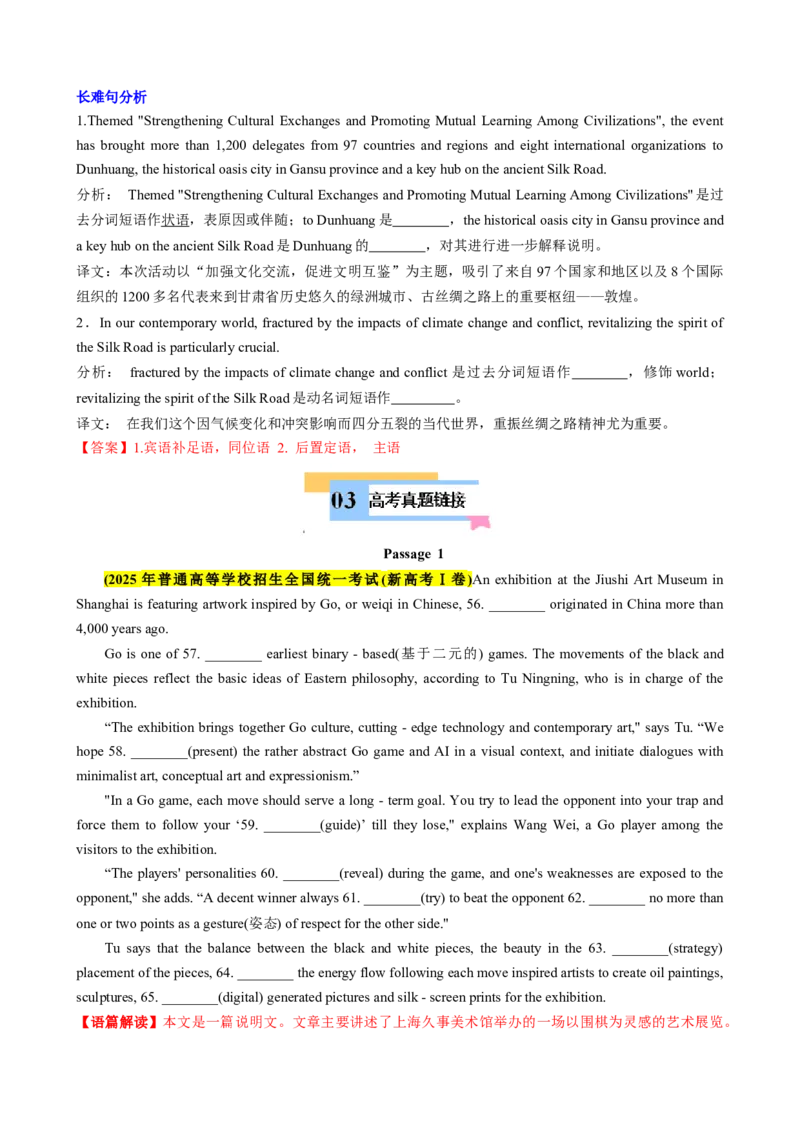
长难句分析
1.Themed "Strengthening Cultural Exchanges and Promoting Mutual Learning Among Civilizations", the event
has brought more than 1,200 delegates from 97 countries and regions and eight international organizations to
Dunhuang, the historical oasis city in Gansu province and a key hub on the ancient Silk Road.
分析: Themed "Strengthening Cultural Exchanges and Promoting Mutual Learning Among Civilizations"是过
去分词短语作状语,表原因或伴随;to Dunhuang 是        ,the historical oasis city in Gansu province and
a key hub on the ancient Silk Road 是Dunhuang 的        ,对其进行进一步解释说明。
译文:本次活动以“加强文化交流,促进文明互鉴”为主题,吸引了来自97 个国家和地区以及8 个国际
组织的1200 多名代表来到甘肃省历史悠久的绿洲城市、古丝绸之路上的重要枢纽——敦煌。
2.In our contemporary world, fractured by the impacts of climate change and conflict, revitalizing the spirit of
the Silk Road is particularly crucial.
分析: fractured by the impacts of climate change and conflict 是过去分词短语作       ,修饰world;
revitalizing the spirit of the Silk Road 是动名词短语作         。
译文: 在我们这个因气候变化和冲突影响而四分五裂的当代世界,重振丝绸之路精神尤为重要。
【答案】1.宾语补足语,同位语 2. 后置定语, 主语
Passage 1
(2025 年普通高等学校招生全国统一考试(新高考Ⅰ卷)An exhibition at the Jiushi Art Museum in
Shanghai is featuring artwork inspired by Go, or weiqi in Chinese, 56. ________ originated in China more than
4,000 years ago.
Go is one of 57. ________ earliest binary - based(基于二元的) games. The movements of the black and
white pieces reflect the basic ideas of Eastern philosophy, according to Tu Ningning, who is in charge of the
exhibition.
“The exhibition brings together Go culture, cutting - edge technology and contemporary art," says Tu. “We
hope 58. ________(present) the rather abstract Go game and AI in a visual context, and initiate dialogues with
minimalist art, conceptual art and expressionism.”
"In a Go game, each move should serve a long - term goal. You try to lead the opponent into your trap and
force them to follow your ‘59. ________(guide)’ till they lose," explains Wang Wei, a Go player among the
visitors to the exhibition.
“The players' personalities 60. ________(reveal) during the game, and one's weaknesses are exposed to the
opponent," she adds. “A decent winner always 61. ________(try) to beat the opponent 62. ________ no more than
one or two points as a gesture(姿态) of respect for the other side."
Tu says that the balance between the black and white pieces, the beauty in the 63. ________(strategy)
placement of the pieces, 64. ________ the energy flow following each move inspired artists to create oil paintings,
sculptures, 65. ________(digital) generated pictures and silk - screen prints for the exhibition.
【语篇解读】本文是一篇说明文。文章主要讲述了上海久事美术馆举办的一场以围棋为灵感的艺术展览。
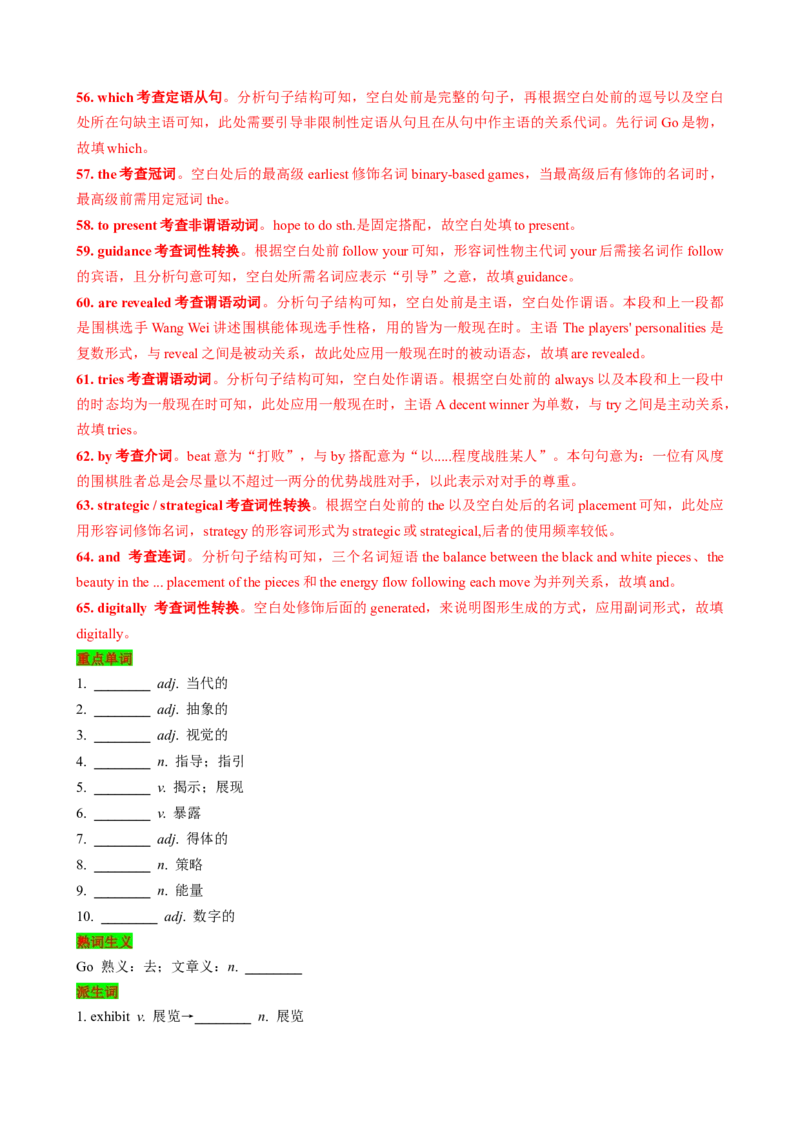
56. which 考查定语从句。分析句子结构可知,空白处前是完整的句子,再根据空白处前的逗号以及空白
处所在句缺主语可知,此处需要引导非限制性定语从句且在从句中作主语的关系代词。先行词Go 是物,
故填which。
57. the 考查冠词。空白处后的最高级earliest 修饰名词binary-based games,当最高级后有修饰的名词时,
最高级前需用定冠词the。
58. to present 考查非谓语动词。hope to do sth.是固定搭配,故空白处填to present。
59. guidance 考查词性转换。根据空白处前follow your 可知,形容词性物主代词your 后需接名词作follow
的宾语,且分析句意可知,空白处所需名词应表示“引导”之意,故填guidance。
60. are revealed 考查谓语动词。分析句子结构可知,空白处前是主语,空白处作谓语。本段和上一段都
是围棋选手Wang Wei 讲述围棋能体现选手性格,用的皆为一般现在时。主语The players' personalities 是
复数形式,与reveal 之间是被动关系,故此处应用一般现在时的被动语态,故填are revealed。
61. tries 考查谓语动词。分析句子结构可知,空白处作谓语。根据空白处前的always 以及本段和上一段中
的时态均为一般现在时可知,此处应用一般现在时,主语A decent winner 为单数,与try 之间是主动关系,
故填tries。
62. by 考查介词。beat 意为“打败”,与by 搭配意为“以.....程度战胜某人”。本句句意为:一位有风度
的围棋胜者总是会尽量以不超过一两分的优势战胜对手,以此表示对对手的尊重。
63. strategic / strategical 考查词性转换。根据空白处前的the 以及空白处后的名词placement 可知,此处应
用形容词修饰名词,strategy 的形容词形式为strategic 或strategical,后者的使用频率较低。
64. and 考查连词。分析句子结构可知,三个名词短语the balance between the black and white pieces、the
beauty in the ... placement of the pieces 和the energy flow following each move 为并列关系,故填and。
65. digitally 考查词性转换。空白处修饰后面的generated,来说明图形生成的方式,应用副词形式,故填
digitally。
重点单词
1. ________ adj. 当代的
2. ________ adj. 抽象的
3. ________ adj. 视觉的
4. ________ n. 指导;指引
5. ________ v. 揭示;展现
6. ________ v. 暴露
7. ________ adj. 得体的
8. ________ n. 策略
9. ________ n. 能量
10. ________ adj. 数字的
熟词生义
Go 熟义:去;文章义:n. ________
派生词
1. exhibit v. 展览→________ n. 展览
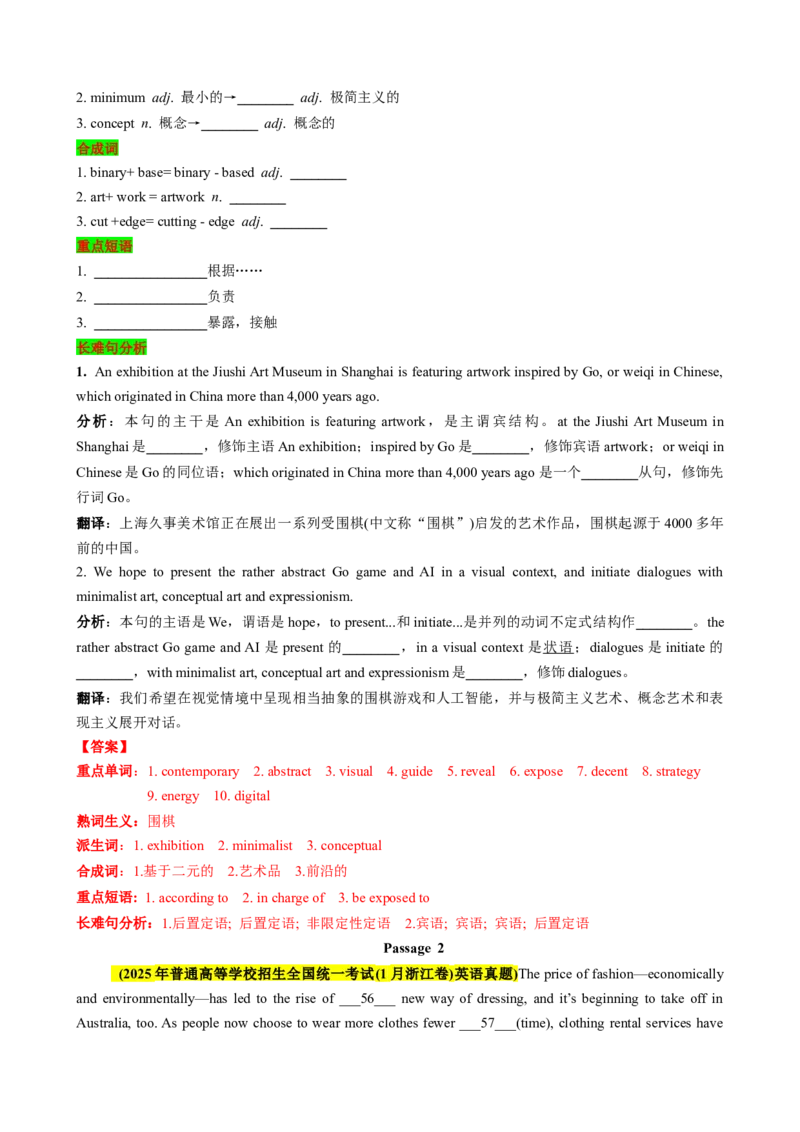
2. minimum adj. 最小的→________ adj. 极简主义的
3. concept n. 概念→________ adj. 概念的
合成词
1. binary+ base= binary - based adj. ________
2. art+ work = artwork n. ________
3. cut +edge= cutting - edge adj. ________
重点短语
1. ________________根据……
2. ________________负责
3. ________________暴露,接触
长难句分析
1. An exhibition at the Jiushi Art Museum in Shanghai is featuring artwork inspired by Go, or weiqi in Chinese,
which originated in China more than 4,000 years ago.
分析:本句的主干是An exhibition is featuring artwork ,是主谓宾结构。at the Jiushi Art Museum in
Shanghai 是________,修饰主语An exhibition;inspired by Go 是________,修饰宾语artwork;or weiqi in
Chinese 是Go 的同位语;which originated in China more than 4,000 years ago 是一个________从句,修饰先
行词Go。
翻译:上海久事美术馆正在展出一系列受围棋(中文称“围棋”)启发的艺术作品,围棋起源于4000 多年
前的中国。
2. We hope to present the rather abstract Go game and AI in a visual context, and initiate dialogues with
minimalist art, conceptual art and expressionism.
分析:本句的主语是We,谓语是hope,to present...和initiate...是并列的动词不定式结构作________。the
rather abstract Go game and AI 是present 的________,in a visual context 是状语;dialogues 是initiate 的
________,with minimalist art, conceptual art and expressionism 是________,修饰dialogues。
翻译:我们希望在视觉情境中呈现相当抽象的围棋游戏和人工智能,并与极简主义艺术、概念艺术和表
现主义展开对话。
【答案】
重点单词:1. contemporary  2. abstract  3. visual  4. guide  5. reveal  6. expose  7. decent  8. strategy
9. energy  10. digital
熟词生义:围棋
派生词:1. exhibition  2. minimalist  3. conceptual
合成词:1.基于二元的  2.艺术品  3.前沿的
重点短语: 1. according to  2. in charge of  3. be exposed to
长难句分析:1.后置定语; 后置定语; 非限定性定语  2.宾语; 宾语; 宾语; 后置定语
Passage 2
 (2025 年普通高等学校招生全国统一考试(1 月浙江卷)英语真题)The price of fashion—economically
and environmentally—has led to the rise of ___56___ new way of dressing, and it’s beginning to take off in
Australia, too. As people now choose to wear more clothes fewer ___57___(time), clothing rental services have
become increasingly popular.
“I think it’s an amazing idea,” says Tanya Perilli, who owns a clothing rental shop. “Customers today look
past the fact that something is secondhand and focus instead ___58___ the fact that they have something unique to
wear ___59___ are not overstuffing their own wardrobes(衣柜) or contributing to landfill.”
Tanya’s shop offers fashion clothes for women ___60___(rent) rather than purchase them outright, providing
a less expensive ___61___(solve) to one-time event dressing. The concept ___62___(be) certainly not new—men
have been renting good suits for decades—but for female shoppers, it is just taking off. This clothing-as-service
model follows the broader societal movement towards shared economies.
Tanya is also looking beyond special-occasion dresses to less formal clothing, ___63___ she plans to
package as capsule wardrobes and offer to travellers, such as those headed to weddings abroad, with a longer-term
rental period. “I really want to make this work for ___64___(people) lives today, and I know that doesn’t always
mean   ___65___(return) a dress on the Monday after a special weekend,” she says.
【语篇解读】本文描述了时尚的代价推动服装租赁业兴起的现象。
56. a 考查冠词。way 此处意为“方式”,为可数名词,且new 以辅音音素开头,故填a,表示泛指。
57. times 考查名词。根据空白处前fewer 可知,空白处应填可数名词复数形式。
58. on/upon 考查名词。focus on/upon 是固定搭配,意为“集中(注意力、精力等)于……”。
59. and 考查并列连词。句意为:如今的顾客不再在意衣物是否二手,而是关注这样的事实:他们有独特的
衣服穿,同时还不会让自己的衣柜过于拥挤,也不会为垃圾填埋场制造垃圾。结合句意及分析句子结构
可知,空白处缺少连词连接两个并列成分have 和are not overstuffing,故填and。
60. to rent 考查非谓语动词。分析句子结构可知,空白处作目的状语,应用动词不定式。
61. solution 考查词性转换。由空白处前a 可知,空白处应填名词形式。
62. is 考查谓语动词。由but 后的并列分句可知,本句描述的是现在的情况,且主语The concept 为单数,
故填is。
63. which 考查定语从句。分析句子结构可知,此处是一个非限制性定语从句,修饰先行词clothing,并在
从句中作package 和offer 的宾语,故填which。
64. people's 考查名词。句意:我真的希望能让这个(服装租赁模式)顺应如今人们的生活(方式)。根据句意
可知,lives 与people 之间是所属关系,故应用名词所有格。
65. returning 考查非谓语动词。句意:这并不总是意味着要在某个特别的周末过后的周一就归还衣服。根
据句意可知,mean 此处意为“意味着”mean doing sth.是固定搭配,意为“意味着做某事”。
重点单词
1. ________ n. 时尚
2. ________ adj.独特的
3. ________ n. 概念
派生词
1. economy n. 经济→________ adj. 经济的→________ adv. 在经济上
2. environment n. 环境→________ adv. 在环境方面
3. dress v. 穿→________ n. 穿着
4. rent v. 出租→________ n. 租赁
5. solve v. 解决→________ n. 解决方案
6. share v. 分享→________ adj. 共享的
7. travel v. 旅行→________ n. 旅行者
合成词
1. second +hand= secondhand adj. ________
2. Land + fill =landfill n. ________
3. special + occasion = special-occasion adj. ________
重点短语
1. ________________导致
2. ________________脱下,取下
3. ________________集中
长难句分析
1. Customers today look past the fact that something is secondhand and focus instead on the fact that they have
something unique to wear and are not overstuffing their own wardrobes or contributing to landfill.
分析:本句是并列句,由and 连接两个并列的谓语结构。“look past the fact...”和“focus on the fact...”。两
个fact 后面都跟了that 引导的________,分别对fact 的内容进行解释说明。在第二个同位语从句中,
“they have something unique to wear”和“are not overstuffing their own wardrobes or contributing to landfill”
是由and 连接的并列结构,共同作从句的谓语部分。
翻译:如今的顾客会忽略衣服是二手的这一事实,转而关注他们有独特的衣服可穿,而且不会把自己的
衣柜塞得满满当当,也不会造成垃圾填埋的问题。
2. Tanya is also looking beyond special - occasion dresses to less formal clothing, which she plans to package as
capsule wardrobes and offer to travellers, such as those headed to weddings abroad, with a longer - term rental
period.
分析:本句是主从复合句,主句是“Tanya is also looking beyond special - occasion dresses to less formal
clothing”。“which she plans to package as capsule wardrobes and offer to travellers...”是一个________从句,
修饰先行词“less formal clothing”。在定语从句中,“package as capsule wardrobes”和“offer to travellers”
是并列的谓语结构,“such as those headed to weddings abroad”是对“travellers”的举例说明,“with a
longer - term rental period”是________,修饰“travellers”。
翻译:坦尼娅也把目光从特殊场合的礼服转向了不太正式的服装,她计划把这些服装打包成胶囊衣橱,
提供给游客,比如那些前往国外参加婚礼的人,提供更长期的租赁服务。
【答案】
重点单词:1. fashion  2. unique  3. concept
派生词:1. economic; economically  2. environmentally  3. dressing  4. rental  5. solution
6. shared  7. traveller
合成词:1.二手的  2.垃圾填埋场  3.特殊场合的
重点短语: 1. lead to  2. take off  3.focus on
长难句分析:1.同位语从句  2.非限定性定语; 后置定语
Passage 1
(2025-2026 学年高三上·黑龙江哈尔滨·阶段练习)China’s massive V-Day military parade, scheduled
for Sept 3 in Tian’anmen Square, is of great significance. This parade is the first of its kind after China embarked
on its new journey to pursue Chinese modernization on all fronts, showcasing the growth of the country and the
armed forces under the leadership of the CPC, and the inheritance of the great spirit of the War of Resistance.
The parade will be carried out in two steps: the parade ceremony and the march-past, lasting about 70
minutes. Currently, all preparations have been basically completed. All the troops to be reviewed will be in high
spirits to be inspected by the Party and the people, jointly welcoming this victory day that the world should always
remember.
All the weapons and equipment on display are domestically-made active main battle equipment. A large
proportion of new equipment will make its debut (首次亮相) for the first time. Some new types, like land-based,
sea-based, air-based strategic weapons, high-precision strike weapons, and unmanned (无人的) equipment, will
be shown publicly. This fully demonstrates the People’s Liberation Army’s powerful ability to defend national
sovereignty, security, development interests, and maintain world peace.
China holds this grand parade to remember history, honor martyrs (烈士), cherish peace and create a better
future. It is also a solemn declaration of adhering to the correct view of World War Ⅱ history, safeguarding the
post-war order, and defending international fairness and justice.
However, Japan has taken inappropriate actions. Japanese media reported that the Japanese government has
called for a boycott through diplomatic (外交的) channels of Beijing’s events to commemorate World War Ⅱ
victory. In response, China has lodged serious protests and demanded clarification. The Chinese Foreign Ministry
spokesman said that any country that faces history squarely, draws lessons from history, and is committed to
peaceful development will not have misgivings (疑虑) about such events.
The 9-3 parade attracts both domestic and international attention. Many foreign media have reported on it.
For example, CNN noted it offers a rare chance to see China’s rapidly developing military technology. The Cuban
Latin American News Agency reported that China’s military is a firm force for world peace, and this parade
conveys China’s determination to contribute more to global stability.
1.What is the main purpose of China’s 9-3 military parade?
A.To show off China’s military power.
B.To commemorate World War Ⅱ victory and spread the idea of peace.
C.To respond to Japan’s inappropriate actions.
D.To attract international attention.
2.Which statement is TRUE according to the passage?
A.All displayed weapons are new.
B.The 9-3 parade is China’s first ever parade.
C.The 9-3 parade will last about 70 minutes.
D.China has never protested against other countries.
3.What can we infer from the passage?
A.Japan’s boycott call won’t affect the 9-3 parade.
B.Only Chinese people will watch the parade.
C.China’s military technology is not developed.
D.The international community dislikes the parade.
4.What is the best title for the passage?
A.China’s 9-3 Military Parade
B.Japan’s Wrong Actions
C.World War Ⅱ’s Significance
D.China’s Role in World Peace
【答案】1.B    2.C    3.A    4.A
【语篇导读】本文是一篇新闻报道。主要介绍中国9·3 大阅兵的重要意义、流程、展示装备,以及纪念目
的,还提及日本的不当反应和国际媒体的相关报道。
1.细节理解题。根据第四段中的“China holds this grand parade to remember history, honor martyrs (烈士),
cherish peace and create a better future. It is also a solemn declaration of adhering to the correct view of World
War Ⅱ history, safeguarding the post-war order, and defending international fairness and justice.(中国举行这次
盛大阅兵,是为了铭记历史、缅怀烈士、珍爱和平、开创未来,也是为了坚定宣示坚持正确的二战历史
观、维护战后秩序、捍卫国际公平正义。)”可知,中国9·3 阅兵的主要目的是纪念二战胜利并传递和平理
念。故选B 项。
2.细节理解题。根据第二段中的“The parade will be carried out in two steps: the parade ceremony and the
march-past, lasting about 70 minutes.(阅兵活动将分为阅兵式和分列式两个步骤,时长约70 分钟。)”可知,
9·3 阅兵将持续约70 分钟,该表述正确。故选C 项。
3.推理判断题。根据第五段中的“In response, China has lodged serious protests and demanded clarification.
The Chinese Foreign Ministry spokesman said that any country that faces history squarely, draws lessons from
history, and is committed to peaceful development will not have misgivings about such events. (对此,中国已提
出严正抗议并要求澄清。中国外交部发言人表示,任何正视历史、汲取教训、致力于和平发展的国家都
不会对这类活动有疑虑。)”可知,尽管日本反对,但中国坚定举行阅兵,表明其不会受外部干扰,故可推
断日本的抵制行动不会影响阅兵举行。故选A 项。
4.主旨大意题。通读全文,文章围绕“中国9·3 阅兵”展开,依次介绍其意义、流程、装备、纪念目的、
日本反应及国际媒体报道,核心话题为“9·3 阅兵”,“China’s 9-3 Military Parade(中国9·3 阅兵)”精准涵
盖核心主题,适合作为标题。故选A 项。
Passage 2
(2025-2026 学年云南三校(昭通一中等)高考备考实用性联考卷(三)
From collectors flying across countries to K-pop star Lisa saying “I go Pop Mart everywhere,” Pop Mart, a
Chinese toy brand, has become a worldwide craze. At the center are blind-box toys and famous characters, none
more talked about than Labubu, a furry “ugly-cute” figure loved across the globe.
Founded in 2010 by Wang Ning, Pop Mart grew from a small shop in Beijing into China’s top “trendy toy”
company. Its breakthrough came in 2016 with Molly blind boxes, proving mystery packs could create excitement
and huge sales. Since then, Pop Mart has built an “IP engine” — developing or licensing characters, turning them
into toy figures, and selling them through shops and vending machines (自动售货机). It has also partnered with
Disney and Sanrio. By 2025, Labubu had become its best-selling character, reflecting the rise of trendy toys as
part of global youth culture.
For young consumers, these toys mean more than playthings. Claire Carrillo, a 24-year-old from the
Philippines, is drawn to CryBaby, a genderless character with rosy cheeks and teary eyes. “I see myself as a
crybaby,” she explained. Similarly, Singapore filmmaker Ashley Jane Leow collects Hirono and Nyota because
they reflect her and her boyfriend’s personalities.
One big reason behind Pop Mart’s success is the “kidult” market, made up of young people and Gen Z who
enjoy hobbies linked to childhood. According to its 2024 report, the company now operates over 530 stores
worldwide, making around 13.2 billion yuan in sales. Another driver is blind box culture. The surprise element
pushes people to buy more and creates a sense of anticipation that makes each purchase feel like a small
adventure. It also encourages community through sharing, trading and displaying the toys. “It’s just a fun little
thing we do together to relieve stress,” said Amanda Lee, 26, from Singapore, who enjoys opening blind boxes
with colleagues at lunch. For many, the magic of Pop Mart lies in this mix of art, emotion and connection.
1.What does the word “craze” in paragraph 1 most probably mean?
A.A common daily habit.
B.A lasting cultural tradition.
C.A brief but intense fashion.
D.A problem troubling society.
2.What helped Pop Mart grow quickly in 2016?
A.The launch of vending machines.
B.The success of Molly blind boxes.
C.Partnerships with Disney and Sanrio.
D.Its licensing characters and toy figures.
3.Why does Carrillo from the Philippines like the CryBaby series?
A.Because it has a delicate appearance.
B.Because it shows her own character.
C.Because it reminds her of childhood.
D.Because it enjoys worldwide popularity.
4.Why are Pop Mart purchases attractive to consumers?
A.Because they remind elderly people of their childhood.
B.Because they boost stress relief and community growth.
C.Because they offer office workers fun during lunch breaks.
D.Because they increase excitement through surprise elements.
【答案】1.C    2.B    3.B    4.D
【语篇导读】这是一篇说明文。文章主要介绍了中国玩具品牌泡泡玛特凭借盲盒玩具和知名形象风靡全
球,介绍了其发展历程、成功原因,并说明这些玩具对年轻消费者而言不仅是玩物,还承载情感与社交
意义。
1.词句猜测题。根据第一段中“From collectors flying across countries to K-pop star Lisa saying ‘I go Pop
Mart everywhere,’ Pop Mart, a Chinese toy brand, has become a worldwide craze. (从跨国而来的收藏家,到韩
国流行乐明星 Lisa 说‘我走到哪都带着泡泡玛特’,中国玩具品牌泡泡玛特已成为全球craze。)”可知,
craze 体现泡泡玛特当下受到广泛追捧的热度,因此该词意为“热潮”,与C 项“短暂而强烈的时尚”意
思相近。故选C。
2.细节理解题。根据第二段中“Its breakthrough came in 2016 with Molly blind boxes, proving mystery
packs could create excitement and huge sales. (2016 年,Molly 盲盒的推出为其带来了突破,这证明神秘包
装能激发消费者热情并创造高额销量。)”可知,2016 年Molly 盲盒的成功助力泡泡玛特快速发展。故选
B。
3.细节理解题。根据第三段中“Claire Carrillo, a 24-year-old from the Philippines, is drawn to CryBaby, a
genderless character with rosy cheeks and teary eyes. “I see myself as a crybaby,” she explained. (24 岁的菲律宾
女孩 Claire Carrillo 被哭娃系列吸引,这是一个没有性别的角色,有着红润的脸颊和泪眼。她解释道:
‘我觉得自己就像个哭娃。’)” 可知,Carrillo 喜欢哭娃系列是因为该形象能体现她自己的性格。故选
B。
4.细节理解题。根据第四段中“Another driver is blind box culture. The surprise element pushes people to
buy more and creates a sense of anticipation that makes each purchase feel like a small adventure. (另一个推动因
素是盲盒文化。惊喜元素促使人们购买更多产品,并营造出一种期待感,让每次购买都像一场小冒险。)”
可知,泡泡玛特产品对消费者有吸引力的原因之一是惊喜元素带来的兴奋感。故选D。
Passage 3
Before the Qin Dynasty, the beauty of women’s lips had already been paid special attention to. This was
proven in 1983 when a life-size head statue of a goddess was excavated. ★The statue came from the Niu He Liang
Hongshan Culture Site, which has a history of over 5,000 years.   1   This shows that the act of reddening lips
already appeared around 5,000 years ago in ancient China.
It is believed that lip make-up was originally used to please the gods in religious ceremonies. Over time,
people found it could enhance one’s appearance and indicate social status. As a consequence, different materials
for lip beauty products were constantly tested and used to make the lips red and bright.     2
During the Pre-Qin and Han dynasties, women did not apply lip balm to all parts of the lips.   3
   The
upper lip was painted in a pointed shape, while the rest was covered with powder. In the Wei, Jin, and North and
South dynasties, fan-shaped lips were advocated. Women made an obvious depression on the upper lip and lip
contour in the corners of the mouth.
In the Sui and Tang dynasties, a florid style of lip make-up gained popularity. Women first put powder onto
the lips, and then they drew any pattern they liked. During that period, cherry lips were very popular. Two dots
were usually painted outside the corner of the lips to strengthen the image of dimples.     4       To make it, women
first made an obvious depression in the middle of the upper lip. Then the upper lip contour took the shape of two
petals, and the lower lip another petal.
In the Song and Ming dynasties, lip make-up was practiced to make women look more internalized and
gentler.
  5
   In the Qing Dynasty, women normally applied rouge to the whole upper lip and painted a cherry-
like dot in the middle of the lower lip. Some women also added dots in the middle of two lips.
A.It is the production of lip make-up.
B.The lips of the statue were red.
C.Cherry lips were also highly welcomed.
D.They put a big red dot on the lower lip.
E.Another famous pattern was shaped like a little flower.
F.The cherry lips were very popular at ancient times.
G.This led to creating the Chinese art of lip make-up.
【答案】1.B    2.G    3.D    4.E    5.C
【语篇导读】本文是一篇说明文。文章主要讲述了中国古代不同历史时期女性唇部妆容的演变及其文化
意义。
1.由上文“This was proven in 1983 when a life-size head statue of a goddess was excavated. The statue came
from the Niu He Liang Hongshan Culture Site, which has a history of over 5,000 years.(1983 年出土了一尊与真
人大小相同的神像头部,这尊雕像来自距今已有5000 多年历史的牛河梁红山文化遗址)”可知,本空需说
明雕像的具体特征以支撑“唇部化妆历史悠久”的论点。B 项“The lips of the statue were red.(雕像的嘴唇
是红色的)”直接描述了雕像唇部的颜色特征,与后文“This shows that the act of reddening lips already
appeared around 5,000 years ago in ancient China.(这表明涂红嘴唇的行为在5000 年前的古代中国就已出现)”
形成完整的逻辑链条,即雕像的红色嘴唇证明了古代唇妆的存在。故选B。
2.由上文“people found it could enhance one’s appearance and indicate social status. As a consequence,
different materials for lip beauty products were constantly tested and used to make the lips red and bright.(人们发
现唇部化妆可以提升容貌并彰显社会地位,因此不断试验和使用不同的唇部美容材料,使嘴唇变得红润
明亮)”可知,本空需总结唇部化妆材料发展的结果。G 项“This led to creating the Chinese art of lip make-
up.(这催生了中国唇部化妆艺术)”中的“This”指代前文材料试验的行为,“creating the Chinese art”与后文
“different dynasties’ styles(不同朝代的风格)”形成呼应,表明材料试验推动了唇妆艺术的形成。故选G。
3.由上文“During the Pre-Qin and Han dynasties, women did not apply lip balm to all parts of the lips.(先秦至
汉代,女性不会将唇膏涂满整个嘴唇)”可知,本空需说明具体的涂抹方式。D 项“They put a big red dot on
the lower lip.(她们在下唇点一个大红点)”具体描述了“不涂满”的操作方式,与后文“The upper lip was
painted in a pointed shape, while the rest was covered with powder.(上唇涂成尖形,其余部分用粉覆盖)”形成
完整的先秦至汉代唇妆描述。故选D。
4.由上文“Two dots were usually painted outside the corner of the lips to strengthen the image of dimples.(通
常在嘴角外侧画两个点以突出酒窝形象)”及后文“To make it, women first made an obvious depression in the
middle of the upper lip. Then the upper lip contour took the shape of two petals, and the lower lip another petal.
(制作时,女性先在上唇中间做一个明显的凹陷,然后上唇轮廓呈两片花瓣状,下唇呈一片花瓣状)”可知,
本空需引出另一种唇妆图案。E 项“Another famous pattern was shaped like a little flower.(另一种著名图案
形似小花)”中的“Another”与前文“cherry lips(樱桃唇)”形成并列,且“little flower”与后文“petals(花瓣)”
描述一致,表明存在另一种以花朵为灵感的唇妆。故选E。
5.由上文“In the Song and Ming dynasties, lip make-up was practiced to make women look more internalized
and gentler.(宋明时期,唇妆旨在让女性显得更内敛、温柔)”及后文“In the Qing Dynasty, women normally
applied rouge to the whole upper lip and painted a cherry-like dot in the middle of the lower lip. Some women
also added dots in the middle of two lips.(清代女性通常将胭脂涂满上唇,并在下唇中间画一个樱桃状的点,
部分女性还在双唇中间加点)”可知,本空需说明宋明至清代之间的过渡风格。C 项“Cherry lips were also
highly welcomed.(樱桃唇也极受欢迎)”中的“also”承接前文宋明时期的风格,且“cherry lips”与后文清代
“cherry-like dot(樱桃状的点)”形成历史延续性,表明樱桃唇在宋明至清代期间一直受到欢迎。故选C。
Passage 4
Hats were invented long ago in China. For example, in Chinese idioms, there are Yi Guan Chu Chu (neatly
dressed both in clothes and in hat), and Guan Mian TangHuang (elegant and stately in dressing) and so on.    1
The code of wearing hats was an important part in China's costume code: When a man reached the age of
20, he began to wear a hat, and on that occasion, there was a ceremony called Guanli (Ceremony of the Hat).    2
The hat in ancient China was not the same as the present-day one. It had only a narrow ridge covering only
part of the calvaria, not like today's hat that covers the whole head.
After the hat came into being, hierarchical rule in terms of social status was applied to it: A poor person
with a low social status was not allowed to wear a hat.

 3

  In the Han Dynasty, the shape of the hat was
already similar to that of today. The hat must be matched with a headband. A lowly person could only wear a
headband, and a minor was only allowed to wear a hollow headband. The influence of such a rule lasted until the
Ming Dynasty.
In the Ming Dynasty, the Wushamao (black gauze hat) appeared in the official uniform. Mian appeared
earlier than Guan, and generally refers to Mian (crown) specially used by the king. Only when the son of the
emperor succeeded to the throne could he be coronated. Laborers could only wear headbands.

 4

  And later
they served as hats.


 5

  In ancient times, people of the Liao and Jin dynasties usually wore fur hats, and people of the
Yuan Dynasty usually wore helmet-style caps and hats. Moreover, there were little colorful hats of the Uygur, felt
hats of the Tu, fox fur hats of the Mongolian and so on. In daily life, a hat also has such functions as cold
protection, warm keeping, and decoration.
A.This indicated that he had grown up.
B.The rules for wearing hats varied by dynasty.
C.This means their reaching the age of marriage.
D.They were mainly used for wiping off sweat.
E.The Guan and Mian here refer to the hat.
F.Chinese hats have their own national features.
G.Hats in different times have various functions.
【答案】1.E    2.A    3.B    4.D    5.F
【语篇导读】本文是一篇说明文。文章主要介绍了中国帽子的历史与文化,从古代的“冠”和“冕”到
各朝代的戴帽规范及其社会意义。
1.根据空前的“For example, in Chinese idioms, there are Yi Guan Chu Chu (neatly dressed both in clothes and
in hat), and Guan Mian TangHuang (elegant and stately in dressing) and so on. (例如,汉语成语中有“衣冠楚
楚”和“冠冕堂皇”等。)”可知,此处应说明成语中“冠”和“冕”指的是帽子。E 选项“The Guan and
Mian here refer to the hat. (这里的“冠”和“冕”指的是帽子。)”中的“Guan and Mian”与前文成语中的
“冠”“冕”相呼应,解释了其含义,符合语境。故选E 项。
2.根据空前的“When a man reached the age of 20, he began to wear a hat, and on that occasion, there was a
ceremony called Guanli (Ceremony of the Hat). (男子到了20 岁,就开始戴帽子,在这种场合,会举行一个
叫“冠礼”的仪式。)”可知,此处应说明举行冠礼的意义,即标志着成年。A 选项“This indicated that he
had grown up. (这表明他已经长大了。)”中的“This”指代前文的“Guanli”,解释了冠礼的象征意义,符合
语境。故选A 项。
3.根据空后的“In the Han Dynasty, the shape of the hat was already similar to that of today. The hat must be
matched with a headband. A lowly person could only wear a headband, and a minor was only allowed to wear a
hollow headband. The influence of such a rule lasted until the Ming Dynasty. (汉代时,帽子的形状已与如今的
颇为相似。当时,帽子必须与头带搭配佩戴。地位低下者只能戴头带,未成年人则只允许佩戴空心头带。
这一规定的影响一直延续到明代。)”可知,此处说明不同朝代戴帽子的规则不同。B 选项“The rules for
wearing hats varied by dynasty. (戴帽子的规则因朝代而异。)”引出了下文对汉代和明代帽子规则的介绍,
符合语境。故选B 项。
4.根据空前的“Laborers could only wear headbands. (劳动者只能戴头带。)”以及空后的“And later they
served as hats. (后来它们也起到了帽子的作用。)”可知,此处应说明头带最初的用途。D 选项“They were
mainly used for wiping off sweat. (它们主要用来擦汗。)”中的“They”指代前文的“headbands”,介绍了头
带的初始功能,且与后文“served as hats”形成递进,符合语境。故选D 项。
5.根据空后的“In ancient times, people of the Liao and Jin dynasties usually wore fur hats, and people of the
Yuan Dynasty usually wore helmet-style caps and hats. Moreover, there were little colorful hats of the Uygur, felt
hats of the Tu, fox fur hats of the Mongolian and so on. (古代辽、金时期的人通常戴皮帽,元代的人通常戴头
盔式的帽子。此外,还有维吾尔族的小花帽、土族的毡帽、蒙古族的狐皮帽等。)”可知,此处应说明中国
帽子具有民族特色。F 选项“Chinese hats have their own national features. (中国的帽子有其自身的民族特
色。)”中的“national features”与空后不同民族的帽子种类相呼应,符合语境。故选F 项。
Passage 5
My journey of learning the Chinese folk song Tào Mǎ Gān ( 套马杆) began with accidental fascination.
While

 1
   Mongolian throat singing videos online, I stumbled upon a grassland singer's powerful rendition.
The

 2       rhythm and horse-hoof-like vocal vibrations instantly captivated me, though I understood none of the
lyrics.
The first challenge was phonetic. The line “The horseman wielding the lasso, you’re mighty and grand” (套
马的汉子你威武雄壮) took weeks to

 3

 . My Spanish-accented Chinese made “wǔ” (武) sound like “wū”
(屋). My tutor advised: “Don’t just mimic sounds;

 4

  the prairie spirit.” So I watched documentaries about
Mongolian horsemen, finally grasping how the

 5

  “tao ma” (套马) differs from western rodeos — it’s not
domination, but harmonious

 6

  with nature.
Cultural metaphors proved tougher. When the singer described eyes “bright like eagles” (像雄鹰一样明亮),
 I initially took it

 7

 . Later, a Mongolian friend explained: “Eagles symbolize freedom, but also
responsibility — they

 8       protect their nests.” This revelation transformed my interpretation. I began singing
not just with my voice, but with

 9

  movements learned from grassland dancers.
The breakthrough came during a campfire performance in Inner Mongolia. When I

 10


  sang the
climax “Grant me an encounter on the green pasture” (给我一次邂逅在青青的牧场), elderly herders smiled
through teary eyes. Their

 11


  taught me that authentic communication transcends perfect tones — it’s
about emotional

 12


 .
This experience reshaped my language philosophy. Learning Tào Mǎ Gān wasn’t about

 13


  a song,
but bridging cultural chasms. As the Mongolian proverb says, “A song without

 14


  is like a horse without
hooves.” Now when I teach this song, I always begin with grassland geography and nomadic values, for true
understanding requires rooting in cultural

 15


 .
1.A.editing
B.browsing
C.recording
D.translating
2.A.mechanical
B.galloping
C.monotonous
D.whispering
3.A.write
B.master
C.translate
D.compose
4.A.preserve
B.imagine
C.challenge
D.reject
5.A.ancient
B.ritual
C.commercial
D.digital
6.A.conflict
B.coexistence
C.comparison
D.experiment
7.A.seriously
B.literally
C.casually
D.humorously
8.A.fiercely
B.rarely
C.selfishly
D.passively
9.A.robotic
B.subtle
C.aggressive
D.sweeping
10.A.perfectly
B.timidly
C.passionately
D.formally
11.A.applause
B.criticism
C.confusion
D.silence
12.A.complexity
B.neutrality
C.resonance
D.distance
13.A.memorizing
B.creating
C.criticizing
D.selling
14.A.lyrics
B.soul
C.rhythm
D.instruments
15.A.trends
B.soil
C.theories
D.shortcuts
【答案】1.B    2.B    3.B    4.B    5.B    6.B    7.B    8.A    9.D    10.C

11.A    12.C    13.A    14.B    15.B
【语篇导读】这是一篇记叙文,文章讲述了作者学习蒙古歌曲《套马杆》的经历。
1.考查动词词义辨析。句意:在网上浏览蒙古族呼麦演唱视频时,我偶然发现了一位草原歌手的有力演
唱。A. editing 编辑;B. browsing 浏览;C. recording 记录;D. translating 翻译。根据下文“Mongolian
throat singing videos online”可知,此处指在网上浏览蒙古族呼麦演唱视频,故选B。
2.考查形容词词义辨析。句意:奔腾的节奏和马蹄声般的振动立刻吸引了我,尽管我听不懂歌词。A.
mechanical 机械的;B. galloping 奔腾的;C. monotonous 单调乏味的;D. whispering 耳语的。空处和下文
“horse-hoof-like vocal vibrations”并列,“奔腾的节奏”符合语境,故选B。
3.考查动词词义辨析。句意:“套马的汉子你威武雄壮”这句歌词花了几个星期的时间来掌握。A. write
写;B. master 掌握;C. translate 翻译;D. compose 作曲。根据文章首句中“My journey of learning the
Chinese folk song Tào Mǎ Gān (套马杆)”可知,作者要学习这首歌,故此处指掌握这句歌词花了几个星期的
时间,故选B。
4.考查动词词义辨析。句意:我的导师建议:“不要只是模仿声音;想象一下草原精神。”A. preserve
保存;B. imagine 想象;C. challenge 挑战;D. reject 拒绝。根据下文“the prairie spirit”和下文“So I
watched documentaries about Mongolian horsemen(所以我看了关于蒙古骑马者的纪录片)”可知,导师建议作
者想象草原精神,故选B。
5.考查形容词词义辨析。句意:所以我看了关于蒙古骑马者的纪录片,终于明白了“套马”仪式与西方
牛仔竞技的不同之处——它不是统治,而是与自然的和谐共处。A. ancient 古代的;B. ritual 仪式的,习惯
的;C. commercial 商业的;D. digital 数字的。根据上文“it’s not domination”可知,此处指“与自然的和
谐共处”,故选B。
6.考查名词词义辨析。句意:同上。A. conflict 冲突;B. coexistence 共存,共处;C. comparison 比较;
D. experiment 实验。结合上文“tao ma”和与之相比较的“western rodeos”可知,此处指套马仪式,故选
B。
7.考查副词词义辨析。句意:当这位歌手形容眼睛“像鹰一样明亮”时,我一开始真的是这么想的。A.
seriously 严重地;B. literally 按字面意思地;C. casually 随意地;D. humorously 幽默地。根据下文“This
revelation transformed my interpretation.(这个启示改变了我的理解)”可知,作者一开始是按字面意思理解,
故选B。
8.考查副词词义辨析。句意:鹰象征着自由,但也象征着责任——它们奋力保护自己的巢穴。A. fiercely
激烈地,凶猛地;B. rarely 很少,罕见;C. selfishly 自私地;D. passively 被动地。根据上文“but also
responsibility”可知,鹰也象征着责任,故它们奋力保护自己的巢穴,故选A。
9.考查形容词词义辨析。句意:我开始唱歌,不仅用我的声音,而且用从草原舞者那里学来的宏大动作。
A. robotic 机器人的;B. subtle 微妙的;C. aggressive 侵略性的;D. sweeping 大范围的。根据下文“learned
from grassland dancers”和常识可知,草原舞者的动作是宏大的,故选D。
10.考查副词词义辨析。句意:当我热情地演唱高潮部分“给我一次邂逅在青青的牧场”时,年长的牧
民含泪微笑。A. perfectly 完美地;B. timidly 腼腆地;C. passionately 热情地;D. formally 正式地。根据下
文“sang the climax”和“elderly herders smiled through teary eyes”可知,作者饱含激情地演唱高潮部分,感
动了年长的牧民,故选C。
11.考查名词词义辨析。句意:他们的掌声教会了我,真正的沟通超越了完美的语气,而是情感上的共
鸣。A. applause 鼓掌;B. criticism 批评;C. confusion 困惑;D. silence 沉默。根据上文“elderly herders
smiled through teary eyes”可知,年长的牧民含泪微笑,应是为作者精彩的演唱鼓掌,故选A。
12.考查名词词义辨析。句意:同上。A. complexity 复杂性;B. neutrality 中立;C. resonance 共鸣;D.
distance 距离。根据上文“authentic communication transcends perfect tones”以及上文提到年长的牧民含泪
微笑可知,作者的歌声让他们产生了共鸣,故选C。
13.考查动词词义辨析。句意:学习《套马杆》不是为了背一首歌,而是为了跨越文化鸿沟。A.
memorizing 记住;B. creating 创造;C. criticizing 批评;D. selling 卖。结合上文“Learning Tào Mǎ Gān”可
知,学一首歌并不是为了记住歌词,故选A。
14.考查名词词义辨析。句意:正如蒙古谚语所说,“一首没有灵魂的歌就像一匹没有蹄的马。”A.
lyrics 歌词;B. soul 灵魂;C. rhythm 节奏;D. instruments 仪器。根据上文作者理解套马杆的文化意义以及
上文“it’s about emotional ___12___.”提到作者的歌声和牧民达到情感共鸣可知,此处指“一首没有灵魂的
歌就像一匹没有蹄的马”,故选B。
15.考查名词词义辨析。句意:现在我教这首歌的时候,总是从草原地理和游牧价值观开始,因为真正
的理解需要扎根于文化土壤。A. trends 趋势;B. soil 土壤;C. theories 理论;D. shortcuts 捷径。根据上文
“I always begin with grassland geography and nomadic values”可知,作者唱草原歌曲总是从草原地理和游
牧价值观开始,说明真正的理解需要扎根于文化土壤,故选B。
Passage 6
(2025-2026 学年高三上·江苏扬州·阶段练习)
Wang Rongbi is an embroidery (刺绣) designer from Guizhou in Southwest China. Over the past week,
Wang

 1

  (glue) to her cellphone, eagerly awaiting updates about Milan Fashion Week.
Wang is one of 17 whose works

 2

  (choose) to exhibit at the just-concluded event. “I cherished this
opportunity and was committed to

 3

  (hit) the target no matter how difficult,” said Wang.
The Miao’s embroidered costumes, featuring unique patterns

 4

  (inspire) by nature and their
ethnic history, are recognized as a national intangible

 5

  (culture) heritage. Filled with great pride for her
heritage, Wang’s pieces feature distinctive seals embroidered on the chest, back, and sleeves in a nod to her branch
of the Miao ethnic group, the Siyin Miao. “Siyin” in Chinese means four seals.
According to legend, the ancestors of the Siyin Miao people held the seals for the king,     6     they
were separated by war. They embroidered the seals on their clothes as     7    identifying signal. This tradition
has evolved

 8

  the decorations on clothes. “The dress was only for the most important festivals and
occasions, such as the wedding and the

 9

  (bury).” said Wang.
Wang is

 10


  (intense) proud that the traditional costumes of their ethnic group have been
presented on the international stage, boosting confidence in the inheritance and development of Miao embroidery.
【答案】1.has been glued    2.were chosen    3.hitting    4.inspired    5.cultural    6.but

7.an    8.into    9.burial    10.Intensely
【语篇导读】本文是一篇记叙文。文章主要讲述了苗族刺绣设计师王荣碧的故事及作品展示。
1.考查时态。句意:在过去的一周里,王一直盯着她的手机,急切地等待米兰时装周的最新消息。根据
时间状语“Over the past week”可知,glue“粘合,粘牢”这一动作开始于过去,持续到现在,句子应用现
在完成时,且与主语Wang 为被动关系,用现在完成时的被动语态,be glued to 是固定搭配,意为“全神
贯注于……”,主语Wang 是第三人称单数,助动词用has。故填has been glued。
2.考查时态语态。句意:王荣碧是17 位作品被选中在刚结束的活动上展出的人之一。whose 引导的定语
从句描述过去发生的事情,时态用一般过去时,且主语works 与choose“选择”为被动关系,用一般过去
时的被动语态,主语为复数,be 动词用were。故填were chosen。
3.考查非谓语动词。句意:“我非常珍惜这个机会,并决心无论多么困难都要达到目标,”王荣碧说。
be committed to doing sth.为固定短语,意为“致力于做某事”,空处需填hit“达到(目标)”的动名词,
作宾语。故填hitting。
4.考查非谓语动词。句意:苗族的刺绣服装以其独特的图案而闻名,这些图案的灵感来自大自然和民族
历史,被公认为国家级非物质文化遗产。已有谓语动词are recognized,空处需填非谓语动词,作后置定
语,patterns 和inspire“赋予灵感,启发思考”为逻辑动宾关系,用过去分词形式。故填inspired。
5.考查形容词。句意同上。修饰名词heritage,需用形容词cultural“文化的”,作定语。故填cultural。
6.考查连词。句意:据传说,四印苗人的祖先为国王保管印章,但因战争而分离。上下文之间是转折关
系,需用连词but 连接。故填but。
7.考查冠词。句意:他们把印章绣在衣服上作为一种识别信号。此处表示泛指“一种识别信号”,且
identifying 发音以元音音素开头,需用不定冠词an 修饰。故填an。
8.考查介词。句意:这一传统已经演变成衣服上的装饰品。evolve into 为固定短语,意为“演变成”。
故填into。
9.考查名词。句意:“这种衣服只在最重要的节日和场合穿,比如婚礼和葬礼。”王荣碧说。本空作
such as 的宾语,在定冠词the 后用名词burial“葬礼”,与wedding 并列。故填burial。
10.考查副词。句意:王荣碧非常自豪地看到他们民族的传统服装在国际舞台上展示,这增强了他们对
苗族刺绣传承和发展的信心。修饰形容词proud,需用副词intensely“强烈地,非常”,作状语。故填
intensely。
Passage 7
(2025-2026 学年高三上·湖北·阶段练习)假定你是李华,你校国际部将举办“魅力中国节 (Charming
Chinese Festivals)”文化展播活动。请给你校交换生Linda 写一封邮件,邀请她合作拍摄一个3 分钟的短
视频,介绍一个中国传统节日 (如端午节、中秋节等)。内容包括:1. 你提议的节日及拍摄构思 (如
习俗、故事、美食等);2. 征求她的想法并商定讨论时间。
注意:
1. 词数80 左右;
2. 可适当增加细节,以使行文连贯。
Dear Linda,
Hope

this

email

finds

you

well!
___________________________________________________________________________________________
___________________________________________________________________________________________
___________________________________________________________________________________________
___________________________________________________________________________________________
___________________________________________________________________________________________
___________________________________________________________________________________________
_______________________________________________________________________
Yours,
Li Hua
【参考范文】
Dear Linda,
Hope this email finds you well. I’m writing to invite you to collaborate on a 3-minute video for our
school’s “Charming Chinese Festivals” event. I believe your perspective as an exchange student would add a
unique touch to our project.
I suggest we feature the Mid-Autumn Festival, which is known for its beautiful moon-gazing
traditions. My initial idea is to film scenes of making mooncakes, displaying lanterns, and sharing the story
through narration and visuals. I’d love to hear your thoughts and ideas.
Would you be available to discuss this further sometime this week? Please let me know what time
works best for you.
Looking forward to your reply.
Best regards,
Li Hua
【导语】本篇书面表达属于应用文。你校国际部将举办“ 魅力中国节 (Charming Chinese
Festivals)”文化展播活动。请考生给你校交换生Linda 写一封邮件,邀请她合作拍摄一个3 分钟的
短视频,介绍一个中国传统节日 (如端午节、中秋节等)。
【详解】1.词汇积累
观点:perspective → point of view
因……而出名:be known for → be famous for
展示:display → reveal
分享:share → have a share in
2.句式拓展
简单句变复合句
原句:My initial idea is to film scenes of making mooncakes, displaying lanterns, and sharing the story
through narration and visuals.
拓展句:My initial idea is to film scenes, which include making mooncakes, displaying lanterns, and
sharing the story through narration and visuals.
【点睛】【高分句型1】I suggest we feature the Mid-Autumn Festival, which is known for its beautiful
moon-gazing traditions.(运用了省略了that 的宾语从句,which 引导的非限制性定语从句)
【高分句型2】Please let me know what time works best for you. (运用了what 连接的宾语从句)
Passage 8
(2026 届辽宁省鞍山市部分学校高三上学期一模)
Studying abroad in Canada, I never thought that the small chopsticks would become a unique barrier in my
cross-cultural adaptation.
For a Chinese student, using chopsticks to eat is the most natural thing. But here, every time I ate in the
cafeteria and skillfully picked up food with chopsticks, the foreign classmates around me always cast curious and
slightly confused looks, and from time to time, there were whispers: “How do they do that?” At first, I would
smile and briefly explain how to use chopsticks to them. But as the number of times increased, the sense of
strangeness brought about by cultural differences gradually made me feel uncomfortable. Even for a moment, I
hesitated to switch to a knife and fork to eat in order to fit in.
During a group dinner, everyone sat around the restaurant. I habitually reached out for chopsticks. Jack,
who was in the same group, saw this and exclaimed excitedly: “Hey, let’s see your magic with chopsticks!” As he
spoke, he also picked up a pair of chopsticks and clumsily imitated. But before he could pick up anything, the
chopsticks slipped from his hand. The other classmates laughed, and my face burned. I lowered my head to eat
awkwardly, but my heart was in a mess. I realized that in their eyes, chopsticks were just a novel “performance
prop (道具)”, and I, as a “foreigner” using chopsticks, seemed to have become an object of observation.
After that, when facing others’ curiosity about chopsticks, I lost the initial enthusiasm to share and just
casually smiled. I was afraid of this excessive attention, afraid that my cultural habits would become an “outsider
label” in the eyes of others. I even began to deliberately reduce the number of times I used chopsticks in public,
trying to make myself  “fit in” with the local dining style.
注意:
1.续写词数应为150 个左右;
2.请按如下格式在答题卡的相应位置作答。
Until one day, the school held an international cultural festival.
___________________________________________________________________________________________
___________________________________________________________________________________________
___________________________________________________________________________________________
I started to patiently explain how to hold chopsticks and what they symbolize.
___________________________________________________________________________________________
___________________________________________________________________________________________
___________________________________________________________________________________________
【参考范文】
Until one day, the school held an international cultural festival. Each country’s student union was required
to set up a booth to showcase their own culture. Our Chinese student union decided to take chopsticks as the
theme. At first, I was a little hesitant, but when I saw my classmates actively preparing, I was also infected by
their enthusiasm. I thought, since chopsticks are an important part of Chinese culture, why not let more people
know and understand them?
I started to patiently explain how to hold chopsticks and what they symbolize. I told them that chopsticks
represent the wisdom and philosophy of the Chinese people. They are not only a tool for eating, but also a cultural
carrier. As I spoke, more and more people gathered around our booth. Some of them were curious, some were
amazed, and some even tried to use chopsticks under my guidance. Looking at their serious expressions and the
smiles on their faces, I felt a sense of pride and satisfaction. I realized that cultural differences are not a barrier,
but a bridge. As long as we are willing to share and communicate, we can understand and respect each other’s
cultures.
【导语】本文讲述了作者在加拿大留学时,因使用筷子吃饭被外国同学好奇围观,逐渐对筷子产生抵触,
直到学校举办国际文化节。
【详解】1. 段落续写:
①第一段首句“直到有一天,学校举办了国际文化节。”可续写作者在文化节上的经历,如决定以筷子
为主题展示中国文化,开始时的犹豫,以及看到同学们积极准备后的转变。
②第二段首句“我开始耐心地解释如何拿筷子以及它们象征着什么。”可续写作者在文化节上向外国同
学介绍筷子的过程,同学们的反应,以及作者自己的感受和领悟。
2. 续写线索:学校举办国际文化节——中国学生以筷子为主题——作者犹豫后加入——作者介绍筷子
——同学们的反应——作者的感受和领悟
3. 词汇激活:
行为类:
①
展示:showcase/display
②
影响:infect/affect
③
聚集:gather/assemble
情绪类:
①
热情:enthusiasm/passion/zeal
②
满意:satisfaction/contentment
【点睛】[高分句型1] I thought, since chopsticks are an important part of Chinese culture, why not let more
people know and understand them? (运用了since 引导原因状语从句)
[高分句型2] As I spoke, more and more people gathered around our booth. (运用了as 引导时间状语从句)
[高分句型3] I realized that cultural differences are not a barrier, but a bridge. (运用了that 引导宾语从句)