文档文本内容
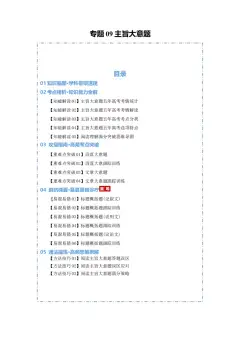
考点分析
解题技巧
专题突破09 主旨要义(听力专练)

高考英语听力中的“主旨要义”题是核心题型,它考查的是考生对整体对话或独白核心内容的把握能
力,也就是我们常说的 “抓核心” 或 “听大意” 的能力。
主旨题的关键在于理解整体而非细节。其答案往往不是直接说出来的,需要考生通过整合信息来归纳
总结。
1. 对话的开头与结尾
开头(首句原则): 很多对话会在开头就点明谈话的背景或原因。例如,打电话的开场白:“Hi,
Mike, I'm calling to ask about the science project we're working on.” 这句话直接点明了谈话主题是
“science project”。
结尾(尾句原则): 对话的结尾常常会对谈话内容进行总结或明确下一步行动,从而揭示主旨。例
如:“So, we've decided to meet at the library tomorrow to finish the report.” 这再次确认了谈话的核心
是“安排完成报告”。
2. 重复出现的关键词
围绕一个主题,某些核心词汇会反复出现。如果你听到某个词或它的同义词被多次提及,那它很可能
就是主旨的核心。例如: 在一段对话中,如果反复出现 “flight”, “ticket”, “check-in”, “boarding
gate”, “destination” 等词,那么主题几乎可以确定与“航空旅行”有关。
3. 说话者的整体语气和互动
通过说话者的语气(如兴奋、焦虑、抱怨、咨询)可以推断谈话的性质和目的。例如: 如果一方在
不断提出问题,另一方在详细解答,那么谈话的目的很可能是“寻求信息”或“咨询”。
4. 独白/短文的首段和尾段
对于较长的独白(如广播通知、简短讲座),其结构与阅读理解类似。主旨通常出现在开头段,用来
引出话题;结尾段则进行总结,重申核心观点。
常见设问方式
What are the two speakers mainly talking about?
What is the conversation mainly about?
What is the topic of the conversation?
What is the main idea of the conversation?
What can we learn from the conversation?
技巧1 预读选项,预测主题
在听力开始前,快速浏览选项,尤其是四个选项的名词性短语。这些关键词可以帮你提前预测对话可
能围绕什么展开(如:job, travel plan, school assignment, problem with a product)。
强化训练
技巧2 抓住整体,放弃纠结
听的时候要有“大局观”。如果某个词没听懂或某个细节没听清,不要纠结!继续往下听,把握整体
的脉络和反复出现的关键词。
技巧3 边听边记关键词
用笔简单记下重复出现的名词、动词,以及对话的目的(如:invite, complain, advise, inquire)。这
些笔记是你最后做选择的重要依据。
技巧4  特别关注开头和结尾
集中百分之百的注意力在对话的第一句和最后一句上,这里常常隐藏着主旨的答案。
技巧51  选择最概括、最全面的选项
做完题后,问自己一个问题:“如果我用一句话来告诉别人这段对话讲了什么,我会怎么说?” 那
个最接近你这句话的选项,通常就是正确答案。


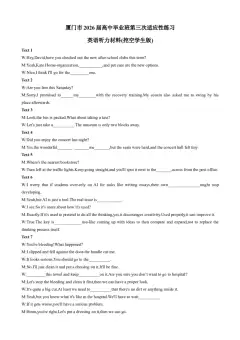
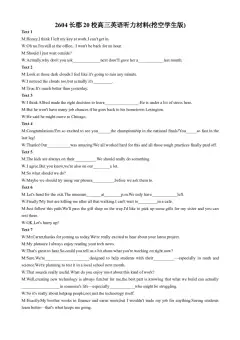
练习 1 听下面10 个句子。每段句子后有一个小题,从题中所给的A、B、C 三个选项中选出最佳选项。听
完每个句子后,你都有10 秒钟的时间来回答有关小题和阅读下一小题。每个句子仅读一遍。难度:三星
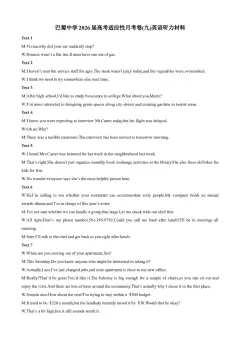
1. What is the man talking about?
A. The paper.
B. An ad.
C. Sunshine.
2. What is the woman talking about?
A. A college campus.
B. A beautiful park.
C. An architectural exhibition.
3. What is the man talking about?
A. A library.
   B. A book.
      C. A drama.
4. What is the woman talking about?
A. A festival.
B. An ancestor.                  C. A food.
5. What is the man talking about?
A. Climbing.
B. Watching films.
C. Hobbies.
6. What is the woman talking about?
A. A noisy night.
B. Life in the city.
C. A place of living.
7. What is the man mainly talking about?
A. Travel plan.
B. Local foods.
C. Dinner time.
8. What will the speakers mainly talk about?
A. How long they haven't met.
B. How Susie went to college.
C. How Susie's life is going.
9. What is the woman mainly talking about?
A. The woman’s happy retirement.
B. The woman’s art classes.
C. The woman’s hobbies.
10. What is the woman talking about in general?
A. A big company.
B. A new manager.
C. A job advertisement.
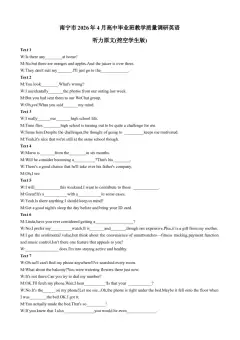
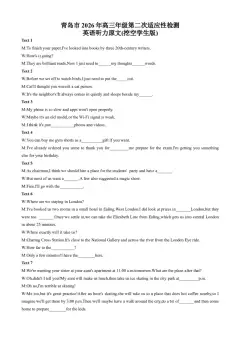
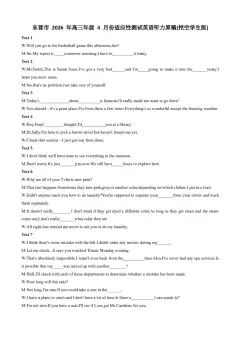
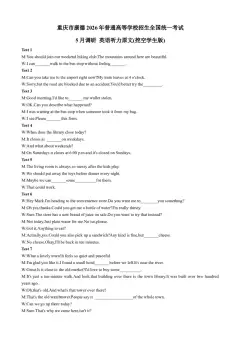
练习 2 听下面30 段对话。每段对话后有一个小题,从题中所给的A、B、C 三个选项中选出最佳选项。听
完每段对话后,你都有10 秒钟的时间来回答有关小题和阅读下一小题。每段对话仅读一遍。难度等级:
四星
1 What are the two speakers talking about?
A. A travel plan.
B. A big company.
C. A job opportunity.
2. What are the speakers talking about?
A. A picnic.
B. An animal.
C. A storm.
3 What are the speakers mainly talking about?
A. A game.
B. An article.
C. A player.
4 What are the speakers talking about?
A. Their sports partners.
B. Their common hobby.
C. Their favorite sports.
5. What are the speakers mainly talking about?
A. A trip.
B. The weather.
C. An umbrella.
6 What are the speakers mainly talking about?
A. Their favorite songs.
B. Online English courses.
C. Language learning.
7 What are the speakers talking about?
A. A street.
B. A park.
C. A dog.
8 What are the speakers mainly talking about?
A. A painting.
B. A gallery.
C. An artist.
9. What are the speakers mainly talking about?
A. Sports.
B. Sleeping habits.
C. Physical discomfort.
10. What are the speakers talking about?
A. A new office.
B. A change of their jobs.
C. A former colleague.
11. What are the speakers talking about?
A. A statue.
B. A square.
C. An artist.
12. What are the speakers mainly talking about?
A. A famous fashion designer.
B. A new clothing trend.
C. An ancient Chinese painting.
13. What is the topic of the conversation?
A. Items that can be recycled.
B. Advice on choosing cat food.
C. The key to growing flowers.
14. What does the man mean?
A. The woman is lazy.
B. The woman is helpful,
C. The woman should refuse John.
15. What does the woman mean?
A. The boy needs to have a rest.
B. The boy has to go over lessons at weekends.
C. The boy should have passed the exam last time.
16. What are the speakers mainly talking about?
A. Where to have dinner.
B. When to meet a neighbor.
C. What to expect for the evening.
17. What are the speakers mainly discussing?
A. Aging problems.
B. The secret of the brain.
C. Benefits of learning a new language.
18. What are the speakers talking about?
A. A meeting.
B. A colleague.
C. A lunch break.
19. What is the conversation mainly about?
A. The man's trip.
  B. The man's family.
C. New Zealand.
20. What are the speakers discussing?
A. Whether to go to France.           B. What to do in France.
C. How to go to France.
21. What are the speakers mainly discussing?
A. How to lose weight.                  B. What to eat for lunch.
C. Where to have a barbecue.
22. What are the speakers mainly discussing?
A. What to buy.
  B. When to go shopping.
C. Whether to change a sofa.
23. What are the speakers talking about?
A. Having a birthday party.            B. Doing some exercise.
 C. Getting Lydia a gift.
24. What are the two speakers mainly talking about?
A. A wallet.                              B. A lawyer.
C. A story.
25. What are the speakers mainly talking about?
A. A dog.
  B. A lecture.
C. A professor.
26. What are the speakers discussing?
A. When the man will attend a wedding.
B. What the man should wear to a wedding.
C. Whether the man has formal clothes for work.
27.What are the speakers mainly talking about?
A.How to support a family.
   B.How to treat others.
  C.How to find a great job.
28. What is the conversation mainly about?
A. Focusing on the past.
B. Learning from the past.
C. Departing from the past.
29. What are the speakers mainly talking about?
A. Keeping a balanced diet.
B. Working hard.
C. Losing weight.
30. What is the main idea of the conversation?
A. The artist’s use of colors.
B. The current state of art in general.
C. The speakers’ expectations of the artist.