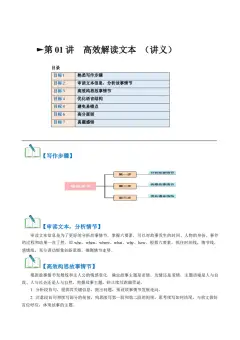
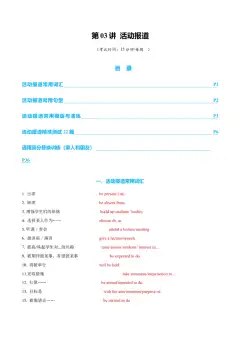
第 01 讲 高考听力试题规律+高分秘诀
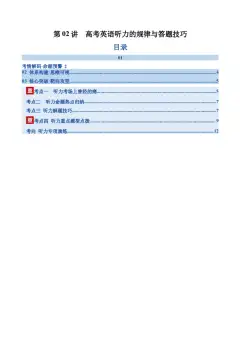
目录
01 考情透视·目标导航········································································································································1
02 知识导图·思维引航········································································································································2
03 考点突破·考法探究········································································································································2
听力高分秘诀···
知识点1 听力命题规律··································································································································2
知识点2 听力解题技巧··································································································································3
知识点3 听力热点话题必备词····················································································································4
知识点4 听力重点题型点拨·························································································································6
04真题练习·命题洞现
1.真题实战 ·················································································································································8
2.命题演练 ··············································································································································10
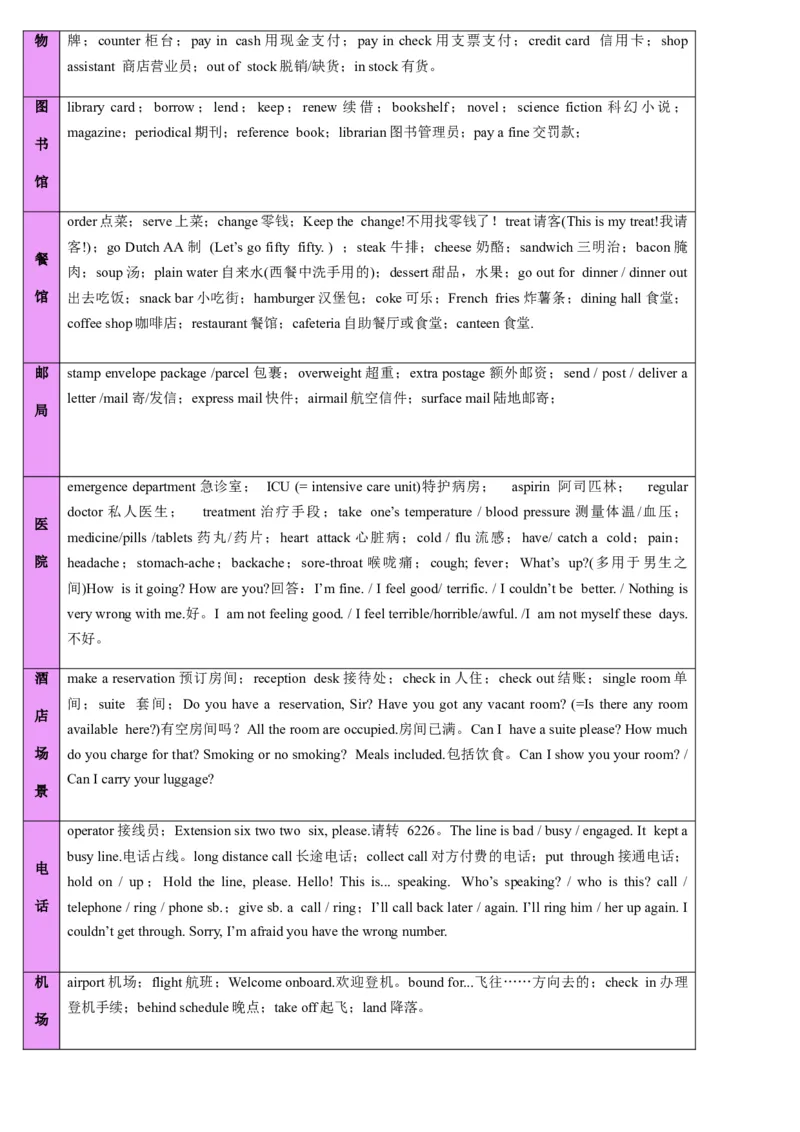
题目:题目数量,第一节含1-5共5小题。
场景:对话场景生活化,涉及到感谢与告别、周末计划、求助照看包包、看望病人计划与安排、饭店消费结
账、准备新年礼物、交通出行方式等。
发音:英美音朗读均有,但新高考I卷男女主播均为美音朗读。发音都标准清晰,无明显地方口音,用词标
第 准。
一 第一部分变化
部 词汇:构词法词汇增多;熟词生义;词块的高频使用;
分 选材:话题涉及的场景对话完全回归真实生活情境中,材料中的语言非常地道。
设题:题干设置灵活,难度大。选项设置简洁,但干扰性强。更注重考生在语言基础上的对信息的整合、转
换、推理以及快速反应与变通能力。
语速:【2024年新高考I卷】听力语速约152词/分,比2023年新高考I卷、II卷有明显上升。
1. 对话场景灵活。2.发音都标准清晰,无明显地方口音,无背景噪音,用词标准。有熟词生义及习惯用法
第
如【2024年新高考I卷】
二
部
2.Text 6:6-7共2小题;Text 7:共2~3小题;Text 8:3~4小题;Text 9:3~4小题;
分
第二部分变化发音:新高考I卷中男女主播均为标准美式口音,口语化明显。
词汇:构词法词汇增多;词块使用频繁
发音:基本标准,带有少量口音,如重音节迁移等, 弱读、爆破、连读现象突出,语速很快。
短 题目:数量含3~4道小题。
文 词汇:构词法词汇增多;词块使用频繁;熟词生义
疑 疑问词的设置比往年的灵活度更高。包含what, when, why, how, where, which, who等。
问
词
听力高分秘诀
知识点1 听力命题规律
命题热点归纳
从近三年新高考听力来看,预测2025年高考会更加贴近学生学习和实际生活的语篇,易于学生代入情境选材围绕
人与社会、人与自然、人与自我三大主题语境。通过设置真实的试题情境,考查学生运用英语进行日常交际以及使用
英语解决实际问题的能力,引导学生理解并掌握学以致用,落实核心素养考查,引导学生养成积极向上的健康心态。
材料来源于实际生活,涉及到现实生活的多个方面,如日常生活、文化教育、传说、时事、人物、科普等。对话一般围
绕一个日常生活的话题展开。如:购物、买票、道别、感谢、打电话、约会、偏爱、祝愿和祝贺、提供帮助、请求、问
路、看病、求救等。
热点话题:
1.日常生活:对话者身份、所处地点、情绪、天气状况等。
2.数字推算:电话号码、出生日期、金钱数字、路程距离、时间长短等。
3.行为预测:对话者谈话的主题,以及将要去干什么。
4,细节推断:事情发生的时间、地点、原因、经过、结果等。
5.对话涉及话题:计划打算、工作学习、购物、旅游交通、看病、生日、体育、求助等
知识点2 听力解题技巧
1. 充分利用时间,预览信息
利用听录音前的时间,迅速看一遍题目,预测短文或对话可能涉及的内容。
2.领略主旨大意,概括话题内容任何一段对话或独白都是围绕一个中心展开的,有时主旨大意较明显,有时则需要归纳、概括。常见的提问方式有:
What’s the passage mainly about?
What’s the topic of the passage?
What are the two speakers doing?
What are the two speakers talking about?
What is the dialogue/conversation about?
3.捕捉主要细节,确认具体事实
这类试题在高中听力试题中约占8小题。它要求我们听清、听懂与话题中心相关的具体信息,准确理解具体细节,
如时间、地点、人物、价钱、数量、目的、原因、结果等。同时,还要求我们对所听到的信息进行简单的处理,比如数
字运算、时间顺序、比较筛选、同义转换、因果关系等。理解具体信息有助于把握话题内容,领会说话者意图,这是听
力考查的重点内容。常见的提问方式有:
Where is the woman going?
How does the man pay for the tickets?
What’s wrong with the girl?
When does the woman plan to arrive?
What’s the man’s house number?
How many hours does Tom sleep a day?
Why does the man thank the woman?
Which of the following is true?
4.推测谈话背景,辨认角色关系
这类试题在高中听力试题中约占5小题,要求我们从谈话或说话的话题和语气来推断出对话双方(或说话人)的职
业身份,彼此之间(或与他人)的关系,对话发生的时间、地点或场合等。常见的提问方式有:
Where does this conversation take place?
Where is the woman speaking?
Where did the conversation most likely happen?
When does the dialogue take place?
Who do you think the woman probably is?
What’s the probable relationship between the speakers?
5.领会弦外之音,揣摩观点意图
这类试题在高中听力试题中约占5小题,它要求我们从话语中听出其中可能有的“弦外之音”,也就是揣摩说话人
的意图、观点或态度等。
常见的提问方式有:
What can we learn from the conversation/speakers?
What can we know /learn about the woman?
What does the man mean?
What does the speakers want to tell us?
What is the probable result of the conversation?
知识点3 听力热点话题必备词
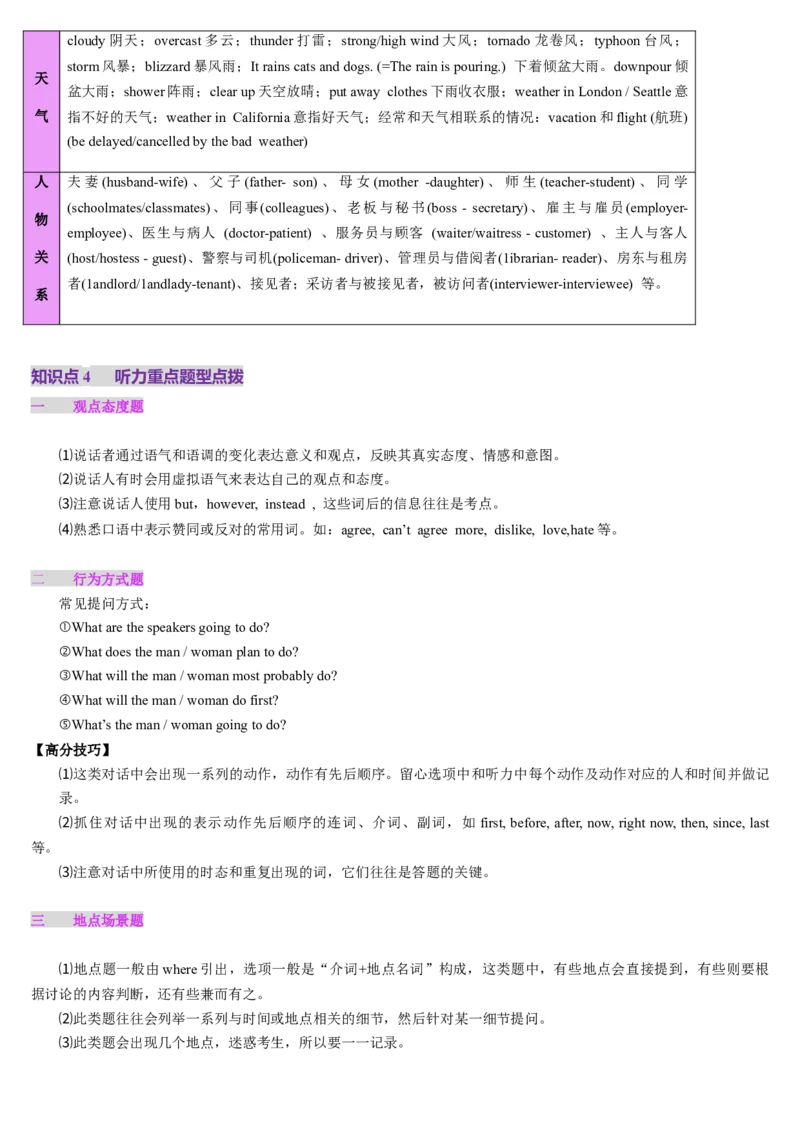
store杂货店;department store百货商场;shopping center购物中心;商品信息:size;color;style;
price;What color/size/kind do you want?商品论贵贱:expensive, cheap;价格论高低:high, low;
购
bargain便宜货;popular /fashionable流行的;in fashion流行,时尚;out of fashion过时的;brand品物 牌;counter 柜台;pay in cash 用现金支付;pay in check 用支票支付;credit card 信用卡;shop
assistant 商店营业员;out of stock脱销/缺货;in stock有货。
图 library card;borrow;lend;keep;renew 续借;bookshelf;novel;science fiction 科幻小说;
magazine;periodical期刊;reference book;librarian图书管理员;pay a fine交罚款;
书
馆
order点菜;serve上菜;change零钱;Keep the change!不用找零钱了!treat请客(This is my treat!我请
客!);go Dutch AA制 (Let’s go fifty fifty. ) ;steak牛排;cheese奶酪;sandwich三明治;bacon腌
餐
肉;soup汤;plain water自来水(西餐中洗手用的);dessert甜品,水果;go out for dinner / dinner out
馆 出去吃饭;snack bar小吃街;hamburger汉堡包;coke可乐;French fries炸薯条;dining hall食堂;
coffee shop咖啡店;restaurant餐馆;cafeteria自助餐厅或食堂;canteen食堂.
邮 stamp envelope package /parcel包裹;overweight超重;extra postage额外邮资;send / post / deliver a
letter /mail寄/发信;express mail快件;airmail航空信件;surface mail陆地邮寄;
局
emergence department急诊室; ICU (= intensive care unit)特护病房; aspirin 阿司匹林; regular
doctor 私人医生; treatment 治疗手段;take one’s temperature / blood pressure 测量体温/血压;
医
medicine/pills /tablets 药丸/药片;heart attack 心脏病;cold / flu 流感;have/ catch a cold;pain;
院 headache;stomach-ache;backache;sore-throat 喉咙痛;cough; fever;What’s up?(多用于男生之
间)How is it going? How are you?回答:I’m fine. / I feel good/ terrific. / I couldn’t be better. / Nothing is
very wrong with me.好。I am not feeling good. / I feel terrible/horrible/awful. /I am not myself these days.
不好。
酒 make a reservation预订房间;reception desk接待处;check in人住;check out结账;single room单
间;suite 套间;Do you have a reservation, Sir? Have you got any vacant room? (=Is there any room
店
available here?)有空房间吗?All the room are occupied.房间已满。Can I have a suite please? How much
场 do you charge for that? Smoking or no smoking? Meals included.包括饮食。Can I show you your room? /
Can I carry your luggage?
景
operator接线员;Extension six two two six, please.请转 6226。The line is bad / busy / engaged. It kept a
busy line.电话占线。long distance call长途电话;collect call对方付费的电话;put through接通电话;
电
hold on / up;Hold the line, please. Hello! This is... speaking. Who’s speaking? / who is this? call /
话 telephone / ring / phone sb.;give sb. a call / ring;I’ll call back later / again. I’ll ring him / her up again. I
couldn’t get through. Sorry, I’m afraid you have the wrong number.
机 airport机场;flight航班;Welcome onboard.欢迎登机。bound for...飞往……方向去的;check in办理
登机手续;behind schedule晚点;take off起飞;land降落。
场cloudy阴天;overcast多云;thunder打雷;strong/high wind大风;tornado龙卷风;typhoon台风;
storm风暴;blizzard暴风雨;It rains cats and dogs. (=The rain is pouring.) 下着倾盆大雨。downpour倾
天
盆大雨;shower阵雨;clear up天空放晴;put away clothes下雨收衣服;weather in London / Seattle意
气 指不好的天气;weather in California意指好天气;经常和天气相联系的情况:vacation和flight (航班)
(be delayed/cancelled by the bad weather)
人 夫妻(husband-wife)、父子(father- son)、母女(mother -daughter)、师生(teacher-student)、同学
(schoolmates/classmates)、同事(colleagues)、老板与秘书(boss - secretary)、雇主与雇员(employer-
物
employee)、医生与病人 (doctor-patient) 、服务员与顾客 (waiter/waitress - customer) 、主人与客人
关 (host/hostess - guest)、警察与司机(policeman- driver)、管理员与借阅者(1ibrarian- reader)、房东与租房
者(1andlord/1andlady-tenant)、接见者;采访者与被接见者,被访问者(interviewer-interviewee) 等。
系
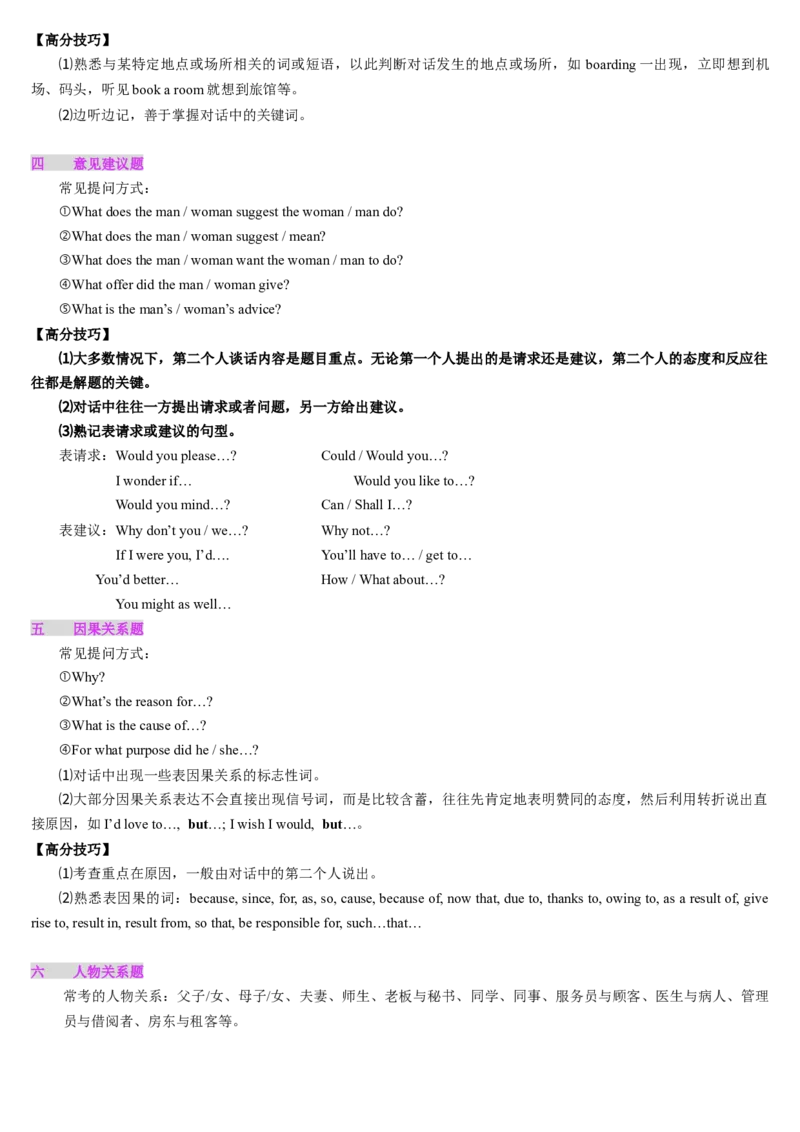
知识点4 听力重点题型点拨
一 观点态度题
⑴说话者通过语气和语调的变化表达意义和观点,反映其真实态度、情感和意图。
⑵说话人有时会用虚拟语气来表达自己的观点和态度。
⑶注意说话人使用but,however, instead , 这些词后的信息往往是考点。
⑷熟悉口语中表示赞同或反对的常用词。如:agree, can’t agree more, dislike, love,hate等。
二 行为方式题
常见提问方式:
①What are the speakers going to do?
②What does the man / woman plan to do?
③What will the man / woman most probably do?
④What will the man / woman do first?
⑤What’s the man / woman going to do?
【高分技巧】
⑴这类对话中会出现一系列的动作,动作有先后顺序。留心选项中和听力中每个动作及动作对应的人和时间并做记
录。
⑵抓住对话中出现的表示动作先后顺序的连词、介词、副词,如 first, before, after, now, right now, then, since, last
等。
⑶注意对话中所使用的时态和重复出现的词,它们往往是答题的关键。
三 地点场景题
⑴地点题一般由where引出,选项一般是“介词+地点名词”构成,这类题中,有些地点会直接提到,有些则要根
据讨论的内容判断,还有些兼而有之。
⑵此类题往往会列举一系列与时间或地点相关的细节,然后针对某一细节提问。
⑶此类题会出现几个地点,迷惑考生,所以要一一记录。【高分技巧】
⑴熟悉与某特定地点或场所相关的词或短语,以此判断对话发生的地点或场所,如 boarding一出现,立即想到机
场、码头,听见book a room就想到旅馆等。
⑵边听边记,善于掌握对话中的关键词。
四 意见建议题
常见提问方式:
①What does the man / woman suggest the woman / man do?
②What does the man / woman suggest / mean?
③What does the man / woman want the woman / man to do?
④What offer did the man / woman give?
⑤What is the man’s / woman’s advice?
【高分技巧】
⑴大多数情况下,第二个人谈话内容是题目重点。无论第一个人提出的是请求还是建议,第二个人的态度和反应往
往都是解题的关键。
⑵对话中往往一方提出请求或者问题,另一方给出建议。
⑶熟记表请求或建议的句型。
表请求:Would you please…? Could / Would you…?
I wonder if… Would you like to…?
Would you mind…? Can / Shall I…?
表建议:Why don’t you / we…? Why not…?
If I were you, I’d…. You’ll have to… / get to…
You’d better… How / What about…?
You might as well…
五 因果关系题
常见提问方式:
①Why?
②What’s the reason for…?
③What is the cause of…?
④For what purpose did he / she…?
⑴对话中出现一些表因果关系的标志性词。
⑵大部分因果关系表达不会直接出现信号词,而是比较含蓄,往往先肯定地表明赞同的态度,然后利用转折说出直
接原因,如I’d love to…, but…; I wish I would, but…。
【高分技巧】
⑴考查重点在原因,一般由对话中的第二个人说出。
⑵熟悉表因果的词:because, since, for, as, so, cause, because of, now that, due to, thanks to, owing to, as a result of, give
rise to, result in, result from, so that, be responsible for, such…that…
六 人物关系题
常考的人物关系:父子/女、母子/女、夫妻、师生、老板与秘书、同学、同事、服务员与顾客、医生与病人、管理
员与借阅者、房东与租客等。【高分技巧】
⑴抓住对话中与职业身份相关的关键词、术语、环境。
⑵注意两人的语气、口吻、亲密度。
⑶对话中往往不直接说出某人身份,要求从对话中判断,例如对话中的称呼语。
七 数字细节题
常见提问方式:
①How much / many…?
②How far…?
③How long…?
④What time…?
⑤When…?
⑴该类题常常涉及时间、日期、价格、年龄、距离、速度、电话号码等。
⑵出题形式为数字辨析和计算。
⑶对话中常出现易混淆的数字,如fourteen和forty。
⑷出现与数字运算有关的词,如:double, twice, couple, times, quarter, divide, add up to等。
【高分技巧】
⑴边听边记录数字。
⑵注意数字的单位。
⑶掌握数字的读法。
一、 真题实战
第一部分 听力(共两节,满分 30 分)
第一节(共5小题;每小题1分,满分5分)
听下面5段对话。每段对话后有一个小题,从题中所给的A、B、C三个选项中选出最佳选项。听完每段对话后,你
都有10秒钟的时间来回答有关小题和阅读下一小题。每段对话仅读一遍。
1.What is Kate doing?
A.Boarding a flight. B.Arranging a trip. C.Seeing a friend off.
2.What are the speakers talking about?
A.A pop star. B.An old song. C.A radio program.
3.What does the man want to do?
A.Cancel an order. B.Ask for a receipt. C.Reschedule a delivery.
4.What will the speakers do today?
A.Go to an art show. B.Meet the man's aunt. C.Eat out with Mark.
5.When will the next train to Bedford leave?
A.At 9:45. B.At 10:15. C.At 11:00.
第二节(共15小题;每小题1分,满分15分)听下面5段对话或独白。每段对话或独白后有几个小题,从题中所给的A、B、C三个选项中选出最佳选项。听每段
对话或独白前,你将有时间阅读各个小题,每小题5秒钟;听完后,各小题将给出5秒钟的作答时间。每段对话或独白
读两遍。
听下面一段较长对话,回答以下小题。
6.What will the weather be like today?
A.Stormy. B.Sunny. C.Foggy.
7.What is the man going to do?
A.Plant a tree. B.Move his car. C.Check the map.
听下面一段较长对话,回答以下小题。
8.Why is Kathy in California now?
A.She is on vacation there.B.She has just moved there. C.She is doing business there.
9.What is the relationship between Tom and Fiona?
A.Husband and wife. B.Brother and sister. C.Father and daughter.
10.What does Kathy thank Dave for?
A.Finding her a new job. B.Sending her a present. C.Calling on her mother.
听下面一段较长对话,回答以下小题。
11.How did Jack go to school when he was a child?
A.By bike. B.On foot. C.By bus.
12.What is Jack's attitude toward parents driving their kids to school?
A.Disapproving. B.Encouraging. C.Understanding.
13.What is the problem with some parents according to the woman?
A.Overprotecting their children.
B.Pushing their children too hard.
C.Having no time for their children.
听下面一段较长对话,回答以下小题。
14.Why did Marie post her kitchen gardening online at first?
A.To keep records of her progress.
B.To sell home-grown vegetables.
C.To motivate her fellow gardeners.
15.Why does Marie recommend beginners to grow strawberries?
A.They need no special care.
B.They can be used in cooking.
C.They bear a lot of fruit soon.
16.What is difficult for Marie to grow?
A.Herbs. B.Carrots. C.Pears.
17.What is Marie's advice to those interested in kitchen gardening?
A.Aim high. B.Keep focused. C.Stay optimistic.
听下面一段独白,回答以下小题。
18.What is "Life of Johnson"?
A.A magazine column. B.A TV series. C.A historical novel.19.What is Johnson famous for?
A.His acting talent. B.His humorous writing. C.His long sports career.
20.When did Johnson join Sports Times?
A.In 1981. B.In 1983. C.In 1985.
二、 命题演练
第一部分 听力(共两节,满分 30 分)
第一节(共5小题;每小题1分,满分5分)
听下面5段对话。每段对话后有一个小题,从题中所给的A、B、C三个选项中选出最佳选项。听完每段对话后,你
都有10秒钟的时间来回答有关小题和阅读下一小题。每段对话仅读一遍。
1.(23-24高三下·江苏扬州·阶段练习)What are the speakers mainly talking about?
A.A stranger. B.A good deed. C.A phone.
2.Why does the woman call the man?
A.To put off an appointment. B.To make an apology. C.To cancel a flight.
3.Which movie does the man prefer?
A.Lost in the Stars. B.Never Say Never. C.Chang’an.
4.Where does the conversation most probably take place?
A.In a shop. B.In a library. C.On a bus.
5.What behavior does the man dislike at the cinema?
A.Kicking the seat. B.Leaving halfway. C.Sending texts.
第二节(共15小题;每小题1分,满分15分)
听下面5段对话或独白。每段对话或独白后有几个小题,从题中所给的A、B、C三个选项中选出最佳选项。听每段
对话或独白前,你将有时间阅读各个小题,每小题5秒钟;听完后,各小题将给出5秒钟的作答时间。每段对话或独白
读两遍。
听下面一段较长对话,回答以下小题。
6.Who did the man meet while waiting for the woman?
A.Norman. B.Mr Pope. C.Mrs Pope.
7.Why can’t the man hear the woman clearly?
A.There is something wrong with his ears.
B.The woman speaks in a low voice.
C.It is too noisy nearby.
听下面一段较长对话,回答以下小题。
8.What part of the man’s body is hurting?
A.The top of his head.
B.The right side of his face.
C.The left side of his mouth.
9.Where does the man decide to go?
A.To a hospital.
B.To a dentist’s office.C.To his regular doctor’s office.
10.How will the speakers go there?
A.By bus. B.By bike. C.By car.
听下面一段较长对话,回答以下小题。
11.Why was the man late again?
A.He got up late.
B.The traffic was heavy.
C.He had an accident on his way.
12.What is the schoolmaster doing now?
A.Giving a class. B.Meeting a guest. C.Having a meeting.
13.What does the woman suggest the man do in the end?
A.Cycle to work. B.Go to bed early. C.Buy an alarm clock.
听下面一段较长对话,回答以下小题。
14.What day is it today?
A.Thursday. B.Friday. C.Saturday.
15.What kind of party will the girl attend?
A.A birthday party. B.A welcome party. C.A goodbye party.
16.Why does the man refuse the girl to drive his car?
A.She can take the subway.
B.She doesn’t have a license.
C.She is not skilled enough to drive.
17.What gift will the girl bring for Jenny?
A.The wooden boat. B.Chocolate. C.Some flowers.
听下面一段独白,回答以下小题。
18.Who are the listeners?
A.Parents. B.Students. C.Teachers.
19.How can the listeners get the information about the procedures?
A.From a brochure. B.From a doctor. C.From the speaker.
20.What does the speaker suggest the listeners do in the end?
A.Go to the health center soon.
B.Offer their medical history to the doctor.
C.Make an early appointment with the health center.