文档文本内容
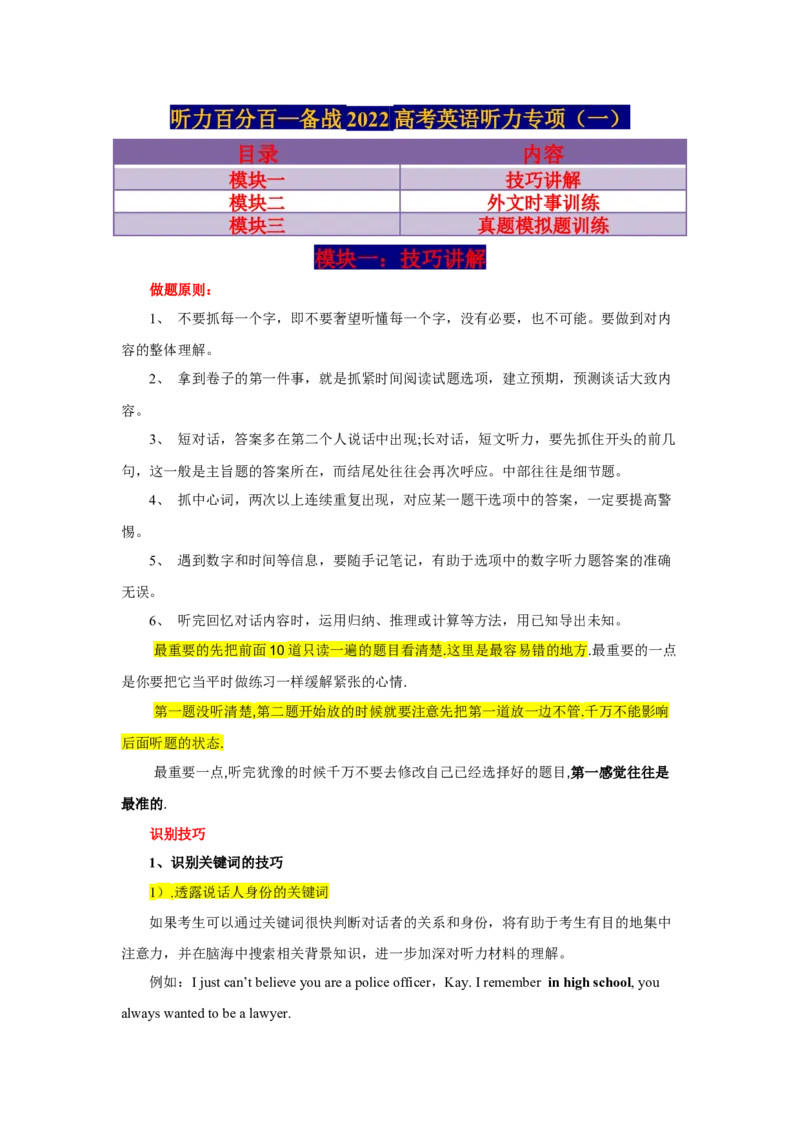
听力百分百—备战 2022 高考英语听力专项(一)
目录 内容
模块一 技巧讲解
模块二 外文时事训练
模块三 真题模拟题训练
模块一:技巧讲解
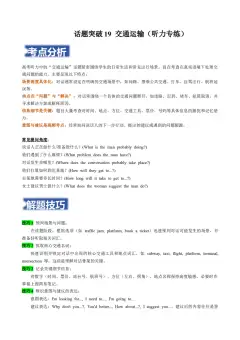
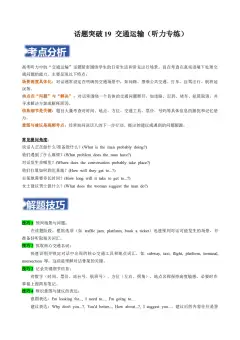
做题原则:
1、 不要抓每一个字,即不要奢望听懂每一个字,没有必要,也不可能。要做到对内
容的整体理解。
2、 拿到卷子的第一件事,就是抓紧时间阅读试题选项,建立预期,预测谈话大致内
容。
3、 短对话,答案多在第二个人说话中出现;长对话,短文听力,要先抓住开头的前几
句,这一般是主旨题的答案所在,而结尾处往往会再次呼应。中部往往是细节题。
4、 抓中心词,两次以上连续重复出现,对应某一题干选项中的答案,一定要提高警
惕。
5、 遇到数字和时间等信息,要随手记笔记,有助于选项中的数字听力题答案的准确
无误。
6、 听完回忆对话内容时,运用归纳、推理或计算等方法,用已知导出未知。
最重要的先把前面10道只读一遍的题目看清楚.这里是最容易错的地方.最重要的一点
是你要把它当平时做练习一样缓解紧张的心情.
第一题没听清楚,第二题开始放的时候就要注意先把第一道放一边不管.千万不能影响
后面听题的状态.
最重要一点,听完犹豫的时候千万不要去修改自己已经选择好的题目,第一感觉往往是
最准的.
识别技巧
1、识别关键词的技巧
1).透露说话人身份的关键词
如果考生可以通过关键词很快判断对话者的关系和身份,将有助于考生有目的地集中
注意力,并在脑海中搜索相关背景知识,进一步加深对听力材料的理解。
例如:I just can’t believe you are a police officer,Kay. I remember in high school, you
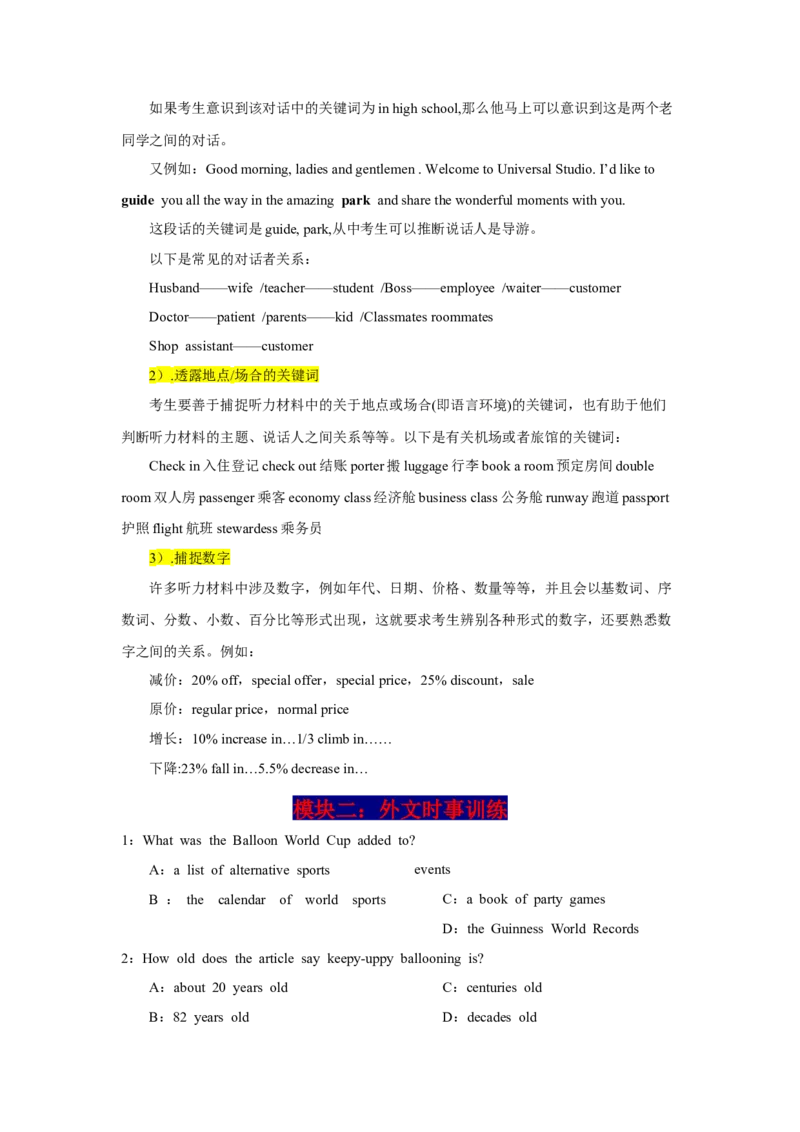
always wanted to be a lawyer.如果考生意识到该对话中的关键词为in high school,那么他马上可以意识到这是两个老
同学之间的对话。
又例如:Good morning, ladies and gentlemen . Welcome to Universal Studio. I’d like to
guide you all the way in the amazing park and share the wonderful moments with you.
这段话的关键词是guide, park,从中考生可以推断说话人是导游。
以下是常见的对话者关系:
Husband——wife /teacher——student /Boss——employee /waiter——customer
Doctor——patient /parents——kid /Classmates roommates
Shop assistant——customer
2).透露地点/场合的关键词
考生要善于捕捉听力材料中的关于地点或场合(即语言环境)的关键词,也有助于他们
判断听力材料的主题、说话人之间关系等等。以下是有关机场或者旅馆的关键词:
Check in入住登记check out结账porter搬luggage行李book a room预定房间double
room双人房passenger乘客economy class经济舱business class公务舱runway跑道passport
护照flight航班stewardess乘务员
3).捕捉数字
许多听力材料中涉及数字,例如年代、日期、价格、数量等等,并且会以基数词、序
数词、分数、小数、百分比等形式出现,这就要求考生辨别各种形式的数字,还要熟悉数
字之间的关系。例如:
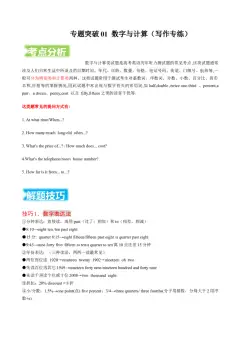
减价:20% off,special offer,special price,25% discount,sale
原价:regular price,normal price
增长:10% increase in…1/3 climb in……
下降:23% fall in…5.5% decrease in…
模块二:外文时事训练
1:What was the Balloon World Cup added to?
A:a list of alternative sports events
B : the calendar of world sports C:a book of party games
D:the Guinness World Records
2:How old does the article say keepy-uppy ballooning is?
A:about 20 years old C:centuries old
B:82 years old D:decades old3: Who promoted the Balloon World Cup?
A:Gerard Pique C:a toy company
B:a balloon company D:a billionaire
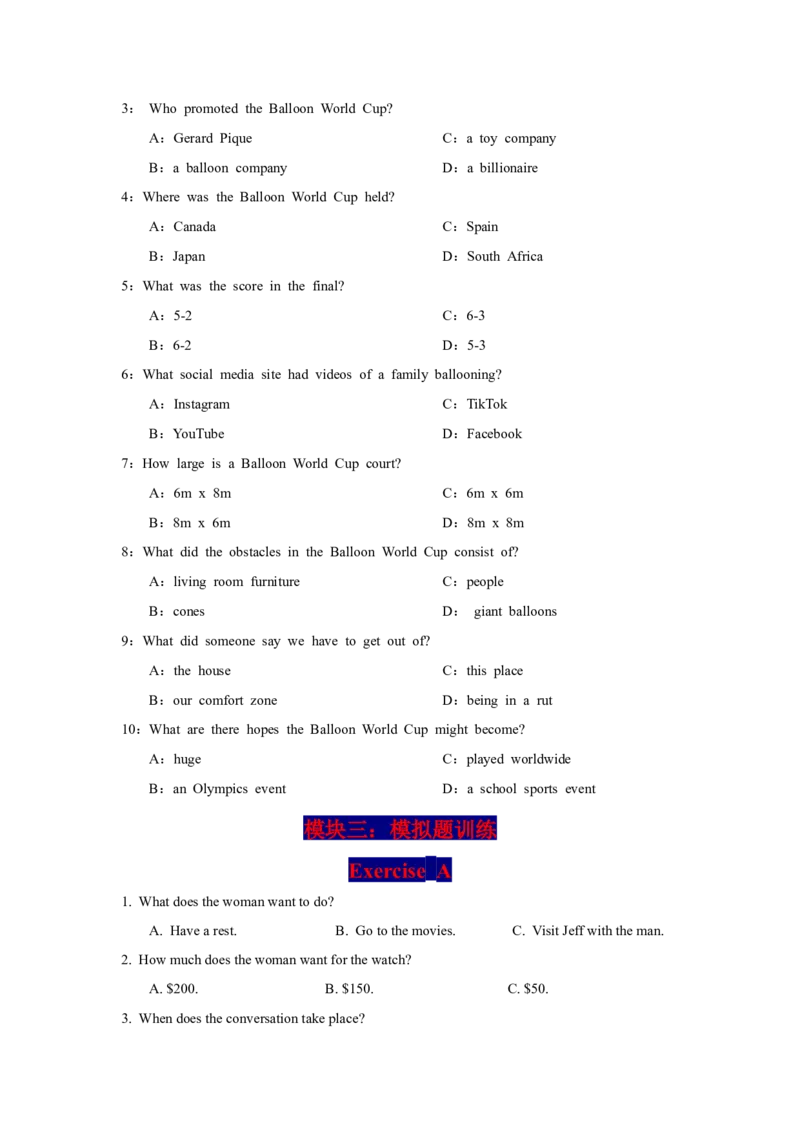
4:Where was the Balloon World Cup held?
A:Canada C:Spain
B:Japan D:South Africa
5:What was the score in the final?
A:5-2 C:6-3
B:6-2 D:5-3
6:What social media site had videos of a family ballooning?
A:Instagram C:TikTok
B:YouTube D:Facebook
7:How large is a Balloon World Cup court?
A:6m x 8m C:6m x 6m
B:8m x 6m D:8m x 8m
8:What did the obstacles in the Balloon World Cup consist of?
A:living room furniture C:people
B:cones D: giant balloons
9:What did someone say we have to get out of?
A:the house C:this place
B:our comfort zone D:being in a rut
10:What are there hopes the Balloon World Cup might become?
A:huge C:played worldwide
B:an Olympics event D:a school sports event
模块三:模拟题训练
Exercise A
1. What does the woman want to do?
A. Have a rest. B. Go to the movies. C. Visit Jeff with the man.
2. How much does the woman want for the watch?
A. $200. B. $150. C. $50.
3. When does the conversation take place?A. During a vacation. B. At the end of a term. C. At the beginning of a term.
4. What happened to the woman?
A. She couldn't find Mr. Beringer.
B. She was late for an interview.
C She failed to get a job.
5. What does the woman mean?
A. Only 10% of American mothers work.
B. Her mother is a housewife.
C. Most American mothers work.
第二节(共15小题;每小题1.5分,满分22.5分)
听下面5段对话或独白。每段对话或独白后有几个小题,从题中所给的 A、B、C 三
个选项中选出最佳选项,并标在试卷的相应位置。听每段对话或独白前,你将有时间阅读
各个小题,每小题5秒钟;听完后,各小题给出5秒钟的作答时间。每段对话或独白读两
遍。
6. Why does the man want to buy a new TV?
A. The old TV is broken.
B. He moved to a new house.
C. The new TV is cheap now.
7. What will the man probably buy?
A. A cheap TV. B. A small TV. C. A big TV.
8. Where do the speakers prefer to go?
A. Hawaii. B. Europe. C. The Bahamas.
9. What will the speakers probably do next?
A. Check the travel fees.
B. Call their friends.
C. Book their flight.
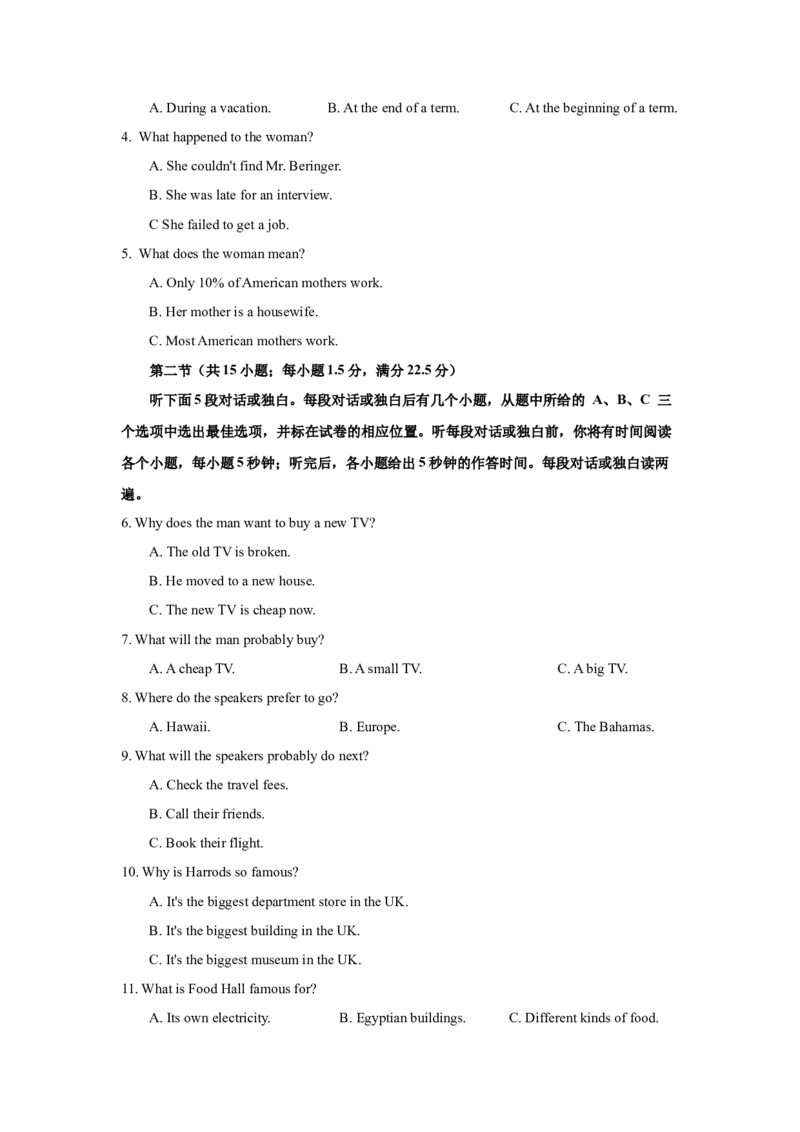
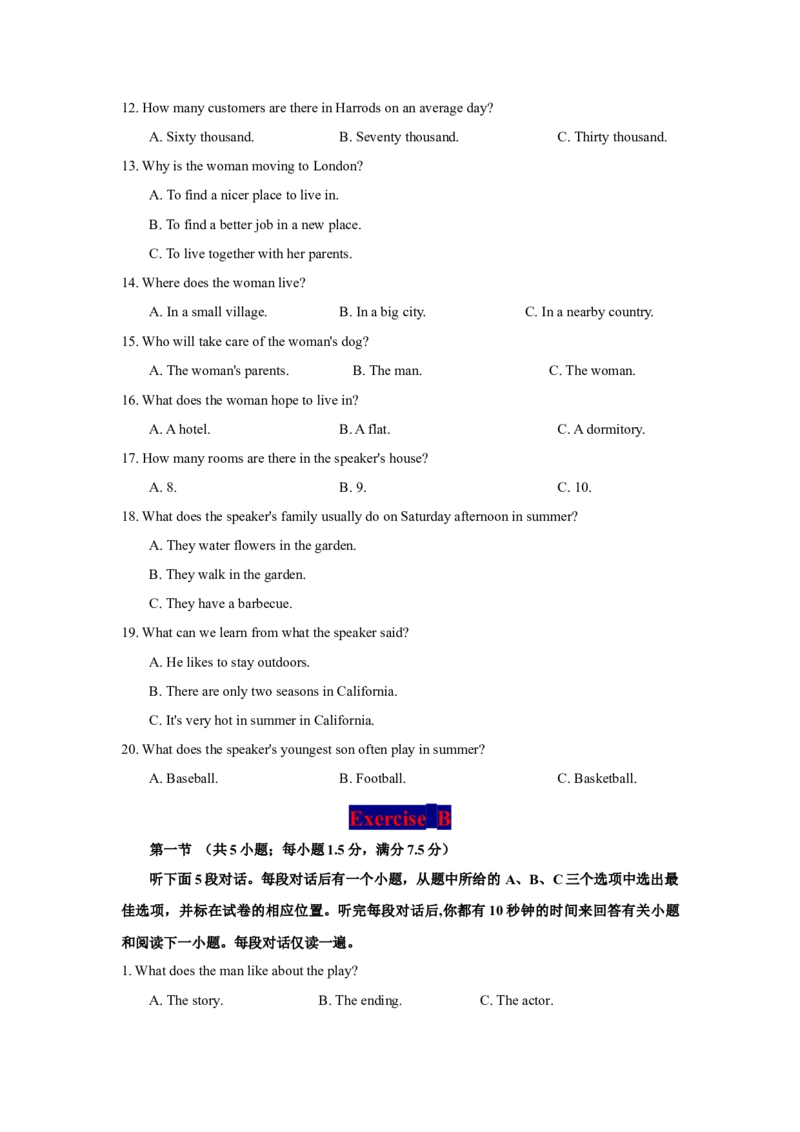
10. Why is Harrods so famous?
A. It's the biggest department store in the UK.
B. It's the biggest building in the UK.
C. It's the biggest museum in the UK.
11. What is Food Hall famous for?
A. Its own electricity. B. Egyptian buildings. C. Different kinds of food.12. How many customers are there in Harrods on an average day?
A. Sixty thousand. B. Seventy thousand. C. Thirty thousand.
13. Why is the woman moving to London?
A. To find a nicer place to live in.
B. To find a better job in a new place.
C. To live together with her parents.
14. Where does the woman live?
A. In a small village. B. In a big city. C. In a nearby country.
15. Who will take care of the woman's dog?
A. The woman's parents. B. The man. C. The woman.
16. What does the woman hope to live in?
A. A hotel. B. A flat. C. A dormitory.
17. How many rooms are there in the speaker's house?
A. 8. B. 9. C. 10.
18. What does the speaker's family usually do on Saturday afternoon in summer?
A. They water flowers in the garden.
B. They walk in the garden.
C. They have a barbecue.
19. What can we learn from what the speaker said?
A. He likes to stay outdoors.
B. There are only two seasons in California.
C. It's very hot in summer in California.
20. What does the speaker's youngest son often play in summer?
A. Baseball. B. Football. C. Basketball.
Exercise B
第一节 (共5小题;每小题1.5分,满分7.5分)
听下面5段对话。每段对话后有一个小题,从题中所给的A、B、C三个选项中选出最
佳选项,并标在试卷的相应位置。听完每段对话后,你都有10秒钟的时间来回答有关小题
和阅读下一小题。每段对话仅读一遍。
1. What does the man like about the play?
A. The story. B. The ending. C. The actor.2. Which place are the speakers trying to find?
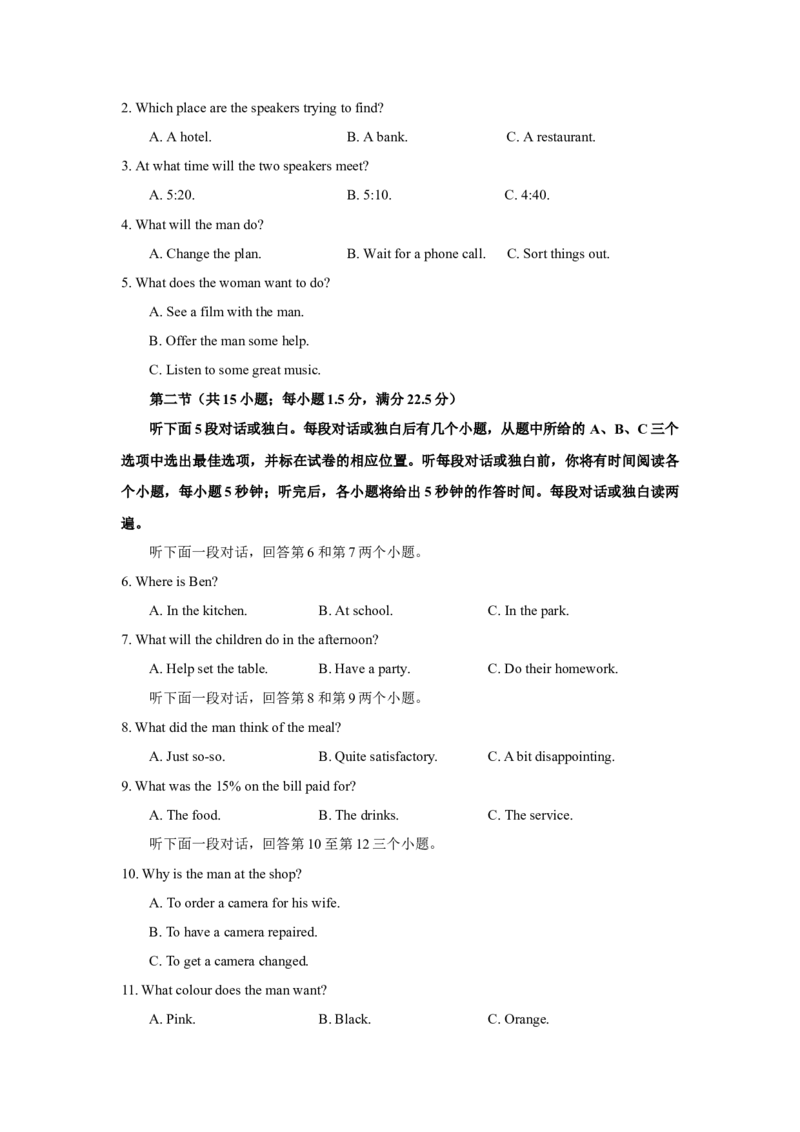
A. A hotel. B. A bank. C. A restaurant.
3. At what time will the two speakers meet?
A. 5:20. B. 5:10. C. 4:40.
4. What will the man do?
A. Change the plan. B. Wait for a phone call. C. Sort things out.
5. What does the woman want to do?
A. See a film with the man.
B. Offer the man some help.
C. Listen to some great music.
第二节(共15小题;每小题1.5分,满分22.5分)
听下面5段对话或独白。每段对话或独白后有几个小题,从题中所给的 A、B、C三个
选项中选出最佳选项,并标在试卷的相应位置。听每段对话或独白前,你将有时间阅读各
个小题,每小题5秒钟;听完后,各小题将给出5秒钟的作答时间。每段对话或独白读两
遍。
听下面一段对话,回答第6和第7两个小题。
6. Where is Ben?
A. In the kitchen. B. At school. C. In the park.
7. What will the children do in the afternoon?
A. Help set the table. B. Have a party. C. Do their homework.
听下面一段对话,回答第8和第9两个小题。
8. What did the man think of the meal?
A. Just so-so. B. Quite satisfactory. C. A bit disappointing.
9. What was the 15% on the bill paid for?
A. The food. B. The drinks. C. The service.
听下面一段对话,回答第10至第12三个小题。
10. Why is the man at the shop?
A. To order a camera for his wife.
B. To have a camera repaired.
C. To get a camera changed.
11. What colour does the man want?
A. Pink. B. Black. C. Orange.12. What will the man do afterwards?
A. Make a phone call.
B. Come again the next day.
C. Wait until further notice.
听下面一段对话,回答第13至第16四个小题。
13. What would Joe probably do during the Thanksgiving holiday?
A. Go to a play. B. Stay at home. C. Visit Kingston.
14. What is Ariel going to do in Toronto?
A. Attend a party. B. Meet her aunt. C. See a car show.
I5. Why is Ariel in a hurry to leave?
A. To call up Betty. B. To buy some DVDs. C. To pick up Daniel.
16. What might be the relationship between the speakers?
A. Classmates. B. Fellow workers. C. Guide and tourist.
听下面一段独白,回答第17至第20四个小题。
17. Why do some people say they never have dreams according to Dr Garfield?
A. They forget about their dreams.
B. They don’t want to tell the truth.
C. They have no bad experiences.
18. Why did Davis stop having dreams?
A. He got a serious heart attack.
B. He was too sad about his brother’s death.
C. He was frightened by a terrible dream.
19. What is Dr Garfield’s opinion about dreaming?
A. It is very useful.
B. It makes things worse.
C. It prevents the mind from working.
20. Why do some people turn off their dreams completely?
A. To sleep better.
B. To recover from illnesses.
C. To stay away from their problems.
Exercise C
第一节(共5小题;每题1.5分,满分7.5分)听下面5段对话。每段对话后有一个小题,从题中所给的A、B、C三个选项中选出最
佳选项,并标在试卷的相应位置。听完每段对话后,你都有 10秒钟的时间来回答有关小题
和阅读下一小题。每段对话仅读一遍。
1. What does the man usually do after dinner?
A. He surfs the Internet. B. He watches TV. C. He does running.
2. How does the woman go to work this week?
A. By car. B. By bike. C. On foot.
3. What does the woman suggest the man do?
A. Order a taxi. B. Take a different train. C. Reschedule the interview.
4. What does the woman care most about the bookshelf?
A. The door. . B. The size. C. The height.
5. What does the man do?
A. He's a tailor. B. He's a waiter. C. He's a shop assistant.
第二节(共15小题;每小题1.5分,满分22.5分)
听下面5段对话或独白。每段对话或独白后有2至4个小题,从题中所给的A、B、C
三个选项中选出最佳选项,并标在试卷的相应位置。听每段对话或独白前,你将有 5秒钟
的时间阅读各个小题;听完后,各小题将给出5秒钟的作答时间。每段对话或独白读两遍。
听下面一段对话,回答第6和第7题。
6. What is the most challenging thing for the man?
A. Eating the local food.
B. Adjusting to the local climate.
C. Recovering from the time difference.
7. How long will the man probably stay in Singapore?
A. Just for the weekend. B. A bit less than 12 days. C. About 15 days.
听下面一段对话,回答第8至第10题。
8. What makes the woman feel upset?
A. Driving to work every morning.
B. Working far away from home.
C. Getting a speeding ticket.
9. What is the second ticket for?
A. Driving carelessly. B. Talking back to the police. C. Not wearing the seat belt.
10. What does the woman learn from the incident?A. She was wronged. B. She was wrong. C. She was unlucky.
听下面一段对话,回答第11至第13题。
11. Why is Matt reading the book?
A. To improve his reading. B. To become a better player.
C. To prepare for entering the army.
12. What would the woman like to do?
A. Be a manager at work. B. Quit her job. C. Borrow Matt's book.
13. What is the relationship between the speakers?
A. Teacher and student. B. Aunt and nephew. C. Boss and employee.
听下面一段对话,回答第14至第17题。
14. What is the woman planning to do right after school finishes?
A. Go travelling. B. Go to university. C. Get a job.
15. Which country are the speakers in?
A. Ireland. B. America. C. England.
16. What does the man love doing?
A. Repairing cars. B. Studying philosophy. C. Learning another language.
17. What is the main topic of the conversation?
A. When the speakers will start the trip.
B. Where the speakers will study after graduation.
C. What the speakers will do once they leave school.
听下面一段独白,回答第18至第20题。
18. What will visitors enjoy in the open-air museum?
A. Traditional folk art. B. Ancient rural life. C. Precious masterpieces.
19. Which of the following is NOT suggested to do in the museum?
A. Don't touch the tools. B. Don't frighten animals. C. Don't take a guide dog.
20. What will the visitors do after the speech?
A. Set off for visiting. B. Get out of the museum. C. Go back to the hotel.
Exercise D
第一节(共5小题;每小题1.5,分,满分7.5分)
听下面5段对话。每段对话后有一个小题,从题中所给的A、B、C三个选项中选出
最佳选项,并标在试卷的相应位置。听完每段对话后,你都有 10秒钟的时间来回答有关小题和阅读下一小题。每段对话仅读一遍。
1. What will the woman probably do?
A. Do the laundry. B. Iron a shirt. C. Make a coffee.
2. What does the woman like doing on sunny days?
A. Being with friends. B. Exploring the city. C. Watching movies.
3. Where does the conversation take place ?
A. In a library. B. In a bookstore. C. In a classroom.
4. Why does the man make the phone call?
A. To make an apology.
B. To cancel a meeting.
C. To reschedule an appointment.
5. How does the woman practise her English?
A. By talking to natives,
B. By viewing the websites.
C. By going to the English Comer.
第二节(共15小题;每小题1.5分,满分22.5分)
请听下面5段对话或独白。每段对话或独白后有几个小题,从题中所给的 A、B、C
三个选项中选出最佳选项。听每段对话或独白前,你将有时间阅读各个小题,每小题 5秒
钟;听完后,各小题将给出5秒钟的作答时间。每段对话或独白读两遍。
听第6段材料,回答第6、7题。
6. How long did it take to build the monument?
A. 37 years. B. 40 years. C. 65 years.
7. What does the man do?
A. He is a worker. B. He is a guide. C. He is a reporter.
听第7段材料,回答第8、9题。
8. Why does the man feel sorry for the woman?
A. Her train was delayed.
B. The platform was hard to find.
C. She was squeezed into the train.
9. What happened to the woman during the subway trip?
A. She missed her stop.
B. She got off the train early.C. She found a seat on the train.
听第8段材料,回答第10至12题。
10. What ticket has the man bought?
A. First class. B. Second class. C. Business class.
11. What is free on the train?
A. Meals. B. Coffee. C. Snacks.
12. When should the man reach the train station at the latest?
A. At 8:30 a.m.. B. At9:30 a.m.. C. At 9:00 a.m..
听第9段材料,回答第13至16题。
13. What does the woman think about attending trainings at weekends?
A. Unnecessary. B. Essential. C. Unreasonable.
14. What are the trainings mainly for?
A. Skill learning. B. Cultural awareness. C. Teamwork improvement.
15. What benefit will a one — year employee receive?
A. A salary increase. B. A seven-day holiday. C. A possible promotion.
16. What is the conversation mainly about?
A. Company rules. B. Salary standards. C. Job trainings.
听第10段独白,回答第17至20题。
17. What is suggested by the speaker?
A. Trying a learning app.
B. Taking a language course.
C. Going back into the classroom.
18. How many features are talked about?
A. 5. B.4. C. 3.
19. Which is a feature of FluentU?
A. All the lessons are free.
B. The contents are quite broad.
C. It slows down the sound of the videos.
20. Why is FluentU very effective?
A. The topics are very fascinating.
B. Learners can choose proper levels.
C. The videos can get anyone started quickly.